
Doctors remove pig kidney from an Alabama woman after a record 130 days

posted in: All news | 0

By LAURAN NEERGAARD

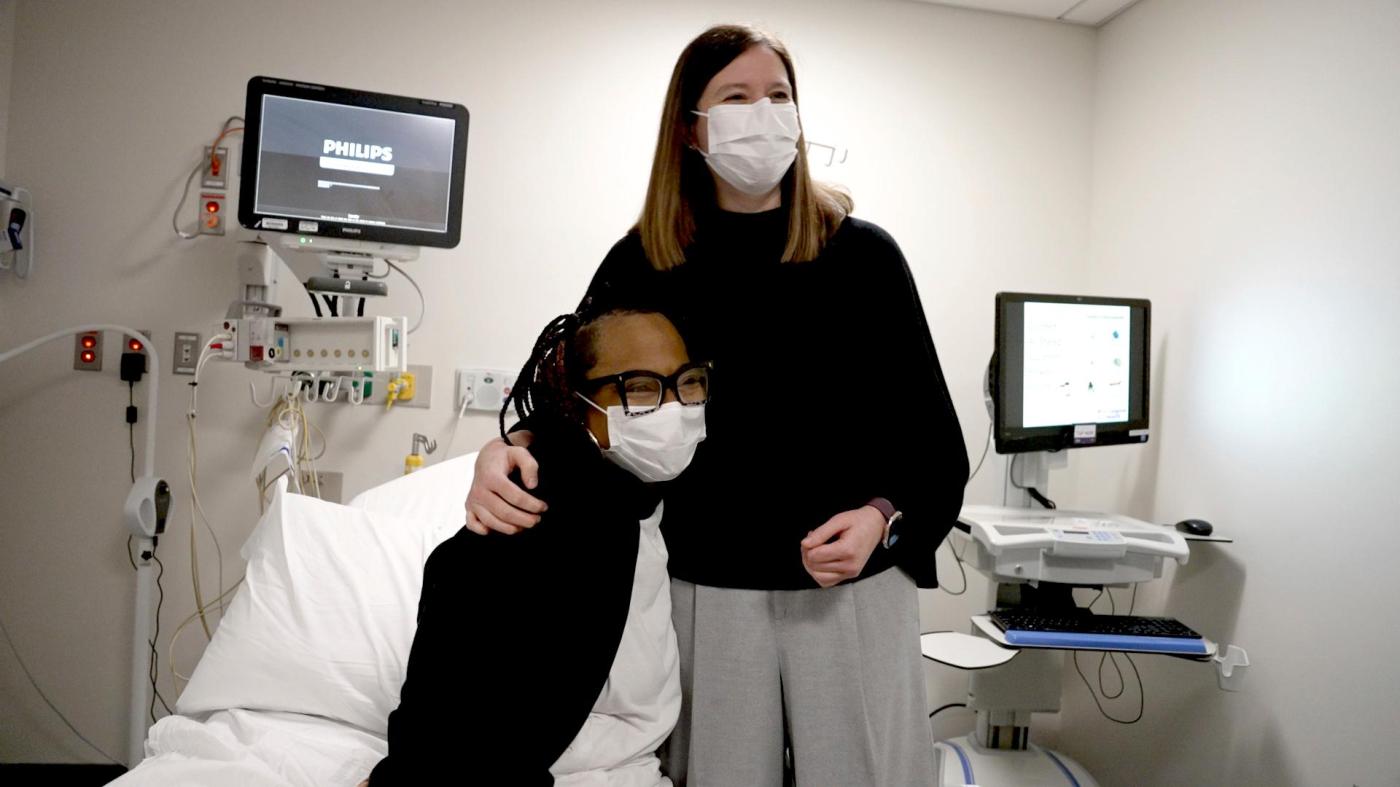
WASHINGTON (AP) — An Alabama woman who lived with a pig kidney for a record 130 days had the organ removed after her body began rejecting it and is back on dialysis, doctors announced Friday – a disappointment in the ongoing quest for animal-to-human transplants.

Related Articles


The House speaker’s eyeing big cuts to Medicaid. In his Louisiana district, it’s a lifeline


Kennedy says Health and Human Services will determine the cause of autism by September


Hit hard by opioid crisis, Black patients further hurt by barriers to care


Cabot Creamery butter recalled over fecal bacteria contamination


Engineers develop tiny pacemaker, smaller than a grain of rice

Towana Looney is recovering well from the April 4 removal surgery at NYU Langone Health and has returned home to Gadsden, Alabama. In a statement, she thanked her doctors for “the opportunity to be part of this incredible research.”

“Though the outcome is not what anyone wanted, I know a lot was learned from my 130 days with a pig kidney – and that this can help and inspire many others in their journey to overcoming kidney disease,” Looney added.

Scientists are genetically altering pigs so their organs are more humanlike to address a severe shortage of transplantable human organs. More than 100,000 people are on the U.S. transplant list, most who need a kidney, and thousands die waiting.

Before Looney’s transplant only four other Americans had received experimental xenotransplants of gene-edited pig organs – two hearts and two kidneys that lasted no longer than two months. Those recipients, who were severely ill before the surgery, died.

Now researchers are attempting these transplants in slightly less sick patients, like Looney. A New Hampshire man who received a pig kidney in January is faring well and a rigorous study of pig kidney transplants is set to begin this summer. Chinese researchers also recently announced a successful kidney xenotransplant.

Looney had been on dialysis since 2016 and didn’t qualify for a regular transplant – her body was abnormally primed to reject a human kidney. So she sought out a pig kidney and it functioned well – she called herself “superwoman” and lived longer than anyone with a gene-edited pig organ before, from her Nov. 25 transplant until early April when her body began rejecting it.

NYU xenotransplant pioneer Dr. Robert Montgomery, Looney’s surgeon, said what triggered that rejection is being investigated. But he said Looney and her doctors agreed it would be less risky to remove the pig kidney than to try saving it with higher, riskier doses of anti-rejection drugs.

“We did the safe thing,” Montgomery told The Associated Press. “She’s no worse off than she was before (the xenotransplant) and she would tell you she’s better off because she had this 4½ month break from dialysis.”

Shortly before the rejection began, Looney had suffered an infection related to her prior time on dialysis and her immune-suppressing anti-rejection drugs were slightly lowered, Montgomery said. At the same time, her immune system was reactivating after the transplant. Those factors may have combined to damage the new kidney, he said.

Rejection is a common threat after transplants of human organs, too, and sometimes cost patients their new organ. Doctors face a balancing act in tamping down patients’ immune systems just enough to preserve the new organ while allowing them to fight infection.

It’s an even bigger challenge with xenotransplantation. While these pig organs have been altered to help prevent immediate rejection, patients still require immune-suppressing drugs. Which drugs are best to prevent different, later forms of rejection isn’t clear, said Dr. Tatsuo Kawai of Massachusetts General Hospital, another xenotransplant pioneer. Different research groups are using different combinations, he said.

“When we have more experience, we’ll know what kind of immunosuppression is really necessary for xenotransplant,” Kawai said

Montgomery said Looney’s experience offers valuable lessons for the upcoming clinical trial.

Making xenotransplant ultimately work “is going to be won with singles and doubles, not swinging for the fence every time we do one of these,” he said.

The Associated Press Health and Science Department receives support from the Howard Hughes Medical Institute’s Science and Educational Media Group and the Robert Wood Johnson Foundation. The AP is solely responsible for all content.
Slowly and Painfully, House Passes $337 Billion Budget

posted in: All news | 0

The Texas House spent over 14 hours debating—but mostly, just standing around—amendments during a marathon proceeding to pass its biennial budget. 

Ultimately, the House voted 118-26 to adopt a $337 billion budget early Friday morning. The bill, shepherded by House Appropriations Chairman Greg Bonnen, featured many big-ticket items. At the top is $51 billion to cover the ballooning cost of previously enacted property tax relief and finance a new round of cuts. The budget also puts $75.6 billion toward public education, which includes a modest but long-overdue bump in the per-student allotment, and $1 billion earmarked for school vouchers. Legislators are also maintaining full funding for Governor Greg Abbott’s border security project Operation Lone Star with another $6.5 billion for the next two years (despite the fact that border crossings are precipitously low and President Trump is back in the White House).   

Nineteen Republicans, comprising the hard-right bloc, voted against the budget—contending that it enabled too much bloated government spending and not enough property tax cuts. Seven Democrats opposed it over the funding for private school vouchers. While there are some minor differences, the House budget has largely aligned with the one that the Senate unanimously passed on March 25. The two chambers will now iron out the differences in conference committee.

The debate kicked off with Chairman Bonnen filing a motion to move nearly 200 of the almost 400 amendments to Article XI, which is essentially the budgetary graveyard. The move effectively killed several conservative amendments, including over a dozen of Representative Brian Harrison’s bills with the same copy-and-paste anti-DEI language. As usual, Harrison took to the floor to complain, but the motion overwhelmingly passed 120-26. 

This preliminary move seemed to suggest a quicker hearing without much debate, perhaps even letting legislators out before sundown. (Note: During eight of the last 15 legislative sessions, the budget hearing ended after midnight.) Legislators only voted on 33 amendments, adopting 25, but there were several points of order—the parliamentary challenges to proposed legislation, known lovingly in the Lege as POOs—that dragged the floor proceedings into the 3 a.m. hour. 

Only a small portion of the filed amendments actually made it to the floor for debate, which often erupted as flashpoints between painfully long periods of procedural negotiation. 

The first amendment adopted, filed by Representative Mary González, an El Paso Democrat, completely wiped out funding for the Texas Lottery Commission and the Economic Development and Tourism Fund in the Governor’s Office. The maneuver successfully took down conservative amendments that planned to siphon funds from these pools of money. Democratic state Representative Erin Zwiener first tested González’s tactic with a POO directed against Representative Mitch Little, whose amendment sought to raise salaries for employees of the Office of the Attorney General. Little’s amendment—and a few others, including, ironically, one of Zwiener’s—also fell to the same trap. 

Representative Ana-María Rodríguez Ramos, a Dallas Democrat, brought an amendment to move $5 million from border security to create an economic instability dashboard that would track “indicators of household economic distress,” including eviction filings and food insecurity rates. GOP state Representative Tony Tinderholt criticized the amendment for taking money—0.07 percent of the proposed $6.5 billion for Operation Lone Star—away from fighting “sex slavery and fentanyl” at the border, which led to a brief argument between the two. “You want to use your talking points, your right-wing, red-meat talking points, I hear you,” Rodríguez Ramos said. “But these same people who you’re serving the red meat to, they’re getting evicted from their homes.” 

The amendment failed 56-90. 

Another heated debate came over a Republican amendment, filed by Representative Tom Oliverson, to take $70 million from Medicaid and funnel it into the Thriving Texas Families Program, which funds anti-abortion pregnancy centers. A ProPublica investigation found the program (formerly known as “Alternatives to Abortion”) is “riddled with waste and lacks oversight.” Democrats criticized Oliverson on his lack of specificity as to where the money would go and how it’d be used.  San Antonio state Representative Barbara Gervin-Hawkins pressed Oliverson to name any of the specific providers in the program, which he could not do.  “You have to be knowledgeable, if you’re expecting us to put $70 million in a program,” Gervin-Hawkins said.  “I too agree that we want to be in support of mothers and babies, but to do it without any specifics is quite concerning.” The amendment passed 90-56. 

As they do in every session, Democrats also put forth a largely symbolic test vote to expand Medicaid in Texas (which remains one of just 10 states that have not done so). State Representative John Bucy carried the amendment this time. “It should break all of our hearts that one of the richest states, in one of the richest countries, has allowed this to become our normal,” Bucy said. “Our money is going to other states while taxpayers aren’t getting anything.” 

In the debate, GOP members argued against expansion largely by making claims about huge amounts of Medicaid fraud in the current state program (which is the duty of the Republican-run government, including the state attorney general, to police). Representative Gene Wu, the Democratic caucus chair, said the amount of fraud cited by the GOP took place over decades and that annual Medicaid fraud averages to about 2 or 3 percent—about the same rate as most other state agency programs. Several Democratic and Republican representatives took to the podium, questioning and interrupting each other in favor of or against the Medicaid expansion amendment. The amendment failed 65-83. 

Ultra-conservatives did manage to press for one of their primary causes in the budget debate—though largely without success. Representative Andy Hopper, a freshman right-winger from Wise County, put forth an amendment to completely eliminate state funding for UT-Austin because of its LGBTQ+ and “DEI” studies programs and degree plans. After a brief back and forth between Hopper and Representative Lauren Ashley Simmons, who attempted to explain intersex people to a clueless Hopper, Simmons filed a point of order (the 10th of the day, not that anyone was counting). House parliamentarians ultimately ruled against the amendment after nearly an hour of deliberation.

Shortly after, Representative Brent Money, a fellow freshman hardliner, introduced an identical amendment, only swapping out UT-Austin for Texas State University. Lest one think Money suffered temporary amnesia about the fate of his pal Hopper’s amendment, he quickly withdrew the amendment after using his time at the microphone to make sure his colleagues knew how he felt about “woke gender ideology.” 

Around midnight, Representative Janis Holt made the point to amend Representative Ramon Romero’s amendment about desalination to replace the words “The Gulf of Mexico” with “The Gulf of America.” 

Zwiener adequately summed up everyone’s feelings about the whole endeavor with a simple question: “Why?” 

The post Slowly and Painfully, House Passes $337 Billion Budget appeared first on The Texas Observer.

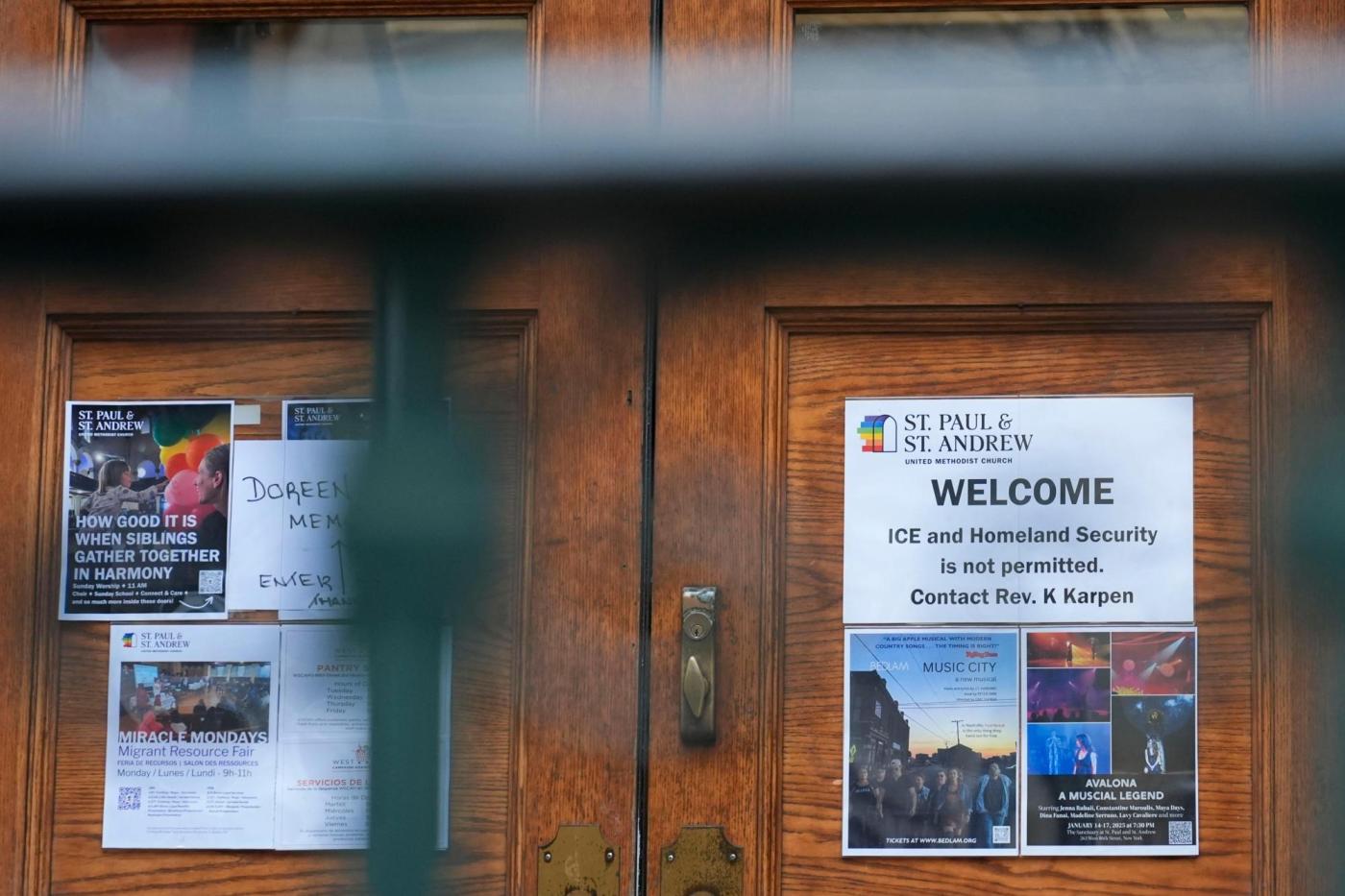
Federal judge refuses to block immigration enforcement operations in houses of worship

posted in: All news | 0

By LINDSAY WHITEHURST and MICHAEL KUNZELMAN

WASHINGTON (AP) — A federal judge on Friday refused to block immigration agents from conducting enforcement operations at houses of worship in a lawsuit filed by religious groups over a new policy adopted by the Trump administration.

Related Articles


Trump wants Congress to end the changing of clocks and keep the country on daylight saving time


Schools lined up for help getting cleaner school buses. Then came the EPA freeze


Iowa Republican Gov. Kim Reynolds announces she won’t seek reelection in 2026


The House speaker’s eyeing big cuts to Medicaid. In his Louisiana district, it’s a lifeline


Trump administration to refer Maine to Justice Department over transgender participation in sports

U.S. District Judge Dabney Friedrich in Washington handed down the ruling in a lawsuit filed by more than two dozen Christian and Jewish groups representing millions of Americans.

The judge found that there have been only a handful of such enforcement actions and the faiths had not shown the kind of legal harm that would justify a preliminary injunction.

“At least at this juncture and on this record, the plaintiffs have not made the requisite showing of a ‘credible threat’ of enforcement,” wrote Friedrich, who was appointed by President Donald Trump during his first term. “Nor does the present record show that places of worship are being singled out as special targets.”

On Jan. 20, his first day back in office, Trump’s Republican administration rescinded a Department of Homeland Security policy limiting where migrant arrests could happen. Its new policy said field agents using “common sense” and “discretion” can conduct immigration enforcement operations at houses of worship without a supervisor’s approval.

Plaintiffs’ attorneys claimed the new Homeland Security directive departs from the government’s 30-year-old policy against staging immigration enforcement operations in “protected areas” or “sensitive locations.”

In February, a federal judge in Maryland ruled against the Trump administration in a similar case brought by a coalition of Quakers and other religious groups. U.S. District Judge Theodore Chang’s order in that case was limited to those plaintiffs.

A judge in Colorado sided with the administration in another lawsuit over the reversal of a similar policy that had limited immigration arrests at schools.

Opinion: Hochul’s Desire to Appear Tough on Crime Puts Us All in Danger

posted in: All news | 0

“What New Yorkers in crisis need is housing and wrap around services, which offer long-term stability instead of an endless, involuntary shuffle. Without any real support either inside or outside of psych institutions to address root causes, no one is getting any healthier or safer.”

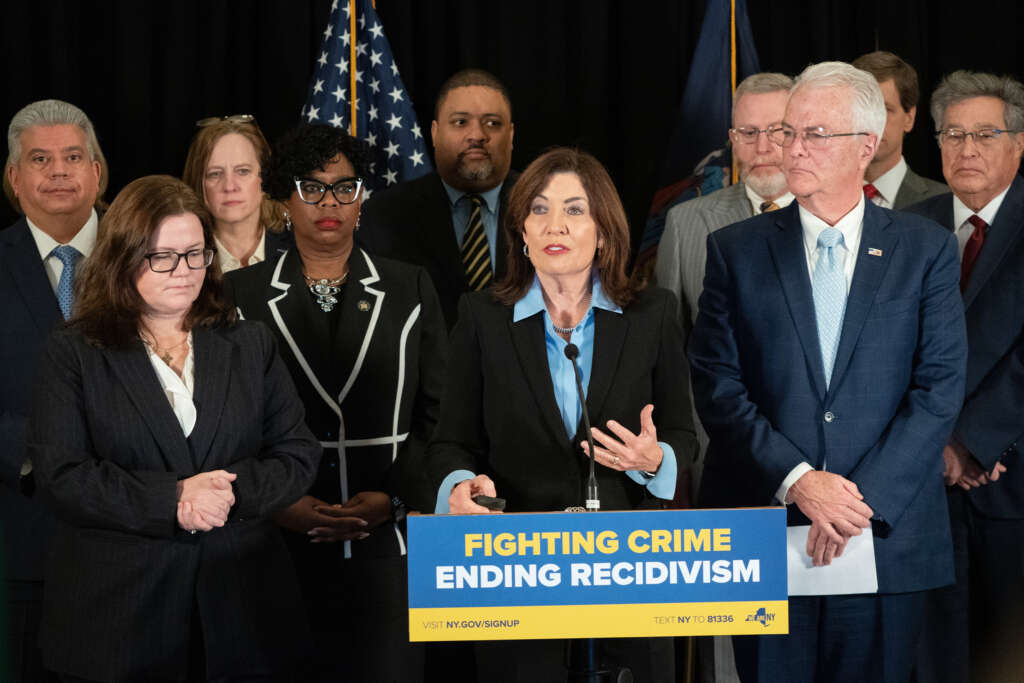
Gov. Hochul announcing plans to change the state’s discovery laws in January. (Don Pollard/Office of Governor Kathy Hochul)

“Statewide, crimes are down…Shootings are down. But it’s all about perception,” said Gov. Kathy Hochul at the end of February. According to Hochul, crime rates in New York are “not statistically significant, but psychologically significant.” 

Psychological significance is how Hochul is justifying spending $144 million over the last three months to flood the subway with 1,000 additional cops. This is on top of the 750 National Guard troops who have been stationed in our subways since last spring, subjecting riders to random searches. And that’s to say nothing of the already extreme baseline level of police presence in New York’s transit system. There’s little evidence these tough-on-crime tactics actually increase safety, but as Hochul might say, safety isn’t the point. The appearance of safety is.

Optics are expensive. The NYPD is by far the country’s biggest and most expensive police department. Its operating budget costs New Yorkers over $6 billion each year, while pensions, misconduct judgements, and other expenses total another $5 billion. That means New Yorkers are paying over $11 billion per year for the NYPD. For decades, communities have been spending extravagantly on their own punishment instead of investing in life-affirming fundamentals like education, housing, jobs, and healthcare. 

Take, for example, the mental health struggles so obviously and visibly afflicting thousands of New Yorkers. A mentally ill person without housing or medical care in New York is most likely to be met with policing. Unequipped to provide care or support, police officers end up just shipping human beings around from place to place: from the subway to the jail to the psych ward, which acts as prison by another name. This may create the perception that something is “being done,” when all that’s really happening is the spinning of an expensive revolving door. 

Psych wards act as temporary holding places that offer very little in the way of actual care. People are often released without long-term resources, making it more likely for them to find themselves back in the same cycle. What New Yorkers in crisis need is housing and wrap around services, which offer long-term stability instead of an endless, involuntary shuffle. Without any real support either inside or outside of psych institutions to address root causes, no one is getting any healthier or safer. 

This shameful lack of results doesn’t seem to be encouraging Gov. Hochul to change course. In yet another ploy that prioritizes safety optics over safety solutions, the governor is attempting to rollback Kalief’s law, a crucial, even if little known, due process protection.

Kalief Browder was a 16-year-old from the Bronx who was wrongfully accused of stealing a backpack in 2010 and jailed on Rikers Island for three years while awaiting trial. He had no access to the evidence against him in the case, and his family could not afford to pay the $3,000 bail set by a Bronx judge. Even after his release from Rikers, Kalief faced intense emotional and psychological challenges and died by suicide in 2015 at the age of 22.

Named in his memory, Kalief’s law requires that evidence be shared with the defense before any plea deals are struck and well before trial. It’s common sense that prosecutors and police should be able to back up their charges before indefinitely locking people up. But for the opportunity to appear tough on crime, Gov. Hochul is more than happy to repave the way for wrongful convictions and indefinite pre-trial detention. 

This backwards approach makes clear that the governor believes that the perception of safety relies on the state having the power to lock up whoever it wants, whenever it wants, with as little evidence as possible. That’s not safety or justice. It’s a dangerous laziness; an unwillingness to do the hard work of investing in the types of interventions that evidence shows will reduce poverty and instability, like housing, direct and easy access to healthcare, jobs, and more.

No doubt, New Yorkers are concerned about safety—more than half say crime is a problem in their local community. But Gov. Hochul’s focus on perception and optics treats popular fears about safety as if they simply fell out of the sky—contextless and without origin. The reality is that our political and media landscapes inform and reinforce one another’s fixation on crime.

Stoking fears about crime is an evergreen electoral strategy, and our nation’s diversity makes it easy to parlay fears about “others” committing crimes into votes. Meanwhile, local and national media spend an enormous amount of time reporting on crime in New York, even when crime rates are falling. The result is a cycle wherein politicians like Hochul govern based on fears that they themselves helped stoke.

Instead of fear and optics-based governance, New Yorkers need evidence-based solutions that chip away at root causes. Heightened police presence, the carceral revolving door, and all-powerful prosecutors are already part of the everyday reality of life in the Bronx. This three-pronged tough-on-crime strategy isn’t working here, and it won’t work for the rest of the state either. 

If we want to build a safe, thriving New York, we need to invest in our neighborhoods instead of in the state’s prisons. That means protecting Kalief’s law. That means passing Treatment Not Jails, which would disrupt the revolving door and instead invest in actual mental health and substance abuse resources. That means passing legislative packages like Communities Not Cages, which would move New York away from policies that increase recidivism, cost people their entire lives, and cost our communities billions of dollars. 

So long as our leaders prioritize safety optics over safety solutions, New Yorkers will pay the price with not only their taxes but the shape and direction of their lives. It’s time to change course.

Carolyn Strudwick is the managing director of social work for The Bronx Defenders. Brittany McCoy is the managing director of policy at The Bronx Defenders.

The post Opinion: Hochul’s Desire to Appear Tough on Crime Puts Us All in Danger appeared first on City Limits.