Private schools face cuts under Gov. Tim Walz’s proposed budget

posted in: All news | 0

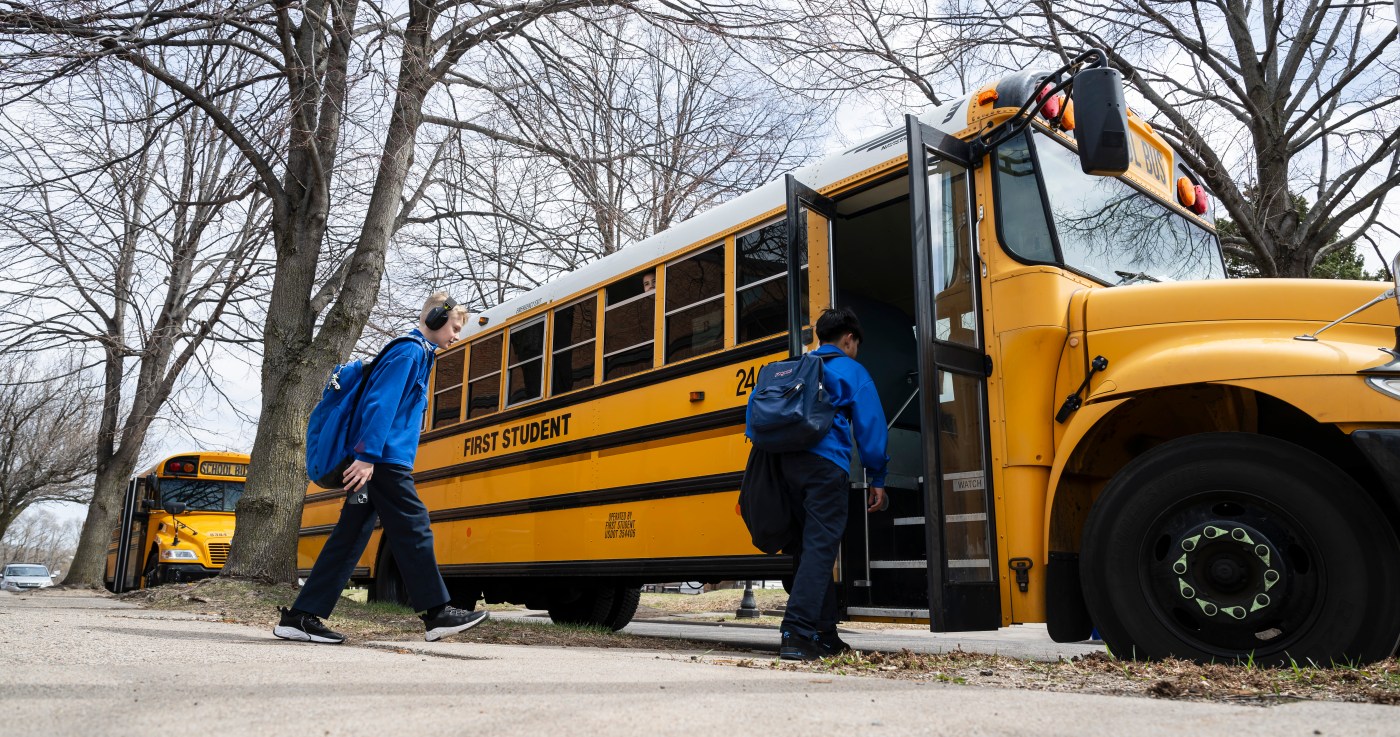
Proposed cuts in Gov. Tim Walz’s budget look to end a more than 50-year-old practice of providing aid to private schools — from transportation to counseling — a move nonpublic school leaders say threatens family choice.

Minnesota leaders have until the end of June this year to come up with a two-year budget and are looking for ways to cut spending with a projected $6 billion deficit for the 2028-29 budget.

Under Walz’s proposed budget, aid for health services and educational materials as well as transportation for private schools are cut. Those reductions are estimated to save the state $109 million in the next two-year budget, “while incentivizing schools to create efficiencies in transportation,” according to the governor’s office.

“(The Minnesota Department of Education) remains committed to addressing budget challenges head-on with the needs of Minnesota students, educators, schools and libraries at the center. While the Governor’s budget proposal is often a starting point for conversation with legislators during the legislative session, the revised budget recommendations work within our fiscal reality to leave positive balances on the bottom line, ensuring our state remains in a position to continue serving learners for generations to come,” read a statement from state officials on April 9.

Students in Krista Welle’s 4th-grade class at St. Pascal Regional Catholic School in St. Paul raise their hands to a question during math instruction on Wednesday, April 16, 2025. (John Autey / Pioneer Press)

Private school officials say their schools actually save the state money by educating students at lower per-pupil costs than their public counterparts and that the cuts risk students’ ability to continue to attend the type of school they choose.

“But even when they go on the public school side, the public school side is still going to have to pay for and provide transportation for (students). So you take the dollars away, but you’re not taking the student away. That student, in some way, shape or form, is still going to need that service that’s going to have to be paid for by somebody in the state of Minnesota,” said Meg Forgette, associate director of quality and excellence for the Archdiocese of St. Paul and Minneapolis, which represents 90 Catholic private schools in Minnesota.

How it currently works

Public school districts have provided students at private schools transportation since a 1969 state statute required it in an effort to provide “equality of treatment in transportation.”

Minnesota has provided other nonpublic student aid since 1975, in the form of textbooks, instructional materials, standardized tests and pupil support services, such as guidance counseling and health services.

A student in Krista Welle’s 4th-grade class at St. Pascal Regional Catholic School in St. Paul works in their math book on Wednesday, April 16, 2025. (John Autey / Pioneer Press)

Students attending nonpublic schools or home schools within the boundaries of a public school district currently can request the district provide these services, and public school districts must provide transportation within the district for resident students attending nonpublic schools, according to the state education department.

Funding for such services is appropriated directly to public school districts, according to Minndependent — an advocacy group for private schools — which are reimbursed by the state.

“… These are kind of the words we’ve used: these are common good services for students, regardless of where they go,” said Tim Benz, president of Minndependent.

Savings

The governor’s office says the cuts are estimated to save the state money, but private school leaders see it another way.

“The collaboration that can happen where we’re able to make a lot of those dollars and those services go a lot farther than what would happen if we were trying to cover those significant expenses, school by school by school, it just doesn’t make sense,” Forgette said. “And so … as a taxpayer in Minnesota … we’re paying the same taxes as all of our other neighbors, when you look at just the lack of efficiency in what these cuts would create relative to what we have now, it just doesn’t make sense.”

The Archdiocese’s private schools educate students at lower costs than their public counterparts, saving taxpayers money, she said. The average per-pupil cost for the Archdiocese in its 90 Catholic schools in the state is around $8,532, Forgette said.

At Ascension Catholic Academy –  which has pre-kindergarten through eighth grade nonpublic schools in Minneapolis and St. Paul – that’s around $12,000 to $13,000, said vice president Quentin Moore. St. Paul Public Schools spent $23,112 per pupil in 2023-24. The state average is $16,649.

“And so, the amount of support that we’re providing to these students, and doing at such a lower cost, when those students who are most likely to be impacted by these cuts are forced, so to speak, to go to their public school district, that’s going to cost taxpayers for each of those students significantly more each school year,” Forgette said.

Impacts on students and families

At Ascension Catholic Academy, more than 70% of its 735 students qualify for free or reduced-price lunch, Moore said.

“And so again, you’re talking about a network, for us, of private schools that are really serving those navigating poverty, other challenges, and with cuts like this, it just makes that ability to deliver our mission, it just makes it harder,” he said.

If the proposed cuts are approved, Ascension is looking at needing to raise an additional $1 million to $1.2 million annually, or around 10% to 12% of its current operating budget, Moore said. For some schools, that fundraising could be donations or increased tuition.

For private schools that have a focus on programming for low-income students and depend on transportation aid, continuing to educate those students “wouldn’t be a reality” without that funding, said Josh Crosson, executive director of EdAllies, a nonprofit advocate for historically underserved students.

“Oftentimes when people think of nonpublic services or private schools, they think like the super ritzy, wealthy communities,” Crosson said. “But what we’re talking about here are the communities that are lowest income, that are exercising their school choice, that have opportunities outside, and those opportunities might be taken away.”

Arsema Mesfun, an eighth-grader at St. John Paul II Catholic School in Minneapolis, said “there is no way” her family would be able to choose the school without transportation.

“We bus at the local public school Las Estrellas. I don’t understand why our bussing would be cut when we share it with them, and they will continue to get bussing. I feel like this is a punishment to me, just because my parents chose a different school,” Mesfun said in testimony April 9 to the state Senate Committee on Education Finance.

Bus service is important, especially for families who wouldn’t be able to provide their children transportation otherwise, said Ivette Munoz of St. Paul, whose four children have attended St. Pascal Regional Catholic School.

“Sometimes we don’t want to move to a public school because it’s very important the faith piece in the kids’ education,” Munoz said.

Next steps

Walz and lawmakers enjoy a $546 million surplus as they develop the 2026-27 budget.

But there is a projected a $6 billion revenue shortfall projected for 2028-29. With a Democratic-Farmer-Labor-controlled Senate, tied House, and DFL Gov. Walz, lawmakers have different ideas as to how to address it.

House and Senate budget targets were due earlier this month. The Legislature needs to pass a budget by end of session May 19 to avoid a special session. If a new budget isn’t passed by the end of June, the government will shut down until the Legislature can pass one.

Related Articles


William O’Brien State Park to unveil $5M in accessibility improvements


Jackpot winner steps forward for $1 million lottery ticket sold in Woodbury


Keri Heintzeman wins Republican primary in 6th Senate District


Marshall man claims that ICE detained him for protests over police killings


Busy Baby founder turns to crowdfunding to pay China tariff and keep business afloat
Wisconsin edged Minnesota in voter turnout last fall, analysis finds

posted in: All news | 0

In the race between Gophers and Badgers for voter turnout, the Badgers won.

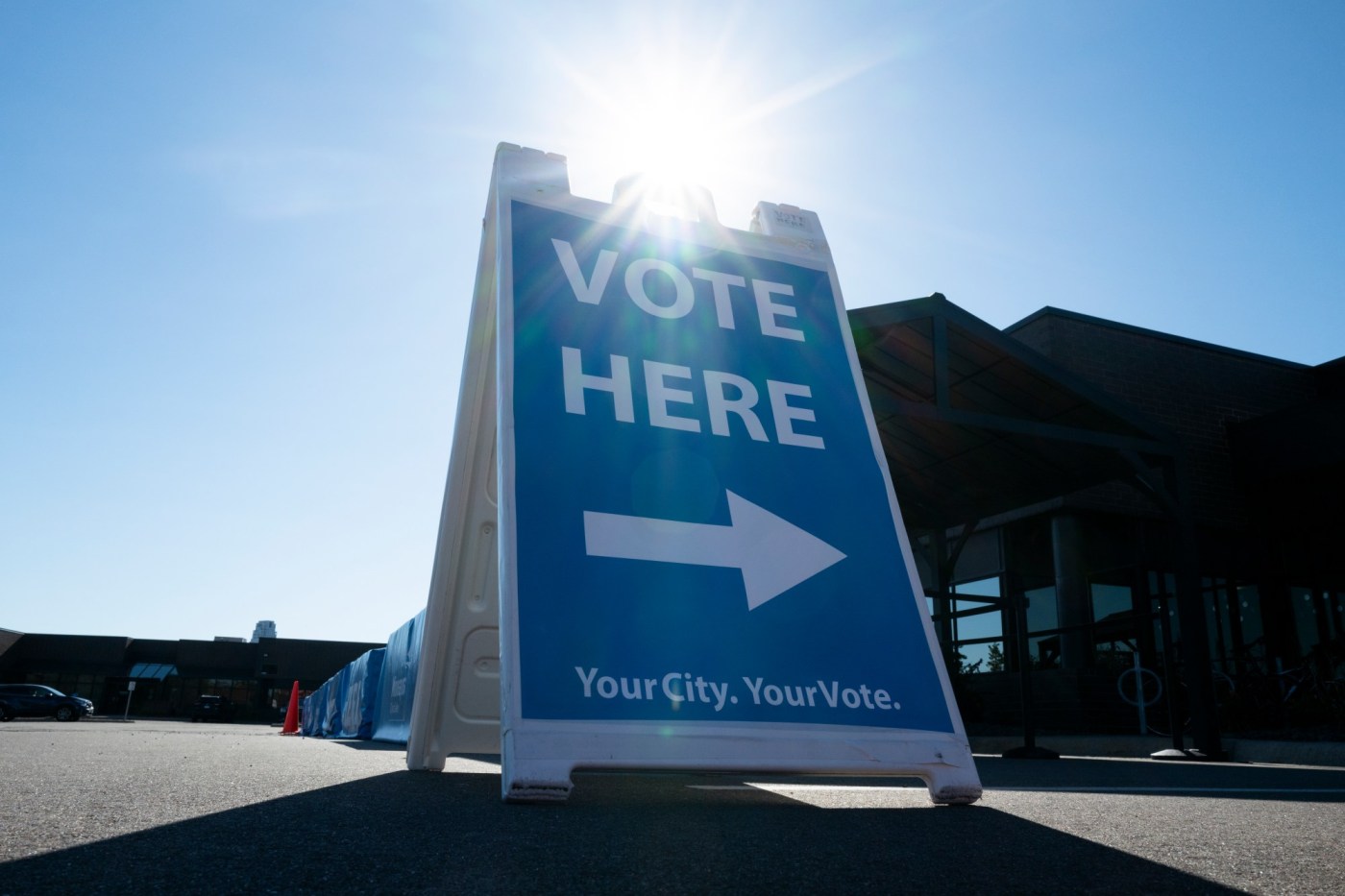
Voters in Wisconsin narrowly outperformed Minnesota voters in the 2024 election. The University of Florida’s Election Lab reported that 76.35% of the voting-eligible population cast ballots in Minnesota. In Wisconsin, 76.64% of the voting-eligible population cast ballots.

Secretary of State Steve Simon regularly touts Minnesota’s long-running first-place voter turnout position. And he said while turnout was strong in the 2024 general election, it came up just a little bit short.

“In a heartbreakingly close contest, Minnesota lost the title of number one in voter turnout to Wisconsin for the 2024 election,” he said in a statement. “We congratulate our neighbors to the east on this victory and we’ll continue our work to earn the top spot back in 2026.”

Wisconsin was one of a handful of battleground states in last year’s presidential election. Campaigns spent tens of millions of dollars in Wisconsin, and voters sent a mixed message back by reelecting Republican President Donald Trump and Democratic U.S. Sen. Tammy Baldwin.

Minnesota stayed in the Democratic column. Former Vice President Kamala Harris won the presidential vote in Minnesota with Gov. Tim Walz on the ticket. DFL Sen. Amy Klobuchar easily defeated her Republican opponent.

Related Articles


Wisconsin teen charged in parents’ deaths is accused of plotting to kill Trump


Brooklyn Park driver charged in Wisconsin crash that killed restaurant owner David Burley


Former Wisconsin Supreme Court justice who led 2020 election probe agrees to surrender law license


Democratic-backed Susan Crawford wins Wisconsin Supreme Court seat, cementing liberal majority


Democratic-backed Susan Crawford wins Wisconsin Supreme Court seat, cementing liberal majority

Today in History: April 17, the Bay of Pigs Invasion

posted in: All news | 0

Today is Thursday, April 17, the 107th day of 2025. There are 258 days left in the year.

Today in history:

On April 17, 1961, some 1,400 CIA-trained Cuban exiles launched the Bay of Pigs invasion of Cuba in an attempt to topple Fidel Castro, whose forces crushed the incursion within three days.

Also on this date:

In 1964, Jerrie Mock completed the first solo around-the-world flight by a woman, landing her single-engine Cessna plane in Columbus, Ohio after a 29-day journey.

Related Articles


Fort Benning takes back its old name, but to honor a different soldier


The Oklahoma City bombing was 30 years ago. Some survivors worry America didn’t learn the lesson


Today in History: April 16, the Virginia Tech shooting


Today in History: April 15, the Titanic sinks in the North Atlantic


Plans to celebrate America’s 250th anniversary were underway. Then came the federal funding cuts

In 1969, a jury in Los Angeles convicted Sirhan Sirhan of assassinating Sen. Robert F. Kennedy. (Sirhan’s death sentence would be commuted to life in prison with the possibility of parole. He remains in prison today.)

In 1970, Apollo 13 astronauts James A. Lovell, Fred W. Haise and Jack Swigert splashed down safely in the Pacific, four days after a ruptured oxygen tank crippled their spacecraft while enroute to the moon.

In 1972, the Boston Marathon allowed women to compete for the first time. Nina Kuscsik was the first officially recognized women’s champion, with a time of 3:10:26.

In 1975, Cambodia’s five-year civil war ended as the capital Phnom Penh fell to the Khmer Rouge, which instituted brutal, radical policies that claimed an estimated 1.7 million lives (nearly one in four Cambodians) until the regime was overthrown in 1979.

In 1991, the Dow Jones industrial average closed above 3,000 for the first time, ending the day at 3,004.46, up 17.58.

In 1993, a federal jury in Los Angeles convicted two former police officers of violating the civil rights of beaten motorist Rodney King. Two other officers were acquitted.

In 2020, President Donald Trump, via Twitter, urged supporters to “LIBERATE” three states led by Democratic governors, apparently encouraging protests against stay-at-home mandates aimed at stopping the coronavirus.

Today’s Birthdays:

Actor David Bradley is 83.
Actor Clarke Peters is 73.
Author Nick Hornby is 68.
Actor Sean Bean is 66.
Rock singer Maynard James Keenan (Tool) is 61.
Actor Lela Rochon is 61.
Actor Kimberly Elise is 58.
Singer-songwriter Liz Phair is 58.
Director-producer Adam McKay is 57.
Rapper-actor Redman is 55.
Football Hall of Famer Tony Boselli is 53.
Actor Jennifer Garner is 53.
Singer Victoria Beckham is 51.
Actor Rooney Mara is 40.

William O’Brien State Park to unveil $5M in accessibility improvements

posted in: All news | 0

William O’Brien State Park in northern Washington County recently underwent a $5.25 million renovation to make the park’s day use area, campground and park office more accessible to people with mobility issues.

The park’s Walter F. Mondale Day Use Area will reopen to the public on May 1, and the park’s Riverway Campground and Riverside Group Camp will reopen on May 2. The lower area of the park has been closed since March 2024 while crews worked to improve accessibility.

Among the improvements: an accessible service counter and windows for visitors at the park office; various accessible paths from the Riverside Trail, parking lot and picnic shelters, and accessible picnic tables.

This project was funded by state bonding funds and the Get Out MORE (Modernize Outdoor Recreation Experiences) initiative. Get Out MORE is a $150 million initiative “to help ensure Minnesotans of all abilities and interests enjoy a world-class recreation system, whichever outdoor experience they choose,” DNR Commissioner Sarah Strommen said.

A visitor tests out an all-terrain track chair at Myre-Big Island State Park near Albert Lea, Minn., on June 1, 2022. (Deborah Rose / Minnesota Department of Natural Resources)

The improvements are an example of how the Get Out MORE initiative, adopted in 2023, is “modernizing outdoor recreation experiences for Minnesotans,” Strommen said. “This project enhances access and helps welcome new users to public lands, which helps Minnesotans of all interests and abilities better connect with the outdoors.”

Get Out MORE funds also are being used to purchase two all-terrain track chairs for the park. The electric-powered chairs, which can be used on designated trails within the park, are available to anyone who has a need, and can help visitors explore areas of the state parks in new ways, often on trails that are not suitable for regular wheelchairs. There will be 23 track chairs in use in state parks in Minnesota by this summer, said Lauren Peck, a spokeswoman for the DNR.

“William O’Brien will be the first state park to get them in the St. Croix Valley area,” Peck said. “Up until now, we’ve had only one track chair in the metro area at Fort Snelling State Park, so adding two at William O’Brien will be really great, and I’m sure will get a lot of demand. The Fort Snelling one is really popular and gets a ton of use, so I’m sure William O’Brien will be the same.”

Track chairs are available year-round in some locations, and seasonally in others. Users must sign a waiver to check one out; no other documentation is required.

Universal design

A new accessible canoe/kayak launch on Lake Alice allows adaptive paddlers to safely transfer in and out of the water. (Courtesy of the Minnesota Department of Natural Resources)

Improvements to the park’s day use area, Riverway Campground and park office were made using universal design, which benefits all visitors, DNR officials said. The park office building now has additional accessible parking; ADA-compliant outdoor service counter and windows and new automatic door openers

When it reopens May 1, the day use area — including the public water access, beach and Riverside Trail — will have two new accessible restroom buildings; a new picnic shelter near Lake Alice beach; accessibility improvements to two existing picnic shelters, including accessible routes from parking, grills and new vault toilets; a safer parking lot with better beach access; a larger, more accessible swimming beach with an ADA-compliant route to the water’s edge, and a new accessible canoe/kayak launch on Lake Alice.

A stretch of the Riverside Trail along the St. Croix River was recently resurfaced as part of accessibility improvements at William O’Brien State Park. (Courtesy of the Minnesota Department of Natural Resources)

When it reopens on May 2, the Riverway Campground will have six ADA-compliant campsites; a resurfaced Riverside Trail; a new accessible route to the park amphitheater and a resurfaced and regraded overflow parking area and trail connections.

Campground shower building renovations are expected to be completed by June 1; campers will have “a rustic camping experience” with vault toilets during the month of May, according to the DNR.

“We’re excited to welcome the public back to this popular area of the park and offer improved amenities that all park visitors can enjoy,” said Ann Pierce, director of Minnesota DNR’s Parks and Trails Division.

Related Articles


Athena Bitcoin asks Stillwater to repeal cryptocurrency ATM ban


HealthPartners opens new specialty center in Woodbury


Jackpot winner steps forward for $1 million lottery ticket sold in Woodbury


Oak Park Heights state of emergency declared to deal with water main break


Lake Elmo assistant principal injured in fight between students