Charges: Hopkins man threatened to ‘shoot up’ UnitedHealthcare headquarters in Minnetonka

posted in: All news | 0

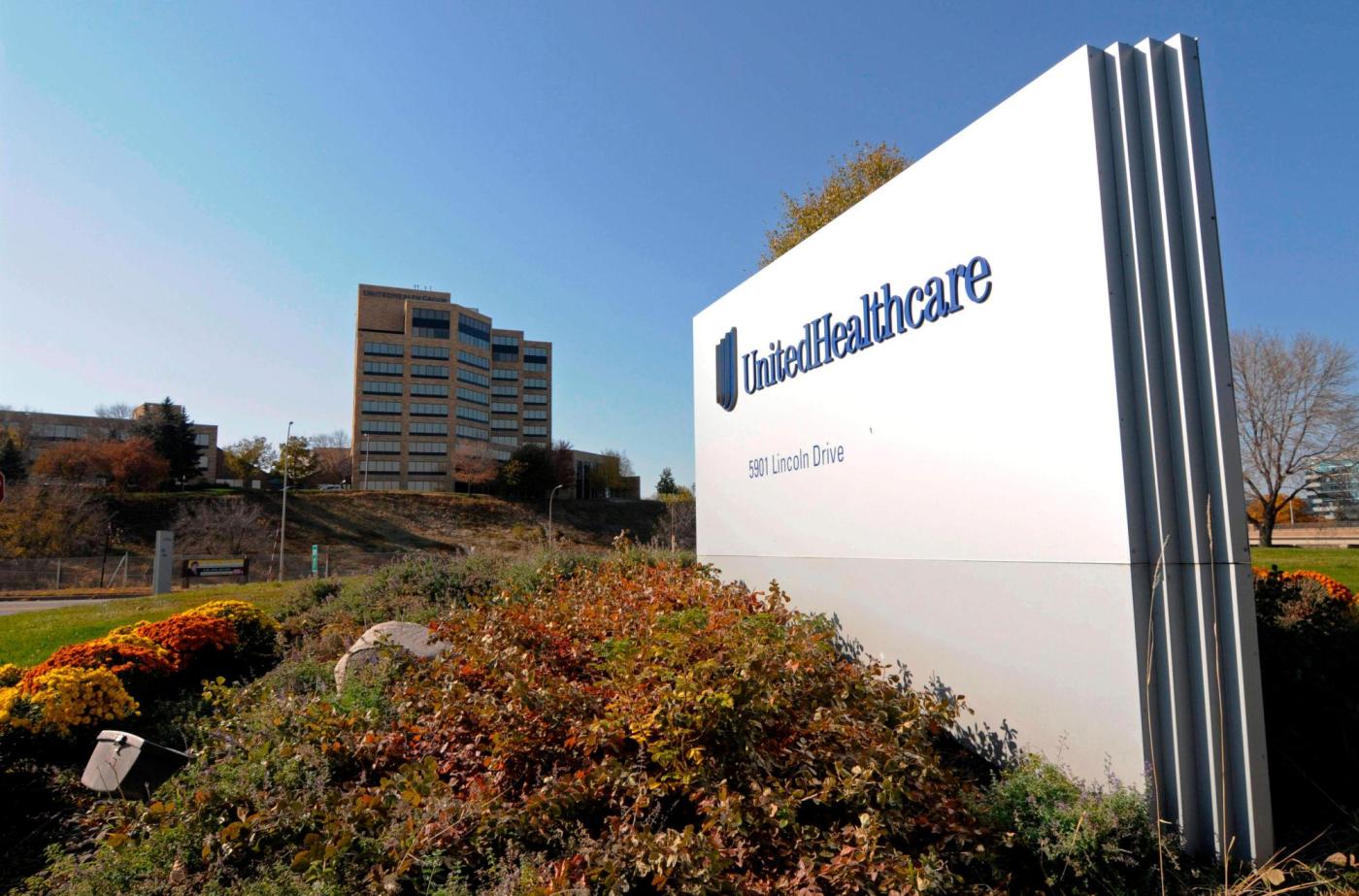
A 26-year-old Hopkins man arrested outside the UnitedHealthcare headquarters in Minnetonka on Monday morning had told the FBI he was going to “shoot up” the inside of the building if his past criminal charges were not dismissed, charges filed Tuesday say.

After Ian Stanley Wagner surrendered to law enforcement without incident, the charges say, a search of his Volkswagen turned up a loaded .38-caliber revolver and a bag with 16 additional rounds, both on the front passenger seat.

Ian Stanley Wagner (Courtesy of the Hennepin County Sheriff’s Office)

The incident comes months after UnitedHealthcare CEO Brian Thompson was fatally shot in New York City on Dec. 4 as he was walking to an investor conference in midtown Manhattan. The alleged killer, Luigi Mangione, 26, faces both state and federal charges.

However, police and company officials said Monday there was no indication that Wagner had specific grievances against UnitedHealthcare itself.

Minnetonka police knew of Wagner’s mental health issues and harassing behavior, the criminal complaint says.

Court records show that in February, Wagner was convicted of threats of violence in Hennepin County. At the time of Monday’s incident, he was wanted on arrest warrants in that case and in connection with two others that allege restraining order violations.

On Tuesday, Minnetonka police filed a petition for an extreme risk protection order against Wagner, noting that he is a risk to himself and others.

He remains at the Hennepin County jail in lieu of $500,000 bail ahead of a Wednesday initial court appearance on four felony charges: two counts of threats of violence and two counts of possession of a firearm and ammunition by a person who is not eligible due to a conviction for a crime of violence. A defense attorney is not listed in the court file.

‘Shoot up’ UnitedHealthcare

According to Tuesday’s criminal complaint, Minnetonka police were sent to UnitedHealthcare headquarters at 10:55 a.m. after the FBI reported being in real-time contact with a suspect “manifesting intent to enter and ‘shoot up’ corporate facilities.”

The FBI said the suspect identified himself as Wagner and stated he was parked at UnitedHealthcare with a loaded firearm.

An FBI negotiator spoke with Wagner while additional law enforcement officers secured the scene. Law enforcement contacted eight nearby commercial buildings to go into lockdown.

Wagner surrendered to law enforcement about 11:45 a.m.

Law enforcement’s investigation revealed a recorded 911 call from that morning in which Wagner told a 911 dispatcher that he would be firing into the UnitedHealth building if criminal charges against him were not dropped. According to the complaint, “Wagner said, ‘Do you want an evacuation on the news?’ or words to that effect,” the complaint says.

He was on house arrest

Wagner was sentenced to four months of electronic home monitoring and three years of probation Feb. 28 after pleading guilty in Hennepin County District Court to two counts of threats of violence relating to an Aug. 9 offense in Minnetonka. The details of that case were not clear Tuesday. He was given a home monitoring strap on March 10 and ordered to return to the county jail on April 3. He failed to do so, and a warrant was issued for his arrest.

Wagner has two other open criminal cases.

He was charged by warrant Jan. 24 in St. Louis County for allegedly violating a restraining order two days earlier. He failed to appear at an April 8 remote arraignment hearing and a warrant was issued for his arrest.

He was charged April 1 by warrant in Hennepin County with violating a harassment restraining order on March 29.

According to Tuesday’s petition for an extreme risk protection order, Wagner’s harassment involves someone he met at a college campus. In 2023, Wagner threatened to burn the victim’s home down. Last year, police were called when he took a BB gun with him to confront the victim.

Related Articles


Millions in merchandise taken by burglars who tunneled through concrete into LA jewelry store


Marshall man claims that ICE detained him for protests over police killings


US judge presses Trump administration on its refusal to return Kilmar Abrego Garcia


Judge grants Justice Department’s request to drop criminal case against alleged top MS-13 leader


Trump says he wants to imprison US citizens in El Salvador. That’s likely illegal

Your tariff questions about wine, answered

posted in: All news | 0

For years, I’ve had no trouble finding distinctive, expressive wines that cost under $20 a bottle. (I share these selections in a seasonal 20 Under $20 article.) But this sweet spot is disappearing.

Though President Donald Trump announced a 90-day pause in enforcing retaliatory tariffs of 20% on all imports from the European Union along with tariffs of up to 30% on imports from other major wine-producing countries, the 10% percent universal tariff he imposed will make it harder to turn up fascinating wines in this price range.

Aside from the damage it will cause to the network of small importers and distributors, retailers and restaurants responsible for getting wine to American consumers, along with the associated shipping and warehousing concerns, the tariffs, especially if the retaliatory penalties are imposed, will limit the options of those consumers who lack ample amounts of disposable wealth.

Is wine going to cost more?

The tariffs will drive up the cost of imported wines. By how much? It depends on who absorbs the tariff penalty. In some cases, each party in the chain from producer to consumer will accept a little pain and nobody will have to pay the full share. But some businesses can’t or won’t accept smaller profits, so in some cases those extra costs may be passed entirely on to the consumer.

Regardless of how the tariff penalty is divvied up, lower-priced wines are going to feel the impact more than expensive wines. Why? Because in general, people who are willing to pay $85 for a bottle of village Burgundy or $200 for a Napa Valley cabernet sauvignon will not care if the Burgundy costs $99 and the Napa cabernet $250. These prices are partly set by demand and are paid by wealthy consumers.

But value-conscious wine drinkers willing to buy an $18 cava may balk at a $23 cava. When these wines become not such good values anymore, demand will decline and they may fall out of circulation. This will diminish the options available to consumers.

But I’ll still find good, affordable wines, right?

For as long as I’ve been making my 20 under $20 recommendations, I’ve argued that the $15 to $25 range offered the best quality-to-price ratio.

Tons of wines are in the market for less than $15 and even $10. But these are often processed wines, made from grapes grown in vast, chemically farmed vineyards in undesirable places, then vinified in factories with additives and technological manipulations.

Many find these wines satisfying enough, though demand for such wines has been falling for several years. That’s fine, though I’d rather drink beer or water than wines like that. Have I ever found a decent wine at these low prices? Sure, but rarely. The odds are against it.

These are the wines that, because of the tariffs, will now be in that $15 to $20 range.

How do tariffs affect American producers?

Isn’t one goal of the tariffs to support American businesses? The United States makes many wonderful wines, from the West Coast to the East Coast, Texas to Michigan. The cost of these wines is likely to rise as well. First, American winemakers rely on imported goods, whether barrels, bottles, corks or winemaking equipment. These costs will rise.

Second, almost all American wines reach the marketplace through distributors who work with imported wines as well. They may spread out the cost of the tariffs through their entire portfolio so that the imported segment does not have to rise as steeply.

But won’t tariffs level the playing field?

For many reasons, including the cost of labor and land, and the fact that European governments tend to invest in wine businesses while the American government does not, it’s difficult for American wines to compete with European wines of equivalent quality, especially at lower prices. The fixed costs of making wine in the United States are higher.

Tariffs may make it easier for American wines to compete, but there’s another, bigger problem.

Good wines are distinctive. They speak of the place the grapes were grown and the people who made the wine. You cannot simply substitute, say, a Sonoma chardonnay for a chardonnay wine made in Chablis or in Meursault. A riesling made in Washington state will never have the character of one from the Mosel Valley of Germany.

How will wine selection be impacted?

Historic wine-producing countries often make wines of hundreds of different grapes, a legacy of centuries past when most wine was grown and consumed locally. Each valley had its own grapes and its own style, many of which have been revived over the past few decades to the delight of wine lovers.

The modern American wine industry did not evolve in this fashion. Its pioneers were entrepreneurs who sought to plant the grapes that they deemed the best in the world, primarily cabernet sauvignon and chardonnay. Their success with these grapes and a handful of others, like merlot, pinot noir, sauvignon blanc and zinfandel, led to hordes of imitators who planted the same set of grapes.

For years, people believed that eight varieties accounted for more than 90% of California wines. I don’t think the percentage is quite that high anymore, but you get the idea.

The variety of wines made in the United States is dwarfed by the vast assortment available from other countries. If you’ve enjoyed wines made with grapes like carricante, limniona, fer, saperavi, treixadura, aglianico or touriga nacional, you are unlikely to find American-made counterparts. The tariffs may diminish some of that glorious variety.

It’s true that American producers in the past 20 years have slowly been diversifying the wines they make. The driving forces for this has been American producers who have been inspired by European wines they’ve discovered. If access to these wines is reduced you are less likely to see the continued exploration in the United States of grapes like trousseau and assyrtiko.

One crucial reason for this wide variety of imported wines is that, unlike any other beverage businesses, wine comprises hundreds of small producers around the globe. These farmers and winemakers have often resisted efforts by bigger businesses to absorb their holdings, or entreaties by marketing agencies to simplify their output or conform to popular styles.

They are able to stay in business because of the demand for what they offer. A significant percentage of their business is often in the United States. Trump’s tariffs will make it more difficult for many of these small businesses to survive, just as they will squeeze many of the small American businesses that import and distribute these wines. We may see more consolidation in the wine growing and distribution businesses, which will further diminish diversity.

Ultimately, it’s irrelevant whether I can pull together enough bottles to write the 20 Under $20 articles going forward. The point is that these wines will no longer be available to anybody unless they are willing and able to spend more money per bottle.

The price of wine will never be a political talking point, like the price of eggs has been. Good wine is not a necessity, but it enhances life. For many, wine may no longer make the cut in their tariff-tightened household budgets.

Related Articles


Bourbon-plumped currants enhance the flavor of hot cross buns for Easter


Go inside the factory where Peeps are made


Expect more fake eggs made of colored marshmallows or even potatoes on this year’s Easter spread


Effortless ways to host an Easter feast without cooking a thing


Recipe: How to make delicious latkes with potatoes, onion and eggs

Member of Zizian group says she did not kill her parents

posted in: All news | 0

By HOLLY RAMER

CONCORD, N.H. (AP) — The daughter of a Pennsylvania couple whose deaths are among six connected to a cultlike group says she has been falsely accused of killing her parents.

Michelle Zajko’s denial was part of a 20-page handwritten “Open Letter to the World” her attorney provided to The Associated Press on Tuesday. Dated March 9, the letter also attempts to defend Jack LaSota, also known as Ziz, whom authorities have described as the apparent leader of the “extremist group” called the Zizians.

“You, the public, are being lied to,” Zajko wrote. “And while I don’t promise to answer all your questions, I think the truth about my friends and I will make a lot more sense than what you’ve been reading about in the papers.”

The group has been linked to killings in Vermont, Pennsylvania and California. A cross-country investigation into LaSota and the Zizians broke open in January when one member of the group died and another was arrested after the shooting death of U.S. Border Patrol Agent David Maland in Vermont.

Authorities say Zajko provided the gun that was used in the Vermont shooting, and in February, she, LaSota and another associate were arrested in Maryland and charged with trespassing, obstructing law enforcement and illegal gun possession after a man told police that three “suspicious” people parked box trucks on his property and asked to camp there.

FILE – This image provided by the Allegany County Sheriff’s Office shows Michelle Zajko. (Allegany County Sheriff’s Office via AP, File)

Zajko also was questioned but not charged in connection with the deaths of her parents, Rita and Richard Zajko, who were shot and killed in their Chester Heights, Pennsylvania, home on New Year’s Eve 2022. A few weeks later, LaSota was charged with disorderly conduct after refusing to cooperate with officers investigating the deaths, but Zajko said LaSota was just “in the wrong place at the wrong time.”

“The police lied to her & told her that I had confessed (to something I didn’t do),” she wrote.

“My friends and I are being described as like Satan’s lapdogs, the devil & the Manson family all rolled into one,” she wrote. “These papers are flagrantly lying. For instance, there were no truck-fulls of guns, no machine gun, & I didn’t murder my parents.”

A call and email sent to the Pennsylvania State Police was not immediately answered.

Members of the Zizian group also have been tied to the death of one of their own during an attack on a California landlord in November 2022 and the landlord’s subsequent killing in January. Maximilian Snyder, who is charged with killing landlord Curtis Lind, had applied for a marriage license with Teresa Youngblut, who is accused of shooting at the Border Patrol agent in Vermont.

“The newspapers do not seem to realize that there are multiple groups, & that my friends & I are not with Snyder,” she wrote.

Youngblut is accused of firing at Maland during a traffic stop and has pleaded not guilty to federal firearms charges. Felix Bauckholt, a passenger in the car, also was killed in a shootout.

Bauckholt and LaSota were living together in North Carolina as recently as this winter, according to their landlord, who also was renting a duplex to Youngblut in the same neighborhood. Zajko’s lawyer said Tuesday that Zajko also had been living in North Carolina before the group moved north to Frostburg, Maryland.

Review of decision not to award Space Command to Alabama inconclusive, with Trump reversal expected

posted in: All news | 0

By TARA COPP

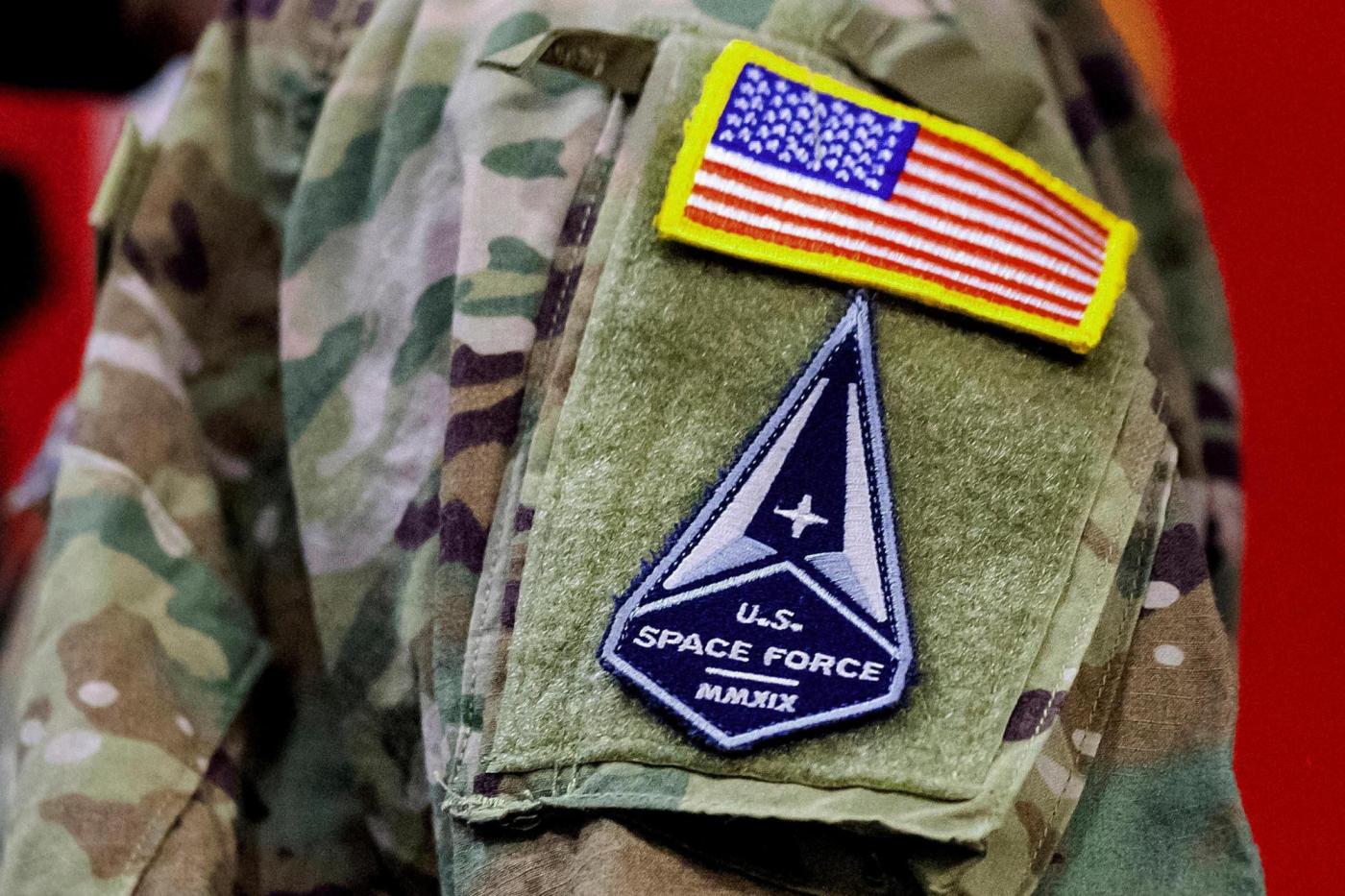
WASHINGTON (AP) — With the Trump administration expected to reverse a controversial 2023 decision on the permanent location of U.S. Space Command, a review by the Defense Department inspector general could not determine why Colorado was chosen over Alabama.

Related Articles


White House threatens Colombia over regulations affecting US auto exports


Texas judge throws out rule that would have capped credit card late fees


Pentagon senior adviser Dan Caldwell ousted during investigation into leaks


Judge orders federal agencies to release billions of dollars from two Biden-era initiatives


Justice Department can cut funding for legal guidance for people facing deportation, US judge says

The inspector general’s report, issued Friday, said this was in part due to a lack of access to senior defense officials during the Biden administration, when the review began.

The location of U.S. Space Command has significant implications for the local economy, given the fast growth in national defense spending in space-based communications and defenses.

In 2021, the Air Force identified Army Redstone Arsenal in Huntsville, Alabama, as the preferred location for the new U.S. Space Command due to cost and other factors. But a temporary headquarters had already been established in Colorado Springs, Colorado, and after multiple delays President Joe Biden announced it as the permanent headquarters.

Alabama’s Republican congressional delegation accused the Biden administration of politicizing the decision. But Colorado, which has Republican and Democratic lawmakers, is home to many other Air Force and U.S. Space Force facilities.

As recently as last week, Rep. Mike Rogers House, an Alabama Republican who chairs the House Armed Services Committee, told a panel at Auburn University he expects the decision to be reversed by the White House before the end of April.

The location of Space Command would be one of many decisions that have swung back and forth between Biden and President Donald Trump. For instance, Biden stopped the construction of the border wall that began during Trump’s first term, only to have Trump now vow to complete it. And Trump is again seeking to ban transgender troops from serving in the military, after Biden removed Trump’s first-term limitations.

The controversy over the basing decision began seven days before Trump’s first term expired, when his Air Force secretary announced Alabama would be home to Space Command, pending an environmental review.

That review was completed about six months into Biden’s term and found no significant impact with hosting the command in Alabama. But the new administration did not act on the decision.

Instead, a year later, the Biden White House said it was keeping the headquarters in Colorado Springs, citing the time that would be lost relocating staff and the headquarters to Huntsville.

The report said interviews has been requested with Biden’s Air Force Secretary Frank Kendall and Defense Secretary Lloyd Austin to understand why Huntsville was not named, but the Biden White House would only allow the interviews if administration lawyers were present. The inspector general rejected that condition, saying it could affect its unfettered access to information.