China appoints a new trade negotiator during tariff fight with the US

posted in: All news | 0

By CHRISTOPHER BODEEN, Associated Press

TAIPEI, Taiwan (AP) — China appointed a new trade negotiator Wednesday in the midst of its tariff fight with the U.S.

The government said Li Chenggang replaces Wang Shouwen, who participated in negotiations for the 2020 trade deal between the China and the U.S.

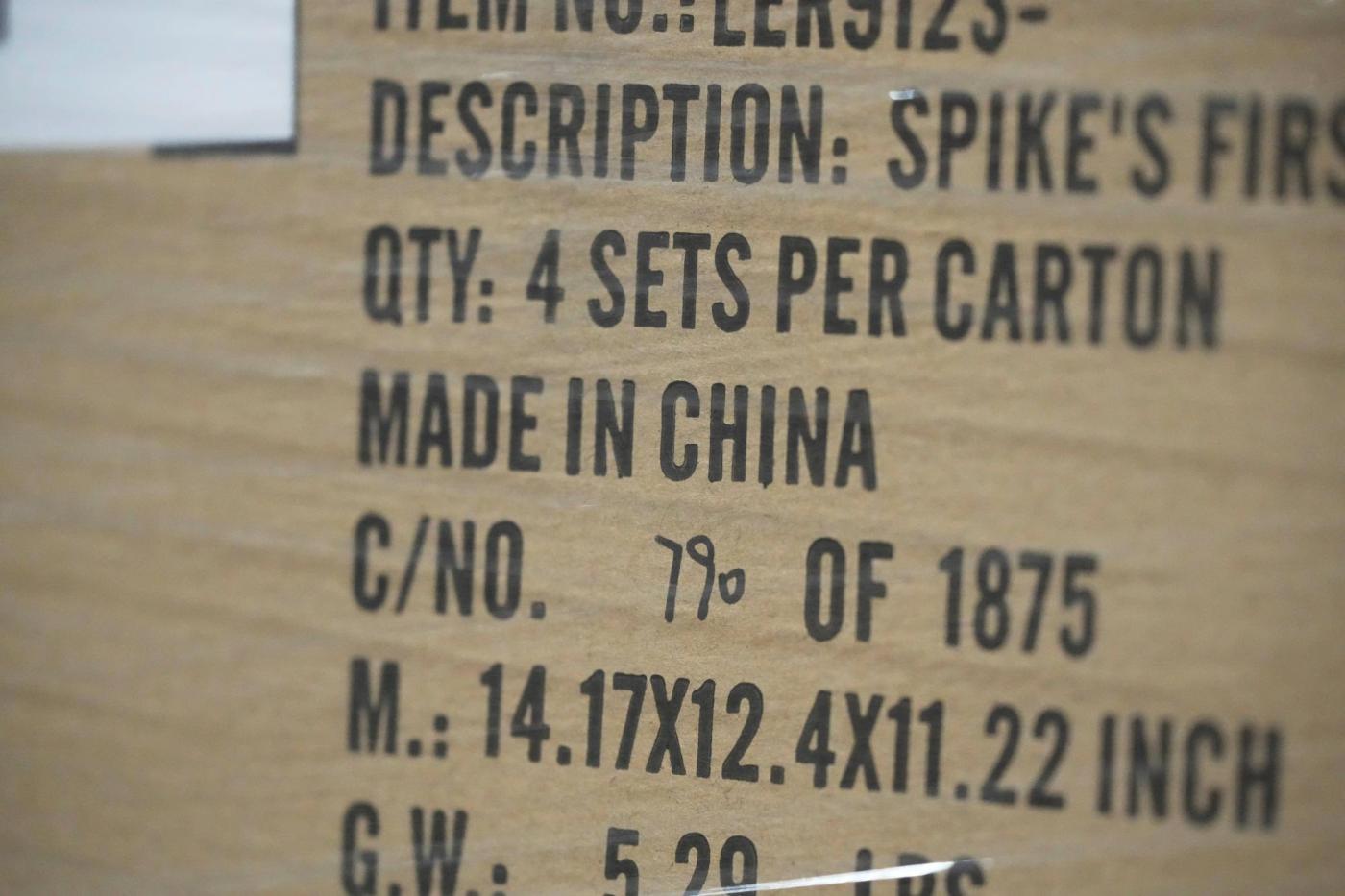
The world’s two largest economies have been steadily increasing tariffs on each other’s goods. China faces 145% taxes on exports to the U.S., while dozens of other countries were given a 90-day reprieve for most duties.

Earlier on Wednesday, China announced its economy expanded at a 5.4% annual pace in January-March, supported by strong exports. Analysts are forecasting that the world’s second largest economy will slow significantly in coming months, however, as tariffs on U.S. imports from China take effect.

Exports were a strong factor in China’s 5% annual growth rate in 2024, and the official target for this year is also about 5%.

Beijing has hit back at the U.S. with 125% tariffs on American exports, while also stressing its determination to keep its own markets open to trade and investment.

In the near term, the tariffs will put pressure on China’s economy, but they won’t derail long-run growth, Sheng Laiyun, a spokesperson for the National Bureau of Statistics, told reporters earlier.

It wasn’t clear why China was changing negotiators but the move comes as Chinese officials say the country has multiple options to respond to U.S. actions, including relying more on its own vast market of 1.4 billion consumers, and on Europe and countries in the global south. But as China’s domestic consumption continues to languish, it will be difficult to replace the U.S. consumer.

China also imposed more export controls on rare earths, which include materials used in high-tech products, aerospace manufacturing and the defense sector.

Prior to his new appointment, Li spent about 4 1/2 years as China’s ambassador to the World Trade Organization, the body that governs global commerce and to which Beijing has appealed in its tariff dispute with the U.S.

He was also deputy permanent representative to the Chinese delegation to the U.N. office in Geneva and other international organizations in Switzerland.

Perhaps more so than his predecessor Wang, Li’s experience at the Commerce Ministry and his participation in negotiating China’s accession to the WTO more than 20 years ago stand him in good steed as China continues to refuse to cave in to U.S. demands, said Tu Xinquan, director of the China Institute for WTO Studies at the University of International Business and Economics.

Still, a bevy of higher-ranking leaders from President Xi Jinping on down is likely to chart the course, with Li representing their case in any talks with the U.S., Tu said, adding that Li is considered pro-free trade.

“There might be another style of negotiations. Li Chenggang is an open-minded person and supports free trade,” Tu said.

Xi, meanwhile, was making the case for China as a source of “stability and certainty” in global free trade as he tours Southeast Asia this week — implying that China is a more reliable trade partner than the U.S.

After first visiting Vietnam, he arrived in Kuala Lumpur, Malaysia’s capital, later Tuesday, for a three-day visit and will end his tour with a stop in Cambodia. In Malaysia, Xi is expected to discuss a free trade agreement between China and 10-member Association of Southeast Asian Nation, one of several funds and agreements China has led as a means of sidestepping organizations and mechanisms dominated by the U.S. and the West.

Asked about the possibility of talks with the U.S., Chinese Foreign Ministry spokesperson Lin Jian said the U.S. had begun the tariff spat and China was only “taking necessary countermeasures to defend its legitimate rights and interests and international fairness and justice.”

“If the U.S. truly wants to resolve the issue through dialogue and negotiation, it should stop using maximum pressure and stop threats and blackmail. For any dialogue to happen, it must be based on equality, respect and mutual benefit,” Lin said at a daily briefing.

A US pastor abducted in South Africa has been rescued after a police shootout

posted in: All news | 0

By MICHELLE GUMEDE, Associated Press

JOHANNESBURG (AP) — An American pastor who was kidnapped last week by armed and masked men during a sermon in the Eastern Cape province of South Africa was rescued on Tuesday after three of his abductors engaged in gunfire with officials and were killed, police reported Wednesday.

The 45-year-old American citizen, Josh Sullivan from Tennessee, has been based in the Motherwell township branch of the Fellowship Baptist church since 2018 alongside his wife and two children.

The missionary was abruptly abducted on Thursday evening when four men broke into the Fellowship Baptist church in Motherwell. They stole two cellphones from members of the congregation before seizing Sullivan from the pulpit and bundling him out of the building. His truck was found abandoned a few hours later.

A multi-agency task force, including the Anti-Gang Unit and the Serious Organised Crime unit, took over the investigation. On Tuesday night they approached the location where they suspected Sullivan was being held, a house in KwaMagxaki, Gqeberha about 20 minutes’ drive from the Baptist church.

According to police, a shootout began when suspects in a car parked outside the house tried to escape and began firing at them. Three unidentified suspects were killed, police said.

“The victim was found inside the same vehicle from which the suspects had launched their attack,” Lieutenant Colonel Avele Fumba said in a statement. “Miraculously unharmed, he was immediately assessed by medical personnel and is currently in an excellent condition.”

The number of kidnappings in South Africa has risen by 264% over the past decade, police data showed.

According to the Institute of Security Studies, a think tank specializing in Africa, kidnapping has become a key tactic in armed robberies and carjackings. In its latest Africa report, the ISS notes that less than 5% of kidnappings in South Africa involve ransom demands.

Since his release, Sullivan, who describes himself as “a church-planting missionary” on his personal website, has been reunited with his wife Meagan and their two children.

A man named Tom Hatley, whom Sullivan describes on his personal blog as his childhood and training pastor, posted a picture of Sullivan and his family on Facebook. Explaining that he had received “the go ahead to let it be known”, Hatley said, “Josh has been released.”

“Thank you for your support and prayers. Please do not stop praying for The Sullivans,” his post read.

“Also, PLEASE respect The Sullivans privacy and their parents. A lot of folks love The Sullivans, and they love you back, but give them some time.”

World shares slip as tech shares are hit by fresh AI chip controls

posted in: All news | 0

By ELAINE KURTENBACH, Associated Press Business Writer

BANGKOK (AP) — World shares were mostly lower Wednesday as stocks of Nvidia and other technology companies were walloped by tighter U.S. controls on exports of advanced computer chips used for artificial intelligence.

The future for the S&P 500 was down 0.8% while that for the Dow Jones Industrial Average lost 0.3%.

Chip maker Nvidia’s shares fell 5.9% in premarket trading after it said the U.S. had imposed stricter controls on its exports of one of its computer chips designed for use in artificial intelligence. Rival chip maker AMD’s shares dropped 6.7%.

Trade war concerns also were revived by a Trump administration announcement of an investigation into imports of critical minerals such as rare earths, which are used in smart phones, electric vehicles and many other products.

In early European trading, Britain’s FTSE 100 lost 0.3% to 8,224.51 after the government said inflation in the U.K. fell for the second month running in March largely as a result of lower gas prices.

Germany’s DAX fell 0.7% to 21,139.72, while the CAC 40 in Paris gave up 0.5% to 7,299.72.

Stocks in China led Asian declines after Beijing reported the world’s second largest economy grew at a strong 5.4% annual rate in the first quarter of the year, helped by strong industrial production, retail sales and exports. But in quarterly terms, growth slowed to 1.2% in January-March from 1.6% in the final quarter of 2024.

Hong Kong’s Hang Seng dropped 1.9% to 21,056.98, while the Shanghai Composite index regained lost ground, adding 0.3% to 3,276.00.

Private sector economists have been downgrading their forecasts after President Donald Trump recently pushed his tariffs on most imports from China to 145%, while China raised its duties on imports from the U.S. to 125%.

Analysts at ANZ Research said activity in the current quarter is already weakening.

“Our view is that the tariff shock is caused by the unpredictability rather than the tariff itself. President Trump’s announcements have affected business sentiment and activity,” Raymond Yeung and other ANZ researchers said in a report after the China data was released.

In Tokyo, the Nikkei 225 index shed 1% to 33,920.40, pulled lower by big tech companies like chip testing equipment maker Advantest, whose shares dropped 6.6% and Disco Corp. which plunged 8%.

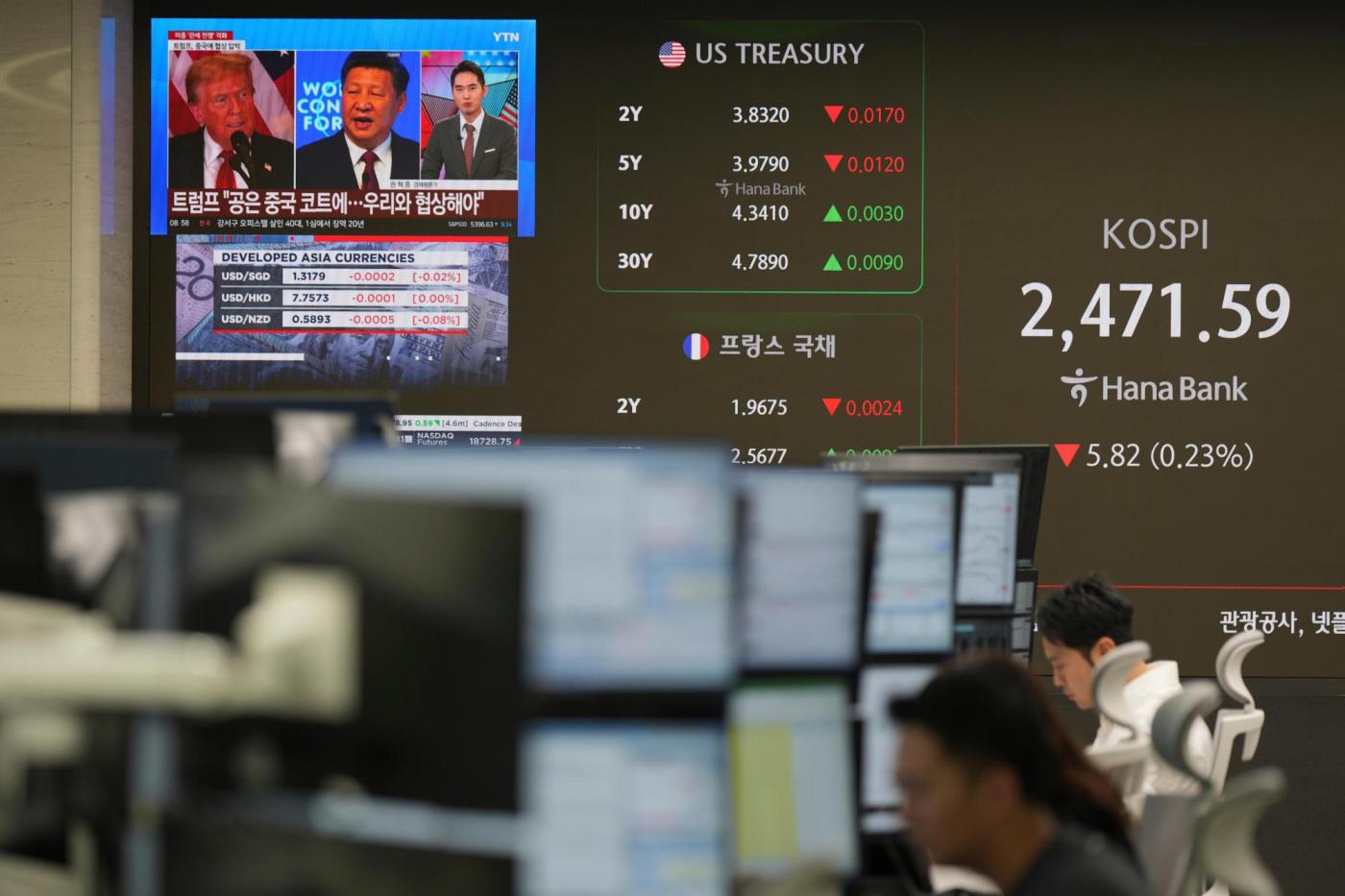
South Korea’s Kospi fell 1.2% to 2,447.43, while in Australia, the S&P/ASX 200 edged less than 0.1% lower to 7,758.90.

India’s Sensex rose 0.4% and Bangkok’s SET climbed 0.9%.

On Tuesday, U.S. stocks drifted, with the S&P 500 slipping 0.2% and the Dow down 0.4%. The Nasdaq composite edged less than 0.1% lower.

Uncertainty over President Donald Trump’s tariffs kept investors watching to see what comes next.

The U.S. bond market appeared to calm after its sudden and sharp moves last week shook confidence in the status of U.S. government bonds as a safe haven against risks.

The yield on the 10-year Treasury was steady at 4.33%, down from 4.38% late Monday and 4.48% at the end of last week. A week earlier it had been at just 4.01%. Yields usually drop when investors are jittery, so this week’s moves have offered reassurance.

The value of the U.S. dollar also steadied after tumbling last week, raising more worries that Trump’s trade war also may be undermining its status as a safe-haven investment.

Palantir Technologies climbed 6.2% for a second day of gains after NATO said it would use the company’s artificial-intelligence capabilities in its allied command operations.

In other dealings early Wednesday, U.S. benchmark crude oil bounced back from early losses, gaining 45 cents to $61.78 per barrel, while Brent crude, the international standard, picked up 49 cents to $65.16 per barrel.

Trump’s tariffs have raised expectations that economies will slow, denting demand for oil and other resources.

The U.S. dollar fell to 142.71 Japanese yen from 143.24 yen. The euro rose to $1.1369 from $1.1283.

California will sue to stop Trump from imposing sweeping tariffs

posted in: All news | 0

By SOPHIE AUSTIN, Associated Press/Report for America

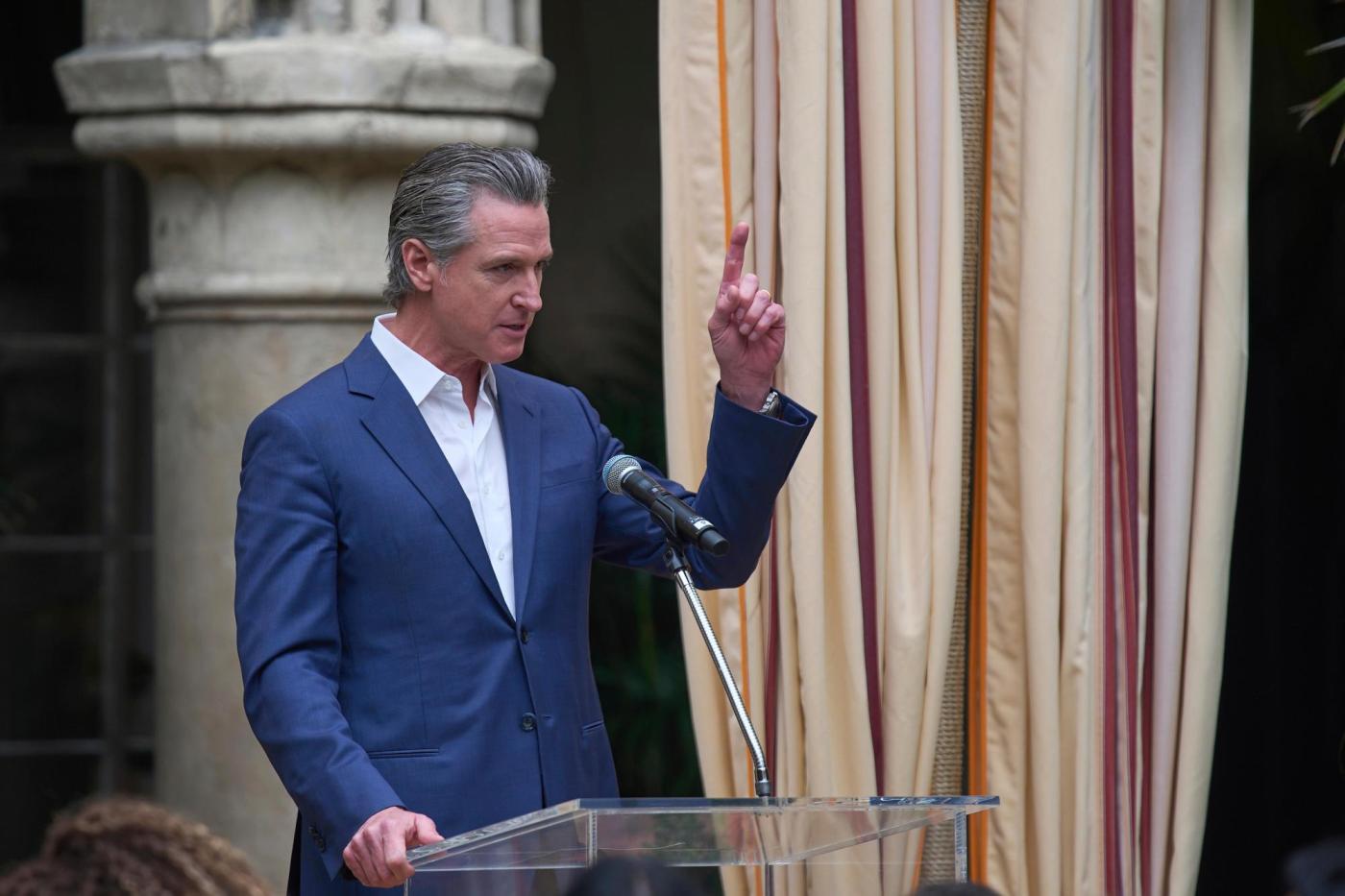
SACRAMENTO, Calif. (AP) — California Gov. Gavin Newsom said Wednesday that his state will file a lawsuit challenging President Donald Trump’s authority to impose sweeping tariffs that have set off a global trade war.

The suit will argue that Trump’s use of the International Emergency Economic Powers Act to impose tariffs on Mexico, Canada and China or a 10% tariff on all imports is unlawful. The act enables a president to freeze and block transactions in response to foreign threats.

The lawsuit, which will be filed in the U.S. District Court for the Northern District of California, will also argue that enacting such tariffs requires approval from Congress, Newsom’s office said in a news release.

Related Articles


Review of decision not to award Space Command to Alabama inconclusive, with Trump reversal expected


Texas judge throws out rule that would have capped credit card late fees


Pentagon senior adviser Dan Caldwell ousted during investigation into leaks


Judge orders federal agencies to release billions of dollars from two Biden-era initiatives


Justice Department can cut funding for legal guidance for people facing deportation, US judge says

Trump has offered many justifications for increasing tariffs, including that they are designed to spur U.S. manufacturing and stop the flow of illicit fentanyl into the country. California’s move follows rapidly changing tariff plans by the Trump administration.

Newsom says the tariffs in effect have resulted in inflated costs and billions of dollars in damage in California, which has the largest economy among U.S. states and is a massive exporter.

“President Trump’s unlawful tariffs are wreaking chaos on California families, businesses, and our economy — driving up prices and threatening jobs,” he said in a statement. “We’re standing up for American families who can’t afford to let the chaos continue.”

Newsom will discuss the lawsuit alongside California Attorney General Rob Bonta later Wednesday in the farm-rich Central Valley. California is a farming powerhouse, with many of the nuts, fruits and vegetables the state grows destined for other countries.

The state will ask the court to immediately block the tariffs.

The announcement comes days after Newsom asked countries to exempt California exports from retaliatory tariffs. No deals have yet been announced.

Austin is a corps member for The Associated Press/Report for America Statehouse News Initiative. Report for America is a nonprofit national service program that places journalists in local newsrooms to report on undercovered issues.