Her son’s injury never got its day in vaccine court. Their lawyer is now advising RFK Jr. on its overhaul

posted in: All news | 0

By Maia Rosenfeld, KFF Health News

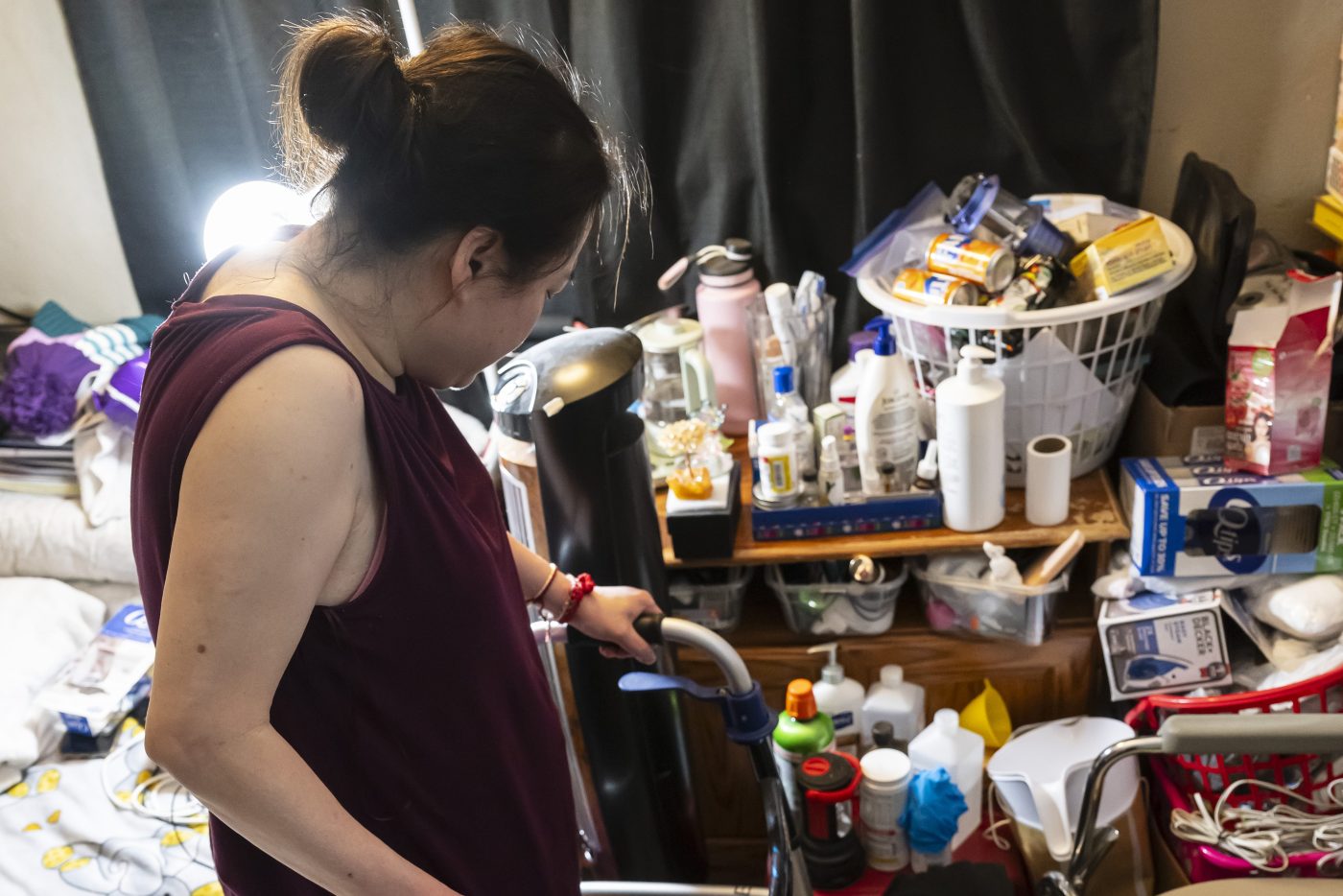
JACKSONVILLE, Fla. — In 2019, after a routine vaccination, 11-year-old Keithron Thomas felt a sharp pain in his shoulder and down his arm. His mother, Melanie Bostic, thought it would go away after a few days. But days turned to weeks, then months, and years.

Related Articles


Judge orders Trump administration to bring back 3 families deported to Honduras, other countries


Justice Department will allow lawmakers to see unredacted versions of released Epstein files


Feds can’t withhold social service funds from 5 Democratic states amid fraud claims, judge rules


Judge strikes down old Arizona abortion restrictions that clash with voter-backed guarantees


FEMA will resume staff reductions that were paused during winter storm, managers say

Bostic learned of a federal program designed to help people who suffer rare vaccine reactions.

The Vaccine Injury Compensation Program was created in 1986 after a flood of vaccine injury lawsuits drove drugmakers from the market. Congress aimed to offer a faster and more generous path to compensation for people injured by vaccines, while shielding manufacturers from liability. The VICP, commonly known as vaccine court, is taxpayer-funded. The government pays any award to claimants as well as attorneys fees.

Bostic filed a claim in 2022 for compensation to cover her son’s spiraling medical bills. She then contacted the Carlson Law Firm, which referred her to Arizona-based attorney Andrew Downing — who now serves as a senior adviser to Health and Human Services Secretary Robert F. Kennedy Jr.

Downing declined to comment and HHS did not respond to requests for comment for this article.

Downing, who has represented hundreds of plaintiffs in vaccine court in Washington, D.C., signed on to take their case, according to a contract reviewed by KFF Health News. They agreed Downing would pursue the claim before the VICP.

Bostic shared documents and medical records as he requested them. Months passed as she waited for news on her son’s case.

After several months of making court filings, Downing told her it was time to opt out of the vaccine program and sue the drugmaker. When she refused to opt out, he withdrew from the case.

The government paid Downing $445 an hour for representing Bostic, which is typical for program attorneys with his experience, according to court records.

Andrew Downing’s bio on the Brueckner Spitler Shelts website says he is a partner at the firm and describes him as “one of the preeminent litigation attorneys in the Court of Federal Claims in Washington, D.C., for vaccine related injuries.” (KFF Health News/KFF Health News/TNS)

Three years later, Bostic said, she hasn’t received a dime for her son’s injury. Thomas, now 18, endures debilitating pain that doctors say may never go away.

Rather than help them work through the program, Bostic feels that Downing steered them away from it and toward a lawsuit against the manufacturer. The VICP ultimately dismissed her case.

Bostic was furious that the court paid Downing anything.

“Y’all could’ve gave that to me for my son,” she said. “How dare y’all.”

In Business With Washington

In June, Kennedy’s HHS also awarded Downing’s law firm, Brueckner Spitler Shelts, a sole-source federal contract to consult on an overhaul of the VICP. The contract has grown to $410,000. Downing is the only attorney listed on the firm’s website who has practiced in vaccine court.

Kennedy has routinely questioned vaccine safety and called the VICP “broken,” saying it shields drug companies from some liability “no matter how negligent they are.” As a personal injury lawyer, Kennedy previously spearheaded civil litigation against vaccine maker Merck.

Downing and about a dozen other lawyers have transferred hundreds of clients from the vaccine program to civil suits, where the financial rewards — for patients and their lawyers — could run far higher, according to a KFF Health News analysis of court records and program data. They’ve collected millions of taxpayer dollars in attorneys fees from vaccine court while launching precisely what it was designed to avoid: lawsuits against vaccine manufacturers.

This shift in legal strategy has fueled Kennedy’s crusade against Merck, and it could end up hurting some vaccine-injured clients, several experts said.

University of California Law-San Francisco professor Dorit Reiss has studied vaccine court for over a decade and has tracked the rise of anti-vaccine forces in American politics. She said VICP attorneys who are also suing vaccine makers have “incentives to direct more people” to lawsuits, “when it might not be in their best interest.”

A Delicate Balance

Kennedy has criticized the VICP as a barrier to accountability. But for Bostic, vaccine court offered an opportunity to hold the government to its promise of caring for casualties of widespread immunization.

Like any medication, vaccines can have side effects. Serious reactions to routine shots are rare, but for the unlucky few who bear this burden, the government promises recourse through its administrative program.

Vaccine court aims to strike a balance between protecting public health and helping individuals who may pay its price. The no-fault program allows claimants with vaccine-related injuries to get help without showing that the vaccine maker did anything wrong, even when the evidence doesn’t meet courtroom standards.

The program has made more than 12,500 awards, totaling roughly $5 billion in compensation. Historically, nearly half of claims have been resolved with some kind of award.

If patients aren’t satisfied with the outcome or don’t get a ruling within 240 days, they may leave the administrative program and sue the vaccine maker in civil court. Plaintiffs could potentially win larger awards. Lawyers could obtain higher fees, which they can’t in vaccine court.

But winning a civil suit is far more difficult, in part because plaintiffs have a greater burden of showing the vaccine caused their injury and that the maker was at fault. Since the VICP was created, no vaccine injury lawsuit has won a judgment in regular court, records show.

That hasn’t stopped some lawyers from trying. After the requisite 240 days, they have transferred hundreds of VICP claims into civil litigation against HPV vaccine manufacturer Merck, the KFF Health News analysis found.

The lawyers who represented those claims include Downing and other VICP attorneys with ties to Kennedy, court records show. Those include Kennedy advisers and people who work in the law office of his longtime personal lawyer Aaron Siri or with Children’s Health Defense, the anti-vaccine outfit Kennedy founded, as well as a former Kennedy co-counsel in suits against Merck over its HPV vaccine, Gardasil.

Downing, whose law firm biography describes him as “one of the preeminent litigation attorneys in the Court of Federal Claims,” has not won an HPV vaccine injury claim in the past five years, records show. Vaccine court did compensate dozens of HPV vaccine claims in that time, but most — including nearly all of Downing’s — were withdrawn upon reaching the opt-out period.

VICP data and court records show that over the past five years, Downing and other lawyers withdrew roughly 400 Gardasil claims from vaccine court before a ruling was issued. The plaintiffs received nothing from the program. Hundreds of these cases joined the litigation against Merck, according to court records.

Once the opt-out period arrived in Bostic’s case, Downing informed her that he was preparing to withdraw her son’s claim and move the case back to the original law firm for a lawsuit against Merck.

“That,” he wrote in an email, “was the plan all along.”

Fighting for Compensation

Thomas, who hopes to enroll in community college and become a computer programmer, has intermittent numbness in his fingers and stabbing sensations in his arm nearly every day. The pain often radiates across his back or up his neck, and he’s developed migraines. Once an active kid who dreamed of playing basketball professionally, he now spends his time playing video games and trying to sleep during lulls in his pain.

Bostic’s claim on behalf of her son made him one of about 1,000 people who have filed with vaccine court for HPV vaccine injuries. More than 200 have received compensation — just over one for every million shots given. Court records show program awards were typically $50,000 to $100,000, with some also covering past medical bills or future health care expenses.

Richard Hughes IV, a health care attorney and former pharmaceutical executive who teaches vaccine law at George Washington University Law School, reviewed Thomas’ records and said cases like his were exactly what the vaccine program was designed to address.

“That just seems straightforward,” Hughes said of Thomas’ claim. “That should have gotten compensated.”

Bostic wanted the federal agencies that had approved and recommended Gardasil to answer for her son’s injuries. The single mother hoped compensation from the program would allow Thomas to see specialists including neurologists, afford natural treatments, and enroll in physical therapy.

“He would have had the best of the best health care,” she said.

When Downing took their case, Bostic said, he told her during a phone call that vaccine court’s $250,000 limit on pain and suffering was too low for her son’s injury. Bostic said Downing advised she could get more money by suing Merck, though that could take longer.

“I said, ‘No, that will take years. My son needs help now,’” Bostic recalled.

Bostic said she told Downing she wanted a fund set up for Thomas’ health care as soon as possible.

In the following weeks, Bostic sent paperwork to Downing’s office but had difficulty getting in touch with him, email and text messages show. Downing’s billing records show a gap in his work on the case from late September until mid-November.

In November 2022, Downing emailed Bostic, “The opt out date for K.T.’s case is set for April 23, 2023. At that point, we will be in a position to opt K.T.’s case out of the Vaccine Program and move the case back over to the Carlson Law Firm for handling in the Merck litigation.”

Bostic said she was confused at the time by that language. But she remembers being emphatic in a follow-up phone call with Downing, repeatedly telling him she would not opt out.

After that, Bostic said, she didn’t hear from Downing for months despite calling his office and leaving messages with secretaries.

Downing’s billing records show that he and his paralegals spent fewer than nine hours on Bostic’s case in that stretch. This included time spent requesting, reviewing, and filing medical records, as well as drafting and filing extension requests. The billing records did not include any communication with Bostic during that time.

The court granted each of Downing’s extension requests, pushing back the deadline a month at a time.

In April 2023, Downing sent Bostic an email noting that 240 days had passed, so he could drop their government claim and they could sue Merck.

“Gardasil cases do not receive very fair treatment in the Vaccine Program,” Downing wrote, adding that he would withdraw as her attorney if Bostic stayed in the program.

Bostic chose to stick with vaccine court, later telling the vaccine court judge by email that she’d advised her attorney “I was not trying to become a millionaire.”

That exchange of emails in April is when Bostic said she learned Downing was already representing plaintiffs in lawsuits over Gardasil. The litigation encompassed hundreds of other patients who — most of them under Downing’s counsel — had filed VICP claims in recent years.

Running out the 240-day clock, critics say, is allowed but subverts the program’s intent.

Some legal experts criticize the way Downing handled Bostic’s case.

“They trusted him to file the VICP case,” Reiss said. “It’s his job to zealously advocate for his clients. In this case, his clients want to go through VICP. It’s his job to fight for them in VICP, not to wait for 240 days.”

When Downing joined HHS as a senior adviser to Kennedy, court records show, he handed off his remaining vaccine court cases to other attorneys in firms involved in the litigation against Merck.

A New Approach

The vaccine program has long faced criticism for giving claimants too little, too late. Even VICP advocates see the need for reform, with eight officials deciding a growing backlog of claims, driving up wait times. The cap on pain and suffering payments has not changed since 1986. But the court can award further compensation like a fund for lifetime medical care that can reach millions.

Most vaccine-injured individuals are better off in the administrative program than in civil litigation, legal experts said.

Renée Gentry, director of GWU’s Vaccine Injury Litigation Clinic and a founding member of the Vaccine Injured Petitioners Bar Association, has represented hundreds of families alleging vaccine injuries. Most of them, she said, aren’t focused on big payouts; rather, they “want their kid taken care of or they want to be taken care of.”

For claims that often fail in vaccine court, however, Gentry said a lawsuit may be the best option. According to Gentry, HPV vaccine claims like Thomas’ are particularly challenging to win in the VICP.

“If you’re not going to win, then you want those clients to have at least an opportunity at something,” she said.

For Mark Sadaka, a prominent vaccine court lawyer representing some claims in Merck litigation, sending clients to regular court is a last resort.

Sadaka said certain Gardasil injury claimants, such as those alleging mental rather than physical harm, might be better off in litigation. But by sticking it out in the VICP, Sadaka has won HPV vaccine injury claims that were the first of their kind, including for narcolepsy, alopecia, and even a deadly arrhythmia.

“He’s going to get taken care of for the rest of his life,” Sadaka said of his client who won compensation for narcolepsy in 2023. “And he doesn’t have to pay me anything.”

Sadaka, like all program lawyers, gets an hourly rate from the VICP. He said that he could make much more money representing the same claims in traditional litigation, since he could get a cut of any awards.

“It’s a better thing for me to file in regular court and get a higher fee, but for the client, sometimes it makes sense, sometimes it doesn’t,” Sadaka said. “My role is to explain both sides in gross detail for them and give them as much information as possible so they can make an informed decision.”

According to Sadaka, some lawyers in the VICP automatically advise their clients to leave vaccine court and file a lawsuit.

“If they can extract settlements, they’re going to be very happy to put that money in their pockets,” Hughes noted.

Winning a lawsuit or reaching a major settlement could also spell trouble for nationwide vaccine access, replaying the events that gave rise to vaccine court in the 1980s.

Some vaccine lawyers and policymakers believe Kennedy and his colleagues might welcome a return to those days.

“If they can bring down the system, that’s a feather in their cap,” Hughes said.

Lawyers cannot win contingency fees in vaccine court. They get paid for time spent on reasonable claims whether they win or lose. Downing made more than $1 million representing clients before the VICP in recent years, according to court records.

A January VICP report shows that since fiscal year 2020, the program has paid scores of attorneys about $280 million — including over $43 million for cases they did not win.

In each of the last two fiscal years, lawyers got roughly $9 million for VICP claims in which their clients got nothing. That was more than the program had ever previously paid to attorneys for unsuccessful claims, according to vaccine court data.

‘Learning How To Cope’

After discovering her attorney would not pursue VICP compensation for her son, Bostic decided to advocate for Thomas herself.

Melanie Bostic’ s son Keithron Thomas has chronic arm and shoulder pain after a rare, suspected injury from the HPV vaccine. (Malcolm Jackson/KFF Health News/TNS)

“Please help me,” she wrote in a letter to the court.

VICP staff gave Bostic extra time to find a new lawyer and gather records.

The following months proved difficult for the family. Bostic was hospitalized with a life-threatening condition. Her mother’s health declined. She was laid off and lost her family’s health insurance.

By the time Bostic could take Thomas to a pediatric neurologist to get medical records for his VICP case, she said, the doctor had moved hours away to Orlando.

Bostic repeatedly missed deadlines and failed to communicate with program staff as required, court records show. Emails, docket entries, and letters suggest she may have misunderstood some court orders and not received others.

When Thomas’ medical records remained incomplete for another year, the presiding official dismissed Bostic’s claim, writing that while he had sympathy for what she and her son had endured, “the case cannot be allowed to remain pending indefinitely.”

Thomas said he can no longer play basketball with friends. He can’t even help his mother carry groceries into the house.

As a child, Thomas enjoyed playing basketball with his friends and hoped to become a professional athlete. (Malcolm Jackson/KFF Health News/TNS)

“I got to live with this, and there’s pain,” he said.

Bostic now works from home as a bank fraud analyst. With an income just above the cutoff for government assistance, she puts in overtime in hopes of affording health insurance for Thomas and her six other children.

“People are asking, ‘How’s your son doing?’” Bostic said. “I normally say, ‘Still the same. We just learning how to cope with it.’”

Methodology

The KFF Health News analysis began with court records for cases in the U.S. Court of Federal Claims, which includes vaccine court. We first identified all cases since 2006 (when the HPV vaccine was introduced) in which the “nature of suit” field explicitly mentioned human papillomavirus, or in which “nature of suit” was categorized as “other” vaccine injury/death and the case text included the word “papillomavirus.” The latter made up about 10% of identified cases, mostly claims filed before the HPV vaccine was added to the program or claims involving multiple vaccines. We cross-referenced the number of cases with data from VICP reports to verify completeness.

After identifying the relevant vaccine court cases, we pulled these claims’ filing and closing dates and took the difference to find the number of days that each case spent in vaccine court. To estimate total attorneys fees awarded for these claims, we added the fee amounts recorded in dozens of the VICP rulings and derived a minimum estimate based on the number of such cases.

We then searched federal court records for litigation over Merck’s HPV vaccine, Gardasil, and pulled the names of the plaintiffs and attorneys involved. To gauge the scale of claims diverted from the VICP to litigation, we searched for each attorney in the Gardasil-related vaccine court cases and searched for the last name of each plaintiff in the titles of those cases.

©2026 KFF Health News. Distributed by Tribune Content Agency, LLC.

Trump policies at odds with emerging understanding of COVID’s long-term harm

posted in: All news | 0

By Stephanie Armour, KFF Health News

Possible risk of autism in children. Dormant cancer cells awakening. Accelerating aging of the brain.

Related Articles


4 people have died from eating death cap mushrooms as they spread in California after rains


US births dropped last year, suggesting the 2024 uptick was short-lived


Demand grows for doulas who can help moms with addiction


Fear in Minnesota’s Somali community deepens, hampering progress on measles vaccination


A newborn’s death likely linked to the mom drinking raw milk while pregnant

Federal officials in May 2023 declared an end to the national COVID pandemic. But more than two years later, a growing body of research continues to reveal information about the virus and its ability to cause harm long after initial infections resolve, even in some cases when symptoms were mild.

The discoveries raise fresh concerns about the Trump administration’s COVID policies, researchers say. While some studies show COVID vaccines offer protective benefits against longer-term health effects, the Department of Health and Human Services has drastically limited recommendations about who should get the shot. The administration also halted Biden-era contracts aimed at developing more protective COVID vaccines.

The federal government is curtailing such efforts just as researchers call for more funding and, in some cases, long-term monitoring of people previously infected.

“People forget, but the legacy of COVID is going to be long, and we are going to be learning about the chronic effects of the virus for some time to come,” said Michael Osterholm, an epidemiologist who directs the University of Minnesota’s Center for Infectious Disease Research and Policy.

The Trump administration said that the COVID vaccine remains available and that individuals are encouraged to talk with their health providers about what is best for them. The COVID vaccine and others on the schedule of the Centers for Disease Control and Prevention remain covered by insurance so that individuals don’t need to pay out-of-pocket, officials said.

“Updating CDC guidance and expanding shared clinical decision-making restores informed consent, centers parents and clinicians, and discourages ‘one size fits all’ policies,” said HHS spokesperson Emily Hilliard.

Although COVID has become less deadly, because of population immunization and mutations making the virus less severe, researchers say the politicization around the infection is obscuring what science is increasingly confirming: COVID’s potential to cause unexpected, possibly chronic health issues. That in turn, these scientists say, drives the need for more, rather than less, research, because over the long term, COVID could have significant economic and societal implications, such as higher health care costs and more demands on social programs and caregivers.

The annual average burden of the disease’s long-term health effects is estimated at $1 trillion globally and $9,000 per patient in the U.S., according to a report published in November in the journal NPJ Primary Care Respiratory Medicine. In this country, the annual lost earnings are estimated to be about $170 billion.

One study estimates that the flu resulted in $16 billion in direct health costs and $13 billion in productivity losses in the 2023-2024 season, according to a Dec. 30 report in medRxiv, an online platform that publishes work not yet certified by peer review.

COVID’s Growing Reach

Much has been learned about COVID since the virus emerged in 2019, unleashing a pandemic that the World Health Organization reports has killed more than 7 million people. By the spring of 2020, the term “long COVID” had been coined to describe chronic health problems that can persist post-infection.

More recent studies show that infection by the virus that causes COVID, SARS-CoV-2, can result in heightened health risks months to more than a year later.

For example, researchers following children born to mothers who contracted the virus while pregnant have discovered they may have an increased risk for autism, delayed speech and motor development, or other neurodevelopmental challenges.

Another study found babies exposed to COVID in utero experienced accelerated weight gain in their first year, a possible harbinger of metabolic issues that could later carry an increased risk for cardiovascular disease.

These studies suggest avoiding severe COVID in pregnancy may reduce risk not just during pregnancy but for future generations. That may be another good reason to get vaccinated when pregnant.

“There are other body symptoms apart from the developing fetal brain that also may be impacted,” said Andrea Edlow, an associate professor of obstetrics, gynecology, and reproductive biology at Harvard Medical School who was involved in both studies. “We definitely need more research.”

Epidemiologists point to some specific, emerging challenges.

A U.K. study in the New England Journal of Medicine found people who fully recovered from mild COVID infections experienced a cognitive deficit equal to a three-point drop in IQ. Among the more than 100,000 participants, deficits were greater in people who had persistent symptoms and reached the equivalent of a nine-point IQ drop for individuals admitted to intensive care.

Ziyad Al-Aly, a clinical epidemiologist who has studied longer-term health effects from COVID, did the math. He estimated COVID may have increased the number of adults in the U.S. with an IQ of less than 70 from 4.7 million to 7.5 million — a jump of 2.8 million adults dealing with “a level of cognitive impairment that requires significant societal support,” he wrote.

“People get COVID-19, some people do fine and bounce back, but there are people who start experiencing problems with memory, cognition, and fuzzy brain,” he said. “Even people with mild symptoms. They might not even be aware.”

Diane Yormark, 67, of Boca Raton, Florida, can relate. She got COVID in 2022 and 2023. The second infection left her with brain fog and fatigue.

“I felt like if you had a little bit too much wine the night before and you’re out of it,” said Yormark, a retired copywriter, who said the worst of her symptoms lasted for about three months after the infection. “Some of the fog has lifted. But do I feel like myself? Not like I was.”

Data from more than a dozen studies suggests COVID vaccines can help reduce risk of severe infection as well as longer-lasting health effects, although researchers say more study is needed.

But vaccination rates remain low in the U.S., with only about 17% of the adult population reporting that they got the updated 2025-2026 shot as of Jan. 16, based on CDC data.

Trump administration officials led by Health and Human Services Secretary Robert F. Kennedy Jr. have reduced access to COVID vaccines despite the lack of any new, substantiated evidence of harm. Though the shots were a hallmark achievement of the first Trump administration, which led the effort for their development, Kennedy has said without evidence that they are “the deadliest vaccine ever made.”

In May he said on X that the CDC would stop recommending COVID shots for healthy children and pregnant women, citing a lack of clinical data. The Food and Drug Administration has since issued new guidelines limiting the vaccine to people 65 or older and individuals 6 months or older with at least one risk factor, though many states continue to make them more widely available.

The Trump administration also halted almost $500 million in funding for mRNA-based vaccines. Administration officials and a number of Republicans question the safety of the Nobel Prize-winning technology — heralded for the potential to treat many diseases beyond COVID — even though clinical trials with tens of thousands of volunteers were performed before the COVID mRNA vaccines were made available to the public.

And numerous studies, including new research in 2025, show COVID vaccine benefits include a reduction in the severity of disease, although the protective effects wane over time.

Following the Findings

Researchers say more and broader support is important because much remains unknown about COVID and its impact on the body.

The growing awareness that, even in mild COVID cases, the possibility exists for longer-term, often undetected organ damage also warrants more examination, researchers say. A study published this month in eBioMedicine found people with neurocognitive issues such as changes in smell or headaches after infection had significant levels of a protein linked to Alzheimer’s in their blood plasma. EBioMedicine is a peer-reviewed, open-access journal published by The Lancet.

In the brain, the virus leads to an immune response that triggers inflammation, can damage brain cells, and can even shrink brain volume, according to research on imaging studies that was published in March 2022 in the journal Nature.

An Australian study of advanced brain images found significant alterations even among people who had already recovered from mild infections — a possible explanation for cognitive deficits that may persist for years. Lead study author Kiran Thapaliya said the research suggests the virus “may leave a silent, lasting effect on brain health.”

Al-Alay agreed.

“We don’t know what will happen to people 10 years down the road,” he said. “Inflammation of the brain is not a good thing. It’s absolutely not a good thing.”

That inflammatory response has also been linked to blood clots, arrhythmias, and higher risk of cardiovascular issues, even following a mild infection.

A University of Southern California study published in October 2024 in the journal Arteriosclerosis, Thrombosis, and Vascular Biology found the risk for a major cardiac event remains elevated nearly three years after COVID infection. The findings held even for people who were not hospitalized.

“We were surprised to see the effects that far out” regardless of individual heart disease history, said James R. Hilser, the study’s lead author and a postdoctoral fellow at the UCLA David Geffen School of Medicine.

COVID can also reactivate cancer cells and trigger a relapse, according to research published in July in the journal Nature. Researchers found that the chance of dying from cancer among cancer survivors was higher among people who’d had COVID, especially in the year after being infected. There was nearly a twofold increase in cancer mortality in those who tested positive compared with those who tested negative.

The potential of the COVID virus to affect future generations is yielding new findings as well. Australian researchers looked at male mice and found that those who had been infected with and then recovered from COVID experienced changes to their sperm that altered their offspring’s behavior, causing them to exhibit more anxiety.

Meanwhile, many people are now living — and struggling — with the virus’ after-effects.

Dee Farrand, 57, of Marana, Arizona, could once run five miles and was excelling at her job in sales. She recovered from a COVID infection in May 2021.

Two months later, her heart began to beat irregularly. Farrand underwent a battery of tests at a hospital. Ultimately, the condition became so severe she had to go on supplemental oxygen for two years.

Her cognitive abilities declined so severely she couldn’t read, because she’d forget the first sentence after reading the second. She also had to leave herself reminders that she is allergic to shrimp or that she likes avocados. She said she lost her job and returned to her previous occupation as a social worker.

“I was the person who is like the Energizer bunny and all of a sudden I’d get so tired getting dressed that I had to go back to bed,” Farrand said.

While she is better, COVID has left a mark. She said she’s not yet able to run the five miles she used to do without any problems.

©2026 KFF Health News. Distributed by Tribune Content Agency, LLC.

Working Strategies: To stress or not to stress? Some prespective

posted in: All news | 0

Amy Lindgren

We’re living in stressful times.

Is that an understatement? Hindsight will provide more perspective, but at the moment I think it’s safe to say the past month has been a stress-whopper, at least in Minnesota. Not that the last year or more were smooth sailing. Stress comes with change and as a nation, we’ve had plenty of that.

Job seekers have had plenty of change as well. In what feels like a nano-second, we’ve gone from a growing job market with abundant employment and generous hiring packages to an estimated 1.2 million layoffs in a single year, 2025.

So yes, there’s plenty to stress about if you’re a job seeker. I’d like to provide a few things not to stress about, just to balance the scales.

The economy. OK, that’s counter-intuitive, since the economy is the big house we all live in. But you can’t control the economy, which means that stressing about it won’t help. What does help is staying informed enough to make logical decisions in terms of career paths, training and your choice of employers.

Not hearing back from online applications. By now you’ve probably heard that online isn’t the most productive place to conduct your job search. People do get interviews and then hired from online postings, but not at the rate you’d expect from the endless array of want ads. Turns out some of those postings are fake, while others are sponsored by employers who believe that ghosting applicants is A-OK. None of this is under your control, except for the original decision to apply online. If you make this choice, find a middle ground for how much effort to put in. Then, let go of your expectations.

Networking. I’m convinced people tumble into the cycle of applying for hundreds of jobs because networking feels even more stressful than being ghosted online. The stress points I hear seem centered on forms of rejection. Non-networkers worry they’ll be turned down for a meeting, that they’ll be seen as rude or pitiful for asking in the first place, that the person they meet won’t actually help them, and more.

This is a type of self-imposed stress, because none of these points are factual unless they actually happen. It may be hard to release these fears but that doesn’t mean you have to stress over them. Just accept that you’re uncomfortable, while recognizing that you’ll survive if people do reject you. Networking is one of those things that gets easier and more effective the longer you do it.

Letting others know you’re unemployed. If you’re embarrassed or ashamed to tell others you’re out of work, you’re creating stress for yourself. Yes, some people might be heels but the majority have come to understand that being unemployed is a status, not a personality type. You can’t activate your network or find the unadvertised openings if no one knows you need a job. This is another stress you need to let go of, for your mental health as well as your job search.

Speaking of mental health, how’s yours? If it’s not super, you might need some proactive steps in addition to letting go of the stressors. Here are some tips that I frequently share with job seekers.

1. Take baby steps. Instead of chastising yourself for what you’re not accomplishing in your job search, break the tasks into smaller and smaller steps until you get to the size you can handle.

2. Revise your plan. If your transition is stuck, ask yourself: Does this need to happen right now? If it doesn’t, consider letting it go for the moment. Focus instead on ways to improve your career, such as training or networking, and pick up the job search later.

What if you can’t put off finding a job? In that case, consider going bold. Instead of trying for the “right” job, consider taking the “right now” job. Do this by asking yourself what job you could get almost immediately. If it would be better than nothing, take it and make it work, at least for the time being. Sometimes you just need to break the stalemate and move forward — because, to mix metaphors, a bicycle in motion is easier to steer.

3. Ask for help. The problem with mental health is that we don’t always recognize when we could use a hand. Sometimes we can’t figure out whom to ask, or what to ask for. This is a situation ready-made for internet research. By looking at trusted resources, you can gain understanding and then decide how to move forward. One place to start is the website for MentalHealthFirstAid.org. After you put that address into your browser, click the About section and scroll down to Mental Health Resources. You’ll find a well-segmented list of resources and ideas for different populations and issues.

Will these steps help? I hope so. We may be living in stressful times, but we can still find ways to reduce the stress we’re carrying. If these steps aren’t the ticket for you, keep working the problem until you find the ones that are.

Related Articles


Working Strategies: Hiring bonuses can come with caveats


Working Strategies: What Gen Z can expect as it enters the workforce


Working Strategies: Leverage your college career services


Working Strategies: Timing out your post-60 career planning


Working Strategies: Resolutions anymore? anyone? Anyone?

Amy Lindgren owns a career consulting firm in St. Paul. She can be reached at alindgren@prototypecareerservice.com.

Jessie Diggins falls in first race of Olympics, finishes 8th

posted in: All news | 0

TESERO, Italy (AP) — Frida Karlsson of Sweden won gold at 2026 Milan Cortina Olympics in the 20-kilometer women’s skiathlon Saturday at the start of cross-country skiing on energy-draining wet snow.

Top-ranked Jessie Diggins of the United States fell in the early stages of the race and struggled throughout to fight her way forward as the Swedes held onto an early advantage. Karlsson clocked 53 minutes, 45.2 seconds, ahead of fellow Swede Ebba Andersson by 51 seconds and Heidi Weng of Norway who pushed hard before the finish, ending 1 minute and 26.7 seconds behind.

The 26-year-old Swedish winner appeared unfazed by the snow conditions and performed a flawless ski exchange in the twin-style race, losing chasers early and lapping many at the back. Confident in her finish Karlsson grabbed a large Swedish flag before crossing the line, hugging her teammate seconds later, cheered on by a large group of traveling fans.

“That was when the moment hit me. I was like, OK this is for real,” Karlsson , who previously won bronze medal in the relay at the Beijing Games four years ago, said after Saturday’s race. “I just had so much fun out there today and I am really proud of my whole team.”

At Milan Cortina, both men and women are competing over an equalized 20 kilometer distance for the first time at the Olympics. Competitors cover half the distance in classic technique before a gear switch mid‑race to finish in freestyle. The cloud-covered race on a Dolomite mountain course familiar to World Cup competitors was on soft snow conditions in a relatively warm 5 Celsius (41 Fahrenheit).

“It was tough conditions out there with very wet snow,” Andersson said. “So you have to be tough with your head and just try to keep up the pace even though you are really tired.”

Jessie Diggins fell on a bend in the classic stage of the race, and finished in 8th place after a late surge, 2 minutes, 21.1 seconds behind the leader. Diggins, racing in her final season, tumbled together with Norway’s Karoline Simpson-Larsen but said she was happy with the way performed in the second stage of the race.

“There’s a lot of the things outside of my control. It just didn’t work out for me today, but that’s OK,” Diggins said. “I was very proud of my heart and my grit and the amount of energy and commitment that I brought to, not just today, but every single day in the lead up to this.”

Related Articles


Apple Valley’s fun-loving Margie Freed aims to help Team USA earn first ever biathlon Olympic medal


Afton native Jessie Diggins has left a lasting legacy in Minnesota


What to watch on Day 1 of the Milan Cortina Olympics: Men’s downhill medal race, Ilia Malinin skates


Photos from the Milan Cortina Olympics opening ceremony


Minions will get their Olympic moment as Spanish figure skater gets final approval for his music