Trump Cuts Put Free Air Conditioners At Risk as Summer Nears

posted in: All news | 0

Applications for LIHEAP, a federal program that helps low-income New Yorkers stay cool in the summer, just went live. But advocates say the initiative’s future is at risk after the Trump administration fired the entire staff that runs it.

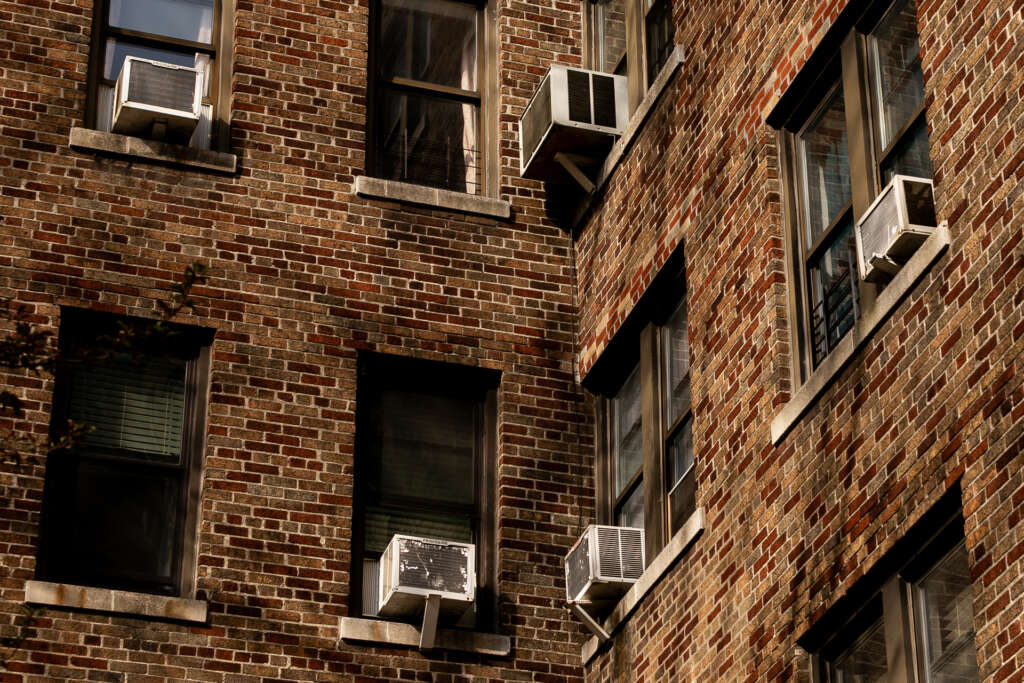
LIHEAP helps New Yorkers with health issues pay for air-conditioning during the summer months. (Adi Talwar/City Limits)

As New Yorkers embrace sunnier weather, those who rely on the federally funded Low Income Home Energy Assistance Program (LIHEAP) to buy air conditioners fear their days of receiving the benefit may be numbered. 

HEAP, as it is often known in New York, is the only program that provides free air conditioners to New Yorkers. Applications to receive cooling assistance went live Tuesday and can be filled out on the NYC.gov website

But earlier this month the Trump administration decided to terminate the entire staff of the Department of Health and Human Services office that runs the initiative, sparking fear about the program’s ability to function.

“The fact that they got rid of all the staff who are responsible for releasing the funds and working with the states makes everyone nervous about what that means for the future of the program,” said Laurie Wheelock, executive director at the nonprofit Public Utility Law Project, which helps people across the state access the program.

The more than two dozen LIHEAP employees who lost their jobs are part of a larger wave of approximately 10,000 workers who were laid off in what administration officials have called a bid to reorganize the agency and cut costs. 

The generalized chaos that comes with the layoffs could render initiatives like HEAP useless without the government actually having to terminate them, said Kevin Kiprovsk, director of policy at the nonprofit LiveOn NY, which helps elderly adults access benefits in the Empire State.

“The state might be less engaged in investing in it if the feds aren’t going to give them money. And the city might be less engaged in processing applications if they don’t know whether the state’s going to give them money either,” Kiprovski explained.

“It’s a trickle-down effect that breaks a program and breaks the back of public service,” he added.

(Hochul’s office declined to comment on how the state would respond to a cutoff of federal dollars.)

‘A critical lifeline’

Across the state, low-income families rely on HEAP to make it through the hottest and coldest months of the year. The program not only provides cooling assistance during the summer, it helps subsidize energy bills when cranking up the heat in winter becomes too costly.

Approximately 1 in 7 households in New York state were two months or more behind on their energy bills as of September of last year, according to an analysis by the Alliance for a Green Economy. More than 1.2 million New York families are collectively in debt more than $1.3 billion dollars to utilities.

“This is a critical lifeline for so many poor and working people across the country, and it’s a lifeline that is especially useful in moments of real crisis with life and death consequences,” said Tara Raghuveer, director of the Tenant Union Federation, a national federation of tenants’ unions.

The state’s HEAP program has its own emergency program that helps residents when they are at risk of getting their utilities shut off by providing a grant to keep their service going.

“People can die under extreme cold conditions, and having access to funds that secure heat in the coldest winter months is really critical,” Raghuveer added.

And keeping people cool in the summer could be just as critical.

Heat-related incidents cause the premature death of an estimated 580 New Yorkers each summer, according to an annual report by the city’s health department. And Black New Yorkers are twice as likely to die from heat stress — deaths caused directly by heat — as white New Yorkers.

Through the program, low-income residents can purchase and install a fan or air conditioner at a cost of up to $1,000 for a wall unit. To qualify, an applicant must meet the program’s income thresholds, which vary by household size. And at least one member of the household must suffer from a medical condition aggravated by extreme heat.

The benefit is especially important for the elderly, as nearly 1 in 8 older New Yorkers now lives in poverty, according to a recent report by the Center for an Urban Future. 

One 86-year-old client at LivOn NY had to move into a small attic in her daughter’s family’s home, because she couldn’t get by on her $1,500 in monthly Social Security payments. Not wanting to burden her daughter financially, she at first refused to get an air conditioner, but when she started having kidney problems, LIHEAP stepped in to cover the cost.

“She needed an air conditioner to basically stay alive,” said Kim Lerner, director of LivOn NY’s benefits outreach program.

But now that the program is on shaky ground, it’s unclear if there will be enough funding to keep Lerner’s elderly clients cool this summer. 

New York state has received 90 percent of the federal dollars it was allocated for 2025, according to the state agency that operates it, the Office of Temporary and Disability Assistance (OTDA). The other 10 percent has not yet been released to states by the federal Department of Health and Human Services (HHS).

OTDA did not provide details on what services New York’s remaining 10 percent is intended to cover. HHS did not immediately respond to a request for comment.

Still, free air conditioners for this season could run out sooner rather than later. Applications to receive assistance are handed out on a first-come-first-served basis and last until funds run out, which the governor’s office has said will likely be June. 

“This assistance is crucial for at-risk New Yorkers, and I encourage those who may be eligible to apply as soon as possible so they can stay cool in their home when the worst of the weather hits,” Gov. Kathy Hochul said in a press release this week.

Other New York officials agree that it’s imperative that the program stay afloat. OTDA called the program “vital” to “hundreds of thousands of low-and middle-income households, families with young children, and older adults.”

The agency added: “We are counting on our federal elected officials to ensure this successful program continues to be funded and that New Yorkers are able to access the help they need.”

The post Trump Cuts Put Free Air Conditioners At Risk as Summer Nears appeared first on City Limits.


Judge says labor unions’ lawsuit over DOGE access to Labor Department systems can move forward

posted in: All news | 0

By REBECCA BOONE, Associated Press

A federal judge says he won’t dismiss a lawsuit from labor unions seeking to block Elon Musk’s team from accessing systems at the Labor Department.

The labor unions say that allowing Musk’s Department of Government Efficiency to access the systems violates the federal Privacy Act because they contain medical and financial records of millions of Americans. They also contend DOGE doesn’t have the legal authority to direct the actions of congressionally created agencies like the Department of Labor.

Related Articles


Trump says Federal Reserve Chair Powell’s ‘termination cannot come fast enough’


Tennessee’s GOP leads the fight to deny public education to children without documents


Stephen Mihm: The atomic bomb set the stage for the college funding fight


Thomas Friedman: Trapped in a woke right-wing ideology


What happens next after judge warns of possible contempt prosecution over deportation flights order

In a ruling Wednesday, U.S. District Judge John Bates said those claims could move forward in court. But some other, more specific arguments made by the unions — including that the U.S. Health and Human Services Department violated health care privacy laws by allowing DOGE access — were dismissed by the judge.

The federal Privacy Act generally prohibits an agency from disclosing records about a person to another agency, unless the person has first given written permission.

“This Court is the first to admit that seeing someone’s name and SSN in the 648th row of a spreadsheet is ‘different in kind’ from peeping into someone’s bedroom window,” Bates wrote. Still, he said, Congress enacted the Privacy Act to protect the privacy of people identified in federally maintained systems, so that individuals could trust their information would be accessed only by those employees with a valid need to see it.

“As a result, an intrusion upon that sphere — even if the sphere literally encompasses only one row of millions in a dataset — amounts to an injury similar to the intrusion upon other private spheres, such as one’s home,” Bates wrote.

Bates also said the case is likely to undergo a lot of “twists and turns” before it is resolved.

“This is a dynamic case undergirded by a set of facts evolving before the Court’s eyes,” he wrote.

DOGE has also accessed other government databases, including at the Education Department, Treasury, IRS and Social Security Administration, and multiple lawsuits have been filed in response.

DOGE targets a community service program in its latest cost-cutting effort

posted in: All news | 0

By HANNAH FINGERHUT, Associated Press

DES MOINES, Iowa (AP) — A 30-year-old community service program that sends young adults to work on projects across the U.S. was the latest target of the Trump administration ‘s campaign to slash government spending.

AmeriCorps’ National Civilian Community Corps informed volunteers Tuesday that they would exit the program early “due to programmatic circumstances beyond your control,” according to an email obtained by The Associated Press.

The unsigned memo to corps members said NCCC’s “ability to sustain program operations” was impacted by the Trump administration’s priorities and President Donald Trump’s executive order creating the Department of Government Efficiency. Members would be officially dismissed April 30.

AmeriCorps did not respond Wednesday to an AP email seeking comment.

What program was affected and why?

AmeriCorps NCCC, which completed its 30th year last year, employs more than 2,000 people ages 18 to 26 participating for a roughly 10-month service term, according to the program’s website. The teams of corps members are tasked with working on several projects related to education, housing, urban and rural development, land conservation, and disaster relief, driving from one assignment to another across the country.

Related Articles


Trump says Federal Reserve Chair Powell’s ‘termination cannot come fast enough’


Tennessee’s GOP leads the fight to deny public education to children without documents


Stephen Mihm: The atomic bomb set the stage for the college funding fight


Parmy Olson: Social media’s ‘big tobacco moment’ is coming


Thomas Friedman: Trapped in a woke right-wing ideology

The agency pays for volunteers’ basic expenses, including housing, meals and a “limited health benefit,” as well as a “modest” living allowance, according to the program. The program also provided members who complete their 1,700-hour service term with funding for future education expenses or to apply to certain student loans. That benefit was worth about $7,300 this service year.

Funding for AmeriCorps and NCCC has long been scrutinized when Congress talks of budget trims. The federal agency’s budget showed NCCC funding amounted to nearly $38 million last fiscal year.

A White House official said the Trump administration questioned using taxpayer money for the program. The official spoke on condition of anonymity because they were not authorized to comment publicly.

What work were they doing?

The traditional NCCC volunteers worked with sponsors including community and faith-based based organizations, nonprofits, schools, cities and tribes. Some of the recent service projects included working at a food bank in Washington state, building homes with Habitat for Humanity in North Carolina, and facilitating after school programs in Arizona.

AmeriCorps NCCC also has a partnership with the Federal Emergency Management Agency and, more recently, the U.S. Forest Service. Those volunteers over the last year responded to tornadoes and flooding in Iowa, hurricane damage in North Carolina and wildfires in California, among other natural disasters, when volunteers are especially visible.

What happens next for corps members?

Young corps members were told Tuesday night to pack up. Many started long road trips from their latest assignment to campuses in Vicksburg, Mississippi; Vinton, Iowa; Sacramento, California; and Aurora, Colorado. Members would receive their allowance and health coverage through the end of April, according to the memo.

Members were told in the memo that those who have completed 15% or more of their term would be eligible for a prorated amount of their education award.

But Kate Raftery, who was NCCC director from 2011 to 2014, said she’s worried about the corps members, many of whom were the “unusual suspects” who “saw this as a really impactful education or career launching pad.”

“They were not young people who had been striving to be service members somewhere,” Raftery said. “They were looking for an opportunity to improve their life. They were looking for an opportunity to build some skills, and to be part of a community.”

Trump says Federal Reserve Chair Powell’s ‘termination cannot come fast enough’

posted in: All news | 0

By AAMER MADHANI and JOSH BOAK, Associated Press

WASHINGTON (AP) — President Donald Trump slammed Federal Reserve Chair Jerome Powell on Thursday, reiterating his frustration that the Fed has not aggressively cut interest rates and saying that the central bank leader’s “termination cannot come fast enough.”

Related Articles


Tennessee’s GOP leads the fight to deny public education to children without documents


Stephen Mihm: The atomic bomb set the stage for the college funding fight


Thomas Friedman: Trapped in a woke right-wing ideology


What happens next after judge warns of possible contempt prosecution over deportation flights order


DOGE wanted to assign staff to the nonprofit Vera Institute of Justice because it got federal funds

Trump hinted at moving to fire Powell, whose term does not expire until next year. The Republican president’s broadside comes a day after Powell said in a speech that Trump’s broad-based tariffs have left the Federal Reserve seeking “greater clarity” on the impact of policy changes in areas such as immigration, taxation, regulation and tariffs before making the move on interest rates.

“Oil prices are down, groceries (even eggs!) are down, and the USA is getting RICH ON TARIFFS,” Trump said in a social media post.

Referring to the European Central Bank, he added that Powell “should have lowered Interest Rates, like the ECB, long ago, but he should certainly lower them now. Powell’s termination cannot come fast enough!”

The European Central Bank on Thursday lowered its key interest rate from 2.5% to 2.25%.

Powell was initially nominated by Trump in 2017, and he was appointed to another four-year term by President Joe Biden in 2022. At a November news conference, Powell indicated he would not step down if Trump asked him to resign.

He has also said that the removal or demotion of top Fed officials was “not permitted under the law.”

Powell started Trump’s second term in a relatively secure spot with a low unemployment rate and inflation progressing closer to the Fed’s 2% target, conditions that could have spared the U.S. central banker from the president’s vitriol.

But Trump’s aggressive and haphazard tariffs have increased the threat of a recession with both higher inflationary pressures and slower growth, a tough spot for Powell, whose mandate is to stabilize prices and maximize employment. With the economy weakening because of Trump’s choices, the president appears to be looking to pin the blame on Powell.

Powell, in his remarks at the Economic Club of Chicago on Wednesday, said the Fed will base its decisions solely on what is best for all Americans.

“That’s the only thing we’re ever going to do,” Powell said. “We’re never going to be influenced by any political pressure. People can say whatever they want. That’s fine, that’s not a problem. But we will do what we do strictly without consideration of political or any other extraneous factors.”

“Our independence is a matter of law,” Powell continued. “We’re not removable except for cause. We serve very long terms, seemingly endless terms. So we’re protected into law. Congress could change that law, but I don’t think there’s any danger of that. Fed independence has pretty broad support across both political parties and in both sides of the Hill.”

AP journalist Sagar Meghani contributed reporting.