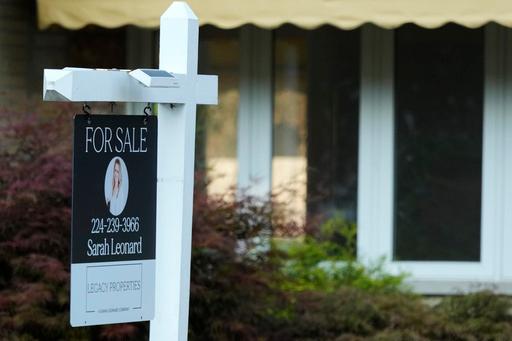
Medical device company to close Maple Grove facility, cut 101 jobs

posted in: All news | 0

Come July, more than 100 workers in Maple Grove are expected to be laid off.

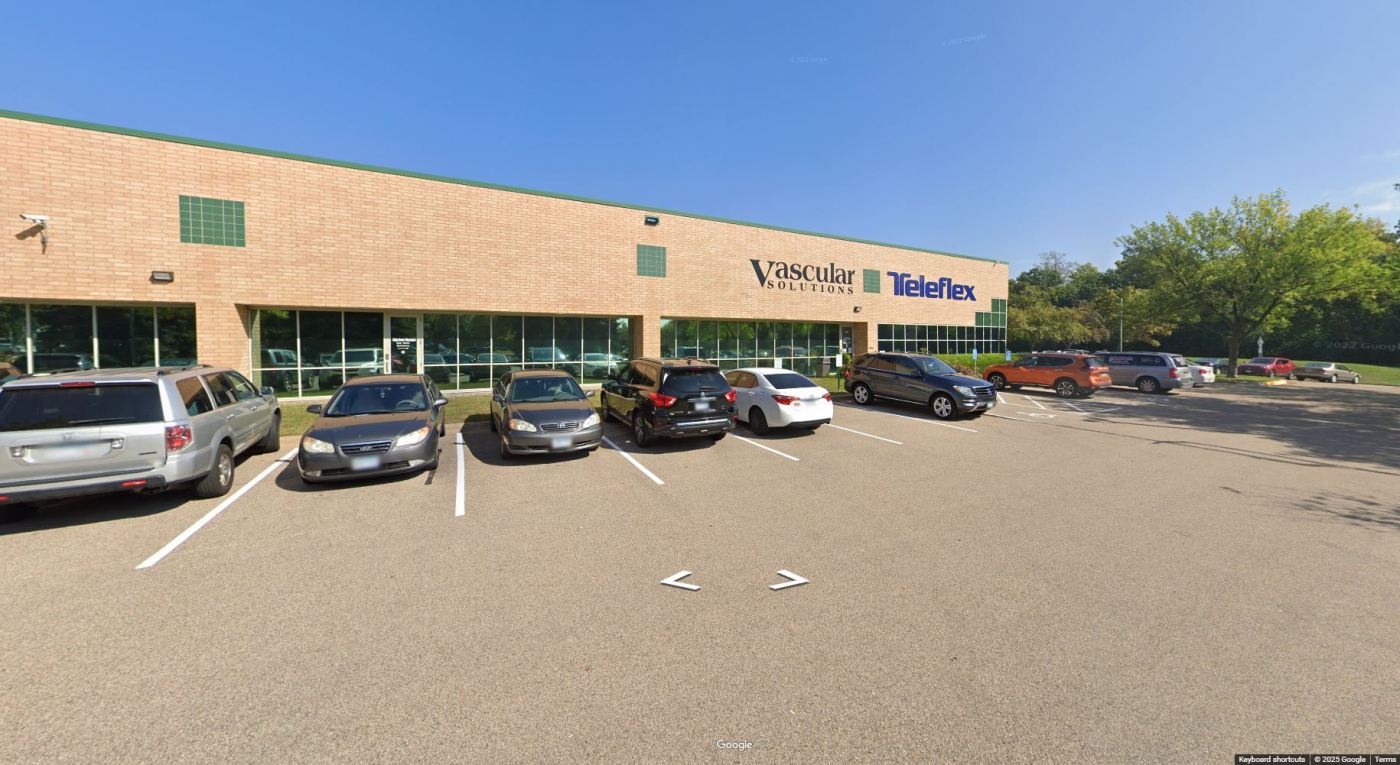
Teleflex, a Pennsylvania-based medical device provider, is closing all operations at its Maple Grove facility and expects to lay off 101 employees July 1, according to a notice filed last week with the Minnesota Department of Employment and Economic Development.

The Maple Grove site, located at 6464 Sycamore Ct. N., was used to create diagnostic and interventional catheters. Laboratory and manufacturing operations are expected to cease by June 30 and a complete closure of the building is expected by March 2026.

A spokesperson for Teleflex did not immediately respond to a Pioneer Press request for comment.

The impacted employees are not part of a union and no bumping rights exist, according to the notice.

Earlier this year, Teleflex announced it would split into two public entities. The new entity, NewCo, will consist of its urology, acute care and OEM businesses while the other, RemainCo, houses hospital-focused vascular access, interventional and surgical businesses, MedTechDive reported.

The same day the split was announced, Teleflex also announced its roughly $790 million acquisition of “all of the vascular intervention business” of medical technology and device company Biotronik, according to a news release from Teleflex.

Related Articles


UnitedHealth cuts 2025 forecast after dealing with first-quarter care use spike


Trump gripes about interest rates, says Fed Chair Powell’s ‘termination cannot come fast enough’


US jobless benefit claims fall last week as labor market remains strong despite recession fears


UnitedHealth’s worst drop in decades weighs on US indexes even as most stocks tick higher


Athena Bitcoin asks Stillwater to repeal cryptocurrency ATM ban

Google’s digital ad network declared an illegal monopoly, joining its search engine in penalty box

posted in: All news | 0

By MICHAEL LIEDTKE, AP Technology Writer

Google has been branded an abusive monopolist by a federal judge for the second time in less than a year, this time for illegally exploiting some of its online marketing technology to boost the profits fueling an internet empire currently worth $1.8 trillion.

Related Articles


UnitedHealth cuts 2025 forecast after dealing with first-quarter care use spike


Trump gripes about interest rates, says Fed Chair Powell’s ‘termination cannot come fast enough’


US jobless benefit claims fall last week as labor market remains strong despite recession fears


UnitedHealth’s worst drop in decades weighs on US indexes even as most stocks tick higher


Athena Bitcoin asks Stillwater to repeal cryptocurrency ATM ban

The ruling issued Thursday by U.S. District Judge Leonie Brinkema in Virginia comes on the heels of a separate decision in August that concluded Google’s namesake search engine has been illegally leveraging its dominance to stifle competition and innovation.

After the U.S. Justice Department targeted Google’s ubiquitous search engine during President Donald Trump’s first administration, the same agency went after the company’s lucrative digital advertising network in 2023 during President Joe Biden’s ensuing administration in an attempt to undercut the power that Google has amassed since its inception in a Silicon Valley garage in 1998.

Although antitrust regulators prevailed both times, the battle is likely to continue for several more years as Google tries to overturn the two monopoly decisions in appeals while forging ahead in the new and highly lucrative technological frontier of artificial intelligence.

The next step in the latest case is a penalty phase that will likely begin late this year or early next year. The same so-called “remedy” hearings in the search monopoly case are scheduled to begin Monday in Washington D.C., where Justice Department lawyers will try to convince U.S. District Judge Amit Mehta to impose a sweeping punishment that includes a proposed requirement for Google to sell its Chrome web browser.

Opinion: Permanent Supportive Housing Is Key to Solving Homelessness

posted in: All news | 0

Mayor Adams has committed to providing temporary housing to New Yorkers with severe mental illness, but the city needs more supportive SROs to prevent a worsening homelessness crisis.

A supportive SRO on W. 22nd Street run by St. Francis Friends of the Poor (Jeremy Amar)

Homelessness among mentally ill New Yorkers is dire and growing, and the city continues to overlook the organizations capable of addressing it. Despite continued efforts, the number of unhoused individuals keeps rising, shelters are over capacity, and more people than ever are living on the streets. So, what can we do? 

In January, Mayor Adams made a $650 million investment to provide temporary housing to patients with severe mental illness. The investment includes the addition of hundreds of shelter beds and funding for a new NYC Health + Hospitals Bridge to Home program. This program provides rooms, meals, recreation, therapy and other support to mentally ill New Yorkers for a period of six to 12 months. Then, unhoused residents will be transitioned into permanent supportive housing. However, there is no mention of investment into such permanent supportive housing, particularly the kind designed to serve those living with serious mental illness. 

As of July 2024, more than 132,000 people were sleeping in NYC’s shelters, not counting the thousands forced to live in public spaces. Mental health disorders are up to four times more common among the homeless, causing those with serious mental illness to cycle between shelters, jails and hospitals due to a lack of stable housing.  

The city’s failure to provide the right housing options has created a ripple effect. Emergency rooms are overcrowded with psychiatric cases, law enforcement is stretched thin responding to mental health crises, and social services are overwhelmed. Without real solutions, chronic homelessness will continue to rise, and more people will lose their lives to preventable tragedies.

A key step in addressing this crisis is restoring support and funding for single-room occupancy (SRO) housing and easing the creation of permanent supportive housing for unhoused people living with serious mental illness. 

For years, SROs served as an essential form of housing for low-income individuals, including those with serious mental illness. These units — small private rooms with shared common spaces — were an affordable way to offer safe, affordable housing to those in need. But decades ago, zoning changes and urban renewal policies led to their systematic removal, worsening today’s crisis while gutting the city’s affordable housing stock. 

Unlike traditional apartments, supportive SROs provide the simplicity that many individuals with serious mental illness need to maintain stability and focus on recovery. Supportive housing offers on-site services like psychiatric care, medication management and case management — services that are essential for keeping residents housed long-term. SROs are a cost-effective, scalable model that could provide immediate relief for those who desperately need a stable place to live.

However, past concerns about isolating people with mental illness have led to policies that discourage 100 percent supportive housing in favor of mixed-population models. Under current requirements, developments must follow a 60/40 model, where 60 percent of units are reserved for people with special needs, such as those with serious mental illness, while 40 percent are allocated to affordable housing. While this approach works for some, it is not suitable for all. Many people with serious mental illness do best in environments surrounded by peers with access to supportive services tailored to their needs.

The worsening homeless crisis — especially among those with serious mental illness — requires urgent, focused solutions. First, the city must remove outdated zoning barriers and support the return of SROs to make it feasible to build deeply affordable housing again. Second, we must expand 100 percent permanent supportive housing that offers on-site services, structure and community — allowing people with serious mental illness to live and recover together. Without this investment, even well-intentioned efforts in shelters and temporary housing will fall short.

New York City cannot afford to delay. By prioritizing SROs and the creation of more permanent supportive housing as a specialized solution for people living with serious mental illness, the city can address homelessness in a meaningful way. Housing is not just a policy issue — it is a matter of life and death. It is time to act.

Christina Byrne is executive director, and Linda Flores is development and communications manager of St. Francis Friends of the Poor.

The post Opinion: Permanent Supportive Housing Is Key to Solving Homelessness appeared first on City Limits.

Average US rate on a 30-year mortgage climbs to 6.83%, highest level since late February

posted in: All news | 0

By ALEX VEIGA, AP Business Writer

The average rate on a 30-year mortgage in the U.S. climbed to its highest level in eight weeks, a setback for home shoppers in the midst of the spring homebuying season.

Related Articles


UnitedHealth cuts 2025 forecast after dealing with first-quarter care use spike


Trump gripes about interest rates, says Fed Chair Powell’s ‘termination cannot come fast enough’


US jobless benefit claims fall last week as labor market remains strong despite recession fears


UnitedHealth’s worst drop in decades weighs on US indexes even as most stocks tick higher


Athena Bitcoin asks Stillwater to repeal cryptocurrency ATM ban

The rate rose to 6.83% from 6.62% last week, mortgage buyer Freddie Mac said Thursday. A year ago, the rate averaged 7.1%.

Borrowing costs on 15-year fixed-rate mortgages, popular with homeowners refinancing their home loans, also rose. The average rate increased to 6.03% from 5.82% last week. It’s still down from 6.39% a year ago, Freddie Mac said.

Mortgage rates are influenced by several factors, including global demand for U.S. Treasurys, the Federal Reserve’s interest rate policy decisions and bond market investors’ expectations for future inflation.

The average rate on a 30-year mortgage loosely follows moves in the 10-year Treasury yield, which lenders use as a guide to pricing home loans.

The yield, which had mostly fallen this year after climbing to around 4.8% in mid-January, spiked last week to 4.5% amid a sell-off in government bonds triggered by investor anxiety over the potential fallout from the Trump administration’s escalating tariff war.

The 10-year Treasury yield was at 4.32% in midday trading Thursday.