Hegseth had a second Signal chat where he shared details of Yemen strike, New York Times reports

posted in: All news | 0

By TARA COPP, Associated Press

WASHINGTON (AP) — Defense Secretary Pete Hegseth created another Signal messaging chat that included his wife and brother where he shared similar details of a March military airstrike against Yemen’s Houthi militants that were sent in another chain with top Trump administration leaders, The New York Times reported.

A person familiar with the contents and those who received the messages, who spoke on condition of anonymity to discuss sensitive matters, confirmed the second chat to The Associated Press.

Related Articles


Vance arrives in India for a 4-day visit that includes talks with Modi


More Democratic lawmakers are visiting El Salvador on Abrego Garcia’s behalf


Hegseth Said to Have Shared Attack Details in Second Signal Chat


The ‘return’ of an extinct wolf is not the answer to saving endangered species, experts warn


Andreas Kluth: The US has Greenland (and foreign policy) exactly upside down

The second chat on Signal — which is a commercially available app not authorized to be used to communicate sensitive or classified national defense information — included 13 people, the person said. The person also confirmed the chat was dubbed “Defense ‘ Team Huddle.”

The New York Times reported that the group included Hegseth’s wife, Jennifer, who is a former Fox News producer, and his brother Phil Hegseth, who was hired at the Pentagon as a Department of Homeland Security liaison and senior adviser. Both have traveled with the defense secretary and attended high-level meetings.

The White House and Pentagon said late Sunday that disgruntled former employees were spreading false claims.

“No matter how many times the legacy media tries to resurrect the same non-story, they can’t change the fact that no classified information was shared,” said Anna Kelly, White House deputy press secretary. “Recently-fired ‘leakers’ are continuing to misrepresent the truth to soothe their shattered egos and undermine the President’s agenda, but the administration will continue to hold them accountable.”

Pentagon spokesman Sean Parnell added in a post on X late Sunday that the report “relied only on the words of people who were fired this week and appear to have a motive to sabotage the Secretary and the President’s agenda. There was no classified information in any Signal chat, no matter how many ways they try to write the story.”

The revelation of the additional chat group brought new calls for Hegseth to be ousted as President Donald Trump’s administration has faced criticism for failing to take action so far against the top national security officials who discussed plans for the military strike in Signal.

“The details keep coming out. We keep learning how Pete Hegseth put lives at risk. But Trump is still too weak to fire him,” Senate Democratic Leader Chuck Schumer posted on X. “Pete Hegseth must be fired.”

The first chat, set up by national security adviser Mike Waltz, included a number of Cabinet members and came to light because Jeffrey Goldberg, editor-in-chief of The Atlantic, was added to the group.

The contents of that chat, which The Atlantic published, shows that Hegseth listed weapons systems and a timeline for the attack on Iran-backed Houthis in Yemen last month.

Hegseth has previously contended that no classified information or war plans were shared in the chat with the journalist.

FILE – U.S. Secretary of Defense Pete Hegseth speaks during the Central American Security Conference in Panama City, April 9, 2025. (AP Photo/Matias Delacroix, file)

The Times reported Sunday that the second chat had the same warplane launch times that the first chat included. Multiple former and current officials have said sharing those operational details before a strike would have certainly been classified and their release could have put pilots in danger.

Hegseth’s use of Signal and the sharing of such plans are under investigation by the Defense Department’s acting inspector general. It came at the request of the leadership of the Senate Armed Services Committee — Republican Chairman Roger Wicker of Mississippi and ranking Democratic member Jack Reed of Rhode Island.

Reed urged the Pentagon watchdog late Sunday to probe the reported second Signal chat as well, saying that Hegseth “must immediately explain why he reportedly texted classified information that could endanger American servicemembers’ lives.”

“I have grave concerns about Secretary Hegseth’s ability to maintain the trust and confidence of U.S. servicemembers and the Commander-in-Chief,” he added.

The new revelations come during further turmoil at the Pentagon. Four officials in Hegseth’s inner circle departed last week as the Pentagon conducts a widespread investigation for information leaks.

Dan Caldwell, a Hegseth aide; Colin Carroll, chief of staff to Deputy Defense Secretary Stephen Feinberg; and Darin Selnick, Hegseth’s deputy chief of staff, were escorted out of the Pentagon.

While the three initially had been placed on leave pending the investigation, a joint statement shared by Caldwell on X on Saturday said the three “still have not been told what exactly we were investigated for, if there is still an active investigation, or if there was even a real investigation of ‘leaks’ to begin with.”

Caldwell was the staff member designated as Hegseth’s point person in the Signal chat with Trump Cabinet members.

Former Pentagon spokesman John Ullyot also announced he was resigning last week, unrelated to the leaks. The Pentagon said, however, that Ullyot was asked to resign.

AP writer Michelle L. Price in Washington contributed to this report.

Gophers football: Running back Jaydon Wright to enter transfer portal

posted in: All news | 0

Gophers redshirt freshman running back Jaydon Wright plans to enter the NCAA transfer portal, a source confirmed to the Pioneer Press on Monday.

Wright missed the 2024 season with an injury and has been sidelined during spring practices, as well. He is the third scholarship player to enter the portal this spring, following quarterback Zach Pyron and linebacker David Amaliri last week.

One element in the amount of departures is the Gophers’ need to trim its roster down to 105 players before next season. That is the expected requirement incoming from the House settlement with the NCAA.

Wright was a three-star prospect from Bishop McNamara Catholic School in Kankakee, Ill. 247Sports first reported the news on Wright.

Related Articles


Gophers football adds Hawkeyes cornerback via transfer portal


Gophers football seek another quarterback in transfer portal


Gophers quarterback Zach Pyron enters NCAA transfer portal


Gophers football: P.J. Fleck doesn’t anticipate ‘plethora’ of movement in NCAA transfer portal


Gophers football: First player enters transfer portal this spring

US stocks sink with the US dollar’s value as investors retreat further from the United States

posted in: All news | 0

By STAN CHOE, Associated Press Business Writer

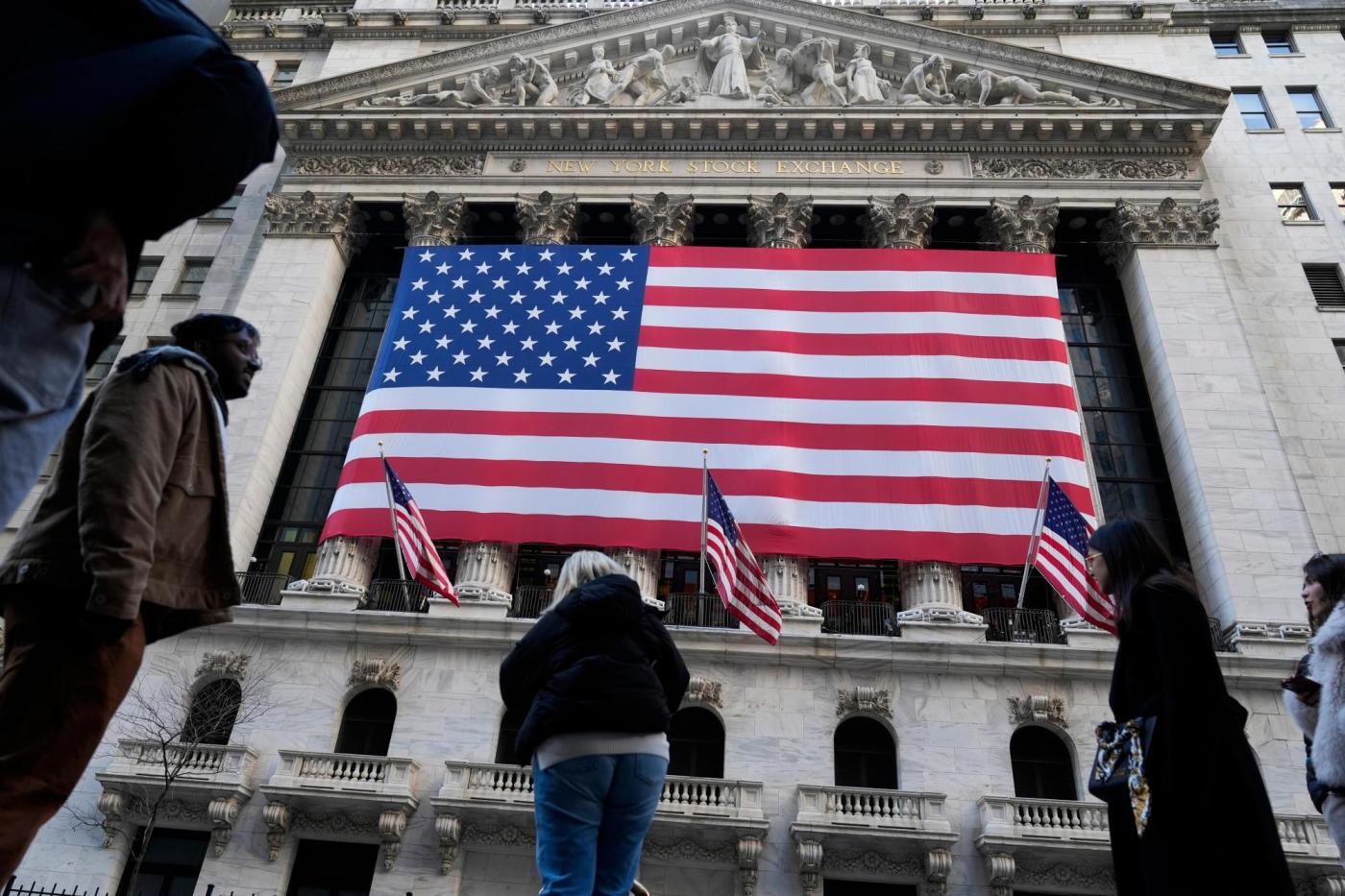
NEW YORK (AP) — U.S. stocks are sinking Monday as investors pull away from the United States because of the uncertainty caused by President Donald Trump’s trade war and his criticism of the Federal Reserve.

The S&P 500 was 1.2% lower in early trading and back to 15% below its record set two months ago. The Dow Jones Industrial Average was down 430 points, or 1.1%, as of 9:35 a.m. Eastern time, and the Nasdaq composite was 1.5% lower.

Perhaps more worryingly, U.S. Treasury bonds and the value of the U.S. dollar also sank as a retreat continues from U.S. markets. It’s an unusual move because Treasurys and the dollar have historically strengthened during past episodes of nervousness. But this time around, it’s policies directly from Washington that are causing the fear and potentially weakening their reputations as some of the world’s safest investments.

Trump continued his tough talk on trade over the weekend, even as economists and investors continue to say his stiff proposed tariffs could cause a recession unless they’re rolled back.

“The golden rule of negotiating and success: He who has the gold makes the rules,” Trump said in all capitalized letters on his Truth Social Network. He also said that “the businessmen who criticize tariffs are bad at business, but really bad at politics,” also in all caps.

Trump has recently focused more on China, the world’s second-largest economy, which upped its own rhetoric against the world’s largest economy. China on Monday warned other countries against making trade deals with the United States “at the expense of China’s interest” as Japan, South Korea and other countries try to negotiate agreements that would lower U.S. tariffs on their own products.

“If this happens, China will never accept it and will resolutely take countermeasures in a reciprocal manner,” China’s Commerce Ministry said in a statement.

Also hanging over the market are worries about Trump’s anger at Federal Reserve Chair Jerome Powell. Trump last week criticized Powell again for not cutting interest rates sooner to help give the economy more juice.

The Fed has been resistant to lowering rates too quickly because it does not want to allow inflation to reaccelerate after it has slowed nearly all the way down to its 2% goal from more than 9% three years ago.

A move to fire Powell would likely send another bolt of fear through financial markets. While investors would love to see lower interest rates, because they would give at least a short-term boost to prices for stocks and other investments, the larger worry is that a less independent Fed would be less effective at keeping inflation under control in the long run. It would further weaken, if not kill, the United States’ reputation as the world’s safest place to keep cash.

On Wall Street, several Big Tech stocks helped lead indexes lower ahead of their latest earnings reports coming later this week.

Tesla sank 4.4%, for example. The electric vehicle’s stock came into Monday roughly 50% below its record set in December on criticism that its stock price had gone too high and that its brand has become too entwined with Elon Musk, who’s leading the U.S. government’s efforts to cut spending.

On the winning side of Wall Street were Discover Financial Services and Capital One Financial, which jumped after the U.S. government approved their proposed merger.

Discover rallied 4.6%, and Capital One rose 2.6%.

In the bond market, shorter-term Treasury yields fell as investors keep alive hopes that the Fed may cut its main overnight interest rate later this year in order to support the economy. But longer-term yields rose as doubts continue to rise about the United States’ standing in the global economy.

The yield on the 10-year Treasury rose to 4.38% from 4.34% at the end of last week and from just about 4% earlier this month. That’s a substantial move for the bond market.

The U.S. dollar’s value, meanwhile, fell against the euro, Japanese yen, the Swiss franc and other currencies.

In stock markets abroad, Tokyo’s Nikkei 225 fell 1.3%. Indexes fared better in Seoul, where stocks rose 0.2%, and in Shanghai, which saw a 0.4% gain.

AP Business Writer Elaine Kurtenbach contributed.

Vance arrives in India for a 4-day visit that includes talks with Modi

posted in: All news | 0

By SHEIKH SAALIQ, Associated Press

NEW DELHI (AP) — U.S. Vice President JD Vance arrived in India on Monday for a four-day visit as New Delhi looks to avoid U.S. tariffs, negotiate a bilateral trade deal with Washington and strengthen ties with the Trump administration.

Vance will meet Prime Minister Narendra Modi on the first day of his largely personal visit. The two leaders are expected to hold discussions on bilateral ties outlined in February when Modi met President Donald Trump in Washington.

U.S. Vice President JD Vance arrives in New Delhi, India, Monday, April 21, 2025. (Kenny Holston/The New York Times via AP, Pool)

The U.S. is India’s largest trading partner and the two countries are now holding negotiations aiming to seal a bilateral trade agreement this year.

They have set an ambitious target of more than doubling their bilateral trade to $500 billion by 2030. If achieved, the trade deal could significantly enhance economic ties between the two countries and potentially strengthen diplomatic ties as well.

Vance’s first visit to New Delhi comes amid the backdrop of Trump’s now-paused tariff program against most countries, including India. It also coincides with a rapidly intensifying trade war between Washington and Beijing, which is New Delhi’s main rival in the region.

Modi and Vance are expected to “review the progress in bilateral relations” and “exchange views on regional and global developments of mutual interest,” India’s Foreign Ministry said last week. On Monday, spokesperson Randhir Jaiswal said Vance’s visit will “further deepen the India–U.S. comprehensive global strategic partnership.”

Vance is combining business with pleasure on this trip

Vance was greeted with an Indian classical dance performance after he arrived at New Delhi’s Palam airport on Monday, following his visit to Rome, where he met Pope Francis on Easter Sunday. He is accompanied by his wife, Usha Vance, a practicing Hindu whose parents are from India, along with their three children and officials from the U.S. administration.

U.S. Vice President JD Vance and second lady Usha Vance arrive in New Delhi, India, Monday, April 21, 2025. (Kenny Holston/The New York Times via AP, Pool)

The family visited the Akshardham Hindu temple in New Delhi after their arrival and are expected to tour the iconic Taj Mahal monument and the 12th-century Amer Fort — a UNESCO world heritage site — during their trip.

India is important to the U.S. in counterbalancing Chinese influence

India is a close partner of the U.S. and an important strategic ally in combating the rising influence of China in the Indo-Pacific region. It is also part of the Quad, which is comprised of the U.S., India, Japan and Australia and is seen as a counterbalance to China’s expansion in the region. Trump is expected to attend a summit of Quad leaders in India later this year.

Related Articles


More Democratic lawmakers are visiting El Salvador on Abrego Garcia’s behalf


The ‘return’ of an extinct wolf is not the answer to saving endangered species, experts warn


Andreas Kluth: The US has Greenland (and foreign policy) exactly upside down


Other voices: Judge Boasberg is right to seek contempt against Trump officials


David Brooks: Time for a civic uprising

Washington has long sought to develop a deeper partnership with New Delhi, which is seen as a bulwark against China. Modi particularly established a good working relationship with Trump during his first term in office and the two leaders are likely to further boost cooperation between their countries.

Modi was among the first leaders to visit the U.S. and hold talks with Trump after he returned to the White House. During his visit, he hailed a “mega partnership” with the U.S., and kickstarted a negotiation process to minimize the possible fallout of Trump’s tariffs.

The two leaders also said they planned to grow their defense partnership, with India signaling compliance with the Trump administration’s demands, saying it will purchase more oil, energy and defense equipment from the U.S. Modi also has cooperated with Trump’s moves to deport undocumented migrants as India has accepted many of its citizens from the U.S. in the past few months.

Regardless, Trump targeted India with a 26% levy, part of which has since been paused. However, he has continued to call India a “tariff abuser” and “tariff king.”

Trade talks are urgent for Delhi as it tries to avoid Trump’s tariffs

The trade negotiations are especially urgent for New Delhi as it could be hit hard by Trump’s tariffs, particularly in the agriculture, processed food, auto components, high-end machinery, medical equipment and jewelry sectors.

Harsh Vardhan Shringla, India’s former foreign secretary and ambassador to the U.S., said Vance’s visit comes at a time of global upheaval in world trade. He said ties between New Delhi and Washington could see an upsurge under Trump’s presidency, mainly in technology-sharing and defense.

“U.S. trade policy under Trump offers an opportunity for India to embed itself in a bigger way in the U.S. markets and global supply chains,” Shringla said.

Modi’s government is also hoping to attract investment from Tesla and SpaceX CEO Elon Musk.

Last month, Musk’s Starlink entered into agreements with two of India’s top telecom operators to provide satellite-based internet services. Musk also indicated he would visit India later this year after speaking last week with Modi, signaling there could be progress in the electric-car maker’s push to enter the Indian market.

India is also a major defense partner of the U.S. It has in recent years embedded advanced American jets, helicopters, missiles and military gear into its armed forces. The two countries have announced plans to sign a 10-year framework later this year for strengthening their defense partnership.

Associated Press writer Rajesh Roy contributed to this report.