In the early days of the Twins’ season, they’ve been let down by their own defense too often.
On Tuesday, they were finally on the other side of that. Though hits were hard to come by for much of the night, the Twins were able to take advantage of a couple of Chicago errors and pulled away late, snapping a three-game losing streak with a 4-2 win over the White Sox in the series opener at Target Field.
In the second inning, down a run, shortstop Carlos Correa grounded a ball towards first baseman Andrew Vaughn. Second baseman Lenyn Sosa was unable to catch Vaughn’s thrown, and instead of it being a rally-killing double play, the Twins had two runners on and nobody out.
They got one run out of the situation when Ty France found a hole in the right side of the infield, sending a single to right and tying the game.
An inning later, rookie Luke Keaschall helped make things happen with his legs. After drawing a two-out walk and stealing second, some aggressive baserunning paid off. The next batter, Trevor Larnach, hit a little tapper. But when catcher Edgar Quero’s throw hit Larnach in the back, Keaschall kept running, speeding home from second.
He jogged home the second time around — after another walk and stolen base — scoring on Larnach’s two-run missile to right in the eighth inning, the outfielder’s second home run of the season.
For much of the night, it seemed like the White Sox were going to break through, putting baserunners on in seven of nine innings.
Starter Bailey Ober maneuvered around traffic all night, getting a pair of double-play balls and limiting the damage to just one run in the second when the White Sox loaded the bases.
Ober lasted six innings, giving up eight hits but just the one run, before making way for Griffin Jax. The reliever, who has struggled throughout April, pitched in the seventh inning rather than the eighth or ninth for the first time this season, working around a single to throw a scoreless inning.
Louie Varland, given a high leverage opportunity in the eighth inning, responded by sending down three White Sox hitters in order before Jhoan Duran came in for the save.
After loading the bases with no outs, Duran gave up a run before Byron Buxton made a game-saving catch, verging to his left as he ran back and then diving to corral a ball that would have driven in a pair of runs.
Minnesota Twins starting pitcher Bailey Ober (17) delivers during the first inning of a baseball game against the Chicago White Sox, Tuesday, April 22, 2025, in Minneapolis. (AP Photo/Abbie Parr)
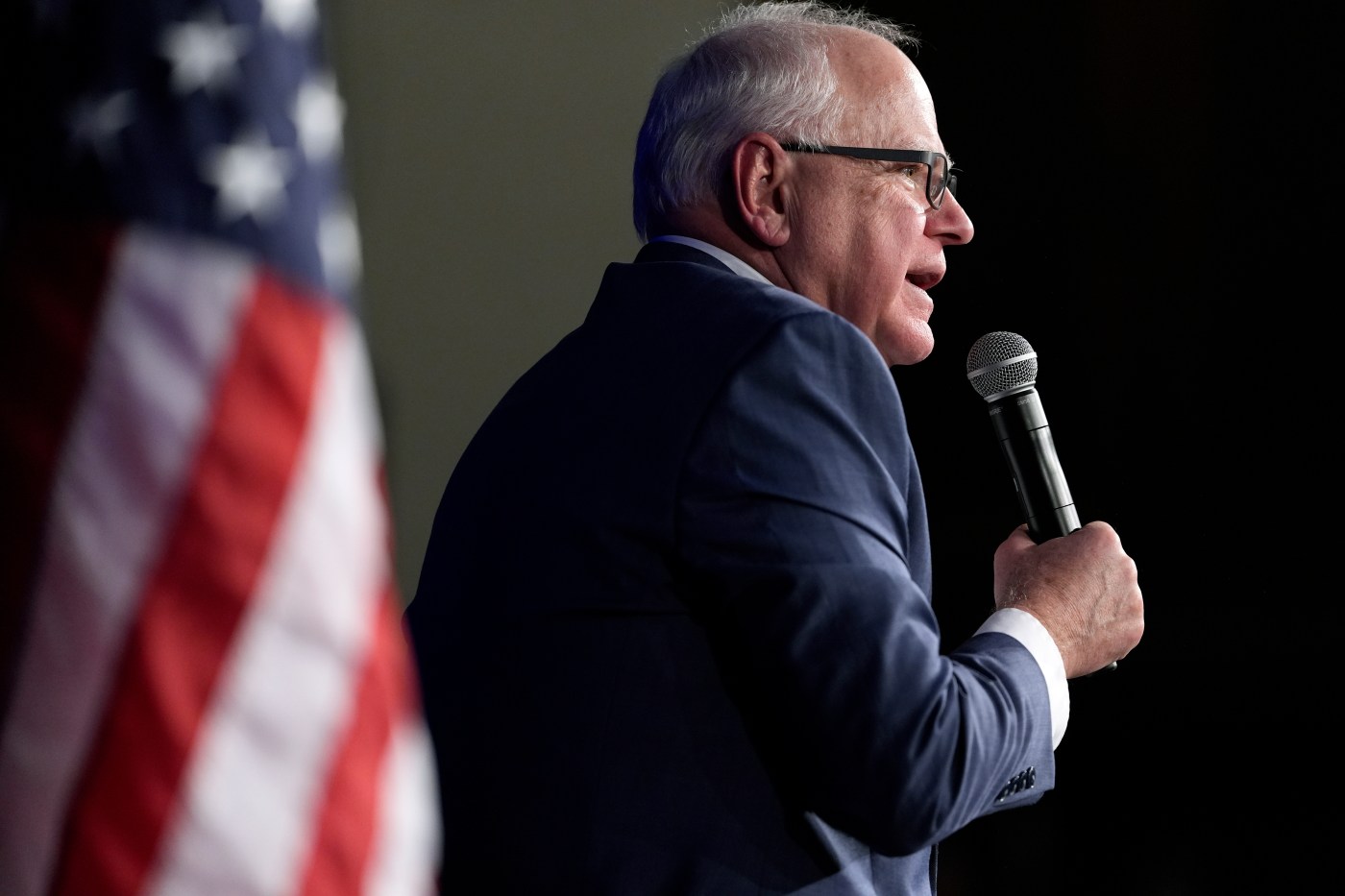
Minnesota Gov. Tim Walz is set to deliver his annual State of the State address on Wednesday night in St. Paul.
The address will be made to state representatives and senators at 7 p.m. in the House chamber of the state Capitol. Walz said at an unrelated news conference last week that his address will touch on the effects of the Trump administration’s decisions on Minnesota, including potentially large Medicaid cuts, as well as “things to be optimistic about” and ways to “work together.”
“This will be a piece of that,” the Democratic governor said about Trump policy impacts on Minnesota. “We decided to pick trade wars with our allies. We isolated and turned allies against us. We’ve forced many folks into the Chinese sphere of influence on a broader scale, and states are under threat from programs just like this. So I think to try and articulate we’ve got some real decisions to make … I’m also going to focus back that there’s many, many things to be optimistic about.”
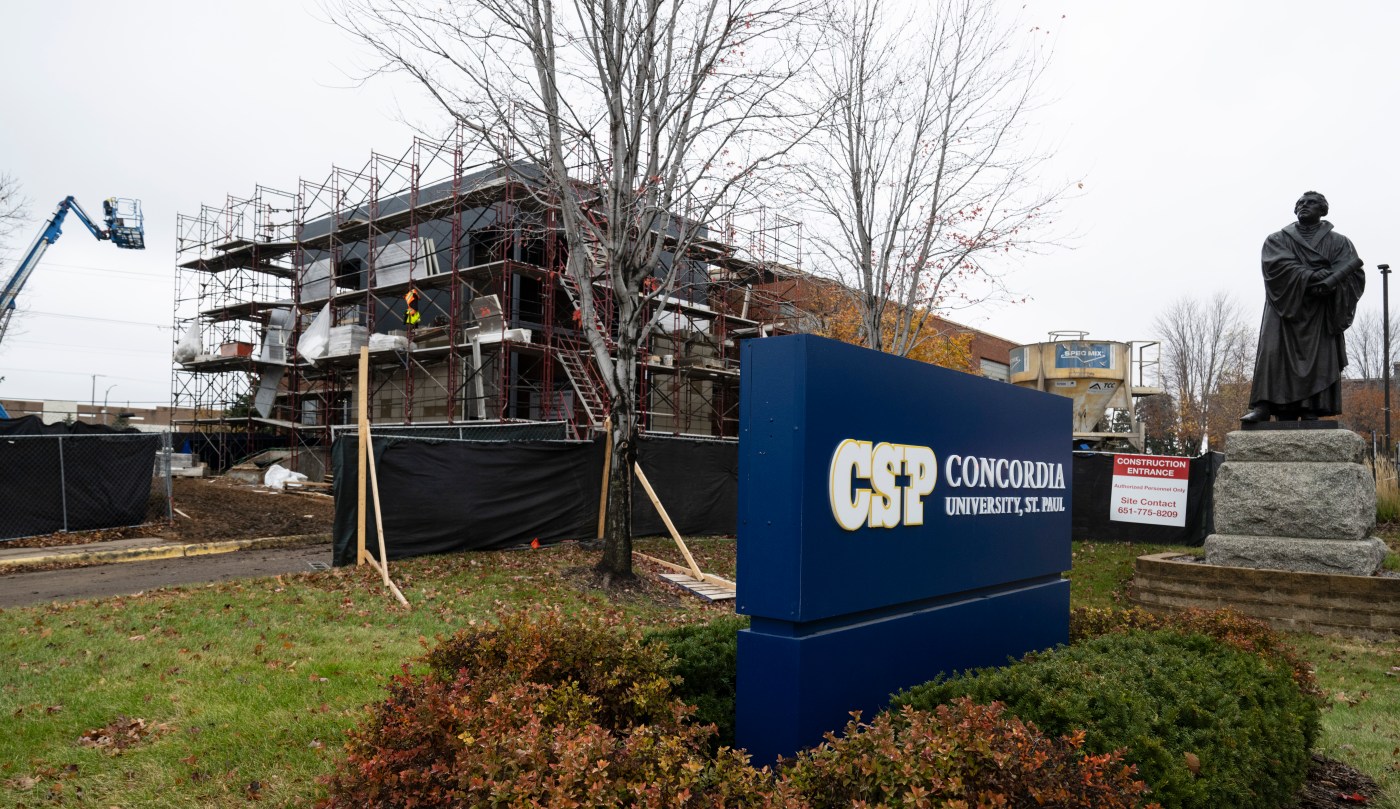
Five non-citizen graduates of Concordia University in St. Paul are suing the U.S. Department of Homeland Security after their student visas were canceled.
According to the lawsuit filed Monday in U.S. District Court, the five plaintiffs are citizens of India who attained master’s degrees in information technology and management. The suit says each of the graduates were working for tech companies as part of authorized post-graduate training and that each of them had to quit their jobs because they couldn’t hold the positions without student visas.
“Plaintiffs were provided no notice, much less an opportunity to object, to the termination of their status — the foundations of the procedural due process that all persons in the United States (including noncitizens) are entitled under the Fifth Amendment,” the lawsuit reads.
In declarations filed in court, Salma Rameez Shaik, Akhil Pothuraju, Nithish Babu Challa, Shyam Vardhan Reddy Yarkareddy and Almas Abdul all say they were in compliance with all the rules and regulations required to maintain their student visas.
Four of the five say they had been cited for traffic violations — one of whom said they pleaded guilty to a misdemeanor drunken driving offense.
However, the suit says these offenses are not sufficient to warrant termination of their student visas. The plaintiffs also said they had not engaged in any on-campus political protests or demonstrations.
The suit also asks the court to issue an emergency injunction that would allow them to keep their legal status and prevent them from being arrested and detained.
“Two judges in this District already issued temporary restraining orders similar to the one sought here on nearly identical facts,” the lawsuit reads, referring to the cases of Rattanand Ratsantiboon (Metropolitan State University in St. Paul) and Ziliang Jin (University of Minnesota). Both men, who also had their student status suddenly terminated by DHS, were granted temporary restraining orders by federal judges last week.
Ratsantiboon and Jin are among at least two dozen international students in Minnesota who have been stripped of their status by the department as part of the Trump administration’s crackdown on immigration, both illegal and legal.
Related Articles
NYC mayor and Trump border czar tout charges against 27 people in Tren de Aragua case
Trump says he has ‘no intention’ of firing Federal Reserve chair
Three more prosecutors resign in aftermath of dismissal of case against NYC mayor
Federal judge blocks Trump administration from dismantling Voice of America
Keith Ellison sues Trump administration over orders on transgender issues
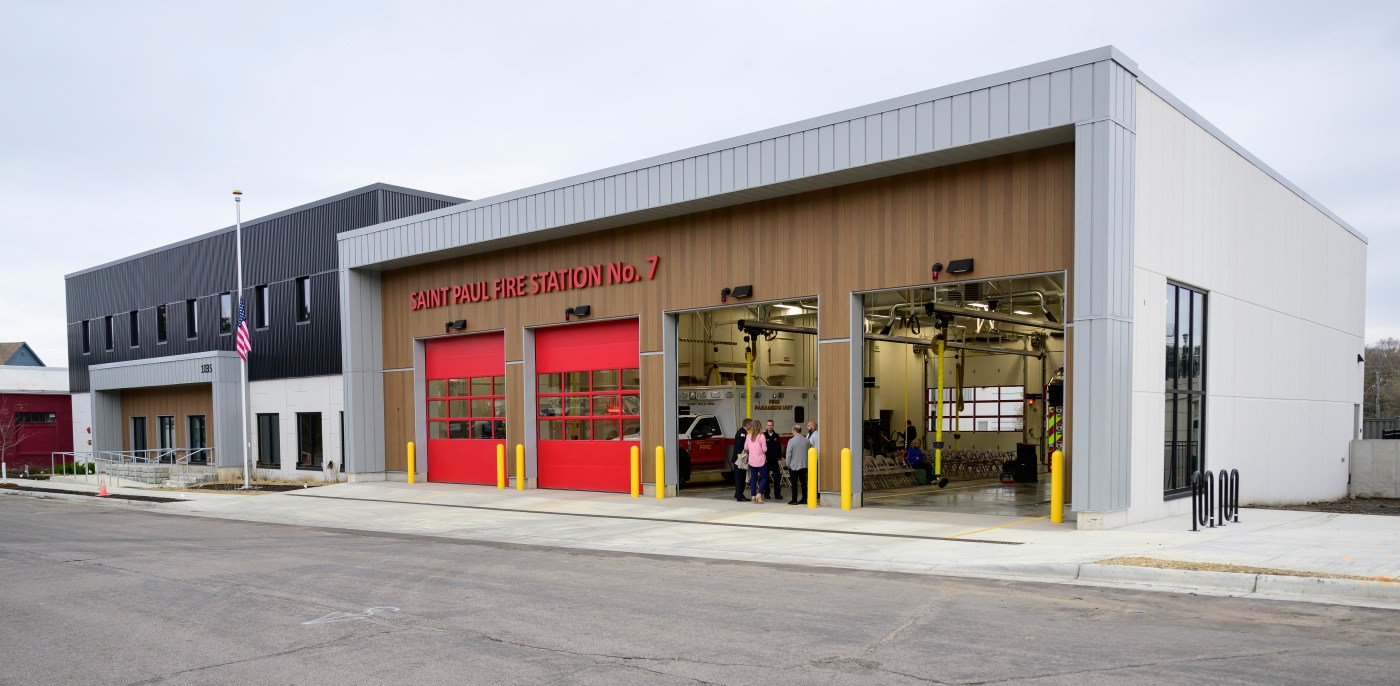
The new St. Paul Fire Station No. 7, across the street from the old station on Ross Ave, in St. Paul on Tuesday, April 22, 2025. (John Autey / Pioneer Press)
St. Paul Fire Chief Butch Inks cuts the ribbon for new St. Paul Fire Station No. 7 on Ross Ave. in St. Paul on Tuesday, April 22, 2025. Joining Inks are, from left, Assistant Fire Chiefs Anthony Farina and Jeramiah Melquist, City Council member Cheniqua Johnson, Ward 7, Inks, U.S. Sen. Amy Klobuchar, DFL-Minnesota, St. Paul Mayor Melvin Carter and Assistant Fire Chief Steven Sampson. (John Autey / Pioneer Press)
St. Paul Fire Engine 7, the department’s new electric fire truck, in its new home, the new St. Station No. 7, on Ross Ave. in St. Paul on Tuesday, April 22, 2025. (John Autey / Pioneer Press)
A firefighter slides down one of two firefighter poles at the new St. Paul Fire Station No. 7 on Ross Ave. in St. Paul on Tuesday, April 22, 2025. (John Autey / Pioneer Press)
Newly-promoted St. Paul Fire Captain Derek Baker has his bars pinned to his shirt by his daughter Emma, 10, with assistance from his fiancée, Courtney, joined by Harper 5, right, and Kylie, 3, during a promotion ceremony at St. Paul Fire Station No. 7 in the St. Paul on Tuesday, April 22, 2025. Baker was one of nine paramedics/firefighters promoted to captain. (John Autey / Pioneer Press)
U.S. Sen. Amy Klobuchar, DFL-Minnesota, left, U.S. Rep. Betty McCollum, DFL-Minnesota, and St. Paul Mayor Melvin Carter listen to St. Paul Fire Chief Butch Inks during a ribbon cutting celebration for the new St. Paul Fire Station No. 7 on Ross Ave. in St. Paul on Tuesday, April 22, 2025. (John Autey / Pioneer Press)
St. Paul Mayor Melvin Carter radios Fire Dispatch to officially open the new St. Paul Fire Station No. 7 on Ross Ave. in St. Paul on Tuesday, April 22, 2025. Joining Carter are, from left, U.S. Sen. Amy Klobuchar, DFL-Minnesota, St. Paul Fire Chief Butch Inks and St. Paul City Council member Cheniqua Johnson, Ward 7. (John Autey / Pioneer Press)
Nine newly minted St. Paul Fire Captains stand during their promotion ceremony at St. Paul Fire Station No. 7 on Tuesday, April 22, 2025. (John Autey / Pioneer Press)
Newly-promoted St. Paul Fire Captain Chris Gustafson has his bars pinned to his shirt by his sons Arthur, 7, left, and Malcolm, 5, assisted by mentor and retired firefighter Ryan Lyons, during a promotion ceremony at St. Paul Fire Station No. 7 on Tuesday, April 22, 2025. Gustafson was one of nine paramedics/firefighters promoted to captain. (John Autey / Pioneer Press)
The turnout racks in the new St. Paul Fire Station No. 7 on Ross Ave. in St. Paul on Tuesday, April 22, 2025. (John Autey / Pioneer Press)
A dorm-style room in the new St. Paul Fire Station No. 7 on Ross Ave. in St. Paul on Tuesday, April 22, 2025. (John Autey / Pioneer Press)
Pictures and magnets adorn a refrigerator at the new St. Paul Fire Station No. 7 on Ross Ave. in St. Paul on Tuesday, April 22, 2025. (John Autey / Pioneer Press)
The entertainment room in the new St. Paul Fire Station No. 7 on Ross Ave. in St. Paul on Tuesday, April 22, 2025. (John Autey / Pioneer Press)
The kitchen at the new St. Paul Fire Station No. 7 on Ross Ave. in St. Paul on Tuesday, April 22, 2025. (John Autey / Pioneer Press)
An outdoor patio overlooks the Earl St. bridge at the new St. Paul Fire Station No. 7 on Ross Ave. in St. Paul on Tuesday, April 22, 2025. (John Autey / Pioneer Press)
One of the features of the new St. Paul Fire Station No. 7 on Ross Ave. in St. Paul is a safe room, seen Tuesday, April 22, 2025. (John Autey / Pioneer Press)
One of the two firefighter poles, this one in the kitchen and lounge space, in the new St. Paul Fire Station No. 7 on Ross Ave. in St. Paul on Tuesday, April 22, 2025. (John Autey / Pioneer Press)
The dorm-style rooms at the new St. Paul Fire Station No. 7 on Ross Ave. in St. Paul on Tuesday, April 22, 2025. (John Autey / Pioneer Press)
The back door bays of the St. Paul Fire Station No. 7 on Ross Ave. in St. Paul on Tuesday, April 22, 2025. (John Autey / Pioneer Press)
1 of 19
The new St. Paul Fire Station No. 7, across the street from the old station on Ross Ave, in St. Paul on Tuesday, April 22, 2025. (John Autey / Pioneer Press)
The $12 million station in Dayton’s Bluff has room for more emergency vehicles and firefighters than the old station, which will mean they can have a bigger impact on the East Side, said Assistant Fire Chief Jeramiah Melquist. It was also constructed with firefighter health and wellness in mind.
“This is more than just a building,” said Fire Chief Butch Inks. “It’s … a promise that help is never far away. … When lives are on the line, seconds matter.”
The new station by the Earl Street bridge is across the street from the old Station 7 on Ross Avenue between Earl and East Seventh streets, though the location wasn’t chosen “simply because there was land available,” Inks said. “We used a data-driven approach.”
Mayor Melvin Carter added: “For years, we’ve experienced … disparities in fire fatalities on our East Side that requires answers, that requires action, that requires investment.”
New station doubles size, room for fire rigs
The old Station 7 was 9,000 square feet vs. the new station’s 19,000 square feet. The land had been a vacant lot, which previously was home to the Viaduct Inn, a bar and restaurant. The St. Paul Port Authority sold the 0.67 acre lot to the city of St. Paul for $233,482.
The previous building had three bays for fire department vehicles, which the department said was increasingly inadequate for serving the community’s needs. The station previously housed a fire engine and ladder truck; an ambulance was moved to the building in 2018, which meant the engine had to relocate to a different station.
The new station’s garage has space for five vehicles: an engine truck and a ladder truck, two ambulances (one for advanced life support and one for basic life support), and a modified SUV for the district chief who is in charge of incidents.
Firefighters at the old Station 7 responded to 11 calls per day, on average, and Melquist estimates they’ll handle 20-25 calls from the new station.
Cancer reduction measures
St. Paul Fire Chief Butch Inks cuts the ribbon for new St. Paul Fire Station No. 7 on Ross Ave. in St. Paul on Tuesday, April 22, 2025. Joining Inks are, from left, Assistant Fire Chiefs Anthony Farina and Jeramiah Melquist, City Council member Cheniqua Johnson, Ward 7, Inks, U.S. Sen. Amy Klobuchar, DFL-Minnesota, St. Paul Mayor Melvin Carter and Assistant Fire Chief Steven Sampson. (John Autey / Pioneer Press)
The garage has doors in the front and back, which are “a big safety factor” because a fire equipment operator can drive directly in and out, said Deputy Fire Chief Jamie Smith. At most fire stations in St. Paul, operators have to reverse the large trucks into the station “multiple times a day, 3 in the morning, snow storm,” for instance, navigating pedestrians and traffic, Smith said.
The station was designed with “cancer reduction efforts in mind,” Smith said. A room directly off the garage will house specially-designed washers for firefighters’ turnout gear, which all fire stations in St. Paul have.
“Back in the day, it was a badge of honor to have dirty fire gear,” Smith said. “Now we realize that that soot is actually cancer-causing carcinogens.”
The goal is for firefighters to get out of their gear as quickly as possible and not bring it into the station. All St. Paul firefighters have two sets of gear, so they can use their other set if the first one is still washing or drying.
Firefighters have a 9 percent higher risk of being diagnosed with cancer than the general U.S. population, the Firefighter Cancer Support Network says of national information.
‘Heartbeat’ of the station
St. Paul firefighters work 24-hour shifts and they’re encouraged to rest when they can between calls.
A dorm-style room in the new St. Paul Fire Station No. 7 on Ross Ave. in St. Paul on Tuesday, April 22, 2025. (John Autey / Pioneer Press)
The new station has 12 small, individual dorm rooms and three rooms for supervisors. The old Station 7 and some of the city’s other 15 stations still have communal sleeping areas, with beds separated by curtains.
“Sometimes you sleep for a few hours, sometimes you sleep not at all,” Smith said of firefighters’ shifts.
The station alert system can be heard in each dorm room, so firefighters know when they’re being dispatched to a medical emergency or a fire.
“When that alarm goes off,” firefighters have a minute-and-a-half to get suited up and into their rig, Smith said. The new station has two fire poles, which are intended to save time for firefighters getting from the dorms and kitchen on the second floor to the first floor.
Twelve to 15 firefighters will work at the station per shift, and there’s a large kitchen with enough room for them to eat meals together. On-duty fire crews take turns cooking for each other.
“Firefighting is a tough job, it’s a mentally draining job” and firefighters drink coffee together and share meals, Smith said. “… If there’s a tough call and we need to just talk about it, this is an area where we do it. The kitchen is the heartbeat of any fire station.”
Home to first electric fire truck
St. Paul Fire Engine 7, the department’s new electric fire truck, in its new home, the new St. Station No. 7, on Ross Ave. in St. Paul on Tuesday, April 22, 2025. (John Autey / Pioneer Press)
St. Paul rolled out Engine 7 last year, which increased the department’s fleet of engines by one. It’s the first electric fire truck in the state and is now permanently housed at Station 7. The city is planning to purchase a second electric fire truck with a state grant, Carter said.
It’s not just about cleaner energy — the vehicle is “better,” Carter said. It’s “smaller and narrower, which means it can fit into spaces that other rigs cannot.” It can also get water onto fires faster than diesel-powered fire engines, he added.
Related Articles
Minnesota gun-carry permit age drops from 21 to 18 after legal challenge
MN state employee arrested for Tesla vandalism will not be charged
Woodbury duplex destroyed in fire
Trump’s transportation officials buck a long-held practice of using ‘road diets’ to slow speeders
Pedestrian dies after she’s struck by teen driver in St. Paul
When the city funded the station in 2019, it was expected to cost about $9 million, but costs kept rising and the project had a $10.7 million budget when they broke ground in 2023. “The longer we waited, the more expensive it got” and the final cost was approved by the city at just over $12 million, Melquist said.
It was funded by sales tax bonds and St. Paul’s Capital Improvement Budget, plus $1.7 million in federal funds, according to the mayor’s office. The office hasn’t made a decision about what will happen to the old station.
Firefighters have been working from the new station since April 10, and Tuesday was the day of the ceremonial ribbon cutting.