These little-known bank accounts allow Americans with disabilities to save and invest

posted in: News | 0

By CORA LEWIS

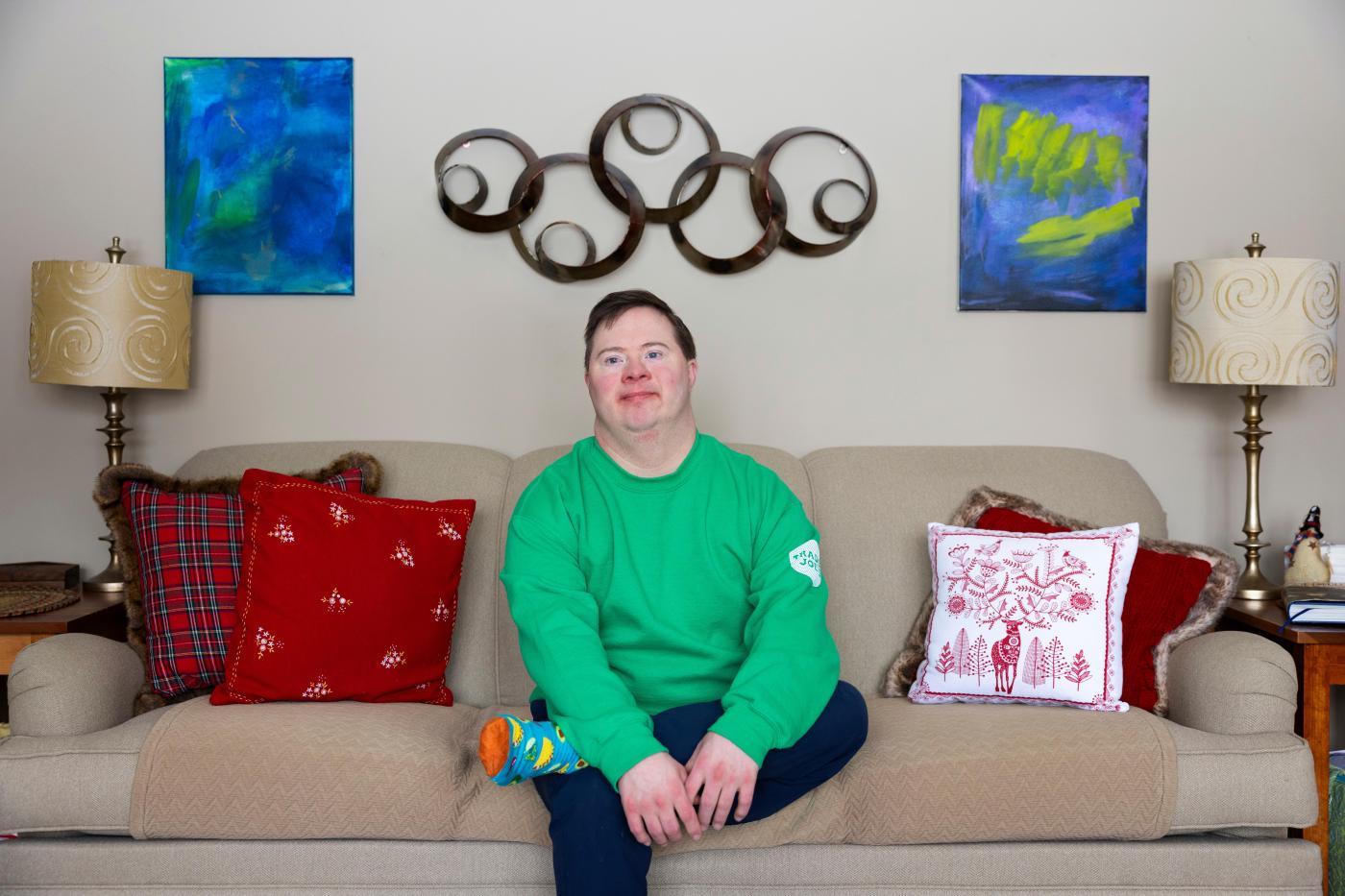
NEW YORK (AP) — Paul Safarik, 32, of Lincoln, Nebraska, has worked in the food industry since he was 21, delivering for quick service restaurants like Raising Cane’s and stocking groceries at stores like Trader Joe’s. With his earnings, Safarik, who has Down syndrome, recently bought a treadmill to stay active when the weather’s bad and helped cover the cost of braces for his teeth.

That’s unusual, financially speaking, and it’s thanks in part to a little-known savings account called an ABLE account, which lets people people with disabilities save money beyond the $2,000 asset limit that’s linked to benefits like Supplemental Security Income and Medicaid. Without the account, Safarik could have risked losing government assistance if he had more than $2,000 in assets saved at one time in a given month.

“With this ABLE account, we don’t have to worry as much,” said Deb Safarik, 71, Paul’s mother, with whom he lives. “It’s nice that he can work and save, and not have that be held against him.”

Named for the 2014 law that created them, the Achieving a Better Life Experience Act, ABLE accounts have been available since 2016 to individuals identified by a doctor as having a disability before the age of 26. Next year, they’ll become available to those identified before the age of 46, which will increase access to an additional 6 million people, including 1 million veterans, according to Indiana State Treasurer Daniel Elliott, who administers the accounts in his state. An estimated 8 million people nationwide already qualify.

“The fact that it used to be that individuals could only save up to $2,000 or they could lose benefits — that was really restricting a lot of families,” Elliot said. “People were forced into a position where they couldn’t save for their futures. Now we’re seeing average account balances of (ABLE accounts) between $11,000 and $12,000.”

Generally, ABLE accounts may reach totals of $100,000 without affecting Supplemental Security Income. Lifetime balance limits for the various state ABLE accounts can range from around $300,000 to over $500,000. They’re administered by state treasurers, and the vast majority can be set up online via their websites. Some ABLE plans accept paper applications as well.

Related Articles

Business |


What happens to your 401(k) after you leave a job? 8 key things to consider

Business |


January home sales fall as high mortgage rates, prices freeze out would-be buyers

Business |


Data: Taxpayers missing out on chance to file for free

Business |


Buy, build or fix: basics for home buyers

Business |


18 ways to save money on groceries

Anyone can contribute to an ABLE account — including the account owner, friends, family, organizations, nonprofits, and employers — up to $19,000 per year in 2025. If the account owner is able to work and not already contributing to a workplace retirement plan, they can contribute an additional amount equal to their yearly gross income. For 2025, that amount is up to an additional $15,560 to $18,810, depending on the state administering the account.

There are also tax advantages. Investment earnings from ABLE accounts remain untaxed as long as money taken from the account is used for “qualified disability expenses,” such as medical treatment, education, tutoring and job training. Account holders may choose from a number of investment options for the funds in their accounts or hold and save the money without investing it further.

Elliot said raising awareness of the accounts is the biggest challenge for the National Association of State Treasurers (NAST), for which he’s also the secretary treasurer.

“Many people are used to the idea that, ‘If I have a disability or my child has one, it could endanger their benefits to save money,’” he said. “We as a state and as a country need to start reaching out to people and saying, ‘Look, you actually can save money now. You could save towards the purchase of a home.’ The hardest thing right now is getting that message out. We need more people to be aware things have changed.”

According to NAST’s data, just 186,641 ABLE accounts existed at the end of 2024, despite an estimated 8 million people qualifying. When the age limit is raised, the accounts will also become available to people whose disabilities may have been the result of an accident in adulthood or developed later in life, such as after a COVID infection.

Andrew Warren, senior associate for policy and research at the Financial Health Network, who studies the financial circumstances of Americans with disabilities, said that the vast majority of people surveyed for a 2023 report by the organization did not know these accounts existed.

“Less than 1% of eligible individuals have these accounts,” Warren said. “Our research show that one of the major barriers to becoming financially healthy for this vulnerable group is asset limits. But there’s an information disconnect between caseworkers and direct services providers on the ground and (administrators of ABLE accounts).”

Here’s what to know:

How do I know if I qualify for an ABLE account?

Two online resources — ABLE Today and the ABLE National Resource Center — can guide you through questions to determine if you or a friend or family member qualifies.

Right now, ABLE accounts are for:

— People whose disability began before age 26, and

— People for whom the disability is “terminal or long-term (more than 12 months)” and for whom the disability causes “marked and severe functional limitations.”

A qualifying person must also meet one of the following criteria:

— Being eligible for Supplemental Security Income (SSI) or Social Security Disability Insurance (SSDI) because of the disability; or

— A doctor has diagnosed the disability (physical or mental).

In 2026, the age limit for ABLE accounts will rise to 46.

What can I do to prepare if I or a family member will qualify next year?

You can begin educating yourself now about the process of setting up the account, so you can add money and fund the account right away beginning in January 2026. Family, friends, and organizations may also begin setting money aside with the intention of contributing it to the account in the individual’s name as of January 1.

The Associated Press receives support from Charles Schwab Foundation for educational and explanatory reporting to improve financial literacy. The independent foundation is separate from Charles Schwab and Co. Inc. The AP is solely responsible for its journalism.

Clint Hill, Secret Service agent who leaped onto JFK’s car after the president was shot, dies at 93

posted in: News | 0

BELVEDERE, Calif. — Clint Hill, the Secret Service agent who leaped onto the back of President John F. Kennedy’s limousine after the president was shot, then was forced to retire early because he remained haunted by memories of the assassination, died Friday. He was 93.

Hill died at home in Belvedere, California, according to his publisher, Gallery Books, an imprint of Simon & Schuster. A cause of death was not given.

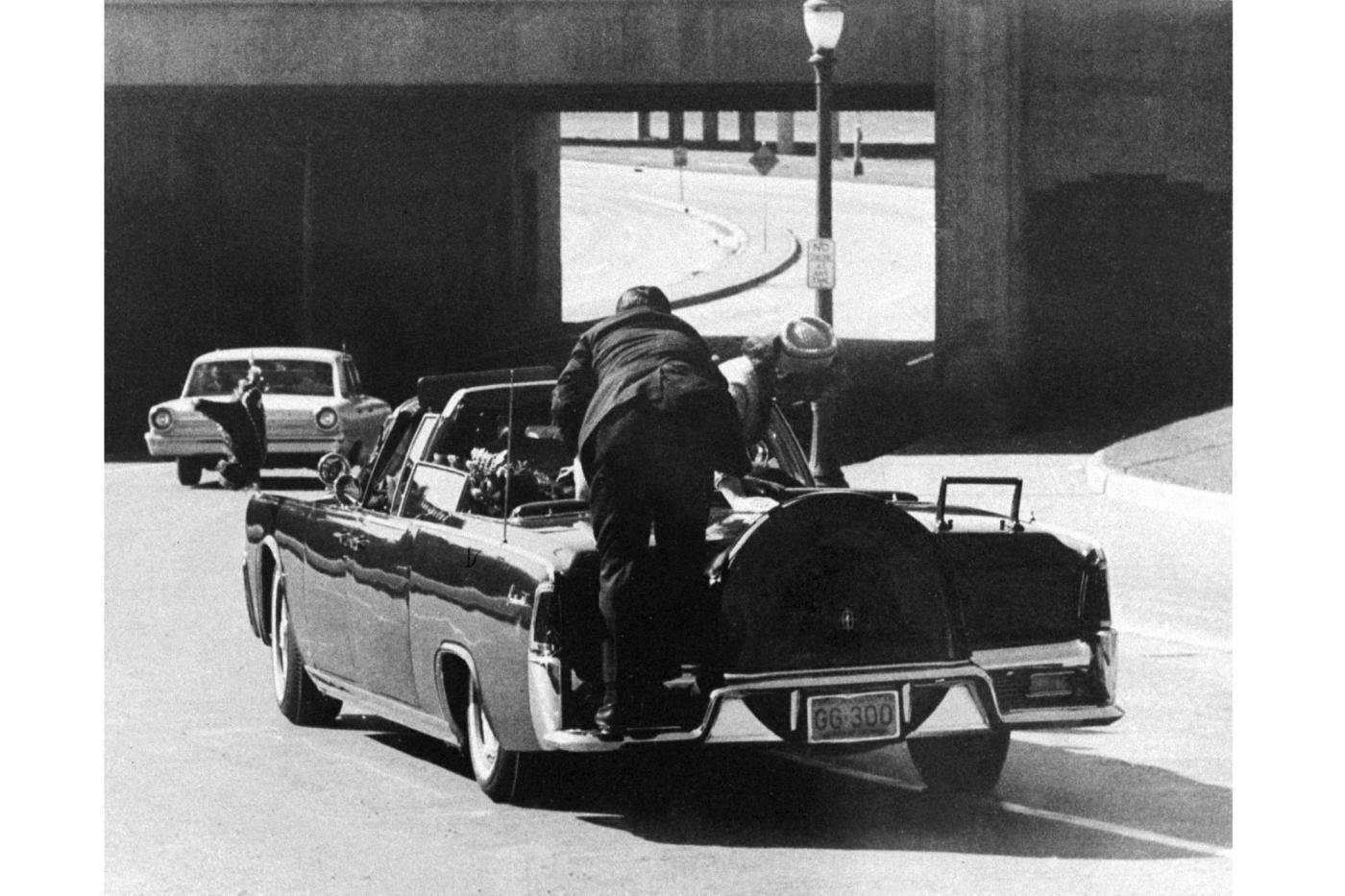
Although few may recognize his name, the footage of Hill, captured on Abraham Zapruder’s chilling home movie of the assassination, provided some of the most indelible images of Kennedy’s assassination in Dallas on Nov. 22, 1963.

Hill received Secret Service awards and was promoted for his actions that day, but for decades blamed himself for Kennedy’s death, saying he didn’t react quickly enough and would gladly have given his life to save the president.

“If I had reacted just a little bit quicker. And I could have, I guess,” a weeping Hill told Mike Wallace on CBS’ 60 Minutes in 1975, shortly after he retired at age 43 at the urging of his doctors. “And I’ll live with that to my grave.”

Related Articles

National News |


Roberta Flack, Grammy-winning ‘Killing Me Softly’ singer with an intimate style, dies at 88

National News |


Some Trump Officials Push Back Against Musk’s Ultimatum to Workers

National News |


Musk’s cost-cutting team is laying off workers at the auto safety agency overseeing his car company

National News |


One of Sean ‘Diddy’ Combs’ attorneys wants to quit his defense team

National News |


AP sues 3 Trump administration officials, citing freedom of speech

It was only in recent years that Hill said he was able to finally start putting the assassination behind him and accept what happened.

On the day of the assassination, Hill was assigned to protect first lady Jacqueline Kennedy, and was riding on the left running board of the follow-up car directly behind the presidential limousine as it made its way through Dealey Plaza.

Hill told the Warren Commission that he reacted after hearing a shot and seeing the president slump in his seat. The president was struck by a fatal headshot before Hill was able to make it to the limousine.

Zapruder’s film captured Hill as he leaped from the Secret Service car, grabbed a handle on the limousine’s trunk and pulled himself onto it as the driver accelerated. He forced Mrs. Kennedy, who had crawled onto the trunk, back into her seat as the limousine sped off.

Hill later became the agent in charge of the White House protective detail and eventually an assistant director of the Secret Service, retiring because of what he characterized as deep depression and recurring memories of the assassination.

The 1993 Clint Eastwood thriller “In the Line of Fire,” about a former Secret Service agent scarred by the JFK assassination, was inspired in part by Hill.

Hill was born in 1932 and grew up in Washburn, North Dakota. He attended Concordia College in Moorhead, Minnesota, served in the Army and worked as a railroad agent before joining the Secret Service in 1958. He worked in the agency’s Denver office for about a year, before joining the elite group of agents assigned to protect the president and first family.

Since his retirement, Hill has spoken publicly about the assassination only a handful of times, but the most poignant was his 1975 interview with Wallace, during which Hill broke down several times.

“If I had reacted about five-tenths of a second faster, maybe a second faster, I wouldn’t be here today,” Hill said.

“You mean you would have gotten there and you would have taken the shot?” Wallace asked.

“The third shot, yes, sir,” Hill said.

“And that would have been all right with you?”

“That would have been fine with me,” Hill responded.

In his 2005 memoir, “Between You and Me,” Wallace recalled his interview with Hill as one of the most moving of his career.

In 2006, Wallace and Hill reunited on CNN’s “Larry King Live,” where Hill credited that first 60 Minutes interview with helping him finally start the healing process.

“I have to thank Mike for asking me to do that interview and then thank him more because he’s what caused me to finally come to terms with things and bring the emotions out where they surfaced,” he said. “It was because of his questions and the things he asked that I started to recover.”

Decades after the assassination, Hill co-authored several books — including “Mrs. Kennedy and Me” and “Five Presidents” — about his Secret Service years with Lisa McCubbin Hill, whom he married in 2021.

“We had that once-in-a-lifetime love that everyone hopes for,” McCubbin Hill said in a statement. “We were soulmates.”

Clint Hill also became a speaker and gave interviews about his experience in Dallas. In 2018, he was given the state of North Dakota’s highest civilian honor, the Theodore Roosevelt Rough Rider Award. A portrait of Hill adorns a Capitol gallery of fellow honorees.

A private funeral service will be held in Washington, D.C., on a future date.


Egg prices are taking the fun (and profit) out of brunch

posted in: News | 0

With egg prices at a record high, shoppers know the pain of trying to buy eggs and finding only empty shelves or horrifying prices. But do you know how it’s hitting your favorite weekend breakfast spot?

Related Articles

Business |


Apple announces $500 billion investment in US amid tariff threats that could affect the iPhone

Business |


Robinhood says SEC has closed its investigation into the company

Business |


Fired federal workers hunt for new jobs but struggle to replace their old ones

Business |


Starbucks lays off 1,100 corporate employees as coffee chain streamlines

Business |


Business People: 3M CEO Bill Brown named chairman, amid other board moves

In a move demonstrating just how impactful the ups-and-downs of egg prices have become, Waffle House recently announced it added a 50-cents-per-egg surcharge to customers’ bills. The Georgia-based chain told CNN that it is watching egg prices and will “adjust or remove” the extra charge based on market conditions.

“The continuing egg shortage caused by HPAI (bird flu) has caused a dramatic increase in egg prices,” Waffle House told the news network. “Customers and restaurants are being forced to make difficult decisions.”

And it really is a hard decision for restaurant owners to make, says Bo Davis, CEO and co-founder of MarginEdge, a restaurant management platform that helps clients track expenses and adjust to price changes.

On the one hand, egg-centric restaurants already operating on thin margins are dealing with an unworkable math problem, Davis says. During the week of Feb. 3, the median price for a dozen eggs was $7.55 nationally (that’s wholesale), according to MarginEdge data collected from its 10,000-plus restaurant clients.

But on the other hand, customers are tired of high prices after years of inflation and will go somewhere else if their favorite diner becomes too pricey.

“At the end of the day, it’s just hard,” Davis says. “Your profitability is going to get wiped out until this gets fixed. You can’t charge enough money to make a healthy profit on eggs at that price if you are an egg concept or a breakfast concept.”

NerdWallet spoke with Davis about what customers might like to know about how restaurants adjust to price spikes. The interview has been edited for length and clarity.

NerdWallet: For restaurants, how big a deal is it when the price of a single ingredient becomes this volatile?

Davis: We have a fair number of clients that are breakfast places. And for them it’s really, really challenging and borderline devastating.

In the traditional sort of menu planning, a restaurant expects 25 to 30% of the costs that they’re charging a client to be their food costs. And there’s another 30% that’s basically labor. And then there’s about 20 to 30% that are other costs. And typically, you’ve got about a 10% margin at the end of it. So if you think about that math: $0.30 on the dollar going to food, with a 10% profit margin, means that if that food item goes up 33%, you’re broke.

If you take something like an omelet where the cost is almost entirely eggs, and the price triples — it doesn’t go up 33%, it triples — then you go from a 30% plate cost to a 90% plate cost. You have the same labor, you have the same rent, you have the same, you know, cleaning supplies and packaged goods and all the other things the restaurant needs. But now you’re minus 50 or 60% on that omelet. You can see how even a 50-cent up-charge would struggle to cover that cost.

NerdWallet: How do restaurants cope with high egg prices?

Davis: The first thing you do is you try to drive customers to a different menu item. The next thing you can do is adjust operations to just make sure that you’re running it as efficiently as possible — that no eggs are getting lost.

The next thing you can do is raise prices. That’s really hard when you see a price like this spike as high as it is. The Waffle House example of 50 cents on an egg — that’s tough to do and it’s tough to fully recapture the cost.

The other thing you can do is lower the quantity you put on a plate, which is also hard, right? How small of an omelet will a customer accept before it just doesn’t work any more?

I guess the last one I would also say is you can trade down quality. So if you’re using cage-free eggs, you can trade to the less expensive non-organic eggs. If you’re using those, you can trade to liquid eggs, where you’re getting them at a lower cost.

NerdWallet: Using Waffle House as an example, why apply a surcharge instead of raising your menu price?

Davis: They believe it’s temporary. With menu prices, you do your very best to adjust them as slowly as possible because it’s the easiest way to push customers away.

I would imagine they also train their servers to tell people, “Look, you know how you’re having a hard time getting eggs? So are we. We have to do this for a minute. We’re hoping it’ll go away soon.” And that would, I think, dramatically minimize the impact of it on a customer or at least not make a customer change their permanent buying decisions.

The surcharge is unusual. And I think it is because this is such an anomaly. What’s interesting with eggs is that because the price move is so intense, if you’re an egg concept, that change is so dramatic that even if other food prices were bouncing down, they’re just not going to offset it.

NerdWallet: Are restaurant-goers going to see more surcharges like the one at Waffle House, do you think?

Davis: Yes. When we saw supply-chain issues and spiked prices around the COVID-19 stuff, it was very clear what had happened, and they were temporary, and the supply chain existed, it just was frozen for a minute.

This isn’t that. This isn’t some boats got stuck or whatever. The chickens are gone. You have to grow new chickens, and the bird flu’s not gone. So it does feel like this is not going away in the near term. I would expect that the surcharges would continue, but you’d also just see more and more restaurants trying to find ways to get customers to eat substitute products. Because it’s hard to just charge more and more and more.

And honestly consumers are getting hammered with it, right? You are. I am. And then going out to eat, and that being more expensive at the same time. I think there’s going to be a continued push on substitute products to the extent you can.

Taryn Phaneuf writes for NerdWallet. Email: tphaneuf@nerdwallet.com.

Shariah court in Indonesia sentences 2 men to up to 85 lashes for having gay sex

posted in: News | 0

By YAYAN ZAMZAMI

BANDA ACEH, Indonesia (AP) — An Islamic Shariah court in Indonesia’s conservative Aceh province on Monday sentenced two men to public caning for having gay sex.

Related Articles

World News |


Trump’s abrupt change of US policy on Ukraine raises questions about Taiwan support

World News |


UN rejects US resolution urging an end to the war in Ukraine without noting Russian aggression

World News |


The biggest takeaways from Germany’s election, which will bring change to the EU’s leading power

World News |


Trump meets with French President Macron as uncertainty grows about US ties to Europe and Ukraine

World News |


Western leaders visit Kyiv and pledge military support against Russia on the war’s 3rd anniversary

The couple, aged 24 and 18, were arrested on Nov. 7, after neighborhood vigilantes in the provincial capital, Banda Aceh, suspected them of being gay and broke into their rented room to catch them naked and hugging each other.

The lead judge said that the two college students were “legally and convincingly” proven to have had gay sex and would receive 85 and 80 strokes respectively.

“During the trial it was proven that the defendants committed illicit acts, including kissing and having sex.“ said the judge, Sakwanah, who goes by a single name like many Indonesians. ”As Muslims, the defendants should uphold the Shariah law that prevails in Aceh,” she added.

She said the three-judge panel decided against imposing the maximum sentence of 100 lashes because the men were outstanding students who were polite in court, cooperated with authorities and had no previous convictions.

Prosecutors previously demanded each get 80 strokes, but the judges decided on a harsher punishment for the older man because they believed that he was the one who had encouraged and provided a place for sexual relations.

Both prosecutors and the lawyers for the two men said they accepted the sentence and will not appeal.

Aceh is considered more devout than other areas of Muslim-majority Indonesia and is the only province allowed to observe a version of Islamic Shariah law.

Indonesia’s secular central government granted Aceh the right to implement Islamic Shariah law in 2006 as part of a peace deal to end a separatist war. A religious police and court system have been established, and the new law is a significant strengthening of Shariah in the region. Each year since then, more than 100 people have been publicly caned.

Aceh implemented an expansion of Islamic bylaws and criminal code in 2015 that extended Shariah law to the province’s non-Muslims, who account for about 1% of the population, and allows up to 100 lashes for morality offenses including gay sex and sex between unmarried people. This will be the third time that Aceh has caned people for homosexuality.

Caning is also a punishment in Aceh for gambling, drinking alcohol, women who wear tight clothes and men who skip Friday prayers.

Human rights groups have criticized the law, saying it violates international treaties signed by Indonesia protecting the rights of minorities.

Indonesia’s national criminal code doesn’t regulate homosexuality, and the central government doesn’t have the power to strike down Shariah law in Aceh. However, an earlier version of the law that called for people to be stoned to death for adultery was dropped because of pressure from the central government.

Associated Press writer Niniek Karmini in Jakarta, Indonesia, contributed to this report.