Elizabeth Shackelford: What history tells us about fighting the repression we are seeing here

posted in: All news | 0

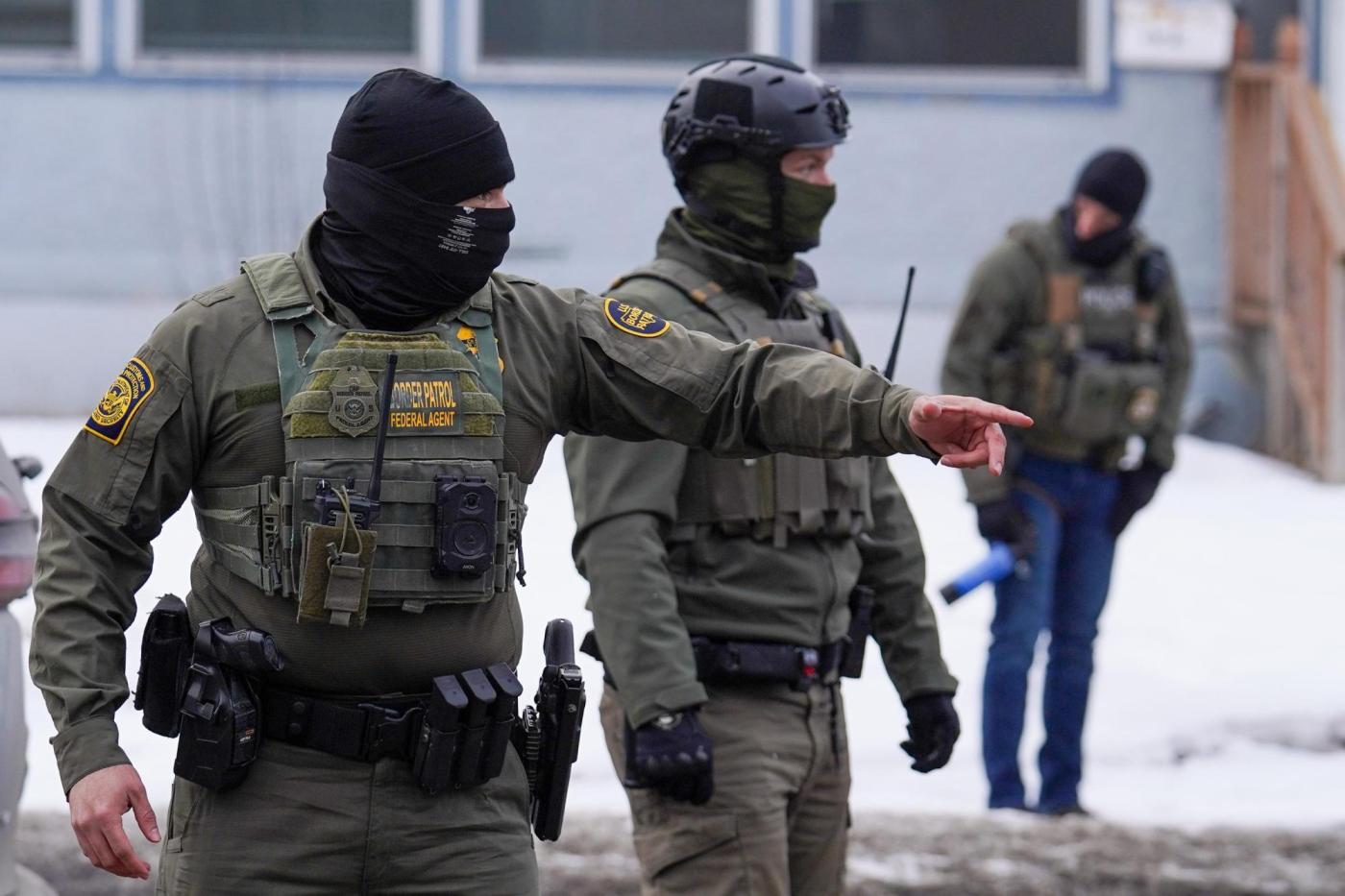
The U.S. government is using unaccountable federal forces to violently suppress dissent and reinforce its power through force and fear. This behavior is designed to make the people feel powerless and the governing authority impenetrable. It may feel shocking in America today, but it’s a common approach used by repressive regimes around the world.

Pushing back on this is difficult and scary, but history has shown us how and under what circumstances citizens have built effective resistance. The good news is that the people across targeted U.S. cities have been doing just that.

When and how do social movements succeed against abusive governments? We have many historic examples to draw on.

Poland’s communist government brutally suppressed the Solidarity Movement during the 1980s as the country’s workers used protests, labor organizing and labor strikes to fight for rights and freedoms.

The 1980s saw a similar popular movement in Chile against Augusto Pinochet who had seized power in a military coup in 1973. Organized civil resistance grew, with regular protests involving widespread evening noise, honking horns and banging pots and pans in solidarity, and “lightning” protests that organized and dispersed quickly.

Students founded the Otpor movement in Serbia in 1998 to resist the regime’s repression of universities. Its focus soon shifted to ousting dictator Slobodan Milosevic, using mass demonstrations and a general strike across the provinces to make its point.

Each of these movements was met with violence and repression, with activists arrested in the thousands, beaten and harassed, but they continued resisting with nonviolence. Gradually, concessions were secured, culminating in elections that the violent regimes lost and ultimately conceded.

America’s own Civil Rights Movement tells the story and success of generations of resistance in the face of violent repression, but its leaders’ deep commitment to nonviolence and persistence won the support of the American public and political leadership and ultimately dismantled legal segregation and disenfranchisement.

None were quick successes, but all achieved remarkable outcomes. In recent years, experts have built databases to study hundreds of examples of civil resistance movements, and the outcomes reveal some lessons and trends.

Social mobilizations against governments tend to be most effective when they are nonviolent, align with public opinion, have media coverage and are ultimately supported by elite actors (business or political figures with influence on public opinion or government actors). These elements all help grow public support and pressure. Nonviolent movements are about twice as likely to succeed as violent ones.

Social media have enhanced the power of another useful tool: real-time video. Exposing government violence before the government sells a different story undermines support for and trust in the government, which in turn reinforces support for the social movement against it.

All of this plays into what Erica Chenoweth, an expert on political violence, calls the “ 3.5% rule,” which asserts that “no government has withstood a challenge of 3.5% of the population mobilized against it” at one time. This conclusion was based on analysis of over 300 movements since 1900. The study focuses on efforts to oust incumbent leaders and has exceptions, but the conclusion is broadly applicable: a movement that can generate this much active public support has a high chance of success.

For context, the most recent nationwide mobilization was the No Kings protest in October, with about 7 million participants, or about 2% of the U.S. population, and this happened well before federal forces killed two U.S. citizens in the streets. The response so far in targeted cities seems beyond the 3.5% threshold already.

Residents of Los Angeles, Chicago and Minneapolis, which have each faced heavy-handed federal crackdowns, are showing us how this is done. They have deployed rapid-response networks of community groups and volunteers to witness, document and track aggressive federal officer activity in their cities. Their videos have turned American public opinion squarely against these operations and undercut the administration’s justifications for use of force. They have secured the support of big and small businesses.

The effort to do so continues. Just last week, protesters were arrested demonstrating at a Target in Chicago’s West Loop as they pressed Target stores to deny entry to immigration agents and call for Immigration and Customs Enforcement to leave Illinois and Minnesota.

Activist groups such as Indivisible have trained tens of thousands of people in nonviolent tactics. As federal agents try to scare and provoke, in a way that could easily undermine the cause, such training is essential to ensure peaceful protesters do not take the bait.

And it’s working. Los Angeles succeeded in ousting thousands of National Guard forces the administration had deployed to aggressively back up its immigration operation. Two weeks ago, U.S. Border Patrol Cmdr. Gregory Bovino was stripped of leadership of the Minneapolis operation, and the Department of Homeland Security has announced that it is drawing down numbers of immigration officers there and would be issuing the remaining ones body cameras, a policy that gradually will be expanded nationwide. These are small but important concessions.

Ending this government repression will take a sustained and organized effort well beyond these cities. But if more Americans are ready to stand up with similar conviction, I have faith that the people will succeed.

Elizabeth Shackelford is a senior adviser with the Institute for Global Affairs at Eurasia Group and a foreign affairs columnist for the Chicago Tribune. She is also a distinguished lecturer with the Dickey Center at Dartmouth College. She was previously a U.S. diplomat and is the author of “The Dissent Channel: American Diplomacy in a Dishonest Age.”

After one month, how is Minnesota paid leave holding up?

posted in: All news | 0

Minnesota’s new paid family and medical leave program is off to a steady start, with more than $30 million in payments and 13,700 benefit approvals in its first month, according to data state officials shared Monday.

The 13,700 approvals are slightly above pace for the 130,000 people the Department of Employment and Economic Development expects in the first year. Though the number is boosted in part by early applications for child bonding leave — something known in paid leave circles as a “baby bump.”

That initial bump is expected to even out over time.

“We’ve seen weekly applications start to trend down over time … in line with experience in other states,” DEED Deputy Commissioner Evan Rowe said in a call with reporters Monday.

Paid family and medical leave was approved by the Democratic-Farmer-Labor-controlled Legislature in 2023. It officially launched Jan. 1 and is the 13th state program of its kind. Applications for bonding leave opened in November, inflating the first month’s numbers, according to DEED, which is tasked with running the program.

About 4,500 of the approved applications were from the soft launch in November and December of 2025. The total number of applications from January that got state approval was closer to 9,200 though there are still pending applications for that month.

How it works, how much is it expected to cost?

The new paid leave benefit requires most employers to offer employees 12 weeks of family leave and 12 weeks of medical leave. Annual time off will be capped at 20 weeks. Events like having a child, a serious illness, or caring for a sick family member are eligible for coverage.

It’s expected to cost Minnesota around $1.6 billion in its first year and is covered by a 0.88% payroll tax split between employers and employees. Asked Monday how long that rate would stand, DEED officials said that would depend on an actuarial analysis expected in the coming months.

The state will have to send employers updated premium rates by July 31, so there will need to be an official estimate before then, Rowe said.

The maximum benefit payout is $1,432 per week — roughly the average wage in Minnesota. The average weekly payout for approved leave in January was around $1,132 per week, according to DEED.

The first round of payments was scheduled to start on Jan. 12. Close to 3,000 Minnesotans received payments in the first round.

Applications

So far, the state has received 38,000 paid leave applications and made more than 21,000 approvals, denials and cancellations. Phone wait times for paid leave assistance remained under 5 minutes, according to DEED officials.

Rejections for paid leave applications were largely due to employees already having access to a similar benefit through their employer, state officials said. Other reasons for rejection included a lack of proper documents.

So far, most leave requests have been for bonding with a child — around 48%. Medical leave was at 41% for the first month and continues to grow, according to Rowe. In the coming months, that proportion likely will continue its climb.

The remainder of approved leave requests broke down as follows — 10% was leave to care for a relative or loved one, and less than 1% each for military and personal safety-related issues.

Average leave durations parental bonding were for nine weeks, medical leaves for six and a half weeks and care for relatives six weeks.

Other types of leave, such as for military service or personal safety did not have enough applicants to show meaningful trends in January, according to DEED.

Fraudulent claims

There have been some attempts at fraud in the program in its first month, Rowe said. Though it may be too early to demonstrate any significant vulnerabilities to the system.

DEED has forwarded possible fraud cases to the Minnesota Bureau of Criminal Apprehension. State officials did not have a number of fraud attempts or details about any particular cases on Monday, though Rowe said some applicants had attempted to supply false information in order to obtain benefits.

Minnesota paid leave requires significant levels of verification for an applicant to qualify for payments.

DEED uses existing data from Minnesota’s unemployment insurance program, which has a strong reputation for fraud prevention, to identify and lock accounts suspected of being compromised by hackers or impostors.

To access benefits

To access benefits, applicants must submit identification and take a photo of themselves to sign up through an online platform called LoginMN, a centralized sign-in site for state services. All claims must be certified by a health care provider or other appropriate professional.

A team with access to data analytics to spot overall trends in the paid leave system will review claims. Minnesota will be the first state to integrate electronic health records into its paid leave system. The state will also conduct random audits of claims.

State officials in November said they expect cybercrime and identity theft to be among the main forms of fraud they’ll face. But they’ll also need to ensure applicants are telling the truth on claims. Multiple points of validation will help combat dishonest applicants, Rowe told lawmakers at the time.

Related Articles


Burnsville takes new approach to implement affordable housing programs


Audit: Changing procedures may safeguard $1 billion in MN Medicaid programs


Greater Minnesota cities ask lawmakers to invest in ‘the basics’ as hot-button issues loom


MN governor hopeful Lisa Demuth focuses on fraud while visiting Moorhead


DFL wins in St. Paul, Woodbury special elections. MN House remains tied

Catherine O’Hara died from a pulmonary embolism. Cancer was the underlying cause

posted in: All news | 0

By ANDREW DALTON

LOS ANGELES (AP) — Catherine O’Hara died from a pulmonary embolism, with cancer as the underlying cause.

Related Articles


Person is shot in a high school in Maryland and a suspect is in custody, police say


Trump’s immigration crackdown is straining federal courts. Judges are raising the alarm


US military boards sanctioned oil tanker in the Indian Ocean after pursuit from the Caribbean


Trial against Meta in New Mexico focuses on dangers of child sexual exploitation on social media


New video footage released from day of the fatal Brown University shooting

A Los Angeles County death certificate issued Monday lists the pulmonary embolism, which occurs when a blood clot blocks an artery in the lungs, as the immediate cause of the actor’s Jan. 30 death at age 71. Rectal cancer was the long-term cause.

The oncologist who signed off on the certificate indicated that he had been treating O’Hara since March of last year, and last saw her on Jan. 27. She died at a hospital in Santa Monica, California.

The beloved Canadian-born comic actor and “SCTV” alum starred as Macaulay Culkin’s mother in two “Home Alone” movies and won an Emmy as the dramatically oblivious wealthy matriarch Moira Rose in “Schitt’s Creek.”

Her death was a surprise to most, and an initial statement from her representatives said only that she died “following a brief illness.”

Collaborators including Culkin, Christopher Guest, Eugene Levy and Pedro Pascal paid her loving tribute after her death.

The document said she was cremated. It lists her profession as “actress” and her business as movies. It said she practiced her trade for 50 years.

Person is shot in a high school in Maryland and a suspect is in custody, police say

posted in: All news | 0

ROCKVILLE, Md. (AP) — One person was shot inside a high school in Maryland on Monday as police said that a person was in custody and the school’s campus was on lockdown.

Related Articles


Catherine O’Hara died from a pulmonary embolism. Cancer was the underlying cause


Trump’s immigration crackdown is straining federal courts. Judges are raising the alarm


US military boards sanctioned oil tanker in the Indian Ocean after pursuit from the Caribbean


Trial against Meta in New Mexico focuses on dangers of child sexual exploitation on social media


New video footage released from day of the fatal Brown University shooting

Police have a person in custody related to the shooting, according to the Montgomery County Department of Police in a post on X.

Officers were dispatched at 2:15 p.m. because of reports of shots fired at Thomas S. Wootton High School in Rockville, a suburb of Washington, D.C., the department said.

“We’re just still in lockdown, the police are here, the kids are all in the classrooms,” said Tabitha Davis, an administrator at the school, who wasn’t able to provide more information in a brief phone interview with The Associated Press.

Rockville is the seat of Montgomery County, Maryland’s most populous.