While the state has celebrated the growth of its newest legal economy, many feel left out—no one more so than non-citizen immigrants. This story comes to us from Feet in 2 Worlds, an independent media outlet and journalism training program that empowers the voices of immigrant journalists.
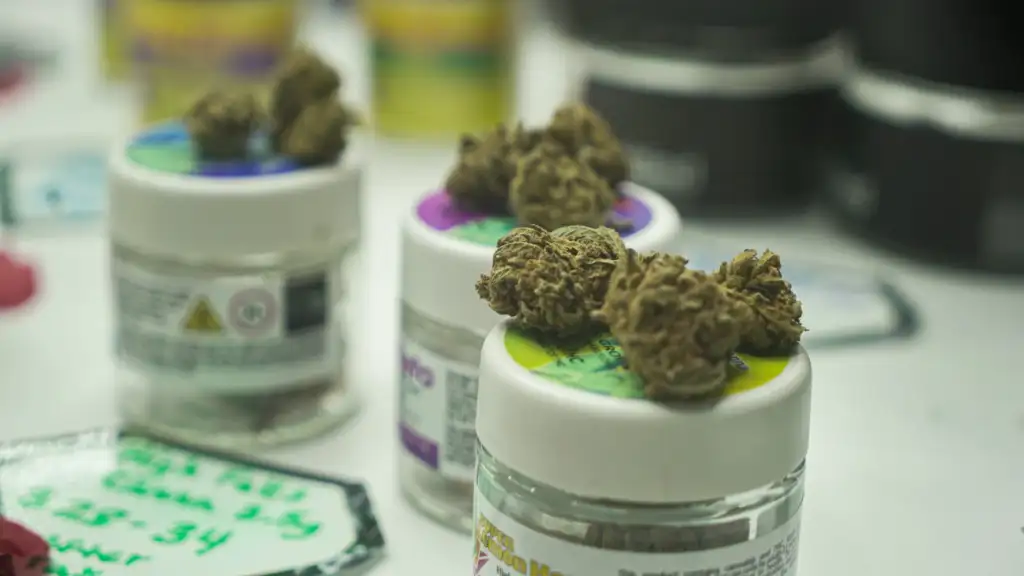
Strains of cannabis outside of their cases but behind glass at the legal Emerald Dispensary in Bushwick, Brooklyn, NY. (Photo Credit: Iggy Monda.)
This story comes to us from Feet in 2 Worlds, an independent media outlet and journalism training program that empowers the voices of immigrant journalists.
As a way to welcome the new year, New York Gov. Kathy Hochul declared on the final day of 2024 that New York State’s budding cannabis industry had hit a milestone: it had produced $1 billion in retail sales. And that every single green bill made was legal and clean.
New York was only the 15th state to legalize adult-use cannabis, when it did so in March 2021 with the signing of the Marihuana Regulation and Taxation Act (MRTA). But New York State’s politicians and entrepreneurs had higher dreams than the 14 states that had legalized recreational cannabis before them. They saw a future where the state would become the capital of cannabis in more ways than one.
The announcement of $1 billion in sales was the state’s way of declaring that it is catching up to other big players like California and Michigan, while pushing forward equity in the space.
Besides legalizing recreational cannabis, what New York State did with the passing of the MRTA was promise to prioritize people who had been arrested for cannabis-related offenses and targeted by police. For decades, police disproportionately arrested Black and Latino people more often than white people. The NYPD made 4,081 criminal possession of marijuana arrests in 2018. Only 287 of those arrests were of white people, while Black and Latino people accounted for 3,627 of them.
“What we do know, and we kind of talked about a lot, is everyone uses cannabis at the same rates,” said Dasheed Dawson, New York City’s first cannabis czar, who resigned at the end of March following sexual harassment accusations. “It is just certain populations — Black, Indigenous, Latinx, immigrant populations — that have been disproportionately criminalized for that same use.”
In response, the state of New York wanted to make sure that the people who were harmed most by prior drug policies had a fair, inclusive opportunity to participate.
“One of the main goals of New York State legalizing cannabis was to make sure we were leading with equity, and equity was at the center and the heart of everything we did,” said Taylor Randi Lee, the Press Secretary for the New York State Office of Cannabis Management. That state office was established on the same day adult-use cannabis was legalized.
New York State made a commitment to expunge non-violent cannabis-related convictions. And the state promised that the first group of people to be issued retail cannabis licenses would be those who had been previously convicted for a non-violent cannabis offense—namely those in the Black and Latino communities. This type of license was called a Conditional Adult-Use Retail Dispensary (CAURD) License.
“When I read that rule right there, I was like, oh snap, this law is written for me,” said Coss Marte, one of New York’s first CAURD holders. Marte grew up on the Lower East Side of Manhattan, where drugs were a common part of everyday life. He was incarcerated three times in his life for cannabis offenses and at least once for possession of cocaine.
Once out of prison and following the passage of the MRTA, Marte not only acquired his CAURD license to sell cannabis recreationally in his Lower East Side and two other dispensary locations all named CONBUD, but he was also able to expunge his prior cannabis offenses.
“Why wouldn’t you go support a Coss Marte?” asked Solonje Burnett, an entrepreneur and consultant who runs a business called Weed Auntie. “Why wouldn’t you go to these guys who were actually arrested for either having weed or distributing weed when it was illegal?”
For Burnett, supporting businesses run by members of society who were imprisoned for cannabis offenses is beneficial for a myriad of reasons. For one, it’s healthier. According to Burnett, the people who were always selling cannabis know what product is the best quality. Legal cannabis dispensaries—unlike their unlicensed counterparts—have to be tested and approved before they can be sold. And, Burnett says, licensed stores won’t sell anything that could be potentially dangerous.
“Me going to this dispensary, even though it might be a little bit more expensive [than an unlicensed store, helps to] prop up a safe industry for my community,” says Burnett.
Secondly, Burnett and politicians will argue that supporting owners like Marte creates jobs for local communities that have been affected by state and city enforcement in the past.
“The governor’s office mandates that 50 percent of adult use cannabis licenses go to social economic and equity licensees,” added Taylor Randi Lee. “I’m proud to say that New York State’s at 54 percent.”
The MRTA was considered by many advocates to be one of the most progressive legalization efforts of cannabis in the country. But while it focuses on disenfranchised communities and even veterans and farmers, it largely leaves immigrants out of the picture.
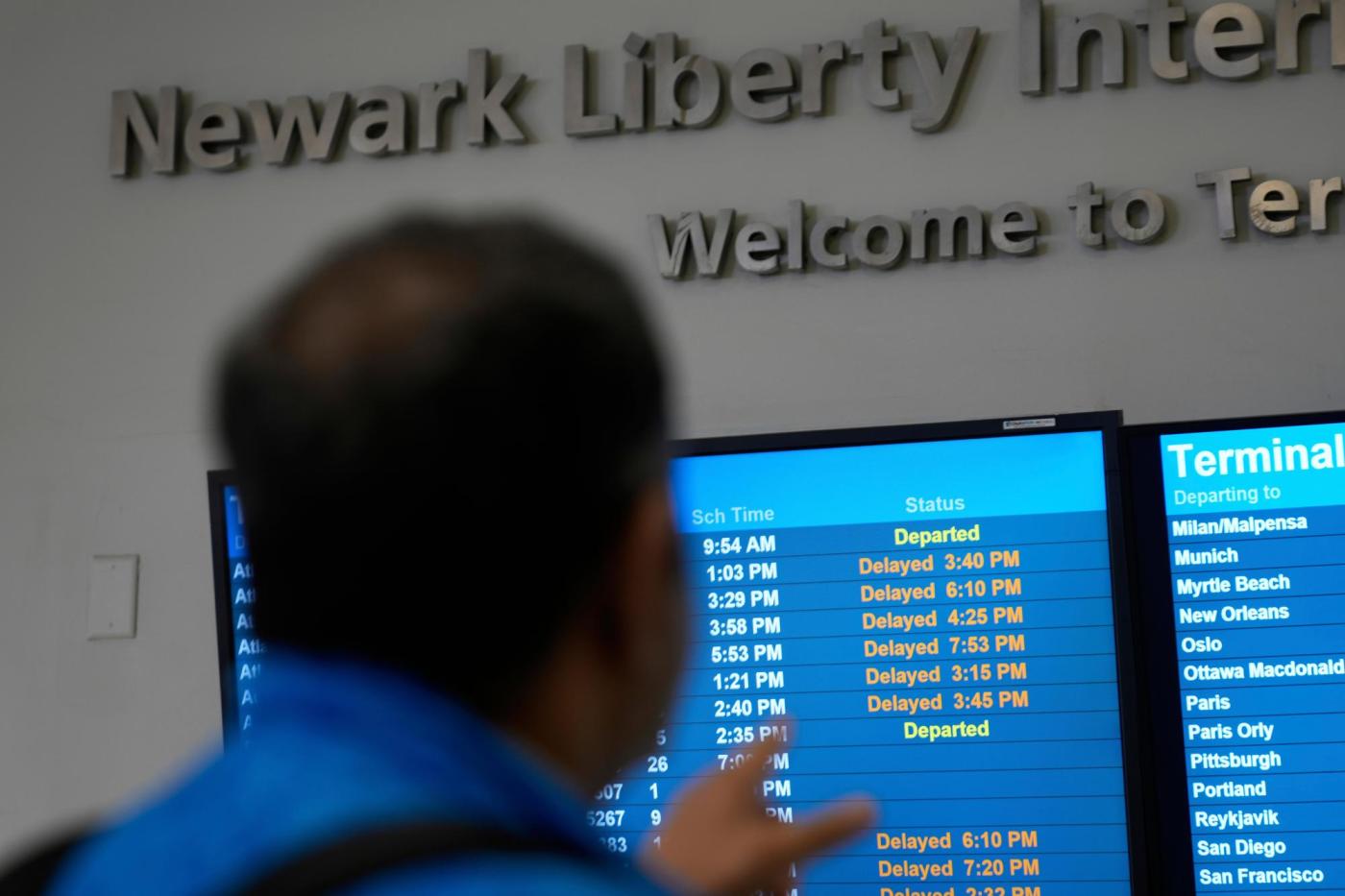
And that’s because while cannabis is now legal to smoke and sell in the state of New York, it is still illegal at the federal level. That means an immigrant who is not a citizen can be charged with cannabis-related crimes, even if they are in a legal state or territory. So, while citizens in these locations can smoke and sell legally without worrying about legal consequences, non-citizen immigrants take the risk of losing their chance at citizenship or residency, or facing deportation.
“We have this two-tier system of justice, right? There’s one for citizens and one for immigrants,” said Benita Jain, senior advisor and federal policy counsel with the Immigrant Defense Project.
Rows of cannabis products behind glass at the legal Emerald Dispensary in Bushwick, Brooklyn, NY. (Photo Credit: Iggy Monda)
The federal government has linked cannabis with immigrants since even before the country first criminalized it.
The United States had been producing cannabis since the 17th century when it was more colloquially known as hemp. It was such a common crop that the country’s first president—George Washington—was growing it, and colonial Virginia even passed a law requiring every farmer to grow it. If they didn’t, they risked being jailed. In the 19th century, major cities, like New York, would allow for the operation of hash parlors, where people could smoke as if they were drinking at a bar.
But in November 1910, Mexican citizen Francisco Madero made a call to arms to overthrow the Mexican government, spurring on the Mexican Revolution. A result of that fighting were Mexicans immigrating to the United States.
Coincidentally, around the same time, at the beginning of the 20th century — when cannabis-like products were legal and being used in the U.S. — newspapers printed stories about violence around the border. The common thread in these stories were that immigrants from Mexico were routinely high and hurting American citizens, including “upper-class white women.” Some accused these immigrants of gifting cannabis to schoolchildren.
Other newspaper articles also targeted immigrants from India and the West Indies as a source of all the “dangerous” cannabis that was coming into the country and seducing the white population into smoking along with them. The prejudicial rhetoric continued for decades.
The movement to make cannabis illegal federally picked up in the 1930s. The first two dominos to fall were the creation of the Federal Bureau of Narcotics and the naming of Harry J. Anslinger as its commissioner in 1930. Anslinger made it his mission to outlaw cannabis by any means necessary, and to do so he had to convince the public that cannabis would make the average man dangerous — even when 29 out of 30 scientists told him that his hypothesis had no scientific backing.
In 1937, he testified before Congress his belief on the dangers of the plant, but instead of using more colloquial words such as cannabis and hash, Anslinger adopted the word “marihuana” so as to use a more Spanish-sounding term that he could link with Mexicans. In his testimony, he quoted from a particularly prejudiced-laden letter from a newspaper editor that read:
“I wish I could show you what a small marihuana cigaret can do to one of our degenerate Spanish-speaking residents. That’s why our problem is so great; the greatest percentage of our population is composed of Spanish-speaking persons, most of who are low mentally, because of social and racial conditions.”
His testimony paved the way for the Marihuana Tax Act of 1937, which taxed cannabis so heavily that it made any recreational use impractical. Ironically, this legislation was enacted almost two decades after Mexico itself had already outlawed cannabis.
Anslinger may not have been able to criminalize cannabis, but his mission was completed by President Richard Nixon. In 1970, Nixon signed the Controlled Substances Act, which classified cannabis as a Schedule I drug, meaning it would be treated as an illegal substance with the highest potential for abuse and without medical benefits. It set the stage for the War on Drugs he launched the following year, which has sustained until today.
The federal government has recently began discussing whether or not it should reschedule cannabis away from Schedule I and to Schedule III, allowing it to be more accessible. And states are trying to reverse policies of 20th century American leaders — policies that have led to millions of people being arrested within the Black, Latino, and immigrant communities. This all comes as a result of a majority of Americans accepting that cannabis is not a danger to a majority of people.
But while dozens of states have legalized adult-use cannabis, Benita Jain said that immigration laws have only been reinforced by presidents such as Ronald Reagan and Bill Clinton.
“As a result of immigration laws passed in 1996, but even before that for drug-related convictions,” said Jain, “a broad range of convictions can trigger immigration detention, can result in a person being denied lawful permanent residency, can result in someone with lawful permanent residency being subject to deportation, or being unable to apply for citizenship.”
Donald Trump is now this country’s president. As a result, deportations are on the mind of many in this country, including Burnett—or the Weed Auntie.
“I’m really, really worried about what’s going to happen in 2025 with our deportation dictator coming into power,” said Burnett. “That is his modus operandi.”
President Trump has been relatively positive about cannabis being legalized across the country, but his deportation policies are as clear as day. He isn’t the first president to deport thousands, and won’t be the first to proceed with deportations based on substances like cannabis. Just between 2002 and 2020, the U.S. deported over 47,000 people for marijuana use or possession.
And so if a non-citizen immigrant wants to join the legal cannabis economy, they must either sell illegally or take great care in taking on a position that doesn’t require being directly involved with the product. But even that comes with risks.
“Proximity is a risk factor,” said Jain. She mentioned stories of auditing work for a cannabis business, installations of security cameras, and even delivery drivers leading to federal scrutiny. “Our sense is that the closer a person who’s working in the industry is to the actual substance, the more risk they face.”
Even if the political leaders in the nation’s capital reschedule cannabis away from Schedule I, it wouldn’t help non-citizen immigrants as much as one might think. Jain says while that would be a boon to corporations and business owners looking for more tax benefits, immigrants would need more drastic action from the government if they wish to legally participate in this new cannabis economy, as a seller or consumer.
“What we need to do,” said Jain, “is to deschedule marijuana completely, and then have the immigration laws also catch up to us to that.”
Podcast credits: Hosted by Shaka Tafari. Produced by Iggy Monda. Edited by Lushik Lotus-Lee. Additional editing by Mia Warren and Quincy Surasmith. Fact Checking by Julie Schwietert Collazo. Engineering by Jocelyn Gonzales. Original theme music by Gautam Srikishan. Additional music from Blue Dot Sessions. “The Hustle” show logo by Daniel Robles. Special thanks to Scott Foletta and Solonje Burnett.
Feet in 2 Worlds is supported by the John D. and Catherine T. MacArthur Foundation, The Ford Foundation, the Fernandez Pave the Way Foundation, an anonymous donor, and contributors to our annual NewsMatch campaign.
The post In the Weeds: Immigrants & NY’s Legalized Cannabis Industry appeared first on City Limits.