HOT SULPHUR SPRINGS — Jonathan and Elizabeth Stark arrived at a park outside Granby, Colorado, on a late-April day in 2020 to meet with Grand County’s assistant coroner and a sheriff’s investigator.
Their conversation, captured on a body-worn camera, concerned the investigation into the Feb. 18 death of their 7-year-old son, Isaiah.
The cause and circumstances of the boy’s death were deeply unusual. Isaiah died from ingesting too much sodium, the coroner found, likely due to drinking olive brine. The parents had used olives and olive brine as a form of punishment, a mandatory reporter later told a child abuse hotline. Isaiah was also malnourished at the time of his death.
The Starks were well-known in the small mountain community of Colorado’s Grand County, especially in law enforcement circles, with Jonathan Stark serving as an officer in the Granby Police Department.
Ninety minutes into their conversation, the assistant coroner, Tawnya Bailey, told the parents, “I will do everything in my power to make sure this stays here,” according to a report by the Colorado Bureau of Investigation. She added that the sheriff’s investigator, Bobby Rauch, would do the same.
The Starks asked what the district attorney would do with the autopsy findings. The DA would review the report and “throw it aside,” they were told. Rauch assured the Starks that “the case was done.”
The suspicious circumstances surrounding Isaiah Stark’s death and subsequent revelations about the ensuing investigations have prompted serious concern from child welfare workers, who question whether officials in the rural Colorado county adequately and impartially probed the child’s fatality.
The Child Protection Ombudsman of Colorado, tasked with investigating child safety concerns, explicitly called out the Grand County sheriff’s and coroner’s offices, as well as the 14th Judicial District Attorney’s Office, for neglecting several key portions of a normal death investigation. The state’s Child Fatality Review Team, which compiles reports on youth deaths, divulged little information about Isaiah’s death, but concluded it was “needless and could have been prevented” if only medical and mental health professionals had appropriately monitored the situation.
In all, at least seven separate entities reviewed the case over the past five years, including one outside county investigation that found the parents had committed “fatal medical neglect.” The local district attorney, however, declined to bring charges.
“We have many unanswered questions, and those responsible for giving these answers are unwilling to do so,” said Stephanie Villafeurte, the ombudsman, in an interview.
The Starks declined to comment for this story.
District Attorney Matt Karzen, in a statement, said his office declined to prosecute this case “because the autopsy, and then subsequent additional review by medical professionals, could not confirm the exact cause of death nor establish any culpable mental state required for a criminal prosecution under applicable Colorado statutes.”
Publicly available information about the autopsy shows the coroner did, in fact, rule on the cause and manner of death, and an independent pathologist later said the boy was so dehydrated it may not have taken much olive brine to kill him.
The Grand County Sheriff’s Office, in a statement, said it conducted a “comprehensive, professional death investigation into this matter.”
“This has been classified as a death investigation, and while this is a tragic death, there are no findings to support a criminal case, and specifically not a ‘homicide’ classification,” the statement read.
But The Denver Post’s investigation reveals that some in the child welfare system, including the child protection ombudsman, believe Isaiah Stark’s death underscores how vulnerable children can fall through the cracks of Colorado’s human services and criminal justice systems and highlights the conflicts of interest in small, close-knit communities.
The Post compiled this report through documents obtained through open records requests with the ombudsman’s office and a heavily redacted investigation produced by the CBI at the behest of the ombudsman. The Post also reviewed a limited report from the Child Fatality Review Team, as well as a medical review performed by an outside doctor.
The Grand County Sheriff’s Office declined to provide case investigation documents to The Post, including the body-camera video from the park, saying that disclosure of the records would be “contrary to the public’s interest.”
A sheriff’s vehicle is parked outside the Grand County Sheriff’s Office on April 22, 2025, in Hot Sulphur Springs. (Photo by RJ Sangosti/The Denver Post)
‘I am desperate for help’
Isaiah Stark was born Jan. 15, 2013, to a substance-using mother, according to a 2023 letter sent by Villafuerte’s office to the CBI. The boy, who was also born with multiple developmental issues, had been in the Starks’ care since he was three months old, placed with the family through the Florida foster care system.
The Grand County Department of Human Services met with the family monthly for three months in 2016 and 2017, noting no safety concerns, the ombudsman’s letter states.
But caseworkers expressed concerns about the validity of the difficulties that Elizabeth reported regarding Isaiah’s behavioral health issues, including Reactive Attachment Disorder, a rare but serious condition in which an infant or young child doesn’t establish healthy attachments with parents or caregivers, the letter says.
Caseworkers noted that the mother also appeared overwhelmed by parenting in general.
On March 22, 2017, the Starks legally adopted Isaiah.
Two years later, the family contacted Isaiah’s doctor, requesting a change in his medication.
“I am desperate for help,” Elizabeth said, according to the records reviewed by the ombudsman and described in the letter. “Is there a stronger medication that you can prescribe ASAP that will take the ability away from him to keep him awake and completely force his body to sleep?”
These messages continued at least once a month.
On Feb. 16, 2020, Elizabeth sent the doctor another urgent request.
“I am still having significant problems with his sleep,” she wrote. “He says he is sleeping at night, and he seems to be, but he is wanting to sleep all day and we are held hostage by this, unable to do anything because he keeps falling asleep.”
The following day, Elizabeth sent another message, noting that things are “getting worse.” Isaiah was vomiting and engaging in other unwanted behaviors, according to hospital and law enforcement records reviewed by the ombudsman.
The parents decided to take Isaiah to Children’s Hospital Colorado in Aurora. But on the way there, Isaiah became unresponsive.
Elizabeth reversed course, bringing her son to the Middle Park Medical Center in Granby. He died the following day.
At his funeral on Feb. 22, 2020, at the Winter Park Christian Church in Tabernash, the mother described Isaiah’s death as “God rescuing him,” according to transcripts included in a 2023 CBI report. She said this was not the outcome she wanted or prayed for, but she felt his death “set him free from his disorder.”
Jonathan Stark, in an Instagram post that day, wrote, “My son is not lost to us, was not taken from us. He is well and whole with his Father.”
“This is the greatest pain I’ve felt and some of the greatest joy for my son’s peace,” he wrote.
Isaiah Stark died at Middle Park Medical Center in Granby, Colorado, seen here on April 22, 2025. (Photo by RJ Sangosti/The Denver Post)
‘More than an accident’
An autopsy showed the 7-year-old died of severe hypernatremia, a condition characterized by a high concentration of sodium in the blood. The likely culprit, the coroner determined, was olive brine. Isaiah was also malnourished and dehydrated at the time of his death, with his small and large intestines markedly distended.
Deadly cases of hypernatremia are quite rare, said Shireen Banerji, poison center director at Denver’s Rocky Mountain Poison and Drug Center.
Normally, if someone ingests too much sodium, their body will protect them by throwing it up, she said. If a large amount of sodium manages to be absorbed into the bloodstream, it can cause the lungs and brain to be overloaded with fluid.
“It would have to be more than an accident,” Banerji said. “You’d need to drink it like a beverage; you’d need a good amount.”
The Grand County coroner ruled the manner of death to be accidental.
The coroner, Brenda Bock, in April sent Karzen, the district attorney, and Grand County Sheriff Brett Schroetlin the autopsy report.
“I do not believe this is anything more than a tragic accident,” Bock wrote, according to an account of the email included in the CBI report.
That same day, the Starks met with the sheriff’s investigator and deputy coroner at the Granby-area park. Bailey, the assistant coroner, told the parents that if she were to receive a records request, she would respond with, “Geez, I can’t find that file” and that she “would take a long time to find that record,” the CBI report states.
Autopsy reports for children are no longer public record in Colorado. The coroner only divulged certain autopsy information to The Post as required under the new law.
Bailey, in a statement to The Post, said the coroner conducted an “unbiased, professional and thorough investigation into this death that is based on facts. My office has cooperated and complied with any (Colorado Open Records Act)-related requests regarding this death as is statutorily required by law.”
Reported to child abuse hotline
Despite numerous red flags, Isaiah’s death wasn’t reported to the state child abuse hotline until November 2021 — nearly 21 months after his death. Three mandatory reporters called it in.
Colorado law requires that counties aware of egregious incidents of child abuse and/or neglect, or near-fatalities or fatalities of any child, must report that information within 24 hours to the state’s Department of Human Services.
One of the mandatory reporters told the hotline that the parents had been using olives and olive brine as a punishment for the child’s behavior, according to the ombudsman’s letter. This information, the reporting party said, was relayed to the coroner at the time of the boy’s death, but no one had reported it to the statewide hotline for abuse or neglect.
“The reporting party was concerned for the other children in the home and the potential for excessive discipline,” the ombudsman’s letter notes.
Given Jonathan Stark’s job with the Granby Police Department, officials at the Grand County Department of Human Services referred the new investigation — based on the report to the child abuse hotline — to their counterparts in Jefferson County.
On Dec. 20, 2021, the 14th Judicial District Attorney’s Office said it would not file criminal charges because the case “cannot be proven beyond a reasonable doubt,” the CBI report states.
The 14th Judicial District Attorney’s Office is located inside the Grand County Judicial Center building, seen here on April 22, 2025, in Hot Sulphur Springs. (Photo by RJ Sangosti/The Denver Post)
Four months later, Jefferson County Human Services concluded that both parents were determined to be “founded” for fatal medical neglect and “neglect injurious environment” of Isaiah, the ombudsman’s letter said. Jefferson County declined to provide this report or discuss the investigation with The Post, citing child confidentiality laws.
“Founded,” as defined by the Code of Colorado Regulations, means that the abuse and/or neglect assessment is established by a “preponderance of the evidence that an incident(s) of abuse and/or neglect occurred.”
“Fatal neglect” is when the physical or medical needs of the child are not met, resulting in death. An “environment injurious to the welfare of a child” is when the environment caused injuries to the welfare of the child or “reasonably could be foreseen as threatening to the welfare of the child and is in control of the parent,” the regulations state.
Findings of child abuse and neglect go into a parent’s record in the state’s child welfare database, and could impact their ability to be foster parents in the future. Reports of known or suspected child abuse or neglect must be transmitted immediately by the county department to the district attorney’s office and to local enforcement.
Often, prosecutors work closely with human services and others involved with a child abuse case, including the person who conducted the autopsy and mandatory reporters who worked on the case.
Multiple experts consulted by The Post for this story said they were surprised that, given the facts of this case, no charges were filed.
Jonathan Stark expressed concerns that the Jefferson County findings would impact his employment and was encouraged to speak to an attorney, the ombudsman’s letter says.
Karzen, the district attorney, told The Post he was “aware” of the Jefferson County report, though he didn’t say whether he received or reviewed it as part of his charging decision. He said he believes Jefferson County investigators received additional information from independent medical experts, but did not know whether they re-evaluated their conclusions in light of that medical evidence.
A limited child fatality review
The ombudsman in May 2022 received a complaint about Isaiah’s death. The reporting party expressed concern that the fatality did not appear to have received a thorough investigation due to Jonathan Stark’s job in law enforcement.
The ombudsman’s office reviewed a host of records from the sheriff’s office, including body-worn camera footage, incident reports, video, dispatch records and calls. Villafuerte, the ombudsman, said the criminal investigation did not include crucial information such as interviews with surviving siblings, observations of the family’s home, and a review of medical and child welfare records.
She also expressed concern with the assistant coroner’s statements at the park and the relationship between Jonathan Stark and the district attorney.
“We don’t have any facts before us that indicate the child’s death was reviewed in a manner that would quell concerns from the community — period,” Villafuerte said in an interview.
In February 2023, the ombudsman sent a letter to Karzen, the district attorney, saying she had reason to believe his office never received the Jefferson County assessment, as is required by law. Villafuerte asked for a 15-minute meeting to discuss the case.
That conversation never happened, she said.
In June 2023, the Child Fatality Review Team conducted an assessment of Isaiah’s death, with its three-page report shedding light on the parents’ struggles dealing with Isaiah’s needs.
The Child Fatality Review Team conducts in-depth case reviews of all incidents of egregious child abuse or neglect, near-fatalities, and fatalities substantiated for abuse or neglect when a family has had previous involvement with a county human services agency within three years prior to the incident.
Elizabeth Stark admitted that the boy was “different and difficult to parent” from the time of his placement to the time of his death, the report notes under a subsection detailing identified risk and contributing factors that may have led to the incident. She said Isaiah, at just two months of age, “hated her.” The parents described the child as “damaged” when they took him into their home as an infant.
The mother, the report states, blamed every negative aspect of his life on his Reactive Attachment Disorder. The parents attributed Isaiah’s actions to “manipulative behaviors and willfulness.”
Other risk factors included the children being homeschooled, a lack of available resources in rural Grand County, and a lack of referrals made regarding Isaiah’s extremely low body mass index and other medical issues that “should have been red flags in the medical community.”
The review team said the death was “needless and could have been prevented had the child received appropriate monitoring and intervention from medical and mental health professionals.”
The report, though, made no recommendations and did not detail the circumstances surrounding Isaiah’s death. The review team included a rare non-disclosure statement, saying “it is not in the best interest of the child or the child’s family to release the full CFRT report.”
The review team issued 50 reports in 2021. Only five included non-disclosure statements.
The Colorado Department of Human Services told The Post that state law does not allow the agency to share additional information about specific cases.
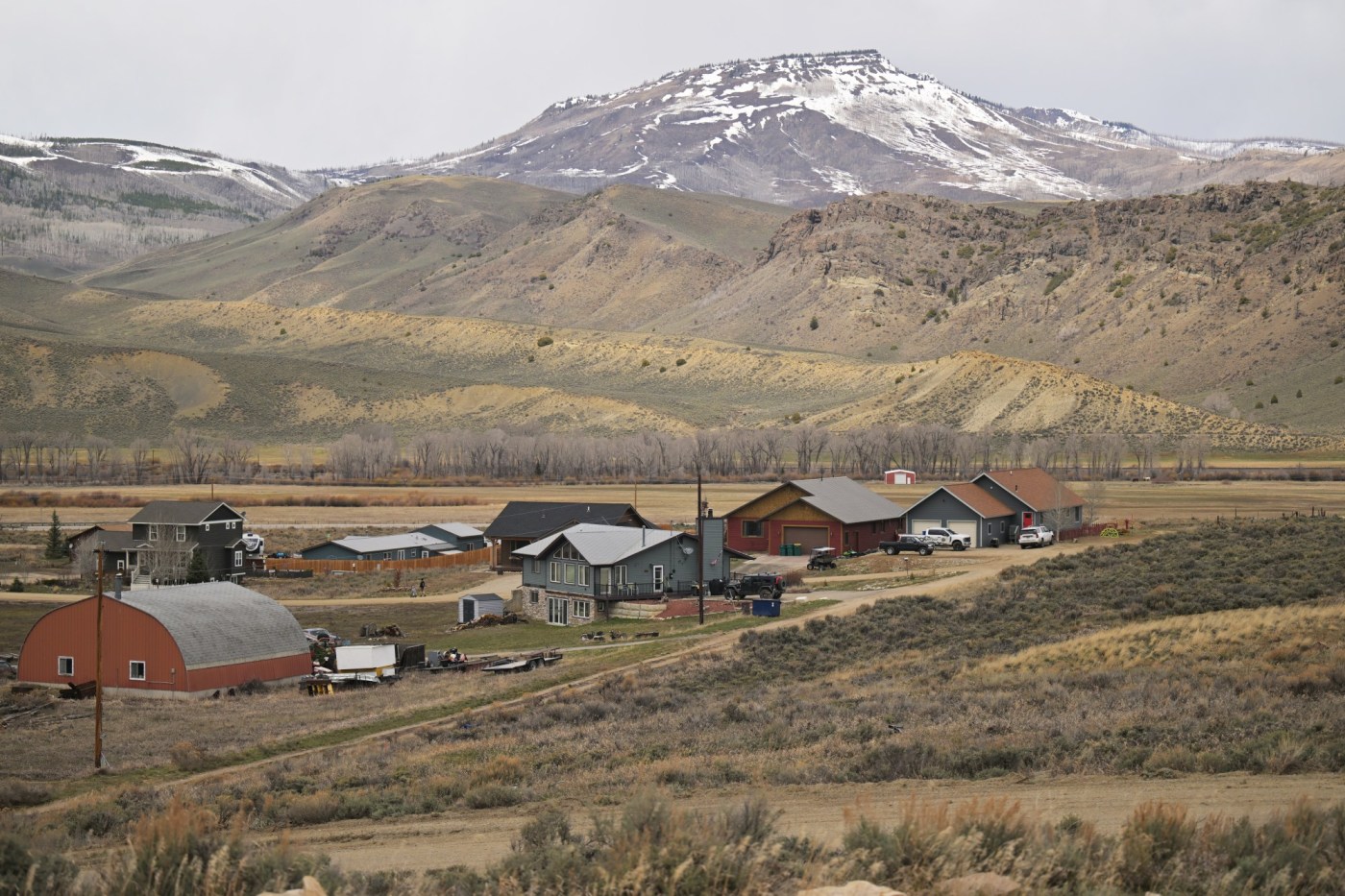
Isaiah Stark lived in this Hot Sulphur Springs neighborhood, photographed on April 22, 2025. (Photo by RJ Sangosti/The Denver Post)
‘We have been denied answers’
In September 2023, Karzen, at the behest of the ombudsman, asked the CBI to investigate Isaiah’s death.
Two months later, Karzen referred the case to First Judicial District Attorney Alexis King “to avoid any possible conflict of interest,” the CBI report states. But in February 2024, King’s office said it would not make any prosecutorial decisions, citing a misunderstanding over which office would handle the prosecution.
The parties agreed that the case should be referred back to Karzen’s office to determine whether a special prosecution was necessary for a filing decision, said Brionna Boatright, a spokesperson for King’s office.
The First Judicial District’s DA was never appointed as special prosecutor.
In April 2024, Karzen requested the state attorney general’s office review the death. The DA did this, he told The Post, because human services workers “seemed to believe the criminal declination decision was not appropriate.”
The AG’s office consulted an independent forensic pathologist to look at the circumstances that may have caused Isaiah’s death. The doctor reached three conclusions, according to a summary of his findings provided to The Post by Karzen: Isaiah had compromised kidney function at the time of his death; Isaiah was significantly dehydrated at the time of his death; and a small amount of olive brine could have been fatal to someone in Isaiah’s condition.
The pathologist, Dr. Michael Arnall, said Isaiah’s lab results showed he was suffering from a renal impairment, causing his kidneys to function at only 50% to 66% of normal at the time of his death. This impairment, known as prerenal azotemia, can be caused by dehydration and reduces the body’s ability to excrete sodium, causing sodium levels to rise.
Isaiah’s dehydration was significant, Arnall found, and likely contributed to elevated levels of sodium in his bloodstream at the time of his death.
The pathologist’s research showed four ounces or half a cup of olive brine could be a fatal dose for an otherwise healthy child. However, for someone in Isaiah’s condition, the amount could be as little as one to three ounces.
Arnall, though, said he could not determine the exact cause of Isaiah’s death. It’s possible, the summary states, that the boy succumbed to hypernatremic dehydration and renal impairment alone, without the ingestion of a large sodium load.
But these two conditions made Isaiah extremely susceptible to a large amount of sodium, the doctor said. If he ingested olive brine in this state, his body would have been unable to excrete sodium fast enough, inducing fatal hypernatremia.
“I do not believe that I will be able to prove which alternative this case represents or the relative contribution of each (cause),” Arnall stated in the summary.
Eventually, the case made its way back to Karzen.
In a March 25 letter to the CBI, the DA said his office had, for the second time, declined to prosecute anyone connected to Isaiah Stark’s death. The initial autopsy report classified the death as an “accident,” he wrote. Additional review by medical experts revealed “substantial uncertainty as to exactly what events and medical conditions led to the death of (Isaiah Stark).”
“Because there is insufficient evidence of any crime related to the death, specifically a lack of scientific evidence establishing the required culpable mental state for criminal liability, prosecution of this matter is again declined,” Karzen wrote.
Villafuerte, meanwhile, is still trying to figure out how a series of systems failed this 7-year-old boy. This situation, she said, is symptomatic of a much larger problem.
“Ultimately, we adults need to ask ourselves: When it comes to a child fatality, was the death preventable? And what can we learn about all of our roles? What can all of us learn from a child’s death so we don’t repeat it again?” Villafuerte said. “We have been denied answers to those questions. That’s the biggest concern here.”