Real World Economics: Tax bill full of perverse incentives

posted in: All news | 0

Edward Lotterman

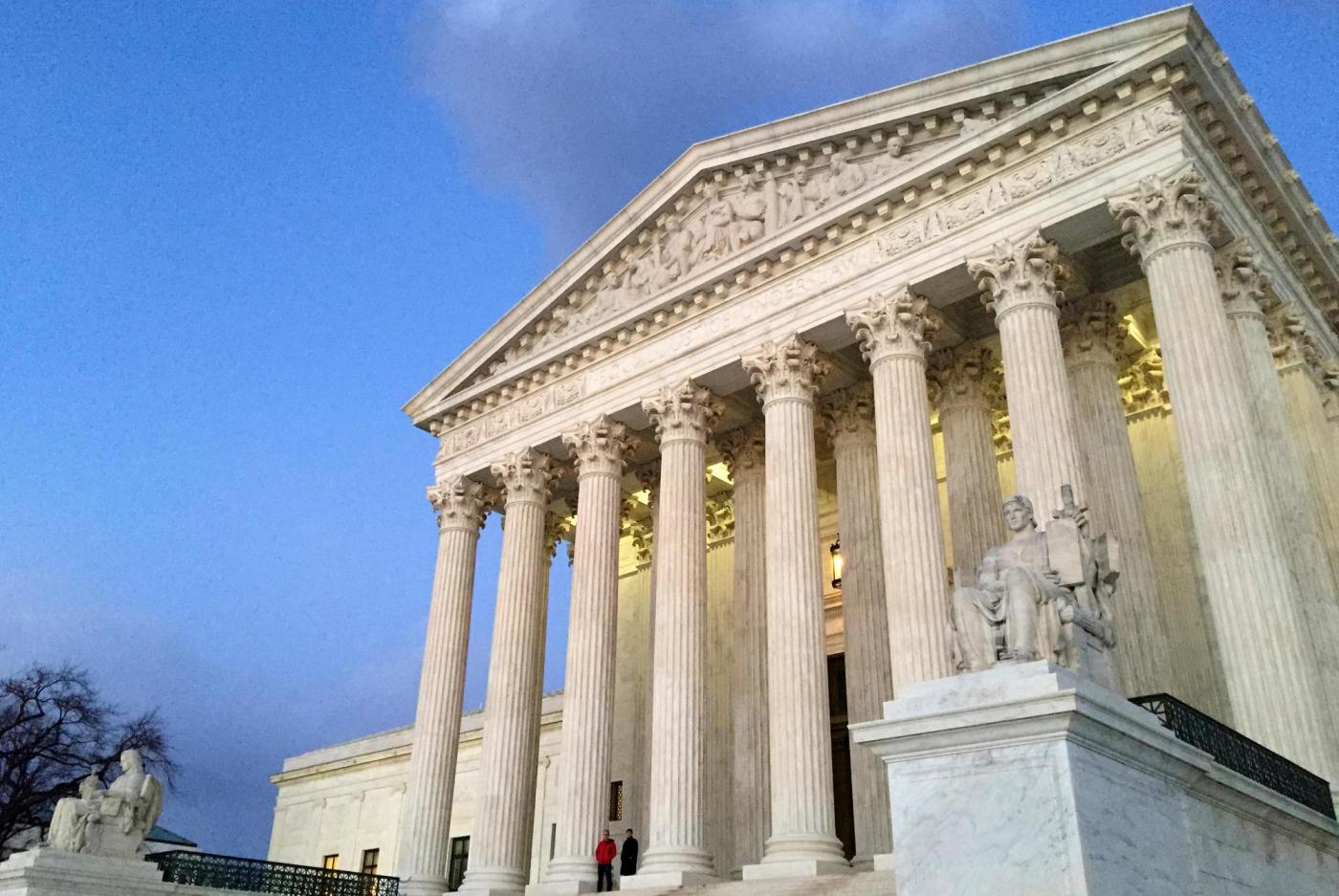
The 119th Congress now deliberating in Washington is rewriting history. Having sat for only 135 days, but already over seven months into fiscal year 2025, it will grab the prize as most fiscally irresponsible Congress ever.

The 12th Congress, 1811-1813, held that status for two centuries. It declared war on England in June 1812 and adjourned without appropriating any money with which to fight. This was after refusing to recharter the First Bank of the United States, the best vehicle by which we might have borrowed the money.

We are not in a declared war now, thank God, yet there are conflicts at multiple points around the world. Our armed forces conduct combat operations daily. More importantly, the world economy is in peril amidst a trade war of our own making.

So what has this Congress done? Seven months and two weeks into the current fiscal year, Congress should be well into the task of writing the budget for FY 2026. That starts in 136 days. But it cannot quite finish a 2025 budget that will pass both houses and be signed by our president.

The general outline is clear, however. Total outlays will be up from FY 2024. Elon Musk’s delusional promises to reduce spending by $2 trillion have actually cut less than $100 billion. And some cuts were from necessary programs like air traffic control and income tax administration that will be restored. And in any case, DOGE’s cuts will be overwhelmed by higher outlays from the number of Social Security and Medicare beneficiaries ratcheting up by 1.5 million. Everyone knew this would happen.

Yet Congress proposes to cut taxes by about $90 billion a year compared to what they would be with no change in current policy. All this is madness.

The root cause of the trade deficits that trouble those in the administration is that Americans consume more than we produce. The fiscal deficit — our government paying out more than it takes in — is one underlying cause of perennial trade deficits that some see as evidence of our being cheated.

But that is a broader matter. What about details of what Congress is poised to do?

First, the 2017 tax cuts that overwhelmingly benefited high income people will be made permanent. This is obscene in its lack of fairness.

University of Chicago economist Raghuram G. Rajan pointed out 15 years ago that “The top 1 percent of households accounted for only 8.9 percent of income in 1976, but this share grew to 23.5 percent of the total income generated in the United States in 2007. Put differently, of every dollar of real income growth that was generated between 1976 and 2007, 58 cents went to the top 1 percent of households.”

Those trends have continued. Forty years ago, our nation was in the fifth of nations with the most equal income distribution. Now we are in the fifth with the most unequal. Yes, high income households do pay a large fraction of total personal income taxes. But that is because they get such a large and growing fraction of total income. Yet the cuts they got eight years ago will continue.

So will the “carried interest” treatment for much of the compensation of hedge fund managers that results in their facing lower marginal tax rates than most school teachers or many truck drivers. This injustice has begged for correction for 30 years, but donations to inaugural balls and purchases of Donald and Melania’s crypto coins along with PAC contributions to key congressional races were investments that paid off handsomely to put it mildly.

Also, no one will pay income taxes on any Social Security benefits. That upends a bi-partisan consensus carefully crafted in 1984 to eliminate an unfair disparity between the taxation of public and private pension plans on one side with zero taxation of the fraction of Social Security paid for by employers’ share of FICA. It also served to keep Social Security funding solvent longer without further increases in FICA rates.

But responsible bi-partisan crafting when Congress still functioned cannot resist demagogues. And so, a fraction of us who are relatively well off will pay less in taxes. Our children and grandchildren will pay more.

The elimination of taxes on tip income will help some of them, although fewer than 2% of U.S. workers get tips and considerable fudging remains on the fraction still paid in cash. I

Hourly workers will not be taxed on overtime. The Fair Labor Standards Act, passed late in Franklin Roosevelt’s New Deal in 1938, requires wages at least one and a half times as high for any hours over 40 a week. All this was ordinary income subject to the individual income tax. But now only pay for the first 40 hours a week will get hit.

There is some apparent fairness in these two measures. If you’re giving many billions to millionaires, give at least a couple of billions to wait staff, truck drivers and assembly-line and warehouse workers.

The problem is that in doing so, you introduce other incentives that skew efficient use of resources as people try to milk the new tax preference for all they can.

Lower tax rates on capital gains than on salaries created the sham of hedge fund managers being compensated with “carried interest.” Decades earlier, a lower tax rate on sales of “livestock held for breeding purposes,” meant that female pigs raised for slaughter would be bred to give one litter of baby pigs before being sent to packing plants, while these sows’ male littermates were sent as soon as fat for slaughter.

Such tax-reducing fiddling wastes resources. They only make sense to people doing them because of the tax code quirks. This year’s tax changes create large incentives for more of the shame — er, same.

Hospitality owners already try to shift compensation from wages toward “tips.” One can already read how that might get extended to other sectors.

Brazil once had a similar experiment with tax-free overtime. Workers who regularly had been working 40 hours a week started to clock 32 one week, 48 the next and so on. Total hours worked didn’t change, but fiddled timecards meant 10% to15% of pay was not taxed.

Could major employers here get away with this? Probably not. What about small construction, office cleaning, independent retail and similar firms? Don’t bet against it. Yet over-the-road truckers earning by the mile or others on piecework won’t benefit a cent.

Public finance economists evaluate the “burden” of taxes. This includes the total cost to society of the taxes actually paid to the government plus the administrative costs of complying with the tax. It also includes the losses in national output caused by inefficient use of resources motivated only by tax avoidance. Breeding young sows to have one litter of pigs to lower income tax liability took more real resources of feed, labor and facilities per pound of pork available to households.

Congress’s 2025 actions make our economy less efficient, less fair, and less sustainable than it was on Jan. 1. It already was shot through with problems then. Why do we accept going backwards?

Related Articles


Real World Economics: Remember the money supply? It’s our main problem


Real World Economics: GDP is important, but must be kept in context


Real World Economics: The buck stops Trump, or so it appears


Ed Lotterman: What if the Fed set a trap for Trump?


Real World Economics: Powell hits first; Trump hits back

St. Paul economist and writer Edward Lotterman can be reached at stpaul@edlotterman.com.

AP PHOTOS: Mexican tall ship strikes Brooklyn Bridge, snapping masts and killing 2 crew members

posted in: All news | 0

NEW YORK (AP) — A Mexican navy sailing ship on a global goodwill tour struck the Brooklyn Bridge in New York, snapping its three masts, killing two crew members and leaving some sailors dangling from harnesses high in the air waiting for help. Mayor Eric Adams says at least 19 people aboard the ship needed medical treatment Saturday night. But he says the 142-year-old bridge has been spared major damage. The cause of the collision is under investigation. The Mexican navy says in a post on the social media platform X that the incident involves the Cuauhtemoc, an academy training vessel.

States are telling sheriffs whether they can — or can’t — work with ICE

posted in: All news | 0

By Tim Henderson, Stateline.org

Local sheriffs are on the front lines in deciding whether to participate in the Trump administration’s mass deportation plans. But states increasingly are making the choice for them.

More and more, sheriffs’ hands are tied no matter whether they do — or don’t — want to help with deportations, though they often get the blame when conservatives draw up lists of sanctuary cities.

“‘Naughty lists,’ as we call them, are not super helpful here,” said Patrick Royal, a spokesperson for the National Sheriffs’ Association. “We all know there are places like Colorado where you can’t [help with deportations], and places like North Carolina where you have to.”

Cooperation between sheriffs and U.S. Immigration and Customs Enforcement lies at the heart of the Trump administration’s immigration detention policy. The administration plans to punish noncooperative jurisdictions with funding cuts— though many legal experts agree that cooperation is voluntary unless state or local laws say otherwise.

Sheriffs, who typically run local jails, must decide what to do when faced with immigration detainers— requests from ICE to hold onto incarcerated people up to two extra days so ICE officers can show up and arrest them. ICE issues those detainers when the agency reviews fingerprints sent electronically for background checks as part of the jail booking process.

Otherwise, arrested suspects who post bond or are otherwise released by a judge might go free despite their immigration status, prompting ICE in some cases to pursue them in the community.

In North Carolina, Sheriff Garry McFadden ran on a platform of limiting cooperation with ICE when he was elected in Mecklenburg County, home to Charlotte, in 2018. But today, McFadden must comply with detainers because of a state law passed last year.

In a now-retracted Facebook post, U.S. Sen. Thom Tillis in late April accused Mecklenburg and several other North Carolina counties of “shielding criminal illegal immigrants” as sanctuary jurisdictions. Tillis, a North Carolina Republican, said in the post he was writing federal legislation to prosecute sanctuary jurisdictions.

“You can’t say we’re a sanctuary county and have state laws that say we have to work with ICE. You can’t have both,” McFadden said. He added that he’d like more choice about whether to comply with detainers. A federal funding cutoff would endanger important jail programs such as rape counseling, he said.

“Everybody’s focused on immigration like that’s the biggest fire, and nobody wants to address the other things. The losers will be the prisoners who need all these services we provide,” McFadden said.

Conservative sheriffs in Democratic-controlled states also can be frustrated by state policy on detainers. Sheriff Lew Evangelidis of Worcester County, Massachusetts, said he’s been criticized for releasing prisoners wanted by ICE but sometimes has no choice: A 2017 state Supreme Court ruling prohibits holding prisoners based on detainers.

“If they [ICE] want this person and consider them a threat to public safety, then I want that person out of my community. I want to keep my community safe,” said Evangelidis. He supported a Republican-sponsored effort in the state legislature to allow 12-hour holds for ICE if a judge determines the prisoner is a threat to public safety, but the amendment was voted down in April.

States act on detainers

Many experts agree that ICE detainers can be legally ignored if states allow sheriffs to do that.

“That detainer request is just that, a request, it’s not a requirement,” said Cassandra Charles, a staff attorney at the National Immigration Law Center, which is opposing Louisiana’s lawsuit to reverse a court-ordered ban on cooperation between Orleans Parish and ICE.

The general counsel for the North Carolina Sheriffs’ Association, Eddie Caldwell, agreed that the detainers are voluntary under federal law.

The association supports a state bill now under consideration that would require not only the 48-hour detention but also a notice sent 48 hours before release to let ICE know the clock is running. The proposal has passed the House.

The notification matters, Caldwell said, because there can be criminal proceedings that take weeks or months, so ICE in many cases doesn’t realize the 48-hour window has started.

Tillis’ office said the senator’s disagreement with McFadden, a Democrat, and other sheriffs is about that notification.

“It’s not necessarily that [sheriffs] are breaking the law, but rather making it as difficult as possible for ICE to take prisoners into custody by refusing to do some basic things. Notification is important,” said Daniel Keylin, a senior adviser to Tillis.

States including California, Colorado and Massachusetts ban compliance with the ICE detainers, on the general principle that it’s not enough reason to hold people in jails when they’re otherwise free to go because of bail or an end to their criminal cases. Those three states have made recent moves to defend or fine-tune their rules.

California’s attorney general also has issued guidance to local jurisdictions based on a 2017 state law limiting cooperation with immigration authorities. That law withstood a court challenge under the first Trump administration.

Colorado has a law against holding prisoners more than six hours longer than required, and a new bill sent to Democratic Gov. Jared Polis last week would specify that even those six hours can’t be for the purpose of an immigration detainer.

Iowa, Tennessee and Texas are among the states requiring cooperation with detainers.

And Florida has gone further, requiring sheriffs to actively help ICE write detainers though official agreements in which local agencies sign up to help enforce immigration laws.

Cooperation boosts arrests

Such cooperation makes a big difference, experts say — jails are the easiest place to pick up immigrants for deportation, and when local sheriffs and police help out, there are more arrests.

“A larger share of ICE arrests and deportations are happening in places where local law enforcement is cooperative with ICE,” said Julia Gelatt, associate director for the Migration Policy Institute’s U.S. Immigration Policy Program, speaking at a recent webinar.

“A declining share of arrests and deportations are happening from places like California, where there are really strict limitations on local law enforcement’s cooperation with ICE,” she added.

ICE is making about 600 immigration arrests daily, twice the rate as during the last year of the Biden administration, said Muzaffar Chishti, an attorney and policy expert at the Migration Policy Institute, speaking at the same event.

Reports on deportations are incomplete, Chishti said, but he estimated the current administration is on track to deport half a million people this year and is trying to get that number higher.

“The Trump administration has not been able to change the laws that are on the books, because only Congress can do that,” Chishti said. “It’s going to take congressional action for the Trump administration to achieve its aim of higher [arrest and deportation] numbers.”

Related Articles


Moody’s strips U.S. government of top credit rating, citing Washington’s failure to rein in debt


DHS asks for 20,000 National Guard troops for immigration roundups, Pentagon reviewing request


Case of brain-dead pregnant woman kept on life support in Georgia raises tricky questions


House Republicans include a 10-year ban on US states regulating AI in ‘big, beautiful’ bill


Federal judge strikes down workplace protections for transgender workers

President Donald Trump has added more pressure, last month requesting a list from Attorney General Pam Bondi and Homeland Security Secretary Kristi Noem of sanctuary cities, which he says would face funding cuts. The administration also has sued some states, including Colorado, Illinois and New York, over their policies.

Asked for comment on the legality of funding cutoffs for sanctuary policies, Bondi’s office referred to a February memo in which she promised to “end funding to state and local jurisdictions that unlawfully interfere with federal law enforcement operations.” The memo cites a federal law saying local officials “may not prohibit, or in any way restrict” communication about immigration status.

Local jurisdictions in Connecticut, Minnesota, New Mexico, Oregon and Washington joined a February lawsuit led by the city and county of San Francisco and Santa Clara County in California against a Trump administration executive order calling for defunding cities with sanctuary policies, calling the order “illegal and authoritarian.”

In April, a U.S. district court in California issued a preliminary injunction in that case preventing any funding cutoff over sanctuary policies to the cities and counties in the lawsuit. And on Friday, the federal judge, William Orrick, ruled that the injunction applies to any list of sanctuary jurisdictions the administration may target for funding cuts.

Trump’s new executive order seeking the list cannot be used as “an end run” around Orrick’s injunction, the judge wrote, while he decides the legality of detainer policies and other issues.

“The litigation may not proceed with the coercive threat to end all federal funding hanging over the Cities and Counties’ heads like the sword of Damocles,” Orrick wrote.

Stateline reporter Tim Henderson can be reached at thenderson@stateline.org.

©2025 States Newsroom. Visit at stateline.org. Distributed by Tribune Content Agency, LLC.

In the Deep South, health care fights echo civil rights battles

posted in: All news | 0

By Anna Claire Vollers, Stateline.org

MONTGOMERY, Ala. — Tara Campbell unlocked the front door of the Bricklayers Hall, a no-frills brick building on South Union Street in downtown Montgomery, half a mile from the white-domed Alabama Capitol.

She was dressed in leggings, a T-shirt and bright blue running shoes. It was 8 a.m. on a Saturday, and she exuded the bouncy enthusiasm of a Zumba instructor as she welcomed the handful of Black women who’d just arrived.

Like Campbell, they were dressed for a workout. Three of them wore Wonder Woman socks that boasted tiny capes, which earned some laughs.

The women were ready for a two-mile group walk around Montgomery’s historically Black Centennial Hill neighborhood. But Campbell wanted to give them a quick tour of the building first.

For most, it was their first time inside the new Montgomery outpost of GirlTrek, a national organization dedicated to improving the health of Black women. A veteran of the nonprofit group’s Chicago chapter, Campbell moved south three months ago to open the new office in Montgomery.

GirlTrek chose its location deliberately. The Bricklayers Hall was the nerve center of the 1955-1956 Montgomery bus boycott, which successfully desegregated the city’s public buses and became a model of nonviolent protest. The Rev. Martin Luther King Jr. and other boycott leaders strategized inside the hall, where King also kept an office.

That office is now Campbell’s office. GirlTrek’s walking teams are designed to empower Black women to improve their health, but also to encourage civil rights-inspired activism to tackle broader health disparities.

The Bricklayers Hall, located in the historically Black neighborhood of Centennial Park in Montgomery, Ala., was the nerve center for the 1955-1956 Montgomery bus boycott touched off by Rosa Parks. (Anna Claire Vollers/Stateline/TNS)

This year marks the milestone anniversaries of several civil rights victories: the 70th anniversary of the bus boycott, the 60th anniversary of the Selma-to-Montgomery marches, the landmark Voting Rights Act of 1965.

But 2025 also marks the 60th anniversary of Medicaid, the public health insurance program for people with low incomes.

The creation of Medicaid isn’t typically considered a civil rights victory. But the idea of health care as a human right was very much a part of the Civil Rights Movement, as was the belief that universal coverage could help dismantle racial inequities in health care.

“The connection between Medicare, Medicaid and the Civil Rights Movement was there from the beginning,” said Zachary Schulz, a history lecturer at Auburn University who specializes in public health history and policy. “Desegregation is often discussed in education, but there could be an argument made that it began in health care.”

Many of the Alabama communities that were home to the fiercest civil rights battles of the 20th century still grapple with systemic neglect that’s resulted in poor health outcomes, high uninsured rates and a shortage of medical providers.

In the neighborhoods around the Alabama Capitol, where nearly 50,000 people gathered in March of 1965 to meet the Selma-to-Montgomery marchers and push for voting rights, nearly a quarter of residents don’t have health insurance, according to the latest U.S. census data, for 2023. Around the Bricklayers Hall, the median household income is about$23,615, less than half of what it is statewide.

The neighborhood’s closest hospital filed for bankruptcy in February.

Statewide, 12% of Black residents under age 65 are uninsured, compared with 8.2% of white people and 10.3% for all races, according to the census.

Just as civil rights activists marched for voting rights and an end to segregation, the next generation of organizers is demanding something they see as no less essential: the right to accessible, affordable health care in a system that continues to deny it.

The women in the Saturday morning walking group come from different neighborhoods across the city. Most said they have health insurance. But everybody knows somebody who’s struggled to get the health care they need.

Campbell believes unjust policies harm the health of Black women everywhere — and wants to encourage them to continue pushing for change.

One policy change that has long been the focus of rallies, committee hearings and advocacy across the state: Alabama’s refusal to expand Medicaid to more adults under the Affordable Care Act, despite evidence that the state’s health care system is failing huge swaths of Alabamians. Alabama consistently ranks at or near the bottom in health measures, including high rates of heart disease, obesity and maternal deaths.

“We’re trying to save our own lives,” Campbell said. “We’re here in the footsteps of the Civil Rights Movement where, when they walked, things changed.”

‘The most shocking and the most inhuman’

Black medical leaders of the Civil Rights Movement, such as Dr. W. Montague Cobb, advocated for the passage of Medicaid and Medicare. Others, including King, spoke of health care as a moral imperative. “Of all the forms of inequality, injustice in health is the most shocking and the most inhuman,” he reportedly said in a 1966 speech to health care workers.

When Medicaid and Medicare launched that year, many Southern hospitals were still segregated. The feds sent teams to thousands of hospitals over the next few years to make sure they were following federal law before they could receive federal Medicare and Medicaid funding.

Related Articles


Pain clinic CEO faced 20 years for making patients ‘human pin cushions.’ He got 18 months


Ramsey County mental health vehicle to provide assessments, resources


FDA OKs first blood test that can help diagnose Alzheimer’s disease


Minnesota seeks to replace retiring ag mental health counselor


Gene editing helped a desperately ill baby thrive. Scientists say it could someday treat millions

“Southern states were especially resistant back then to participation because it required compliance with federal regulations, including civil rights laws,” said Schulz, of Auburn University. Alabama didn’t launch its Medicaid program until 1970.

Some see echoes in today’s debate over Medicaid expansion.

Under the Affordable Care Act, which President Barack Obama signed into law in 2010, states can extend Medicaid coverage to adults making up to 138% of the federal poverty level — currently about $21,000 a year for a single person. The feds currently cover 90% of the costs for those newly eligible enrollees.

Congressional Republicans are now considering whether to reduce the amount the federal government kicks in. But even at the 90% rate, 10 states — most of them in the South — have refused to take the deal. Many Republicans in those states say extending coverage to working-age adults would take away resources from people in greater need.

“Yet again, as in the ’60s, Southern states, including Alabama, were slow or resistant to expansion,” said Schulz. “The parallels are there: States’ rights versus federal mandates are very much the bottom line.”

‘Connect and keep moving’

Less than three miles from the Bricklayers Hall, Valtoria Jackson pastors the St. Peter African Methodist Episcopal Church. Her flock is a small but active Black congregation whose mission work often centers on health issues. Situated in a lower-income Montgomery neighborhood that’s recently seen signs of gentrifying, the church has sponsored a community garden, fitness classes and a fund to help neighbors pay their medical bills.

Jackson has also been a nurse for 41 years, most of them in Montgomery, and reckons she’s worked at every hospital in the city.

“I see myself as a connector,” she said. “I don’t like being in front. I just connect and keep moving.”

On a recent weekday morning she was in her car, delivering boxes of food to older people as part of a nutrition program funded by the U.S. Department of Agriculture. She’s also a familiar face in Montgomery’s advocacy circles. She’s spoken at rallies on the steps of the state Capitol, protesting with organizations such as the Poor People’s Campaign against poverty and for universal health care and Medicaid expansion.

“There’s no reason we shouldn’t have Medicaid expansion here in the South,” Jackson said.

Alabama’s skeletal Medicaid program does not cover able-bodied adults without children. Its income eligibility limit for parents — 18% of the federal poverty line — is among the lowest in the nation. A single parent with one child, for example, is ineligible if she makes more than $3,816 per year.

Some of Jackson’s parishioners work low-wage jobs and fall into the so-called coverage gap, earning too much to qualify for Alabama Medicaid, but not enough to afford private health insurance.

About 161,000 uninsured adults in Alabama would gain coverage if the state expanded Medicaid, according to a KFF analysis of federal data. More than half are people of color, according to the Center on Budget and Policy Priorities, a left-leaning think tank.

‘Good Sam’

In 1965, Lula Edwards was a 35-year-old nurse at Good Samaritan Hospital in Selma, Alabama. The hospital, known in the community as “Good Sam,” was the only medical center in six counties that was open to Black people.

On March 7, 1965, its hallways filled with the bleeding and injured after Alabama state troopers attacked civil rights marchers on the Edmund Pettus Bridge in what would become known as Bloody Sunday. Edwards was supposed to be off work that day, but was called in to care for the wounded.

Outside of her hospital work, she kept her Montgomery home open to people who needed treatment. For Edwards, community-based care was a human right.

“She treated people in her own home when she wasn’t at the hospital, giving people their shots, giving stitches, giving medicine,” said her grandson, Robert Stewart. “She was right there in the neighborhood and treated them for free.”

Stewart was determined to continue her legacy and that of his other grandparents, who marched in Selma during the Civil Rights Movement and helped register people to vote.

Edwards died in 2022 at age 92, a day after Stewart announced he was running for a seat in the Alabama state Senate. At her funeral, he said, mourners came up to him with campaign donations in her honor.

“My grandmother always told me I would be in politics,” he said. Stewart won his election a few months later. The Selma native now represents an eight-county district in central Alabama that has some of the poorest health outcomes in the state.

As a Democrat in a state with a Republican supermajority, his calls for Medicaid expansion go largely ignored. But he’s proud the legislature expanded Alabama’s postpartum Medicaid coverage from 60 days to a year in 2023 and eliminated Medicaid application delays for pregnant women earlier this year — significant steps for a state where Medicaid covers about half of all births.

But it’s still not enough.

“I represent eight counties, yet only two of them have pediatricians,” he said. “I have people in my district who have opted to stay out of the workforce so they can qualify for Medicaid because that’s the only way they can afford their insulin or their blood pressure medication.”

Two hospitals closed in Alabama just last year, including one in his district. Four Alabama hospitals have closed their labor and delivery units since 2023. The Alabama Hospital Association has long advocated for Medicaid expansion as a way to help financially struggling hospitals, particularly in rural areas.

Stewart and other Democrats have adapted their calls for Medicaid expansion to include the ways it could fit into Republican priorities, such as benefiting the state’s workforce.

“Expanding Medicaid needs to be a number one priority if we’re going to be serious about improving workforce participation as well as improving the overall health of Alabamians,” he said.

In recent years, conservative lawmakers in holdout states such as Alabama and Mississippi have signaled interest in expanding Medicaid. But after President Donald Trump’s reelection put federal Medicaid cuts on the table, expansion seems further away than ever.

Earlier this year, Alabama’s Republican House Speaker Nathaniel Ledbetter said expansion was no longer a priority this legislative session because Medicaid could see changes at the federal level.

“We are better off seeing what they are going to do,” he told reporters.

Sacred ground

The front office at the Bricklayers Hall is sparsely furnished. There’s a metal desk, a small filing cabinet, a tripod with a ring light for filming social media videos. Bulletin boards lean against the wall, waiting to be hung.

In the corner, a big blue sign: “Black women, you are welcome here.”

As Campbell shows the women around the space, she tells them the office once belonged to King.

“It’s like we’re walking on sacred ground,” someone says quietly.

In a back room, posters and protest signs decorate the wall:

“When Black women walk, things change”

“We walk for healthier bodies, families & communities”

Mary Mixon, 73, is retired from the Air Force and walks at least four miles every day. She began walking with GirlTrek on Saturday mornings because of the group’ s focus on joy and health. Mixon has military-provided health care but acknowledges the challenges others face in accessing health care in Montgomery, Alabama. (Anna Claire Vollers/Stateline/TNS)

Mary Mixon, 73, is retired from the Air Force and already walks up to five miles each day. But she comes to the Saturday morning GirlTrek walks, she says, “for the joy.”

She moved to Montgomery decades ago when she was assigned to nearby Maxwell Air Force Base.

“I was literally afraid to come because I’m from the Midwest, and I’d heard of so many ugly things here,” she recalled. “But as the time went on, I learned that injustice — yes, it does happen. But initiatives happen also. You can take the injustice and turn it around to justice.”

After Campbell passed out GirlTrek T-shirts to everyone, the group began its two-mile walk.

They set a speedy pace but waited at red lights for one another — no woman left behind. They chatted about kids and jobs. Some listened to music.

Their walk took them through the same neighborhood streets where, 60 years ago, Black Montgomery residents marched for justice and equal treatment.

But their route didn’t pass the Alabama State House, where lawmakers are winding down another legislative session without expanding Medicaid.

This story is part of “Uninsured in America,” a project led by Public Health Watch that focuses on life in America’s health coverage gap and the 10 states that haven’t expanded Medicaid under the Affordable Care Act. Stateline reporter Anna Claire Vollers can be reached at avollers@stateline.org.

©2025 States Newsroom. Visit at stateline.org. Distributed by Tribune Content Agency, LLC.