What Happened This Week in NYC Housing? May 23, 2025

posted in: All news | 0

Each Friday, City Limits rounds up the latest news on housing, land use and homelessness. Catch up on what you might have missed here.

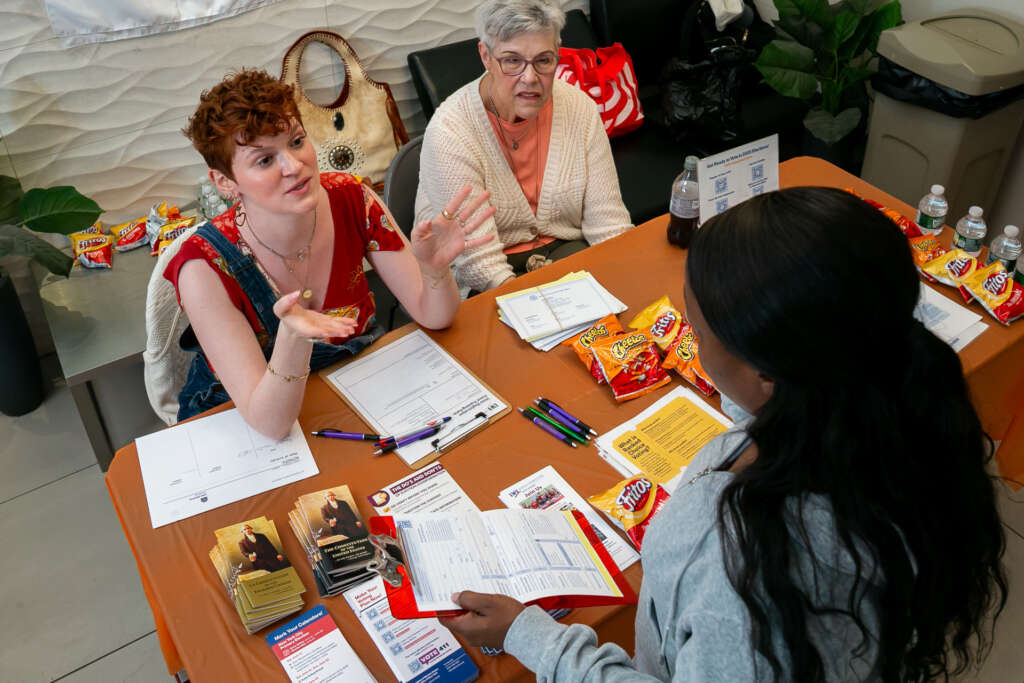
A voter registration drive at a supportive housing site for domestic violence survivors. (Photo by Adi Talwar)

Welcome to “What Happened This Week in NYC Housing?” where we compile the latest local news about housing, land use and homelessness. Know of a story we should include in next week’s roundup? Email us.

ICYMI, from City Limits:

With the city’s primary elections just weeks away, housing and homeless advocacy groups are helping unhoused New Yorkers and domestic violence survivors register to vote. You don’t need a permanent address to cast your ballot, and DV survivors can request the state keep their records confidential.

The state budget included a small pool of funds to kickstart a new rental subsidy program. Here’s what we know so far about how the housing access voucher program will work, and who would qualify. (Lea la versión en español aquí.)

The comptroller’s office will audit how NYCHA spends city capital budget funds, at the request of public housing tenants.

Here’s what former Assembly member and now mayoral candidate Michael Blake says he’ll do to address the city’s housing crisis if elected to City Hall.

ICYMI, from other local newsrooms:

Related Companies is dropping its bid to build a casino at Hudson Yards, and now proposes building up to 4,000 new apartments instead on Manhattan’s west side, the New York Times reported.

Residents at Rochdale Village, a Queens Mitchell-Lama co-op home to some 25,000 people, are facing soaring maintenance, insurance and other costs, according to Gothamist.

NYCHA opened its first dog park at Castle Hill Houses, the Bronx Times reported.

Property owners on Staten Island are ready to build Accessory Dwelling Units—a key part of the mayor’s City of Yes for Housing plan passed late last year—but the approval process is slow-going, according to The City.

A state court is taking up a case in which landlords are challenging the city of Kingston’s efforts to adopt rent stabilization, and its decision could effect other attempts to expand tenant protections across upstate New York, according to City & State.

The post What Happened This Week in NYC Housing? May 23, 2025 appeared first on City Limits.

Trump relishes uttering the outlandish. Here’s where some of his most showstopping comments stand

posted in: All news | 0

By WILL WEISSERT, Associated Press

WASHINGTON (AP) — It may start as a casual aside, a wee-hours social post or a much-hyped announcement.

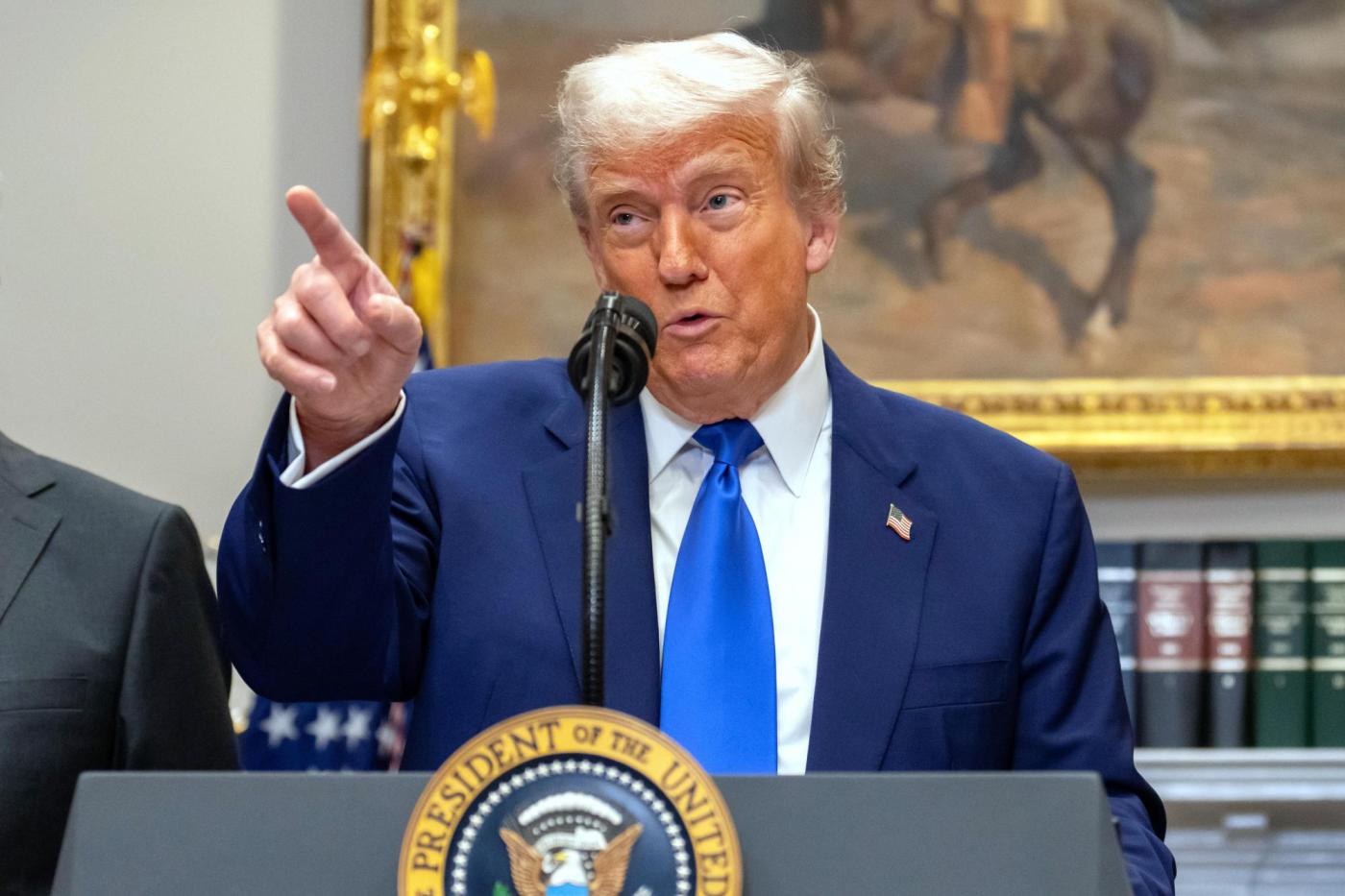
Whatever the delivery mechanism, President Donald Trump loves to toss out startling ideas aimed at dropping jaws, commandeering headlines and bolstering his political brand. Never in modern times has a president offered so many off-the-cuff statements with such a potential for wide, even global, impact.

His sometimes implausible notions may become reality, or — through repetition — no longer sound so outlandish. At other times, Trump just moves on, either by fashioning a rhetorical off-ramp or finding a way to declare victory. Some ideas, though, just seem to fade away.

Here’s a look at some of Trump’s showstopping utterances this term and where they stand.

President Donald Trump speaks to reporters aboard Air Force One en route from Riyadh, Saudi Arabia to Doha, Qatar, Wednesday, May 14, 2025. (AP Photo/Alex Brandon)

Being gifted a new Air Force One by Qatar

WHERE IT STANDS: Moving ahead.

BACKSTORY: Trump has embraced the idea of getting a $400 million luxury plane as a gift from oil-rich Qatar for the U.S. to use as Air Force One until Boeing delivers long-delayed new planes to the government. The Pentagon said Wednesday it has accepted the jet for use as Air Force One, but retrofitting the plane to meet security requirements will be costly and take time. And ethics experts, Democrats, and even some conservatives have warned that accepting such a luxurious gift from a foreign government is unseemly and could violate constitutional provisions meant to avoid bribery.

Reopening Alcatraz prison in San Francisco Bay

WHERE IT STANDS: In limbo.

BACKSTORY: Trump posted on his social media site in early May that he wanted to reopen an “expanded and rebuilt” Alcatraz, the notorious former prison that has been closed for more than six decades — and he subsequently talked about it at the White House. The president hasn’t said much on the subject since, nor addressed how lengthy, difficult and costly such a reclamation project would be. William K. Marshall III, the director of the Bureau of Prisons, said he’s ordered an “assessment to determine our needs and the next steps,” even as California’s Democratic governor, Gavin Newsom, dismissed the idea as a “distraction.” Some administration officials have endorsed bringing back the lockup known as “The Rock,” which operated from 1934 to 1963. Border czar Tom Homan suggested it could be used to house migrants awaiting deportation.

Making Canada the 51st state

WHERE IT STANDS: Still talking.

BACKSTORY: Trump first floated this idea of the “Great State of Canada” with a December post just after midnight. When new Canadian Prime Minister Mark Carney recently visited Trump at the White House, he made a point of saying that Canada “won’t be for sale, ever.” Trump responded, “never say never.” Carney said later that he told the president privately to quit talking about making Canada a state. He didn’t divulge Trump’s reaction, though, noting only that it was necessary to distinguish between “a wish and a reality.” Trump nonetheless insisted during the meeting that Canada joining the United States would be a “wonderful marriage.”

Annexing Greenland

WHERE IT STANDS: Still talking.

FILE – Vice President JD Vance gestures as he tours Pituffik Space Base, March 28, 2025, in Greenland. (Jim Watson/Pool via AP, File)

BACKSTORY: Trump continues to insist that the U.S. could “get” Greenland, which is part of the kingdom of Denmark, despite Copenhagen saying that’s impossible. Vice President JD Vance visited Greenland in March for a quick stop at the U.S. military base there after island residents rejected a broader visit. During that trip, Vance scolded Denmark but acknowledged that Greenland would control its own sovereignty — while still suggesting that it may want to make a deal with the United States.

Annexing the Panama Canal

WHERE IT STANDS: Political off-ramp found.

BACKSTORY: Trump for months decried growing Chinese influence over the Panama Canal and even refused to rule out a U.S. invasion to retake control of the waterway. The situation appeared to simmer down when the White House hailed a nearly $23 billion deal announced in March that would sell two canal ports run by a company based in the Chinese territory of Hong Kong to investors led by the U.S. firm BlackRock. The deal has since hit regulatory snags, and has yet to be finalized. In the meantime, the U.S. signed an agreement giving its troops access to Panamanian facilities.

Touring Fort Knox to make sure the gold is still there

WHERE IT STANDS: Faded away.

BACKSTORY: Trump suggested in February that billionaire Elon Musk would be checking out Fort Knox in Kentucky to ensure that U.S. gold reserves were still there. Days later, the president said at a conservative conference outside Washington, “I’m going to go with Elon.” He then drew sustained applause by asking, “Would anybody like to join us?” Nothing has come of it since.

Redeveloping the Gaza Strip into a Riviera-like resort

WHERE IT STANDS: Losing steam.

Related Articles


DOGE targets Census Bureau, worrying data users about health of US data infrastructure


Trump threatens 50% tariffs on EU and 25% penalties on Apple as his trade war intensifies


Omani mediator says Iran-US talks made ‘some but not conclusive progress’


Tax bill passed by House Republicans would gut Biden-era clean energy tax credits


A look at the deportees on plane that headed for South Sudan from US

BACKSTORY: Trump has repeatedly floated the idea that the U.S. would “take over” war-torn Gaza and move out the Palestinians who live there. He even suggested that U.S. developers could turn the area into a “Riviera of the Middle East,” once the war between Israel and Hamas has concluded. The president at one point posted a fake video of himself and Israeli Prime Minister Benjamin Netanyahu sunbathing in Gaza and featuring a glitzy resort dubbed “TRUMP GAZA.” During his trip to the Mideast last week, Trump offered a different iteration of the idea, saying the U.S. could “get involved” in Gaza “and make it just a freedom zone.” The issue remains a nonstarter with Arab nations.

Attacking Biden’s autopen

WHERE IT STANDS: Still talking.

BACKSTORY: Trump continues to suggest that an autopen was used to sign presidential pardons, legislation and other key documents during the tenure of former President Joe Biden. It’s an accusation designed to question his Democratic predecessor’s mental capacity and presidential authority. Trump’s repeated complaints about Biden’s autopen continue to get attention among some far-right media outlets and have prompted a Republican proposal in Congress to ban using autopens on presidential pardons. Trump has even suggested an investigation could be coming related to Biden signing immigration actions via autopen. “We’re going to start looking into this whole thing with who signed this legislation,” he said this week.

Endorsing the U.S. joining the British Commonwealth

WHERE IT STANDS: Faded away.

BACKSTORY: Trump used his social media site in March to share a British media outlet’s suggestion that Britain’s King Charles III was making a “secret offer” to allow the United States to become an associate member of the British Commonwealth. “I love King Charles,” Trump wrote. “Sounds good to me!” Trump might have been joking, but his post sparked pushback online from supporters who roundly rejected the idea. He has not gone back to it.

Calling Zelenskyy a dictator

WHERE IT STANDS: Faded away.

BACKSTORY: In February, Trump falsely labeled Ukrainian President Volodymyr Zelenskyy a “dictator without elections” in the midst of Russia’s ongoing invasion of that country. Before Zelenskyy, who was elected Ukraine’s president in 2019, prior to Russia’s attack on Ukraine, subsequently visited the White House, Trump backed off, saying, “Did I say that?” Trump still finds plenty to complain about with the Ukrainian leader, though, saying last week that U.S. aid to the country has been “pissed away.”

Gold cards allowing immigrants to buy U.S. visas

WHERE IT STANDS: Still talking.

BACKSTORY: In February, Trump said his administration would begin offering $5 million “ gold cards ” that give “very high-level people” a “route to citizenship.” The cards would grant foreigners visas to live and work in the United States. In early April, he held up a gold card featuring his name and picture and said they would be available in “less than two weeks, probably.” The card still hasn’t gone on sale, but Commerce Secretary Howard Lutnick recently told the All-In podcast that he’d already personally sold 1,000 of them.

Running for a third term

WHERE IT STANDS: Still talking — off and on.

BACKSTORY: The Constitution’s 22nd Amendment states no one can be elected president “more than twice.” That hasn’t stopped Trump from talking about it — or the Trump Organization from selling “Trump 2028” gear, despite the president himself offering mixed signals. Asked about running for a third term during a recent NBC News interview, Trump replied, “I’m not looking at that.” But he added: “So many people want me to do it. I have never had requests so strong as that. But it’s something that, to the best of my knowledge, you’re not allowed to do. I don’t know if that’s constitutional.” That followed his saying in an interview with NBC News in March: “I’m not joking. There are methods which you could do it.” And he suggested to Time Magazine, “There are some loopholes.”

Will Weissert covers the White House for The Associated Press.

NYC Expands Free Compost Give-Away Sites. Here’s Where to Get Yours This Summer

posted in: All news | 0

Find out where to get free composting this summer for your yard, garden or neighborhood tree pits—made from decomposed food scraps and yard waste.

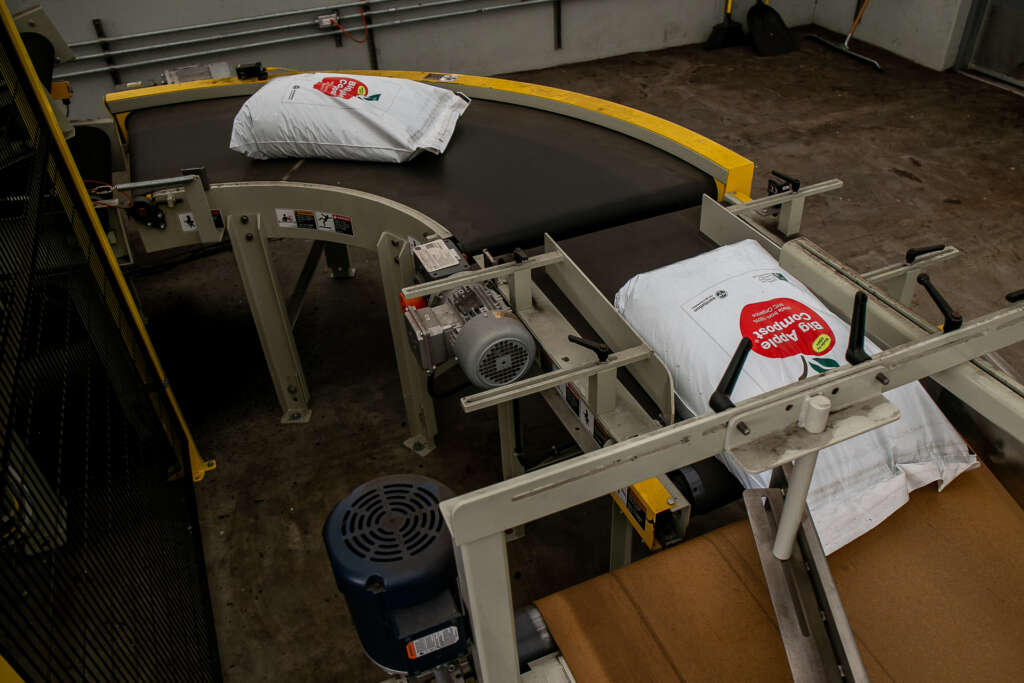
The compost bagging machine at the city’s 33-acre composting facility in the Fresh Kills section of Staten Island. (Photo by Adi Talwar)

The Big Apple has added a new location to its roster of sites that give away free compost to New Yorkers. Made of decomposed food scraps and yard waste, this nutrient-rich material can be added to soil to help plants thrive all summer long.

Every Saturday until Sept. 27, residents in eastern Queens can now head to the corner of Hillside Avenue and Avenue C to grab up to 10 bags of compost, each weighing 40 pounds. Those who are interested must register online to book a time for pickup, and registration is limited to one request per household.

The location is the newest of four “Compost Giveback Sites” run by the city’s Department of Sanitation (DSNY) that will operate through the fall and give away the same amount of material. The department currently has a Giveback Site in Staten Island’s Freshkills, one in Brooklyn’s Greenpoint neighborhood, and two in Queens

DSNY also gives out compost at pop-up events throughout the city and delivers it in bulk to non-profit organizations, community gardens and street tree care volunteer groups. Information on how to participate is available online here.

The compost has been certified by the U.S. Composting Council Seal of Testing Assurance program and is made at DSNY’s Staten Island Compost Facility.

“The recently expanded facility has produced about 42 million pounds of finished compost per year over the last several years. After a 2024 expansion, it can now process about 170 million pounds of incoming material per year,” DSNY noted in a press release.

While the expansion boosted the site’s composting capacity by nearly 2,000 percent, it’s one of only two main facilities processing food waste in New York City. The other is in Brooklyn. 

Last year, community composting groups and lawmakers pushed the administration to add at least one composting facility to each borough, since a lot of the organic waste collected by the Sanitation Department ends up being used for fuel instead of composting.

The city’s current facilities don’t just process organic waste for compost but also do anaerobic digestion, a process that extracts biogas, primarily methane, from the digested material and turns it into energy to heat buildings.

Adding a bunch of smaller facilities dedicated solely to composting and boosting local composting efforts could allow locals to have greater access to the material and foster community engagement, environmental groups argue.

“If we have the resources to do something for ourselves, then there’s a positive community reaction,” Nando Rodriguez, head of the environmental program at Brotherhood Sister Sol (BroSis) told City Limits earlier this year. “Having local community compost, to me, is empowering our community.” 

Community groups around the city have been fighting for more local-based composting initiatives. 

Last fall, the city slashed funding for community composting programs under the Adams administration’s budget cuts. While activists and lawmakers at City Council managed to secure over $6.2 million in last year’s budget to save the community programs, funds will only last until the fiscal year ends this June.

The City Council has proposed setting aside $7 million for community composting in the next fiscal year budget, but details are still under discussion. A new budget is due July 1. 

Regardless of how the funding shakes out, many hope the city’s new required food waste recycling program will boost compost production. Since residential curbside composting became mandatory in April, DSNY said it saw record breaking numbers, collecting 5.24 million pounds of organic waste in its fourth week, a 500 percent increase over the same period the year before.

Fines issued to those who don’t comply have been put on hold until the end of the year, after complaints that the thousands of tickets handed out in the first weeks posed a burden for New Yorkers (though some lawmakers criticized the pause as undermining the Council’s efforts to reduce waste). 

Meanwhile, the city’s “Compost Giveback Sites” continue to receive composted material and redistribute it to New Yorkers, so check out where to get it on DSNY’s website and pick up a bag.

To reach the reporter behind this story, contact Mariana@citylimits.org. 

Want to republish this story? Find City Limits’ reprint policy here.

The post NYC Expands Free Compost Give-Away Sites. Here’s Where to Get Yours This Summer appeared first on City Limits.

Apple has had few incentives in the past to start making iPhones in US

posted in: All news | 0

By MICHAEL LIEDTKE, AP Technology Writer

SAN FRANCISCO (AP) — Unhappy that Apple intends to source nearly all of its U.S. iPhones from India, President Donald Trump on Friday threatened a 25% tariff on the popular device unless the tech giant moves production to the United States. But Apple has seen little incentive in the past to manufacture domestically.

Related Articles


Edmunds: How to get the best auto deals this Memorial Day weekend


Trump’s latest tariff threats knock Wall Street, European stocks and Apple lower


Trump threatens 50% tariffs on EU and 25% penalties on Apple as his trade war intensifies


Microsoft fires employee who interrupted CEO’s speech to protest AI tech for Israeli military


Acme Tools opens Eagan storefront, its first new Minnesota location in 20 years

Apple has traditionally produced its devices in China, in massive factories that rely on a vast network of local suppliers. The company’s reliance on this relationship thrust the technology trendsetter into the crosshairs of Trump’s trade war.

In response to the president’s recent exchange with China, Apple CEO Tim Cook said earlier this month that most iPhones sold in the U.S. during the current fiscal quarter would come from India. After Trump rolled out tariffs in April, bank analysts estimated that a $1,200 iPhone would, if made in America, jump in price anywhere from $1,500 to $3,500.

The disincentives for Apple shifting its production domestically include a complex supply chain that it began building in China during the 1990s. It would take several years and cost billions of dollars to build new plants in the U.S. Combined with current economic forces, the price of an iPhone could triple, threatening to torpedo sales of Apple’s marquee product.

“The concept of making iPhones in the U.S. is a nonstarter,” asserted Wedbush Securities analyst Dan Ives, reflecting a widely held view in the investment community that tracks Apple’s every move. He estimated that the current $1,000 price tag for an iPhone made in China, or India, would soar to more than $3,000 if production shifted to the U.S. And he believes that moving production domestically likely couldn’t be done until, at the earliest, 2028. “Price points would move so dramatically, it’s hard to comprehend.”

Apple didn’t immediately respond to a request for comment Friday. On a quarterly earnings call earlier in May, Cook told investors that tariffs had a “limited impact” on the company in the March quarter because it was able to optimize its supply chain. But Cook warned that it is “very difficult” to predict beyond June “because I’m not sure what will happen with tariffs.”

Apple is widely expected to eventually raise the prices on iPhones and other popular products because the Silicon Valley’s supply chain is so heavily concentrated in China, India and other overseas markets caught in the crossfire of Trump’s escalating trade war.

The big question is how long Apple might be willing to hold the line on its current prices before the tariffs’ toll on the company’s profit margins become too much to bear and consumers are asked to shoulder some of the burden.

One of the main reasons that Apple has wiggle room to hold the line on its current iPhone pricing is because the company continues to reap huge profit margins from the revenue generated by subscriptions and other services tied to its product, said Forrester Research analyst Dipanjan Chatterjee. That division, which collected $96 billion in revenue during Apple’s last fiscal year, remains untouched by Trump’s tariffs.

“Apple can absorb some of the tariff-induced cost increases without significant financial impact, at least in the short term,” Chatterjee said.

Apple tried to appease Trump in February by announcing plans to spend $500 billion and hire 20,000 people in the U.S. through 2028, but none of it was tied to making an iPhone domestically. Instead, Apple pledged to fund a Houston data center for computer servers powering artificial intelligence — a technology the company is expanding into as part of an industrywide craze.

U.S. Commerce Secretary Howard Lutnick also predicted tariffs would force a manufacturing shift during an April 6 appearance on a CBS News program. “The army of millions and millions of human beings screwing in little screws to make iPhones, that kind of thing is going to come to America,” Lutnick said.

But during a 2017 appearance at a conference in China, Cook expressed doubt about whether the U.S. labor pool had enough workers with the vocational skills required to do the painstaking and tedious work that Lutnick was discussing.

“In the U.S. you could have a meeting of tooling engineers and I’m not sure we could fill the room,” Cook said. “In China, you could fill multiple football fields.”

Trump also tried to pressure Apple, to no avail, into shifting iPhone production to the U.S. during his first term as president. But the administration ultimately exempted the iPhone from the tariffs he imposed on China back then — a period when Apple had announced a commitment to invest $350 billion in the U.S. Trump’s first-term tariffs on China also prompted Apple to begin a process that led to some of its current iPhones being made in India and some of its other products being manufactured in Vietnam.

Cook took the president on a 2019 tour of a Texas plant where Apple had been assembling some of its Mac computers since 2013. Shortly after finishing that tour, Trump took credit for the plant that Apple had opened while Barack Obama was president. “Today I opened a major Apple Manufacturing plant in Texas that will bring high paying jobs back to America,” Trump posted on Nov. 19, 2019.