Ex-Trump defense lawyer Emil Bove, a top Justice Department official, is picked to be federal judge

posted in: All news | 0

By ALANNA DURKIN RICHER

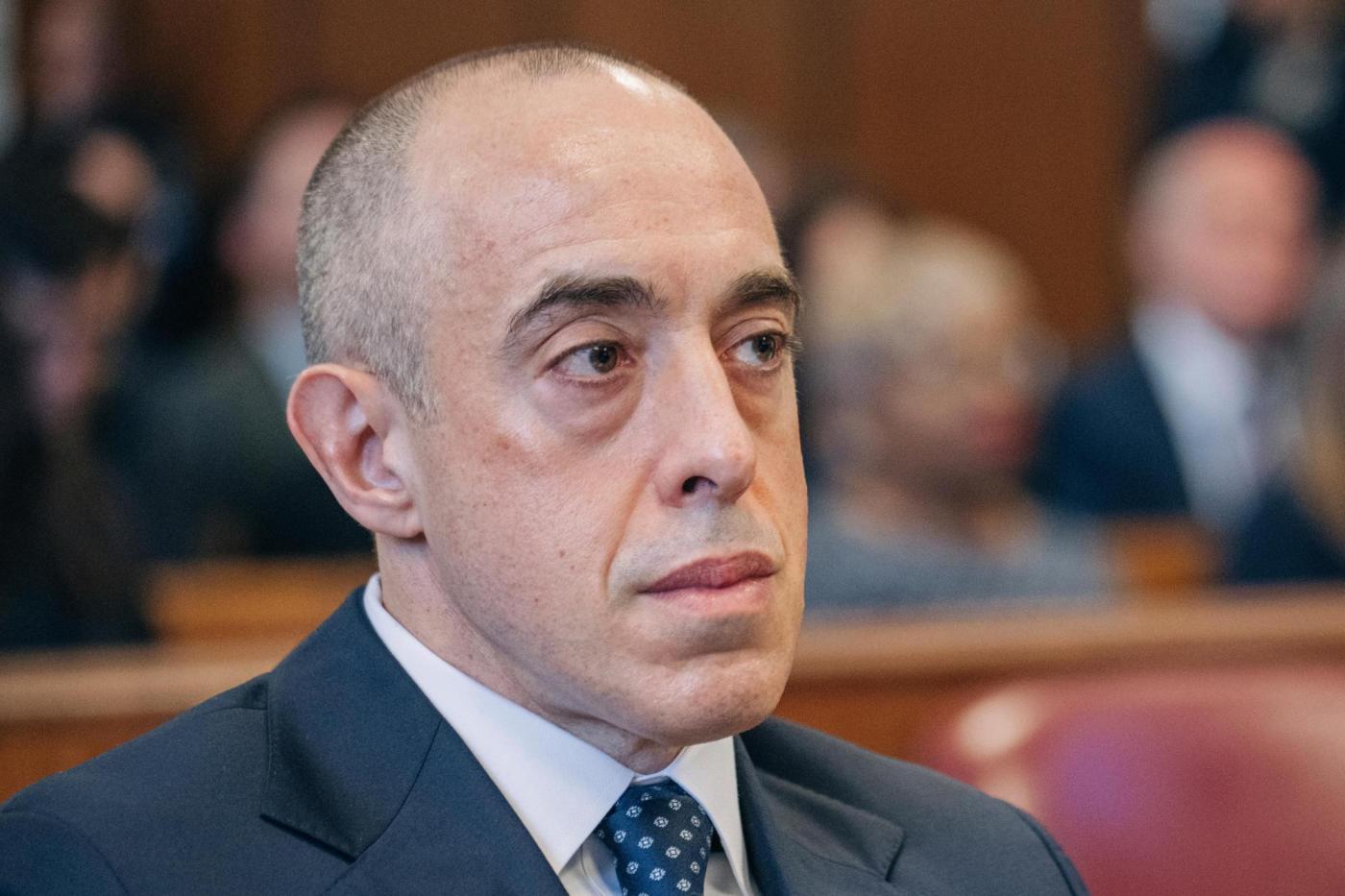
WASHINGTON (AP) — President Donald Trump said Wednesday he is nominating his former criminal defense lawyer Emil Bove, who as a high-ranking Justice Department official was behind the controversial move to drop the corruption case against New York City Mayor Eric Adams, to become a federal appeals court judge.

Related Articles


Trump pardons Julie and Todd Chrisley, reality TV stars convicted in 2022 of fraud and tax evasion


US files motion to dismiss lawsuit over Kilmar Abrego Garcia’s deportation


Judge: Harvard researcher charged with smuggling frog embryos was unlawfully detained by ICE


Fed minutes: Uncertainty ‘elevated’ as risks of higher inflation and unemployment rise


217 days and counting: Trump’s rules slow the release of migrant children to their families

As acting deputy attorney general, Bove has been at the center of some of the department’s most scrutinized actions since Trump’s return to the White House in January.

Bove ordered the dismissal of charges against the Democratic leader of America’s biggest city, accused FBI officials of “insubordination” for refusing to hand over the names of agents who investigated the Capitol riot on Jan. 6, 2021, and ordered the firings of a group of prosecutors involved in the Jan. 6 criminal cases.

He also moved aggressively to align the department with Trump’s agenda around immigration and other matters, ordering federal prosecutors to investigate for potential criminal prosecution state or local officials who are believed to be interfering with the Republican administration’s immigration crackdown.

Trump picked Bove to fill a vacancy on the 3rd U.S. Circuit Court of Appeals, which hears cases from Delaware, New Jersey and Pennsylvania. The nomination, which is subject to Senate confirmation, comes just months into Bove’s contentious tenure at the department.

“Emil is SMART, TOUGH, and respected by everyone,” Trump said in a social media post announcing the nomination. “He will end the Weaponization of Justice, restore the Rule of Law, and do anything else that is necessary to, MAKE AMERICA GREAT AGAIN. Emil Bove will never let you down!”

When Todd Blanche, another former criminal defense attorney for Trump, was sworn in as deputy attorney general, Bove became Blanche’s top adviser, serving as the principal associate deputy attorney general.

Bove, a former federal prosecutor in the Southern District of New York, was on the defense team during Trump’s New York hush money trial and defended Trump in the federal criminal cases brought by the Justice Department. The Justice Department abandoned Trump’s federal 2020 election interference case and the classified documents case after Trump won the election in November.

Bove’s order to dismiss the Adams case roiled the department. Manhattan’s top federal prosecutor, Danielle Sassoon, and several high-ranking department officials resigned rather than carrying out Bove’s order. In remarkable departure from long-standing department norms, Bove said the case should be dropped because it was interfering with the mayor’s ability to aid the president’s crackdown on illegal immigration.

Bove clerked for two federal judges appointed by President George W. Bush, a Republican. He then spent nine years at the U.S. attorney’s office in Manhattan where he specialized in prosecuting drug kingpins and alleged terrorists.

He was involved in multiple high-profile prosecutions, including a drug-trafficking case against the former Honduran president’s brother, a man who set off a pressure cooker device in Manhattan and a man who sent dozens of mail bombs to prominent targets across the country.

Bove’s actions at the New York office, however, rankled some fellow prosecutors and defense attorneys. In 2018, the federal public defender’s office compiled complaints about his behavior from defense attorneys and sent them to two top officials in the U.S. attorney’s office. About 18 months after the email was sent, Bove was promoted to be co-chief of the office’s national security and international narcotics unit.

US files motion to dismiss lawsuit over Kilmar Abrego Garcia’s deportation

posted in: All news | 0

By BEN FINLEY

The Trump administration has asked a federal judge to dismiss the lawsuit over Kilmar Abrego Garcia ’s mistaken deportation to El Salvador, arguing the court lacks jurisdiction because he’s no longer in the United States.

Related Articles


Judge: Harvard researcher charged with smuggling frog embryos was unlawfully detained by ICE


Fed minutes: Uncertainty ‘elevated’ as risks of higher inflation and unemployment rise


217 days and counting: Trump’s rules slow the release of migrant children to their families


A judge refuses to toss states’ lawsuit against Elon Musk and DOGE


Elon Musk criticizes Trump’s ‘big beautiful bill,’ a fracture in a key relationship

The request for dismissal late Tuesday was a procedural move by the U.S. government, which was required to respond to Abrego Garcia’s lawsuit within 60 days. U.S. attorneys reiterated their arguments from late March against his return.

The government’s filing is the latest development in a case that has carried on for two months without any discernible movement toward resolution, despite a judge’s order to bring back Abrego Garcia and a subsequent Supreme Court ruling to “facilitate” his return.

President Donald Trump told ABC News in late April that he could retrieve Abrego Garcia with a phone call to El Salvador’s president. But Trump said he wouldn’t do it because Abrego Garcia is a member of the MS-13 gang, an allegation that Abrego Garcia denies and for which he was never charged.

Trump administration attorneys have not used the president’s plainspoken explanation inside the Maryland federal court that ordered Abrego Garcia’s return. They’ve argued that information about returning Abrego Garcia is protected by the state secrets privilege, a legal doctrine often used in military cases.

U.S. attorneys said releasing such details in open court — or even to the judge in private – would jeopardize national security by revealing sensitive diplomatic negotiations. Many filings in the case have been sealed.

Abrego Garcia’s attorneys have argued that the Trump administration has done nothing to return the Maryland construction worker. They say the government is invoking the privilege to hide behind the misconduct of mistakenly deporting him and refusing to bring him back.

Abrego Garcia’s deportation violated a U.S. immigration judge’s order in 2019 that shielded Abrego Garcia from expulsion to his native country. The immigration judge determined that Abrego Garcia faced likely persecution by a local Salvadoran gang that terrorized his family.

Abrego Garcia’s American wife sued over his deportation, and U.S. District Judge Paula Xinis ordered his return on April 4. The Supreme Court ruled on April 10 that the administration must work to bring him back.

Xinis is yet to rule on the U.S. government’s state secrets claim. During a May 16 hearing, she said the government’s explanation for invoking it was inadequate and gave the Trump administration extra time to provide more information.

Xinis is yet to rule on the Trump administration’s motion Tuesday to dismiss Abrego Garcia’s lawsuit. Hours before filing the motion, the U.S. government had asked Xinis for a 30-day extension.

She denied the request.

“The Court has conducted no fewer than five hearings in this case and at no point had Defendants even intimated they needed more time to answer or otherwise respond,” Xinis wrote.

Simon Sandoval-Moshenberg, one of Abrego Garcia’s attorneys, said in a statement that the Trump administration’s motion to dismiss was “a retread of arguments they’ve already made that have already been rejected, filed just to meet a deadline.”

Cops, service providers increasing presence on St. Paul’s University Ave, Green Line

posted in: All news | 0

Law enforcement will have a more visible presence along St. Paul’s University Avenue and the Green Line, and service providers will be guiding people to resources including addiction treatment and housing services, Metro Transit police announced Wednesday.

A new initiative, Safe and Strong University Avenue, will bring together law enforcement, service providers and prosecutors. It’s planned to last until at least the end of summer and may be extended.

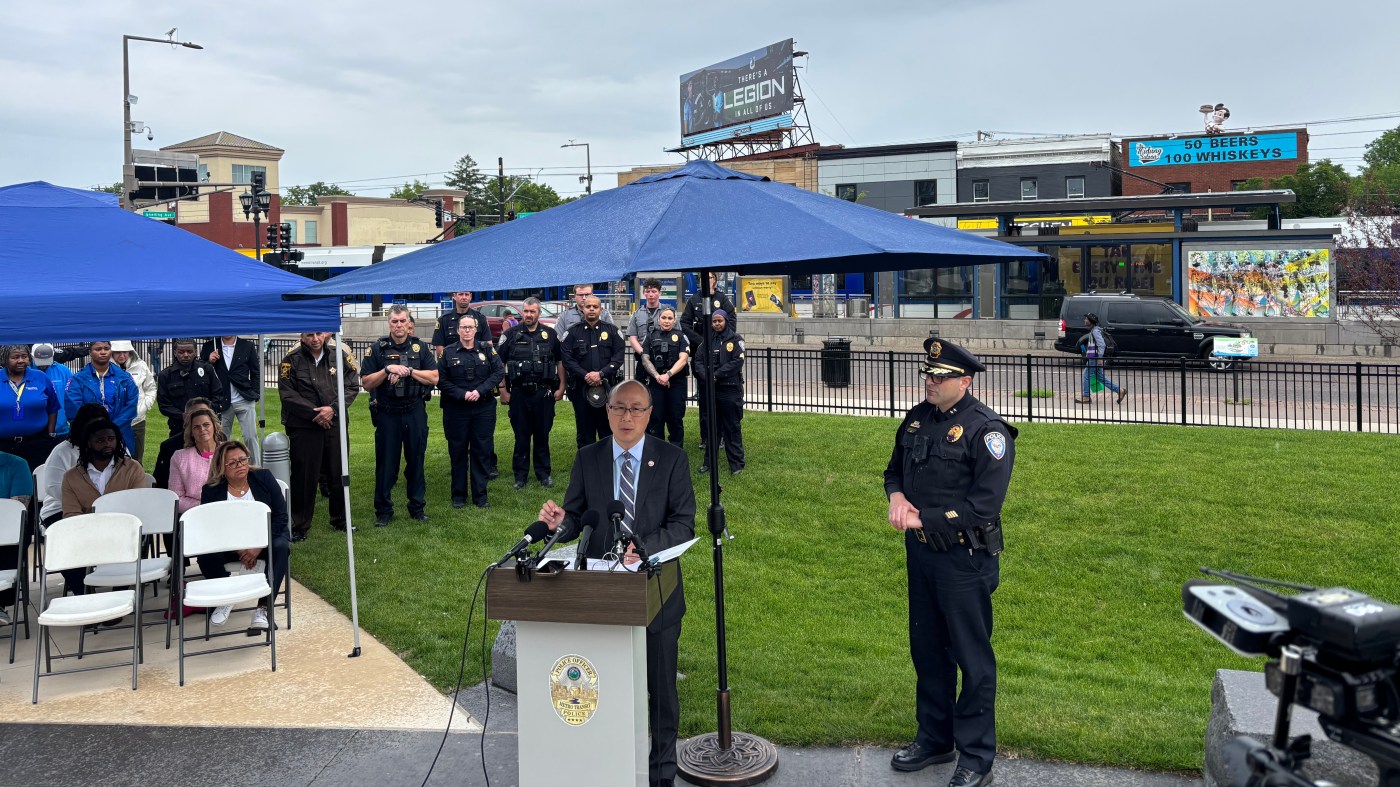
Metro Transit police, St. Paul police and the Ramsey County sheriff’s office “will conduct high visibility, coordinated enforcement operations on the Green Line corridor based on precise data … from our crime intelligence team,” said Joe Dotseth, interim Metro Transit police chief, at a Wednesday press conference near University and Snelling avenues.

Metro Transit is “developing dedicated police beats in this area, a proven approach that reduces crime and builds public trust through consistent officer presence,” including a Hamline-Midway beat, Dotseth added.

They also have the Transit Response Unit, which is out on the system to deal with serious crime.

The most serious crimes were up slightly on the Metro Transit system in the first quarter of this year, compared to last year, but down from two years ago.

In the categories of robbery, assault, homicide, sex offense, theft from person, motor vehicle and burglary, there were 211 reports in the first  quarter of this year (there were no homicides), compared with 200 in the same period last year and 291 in the first quarter of 2023, according to Metro Transit statistics.

‘Public health approach’ included in plan

Safe and Strong University Avenue builds on Metro Transit’s ongoing work to expand official presence on transit, which goes beyond police and includes community service officers and TRIP agents (Transit Rider Investment Program), Doseth said.

“This is not solely about enforcement,” he said. “While serious criminal behavior will result in arrest, our collaborative approach prioritizes connecting people with services whenever possible.”

Responders from St. Paul-Ramsey County Public Health are working alongside the Metro Transit’s Homeless Action Team “to bring a public health approach to concerns that arise on public transit,” said Gloria Reyes, deputy Ramsey County manager of the Safety and Justice Service Team.

Public health responders provide Narcan, along with referrals for services. Ramsey County’s mental health response teams are also supporting people “in emotional distress, helping stabilize situations and guiding people to long term care,” Reyes said.

“People who are struggling, people who are causing a disturbance, … there’s law enforcement there, but there’s also an opportunity for us to get to the root causes of what’s occurring on the Metro Green Line,” Reyes said. “… We are seeing a public health crisis, and we need to bring our public health crisis workers out into the field.”

Prosecution approach includes looking at mental health, addiction

Ramsey County Attorney John Choi said they’ve been meeting with Metro Transit police, St. Paul’s police and Office of Neighborhood Safety, along with the Ramsey County sheriff’s office.

“The light rail system truly belongs to the people,” he said. “And we’ve had some challenges over the past few years. We’re starting to see some better outcomes, but we know that we need to do more.”

Since August, the Ramsey County Attorney’s Office has been asking law enforcement agencies that present cases for charging consideration to designate which ones happened in the University Avenue/Green Line corridor. There have been 111 cases in the corridor presented since August and the county attorney’s office has charged more than 80 percent of them.

“What we are asking for is better investigation on those cases and more information so that we can take the appropriate steps in the court system,” Choi said.

That’s led to prosecutors asking judges to issue orders to stay away from transit or geographic areas in some instances, and also to efforts to “address the underlying reasons of their justice involvement, which oftentimes is mental health related or addiction related,” he added.

For violent offenses, Choi said his office still seeks prison time or the recommendation under state sentencing guidelines, but many of the cases that emerge from the area are misdemeanor or gross misdemeanor level.

Ridership below pandemic levels

Metro Transit ridership has been increasing, though it still remains below pre-pandemic numbers. There were 47.6 million rides on the system last year, compared with 77.9 million in 2019, according to Metro Transit data.

Related Articles


Bayport couple found dead in home; natural causes determined


Group calls for Target to apologize, St. Paul PD to look at false reporting after 2 men accused of being armed


Wildfire evacuation orders lifted in northern Minnesota


What Minnesota laws and policies changed after George Floyd? Here are 9 topics


‘100 deadliest days’ on roads kick off Memorial Day weekend

In the first quarter of 2025, proactive calls for police service by Metro Transit officers increased 55% compared to the same quarter last year.

“We’re aggressively targeting quality-of-life violations that diminish the riders’ experience,” Doseth said, which could include smoking on the train or people acting in a disorderly way. “Serious crimes on the system remain consistently low.”

In a fall survey, more than 40% of respondents said the system felt safer than it did six months ago, in part due to increased presence, Metro Transit said.

Hawaii’s governor signs new hotel tax legislation to help cope with climate change

posted in: All news | 0

By AUDREY McAVOY

HONOLULU (AP) — Hawaii’s governor signed legislation Tuesday that boosts a tax imposed on hotel room and vacation rental stays in order to raise money to address eroding shorelines, wildfires and other consequences of climate change.

Related Articles


Fed minutes: Uncertainty ‘elevated’ as risks of higher inflation and unemployment rise


How to cut spending without cutting out small businesses


A little bit of farm, a little bit of suburbia: That’s the recipe for Agritopia


Stillwater: Water Street Inn’s Chuck Dougherty named Lumberjack Days parade grand marshal


Why ‘wrench attacks’ on wealthy crypto holders are on the rise

The signing, which comes nearly two years after a Maui wildfire killed 102 people and wiped out almost all of Lahaina town, marks the nation’s first such levy to help cope with a warming planet.

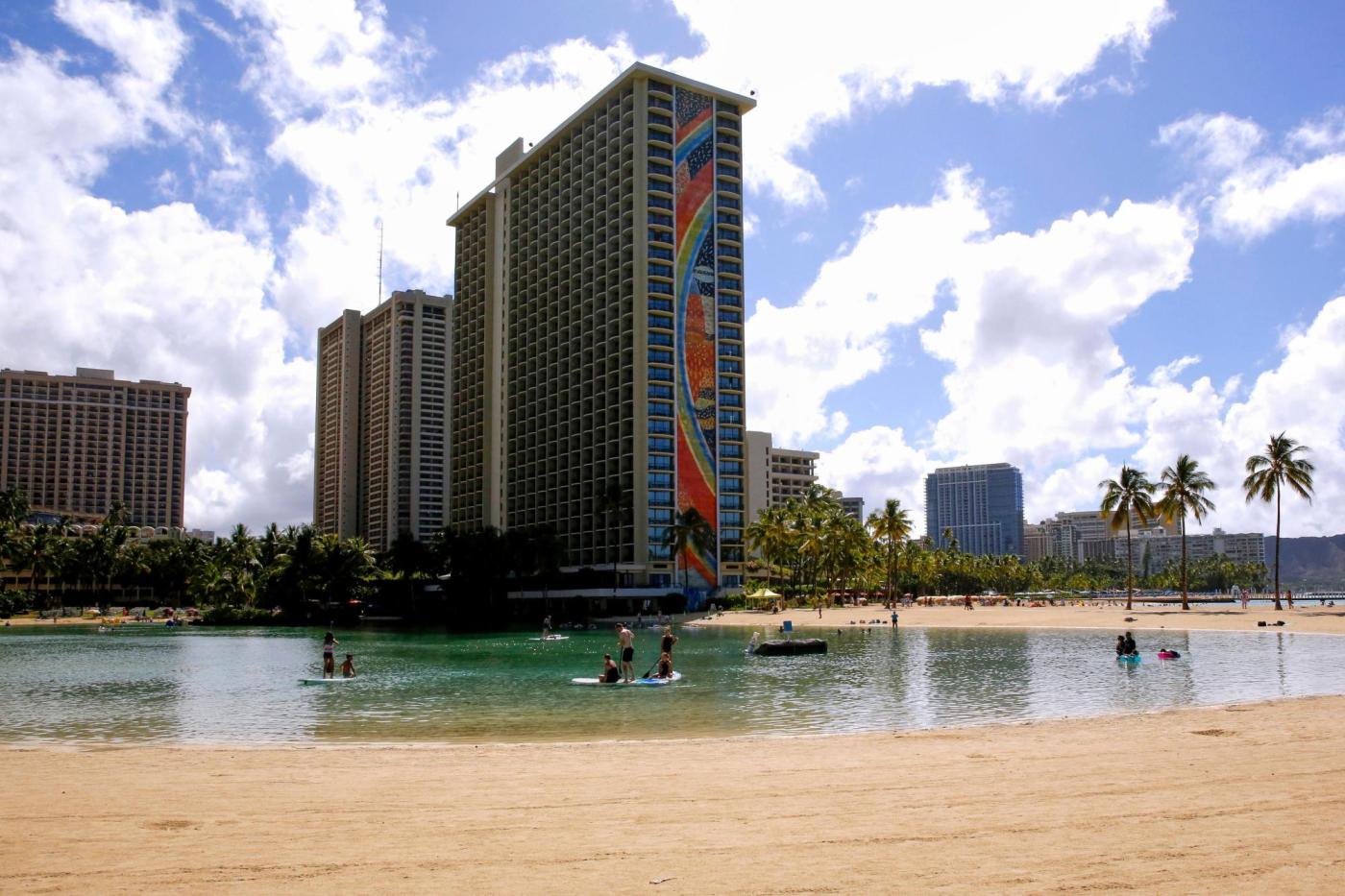
Officials estimate the tax will generate nearly $100 million annually. The money will be used for projects like replenishing sand on eroding Waikiki beaches, promoting the use of hurricane clips to secure roofs during powerful storms and clearing flammable invasive grasses like those that fueled Lahaina’s wildfire.

Gov. Josh Green, speaking at a bill signing ceremony, said Hawaii needs to build more firebreaks and pay a fire marshal, a new position created after Lahaina that Green expects to be staffed within the next two months.

Green said other states and nations will need to act similarly to address climate disasters roiling the planet.

“There will be no way to deal with these crises without some forward-thinking mechanism,” Green said.

The measure adds an additional 0.75% to the daily room rate tax starting Jan. 1. Green said this amounts to an extra $3 tax on a $400 hotel room rate.

It also levies a new 11% tax on cruise ship bills starting July 2026, prorated for the number of days the vessels are in Hawaii ports, to bring cruise ship taxes in line with room taxes on land.

Hawaii Gov. Josh Green, surrounded by lawmakers and supporters, signs legislation in Honolulu on Tuesday, May 27, 2026 that raises the state’s tax on hotel rooms and other short-term accommodations to raise money to help the islands cope with climate change. (AP Photo/Audrey McAvoy)

Travelers to Hawaii already pay a significant room tax. With the new law, the state’s existing 10.25% tax on short-term accommodations will climb to 11%. Together with other state and county taxes, visitors will pay a nearly 19% levy on their accommodations — one of the highest rates in the country.

Hawaii’s hotels ultimately supported the bill, saying it would help improve the visitor experience. Green said the industry looked at “the greater good” for tourism, Hawaii and the planet.

Green initially proposed a bill that would put revenue from the tax increase into a dedicated fund, but lawmakers instead put the money into the state’s general fund. Their compromise measure calls on the governor to request funds from the Legislature for projects in the following areas: protecting native forests, plants and animals; enhancing climate resilience; and mitigating the effects of tourism on the environment. Green said they will collaborate to implement the law.

State Rep. Adrian Tam, the chairperson of the House tourism committee, said the state must earn the public’s trust that it will spend the money transparently and in the best way possible. He noted Hawaii’s tourism economy relies on a brand that’s in part dependent on a pristine natural environment.

“The visitor industry will struggle if we do not take action now,” said Tam, a Democrat representing Waikiki. “There will be nothing left for them to showcase to the rest of the world if our beaches are decimated, wildfires have taken over our towns and hikes left unmanaged.”