Looking to keep wildlife out of the ‘emergency room,’ states expand managers’ role

posted in: All news | 0

By Alex Brown, Stateline.org

State wildlife agencies have a big job.

While the federal government protects animals listed under the Endangered Species Act, states are tasked with keeping the vast majority of other species out of the “emergency room.” Habitat loss, pollution and climate change are making that job much more difficult.

Related Articles


Oil and gas have boomed in New Mexico. Its schools are contending with pollution’s effects


Trump’s push to save coal faces a new hurdle: his own trade war


Supreme Court backs Utah oil railroad expansion and scales back a key environmental law


$14 billion in clean energy projects have been canceled in the US this year, analysis says


Hawaii’s governor signs new hotel tax legislation to help cope with climate change

At the same time, states are finding it harder to count on the hunting and fishing revenues that have long funded most of their work. Agencies say they have more challenges than ever before, and less money to take them on.

In many states, lawmakers are rethinking the long-standing model for wildlife management. They’re considering new funding sources to make the agencies less reliant on license fees. They’re asking wildlife managers to expand their work beyond traditional “game” species, adding protections for threatened insects and other animals. And some are scrutinizing the commissions that have long governed wildlife management.

Some of the proposals have seen broad support from outdoors lovers who want to strengthen their wildlife agencies. Others have drawn opposition from sporting groups, who fear the new focus will diminish hunting and fishing opportunities.

“We’re seeing quite a bit of action this year,” said Logan Christian, wildlife and habitat specialist with the National Caucus of Environmental Legislators, a forum for state lawmakers. “We definitely have noticed that states are working on strengthening their wildlife agencies.”

As Stateline previously reported, New Mexico enacted the most sweeping overhaul this year. It renamed the Department of Game & Fish as the Department of Wildlife, giving it a more explicit focus on non-game species. Budget writers provided $10.5 million in new funding over the next three years to help threatened species. And lawmakers created a new process for appointing the agency’s commissioners, with guidelines ensuring a diversity of expertise and experience.

Wildlife advocates in other states say the New Mexico overhaul was a game changer. But lawmakers elsewhere are taking a more piecemeal approach.

Dollars

Numerous states are reconsidering their wildlife agencies’ funding model.

“There’s definitely a growing awareness that the current management system is outdated and really unfit for 21st century challenges,” said Michelle Lute, executive director of Wildlife for All, a nonprofit focused on overhauling state wildlife governance. “State wildlife agencies are seeing that they can’t rely on hunting and fishing license fees to be able to do this work.”

Earlier this year, lawmakers in Utah enacted a new tax on wind and solar projects that will help fund the state’s wildlife agency. The revenue could double the department’s funding to protect non-game species, from $5 million to $10 million.

“We have a funding model in place for game species,” said Paul Thompson, administrator of the Species Protection Account with the Utah Division of Wildlife Resources. “Funding to work on some of our native species programs has been really hard to come by.”

The new revenue could allow the agency to invest in more biologists, conservation easements, watershed restoration projects and native fish hatchery programs. State Rep. Casey Snider, the Republican who sponsored the bill, argued that the clean energy sector should pay because its development is harming Utah’s habitat.

“Wind and solar projects have an outsized impact on [non-game] species, and they have not been contributing financially,” he said.

But industry leaders said the law will threaten the state’s energy development.

“[The measure will] severely strain the economics of an existing project and send a negative message to developers and the financial institutions that provide capital for these projects,” said Theresa Foxley, chief of staff to rPlus Energies, a renewable developer, in testimony to lawmakers.

Lawmakers in Oregon are considering an increase to the state’s tax on hotel and short-term rental stays to help fund non-game wildlife work. The proposal would bring in about $30 million annually. State Rep. Ken Helm, the bill’s Democratic sponsor, said the state wildlife agency’s division to manage non-game species “has come and gone over the last 30 years as funding is available.”

Growing concerns about climate change and biodiversity have created urgency to find a stable funding source, he said. Helm said the lodging tax is a logical source, because the state’s tourism industry is centered on the outdoors. He noted that Oregon’s natural resources agencies receive only a tiny fraction of the state’s general revenue.

Travel and tourism groups oppose the bill, arguing it could drive visitors elsewhere. Helm has also proposed a bill that would bring in wildlife funding through an income tax increase.

He said his message to fellow lawmakers was: “I’ve given you two ways to get the money we need for this agency. Nobody’s been able to come up with a better idea. Just pick one.”

The bill was heard in committee earlier this month, but has not yet advanced.

Meanwhile, lawmakers in Hawaii approved a “green fee” — a lodging tax increase of 0.75% that Democratic Gov. Josh Green’s office estimates will bring in $100 million annually to help protect the state from climate change. While the fund is not explicitly focused on wildlife, it’s expected to contribute to efforts such as coral reef restoration and watershed protection that will benefit important habitats.

State Rep. Amy Perruso, a Democrat who was among the advocates for a green fee, said the COVID-19 pandemic was a wakeup call.

“With the absence of tourists, we saw a lot more fish in the ocean, everything about the environment was so much more healthy because we didn’t have 10 million extra people,” she said. “If we’re going to do something to protect the environment, [tourism] is a logical connection.”

Washington state was among the first to significantly invest in non-game conservation through state tax revenue, with legislation enacted two years ago. The budget passed by lawmakers this session continues that work, with $14 million set aside for biodiversity and species recovery each of the next two years.

Lawmakers in Kansas and North Carolina also proposed using more general fund revenue for wildlife work, although those measures have not advanced.

Mission

In other states, lawmakers are focused on expanding their wildlife agencies’ mission to more non-game species. Last year, Colorado gave wildlife managers the authority to manage insects and other invertebrates, as well as rare plants.

“Invertebrates are wildlife, and their conservation benefits the entire ecosystem, including the species [state wildlife officials] traditionally managed,” said Richard Reading, vice chair of the Colorado Parks and Wildlife Commission. “They do everything from creating our soils to filtering our water to pollinating the food we eat.”

Reading also serves as vice president of science and conservation at the Butterfly Pavilion, an insect zoo. He noted that studies are showing that many invertebrate species are in rapid decline. In addition to expanding the agency’s authority, lawmakers provided funding for six staff members to take on the additional work.

A similar bill in Nevada, focused on invertebrates, advanced through the Assembly’s natural resources committee.

“There’s definitely concerns about declines in pollinator species,” said Assemblymember Howard Watts, a Democrat who sponsored the bill. “Our wildlife agency can and should take proactive action to do research, surveys and habitat improvement to keep these species off the [endangered species list].”

Watts said the bill would allow wildlife managers to consider insects in state plans to protect imperiled species. He said the Nevada Department of Wildlife has requested an entomologist position if it’s asked to take on the additional species. Beyond that, he said, the measure would not require additional money, as it’s focused on voluntary, proactive work, rather than additional regulations.

Another bill in Pennsylvania would expand wildlife managers’ authority to include insects. That measure has been approved by the House Environmental and Natural Resources Protection Committee.

Sporting groups have largely been supportive of efforts to provide new funding sources to manage non-game species. But some are skeptical of plans to expand agencies’ mission without an increase in revenue.

“Most hunters and anglers understand that healthy game populations are dependent on ecosystem integrity,” said Devin O’Dea, Western policy and conservation manager with Backcountry Hunters & Anglers, a nonprofit focused on public lands. “But when you take a model that’s been developed with the intent of enforcing regulations for fish and game species, expand that scope without funding and additional capacity, it’s a recipe for something to fall off the plate.”

Governance

Meanwhile, some legislators want to rethink the commission model that oversees wildlife governance. Critics say that governors often select commissioners who are hunting guides, farmers and political donors. Once appointed, they enact wildlife policies to suit their economic interests.

Florida state Rep. Anna V. Eskamani, a Democrat, drafted a bill that would overhaul the state’s Fish and Wildlife Conservation Commission. Her proposal would increase the board from seven to nine members. It would designate seats for scientists, conservationists, local officials, farmers, hunters and anglers.

“The commission has made decisions not based on science or conservation, but based on developers or landowners that engage in agricultural practices,” she said. “We tried to strike a balance to ensure there are voices with an environmental background, with a conservation and wildlife background, with an academic background.”

The bill did not advance, but Eskamani said grassroots support is building for systemic changes in wildlife management.

Some sporting groups are more wary of commission overhaul proposals.

“We have seen examples where proposed changes to commissions were politically motivated or motivated by anti-hunting and anti-angling interests,” said Kent Keene senior manager for Western states and agriculture policy with the Congressional Sportsmen’s Foundation, a group that promotes hunting and fishing priorities on Capitol Hill. “When those changes are focused on science-based needs, then the sportsmen’s community has a long history of supporting those steps to ensure we are protecting our heritage.”

Some hunting and fishing groups have emphasized that the expanded mission should come with additional funding, so agencies aren’t stretched thin. Keene noted that hunters and anglers pay an excise tax on the purchase of gear, which provides an important funding source for wildlife agencies. Some have proposed a similar “backpack tax” on gear for hikers, birdwatchers and others.

Another proposal in New Hampshire would give the wildlife agency’s executive director the authority to make policy decisions, relegating the Fish and Game Commission to an advisory body. That bill did not advance.

Stateline reporter Alex Brown can be reached at abrown@stateline.org.

©2025 States Newsroom. Visit at stateline.org. Distributed by Tribune Content Agency, LLC.
Opinion: A Public Bank for the Public Good

posted in: All news | 0

“Some say the need for a municipal bank is even greater as the Trump administration plots cuts to housing, green energy and other programs.”

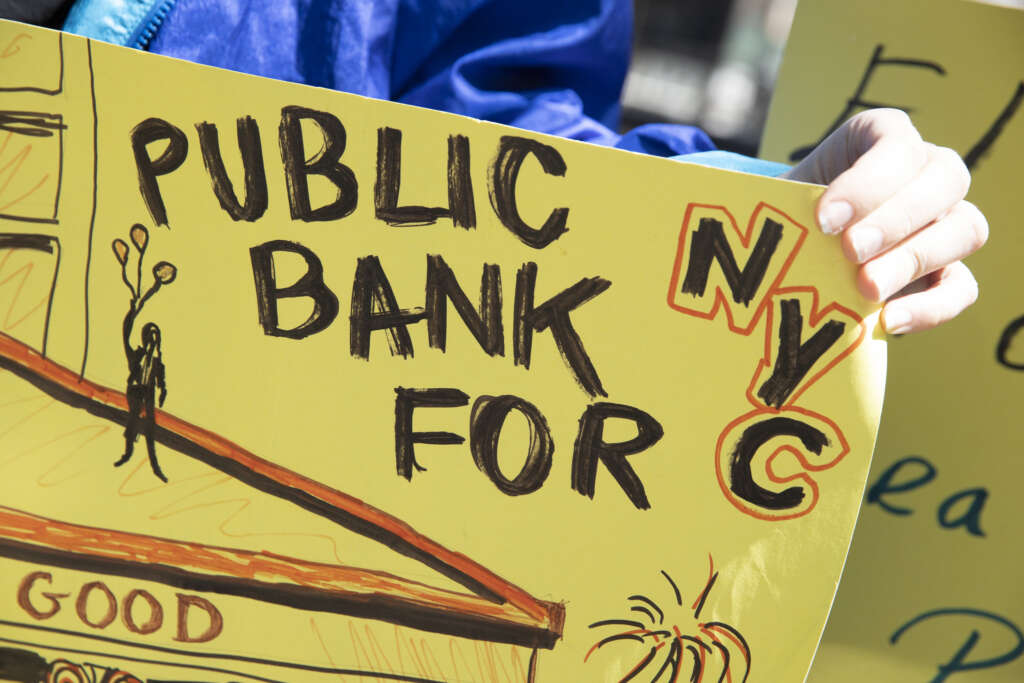
A 2023 rally calling for the city to establish a public bank. (John McCarten/NYC Council Media Unit)

Earlier this month, an obscure government entity, the NYC Banking Commission, voted on which banks city agencies can use over the next two years to deposit tax and other revenue and pay municipal bills. This may seem like little more than a bureaucratic exercise. But with hundreds of millions of dollars sitting in many of these accounts, the choices are far more meaningful than they might seem at first blush. 

That’s why some legislators and advocacy groups are pushing for the city to create its own bank—a public bank—that would use these funds to prioritize investments in city needs rather than helping to sweeten the bottom lines of some of the biggest commercial banks in the world. 

Some say the need for a municipal bank is even greater as the Trump administration plots cuts to housing, green energy and other programs. Moreover, the administration’s unprecedented order to seize from a city bank account $80 million in aid that had been authorized by Congress—and Citibank’s apparent willingness to go along to avoid regulatory retaliation from the White House if it defied the order—should send a clear message of just who’s interest comes first for many of the big banks.

On April 30, the city’s bank accounts held nearly $2.2 billion in deposits, according to information provided by the Department of Finance. Roughly three-quarters of those funds were in just three banks: JP Morgan Chase ($797.9 million), Bank of America ($684.6 million) and Citibank ($197.4 million). These funds don’t just sit idly in accounts waiting to be drawn down; the banks use them to make investments. The trio of banks were the largest bank investors worldwide in the fossil fuel industry over the years 2016-2023, based on data compiled by the organization Banking on Climate Chaos.

As the city labors to meet the challenges of climate change such as extreme heat, flooding, and related issues, it makes little sense for our public dollars to be used to fuel one of the primary sources of these environmental dangers. Funds in a public bank could instead be directed to help ease these problems locally by financing community solar projects, rooftop farms and building renovations that reduce greenhouse gas emissions.

Likewise, many of the Wall Street banks where the city deposits its funds also are major investors in luxury housing projects that spur gentrification and deepen the city’s shortfall of affordable housing. A public bank, with a mission to use its funds to promote the public good rather than maximize shareholder profits, could provide low-interest loans to nonprofit housing developers and community land trusts that aim to produce truly affordable housing. 

Such investments are taking on added import as the Trump administration angles to cut funding for programs that seek to ameliorate climate change and reduce aid that supports affordable housing as well as undermine assistance for underserved communities. As Tousif Ahsan of the New Economy Project said at a May 6 rally, “Through public banks, local governments can responsibly steward public funds—partnering with community-based financial institutions to close critical funding gaps and build wealth in low-income and Black and brown neighborhoods.”

Creating a New York City public bank is also a tool for local economic development—as it has proven to be for more than 100 years in North Dakota. A June 2023 study by the New School Center for New York City Affairs found that just in its early stages, a public bank could spur the creation of 70,600 jobs, more than 17,000 new or renovated housing units and $5.8 billion in lending through local credit unions and neighborhood banks.

“it would represent an alternate model of finance in New York City, one in which finance is not a means of extraction but instead a tool to employ public wealth for public good, enhancing the economic well-being and wealth generating potential for low- and moderate-income New Yorkers and communities,” the report states.   

But the city can’t simply put up a sign and open a bank for business. It needs enabling legislation from the state. State Senator James Sanders Jr., chair of the Senate banking committee, has sponsored the necessary legislation for several years. “I’m proud to lead the charge for the New York Public Banking Act, and I urge my colleagues and the governor to make this the year we give our communities the power to build for themselves,” he said at the May rally.

As the current legislative session in Albany winds down, we’ll soon know if his colleagues heed the call.

Doug Turetsky, a former City Limits reporter and editor, was most recently chief of staff and communications director at the New York City Independent Budget Office.

The post Opinion: A Public Bank for the Public Good appeared first on City Limits.

Israel authorizes more settlements in the occupied West Bank. Strikes on Gaza kill 34, officials say

posted in: All news | 0

By JULIA FRANKEL and NATALIE MELZER

JERUSALEM (AP) — Israel said Thursday it would establish 22 more Jewish settlements in the occupied West Bank, including the legalization of outposts already built without government authorization. In the Gaza Strip, Israeli strikes killed at least 34 people, local health officials said.

Israel captured the West Bank, along with Gaza and east Jerusalem, in the 1967 Mideast war and the Palestinians want all three territories for their future state. Most of the international community views settlements as illegal and an obstacle to resolving the decades-old conflict.

Defense Minister Israel Katz said the settlement decision “strengthens our hold on Judea and Samaria,” using the biblical term for the West Bank. He said it “anchors our historical right in the Land of Israel, and constitutes a crushing response to Palestinian terrorism.”

He added that the construction of settlements was also “a strategic move that prevents the establishment of a Palestinian state that would endanger Israel.”

This is a locator map of Israel and the Palestinian Territories. (AP Photo)

Watchdog group says it’s the biggest expansion since Oslo

The Israeli anti-settlement watchdog Peace Now said the announcement was the most extensive move of its kind since the 1993 Oslo accords that launched the now-defunct peace process. It said the settlements, which are deep inside the territory, would “dramatically reshape the West Bank and entrench the occupation even further.”

Israel has already built well over 100 settlements across the territory that are home to some 500,000 settlers. The settlements range from small hilltop outposts to fully developed communities with apartment blocks, shopping malls, factories and parks.

The West Bank is home to 3 million Palestinians, who live under Israeli military rule with the Palestinian Authority administering population centers. The settlers have Israeli citizenship.

Peace Now said the plans call for the authorization of 12 existing outposts, the development of nine new settlements and reclassifying a neighborhood of an existing settlement as a separate one.

“The government is making clear — again and without restraint — that it prefers deepening the occupation and advancing de facto annexation over pursuing peace,” the group said.

Settlements expand with little or no U.S. pushback

Israel has accelerated settlement construction in recent years — long before Hamas’ Oct. 7, 2023, attack ignited the war in Gaza — confining Palestinians to smaller and smaller areas of the West Bank and making the prospect of establishing a viable, independent state even more remote. Hamas has been designated as a terrorist organization by the United States, Canada and the European Union.

Related Articles


Who is Mohammed Sinwar, the Hamas leader Israel says it killed?


Four Palestinians die in storming of UN food warehouse a day after gunfire at new Gaza aid site


Israeli troops fire warning shots as Palestinians overwhelm new Gaza food center


How is the new Gaza aid plan supposed to work — and why are so many aid groups against it?


At least 60 people killed by Israeli strikes in Gaza as Israel lets minimal aid in

During his first term, President Donald Trump’s administration broke with decades of U.S. foreign policy by supporting Israel’s claims to territory seized by force and taking steps to legitimize the settlements. Former President Joe Biden, like most of his predecessors, opposed the settlements but applied little pressure to Israel to curb their growth.

The top United Nations court ruled last year that Israel’s presence in the occupied Palestinian territories is unlawful and called on it to end, and for settlement construction to stop immediately.

Israel denounced the non-binding opinion by a 15-judge panel of the International Court of Justice, saying the territories are part of the historic homeland of the Jewish people.

Calls for settlements in war-ravaged Gaza

Israel withdrew its settlements from the Gaza Strip in 2005, but leading figures in the current government have called for them to be re-established and for much of the Palestinian population of the territory to be resettled elsewhere through what they describe as voluntary emigration.

Palestinians view such plans as a blueprint for their forcible expulsion from their homeland, and experts say the plans would likely violate international law.

Israel now controls more than 70% of Gaza, according to Yaakov Garb, a professor of environmental studies at Ben Gurion University, who has examined Israeli-Palestinian land use patterns for decades.

The area includes buffer zones along the border with Israel as well as the southern city of Rafah, which is now mostly uninhabited, and other large areas that Israel has ordered to be evacuated.

Strikes kill at least 34 in Gaza

An Israeli airstrike hit a house sheltering several families in Bureij, an urban refugee camp in central Gaza, killing 22 people, including nine women and children, according to officials at nearby Al-Aqsa Martyrs Hospital. An AP journalist viewed the hospital records of the dead.

Strikes in northern Gaza late Wednesday and early Thursday hit a house, killing eight people, including two women and three children, and a car in Gaza City, killing four, local hospitals said.

There was no immediate comment from the Israeli military, which says it only targets combatants and blames civilian deaths on Hamas because the fighters operate in populated areas.

Israel’s campaign in Gaza aimed at destroying Hamas has killed over 54,000 Palestinians, mostly women and children, according to Gaza’s Health Ministry, whose count does not distinguish between civilians and combatants.

The campaign was triggered by Hamas’ Oct. 7 attack, in which terrorists stormed into Israel, killing some 1,200 people, mostly civilians, and abducting 251. Hamas still holds 58 hostages, around a third of them alive, after most of the rest were released in ceasefire agreements. Israeli forces have rescued eight and recovered dozens of bodies.

Melzer reported from Nahariya, Israel. Associated Press writers Kareem Chehayeb in Beirut and Sam Mednick in Tel Aviv, Israel, contributed to this report.

California avocado growers say Mexican imports have helped their sales

posted in: All news | 0

By AMY TAXIN

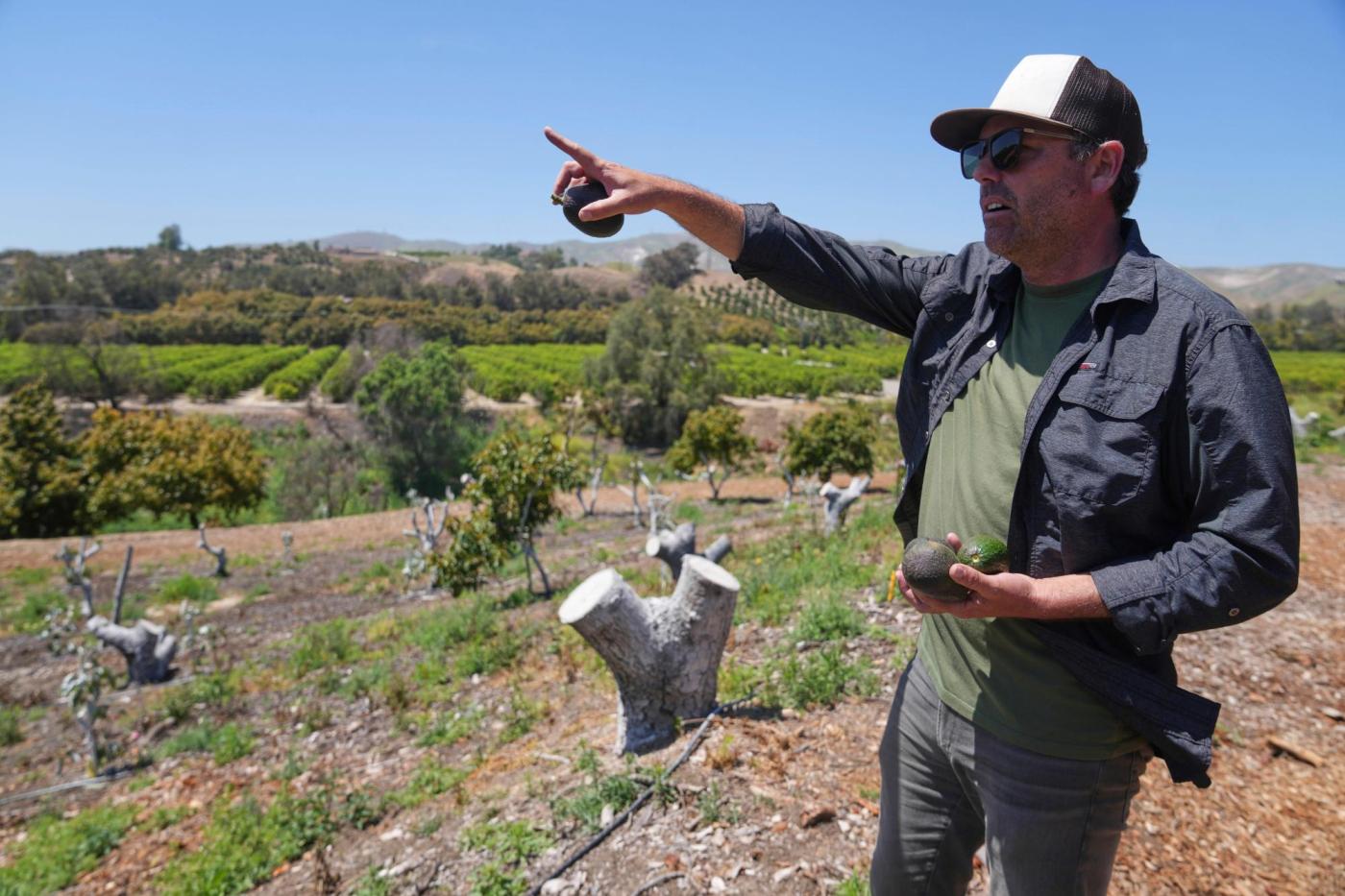
SOMIS, Calif. (AP) — Andreas Tompros lost his home and at least a third of his avocado orchard to a wildfire last year, but the 47-year-old grower is not worried about his farm making a comeback.

Related Articles


Average rate on a US 30-year mortgage rises to 6.89%, its highest level since early February


Ford recalls more than a million vehicles for software glitch that makes rearview camera unreliable


What happens to Trump’s tariffs now that a court has knocked them down?


Nvidia leads Wall Street higher after a US court blocks many of Trump’s tariffs


Hit by Trump trade wars, U.S. economy falls 0.2% in first quarter, an upgrade from initial estimate

While California farmers often rattle off a list of challenges they face including high labor costs, water restrictions and overseas competition, many avocado growers say they have a good thing going. A key reason may come as a surprise to some — Mexican imports.

When the United States lifted its ban on Mexican avocados in 1997, California growers worried at first that the imported fruit would displace their production.

But the steady flow of avocados has wound up helping, not hurting, their sales by allowing for a year-round supply to markets and restaurants that has fomented demand, farmers say. Before the influx, most American consumers considered avocados to be specialty items — and when they came into season in California, industry officials had to work to rev up widespread interest in order to sell them.

But not anymore.

Avocado consumption has been booming in the United States over the past two decades. The amount of fruit available per person tripled to more than 8 pounds between 2000 and 2021, federal statistics show. Avocado toast and guacamole are regular offerings not just in culinary hubs like NYC but at cafes around the Midwest and the South.

Avocados are in demand

On a steep, sun-soaked hillside northwest of Los Angeles, Tompros is replanting nearly 300 avocado trees with the belief that Americans’ hunger for the fruit — and his orchard — will continue to grow.

“It will come back, and I believe it will become better than it was,” Tompros, who previously ran a software company in Hollywood, said of the orchard he took over five years ago in the tiny community of Somis.

Andreas Tompros holds ripe avocados grown at his avocado farm, Ridgecrest Avocados, in Somis, Calif., on Thursday, May 15, 2025. (AP Photo/Damian Dovarganes)

Avocado demand has also been buoyed by consumers’ growing interest in healthy fats, said Emiliano Escobedo, executive director of the Hass Avocado Board.

A 2000 U.S. law created the board that collected 2.5 cents for every pound of avocados imported or produced in the United States. The board used the money to market avocados and conduct nutritional research, an effort that has been widely credited with making the fruit ubiquitous in supermarkets and on restaurant menus.

“It’s been really wildly successful. It generates way more money than most of these other industry boards do,” said Richard Sexton, distinguished professor of agricultural and resource economics at the University of California, Davis. “When you look at the growth rate in avocado consumption relative to all fruits, the difference in growth rate is dramatic.”

A successful crop

Escobedo said about 60% of U.S. households currently buy avocados, and about half of these are responsible for the overwhelming majority of consumption, which means there’s still room for the market to grow — especially in the Northeast, where the fruit is less common.

“There is a lot of opportunity for certain groups of people to increase their purchasing of avocados,” Escobedo said.

While the Trump administration has threatened tariffs on a spate of Mexican goods, avocados have so far been spared. California growers said they want Mexican avocados to keep flowing into the country, though they also want robust U.S. inspections of the imports to keep out pests to protect their crop.

“If you are going to farm in California, avocados are about the best deal right now,” said Ken Melban, president of the California Avocado Commission.

California farmers grow about 10% of the avocados eaten in the United States, Melban said, and account for nearly all of the country’s domestic avocado production. The fruit is largely grown in California from April through September, and Mexican imports arrive year-round to meet nationwide demand, which exceeds what the state’s farmers grow, he said.

Andreas Tompros tours Ridgecrest Avocados in Somis, Calif., on Thursday, May 15, 2025. (AP Photo/Damian Dovarganes)

In Southern California’s Ventura County, many growers have shifted to avocados since lemon prices were walloped by cheaper imports from Argentina. As recently planted trees start bearing fruit in a few years, the region’s avocado production is likely to rise, said Korinne Bell, agricultural commissioner for the county northwest of Los Angeles.

A booming market, despite wildfires

Avocado trees do not come without risks in a region prone to wildfires.

Still, demand for the trees has jumped due to interest from lemon growers — and since the November 2024 fire charred Ventura County avocado orchards, said Rob Brokaw, whose family-owned nursery has supplied avocado trees to California growers for 70 years.

“Right now we are sold out essentially for this year,” Brokaw said. “And we’re mostly sold out for 2026.”

Tompros debated whether to plant the more fire-resistant lemon trees or another crop after the fire ripped through Somis, but he decided to replant due to the soaring demand for Super Bowl guacamole and avocado toast.

Avocados grow at Ridgecrest Avocados in Somis, Calif., on Thursday, May 15, 2025. (AP Photo/Damian Dovarganes)

“It’s the super food, and it’s still growing in popularity,” Tompros said.

He’s taking precautions to not plant the trees too close to what will eventually be his rebuilt home, because the dried-out leaves that help nourish the orchard’s soil can also fuel blazes.

It may take a few years, but Tompros hopes it won’t be too long before his newly planted trees bear fruit that he can sell to a local packinghouse or in seasonal gift boxes with citrus and passionfruit that he ships directly to customers.