Cory Franklin: The lessons of ‘Shoeless’ Joe Jackson and the MLB’s rewriting of history

posted in: All news | 0

MLB Commissioner Rob Manfred recently removed Pete Rose’s permanent ban from baseball, which will make him eligible for induction into the Hall of Fame. Manfred reinstated 17 other banned players as well, including members of the infamous 1919 Chicago White Sox who threw the World Series, including the team’s star “Shoeless” Joe Jackson.

This undated file photo shows baseball player player Shoeless Joe Jackson. (AP Photo/File)

The reinstatement was an obvious sop to the gambling industry, an MLB partner, and possibly also to President Donald Trump, who lobbied for Rose’s future election into the Hall of Fame.

Manfred offered a tone-deaf rationale for reinstating this MLB’s rogues’ gallery: “Obviously, a person no longer with us cannot represent a threat to the integrity of the game.” Whatever else Manfred learned at Harvard Law School, history’s lessons failed to make the curriculum. Understanding history — human nature, mistakes made and the significance of previous cultures — is essential to cultivating integrity.

The nature of history is that no matter how many accounts we read about an event — whether it’s Napoleon Bonaparte’s Russia campaign, the Titanic sinking or the assassination of John F. Kennedy — we can never know precisely what people were thinking, how they acted and why. But whatever history is ultimately knowable, certain falsehoods and myths can be dispelled. This is where, over 100 years later, Jackson, a central figure in the Series fix, provides a lesson about how subtle the lack of integrity can be.

The story now circulating with ever greater popularity is that Jackson was an innocent bystander in the 1919 World Series fix. Claims of his innocence rest on two facts: He hit .375, including the only home run of the Series, and he was never convicted in a court of law.

The first demonstrates how statistics can mislead. By the accounts of other players, the Sox deliberately lost five games (the World Series was then best of nine), and they probably played honestly in two or three. In the first four games that the Sox lost, Jackson got no RBIs. He raised his average remarkably in the three games they won, but his only home run of the Series, along with a base-clearing double, came in the fixed final game clincher, with the Sox already facing an insurmountable lead, and the Series outcome no longer in doubt.

Jackson’s impressive World Series statistics were the result of his poor performance in four fixed games, three games he tried to win and one game in which his contribution didn’t matter in a rigged blowout loss to Cincinnati.

Although Jackson committed no errors, his fielding was likewise suspect. A granular analysis of Jackson’s performance by baseball blogger Dan Holmes reveals his “lackluster efforts in the field, critically in both Games One and Two.” The presiding judge in a subsequent civil suit recalled that Jackson had told him that “he had made no misplays that could be noticed by the ordinary person, but that he did not play his best.”

Regarding his courtroom exoneration and that of the other Black Sox, they were found not guilty of conspiracy, which is different from innocent, primarily because the charges were nebulous — they were charged with conspiracy because fixing baseball games was not a crime — and the Chicago jurors loved their hometown heroes. Baseball Commissioner Kenesaw Mountain Landis summarily banned the players permanently, restoring honesty to the game and saving baseball, along with the help of superstar Babe Ruth’s popularity.

Bill Lamb, a longtime state and county prosecutor in New Jersey, an authority on the scandal and author of “Black Sox in the Courtroom: The Grand Jury, Criminal Trial and Civil Litigation,” has analyzed the legal machinations. He points out Jackson originally admitted in grand jury testimony to being involved in the fix. Then, in a later civil trial against the team, he recanted his sworn testimony, essentially committing perjury.

Lamb poses other questions including why the other fixers would all implicate Jackson if he were innocent, and why Jackson, who claimed he wanted to return the $5,000 he received (he was promised $20,000), eventually deposited it in a Georgia bank near his home.

Lamb concludes: “That Joe Jackson was a likable fellow and persistent in his claims of innocence does not change the historical record. On the evidence, the call is not a close one,” Lamb wrote in 2019 for the Society for American Baseball Research.

Related Articles


Clive Crook: The US is about to discover if deficits don’t matter


Parmy Olson: AI sometimes deceives to survive. Does anybody care?


Maureen Dowd: Dance$ with emolument$


Ezra Klein: Trump’s BBB — Big Budget Bomb


Snoey, Morocco: The emergency in emergency medicine

“As he admitted under oath after first being confronted, Jackson was a knowing, if perhaps unenthusiastic, participant in the plot to fix the 1919 World Series. And damningly, Jackson was just as persistent in his demands to be paid his promised fix payoff money as the Series progressed as he would later be in his disavowals of fix involvement. In the final analysis, Shoeless Joe Jackson, banished from playing the game that he loved while still in the prime of his career, is a sad figure. But hardly an innocent one.”

Manfred may not realize that baseball culture has always reflected the larger societal culture. His reinstatement of Rose and Jackson is no exception: History has become an irrelevant triviality — ignored or, even better, forgotten. Ethics are now a bore since unethical behavior can always be papered over with tricks such as deceptive statistics and abstruse legal arguments.

Nothing good can come of this.

Dr. Cory Franklin is a retired intensive care physician. He wrote this column for the Chicago Tribune.

Matt Wallner’s return means Twins have nearly full group healthy

posted in: All news | 0

SEATTLE — Something rare occurred for the Twins on Saturday, something that very possibly has not happened for years at this point of the season.

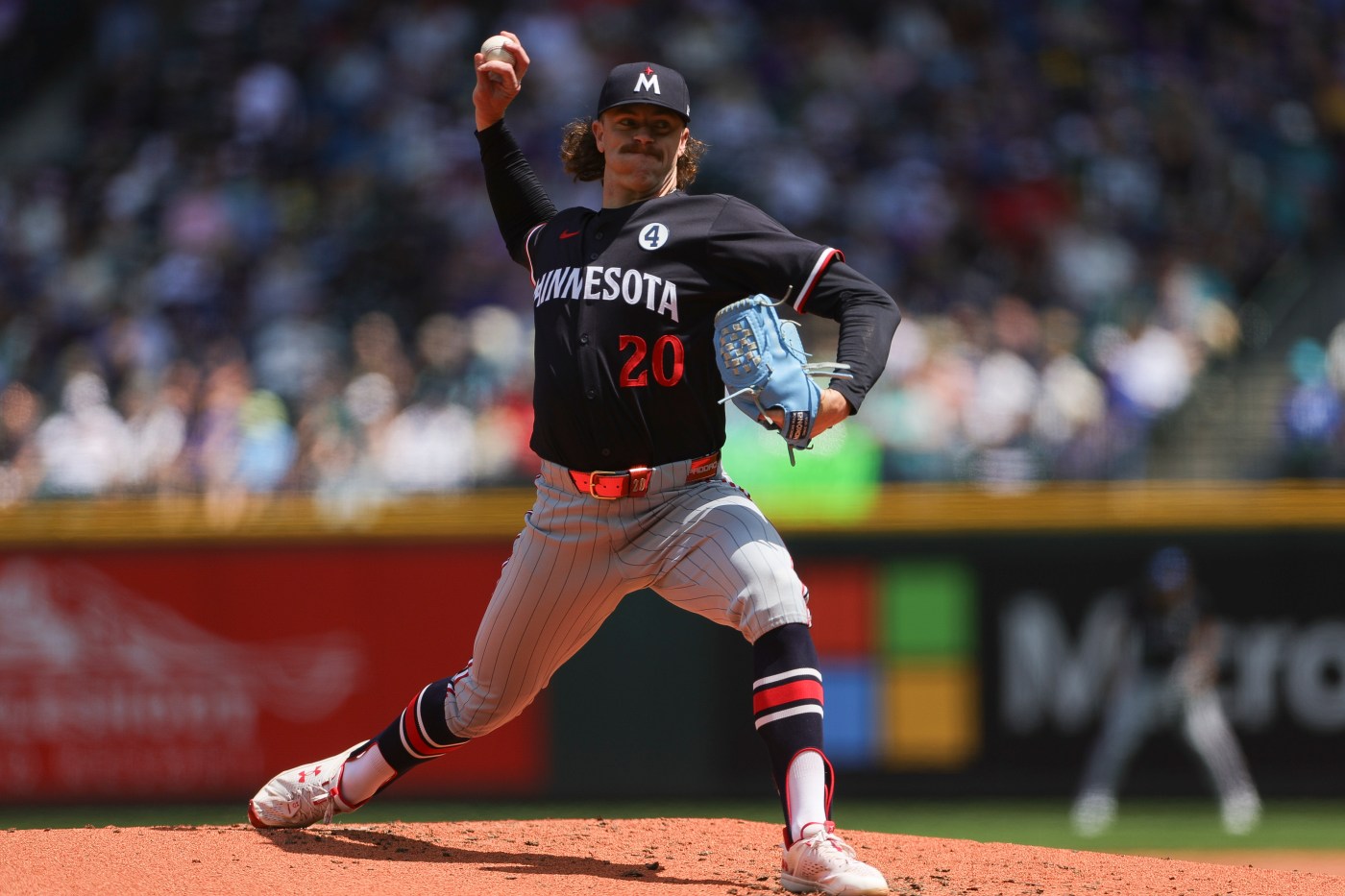
With outfielder Matt Wallner’s activation from the injured list from a hamstring strain that has kept him out since mid-April, the Twins have the full group they expected to break camp with finally healthy.

Of course, there’s a couple new names involved — Kody Clemens and Jonah Bride are now on the roster in place of Edouard Julien and Jose Miranda — and Luke Keaschall remains sidelined with a broken forearm, but everyone whom they entered the season planning on relying upon is now healthy, giving an already surging team a wealth of options.

“It feels good, especially getting everybody back together and having that group we had in spring training back together,” center fielder Byron Buxton said. “Obviously, we’ve got some new additions in here that’s been a big help to get us where we are. Just making sure, even though Matt’s coming back, you keep adding on and they keep doing their job as well as us doing our job. That’s what makes this team roll.”

They didn’t have their full expected group to begin the year — Royce Lewis (hamstring) and Brooks Lee (back) were out to begin the year. By the time Lewis returned as the later of the two, Wallner was already injured. Wallner, who hit a two-run home run in his first at-bat on Saturday, returned a day after Buxton (concussion injured list). And now, Twins manager Rocco Baldelli has his full core from which to craft lineups.

“It’s wonderful to have Wallner back,” Baldelli said. “We’ve got guys that come and go in our lineup pretty often. It’s a really great feeling to get guys back. When he left, he was as productive as any player that we had at that point.”

Wallner injured his left hamstring running to first base on April 15 in a game against the New York Mets. Initially, he said, it didn’t feel like it was going to get better at all. It was tight for a week and remained stiff.

After that first week, it started getting better every single day, little signs of progress that showed him that he was on the right track.

“(I was doing) little stuff in the training room that I’ve never done in my life before, but I think for the most part, it worked, so we’ll take it,” Wallner said.

Once healed, the outfielder went on a rehab assignment with the Triple-A Saints during which he went 8 for 25 (.320) with five home runs over six games, driving in 13 and he picked up where he left off on Saturday with the Twins.

After the first rehab game, he felt a little more tired than he normally would, but he returns to the Twins after playing three consecutive games from Tuesday to Thursday, something which he came out of feeling healthy.

“I feel really good,” he said. “I’m just happy with where I’m at.”

Keirsey Jr. sent down

To make room on the roster, the Twins optioned outfielder DaShawn Keirsey Jr. back to Triple-A.

Keirsey had settled into a role where he would primarily come in late to pinch run and play defense. He was hitting .109 in limited at-bats, with his biggest moment coming on Mother’s Day when he sent the Twins to a walk-off win.

“It’s hard to go from being a baseball player playing regularly to getting called up to the highest level and being told by the manager that you’re going to fill a specific role on Day 1,” Baldelli said. “He handled it great. Couldn’t have been better. … Now, it’s time for him to go get sharp again, go play and get a bunch of at-bats and get some time in the field.”

Briefly

Royce Lewis, who entered the day in an 0-for-28 slump, was not in the starting lineup on Saturday. … Chris Paddack is scheduled to start the series finale in Seattle, which will be at 3:10 p.m. CT. He is slated to face Luis Castillo.

Related Articles


Twins come back to oust Mariners in ‘one of the best wins’ in recent memory


With concussion behind him, Twins welcome back Byron Buxton


Twins option Carson McCusker, setting stage for bigger move Friday


Twins drop finale to Rays, have lost three of four


Twins’ hitters limited to six singles in 5-0 loss to Tampa Bay

Wild GM Bill Guerin: American hockey needs to keep its foot on the gas

posted in: All news | 0

The Minnesota Wild are not one of the eight teams that employed Bill Guerin during his nearly two-decade career as an NHL player. But the Wild general manager skated for the home team in St. Paul once. In the fall of 2004, Guerin played for Team USA in the World Cup of Hockey.,

Before packed houses at Xcel Energy Center, Guerin had teammates like Brett Hull, Mike Modano, Jeremy Roenick, Chris Chelios, Keith Tkachuk and current Minnesota Frost head coach Ken Klee. The Americans beat Slovakia in the preliminary round, and downed Russia in the quarterfinals before falling to Finland in a tight, 2-1 semifinal game.

Between three trips to the Olympics, a pair of appearances in the World Cup and two stints with the American entry in World Juniors when he was a teenager, Guerin spent nearly 90 games wearing red, white and blue and vying for a medal on various international hockey stages.

He won gold in the 1996 World Cup, and silver in the 2002 Olympics in Salt Lake City. So, when USA Hockey needed a general manager for February’s 4 Nations Face-Off, Guerin was the logical choice, and put together a team that came within an overtime goal of gold. He will serve in the same capacity for Team USA in the 2026 Olympics, which will be held next February in Italy.

In early May, as he held his season-ending meeting with the Minnesota media following the Wild’s first-round playoff exit, Guerin’s bags were already packed for the 2025 World Championship in Denmark and Sweden. And while there were seven Wild players and/or prospects dotting several of the international team rosters, Guerin was focused on his nation first and employer second.

“I put a big emphasis on it. It’s not necessarily how many goals you score or this or that or whatever,” Guerin said of the tournament held in Europe each spring. “It’s, ‘When are we going to win that tournament?’ We need to win that tournament soon. We need our best players going.”

Rite of spring

The NHL pauses for the Olympics and competitions such as the inaugural 4 Nations Faceoff so that its top players can skate for their countries. The World Championship is played at the same time as the NHL playoffs in the spring, meaning that the rosters for the United States, Canada, Sweden, Finland, Germany, Switzerland and others are composed primarily of skaters, defensemen and goalies from NHL teams that either didn’t make the playoffs or were knocked out in the first round.

Among the top players for Team USA in 2025 were former Gophers star Logan Cooley, Frank Nazar and Zach Werenski, whose NHL teams — Utah, Chicago and Columbus, respectively — did not make it to the 2025 playoffs. Wild defenseman Zeev Buium was on a plane for Europe to skate for the Americans just a few days after Minnesota was knocked out of the postseason by Vegas.

Other Wild properties in the tournament were defense prospect David Spacek (Czechia), goaltending prospect Samuel Hlavaj (Slovakia), defenseman Jared Spurgeon (Canada), retiring goaltender Marc-Andre Fleury (Canada), defenseman Jonas Brodin (Sweden) and forward Marcus Johansson (Sweden).

With Guerin and other USA Hockey higher-ups in attendance for several of the games in Stockholm, the American team did something it had last accomplished in 1933. After just one loss in their seven preliminary round games, the Americans bested Finland, Sweden and Switzerland in the medal round to bring home gold.

The finale versus the Swiss, whose international hockey stock is rising fast, was an overtime thriller, with Buffalo forward Tage Thompson scoring the game’s only goal.

“It was a great experience … and the buy-in from players was awesome. There was a good feel,” Guerin said this week while taking some much-needed time away from the rink. “The guys wanted to be there, and that’s what I’ve been trying to push is (that) it’s a great experience to get to play for your country.”

Guerin noted that the 1933 team won gold in an era when rosters had fewer than a dozen players, goalies wore little to no padding, and the forward pass was a relatively new element to the game.

“This is really the first time in modern history that we’ve done it,” Guerin said.

And this gold medal may have come at what is looking more and more like the best of times for American hockey. Guerin pointed out that the American entry in sled hockey — an adapted version of the game for players who have lost limbs or dealt with paralysis — is dominating the world stage.

Best of times?

Team USA won its second consecutive gold at the 2025 World Juniors and will go for the three-peat when the tournament comes to the Twin Cities in December.

In April, the U.S. women beat Canada in overtime to claim the World Championship in Czechia. And when they get to Italy next winter, the Americans will be pushing for their first men’s Olympic gold since the 1980 Miracle On Ice, while the Team USA women won their most recent gold in 2018.

“There have been a lot of great accomplishments, and the player pool for all of the different categories we play in is having success. It’s a good thing,” Guerin said. “We don’t want to take our foot off the gas, though. The World Championships happen every year. We don’t just want to say, ‘Hey, great, we won one, let’s back off.’ We want to continue to compete for medals. That’s where we are now.”

With an eye toward the Olympics, Guerin said perhaps the most important thing key members of Team USA gained this month, in addition to those gold medals, was the experience of playing in meaningful games while wearing the nation’s colors.

“A lot of times there are very, very good players that haven’t played in meaningful games,” Guerin said. “We had some guys in that category that really stepped up and proved that they can do that.”

The process of choosing the Team USA roster for World Juniors will begin in late July in Minneapolis with the World Juniors Summer Showcase, which will include teams from Canada, Sweden and Finland as well as the United States, and will be held at Ridder Arena on the U of M campus. Minnesota Gophers men’s hockey coach Bob Motzko is the American coach for World Juniors, for the third time in his career.

Related Articles


WJC pre-tourney games slated for Greater Minnesota


Wild sign Russian prospect Danila Yurov to entry-level contract


As the offseason begins in earnest, some Wild stories to follow


NHL: Salt Lake’s team brands itself as Utah Mammoth


Wild GM Bill Guerin ready to spend

The next step for Timberwolves’ title pursuit? More attention to detail

posted in: All news | 0

On a recording of The Zach Lowe show this week, Lowe, a national NBA analyst, pointed out the similarities between an offensive possession the Timberwolves produced in the first quarter of Wednesday’s Game 5 and what San Antonio did in the 2014 Western Conference Finals, also in Oklahoma City.

The lead guard got two defenders on him off a screen and roll. He then made a swing pass to the perimeter. The next pass hit the rolling big man, who immediately kicked out to the corner for an open triple.

In San Antonio’s case, Boris Diaw drilled the triple. In this instance, Jaden McDaniels’ attempt clanked off the iron as part of a slow start that ultimately doomed Minnesota.

What Lowe was trying to show was that Anthony Edwards, who ignited the possession by drawing the extra defender and getting off the ball, made the right play. But what also stood out was the difference between Minnesota, which lost in the Western Conference Finals, and San Antonio, which went on to win an NBA championship.

All of the Spurs’ passes in this specific clip were on point, and Biaw caught the ball right in the shooting pocket. In Minnesota’s case, Julius Randle’s pass was well behind a rolling Rudy Gobert, who had all he could handle to collect the ball before firing it off to McDaniels — and McDaniels had to reach two feet to his left to bring the ball in before rising up for the shot.

Ask any shooter and they’ll tell you how much the proximity of the incoming pass affects the likelihood of the shot dropping.

Minnesota’s roster is flush with athleticism, physicality and talent. What it lacks is the ability to consistently carry out those little details on both sides of the ball that can be the difference between winning and losing on the grandest stages. A possession here or there was the difference between Minnesota leading the 2024 West Finals 2-0 versus the reality of trailing Dallas 0-2 on the way to a 4-1 series loss.

The Wolves had a chance to square up the 2025 West Finals with Oklahoma City but were outexecuted at the end of Game 4 and lost by two points.

Just a few weeks prior, Oklahoma City played the foul game while leading by three late in a game against Denver, only to have the Nuggets rally to win the game, effectively, at the buzzer. In that case, Denver was able to keep the ball out of the hands of Thunder star guard Shai Gilgeous-Alexander and force Chet Holmgren to take the late-game, pressure-packed free throws. Holmgren missed both.

Minnesota couldn’t repeat the formula. The league MVP caught all three inbounds passes for Oklahoma City in the final 15 seconds of regulation and went 5 for 6 from the stripe to effectively ice the game. Earlier in that quarter, Minnesota gave up a pair of key buckets as Oklahoma City players went unchecked while cutting to the hoop for easy layups.

Those are the details that will continue to prevent Minnesota from climbing the final couple of the rungs on the ladder until they’re corrected.

Wolves veterans Mike Conley and Rudy Gobert were in clear awe of Oklahoma City in the wake of the series, for good reason.

“Their body movement, their connectivity in their sets, their IQ, the things that they were doing, the adjustments they were making were just a level above us,” Conley said. “We were just a step slow at all those things. … They were like on one string defensively.”

Like 15 puppets connected to one string, Anthony Edwards added. The Thunder were locked in from the opening tip to the final buzzer night in and night out. It’s why Oklahoma City sported easily the best defense in the NBA this season — a title Minnesota held just a year ago.

Related Articles


Frederick: Anthony Edwards wasn’t good enough in Game 4. It has nothing to do with points


Mizutani: When Timberwolves needed them most, Anthony Edwards and Julius Randle didn’t show up


Timberwolves’ depth delivers, execution does not in Game 4 loss to Thunder


Timberwolves ditch zone defenses for their ‘fastball’ — aggressive man to man


Mizutani: Timberwolves finally punched back. Let’s see them do it again.

“OKC was really impressive. Their togetherness and their consistency, I mean they’ve done it all year, and really for the last couple of years,” Gobert said. “This is a group that enjoys (playing) together, but they build championship habits. For us, this is where the area of improvement is (needed). We have championship talent, but how can we keep building those championship habits and championship mindset? Because this is what I think is going to help us.

“We can point to a million things, but those things are things that we can all control as a team, individually, collectively as an organization. What I’ve seen from OKC this year is they’re really just like this. And it’s not about making shots every night, playing great every night. You’ll have better stretches, not as good of stretches, but they were together the whole season, and they were doing the little things the whole season.”

That’s what title teams do. Minnesota appeared to have more of an “on” and “off” switch this season that it would toggle depending on the opponent or time of year. Or it would fall back into bad habits until Timberwolves coach Chris Finch and the coaching staff spent another week drilling them back out.

That’s not required for championship teams. Wolves wing Donte DiVincenzo said those “little things” were the separator in the West Finals. The challenge, he noted, is for Minnesota to execute those consistently throughout the campaign.

“Then once you get to the playoffs, it’s second nature,” DiVincenzo said. “It’s a habit at that point.”

Finch said concentration is an “acquired skill.”

“The more you do it, the better you get at it,” he said. “And the more you prioritize it, the better you get at it.”

There lies the key in Conley’s mind. Those details — from understanding opponent scouts to executing defensive coverages to understanding the importance of offensive movement and spacing — need to become more important for everyone in order to improve as a team.

“Maybe that means studying the game more. Maybe that means doing more individual coaching, taking coaches on the side and getting some individual stuff there. Bringing me aside every now and then, even more often, and just using the minds around you to help you grasp certain concepts and certain things about the game,” Conley said. “The game is different than when I came up (and was) starting to play. It might even be taught different at a younger age, or however they go through the circuits and through college. What I know is a lot different than what they know.

“You’ve got to try to bring them up to a certain standard or a certain level where the non-negotiables are things you just do by habit and not something that we have to ask for or show on film a thousand times. It will be on us as a team to try to figure that out.”

If the Wolves don’t, they won’t win. Not at the level at which they hope to.

“I think this group can win a championship. It has the talent to do it, but it’s about keep learning, keep growing. Year 12, and I’m learning every year. Everyone learns,” Gobert said. “I was really impressed with OKC. I think they deserve to be where they’re at, and it’s a credit to them. They have a special team, a special group, and so do we. But I think they were a little more ahead of us in terms of their attention to details.”

“They had a plan, they executed it and they didn’t deviate from it,” Conley added. “Those guys really, really locked in on that and you can tell on both ends of the floor, it didn’t matter who scored, who had the ball — they were just finding the open person and making the next reads.

“(Those are) things that we’ve gotten better at. What we’re still working towards, I think. So, we’ve got a lot of room to grow and to get better at.”

Related Articles


Was this a bite at the apple? The numbers, and the West finals, say Wolves weren’t title contenders


Naz Reid intends to re-sign with the Timberwolves, but wants to do more


Timberwolves blasted in Game 5 to end another season in West Finals


Frederick: Are guys really playoff players? Or can it be matchup dependent?


What makes the Timberwolves’ 3-1 deficit feel even larger? That Oklahoma City crowd.