In the years leading up to the pandemic, one of the hottest trends in the Rock and Roll Hall of Fame crowd was to hit the road for one final tour. But once the concert industry came roaring back to life in 2022, some of rock’s biggest names hopped on board and flipped the bird at the notion of retirement.
Back in 2023, I wrote three columns about that very trend and asked a simple question about aging rockers: What are the chances we’ll see them play the Twin Cities again?
Two years later, here’s an update on the future of six aging musical acts and whether or not another show in the metro is in the cards.
Billy Joel
Billy Joel performs at Allegiant Stadium on November 09, 2024 in Las Vegas, Nevada. (Photo by Ethan Miller/Getty Images)
Age: 76.
Last seen: Nov. 10, 2023; U.S. Bank Stadium.
The dirt: Joel hasn’t released an album of pop music since 1993, but the New York native has kept himself busy on the road. In the time since, Joel has played Twin Cities arenas and stadiums 11 times, both on his own and in joint concerts with Elton John and Stevie Nicks. In 2014, he launched a monthly residency at Madison Square Garden that ended last summer after 104 shows.
But in May, the Piano Man shocked fans when he canceled all of his upcoming concerts due to a diagnosis of normal pressure hydrocephalus. It’s a buildup of fluid deep within the brain that can cause vomiting, vision problems, difficulty walking and memory loss or other cognitive impairment. He’s undergoing at least four months of physical therapy as he has said he’s having trouble with his hearing, vision and balance.
Will we see him again: Assuming he does recover, it won’t be surprising if he says farewell to touring, possibly with one final concert in his hometown.
Bruce Springsteen
Bruce Springsteen and the E Street Band perform at the Xcel Energy Center in St. Paul on Sunday, March 5, 2023. (John Autey / Pioneer Press)
Age: 75.
Last seen: March 5, 2023; Xcel Energy Center.
The dirt: In February 2023, Springsteen hit the road for his first tour with the E Street Band since 2016. The first 130 dates sold more than four million tickets and the outing was named Pollstar’s Rock Tour of the Year for 2024. I gushed about his 2023 show at the X and wrote that the “rollicking, emotionally charged, nearly three-hour concert … was as good, if not better, than any others he’s done here in the 21st century.”
But by the fall of 2023, rumors started flying that the tour would be Springsteen’s last after he postponed the rest of that year’s concerts to recover from peptic ulcer disease. Springsteen rallied, though, and resumed touring last year. In August, he told a Philadelphia crowd: “We’ve been around for 50 f—— years and we ain’t quitting! We ain’t doing no farewell tour b——-! … Farewell to what? A thousand people screaming your name? Get the hell out. I ain’t going anywhere!”
Will we see him again: Springsteen at the E Street Band are currently playing a 16-date European tour, with no other shows planned this year. He could very well launch another full band outing at some point in the future, revive his solo Broadway show or even take that on the road. Not to put too fine of a point on it, but in October, the Boss appeared on “The Graham Norton Show” and said he’ll perform live until he dies: “I am going to keep going until it’s over.”
Aerosmith
BOSTON, MA – September 8: Steven Tyler of Aerosmith pretends to smoke a joint as he performs at Fenway Park on September 8, 2022 in Boston, Massachusetts. (Staff Photo By Matt Stone/MediaNews Group/Boston Herald)
Ages: Steven Tyler, 77; Joe Perry, 74; Tom Hamilton, 73; Brad Whitford, 73; Joey Kramer, 74.
Last seen: July 19, 2019; Twin Cities Summer Jam.
The dirt: The American Rolling Stones have weathered plenty in their decades together, from drug addiction to inter-band feuding. Flamboyant frontman Tyler and guitarist Perry have publicly feuded over Tyler’s stint as a judge on “American Idol” and his failed attempt to launch a solo country career with 2016’s “We’re All Somebody from Somewhere.” In 2015, band members began publicly discussing a final tour and a 2017 European outing was billed as their farewell.
In May 2023, the band announced a farewell tour that kicked off that September and included a stop at Xcel Energy Center. But three nights into the tour, the band postponed the rest of the tour to 2024 after Tyler suffered from vocal chord damage. That damage turned out to be more severe than doctors initially realized and the band announced last August they had officially retired from the road.
Will we see them again: No, although Hamilton has told reporters it’s possible the band may record new music together.
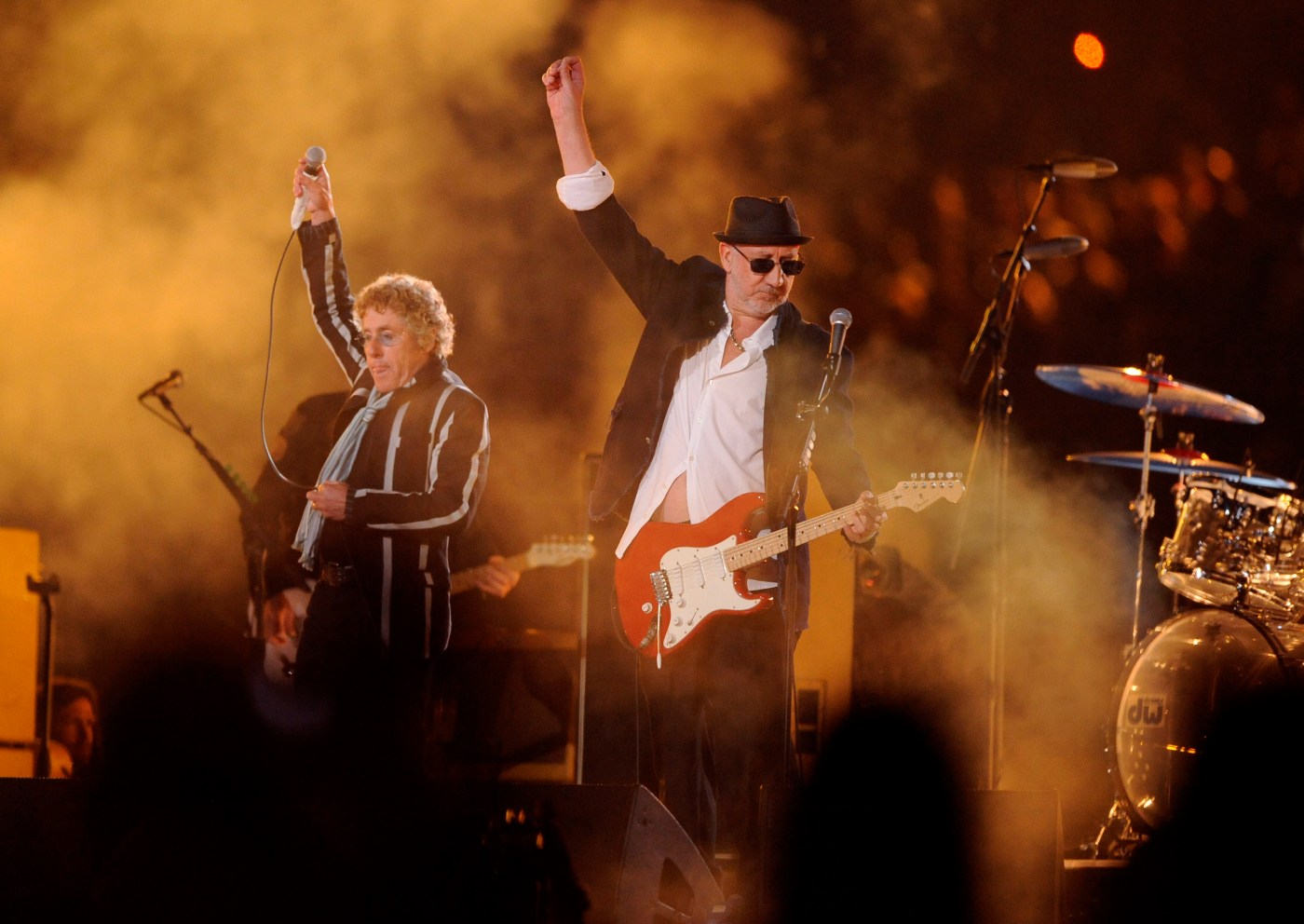
The Who
Ages: Roger Daltrey, 81; Pete Townshend, 80.
Last seen: Sept. 6, 2019; Xcel Energy Center.
The dirt: The Who famously embarked on a farewell tour in 1982, but by the end of that decade, they were already back on the road. The sole surviving members have soldiered on in the years since, despite Daltrey’s voice shrinking to a shadow of its former self. As I wrote in a 2019 review: “Daltrey once again struggled throughout the evening with his vocals noticeably diminished from 2016 (when he seemed to be rallying in what he probably believed would be his final tour). At times, he looked pained as he attempted to strangle the lyrics from his throat. Needless to say, he skipped a whole lot of notes, not to mention screams, along the way.”
In May, the Who announced their upcoming North American fall tour would be their final shows in the U.S. and Canada. The news follows an embarrassing move by Daltrey, who announced longtime drummer Zak Starkey (son of Ringo Starr) would not join the tour due to his loud playing style at a Royal Albert Hall gig. Days later, Townshend said it was a miscommunication and that Starkey was still in the group. But then Townshend backtracked and said Starkey was indeed out of the band for good so he could pursue other projects. Starkey responded by confirming he was fired. Imagine that, a drummer was fired by the Who — the Who! — for being too loud. Keith Moon is spinning in his grave.
Will we see them again: There’s no Minnesota stop on the fall tour, so unless they extend it, the answer is no.
Paul Simon
Paul Simon performs onstage during the Brooks Brothers Bicentennial Celebration at Jazz At Lincoln Center on April 25, 2018 in New York City. (Photo by Dimitrios Kambouris/Getty Images for Brooks Brothers)
Age: 83.
Last seen: April 20, 22 and 23, 2025; Orpheum Theatre.
The dirt: In 2018, Simon announced his retirement from touring with one final outing, citing time away from his family and the death of longtime guitarist Vincent Nguini as key factors. “I’ve often wondered what it would feel like to reach the point where I’d consider bringing my performing career to a natural end,” Simon said in a news release at the time. “Now I know. It feels a little unsettling, a touch exhilarating and something of a relief.”
But in 2023, Simon released his 15th album, “Seven Palms,” a single piece of continuous music in seven movements that’s intended to be listened to as one long piece. It earned Simon his 28th Grammy nomination.
Despite revealing that he has lost most of his hearing in his left ear, Simon went ahead and unretired this year. According to the news release announcing his 2025 tour, Simon “chose to perform in intimate venues where the acoustics are optimal in consideration of the severe hearing loss that he incurred over the last few years. … Together with the Stanford Initiative to Cure Hearing Loss, and his own production team, Simon redesigned his entire stage set up to make performing viable.”
Will we see him again: His current outing runs through August. It remains to be seen if that will truly be the end of the road for Simon.
Bob Dylan
FILE – In this Jan. 12, 2012, file photo, Bob Dylan performs in Los Angeles. (AP Photo/Chris Pizzello, File)
Age: 84.
Last seen: Oct. 25, 2017; Xcel Energy Center.
The dirt: Dylan clearly loves the road. On June 7, 1988, he started a tour that, for the most part, hasn’t stopped since. Fans and the media have dubbed it the Never Ending Tour, a term Dylan has dismissed several times. Yet he has played roughly 100 shows a year for decades now, stopping only for a few months in 1997 when he was hospitalized with a serious chest infection and then again during the pandemic.
When Dylan hit England in 2022, several critics wrote about his concerts as if his retirement was imminent. But Dylan has yet to confirm whether or not he’s on the final leg of his storied career.
Will we see him again: Dylan did play Somerset (Wis.) Amphitheater in September as part of Willie Nelson’s annual Outlaw Music Festival, which Dylan will again join this year, although the tour is hitting East Troy on the other side of Wisconsin. Dylan seemed to be trolling the metro this spring when he hit Omaha, Sioux City, Mankato, Eau Claire, Green Bay and Davenport. His current outing is now billed to run through spring 2025, so it’s possible he’ll finally hit the Cities again, but one never knows when it comes to Dylan.
Related Articles
Review: Bassoonist Fei Xie shines in Minnesota Orchestra program also featuring Wynton Marsalis pieces
Cynthia Erivo mines the depths of her soul for ‘I Forgive You,’ her ‘honest, human’ album
Rapper Lil Wayne to headline Target Center in August
Concert review: Maynard James Keenan and pals celebrate his 61st birthday at the X
Here are five ways to celebrate Pride month, from Pee-wee Herman to F1rst Wrestling