New German leader plans to discuss Ukraine and trade with Trump in Oval Office visit

posted in: All news | 0

By SEUNG MIN KIM, KIRSTEN GRIESHABER and GEIR MOULSON, Associated Press

WASHINGTON (AP) — Germany’s new leader is meeting President Donald Trump in Washington on Thursday as he works to keep the U.S. on board with Western support for Ukraine, help defuse trade tensions that pose a risk to Europe’s biggest economy and further bolster his country’s long-criticized military spending.

Trump and Chancellor Friedrich Merz have spoken several times by phone, either bilaterally or with other European leaders, since Merz took office on May 6. German officials say the two leaders have started to build a “decent” relationship, with Merz wanting to avoid the antagonism that defined Trump’s relationship with one of his predecessors, Angela Merkel, in the Republican president’s first term.

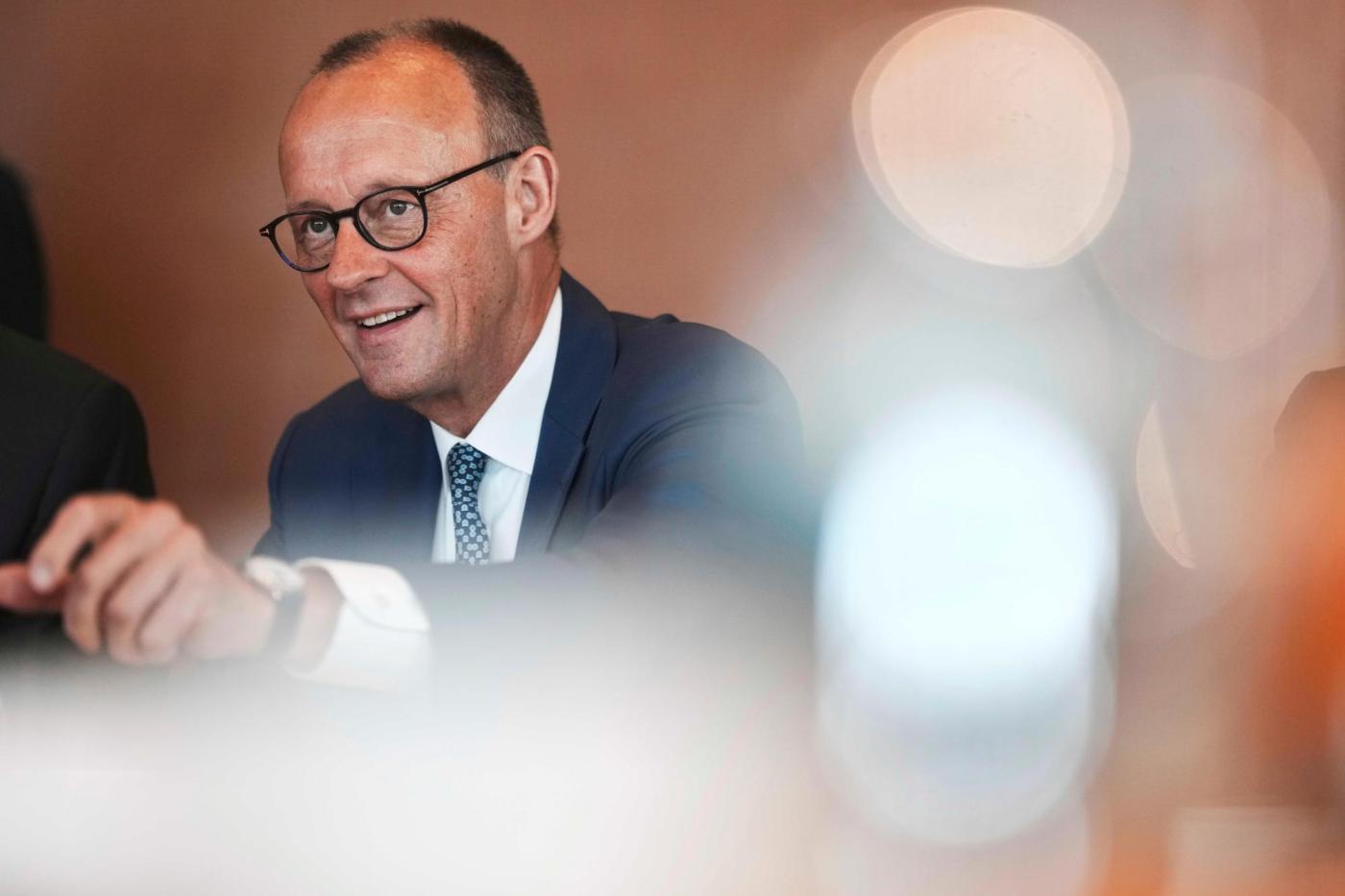
German Chancellor Friedrich Merz speaks at the municipal congress of the German Association of Towns and Municipalities (DStGB) in Berlin, Germany, Tuesday June 3, 2025. (Michael Kappeler/dpa via AP)

The 69-year-old Merz is a conservative former rival of Merkel’s who took over her party after she retired from politics. Merz also comes to office with an extensive business background — something that could align him with Trump.

On Thursday, Merz told reporters in Washington ahead of his meeting with Trump that “the meeting has been well prepared on all sides.” He said he wants to discuss the Ukraine war, tariffs and NATO spending.

“We will have to talk about NATO — we changed the constitution in Germany so that we can spend the means that need to be spent,” Merz said, adding that “we want to become the strongest conventional army in the European Union.” Before it took office, Merz’s coalition pushed plans through parliament to enable higher defense spending by loosening strict rules on incurring debt.

Still, Merz said he didn’t anticipate major breakthroughs on any of the key issues that he planned to discuss with Trump.

A White House official said topics that Trump is likely to raise with Merz include Germany’s defense spending, trade, Ukraine and what the official called “democratic backsliding,” saying the administration’s view is that shared values such as freedom of speech have deteriorated in Germany and the country should reverse course. The official spoke on condition of anonymity to preview the discussions.

But Merz told reporters Thursday morning that if Trump wanted to talk German domestic politics, he was ready to do that but he also stressed Germany holds back when it comes to American domestic politics.

Merz will want to avoid an Oval Office showdown of the kind that Ukrainian President Volodymyr Zelenskyy and South African President Cyril Ramaphosa experienced in recent months. Asked about the risk of a White House blow-up, Merz spokesperson Stefan Kornelius said on Monday that the chancellor is “well-prepared” for the meeting and that he and Trump have “built up a decent relationship, at least by phone” and via text messaging.

Keeping Ukraine’s Western backers together

Merz has thrown himself into diplomacy on Ukraine, traveling to Kyiv with fellow European leaders days after taking office and receiving Zelenskyy in Berlin last week. He has thanked Trump for his support for an unconditional ceasefire while rejecting the idea of “dictated peace” or the “subjugation” of Ukraine and advocating for more sanctions against Russia.

The White House official said Trump on Thursday will stress that direct peace talks must continue.

In their first phone call since Merz became chancellor, Trump said he would support the efforts of Germany and other European countries to achieve peace, according to a readout from the German government. Merz also said last month that “it is of paramount importance that the political West not let itself be divided, so I will continue to make every effort to produce the greatest possible unity between the European and American partners.”

Under Merz’s immediate predecessor, Olaf Scholz, Germany became the second-biggest supplier of military aid to Ukraine after the United States. Merz has vowed to keep up the support and last week pledged to help Ukraine develop its own long-range missile systems that would be free of any range limits.

Military spending

At home, Merz’s government is intensifying a drive that Scholz started to bolster the German military after Russia launched its full-scale invasion of Ukraine. In Trump’s first term, Berlin was a target of his ire for failing to meet the current NATO target of spending 2% of gross domestic product on defense, and Trump is now demanding at least 5% from allies.

The White House official said the upcoming NATO summit in the Netherlands later this month is a “good opportunity” for Germany to commit to meeting that 5% mark.

Scholz set up a 100 billion euro ($115 billion) special fund to modernize Germany’s armed forces — called the Bundeswehr — which had suffered from years of neglect. Germany has met the 2% target thanks to the fund, but it will be used up in 2027.

Merz has said that “the government will in the future provide all the financing the Bundeswehr needs to become the strongest conventional army in Europe.” He has endorsed a plan for all allies to aim to spend 3.5% of GDP on their defense budgets by 2032, plus an extra 1.5% on potentially defense-related things like infrastructure.

Germany’s economy and tariffs

Another top priority for Merz is to get Germany’s economy, Europe’s biggest, moving again after it shrank the past two years. He wants to make it a “locomotive of growth,” but Trump’s tariff threats are a potential obstacle for a country whose exports have been a key strength. At present, the economy is forecast to stagnate in 2025.

Related Articles


Trump banned citizens of 12 countries from entering the U.S. Here’s what to know.


Trump’s EPA targets environmental rules projected to save billions — and many thousands of lives


Trump speaks with Xi amid stalled talks between the US and China over tariffs


Consultant behind AI-generated robocalls mimicking Biden goes on trial in New Hampshire


Thune’s first big test as Senate leader has arrived with Trump’s tax bill

Germany exported $160 billion worth of goods to the U.S. last year, according to the Census Bureau. That was about $85 billion more than what the U.S. sent to Germany, a trade deficit that Trump wants to erase.

“Germany is one of the very big investors in America,” Merz told reporters Thursday morning. “Only a few countries invest more than Germany in the USA. We are in third place in terms of foreign direct investment.”

The U.S. president has specifically gone after the German auto sector, which includes major brands such as Audi, BMW, Mercedes Benz, Porsche and Volkswagen. Americans bought $36 billion worth of cars, trucks and auto parts from Germany last year, while the Germans purchased $10.2 billion worth of vehicles and parts from the U.S.

Trump’s 25% tariff on autos and parts is specifically designed to increase the cost of German-made automobiles in hopes of causing them to move their factories to the U.S., even though many of the companies already have plants in the U.S. with Volkswagen in Tennessee, BMW in South Carolina and Mercedes-Benz in Alabama and South Carolina.

There’s only so much Merz can achieve on his view that tariffs “benefit no one and damage everyone” while in Washington, as trade negotiations are a matter for the European Union’s executive commission. Trump recently delayed a planned 50% tariff on goods coming from the European Union, which would have otherwise gone into effect this month.

Far-right tensions

One source of strain in recent months is a speech Vice President JD Vance gave in Munich shortly before Germany’s election in February, in which he lectured European leaders about the state of democracy on the continent and said there is no place for “firewalls.”

That term is frequently used to describe mainstream German parties’ refusal to work with the far-right Alternative for Germany, which finished second in the election and is now the biggest opposition party.

Merz criticized the comments. He told ARD television last month that it isn’t the place of a U.S. vice president “to say something like that to us in Germany; I wouldn’t do it in America, either.”

Moulson reported from Berlin. Associated Press writer Josh Boak in Washington contributed to this report.


Movie review: Tom Hiddleston leads the cosmic puzzle that is ‘Life of Chuck’

posted in: All news | 0

“Life of Chuck” is a peculiar movie with grandiose ambitions. It teases out a cosmic mystery about life and some guy named Charles Krantz ( Tom Hiddleston ) in a story told in reverse chronological order that gets smaller and smaller with each act. This is a story that begins with the apocalypse and ends with a middle school dance. Well, kind of. I’m not out to spoil (much) here.

It’s based on a novella by Stephen King (part of his “If It Bleeds” collection of stories) and adapted by filmmaker Mike Flanagan, who was also behind “Gerald’s Game” and “Doctor Sleep.” This, however, is not a horror movie, though there are spooky elements laden with ominous ambiguity. There are also big, joyful dance numbers, a fair share of cynical jokes, whimsical narration from Nick Offerman, earnest conversations about the end of the world and plenty of references to Walt Whitman’s “Song of Myself” — in particularly “I am large, I contain multitudes.” That is most movingly conveyed in a sweet scene with a teacher (Kate Siegel) and a middle school aged Chuck ( Benjamin Pajak ) on the last day of school.

“Life of Chuck” wants to make you think, feel, laugh and cry about the most mundane of characters: Krantz, a white, American, middle-aged accountant, whose life is modest and whose childhood was full of tragedy and loss. And while I certainly enjoyed elements of this odyssey in reverse, I was ultimately left feeling very little — especially about Chuck and the questionable end-of-film explanation that ties it all together.

This image released by Neon shows Karen Gillan in a scene from “The Life of Chuck.” (Neon via AP)

Hiddleston, it should be said, is not in “Life of Chuck” as much as one might expect for being the titular character. His presence looms large certainly — it’s why we’re here. But, in reality, Hiddleston as a performer is more of an ensemble player among a sea of recognizable faces.

In the third act, which opens the film, he’s everywhere — on billboards and television ads, cheerily smiling in a nondescript grey suit, coffee cup in one hand, pencil in another. “Charles Krantz. 39 great years! Thanks Chuck!” the signs read.

It’s the background until it’s all that’s left as the world appears to be ending. The internet has gone out. Parts of California have drifted into the Pacific. Environmental disasters rage. Suicides are skyrocketing. Hail Mary life decisions are being made. And poor Marty (Chiwetel Ejiofor) is just trying to do his job as a school teacher. His parent-teacher conferences have become parent therapy sessions. Everyone — a maintenance guy (Matthew Lillard), a funeral director (Carl Lumbly) — seems to want to philosophize about what’s going on, and who the heck Chuck is. He has big conversations about the history of the universe with his ex-wife (Karen Gillan). And together they wait for the end.

In act two, a grown Chuck (Hiddleston) dances in the street in a joyful six-minute sequence. Compelled to move when he hears the beat of a street drummer (Taylor Gordon), he even pulls in a stranger to join him (Annalise Basso).

This image released by Neon shows Mia Sara, from left, Mark Hamill, and Cody Flanagan in a scene from “The Life of Chuck.” (Neon via AP)

In act one, he’s a kid ( Pajak ) who has lost both his parents and unborn sister in a car accident and is living with his grandparents (Mark Hamill and Mia Sara, who it’s nice to have back on screen). It’s during this segment, which comprises nearly half the movie, that he learns to dance. First, it’s through his grandmother freestyling to Wang Chung and curating a movie musical marathon (including “Singin’ in the Rain,” “Cabaret, “Cover Girl” and “All That Jazz”). Then it’s at school, where little Chuck learns the perks of being a straight man who can dance. There’s also a possibly haunted cupola on the top floor of their house that’s causing grandpa lots of anxiety.

This is a film with a big heart that has already made a significant impact on some moviegoers. Last fall it won the audience award at the Toronto International Film Festival, an honor which has produced many best picture nominees and winners.

And it’s one where a second viewing might be rewarding, so you can more appreciate the thoughtful throughlines and the piece as a whole since you know what it’s building toward.

But I also suspect this particular flavor of sentimentality might not be for everyone. This critic felt a bit like the film was trying to trick you into caring about Chuck, while revealing very little about the man he became and explaining too much about the mystery. And yet it’s a nice message, with nice performances and might be that kind of affirming hug of a film that someone is craving.

“Do I contradict myself? Very well then I contradict myself.”

Film reviews can also contain multitudes.

‘Life of Chuck’

A Neon release in select theaters on Friday, June 6; everywhere on Friday, June 13.

Rated R by the Motion Picture Association of America for language.

Running time: 110 minutes.

Two and a half stars out of four.

Related Articles


Movie review: ‘Karate Kid: Legends’ fails to reconcile competing storylines


Movie Review: Wes Anderson’s ‘Phoenician Scheme’ is as Wes Anderson as a Wes Anderson film can be


Movie review: ‘Jane Austen Wrecked My Life’ a warm romance befitting the author


Review: Tom Cruise holds the key to ‘Mission: Impossible – The Final Reckoning’


Movie review: Live-action ‘Lilo & Stitch’ an utterly refreshing delight


Crews clean up 2,000-gallon fuel spill in Baltimore’s harbor

posted in: All news | 0

BALTIMORE (AP) — Crews were working Thursday morning to contain and clean up a 2,000-gallon diesel fuel spill in Baltimore’s harbor, according to state and city officials.

Initially, Johns Hopkins Hospital reported a contained 200-gallon diesel fuel spill at its East Baltimore facility on Wednesday morning, but a few hours later the fire department responded to a 911 call for a spill at a marina in Harbor East more than a mile away, officials said. The state, city and U.S. Coast Guard began coordinating a response to the spill. In an update around 7 p.m., Hopkins reported that 2,000 gallons had spilled, officials said.

Related Articles


Supreme Court sides with Catholic Charities in religious-rights case over unemployment taxes


Supreme Court blocks Mexico’s $10B lawsuit alleging US gunmakers have fueled cartel violence


Supreme Court makes it easier to claim ‘reverse discrimination’ in employment, in a case from Ohio


Wall Street is on hold as the countdown ticks toward Friday’s jobs report


Trump banned citizens of 12 countries from entering the U.S. Here’s what to know.

More than 100 people worked through the night to make sure that the situation was under control and contained, Gov. Wes Moore said at a news conference. Baltimore Mayor Brandon Scott stressed that there’s no evidence to suggest that the spill was affecting drinking water in the area.

A boom was deployed on the water quickly and later crews began to skim the heating oil product off the water, Fire Chief James Wallace said. They’ve begun to flush the storm drain system to push the product to the harbor where they have skimmers to capture it, he said. That effort will continue through the majority of the day on Thursday. Officials explained that the water appears red due to dye in the fuel.

“Very speedy response, solid coordination, partnership with our state and federal resources have put us into the position right now,” Wallace said. “That’s what’s going to drive the remainder of the day and actually the coming days.”

Officials expect the containment and cleanup efforts will disrupt traffic well into the day Thursday, and they encouraged people to avoid the area.

Supreme Court sides with Catholic Charities in religious-rights case over unemployment taxes

posted in: All news | 0

By LINDSAY WHITEHURST, Associated Press

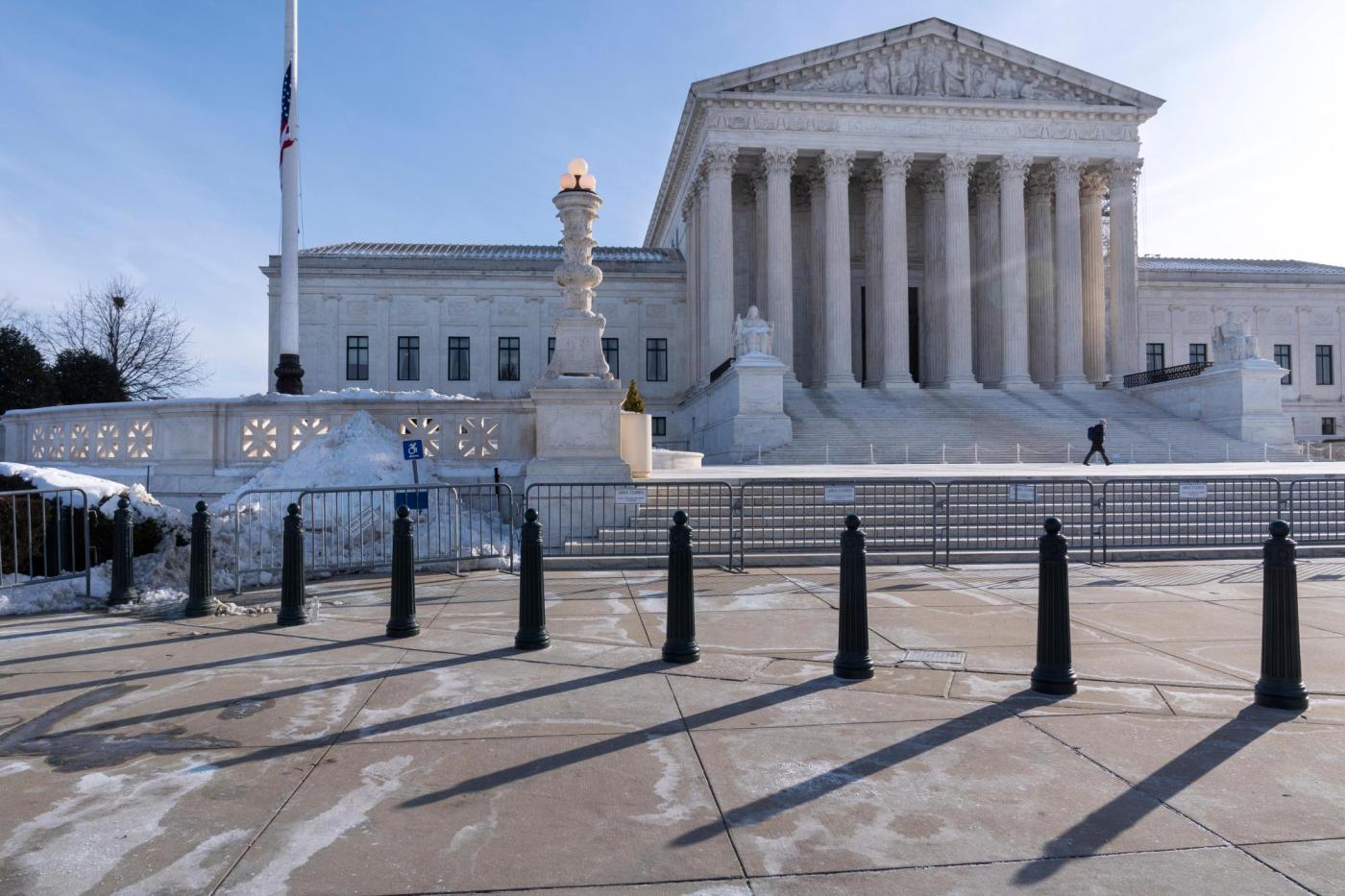
WASHINGTON (AP) — The Supreme Court decided Thursday that a Catholic charity doesn’t have to pay Wisconsin unemployment taxes, one of a set of religious-rights cases the justices are considering this term.

Related Articles


Crews clean up 2,000-gallon fuel spill in Baltimore’s harbor


Supreme Court blocks Mexico’s $10B lawsuit alleging US gunmakers have fueled cartel violence


Supreme Court makes it easier to claim ‘reverse discrimination’ in employment, in a case from Ohio


Wall Street is on hold as the countdown ticks toward Friday’s jobs report


Trump banned citizens of 12 countries from entering the U.S. Here’s what to know.

The unanimous ruling comes in a case filed by the Catholic Charities Bureau, which says the state violated the First Amendment’s religious freedom guarantee when it required the organization to pay the tax while exempting other faith groups.

Wisconsin argues the organization has paid the tax for over 50 years and doesn’t qualify for an exemption because its day-to-day work doesn’t involve religious teachings. Much of the groups’ funding is from public money, and neither employees nor people receiving services have to belong to any faith, according to court papers.

Catholic Charities, though, says it qualifies because its disability services are motivated by religious beliefs and the state shouldn’t be making determinations about what work qualifies as religious. It appealed to the Supreme Court after Wisconsin’s highest court ruled against it. President Donald Trump’s administration weighed in on behalf of Catholic Charites.

Wisconsin has said that a decision in favor of the charity could open the door to big employers like religiously affiliated hospitals pulling out of the state unemployment system as well.

The conservative-majority court has issued a string of decisions siding with churches and religious plaintiffs in recent years. This term, though, a plan to establish a publicly funded Catholic charter school lost after when the justices deadlocked after Amy Coney Barrett recused herself.

The nine-member court is also considering a case over religious objections to books read in public schools. In those arguments, the majority appeared sympathetic to the religious rights of parents in Maryland who want to remove their children from elementary school classes using storybooks with LGBTQ characters.