A guide to what the Juneteenth holiday is and how to celebrate it

posted in: All news | 0

By TERRY TANG

It was 160 years ago that enslaved people in Galveston, Texas, learned they had been freed — after the Civil War’s end and two years after President Abraham Lincoln’s Emancipation Proclamation.

The resulting Juneteenth holiday — its name combining “June” and “nineteenth” — has only grown in one-and-a-half centuries. In 2021, President Joe Biden designated it a federal holiday — expanding its recognition beyond Black America.

A view of a section of the 1865 Juneteenth General Order No. 3 that is displayed by the Dallas Historical Society at the Fair Park Hall of State in Dallas, Friday, June 6, 2025. (AP Photo/LM Otero)

This year will be the first Juneteenth under President Donald Trump’s second administration, which has banned diversity, equity and inclusion initiatives, or DEI, in the federal government. This has included removing Black American history content from federal websites. Trump officials have also discouraged some federal agencies from recognizing other racial heritage celebrations.

Still, many people anticipate getting Juneteenth off work. There are a plethora of street festivals, fairs, concerts and other events planned throughout the week leading into the holiday. But with the current political climate, some may wonder if their company will honor it.

“I don’t think anyone should be intimidated or obligated into not celebrating the day,” said Marc Morial, president and CEO of the National Urban League. “I’ve not heard of anyone being denied. I think it would be absolutely reprehensible.”

People who never gave the occasion more than a passing thought may be asking themselves, is there a “right” way to celebrate Juneteenth?

For beginners and those brushing up on history, here are some answers:

Is Juneteenth more of a solemn day of remembrance or a party?

It depends on what you want. Juneteenth festivities are rooted in cookouts and picnics. Originally celebrated as Black Americans’ true Independence Day, outdoor events allowed for large, raucous reunions among formerly enslaved family, many of whom had been separated. The gatherings were especially revolutionary because they were free of restrictive measures, known as “Black Codes,” enforced in Confederate states. Codes controlled whether liberated slaves could vote, buy property, gather for worship and other aspects of daily life.

Related Articles


Juneteenth celebrations adapt after corporate sponsors pull support


Prosecutors: Suspect in shooting of two Minnesota state lawmakers had planned to target two others


Diddy juror axed for lack of candor about residency in move defense says hurts jury’s diversity


Protester shot and killed at ‘No Kings’ rally in Utah, police say


Supreme Court agrees to hear appeal from New Jersey faith-based pregnancy center

Last year, the White House kicked things off early with a concert on the South Lawn for Juneteenth and Black Music Month. The atmosphere was primarily festive with Vice President Kamala Harris, the first Black vice president, dancing on stage with gospel singer Kirk Franklin.

Plans for a Juneteenth event or proclamation this year have not been decided, according to the White House press office.

Others may choose to treat Juneteenth as a day of rest and remembrance. That can mean doing community service, attending an education panel or taking time off.

“The most important thing everyone should do is be able to quickly answer the question ‘What is Juneteenth?’” Morial said.

What if you’ve never celebrated Juneteenth?

Dr. David Anderson, a Black pastor and CEO of Gracism Global, a consulting firm helping leaders navigate conversations bridging divides across race and culture, never did anything on Juneteenth in his youth. He didn’t learn about it until his 30s.

“I think many folks haven’t known about it — who are even my color as an African American male. Even if you heard about it and knew about it, you didn’t celebrate it,” Anderson said. “It was like just a part of history. It wasn’t a celebration of history.”

For many African Americans, the farther away from Texas that they grew up increased the likelihood they didn’t have big Juneteenth celebrations regularly. In the South, the day can vary based on when word of Emancipation reached each state.

What kind of public Juneteenth events are taking place?

Search online and you will find gatherings nationwide varying in scope and tone. Some are more carnivalesque festivals with food trucks, arts and crafts and parades. Within those festivals, you’ll likely find information on health care, finance and community resources. There also are concerts and fashion shows to highlight Black creativity. There will also be panels to educate about Juneteenth’s history.

The National Park Service is again making entry into all sites free on the holiday, according to its website.

Are there special Juneteenth decorations or foods?

The red, black and green African Liberation Flag, also known as the Pan-African flag, has historically been displayed at both Black History Month and Juneteenth celebrations. Red represents bloodshed and sacrifice of enslaved ancestors. Black symbolizes Black people. Green represents richness of the land in Africa.

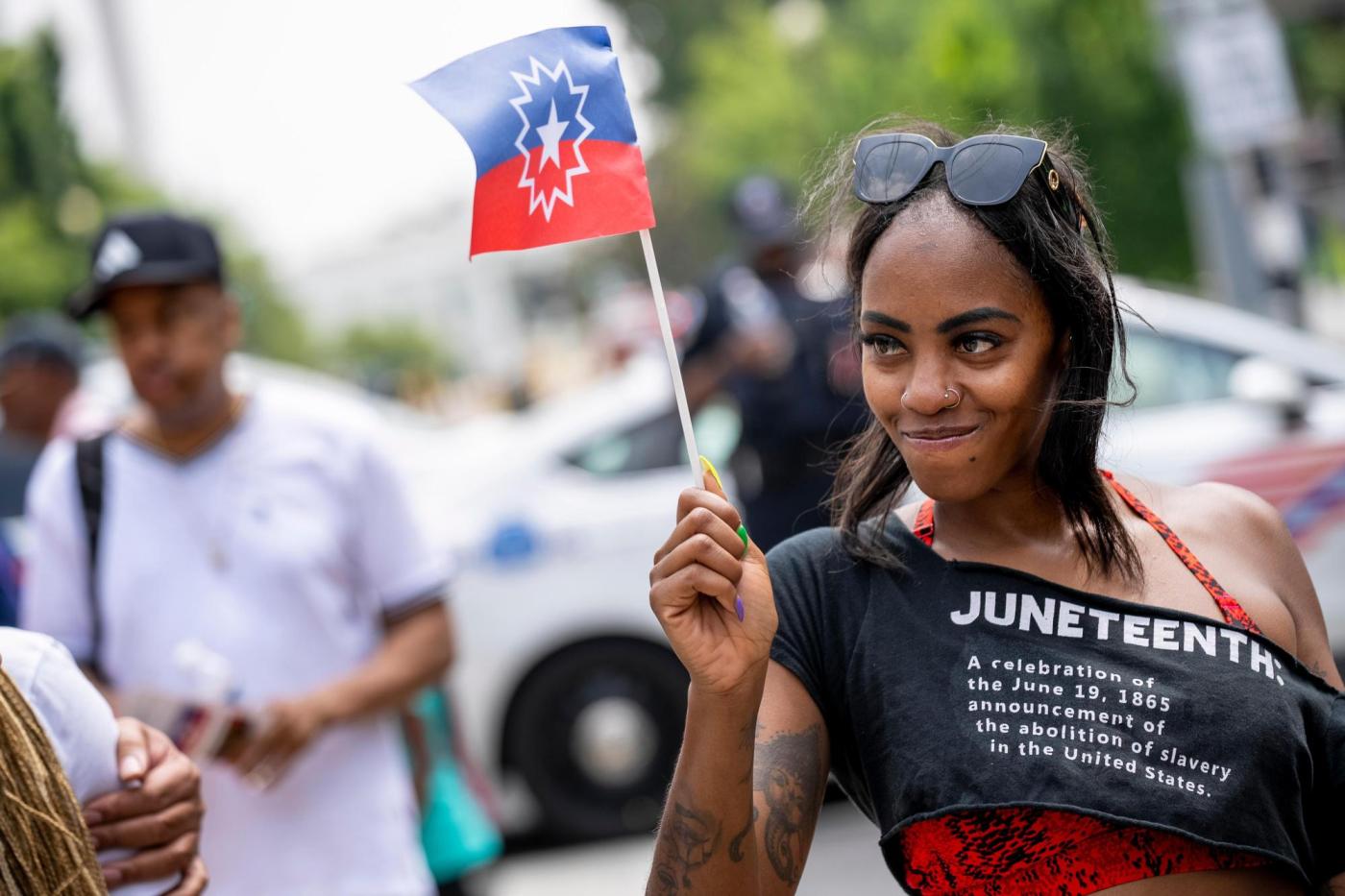
More people, however, have leaned into the Juneteenth flag created in 1997 by activist Ben Haith, who founded the National Juneteenth Celebration Foundation. Like the American flag, it is red, white and blue to indicate those freed are also Americans. The five-point white star in the middle is a tribute to Juneteenth’s birthplace of Texas. It is encircled by another white starry line that represents the spreading of freedom.

Aside from barbecue, the color red has been a through line for Juneteenth food for generations. Red symbolizes the bloodshed and sacrifice of enslaved ancestors. A Juneteenth menu might incorporate items like barbecued ribs or other red meat, watermelon and red velvet cake. Drinks like fruit punch and red Kool-Aid may make an appearance at the table.

In recent years, Juneteenth has become more commercialized with national chains selling Juneteenth party supplies, T-shirts and other merchandise. However, this year, Juneteenth items appear to be fewer or only online. Morial says he would be disappointed if companies decided selling Juneteenth items out in the open was too risky because of politics. At the same time, it might be a good opportunity for consumers.

“I would also encourage people to go online and look for an African American vendor,” Morial said. “If you got to participate in that (commercialism), that’s what I would do.”

Does how you celebrate Juneteenth matter if you aren’t Black?

Dr. Karida Brown, a sociology professor at Emory University whose research focuses on race, said there’s no reason to feel awkward about wanting to recognize Juneteenth just because you have no personal ties or you’re not Black. In fact, embrace it.

“I would reframe that and challenge my non-Black folks who want to lean into Juneteenth and celebrate,” Brown said. “It absolutely is your history. It absolutely is a part of your experience. … Isn’t this all of our history? The good, the bad, the ugly, the story of emancipation and freedom for your Black brothers and sisters under the Constitution of the law.”

What are other names used to refer to Juneteenth?

Over the decades, Juneteenth has also been called Freedom Day, Emancipation Day, Black Fourth of July and second Independence Day among others.

“Because 1776, Fourth of July, where we’re celebrating freedom and liberty and all of that, that did not include my descendants,” Brown said. “Black people in America were still enslaved. So that that holiday always comes with a bittersweet tinge to it.”

Is there a proper Juneteenth greeting?

It’s typical to wish people a “Happy Juneteenth” or “Happy Teenth,” according to Alan Freeman, a comedian who has organized a June 19 comedy show at Club 68, which local media has described as the last Black bar and club on Galveston Island. The day after he will host a stand-up comedy and jazz show at his Houston restaurant and lounge, the Frisky Whisky.

“You know how at Christmas people will say ‘Merry Christmas’ to each other and not even know each other?” Freeman said. “You can get a ‘Merry Christmas’ from everybody. This is the same way.”

The home of one of the largest catalogs of Black history turns 100 in New York

posted in: All news | 0

By JAYLEN GREEN

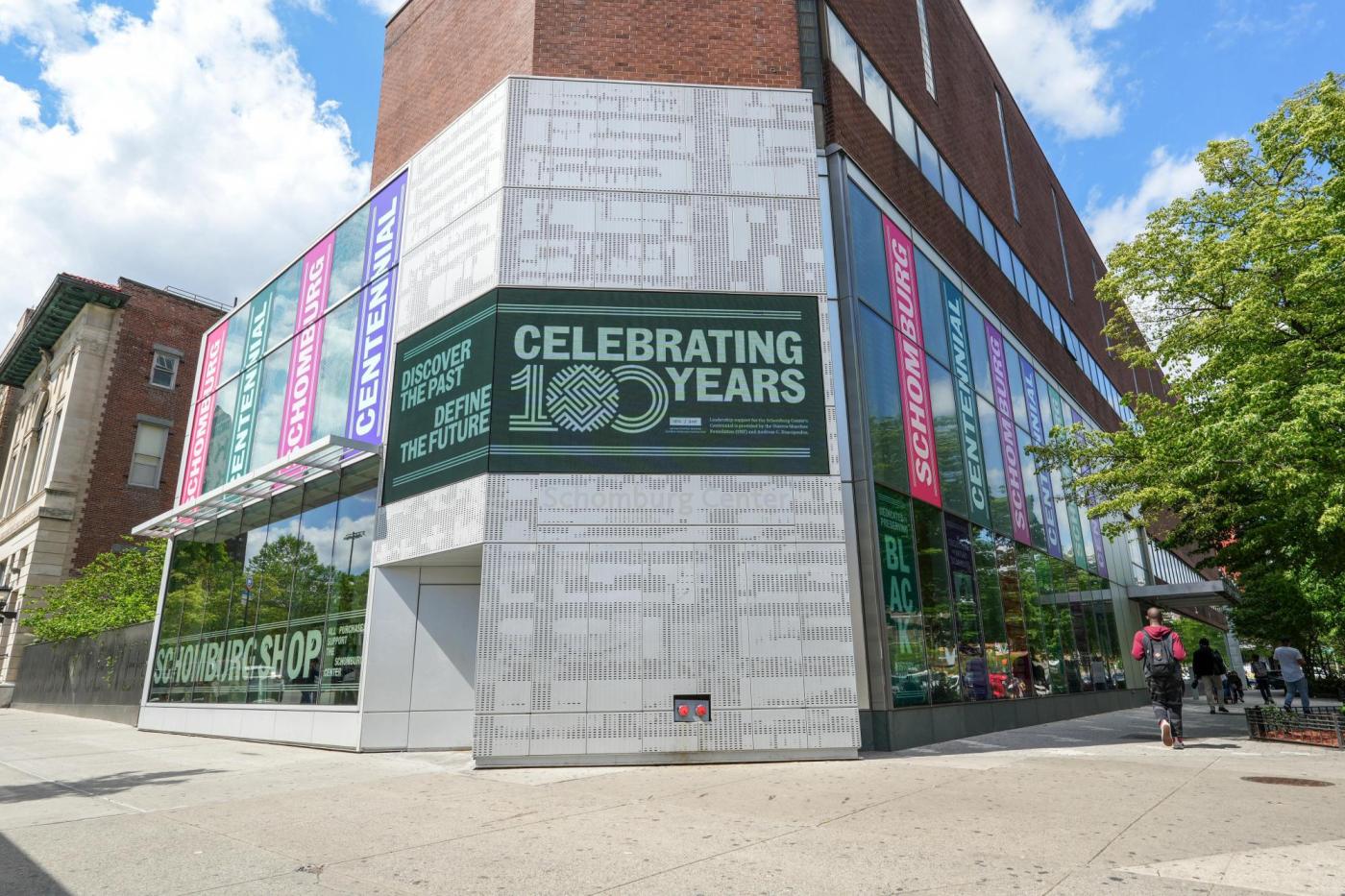
NEW YORK (AP) — It is one of the largest repositories of Black history in the country — and its most devoted supporters say not enough people know about it. The Schomburg Center for Research in Black Culture hoped to change that Saturday, as it celebrated its centennial with a festival combining two of its marquee annual events.

Related Articles


Juneteenth celebrations adapt after corporate sponsors pull support


Prosecutors: Suspect in shooting of two Minnesota state lawmakers had planned to target two others


Diddy juror axed for lack of candor about residency in move defense says hurts jury’s diversity


Protester shot and killed at ‘No Kings’ rally in Utah, police say


Supreme Court agrees to hear appeal from New Jersey faith-based pregnancy center

The Black Comic Book Festival and the Schomburg Literary Festival ran across a full day and featured readings, panel discussions, workshops, children’s story times and cosplay, as well as a vendor marketplace. Saturday’s celebration took over 135th Street in Manhattan between Malcolm X and Adam Clayton Powell boulevards.

Founded in New York City during the height of the Harlem Renaissance, the Schomburg Center will spend the next year exhibiting signature objects curated from its massive catalog of Black literature, art, recordings and films.

Artists, writers and community leaders have gone the center to be inspired, root their work in a deep understanding of the vastness of the African diaspora, and spread word of the global accomplishments of Black people.

It is also the kind of place that, in an era of backlash against race-conscious education and diversity, equity and inclusion initiatives, exists as a free and accessible branch of the New York Public Library system. It’s open to the public during regular business hours, but its acclaimed research division requires an appointment.

“The longevity the Schomburg has invested in preserving the traditions of the Black literary arts is worth celebrating, especially in how it sits in the canon of all the great writers that came beforehand,” said Mahogany Brown, an author and poet-in-residence at the Lincoln Center, who participated in the literary festival.

On Saturday, Dr. Jenny Uguru, director of nursing quality at NYC Health and Hospitals, said the Schomburg Center “stands as an archive to celebrate, recognize and uplift what Black people bring to the table, will bring to future tables.”

This photo provided by the New York Public Library shows an exhibit in the Schomburg Center for Research in Black Culture in New York on May 6, 2025. (Jonathan Blanc/New York Public Library via AP)

For the centennial, the Schomburg’s leaders have curated more than 100 items for an exhibition that tells the center’s story through the objects, people, and the place — the historically Black neighborhood of Harlem — that shaped it. Those objects include a visitor register log from 1925-1940 featuring the signatures of Black literary icons and thought leaders, such as Zora Neale Hurston and Langston Hughes; materials from the Fab 5 Freddy collection, documenting the earliest days of hip-hop; and actor and director Ossie Davis’ copy of the “Purlie Victorious” stage play script.

An audio guide to the exhibition has been narrated by actor and literacy advocate LeVar Burton, the former host of the long-running TV show “Reading Rainbow.”

Whether they are new to the center or devoted supporters, visitors to the centennial exhibition will get a broader understanding of the Schomburg’s history, the communities it has served, and the people who made it possible, said Joy Bivins, the Director of the Schomburg Center, who curated the centennial collection.

“Visitors will understand how the purposeful preservation of the cultural heritage of people of African descent has generated and fueled creativity across time and disciplines,” Bivins said.

Novella Ford, associate director of public programs and exhibitions, said the Schomburg Center approaches its work through a Black lens, focusing on Black being and Black aliveness as it addresses current events, theories, or issues.

“We’re constantly connecting the present to the past, always looking back to move forward, and vice versa,” Ford said.

Still, many people outside the Schomburg community remain unaware of the center’s existence — a concerning reality at a time when the Harlem neighborhood continues to gentrify around it and when the Trump administration is actively working to restrict the kind of race-conscious education and initiatives embedded in the center’s mission.

Novella Ford associate director of public programs and exhibitions (left) and Subha Ahmed, poet and one of the lead instructors of the junior scholars (right) inside the Schomburg Center for Research in Black Culture in New York on Saturday, June 14, 2025. (AP Photo/Jaylen Green)

“We amplify scholars of color,” Ford said. “It’s about reawakening. It gives us the tools and the voice to push back by affirming the beauty, complexity, and presence of Black identity.”

Founder’s donation seeds center’s legacy

The Schomburg Center has 11 million items in one of the oldest and largest collections of materials documenting the history and culture of people of African descent. That is a credit to founder Arturo Schomburg, an Afro-Latino historian born to a German father and African mother in Santurce, Puerto Rico. He was inspired to collect materials on Afro-Latin Americans and African American culture after a teacher told him that Black people lacked major figures and a noteworthy history.

Schomburg moved to New York in 1891 and, during the height of the Harlem Renaissance in 1926, sold his collection of approximately 4,000 books and pamphlets to the New York Public Library. Selections from Schomburg’s personal holdings, known as the seed library, are part of the centennial exhibition.

Ernestine Rose, who was the head librarian at the 135th Street branch, and Catherine Latimer, the New York Public Library’s first Black librarian, built on Schomburg’s donation by documenting Black culture to reflect the neighborhoods around the library.

Today, the library serves as a research archive of art, artifacts, manuscripts, rare books, photos, moving images and recorded sound. Over the years, it has grown in size, from a reading room on the third floor to three buildings that include a small theater and an auditorium for public programs, performances and movie screenings.

Aysha Schomburg, the great-granddaughter of the center’s founder, said she understands why many people still don’t know about the library. When her parents first met, her mother had no idea what was behind the walls of the Schomburg Center, even being from Harlem herself.

Brooklyn United Marching Band kicks in the Langston Hughes Auditorium celebrating the centennial of the Schomburg Center for Research in Black Culture in New York on Saturday, June 14, 2025. (AP Photo/Jaylen Green)

“This is with every generation,” Schomburg told The Associated Press while out at the festival on Saturday. “We have to make sure we’re intentional about inviting people in. So even the centennial festival, we’re bringing the Schomburg out literally into the street, into the community and saying, ‘here we are.’ ”

Youth scholars seen as key to center’s future

For years, the Schomburg aimed to uplift New York’s Black community through its Junior Scholars Program, a tuition-free program that awards dozens of youth from 6th through 12th grade. The scholars gain access to the center’s repository and use it to create a multimedia showcase reflecting the richness, achievements, and struggles of today’s Black experience.

It’s a lesser-known aspect of the Schomburg Center’s legacy. That’s in part because some in the Harlem community felt a divide between the institution and the neighborhood it purports to serve, said Damond Haynes, a former coordinator of interpretive programs at the center, who also worked with the Junior Scholars Program. But Harlem has changed since Haynes started working for the program about two decades ago.

Brooklyn United Marching Band performs in the Langston Hughes Auditorium celebrating the centennial of the Schomburg Center for Research in Black Culture in New York, on Saturday, June 14, 2025. (AP Photo/Jaylen Green)

“The Schomburg was like a castle,” Haynes said. “It was like a church, you know what I mean? Only the members go in. You admire the building.”

For those who are exposed to the center’s collections, the impact on their sense of self is undeniable, Haynes said. Kids are learning about themselves like Black history scholars, and it’s like many families are passing the torch in a right of passage, he said.

“A lot of the teens, the avenues that they pick during the program, media, dance, poetry, visual art, they end up going into those programs,” Haynes said. “A lot the teens actually find their identity within the program.”

Driver killed in Eagan crash; alcohol suspected for second driver

posted in: All news | 0

A 19-year-old man was killed and his passenger received life-threatening injuries in a crash Saturday when two vehicles ran off the road in Eagan. The driver of the other vehicle was impaired by alcohol, according to the Minnesota State Patrol.

Authorities say Reed Robert Schultz of Savage was driving a 2021 Jeep Compass southbound on Minnesota 149.

A 20-year-old man from White Bear Lake was driving a 2007 Honda Accord in the same direction when both vehicles crossed into the northbound lanes of Minnesota 149 before the Minnesota 55 intersection. The Jeep crashed into a light pole at the intersection and the Honda landed in the southeast ditch.

Schultz was taken to Regions Hospital in St. Paul, where he died from his injuries, per the crash report.

His passenger, an 18-year-old man from Edina, suffered life-threatening injuries and is receiving treatment at Regions Hospital.

The crash report says the man from White Bear Lake was driving under the influence of alcohol. He received non-life-threatening injuries.

Related Articles


Many lawmakers share their home addresses. Political violence is changing that.


Sen. John Hoffman and wife recovering from multiple gunshot wounds


Like School Shootings, Political Violence Is Becoming Almost Routine


Reaction to shootings: ‘This is a stunning act of violence,’ said Sen. Amy Klobuchar


Rep. Melissa Hortman and husband slain; Sen. John Hoffman and wife also shot

Coming to America? In 2025, the US to some looks less like a dream and more like a place to avoid

posted in: All news | 0

By LAURIE KELLMAN

LONDON (AP) — The world may be rethinking the American dream.

For centuries, people in other countries saw the United States as place of welcome and opportunity. Now, President Donald Trump’s drive for mass deportations of migrants is riling the streets of Los Angeles, college campuses, even churches — and fueling a global rethinking about the virtues and promise of coming to America.

“The message coming from Washington is that you are not welcome in the United States,” said Edwin van Rest, CEO of Studyportals, which tracks real-time searches by international students considering studying in other countries. Student interest in studying in America has dropped to its lowest level since the COVID-19 pandemic, it found. ”The fact is, there are great opportunities elsewhere.”

There has long been a romanticized notion about immigration and America. The reality has always been different, with race and ethnicity playing undeniable roles in the tension over who can be an American. The U.S. still beckons to the “huddled masses” from the pedestal of the Statue of Liberty. The strong economy has helped draw millions more every year, with the inflow driving the U.S. population over 340 million.

Early clues across industries — like tourism, trade, entertainment and education — suggest the American dream is fading for foreigners who have historically flooded to the U.S.

Polling by Pew Research Center from January through April found that opinions of the U.S. have worsened over the past year in 15 of the 24 countries it surveyed.

Trump and many of his supporters maintain that migrants in the country illegally threaten American safety, jobs and culture. But people in the country legally also have been caught in Trump’s dragnet. And that makes prospective visitors to the U.S., even as tourists, leery.

Trump’s global tariff war and his campaign against international students who have expressed pro-Palestinian sympathies stick especially stubbornly in the minds of people across American borders who for decades clamored to participate in the land of free speech and opportunity.

“The chances of something truly horrific happening are almost certainly tiny,” Duncan Greaves, 62, of Queensland, Australia, advised a Reddit user asking whether to risk a vacation to the land of barbeques, big sky country and July 4 fireworks. “Basically it’s like the Dirty Harry quote: ‘Do you feel lucky?’”

Trump has married two immigrants

For much of its history, America had encouraged immigration as the country sought intellectual and economic fuel to spur its growth.

But from the beginning, the United States has wrestled with the question of who is allowed to be an American. The new country was built on land brutally swiped from Native Americans. It was later populated by millions of enslaved Africans.

The American Civil War ignited in part over the same subject. The federal Chinese Exclusion Act of 1882 prohibited the immigration of Chinese laborers for a decade. During World War II, the U.S. government incarcerated about 120,000 people of Japanese descent in 10 concentration camps. About two-thirds were U.S. citizens.

Still, the United States has always been a nation of immigrants, steered by the “American Creed” developed by Thomas Jefferson, which posits that the tenets of equality, hard work and freedom are inherently American.

Related Articles


Juneteenth celebrations adapt after corporate sponsors pull support


Prosecutors: Suspect in shooting of two Minnesota state lawmakers had planned to target two others


Diddy juror axed for lack of candor about residency in move defense says hurts jury’s diversity


Protester shot and killed at ‘No Kings’ rally in Utah, police say


Supreme Court agrees to hear appeal from New Jersey faith-based pregnancy center

Everyone, after all, comes from somewhere — a fact underscored on-camera in the Oval Office this month when German Chancellor Friedrich Merz gave the president the framed birth certificate of Trump’s grandfather, also named Friedrich, who emigrated from Germany in 1885. He was one of millions of Germans who fled war and economic strife to move to the United States in the late 19th Century.

There’s a story there, too, that suggests the Trump family knows both the triumphs of immigration and the struggle and shame of being expelled.

After marrying and making a fortune in America, the elder Trump attained U.S. citizenship and tried return to Germany. He was expelled for failing to complete his military service — and wrote about the experience.

“Why should we be deported? This is very, very hard for a family,” Friedrich Trump wrote to Luitpold, prince regent of Bavaria in 1905, according to a translation in Harper’s magazine. “What will our fellow citizens think if honest subjects are faced with such a decree — not to mention the great material losses it would incur.”

Trump himself has married two immigrant women: the late Ivana Zelníčková Trump, of what’s now the Czech Republic, and his current wife, Melania Knauss Trump of Slovenia.

Coming to America

It’s hard to overstate the degree to which immigration has changed the face and culture of America — and divided it.

Immigration in 2024 drove U.S. population growth to its fastest rate in 23 years as the nation surpassed 340 million residents, the U.S. Census Bureau said in December. Almost 2.8 million more people immigrated to the United States last year than in 2023, partly because of a new method of counting that adds people who were admitted for humanitarian reasons. Net international migration accounted for 84% of the nation’s 3.3 million-person increase in the most recent data reported.

Immigration accounted for all of the growth in 16 states that otherwise would have lost population, according to the Brookings Institution.

But where some Americans see immigration largely as an influx of workers and brain power, Trump sees an “invasion,” a longstanding view.

Since returning to the White House, Trump has initiated an far-reaching campaign of immigration enforcement that has pushed the limits of executive power and clashed with federal judges trying to restrain him over his invocation of special powers to deport people, cancel visas and deposit deportees in third countries.

In his second term, unlike his first, he’s not retreating from some unpopular positions on immigration. Instead, the subject has emerged as Trump’s strongest issue in public polling, reflecting both his grip on the Republican base and a broader shift in public sentiment.

A June survey from The Associated Press-NORC Center for Public Affairs Research found that 46% of U.S. adults approve of Trump’s handling of immigration, which is nearly 10 percentage points higher than his approval rating on the economy and trade. The poll was conducted at the beginning of the Los Angeles protests and did not include questions about Trump’s military deployment to the city.

‘Shaken their confidence’

The U.S. is still viewed as an economic powerhouse, though people in more countries consider China to be the world’s top economy, according to the Pew poll, and it’s unclear whether Trump’s policies could cause a meaningful drain of international students and others who feel under siege in the United States.

Netherlands-based Studyportals, which analyzes the searches for international schools by millions of students worldwide, reported that weekly pageviews for degrees in the U.S, collapsed by half between Jan. 5 and the end of April. It predicted that if the trend continues, the demand for programs in the U.S. could plummet further, with U.S. programs losing ground to countries like the United Kingdom and Australia.

“International students and their families seek predictability and security when choosing which country to trust with their future,” said Fanta Aw, CEO of NAFSA, which represents international educators. “The U.S. government’s recent actions have naturally shaken their confidence in the United States.”