Americans turn cautious and retail sales slide after a spring spending surge to beat tariffs

posted in: All news | 0

By CHRISTOPHER RUGABER and ANNE D’INNOCENZIO, Associated Press Economics Writer

WASHINGTON (AP) — Retail sales fell sharply in May as consumers pulled back after a sharp increase in spending in March to get ahead of President Donald Trump’s sweeping tariffs on nearly all imports.

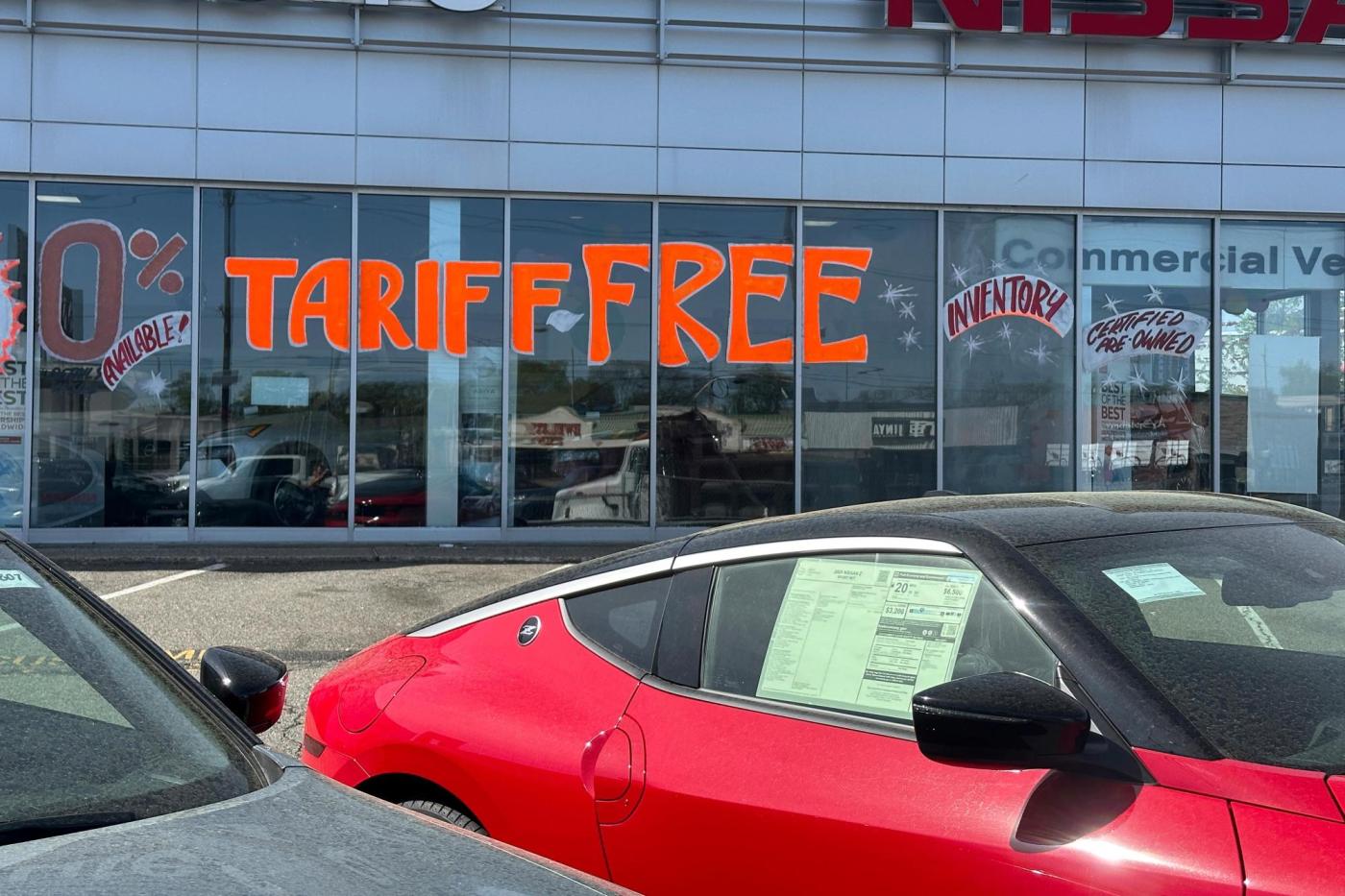
Sales at retail stores and restaurants dropped 0.9% in May, the Commerce Department said Tuesday, after a decline of 0.1% in April. The figure was pulled down by a steep drop in auto sales, after Americans ramped up their car-buying in March to get ahead of Trump’s 25% duty on imported cars and car parts. Excluding autos, sales fell 0.3%.

The sales drop comes after sharp declines in consumer confidence this year. Still, inflation has cooled steadily and unemployment remains low, which could fuel steady spending in the coming months, as the economy has remained mostly solid.

A category of sales that excludes volatile sectors such as gas, cars, and restaurants rose last month by 0.4%, a sign that consumers are still spending on some discretionary items.

FILE – Shoppers pass a Victoria’s Secret store at a shopping mall in Scranton, Pa., May 3, 2021. (AP Photo/Ted Shaffrey, file)

Yet many categories saw sharp declines. Car sales plunged 3.5%, while sales at home and garden centers dropped 2.7%. They fell 0.6% at electronics and appliance stores and 0.7% at grocery stores. There were some bright spots: Sales rose 0.9% at online retailers, 0.8% at clothing stores, and 1.2% at furniture stores.

Sales at restaurants and bars, a closely watched indicator of discretionary spending, fell 0.9% in May, though that followed a solid gain of 0.8% in April.

It is a difficult time for retailers, many of whom built up large inventories this spring after Trump warned that he would impose widespread import taxes. Traffic at the port in Los Angeles has fallen sharply in recent weeks, suggesting fewer goods are entering the United States.

Related Articles


‘Purgatory:’ Fed officials left in limbo as tariffs complicate this week’s rate decision


Congress is holding emergency briefings on security after Minnesota shootings


Today in History: June 17, O.J. Simpson charged with murder following highway chase


Jury finds MyPillow founder defamed former employee for a leading voting equipment company


Trump immigration policies targeting Democratic cities energize organizers, leave others confused

Some consumer products companies say they are seeing the impact of tariffs on their own costs and sales.

Paul Cosaro, CEO of Picnic Time, Inc, which makes picnic accessories like baskets, coolers, and folding chairs, said that orders from retailers are down as much as 40% this summer compared with a year ago. His company sells to a variety of stores like Target and Williams-Sonoma.

Cosaro noted that some stores have been cautious because they’re not sure how shoppers will react to higher prices. Some cancelled orders because Cosaro couldn’t tell them how much the new prices would be due to all the uncertainty. Roughly, 80% of the company’s goods are made in China, with the rest in India and Vietnam.

The company, founded roughly 40 years ago and based in Moorpark, California, was forced to raise prices on average from 11% to 14% for this summer selling season, Cosaro said.

The company has implemented a hiring freeze because of all the extra tariff costs, he added. So far this year the company, which employs from 70 to 100 people, has had to pay $1 million in tariffs. A year ago at this time, the bill was a third of that amount.

D’Innocenzio reported from New York.

Trump suggests he’ll extend deadline for TikTok’s Chinese owner to sell app

posted in: All news | 0

President Donald Trump suggested on Tuesday that he would likely extend a deadline for TikTok’s Chinese owner to divest the popular video sharing app.

Trump had signed an order in early April to keep TikTok running for another 75 days after a potential deal to sell the app to American owners was put on ice.

“Probably yeah, yeah,” he responded when asked by reporters on Air Force One whether the deadline would be extended again.

“Probably have to get China approval but I think we’ll get it. I think President Xi will ultimately approve it.”

He indicated in an interview last month with NBC that he would be open to pushing back the deadline again. If it happens, it would be third time that the deadline has been extended.

Appeals court in San Francisco to hear arguments in National Guard deployment in Los Angeles

posted in: All news | 0

By OLGA R. RODRIGUEZ, Associated Press

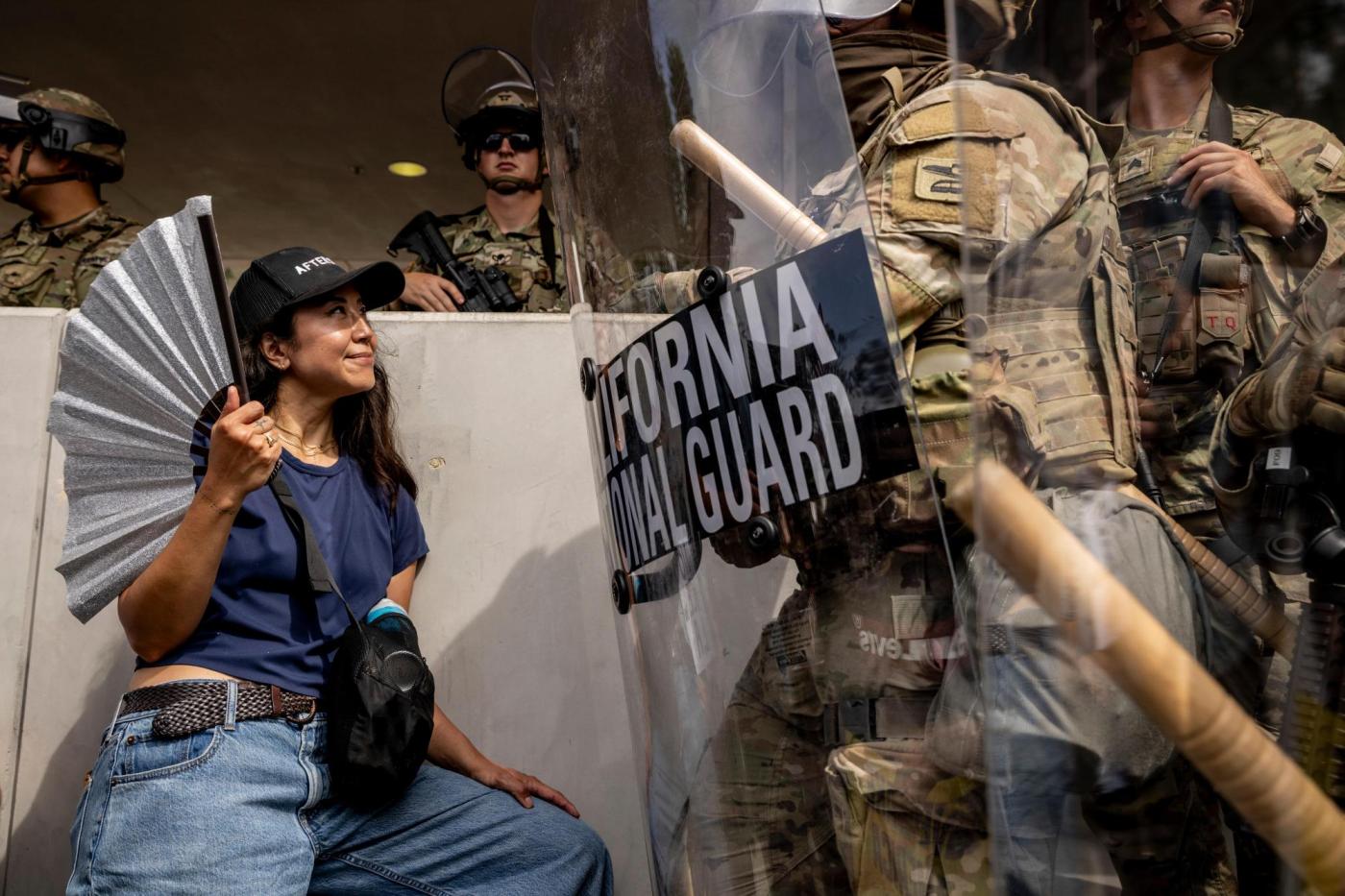
SAN FRANCISCO (AP) — A federal appeals court in San Francisco is scheduled to hear arguments Tuesday on whether the Trump administration should return control of National Guard troops to California after they were deployed following protests in Los Angeles over immigration raids.

The hearing comes after the 9th U.S. Circuit Court of Appeals granted a request by the administration last week to temporarily pause a lower court order that directed President Donald Trump to return control of the soldiers to the governor who filed a lawsuit over the deployment.

The three-judge panel is set to hear oral arguments via video starting at noon, and protests outside the downtown San Francisco court are expected.

Related Articles


‘Purgatory:’ Fed officials left in limbo as tariffs complicate this week’s rate decision


Congress is holding emergency briefings on security after Minnesota shootings


Today in History: June 17, O.J. Simpson charged with murder following highway chase


Jury finds MyPillow founder defamed former employee for a leading voting equipment company


Trump immigration policies targeting Democratic cities energize organizers, leave others confused

U.S. District Judge Charles Breyer in San Francisco ruled last week that the Guard deployment was illegal and exceeded Trump’s statutory authority. It applied only to the National Guard troops and not the Marines, who were also deployed to LA.

The Trump administration argued the deployment was necessary to restore order and protect federal buildings and officers.

In his lawsuit, Gov. Gavin Newsom accused the president of inflaming tensions, breaching state sovereignty and wasting resources. The governor calls the federal government’s decision to take command of the state’s National Guard “illegal and immoral.”

Newsom filed the suit following days of unrest as demonstrators protested against federal immigration raids across the city.

The judge ruled the Trump violated the use of Title 10, which allows the president to call the National Guard into federal service when the country “is invaded,” when “there is a rebellion or danger of a rebellion against the authority of the Government,” or when the president is unable “to execute the laws of the United States.”

Breyer, who was appointed by former President Bill Clinton, said in his ruling that what has been happening in Los Angeles does not meet the definition of a rebellion.

“The protests in Los Angeles fall far short of ‘rebellion,’” he wrote. “Individuals’ right to protest the government is one of the fundamental rights protected by the First Amendment, and just because some stray bad actors go too far does not wipe out that right for everyone.”

The National Guard hasn’t been activated without a governor’s permission since 1965, when President Lyndon B. Johnson sent troops to protect a civil rights march in Alabama, according to the Brennan Center for Justice.

‘Purgatory:’ Fed officials left in limbo as tariffs complicate this week’s rate decision

posted in: All news | 0

By CHRISTOPHER RUGABER, Associated Press Economics Writer

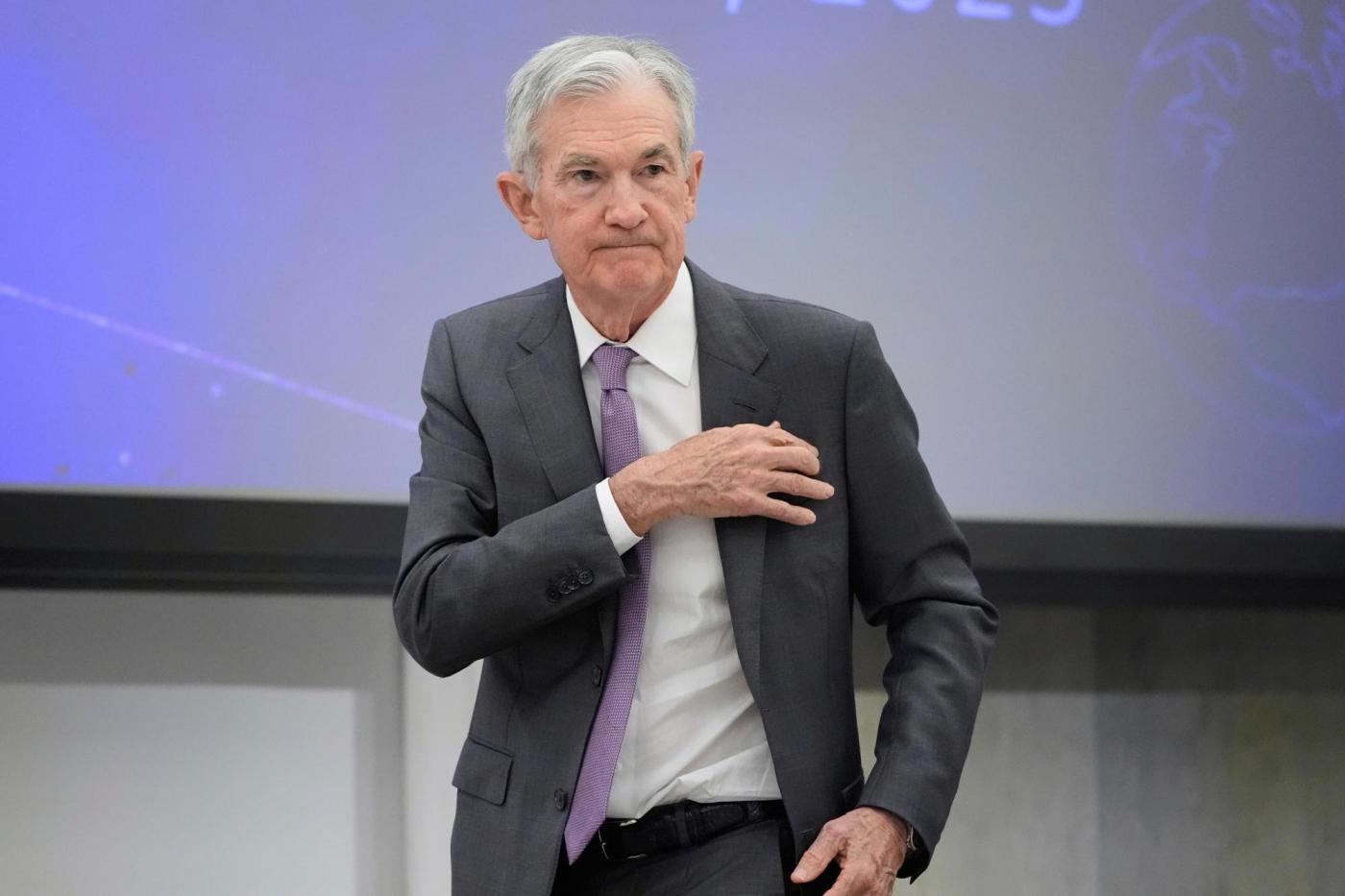
WASHINGTON (AP) — The U.S. economy is mostly in good shape but that isn’t saving Federal Reserve chair Jerome Powell from a spell of angst.

As the Fed considers its next moves during a two-day meeting this week, most economic data looks solid: Inflation has been steadily fading, while the unemployment rate is still a historically low 4.2%. Yet President Donald Trump’s widespread tariffs may push inflation higher in the coming months, while also possibly slowing growth.

With the outlook uncertain, Fed policymakers are expected to keep their key interest rate unchanged on Wednesday at about 4.4%. Officials will also release a set of quarterly economic projections that are expected to show inflation will accelerate later this year, while unemployment my also tick up a bit.

The projections may also signal that the Fed will cut its key rate twice later this year, economists say.

The prospect of higher inflation would typically lead the Fed to keep rates unchanged or even raise them, while rising unemployment would usually lead the Fed to cut its key rate. With the economy potentially pulling in both directions, Powell and other Fed officials have underscored in recent remarks that they are prepared to wait for clearer signals on which way to move.

The Fed is in “an uncomfortable purgatory,” said Diane Swonk, chief economist at accounting giant KPMG. “Without the threat of tariffs, we would be seeing the Fed cut. That’s not where we’re at because of the uncertainty and the threat and the effects (of tariffs) that we don’t know yet.”

The Trump White House has sharply ramped up the pressure on Powell to reduce borrowing costs, with Trump himself calling the Fed chair a “numbskull” for not cutting and other officials, including Vice President JD Vance and Commerce Secretary Howard Lutnick, also calling for a rate reduction.

U.S. President Donald Trump gestures as he attends a family photo session during the G7 Summit, in Kananaskis, Alberta, Monday, June 16, 2025. (Suzanne Plunkett/Pool Photo via AP)

When the Fed reduces its key short-term rate, it often — though not always — leads to lower costs for consumer and business borrowing, including for mortgages, auto loans, and credit cards. Yet financial markets also influence the level of longer-term rates and can keep them elevated even if the Fed reduces the shorter-term rate it controls.

For example, if investors worry that inflation will remain elevated, they can demand higher interest rates on longer-term Treasury securities, which influence other borrowing costs.

Even though Trump has said the economy is doing well, he has also argued that a rate cut would cause the economy to take off “like a rocket.”

But Trump has also highlighted another concern: If the Fed doesn’t cut rates, the federal government will have to pay more interest on its huge budget deficits, which are projected to grow even larger under the White House’s proposed tax and budget legislation currently being considered by the Senate.

“We’re going to spend $600 billion a year, $600 billion because of one numbskull that sits here (and says), ‘I don’t see enough reason to cut the rates now,’” Trump said last week.

Pushing the Fed to cut rates simply to save the government on its interest payments typically raises alarms among economists, because it would threaten the Fed’s congressional mandate to focus on stable prices and maximum employment.

Yet the markets haven’t reacted much to Trump’s recent attacks on the Fed, now that the Supreme Court, in a ruling last month, suggested that a president doesn’t have the legal power to fire the Fed chair.

Still, with inflation remaining low, so far, despite the imposition of tariffs, the Fed may come under greater pressure in the coming months from economists and investors to cut rates. Policymakers estimate that the interest rate that would neither stimulate the economy nor slow it down — known as the “neutral rate” — is about 3%.

Meanwhile, inflation — according to the Fed’s preferred measure — is just 2.1%, almost back to the central bank’s 2% target. Such a low reading suggests the Fed’s rate should be closer to neutral, below its current level of 4.4%, because it doesn’t need a high rate to slow inflation.

Related Articles


Congress is holding emergency briefings on security after Minnesota shootings


Today in History: June 17, O.J. Simpson charged with murder following highway chase


Jury finds MyPillow founder defamed former employee for a leading voting equipment company


Trump immigration policies targeting Democratic cities energize organizers, leave others confused


Doctor charged with supplying Matthew Perry ketamine will plead guilty to distributing the drug

“It’s a reasonable case for the Fed to grapple with,” said Jon Hilsenrath, a visiting scholar at Duke University.

Yet according to a survey Hilsenrath conducted for Duke of former Fed officials and staff, they expect the Fed to cut interest rates just once this year. “There’s a risk that inflation moves up and they don’t want to get ahead of themselves,” he said.

It’s possible that tariffs may not push up inflation as much as economists have feared. But one reason for that could be that the economy may slow, lifting unemployment and making consumers unwilling to pay higher prices, which would reduce inflation.

Economists at Goldman Sachs said in a recent research note that they expect inflation will rise to 3.6% by December, but that the increase will only be temporary.

“The main reason we are less worried is that we expect the economy to be weak this year, with … a modest rise in the unemployment rate,” Jan Hatzius, chief economist at Goldman, and his colleagues wrote.

A noticeable weakening of the economy that slows consumer spending and holds down inflation would likely lead the Fed to quickly cut rates. But they will be more comfortable doing so once they have a better sense of the full impact of tariffs.

Michael Gapen, chief U.S. economist at Morgan Stanley, said in a note Monday that the Fed “will need several months to assess the effects of policy changes, believing that ‘later and correct is better than sooner and wrong.’”