Thomas Friedman: The smart way for Trump to end the Israel-Iran war

posted in: All news | 0

Behind the strikes and counterstrikes in the current Israel-Iran war stands the clash of two strategic doctrines, one animating Iran and the other animating Israel, that are both deeply flawed. President Donald Trump has a chance to correct both of them and to create the best opportunity for stabilizing the Middle East in decades — if he is up to it.

Iran’s flawed strategic doctrine, which was also practiced by its proxy, Hezbollah, to equally bad result, is a doctrine I call trying to out-crazy an adversary. Iran and Hezbollah are always ready to go all the way, thinking that whatever their opponents might do in response, Hezbollah or Iran will always outdo them with a more extreme measure.

You name it — assassinate the prime minister of Lebanon, Rafik Hariri; blow up the U.S. Embassy in Beirut; help Bashar Assad murder thousands of his own people to stay in power — the imprints of Iran and its Hezbollah proxy are behind them all, together or separately. They are telling the world in effect: “No one will out-crazy us, so beware if you get in a fight with us, you will lose. Because we go all the way — and you moderates just go away.”

That Iranian doctrine did help Hezbollah drive Israel out of southern Lebanon. But where it fell short was Iran and Hezbollah thinking they could drive Israelis out of their biblical homeland. Iran and Hezbollah are delusional in this regard — Hamas too. They keep referring to the Jewish state as a foreign colonial enterprise, with no indigenous connection to the land, and therefore they assume the Jews will eventually meet the same fate as the Belgians in the Belgian Congo. That is, under enough pressure they will eventually go back to their own version of Belgium.

But Israeli Jews have no ‘Belgium’

But the Israeli Jews have no Belgium. They are as indigenous to their biblical homeland as the Palestinians, no matter what “anticolonial” nonsense they teach at elite universities. Therefore, you will never out-crazy the Israeli Jews. If push comes to shove, they will out-crazy you.

They will play by the local rules, and yes, those are not the rules of the Geneva Conventions. They are the rules of the Middle East, which I call Hama Rules — named after the Hama attacks perpetrated by the Syrian government of Hafez Assad in 1982, the aftermath of which I covered. Assad wiped out the Muslim Brotherhood in Hama by mercilessly leveling whole swaths of the city, whole blocks of apartments, into a parking lot. Hama rules are no rules at all.

Former Hezbollah leader Hassan Nasrallah and Iran’s supreme leader, Ali Khamenei, both thought that they could out-crazy the Israeli Jews, that Israel would never try to kill them personally, that Israel was, as Nasrallah liked to say, a “spider web” that would just unravel one day under pressure. He paid with his life with that miscalculation last year, and the supreme leader probably would have as well if Trump had not intervened, reportedly, last week to stop Israel from killing him. These Israeli Jews will not be out-crazied. That is how they still have a state in a very tough neighborhood.

The fallacy of ‘once and for all’

That said, Israeli Prime Minister Benjamin Netanyahu and his band of extremists running the Israeli government today are in the grip of their own strategic fallacy, which I call the doctrine of “once and for all.”

I wish I had a dollar for every time, after some murderous attack on Israeli Jews by Palestinians or Iranian proxies, the Israeli government declared that it was going to solve the problem with force “once and for all.”

There are only two ways to finish off this problem once and for all. One is for Israel to permanently occupy the West Bank, the Gaza Strip and all of Iran, as America did to Germany and Japan after World War II, and try to change the political culture. But Israel has no chance of occupying all of Iran, and it has occupied the West Bank for 58 years and still has not wiped out Hamas’ influence there — let alone secular Palestinian nationalism. That is because Palestinians are every bit as indigenous as the Jews in their homeland. Israel will never “once and for all them” into submission, unless they kill every last one.

The only way to even get close to ending the Israeli-Palestinian conflict “once and for all” is by working toward a two-state solution. Which brings me to what Trump should do now regarding Iran. He says he still hopes “there’s going to be a deal.”

The threat of force, and support for two states

If he wants a good deal, he should declare that he is doing two things at once.

One, that he will equip Israel’s air force with the B-2 bombers and 30,000-pound bunker-buster bombs and U.S. trainers that would give Israel the capacity to destroy all of Iran’s underground nuclear facilities unless Iran immediately agrees to allow teams from the International Atomic Energy Agency to disassemble these facilities and to have access into every nuclear site in Iran to recover all fissile material that Tehran has generated. Only if Iran completely complies with these conditions should it be allowed to have a civilian nuclear program under strict IAEA controls. But Iran will comply only under a credible threat of force.

At the same time, Trump should declare that his administration recognizes the Palestinians as a people who have a right to national self-determination. But to realize that, they must demonstrate that they can fulfill the responsibilities of statehood by generating a new Palestinian Authority leadership that the United States deems credible, free of corruption and committed both to effectively serving Palestinian citizens in the West Bank and Gaza and to coexisting with Israel.

Trump must also make clear, though, that he will not tolerate the rapid settlement expansion and one-state reality that Israel is now creating, which is a prescription for a forever war because Palestinians in the West Bank and Gaza won’t disappear or “once and for all” give up their national identity and aspirations. (At the end of May the Netanyahu government approved 22 new Jewish settlements in the occupied West Bank — the largest expansion in decades — which is simply insane.)

To that end, Trump could also say that his administration will be committed to sponsoring peace talks for a two-state solution — with the Trump peace plan for a pathway toward two states from his previous presidency as the minimum starting point but not ending point. That, the parties themselves must negotiate directly.

Pairing force with diplomacy

To be ready to out-crazy the crazies has been a necessary condition for Israel to survive in the Middle East, but it is not a sufficient one. As the war in Gaza demonstrates, that strategy just begets more of the same. Even if it seems unfair at times, even if it seems naive at times, a peace-loving nation has to keep exploring alternatives and pairing force with diplomacy. It’s not only the best policy for Israel vis-a-vis the Palestinians; it’s also the best way for Israel and America to isolate Iran.

As such, if Trump really wants to forge peace in the Middle East, which I believe he does, America must not become Netanyahu’s captive or Iran’s patsy. The United States has no interest in making Israel safe for messianic expansion or Iran safe for nuclear messianism. Trump must ignore the dangerous, knee-jerk isolationism of Vice President JD Vance. And he must eschew the equally foolish Netanyahu-can-do-no-wrong advice of GOP armchair generals and evangelicals. Neither serves U.S. interests or credibility in the region.

Related Articles


Hal Brands: Iran’s four possible responses to Israel — and their risks


Thomas Friedman: Ways to think about what’s happening with Iran and Israel


Robert Pearl: Tariffs, vaccines and chronic disease — the hidden link


F.D. Flam: ‘Organs-on-a-chip’ is one of many alternatives to animal testing


Thomas Friedman: An anti-war movement is stirring in Israel

Necessary conditions

The necessary but not sufficient conditions for peace in the Middle East that will allow America to reduce, but not end, its military presence there are that Iran be forced to draw a clear western border and stop trying to colonize its Arab neighbors and destroy Israel with a nuclear bomb; that Israel be forced to draw a clear eastern border and stop trying to colonize the whole of the West Bank; and that Palestinians be forced to draw clear eastern and western borders between Israel and Jordan and stop with the “river to the sea” nonsense.

This war has created the best opportunity in decades for a wise statesman to use what Dennis Ross, a longtime Middle East negotiator, calls in his new book, “Statecraft 2.0,” “coercive diplomacy.” Is Trump up to that? I really don’t know, but we’re going to find out real soon.

Thomas Friedman writes a column for the New York Times.
 

Today in History: June 18, War of 1812 begins

posted in: All news | 0

Today is Wednesday, June 18, the 169th day of 2025. There are 196 days left in the year.

Today in history:

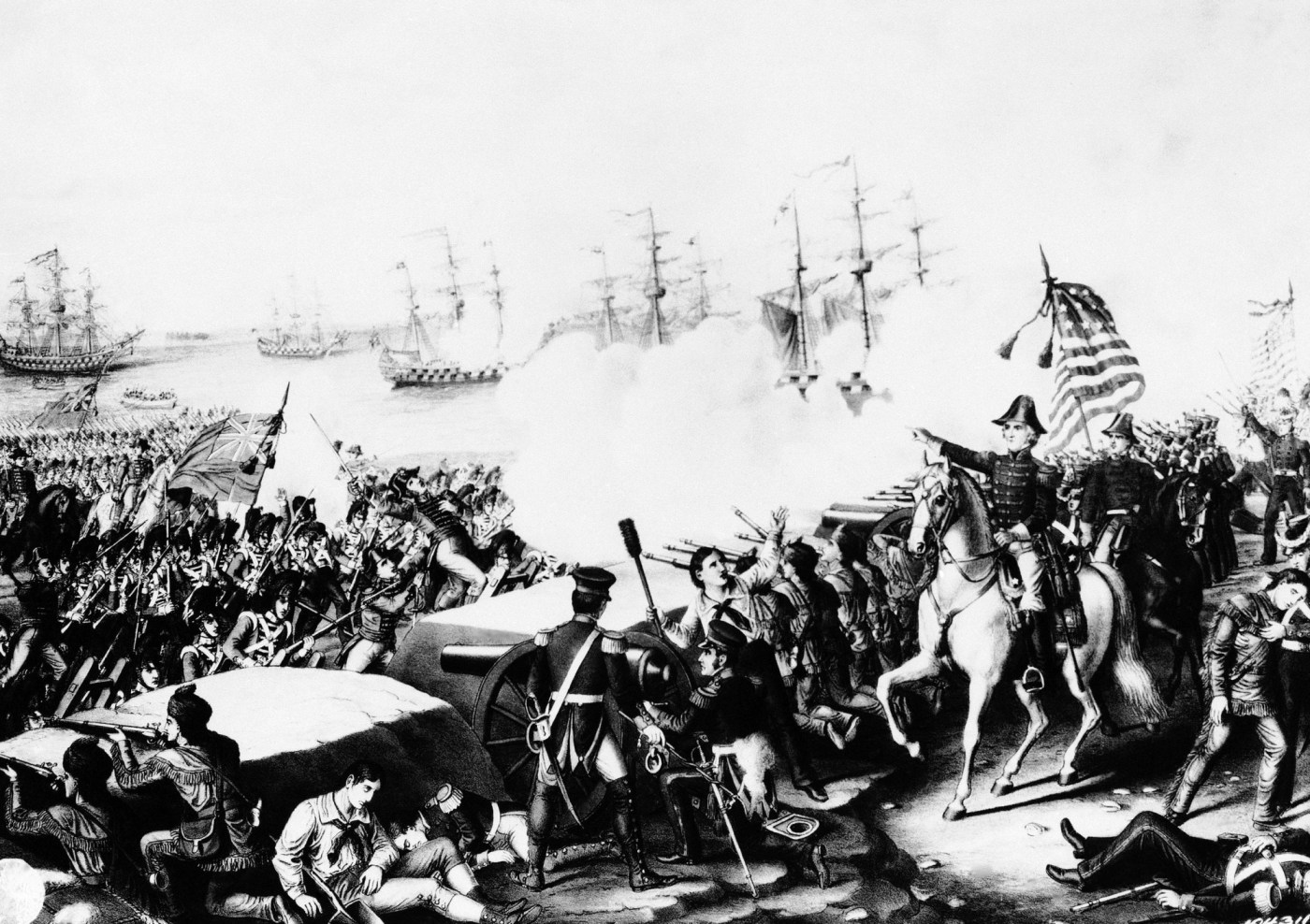
On June 18, 1812, the War of 1812 began as the United States Congress approved, and President James Madison signed, a declaration of war against Britain.

Also on this date:

In 1778, American forces entered Philadelphia as the British withdrew during the Revolutionary War.

Related Articles


Musk’s X sues New York over requirement to show how social media platforms handle problematic posts


Food Network star Anne Burrell dead at 55


Lawyers say plea deal is being pursued for Chinese scientist charged in US toxic fungus case


Los Angeles mayor lifts downtown curfew she imposed during protests against immigration raids


Alex Jones accused of trying to shield assets as Sandy Hook families seek payment on $1B judgment

In 1815, Napoleon Bonaparte was defeated in the Battle of Waterloo as British and Prussian troops defeated the French Imperial Army in Belgium.

In 1979, President Jimmy Carter and Soviet President Leonid Brezhnev signed the SALT II strategic arms limitation treaty in Vienna.

In 1983, astronaut Sally Ride became America’s first woman in space as she and four other NASA astronauts blasted off aboard the space shuttle Challenger on a six-day mission.

In 1986, 25 people were killed when a twin-engine plane and helicopter carrying sightseers collided over the Grand Canyon.

In 1992, the U.S. Supreme Court, in Georgia v. McCollum, ruled that criminal defendants could not use race as a basis for excluding potential jurors from their trials.

In 2018, President Donald Trump announced he was directing the Pentagon to create the Space Force as an independent branch of the United States armed forces.

In 2020, the Supreme Court, in the case of Department of Homeland Security v. Regents of the University of California, rejected by a 5-4 decision President Donald Trump’s effort to end legal protections for more than 650,000 young immigrants.

In 2023, the submersible vessel Titan, on an expedition of view the wreckage of the Titanic in the North Atlantic Ocean, imploded, killing all five people aboard.

Today’s Birthdays:

Musician Paul McCartney is 83.
Actor Carol Kane is 73.
Actor Isabella Rossellini is 73.
Singer Alison Moyet is 64.
Football Hall of Famer Bruce Smith is 62.
Hockey Hall of Famer Martin St. Louis is 50.
Actor Alana de la Garza is 49.
Country musician Blake Shelton is 49.
Football Hall of Famer Antonio Gates is 45.

Vance Boelter could face a rarity for Minnesota: the death penalty

posted in: All news | 0

By STEVE KARNOWSKI

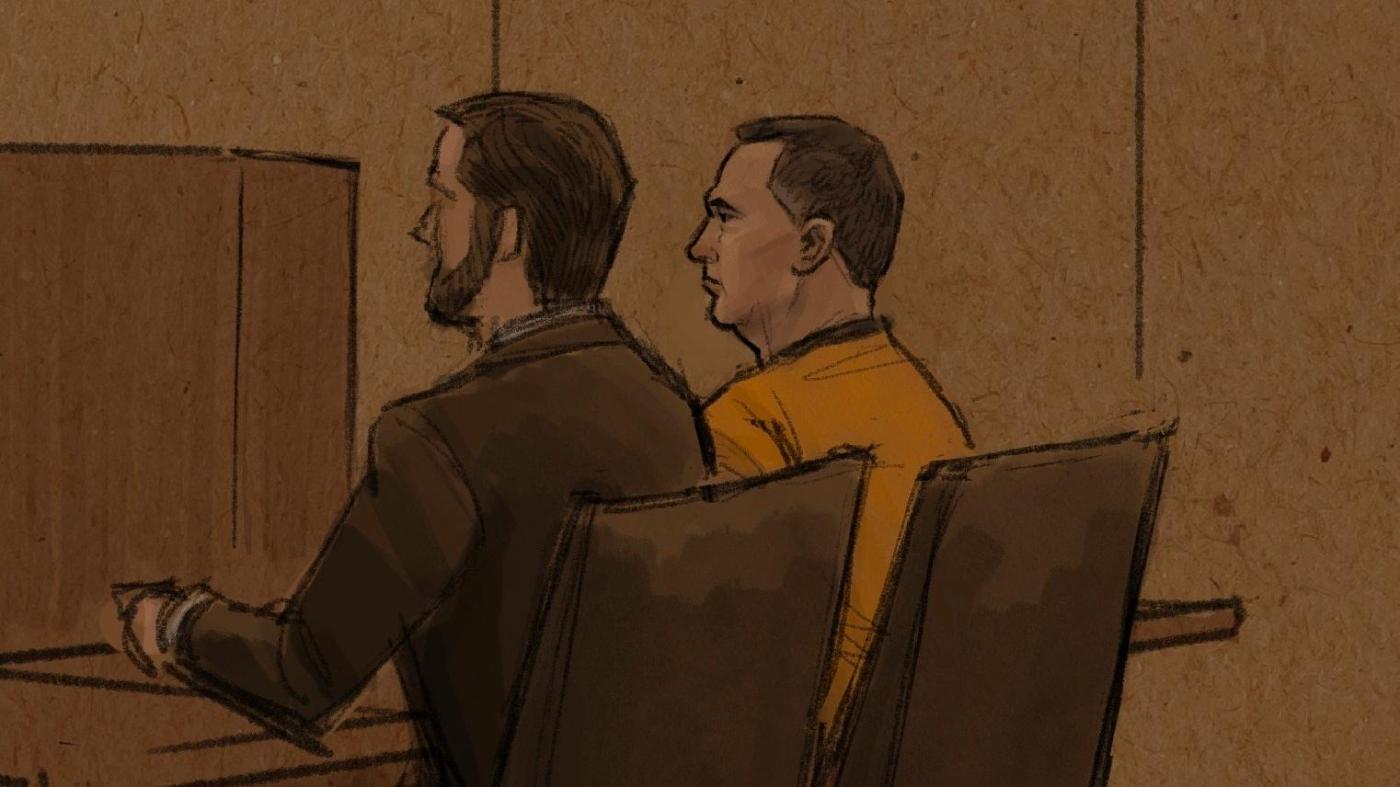
The man charged with killing a prominent Minnesota lawmaker and wounding another could face something that is a rarity for Minnesota but could become more common under the Trump administration: the death penalty.

Minnesota abolished capital punishment in 1911, and the state’s last execution was a botched hanging in 1906. But federal prosecutors announced charges against Vance Boelter on Monday that can carry the death penalty.

It’s not unheard of for state and federal prosecutors to both pursue criminal cases for the same offense, especially in high-profile matters.

In this case federal authorities essentially grabbed the lead from the state prosecutor, Hennepin County Attorney Mary Moriarty. Boelter had been scheduled to make his first court appearance on state charges Monday, but instead marshals took him from the county jail to the U.S. courthouse in St. Paul, where he appeared on the more serious federal charges.

Boelter is accused of fatally shooting former Democratic House Speaker Melissa Hortman and her husband, Mark, in their home early Saturday in the northern Minneapolis suburbs. Before that, authorities say, he also shot and wounded another Democrat, Sen. John Hoffman, and his wife, Yvette, who lived a few miles away. He surrendered Sunday night after what authorities have called the largest search in Minnesota history.

The federal case

Two of the six federal counts can carry the death penalty, something federal prosecutors have not sought in a Minnesota-based case since the Supreme Court reinstated capital punishment in 1976.

“Will we seek the death penalty? It’s too early to tell. That is one of the options,” Acting U.S. Attorney Joseph Thompson said Monday at a news conference where he revealed new details of what he described as a meticulously planned attack. They included allegations that Boelter also stopped at the homes of two other lawmakers that night and had dozens of other Democrats as potential targets, including officials in other states.

Boelter’s federal defenders have declined to comment on the case, and he has not entered a plea.

On her first day in office in February, Attorney General Pam Bondi lifted a moratorium on federal executions that was imposed under the Biden administration in 2021. Only three defendants remain on federal death row after Biden converted 37 of their sentences to life in prison.

Bondi has since authorized federal prosecutors to seek the death penalty in at least three cases, including against Luigi Mangione for the killing of UnitedHealthcare CEO Brian Thompson. In the other two cases, the Justice Department has said it is seeking the death penalty against defendants charged with killing fellow prison inmates.

President Donald Trump’s first administration carried out 13 federal executions, more than the administration of any other president in modern history.

The state’s case

The federal intervention in Boelter’s case appeared to irritate Moriarty, the county’s former chief public defender, who was elected on a police reform and racial justice platform in 2022 after the police killing of George Floyd.

At a news conference Monday to announce the state charges, Moriarty gave only vague answers in response to questions about the interplay between the federal and state investigations. But she acknowledged “there’s a tension” and said federal officials “can speak for themselves.”

Moriarty said she intends to press forward in state court regardless and to seek an indictment for first-degree murder for the killings of the Hortmans, which would carry a mandatory sentence of life without parole. Her office did not immediately respond to a request for further comment Tuesday.

As evidence of the tensions, the county attorney refused to clarify how Boelter’ first hearings would play out. Court records show that Boelter was called for a first appearance in Hennepin County on Monday and that because he was not there as he was in federal custody, the judge issued a bench warrant as a formality, as requested by prosecutors.

“Usually murder cases are overwhelmingly handled in state courts,” said Mark Osler, a death penalty expert at the University of St. Thomas School of Law in Minneapolis. “Clearly this is something of national interest. And that seemed to play a role in the decision that the Justice Department is making here.”

Osler, who formerly served as Moriarty’s deputy county attorney and head of her criminal division, as well as assistant U.S. attorney in Detroit, acknowledged that there are often tensions between state and federal prosecutors.

“There’s no doubt that it’s complicated,” Osler said. “And it’s hard to avoid the sense of the older sibling grabbing something away from the younger sibling.”

What’s next

If federal officials do pursue the death penalty, Osler said, they will face an unusual challenge: “a jury pool drawn from the citizens of a state that has rejected the death penalty for over 100 years. It’s not the same as choosing people in a state where there’s a history of support for the death penalty, such as Texas.”

After his federal court appearance, Boelter was taken to the Sherburne County Jail in suburban Elk River, where federal prisoners are often held.

Thompson told reporters that the federal case “does not nullify the state charges. They remain in place. … My expectation based on prior cases is the federal case, the federal charges, will be litigated first, but the state charges won’t necessarily go anywhere.”

Boelter’s next federal court appearance is June 27. He does not have any further appearances scheduled in state court.

“There’s a natural competitiveness that occurs sometimes between jurisdictions, but you have to hope that in the end, they’re all facing the same way where there’s something as important to public safety as this case is,” Osler said.

___

Associated Press writer Alanna Durkin Richer in Washington contributed.

Related Articles


Vance Boelter’s lifelong friend struggles to comprehend ‘a sick man’


State Sen. Sandy Pappas reflects on lawmaker shootings, personal safety


Capitol candlelight vigil set for Melissa and Mark Hortman


Threats to lawmakers are on the rise, security officials tell senators


Trump says he won’t call Minnesota Gov. Walz after lawmaker shootings because it would ‘waste time’

Reds hand Twins fifth straight loss

posted in: All news | 0

Cincinnati >> TJ Friedl hit a decisive two-out, two-run double in the sixth inning, and the Cincinnati Reds rallied for their third straight win, 6-5 over the Twins on Tuesday night.

Cincinnati has won eight of its last 11 games to climb within two games of the third NL wild-card spot.

Byron Buxton’s solo homer off Andrew Abbott put the Twins ahead 1-0 in the third.

David Festa held Cincinnati hitless until the fourth when Will Benson’s two-run double put the Reds ahead 2-1.

Festa left the game in the fourth with a right hand contusion after allowing four runs, two earned.

Jake Fraley drove in two more runs with a single to make the score 4-1.

A throwing error by Reds third baseman Christian Encarnacion-Strand opened the door for a Twins rally in the sixth.

Harrison Bader’s three-run homer caromed over the wall off Fraley’s glove to put them ahead 5-4.

Abbott allowed five runs, but only one earned, dropping his earned-run average to 1.84.
He struck out five and didn’t walk a batter.

Friedl’s double in the sixth off Brock Stewart (1-1) drove home the go-ahead runs.

Emilio Pagán pitched a scoreless ninth to earn his 17th save. Scott Barlow (2-0) earned the victory for Cincinnati with 1 1/3 innings, striking out two.

Key moment

Buxton reached over the center field wall to rob Benson of a solo home run to end the second, then came to bat with one out in the third and hit a solo homer just over Friedl’s glove in nearly the same spot.

Key stat

Abbott has allowed a run in the first inning just once in his past 24 starts. He allowed five runs in the first on Aug. 7, 2024 against the Marlins.