Trump’s plan to kill dozens of NASA missions threatens US space supremacy

posted in: All news | 0

By Loren Grush, Bloomberg News

NASA’s car-sized Perseverance rover has been roaming the surface of Mars for four years, drilling into the alien soil to collect dirt it places in tubes and leaves on the ground.

Engineers designed Perseverance to be the first step in the agency’s exploration of the Red Planet. In the future, more robotic spacecraft would arrive to sweep up the capsules and rocket them back to Earth, where scientists could look for signs that Mars once was, or is, a world with life.

The wait for answers may be about to get longer. President Donald Trump’s proposed 2026 budget for the U.S. National Aeronautics and Space Administration would cancel the planned follow-on mission, potentially abandoning the tubes for decades to Martian dust storms.

The White House is calling for a roughly 50% cut to NASA’s science spending to $3.9 billion, part of an overall pullback that would deliver the lowest funding level in the agency’s history and kill more more than 40 NASA science missions and projects, according to detailed plans released last month. The Trump administration has also left the agency without a permanent leader and without a vision for how America’s civilian space policy is going to work with U.S. allies and compete with China and other rivals.

The cuts would follow a shift in how the American public thinks about space. NASA has long enjoyed a unique place in U.S. culture, with its exploits celebrated by movies, theme parks and merchandise — but companies like Elon Musk’s SpaceX have begun to capture more attention.

For decades, NASA’s scientific undertakings have provided critical groundwork for researchers seeking to understand the structure of the universe, study how planets form and hunt for evidence that life might exist beyond Earth. Pictures from NASA craft like the Hubble Space Telescope and the recently launched James Webb Space Telescope have inspired and delighted millions.

Now, the agency’s position at the vanguard of discovery is facing foreclosure. Among the other programs set to lose funding are a craft already on its way to rendezvous with an asteroid that’s expected to pass close to Earth in 2029, and multiple efforts to map and explore the acidic clouds of Venus. Researchers worry that abandoning missions would mean investments made by earlier generations might be lost or forgotten.

“Once you launch and you’re operating, then all those costs are behind you, and it’s relatively inexpensive to just keep the missions going,” said Amanda Hendrix, the chief executive officer of the Planetary Science Institute, a nonprofit research organization. “So I’m very concerned about these operating missions that are still producing excellent and really important science data.”

The Trump administration’s narrower vision for NASA comes as it is seeking to reduce waste and jobs in the U.S. government. Critics have faulted NASA over sluggish management of key programs, spiraling costs and delays.

Still, the administration is eager to pour more money into putting people in space. It wants to use $7 billion of the $18.8 billion it would allocate to NASA overall to ramp up efforts to return people to the moon, and invest $1 billion more in sending people to Mars.

“This is a NASA that would be primarily human spaceflight focused,” Casey Dreier, chief of space policy for The Planetary Society, a nonprofit that advocates for space science and exploration, said of the proposed changes. “This is a NASA that would say, ‘The universe is primarily the moon and Mars,’ and basically step away from everything else.”

There are signs that the administration’s proposed cutbacks won’t satisfy lawmakers who view space as vital to U.S. interests. Sen. Ted Cruz, the Texas Republican who leads a committee that oversees NASA, has proposed legislation that would would provide nearly $10 billion to the agency.

“American dominance in space is a national security imperative,” Cruz said in a statement to Bloomberg. “The Commerce Committee’s bill carefully invests in beating China to the Moon and Mars — while respecting every taxpayer dollar. It’s rocket fuel for the commercial space companies and NASA that are working to keep America ahead of China in the Space Race.”

As Trump’s spending proposal moves through Congress, NASA has been left without a strong leader who can press its case after the president withdrew his nomination of billionaire commercial astronaut Jared Isaacman to run the agency.

In a recent interview on the “All-In Podcast,” Isaacman appeared to suggest Trump pulled his nomination because of his close ties to Musk, who had a public falling out with the president. Trump threatened to cancel SpaceX’s government contracts amid the row, but has since backed down.

“Stopping Jared from becoming confirmed is only going to hurt NASA’s ability to push back on budget cuts,” Jim Muncy, a space consultant and lobbyist with PoliSpace, said before Isaacman’s nomination was pulled.

Spaceflight Shift

For decades, NASA handled every step of launching rockets, probes and people into space, from developing, building and launching vehicles, to running missions. Only the government had the resources and the capacity to shoulder the risks without returning a profit.

That all changed in recent years with the emergence of a vibrant U.S. space industry dominated by wealthy entrepreneurs with a passion for spaceflight and the financial wherewithal to withstand repeated failure.

Over time, NASA has ceded more design, development and production work to those companies. SpaceX is carrying cargo and astronauts to the International Space Station, and sending probes into deep space from a rented launchpad at NASA’s Kennedy Space Center. After helping to spur the development of SpaceX hardware, NASA is now one of the company’s biggest customers.

“This has kind of been the tension with the rise of commercial space,” said Mike French, a consultant for the Space Policy Group. “NASA has gone from ‘We’re operating these things; we’re building these things’ to ‘We’ve gotten really good at buying these things.’”

Related Articles


Joe Biden to attend Juneteenth celebration at historic AME church in Texas


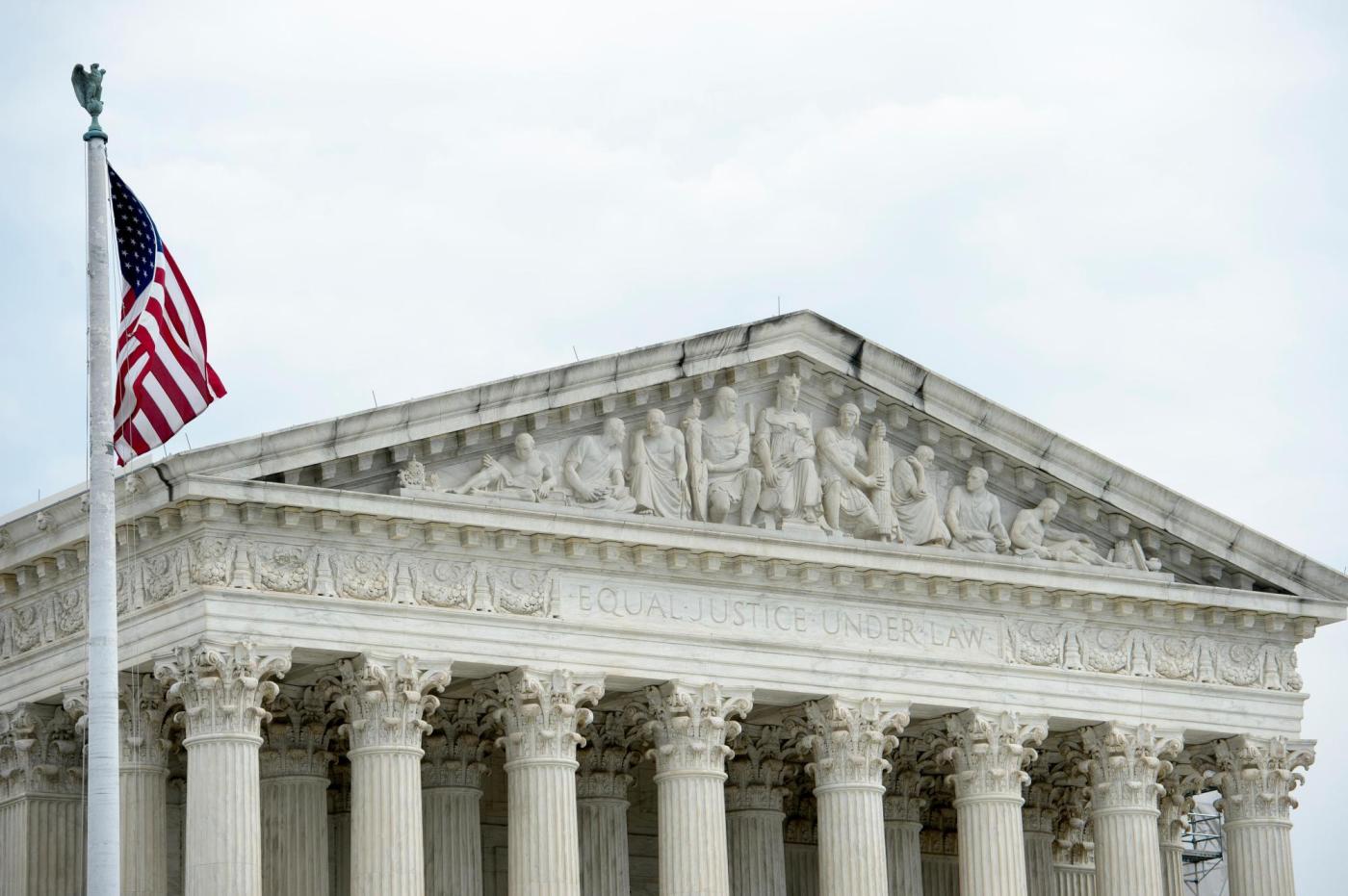
Supreme Court work goes on with 16 cases to decide, including birthright citizenship


Medicare and Social Security go-broke dates pushed up due to rising health care costs, new SSA law


Civil rights agency’s acting chair to face questions on anti-DEI, transgender stances


‘Nobody knows:’ Trump won’t say whether he will move forward with US strikes on Iran

During Trump’s presidency, NASA’s transformation into an incubator for private industry is likely to gain speed. Throughout its budget proposal, the White House calls for mimicking past programs that have leaned more on outsourcing to the private sector.

“With a leaner budget across all of government, we are all taking a closer look at how we work, where we invest, and how we adjust our methods to accomplish our mission,” NASA’s acting administrator, Janet Petro, wrote in a message accompanying the plan. “At NASA, that means placing a renewed emphasis on human spaceflight, increasing investments in a sustainable plan to return to the Moon for long-term human exploration and accelerating efforts to send American astronauts to Mars.”

NASA declined to comment beyond Petro’s statement.

NASA contracts remain one of the most significant and steady sources of funding for the space industry, which has allowed the agency to set the direction for many businesses. But that balance of power is shifting, and cuts to NASA’s funding could cause its leadership to fade.

“NASA would, in a sense, define access and define the culture of spaceflight and define the ambitions of spaceflight,” Dreier said. “Now, they have competitors for that, and frankly, some of their competitors are laying out more ambitious programs.”

Challenging Missions

While NASA has evolved into a technical adviser and financial backer for space companies, pure science has remained part of its mission. NASA’s transition to more commercial partnerships was started, in part, to free up money to spend on exotic, challenging missions with no obvious near-term commercial rewards.

Pulling back is likely to have consequences. Trump’s broader push to curtail funding for science — the administration has choked off money for medical, climate and other research — risks eroding an important source of American soft power.

After the end of the Cold War-era space race, NASA became a vessel for international cooperation, proving countries with lofty goals can work together. Many of the NASA missions Trump has proposed canceling or pulling away from entailed collaboration with European allies.

The prospect of reduced funding is also causing worry about agency talent. Already, NASA is competing with the private space industry for engineers. Shutting down missions could push agency scientists to seek other opportunities.

“Folks are very worried about what they’re going to do now with their lives, and where they’re going to go,” said Hendrix, the Planetary Science Institute’s CEO.

The long-term outlook for NASA is difficult to discern. In the coming years, it is expected to continue its Artemis moon program, and start a new program for human exploration of Mars, with commercial companies at the forefront. But the scientific ambitions that long helped define NASA appear likely to become more limited.

“If we elect to say we no longer want to understand our origins, or we no longer want to challenge ourselves to see if there’s life out in the cosmos, that is the equivalent of turning our heads down and burying ourselves in our cellphones when we’re standing at the edge of the Grand Canyon,” said The Planetary Society’s Dreier. “We miss something more profound and big and deep that we otherwise have no access to in our modern society.”

©2025 Bloomberg L.P. Visit bloomberg.com. Distributed by Tribune Content Agency, LLC.

Joe Biden to attend Juneteenth celebration at historic AME church in Texas

posted in: All news | 0

WASHINGTON (AP) — Former President Joe Biden will be attending a Juneteenth celebration at a historic African Methodist Episcopal church in Galveston, Texas.

Related Articles


Trump’s plan to kill dozens of NASA missions threatens US space supremacy


Supreme Court work goes on with 16 cases to decide, including birthright citizenship


Medicare and Social Security go-broke dates pushed up due to rising health care costs, new SSA law


Civil rights agency’s acting chair to face questions on anti-DEI, transgender stances


‘Nobody knows:’ Trump won’t say whether he will move forward with US strikes on Iran

The former Democratic president’s plans were confirmed by a person with knowledge of them but not authorized to discuss logistics publicly.

In 2021, Biden signed legislation that established Juneteenth as a federal holiday. The day marks the end of slavery by commemorating June 19, 1865, when Union soldiers brought the news of freedom to enslaved Black people in Galveston.

The event Thursday will be held at the Reedy Chapel African Methodist Episcopal Church in Galveston.

That church, the first and oldest operating AME church in the state, is one of the locations where an order announcing the end of slavery in Texas was announced on that day in 1865, according to the Galveston County Daily News.

Oak Park Heights accepting applications for city council seat after death of longtime mayor

posted in: All news | 0

The death of longtime Oak Park Heights Mayor Mary McComber last month left an opening on the city council and necessitated a change in leadership.

Former Deputy Mayor Chuck Dougherty is now mayor, and council member Mike Runk has been appointed deputy mayor.

Oak Park Heights Deputy Mayor Chuck Dougherty, left, is now mayor following the May 26 death of longtime Mayor Mary McComber, right. Mike Runk has been appointed deputy mayor. (Courtesy photos)

The council is accepting applications from candidates interested in filling the vacant city council seat. The deadline for applying is July 3; applications can be found on the city’s website or at City Hall.

The appointed council member will serve until a special election in November 2026; Dougherty will serve as mayor until a special election at the same time.

Both special elections would be for a two-year term to finish McComber’s and Dougherty’s remaining terms, said City Administrator Jacob Rife.

Dougherty has served on the council since 2013. Prior to that, he served on both the parks commission and the planning commission.

“I am honored and grateful for the trust the Oak Park Heights City Council has placed in me by appointing me as mayor of our city,” Dougherty said. “Mayor McComber left some big shoes to fill, but in this time of transition, I am committed to providing steady leadership and ensuring continuity for our community.”

McComber, 71, died May 26 at her home in Oak Park Heights of complications related to Stage 4 metastatic breast cancer. She served for 12 years on the Oak Park Heights City Council before running for mayor in 2012.

Related Articles


Health care union authorizes strike at Stillwater Medical Group


Oak Park Heights announces new mayor, available council seat


Here’s how the 2025 MN Legislature impacted Ramsey, Washington, Dakota counties


More than 40 vendors expected for Stillwater area Food Truck Extravaganza


Washington County Sheriff Dan Starry will not run for a third term

Average long-term US mortgage rate eases to 6.81%, the third consecutive weekly decline

posted in: All news | 0

By ALEX VEIGA, AP Business Writer

MCCLEAN, Va. (AP) — The average rate on a 30-year U.S. mortgage eased for the third week in a row, a welcome trend for prospective homebuyers at a time when elevated borrowing costs remain a drag on the housing market.

Related Articles


Amazon CEO Jassy says AI will reduce its corporate workforce in the next few years


Borrowers looking for lower costs will have to wait as the Fed is unlikely to cut rates


Nippon Steel finalizes $15B takeover of US Steel after sealing national security agreement


Wall Street rises as oil prices ease and the countdown ticks to the Fed’s decision on interest rates


US unemployment ticked down, hovering at historically low levels

The long-term rate fell to 6.81% from 6.84% last week, mortgage buyer Freddie Mac said Wednesday. A year ago, the rate averaged 6.87%.

Borrowing costs on 15-year fixed-rate mortgages, popular with homeowners refinancing their home loans, also fell. The average rate eased to 5.96% from 5.97% last week. A year ago, it was 6.13%, according to Freddie Mac.

Mortgage rates are influenced by several factors, from the Federal Reserve’s interest rate policy decisions to bond market investors’ expectations for the economy and inflation. The key barometer is the 10-year Treasury yield, which lenders use as a guide to pricing home loans.

The 10-year Treasury yield was at 4.35% at midday Wednesday, down from 4.58% just a few weeks ago.

The average rate on a 30-year mortgage has remained relatively close to its high so far this year of just above 7%, set in mid-January. The 30-year rate’s low point this year was in early April when it briefly dipped to 6.62%.

With the latest decline, the average rate is now back to where it was in mid-May, reflecting a recent pullback in bond yields.

High mortgage rates can add hundreds of dollars a month in costs for borrowers and reduce their purchasing power. That’s helped keep the U.S. housing market in a sales slump that dates back to 2022, when mortgage rates began to climb from the rock-bottom lows they reached during the pandemic.

Last year, sales of previously occupied U.S. homes sank to their lowest level in nearly 30 years. Sales remain weak this year, most recently dampening the spring homebuying season.

Elevated borrowing costs are also squeezing the new-home market. Homebuilders broke ground on fewer homes last month than economists expected, the government reported Wednesday.

A closely watched measure of homebuilder sentiment sank this month to its third-lowest reading since 2012, reflecting builders’ worries over the impact that mortgage rates and economic uncertainty are chilling demand for new homes.