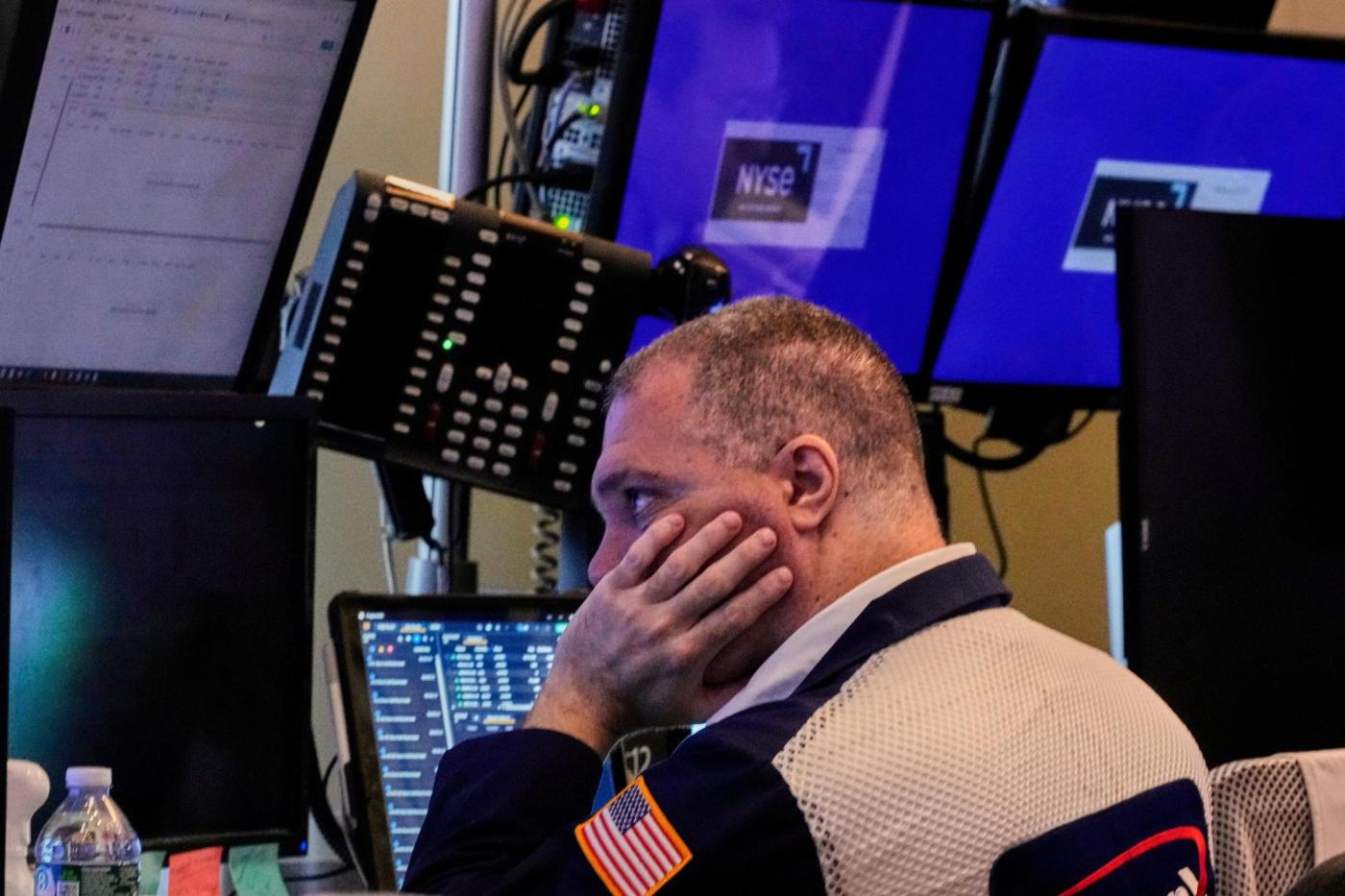
NEW YORK (AP) — U.S. stocks are holding nearly in place on Wednesday as Wall Street waits to hear where the Federal Reserve may be taking interest rates.
The S&P 500 was edging up by 0.1% in early trading. The Dow Jones Industrial Average was up 33 points, or 0.1%, as of 9:35 a.m. Eastern time, and the Nasdaq composite was 0.1% lower.
The quiet moves came as oil prices rose, but more modestly than the day before. They had been yo-yoing for days because of rising and ebbing fears that Israel’s fighting with Iran could disrupt the global flow of crude. A barrel of benchmark U.S. oil added 0.6% to $73.74.
The headline event for the day will likely arrive at 2 p.m. Eastern, when the Federal Reserve is set to announce its latest move on interest rates. The nearly unanimous expectation is that it will hold rates steady, as it’s been doing for all of this year after cutting through the end of 2024.
More important will be what the Fed says about the future. Officials will release projections for where they see the economy, inflation and interest rates heading in upcoming years. The widespread expectation on Wall Street is that the Fed will cut its main interest rate at least two times by the end of 2025, though that has been weakening a bit recently as oil prices have climbed and put upward pressure on inflation.
A cut in rates could make mortgages, credit-card payments and other loans cheaper for U.S. households and businesses, which in turn could give the overall economy a boost. But lower rates can also fan inflation higher.
Besides the threat of higher oil prices because of the fighting between Israel and Iran, the Fed has been concerned about the potential for President Donald Trump’s tariffs to both hurt the economy and to drive inflation higher. That’s been the main reason it’s been on hold with interest rates this year.
So far, inflation has remained relatively tame, and it’s near the Fed’s target of 2%. But economists have been saying it may take months more to feel the full effects of tariffs.
Related Articles
US unemployment claims dipped to 245,000 last week, hovering at historically low levels
Dutch government recommends children under 15 stay off TikTok and Instagram
Health care union authorizes strike at Stillwater Medical Group
Musk’s X sues New York over requirement to show how social media platforms handle problematic posts
General Mills to remove artificial colors from all food lines
A pair of reports on the U.S. economy came in mixed on Wednesday. One said fewer workers applied for unemployment benefits last week, which could be an indication of lightening layoffs. But a second report said that homebuilders broke ground on fewer homes last month than economists expected. That could be a sign that higher mortgage rates are chilling the industry.
In the bond market, Treasury yields edged a bit lower.
The yield on the 10-year Treasury fell to 4.36% from 4.39% late Tuesday. The two-year Treasury yield, which more closely tracks expectations for what the Fed will do with its overnight interest rate, dipped to 3.93% from 3.94%.
In stock markets abroad, indexes were mixed across Europe and Asia.
Tokyo’s Nikkei 225 rose 0.9%, and Hong Kong’s Hang Seng fell 1.1% for two of the bigger moves.
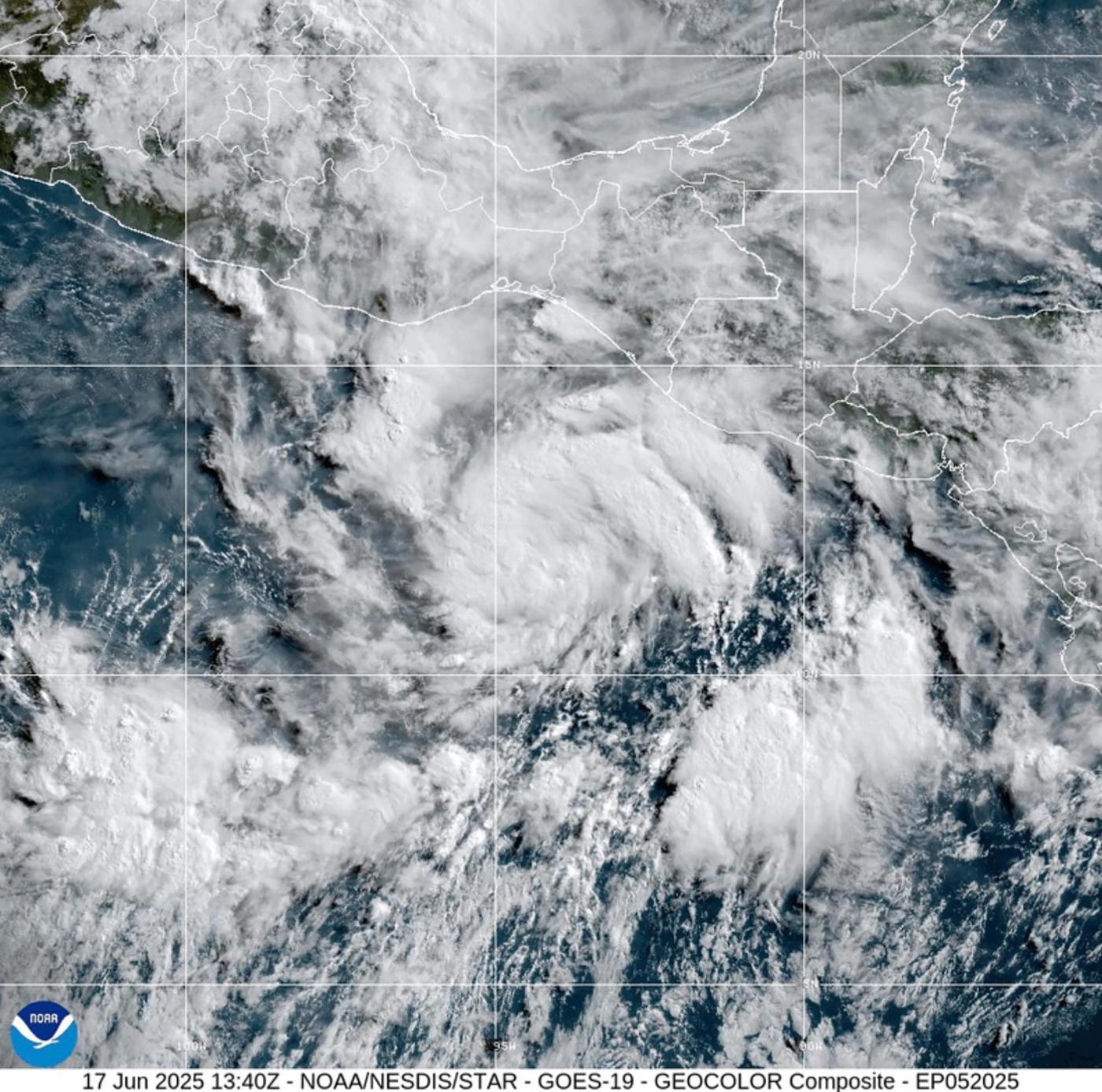
MEXICO CITY (AP) — Hurricane Erick formed Wednesday in the Pacific Ocean on a forecast track to bring heavy rain, strong winds, storm surge and possible mudslides to southern coastal Mexico, forecasters said.
Up to 20 inches (51 centimeters) of rain could fall across the Mexican states of Oaxaca and Guerrero, with lighter amounts in Chiapas, Michoacan, Colima and Jalisco states, the Miami-based U.S. National Hurricane Center said in an advisory. The rainfall threatened flooding and mudslides, especially in areas with steep terrain.
The Category 1 storm on Wednesday morning was located about 160 miles (257 kilometers) south-southeast of Puerto Ángel, Mexico, and had maximum sustained winds of 75 mph (121 kph). It was moving northwest at 7 mph (11 kph).
Erick is expected to be at or near major hurricane status Thursday as it approaches the Mexican coast on Thursday, where it could make landfall. A major hurricane is defined as Category 3 or higher and wind speeds of 111-129 mph (180-210 kph).
The storm’s projected path would take its center near the resort of Acapulco, which was devastated in October 2023 by Hurricane Otis, a Category 5 hurricane that rapidly intensified and caught many unprepared.
At least 52 people died in Otis and 32 were missing, after the storm severely damaged almost all of the resort’s hotels.
Related Articles
Kyiv rescuers find more bodies as death toll from latest Russian aerial attack climbs to 28
Iran’s leader rejects call to surrender, saying US intervention would cause ‘irreparable damage’
Iran’s leader rejects call to surrender, saying US intervention would cause ‘irreparable damage’
Today in History: June 18, War of 1812 begins
Dutch government recommends children under 15 stay off TikTok and Instagram
Guerrero state Gov. Evelyn Salgado said Tuesday that lessons were learned from that storm. She said all schools in the state would close Wednesday and said 582 shelters were prepared to receive people who might evacuate their homes.
A hurricane warning was in effect for Acapulco to Puerto Ángel. A hurricane warning means hurricane conditions are expected in the area, and preparations to protect life and property should be rushed to completion, according to the hurricane center advisory.
Heavy rainfall up to 20 inches (51 centimeters) was forecast for parts of Oaxaca and Guerrero, with as much as 8 inches (20 centimeters) set to fall in Chiapas, Michoacan, Colima and Jalisco states.
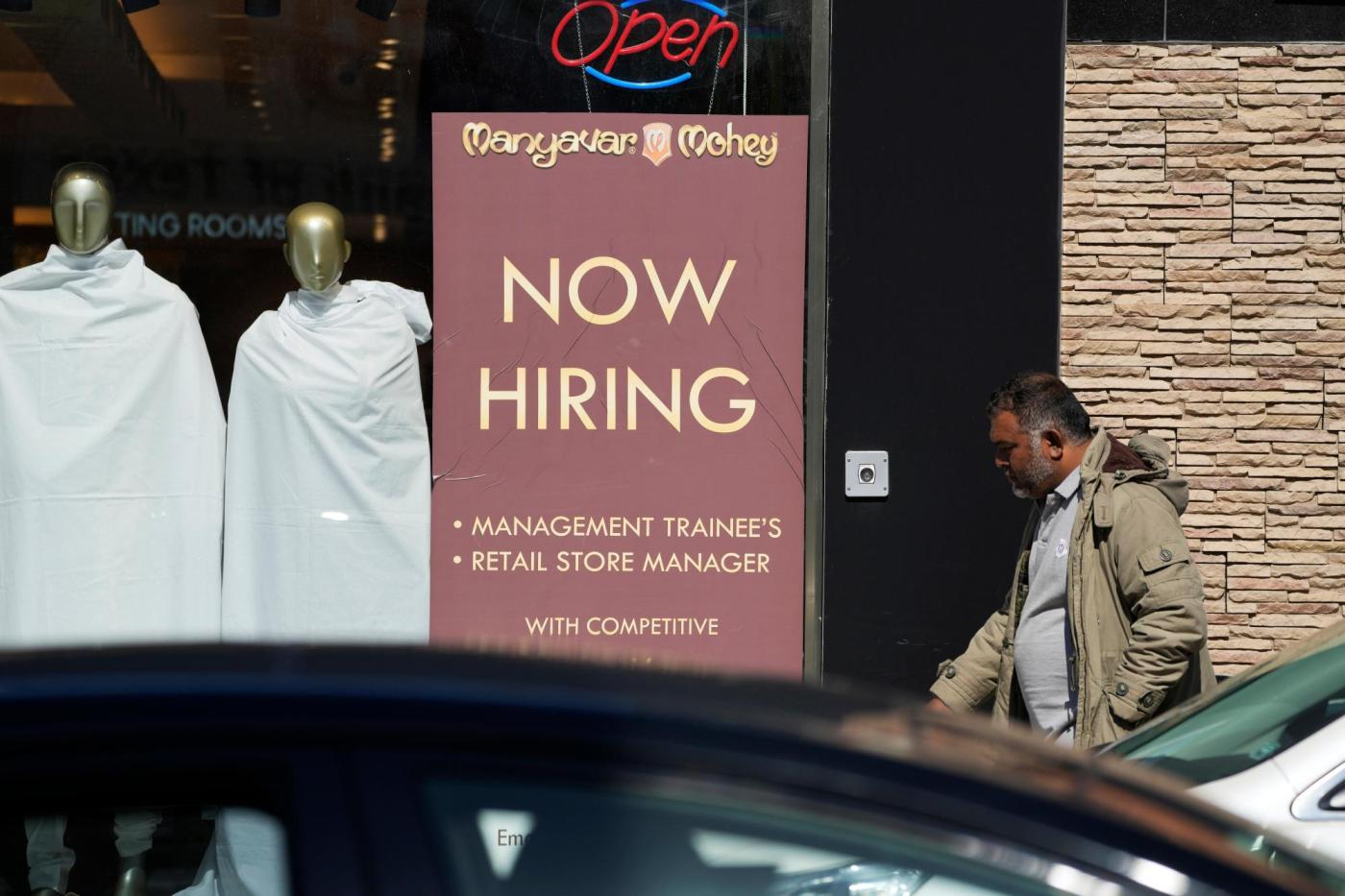
WASHINGTON (AP) — The number of Americans applying for unemployment benefits dipped to 245,000 last week, hovering at historically low levels, the Labor Department said Wednesday.
U.S. jobless claims ticked down from 250,000 the week before. Economists had expected last week’s claims to match that at 250,000.
The four-week average of claims, which smooths out week-to-week volatility, rose to 245,500, the highest since August 2023.
The number of Americans collecting unemployment benefits the week of June 7 slid to 1.95 million.
Weekly unemployment claim are a proxy for layoffs and mostly have stayed within a healthy band of 200,000 to 250,000 since the economy recovered from a brief but painful COVID-19 recession in 2020, which temporarily wiped out millions of jobs.
In recent weeks, however, claims have stayed at the high end of range, adding to evidence that U.S. job market is decelerating after years of strong hiring. So far this year, employers are adding a decent but far from spectacular 124,000 jobs a month, down from an average 168,000 last year and an average of nearly 400,000 from 2021 through 2023.
The hiring slowdown is partly the drawn-out result of 11 interest rate hikes by the Federal Reserve in 2022 and 2023. But Trump’s aggressive and often-erratic trade policies — including 10% taxes on imports from almost every country on earth — are also weighing on the economy, paralyzing businesses and worrying consumers who fear they’ll mean higher prices.
Related Articles
Dutch government recommends children under 15 stay off TikTok and Instagram
Health care union authorizes strike at Stillwater Medical Group
Musk’s X sues New York over requirement to show how social media platforms handle problematic posts
General Mills to remove artificial colors from all food lines
It might be tempting to put 401(k) contributions on hold, but sticking with it is a better strategy
Carl Weinberg of High Frequency Economics is worried that claims remain elevated compared with recent years, when employment has remained very low by historical standards.
“We believe firms have been ‘hoarding’ workers to ensure that they don’t lay off skilled and trained workers by mistake, especially with the labor market still very close to full employment,” Weinberg wrote. “With uncertainty still high … companies have remained hesitant about layoffs. That may be changing.”
The Fed, satisfied that an inflation was coming down, cut rates three times last year. But the central bank has turned cautious in 2025, worried that Trump’s tariffs will rekindle inflationary pressures. The Fed is expected to leave rates unchanged as it wraps up a two-day meeting Wednesday.
DUBAI, United Arab Emirates (AP) — Iran’s supreme leader on Wednesday rejected U.S. calls for surrender in the face of blistering Israeli strikes and warned that any military involvement by the Americans would cause “irreparable damage” to them, in recorded video aired by state TV.
It was the second public appearance by Ayatollah Ali Khamenei since the strikes began, and came a day after U.S. President Donald Trump demanded “UNCONDITIONAL SURRENDER” in a social media post and warned Khamenei that the U.S. knows where he is but has no plans to kill him, “at least not for now.”
The Israeli Iron Dome air defense system fires to intercept missiles during an Iranian attack over Tel Aviv, Israel, early Wednesday, June 18, 2025. (AP Photo/Leo Correa)
Ali Bahreini, Iran’s ambassador in Geneva, speaks to journalists during a press conference at the European headquarters of the United Nations in Geneva, Switzerland, Wednesday, June 18, 2025. (Martial Trezzini/Keystone via AP)
Relatives and friends of Daisy Yitzhaki, 85, who was killed during an Iranian missile attack, mourn during her funeral at Segula cemetery in Petah Tikva, Israel, Wednesday, June 18, 2025. (AP Photo/Oded Balilty)
Mourners carry the flag-draped coffins of five men, whose names were not immediately available, reportedly killed in Israeli strikes, during their funeral in the city of Khorramabad, Iran, Monday, June 16, 2025. (AP Photo/Aziz Babanezhad/Tasnim News Agency)
1 of 4
The Israeli Iron Dome air defense system fires to intercept missiles during an Iranian attack over Tel Aviv, Israel, early Wednesday, June 18, 2025. (AP Photo/Leo Correa)
Khamenei dismissed the “threatening and absurd statements” by Trump.
“Wise individuals who know Iran, its people, and its history never speak to this nation with the language of threats, because the Iranian nation is not one to surrender,” he said. “Americans should know that any military involvement by the U.S. will undoubtedly result in irreparable damage to them.”
A state TV anchor had read Khamenei’s statement earlier, before the video was aired. Iran followed a similar sequence in releasing an earlier statement from the supreme leader, perhaps as a security measure. His location is not known.
His voice echoed as he sat in a room with beige curtains. An Iranian flag and a portrait of Grand Ayatollah Ruhollah Khomeini, who Khamenei succeeded in 1989, hung behind him.
An Iranian official had earlier Wednesday warned that U.S. intervention would risk “all-out war.”
Foreign Ministry spokesman Esmail Baghaei did not elaborate, but thousands of American troops are based in nearby countries within range of Iran’s weapons. The U.S. has threatened a massive response to any attack.
Another Iranian official said the country would keep enriching uranium for peaceful purposes, apparently ruling out Trump’s demands that Iran give up its disputed nuclear program.
Strikes in and around Tehran
The latest Israeli strikes hit a facility used to make uranium centrifuges and another that made missile components, the Israeli military said. It said it had intercepted 10 missiles overnight as Iran’s retaliatory barrages diminish. The U.N. nuclear watchdog said Israel had struck two centrifuge production facilities in and near Tehran.
The Israeli military said it also carried out strikes in western Iran, hitting missile storage sites and a loaded missile launcher.
Israeli strikes have hit several nuclear and military sites, killing top generals and nuclear scientists. A Washington-based Iranian human rights group said at least 585 people, including 239 civilians, have been killed and more than 1,300 wounded.
Iran has fired some 400 missiles and hundreds of drones in retaliatory strikes that have killed at least 24 people in Israel and wounded hundreds. Some have hit apartment buildings in central Israel, causing heavy damage, and air raid sirens have repeatedly forced Israelis to run for shelter.
Iran has fired fewer missiles as the conflict has worn on. It has not explained the decline, but Israel has targeted launchers and other infrastructure related to the missiles.
Casualties mount in Iran
The Washington-based group Human Rights Activists said it had identified 239 of those killed in Israeli strikes as civilians and 126 as security personnel.
The group, which also provided detailed casualty figures during 2022 protests over the death of Mahsa Amini, crosschecks local reports against a network of sources it has developed in Iran.
Related Articles
Iran’s leader rejects call to surrender, saying US intervention would cause ‘irreparable damage’
Today in History: June 18, War of 1812 begins
Dutch government recommends children under 15 stay off TikTok and Instagram
Spain says April blackout was caused by grid failures and poor planning, not a cyberattack
Alfred Brendel, pianist renowned for refined playing of Beethoven, dies at age 94
Iran has not been publishing regular death tolls during the conflict and has minimized casualties in the past. Its last update, issued Monday, put the toll at 224 people killed and 1,277 others wounded.
Shops have been closed across Tehran, including in its famed Grand Bazaar, as people wait in gas lines and pack roads leading out of the city to escape the onslaught.
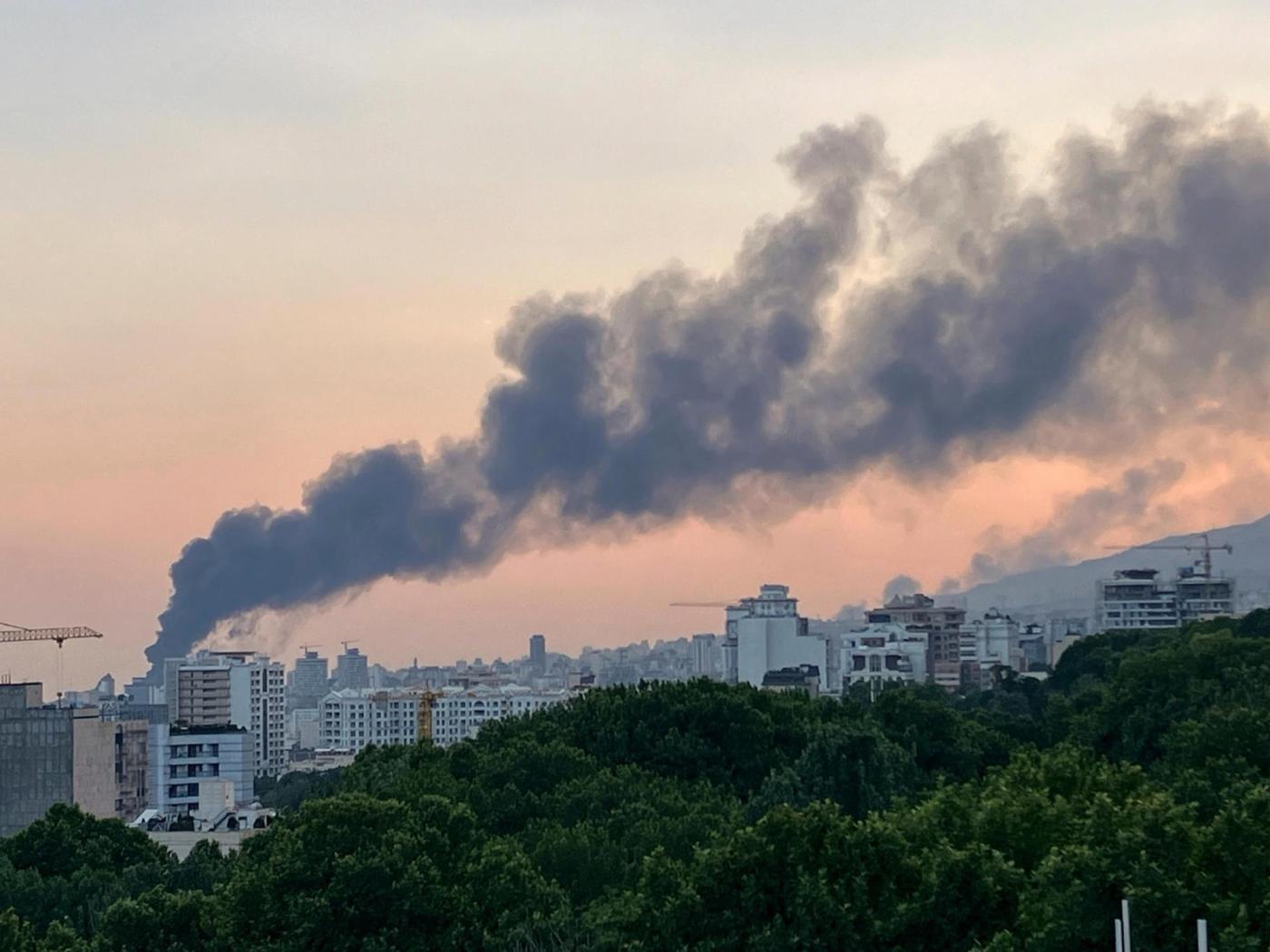
A major explosion could be heard around 5 a.m. in Tehran Wednesday morning, following other explosions earlier in the predawn darkness. Authorities in Iran offered no acknowledgement of the attacks, which has become increasingly common as the Israeli airstrikes have intensified.
At least one strike appeared to target Tehran’s eastern neighborhood of Hakimiyeh, where the paramilitary Revolutionary Guard has an academy.
Iran says it will keep enriching uranium
Israel says it launched the strikes to prevent Iran from building a nuclear weapon, after talks between the United States and Iran over a diplomatic resolution had made little visible progress over two months but were still ongoing. Trump has said Israel’s campaign came after a 60-day window he set for the talks.
Iran long has insisted its nuclear program was peaceful, though it is the only non-nuclear-armed state to enrich uranium up to 60%, a short, technical step away from weapons-grade levels of 90%. U.S. intelligence agencies have said they did not believe Iran was actively pursuing the bomb.
Israel is the only country in the Middle East with nuclear weapons but has never publicly acknowledged them.
Iran’s ambassador to Geneva, Ali Bahreini, told reporters that Iran “will continue to produce the enriched uranium as far as we need for peaceful purposes.”
He rejected any talk of a setback to Iran’s nuclear research and development from the Israeli strikes, saying, “Our scientists will continue their work.”
Israel welcomes first repatriation flights
Israelis began returning on flights for the first time since the country’s international airport shut down at the start of the conflict.
Two flights from Larnaca, Cyprus, landed at Tel Aviv’s Ben Gurion International Airport on Wednesday morning, said Lisa Dvir, an airport spokesperson.
Israel closed its airspace to commercial flights because of the ballistic missile attacks, leaving tens of thousands of Israelis stranded abroad. The conflict has disrupted flight patterns across the region.
Frankel reported from Jerusalem. Associated Press writers Amir Vahdat and Nasser Karimi in Iran, and Jamey Keaten in Geneva, contributed.