Busy schedule suits the Wild just fine at this time of the season

posted in: All news | 0

NEW YORK – The groups who are most directly impacted by the who and when of the NHL schedule – coaches and players – have zero say when it is put together. Instead, consideration of TV coverage and travel distances and whether Kylie Minogue has already booked dates at a particular arena are given the most weight.

The 2024-25 schedule has been more condensed due to the two-week break in February for the 4 Nations Face-Off. Still, the New York Rangers play at Madison Square Garden, which is one of the busiest venues in sports, which leads to schedule anomalies like the one experienced Wednesday night.

While the Wild have essentially had a game every other day for the past month or so, the Rangers were playing for the first time since Saturday. While Wild coach John Hynes reiterated the lack of say they have in the schedule, he said his job is to strive for a balance between rested and rusty when teams are off for multiple days.

“I think at this time of year you want to be able to play. It’s just that you have to take what the schedule gives you. Whatever that situation is, you’ve got to make the best of it,” Hynes said. “So I don’t think there is any one recipe. If you’re playing every other day, then you’ve kind of got to get in your groove in the schedule. If you have a couple days off…managing that the right way is important.”

The Wild conclude a stretch of eight games in 14 days on Sunday afternoon when they host Dallas, then get a two-day break before San Jose visits for one of the final home games of the season on April 9.

More progress for Kaprizov

While the Wild were playing games versus the Devils and Rangers, star forward Kirill Kaprizov checked in with his New York-based doctors and got some more encouraging news about a potential return to the ice.

“It was positive feedback, so he is going to go into the next phase of his rehab, ramp it up, test out some contact and things like that, so that’s where he’s at,” Hynes said, adding that he does not anticipate Kaprizov would be ready to return when the Stars come to Xcel Energy Center on Sunday.

“Let me put it to you this way: I think the feedback that he got and we got was in the positive direction, so we’re hopeful that he’s gonna be able to return before the end of the regular season,” he said.

Following Wednesday’s meeting with the Rangers, the Wild have six games remaining in the regular season – three at home and three on the road.

Gophers get a transfer portal addition

With eight of their top 11 scorers from last season gone either due to early signings or the expiration of their college eligibility, the Minnesota Gophers have plenty of opportunities in their 2025-26 lineup. Several spots will be filled by an incoming freshman class, the specifics of which have not yet been announced.

And this week the Gophers got a homecoming of sorts from the transfer portal. Tanner Ludtke, a former standout at Lakeville South and a 2023 third round draft pick of the Utah Hockey Club, announced he will transfer to Minnesota from Nebraska Omaha, after putting his name in the portal.

After averaging two points per game as a high school senior and during his only full USHL season with Lincoln, Ludtke put up 28 points in 40 games as a freshman in Omaha – a season which ended with a loss to the Gophers in the NCAA tournament – and was named to the NCHC’s all-rookie team. An upper body injury limited him to just eight games last season.

Related Articles


No pouting allowed, as getting to three goals is elusive for Wild lately


Matt Boldy’s late goal salvages a point for Wild in New Jersey


Newark is where it all began for Wild coach John Hynes


Progress, but still no set return date, for Wild’s Kaprizov and Eriksson Ek


Hischier’s hat trick too much for Wild to overcome

Opinion: Children, Parents & Grandparents Call for Hochul to Move Faster on Climate Action

posted in: All news | 0

“While I cannot always prevent pollution from entering my kids’ lungs, I can call on Gov. Hochul to move forward with cap-and-invest and pass strong climate legislation.”

Climate groups staged a rally in March calling for Gov. Hochul to move faster on climate policies. Photo by Noemie Trusty.

It’s every parent’s nightmare: knowing something is harming your child but feeling powerless to stop it. Yet it’s a nightmare that replays every single day when I turn on our gas stove, open our rented apartment’s window to the heavy air outside, or navigate our traffic-choked streets in search of space to play. When your child huffs over to you after running around in the park to tell you he’s finding it hard to breathe again, the guilt and helplessness is crushing.

There is very little the average parent in New York can do on an individual level to remove pollution from their child’s environment, especially as many families are struggling simply to make ends meet in an increasingly unaffordable city. 

Most of us can’t close down the dirty “peaker” power plants scattered throughout the city, or make policy to ramp up the transition to renewable energy. Most of us aren’t able to incentivize and fund widespread electrification of the buildings that produce 70 percent of the greenhouse gas emissions in our city. But there is one parent who has more power than most: our Governor, Kathy Hochul. 

We’ve heard her use encouraging rhetoric around climate and the threat it poses to her grandchildren, but our progress under her administration remains painfully slow. Her flip-flopping on congestion pricing last summer delayed the program until after the general election, putting it squarely in President Donald Trump’s crosshairs. Now Trump wants to kill it. Her hesitation to sign the Climate Superfund Bill in December signaled weakness to the corporate polluters who are challenging it and has us wondering: whose interests come first—ours or theirs? 

This year she’s sitting on another important program—cap-and-invest—that would make big corporate polluters pay for their emissions, then use that revenue to invest the estimated billions into climate solutions. Despite having proposed the program two years ago, the governor has now hit pause and is refusing to make public the draft of the long-promised regulations, upon which the program would be based. 

Not only must Gov. Hochul move forward with cap-and-invest, she must do it right. Climate “solutions” that involve moving pollution from wealthy, politically powerful communities into underserved neighborhoods are not solutions at all; outsourcing the green transition to corporations without any input from New Yorkers, or favoring economies of scale over community skillsets equally won’t get our state where it should be. 

Carbon emissions and the air pollution that comes with them are not family-level problems for parents to tackle alone, they’re society-level problems that need society-level solutions. This is why parents and caregivers like me are choosing to turn away from helplessness and towards building collective power and taking action to push Gov. Hochul to tackle the climate threats facing our kids—threats that are escalating with each passing year.

Last month, local families with Climate Families NYC gathered outside Gov. Hochul’s Manhattan office dressed in snail costumes to tell her to stop being so slow—and to hurry up on tackling the climate crisis. Parents found temporary solace in taking action while the children enjoyed a tale from a giant storybook. Its pages tell of a snail called “Governor Slochul” who has the power to make polluters pay for clean energy and a safer planet but is just being way too slow.

Along with the children in the story, they cheer the snail on as she wakes up and starts to speed towards the finish line of a cleaner and greener state. Because every generation is feeling the effects of climate change, our kids were joined by grandparents from Third Act NYC and teens with the Fridays for Future movement. But, most of all, it’s our children who will reap the consequences of inaction.

To succeed in this mission, families will need our elected representatives in our corner. That’s why we had our last action in Assemblymember Deborah Glick’s district and have contacted our state legislators with our message about the Fund Climate campaign, a spending plan that focuses on cutting pollution and making corporate polluters—not people—pay for climate action. The plan includes programs for affordable climate-ready homes, community-directed grants to climate resiliency projects, and support for policies like the NY HEAT Act and the Cap-and-Invest Guardrails Bill.

More than ever, families are feeling the urgency of this issue. In the past two years, our kids have had to wade to school through unprecedented floods, see the sky turn orange with wildfire smoke, or sit sweltering in classrooms that were not designed for it to be 98 degrees Fahrenheit in June. Despite that, we’re not interested in doom and gloom. Done right, we see an opportunity to make strides towards clean energy and climate resiliency. We see good union jobs, healthier schools, cleaner air, and a more affordable and equitable city. 

So while I cannot always prevent pollution from entering my kids’ lungs, I can call on Gov. Hochul to move forward with cap-and-invest and pass strong climate legislation. Together with other families, we can cut through the smog of corporate interests and hold our leaders accountable for delivering a city where all of us can breathe easier.

Ella Ryan is a member of Climate Families NYC.

The post Opinion: Children, Parents & Grandparents Call for Hochul to Move Faster on Climate Action appeared first on City Limits.

Thomas Friedman: I just saw the future. It was not in America

posted in: All news | 0

I had a choice the other day in Shanghai: Which Tomorrowland to visit? Should I check out the fake, American-designed Tomorrowland at Shanghai Disneyland, or should I visit the real Tomorrowland — the massive new research center, roughly the size of 225 football fields, built by Chinese technology giant Huawei? I went to Huawei’s.

It was fascinating and impressive but ultimately deeply disturbing, a vivid confirmation of what a U.S. businessman who has worked in China for several decades told me in Beijing. “There was a time when people came to America to see the future,” he said. “Now they come here.”

I’d never seen anything like this Huawei campus. Built in just over three years, it consists of 104 individually designed buildings, with manicured lawns, connected by a Disney-like monorail, housing labs for up to 35,000 scientists, engineers and other workers, offering 100 cafes, plus fitness centers and other perks designed to attract the best Chinese and foreign technologists.

The Lianqiu Lake R&D campus is basically Huawei’s response to the U.S. attempt to choke it to death beginning in 2019 by restricting the export of U.S. technology, including semiconductors, to Huawei amid national security concerns. The ban inflicted massive losses on Huawei, but with the Chinese government’s help, the company sought to innovate its way around us. As South Korea’s Maeil Business Newspaper reported last year, it’s been doing just that: “Huawei surprised the world by introducing the ‘Mate 60’ series, a smartphone equipped with advanced semiconductors, last year despite U.S. sanctions.” Huawei followed with the world’s first triple-folding smartphone and unveiled its own mobile operating system, Hongmeng (Harmony), to compete with Apple’s and Google’s.

The company also went into the business of creating the AI technology for everything from electric vehicles, self-driving cars and even autonomous mining equipment that can replace human miners. Huawei officials said in 2024 alone it installed 100,000 fast chargers across China for its electric vehicles; by contrast, in 2021 the U.S. Congress allocated $7.5 billion toward a network of charging stations, but as of November this network had only 214 operational chargers across 12 states.

It’s downright scary to watch this close up. President Donald Trump is focused on what teams American transgender athletes can race on, and China is focused on transforming its factories with AI so it can outrace all our factories. Trump’s “Liberation Day” strategy is to double down on tariffs while gutting our national scientific institutions and workforce that spur U.S. innovation. China’s liberation strategy is to open more research campuses and double down on AI-driven innovation to be permanently liberated from Trump’s tariffs.

China’s message to the United States: We’re not afraid of you. You aren’t who you think you are — and we aren’t who you think we are.

What do I mean? Exhibit A: In 2024, The Wall Street Journal reported that Huawei’s “net profit more than doubled last year, marking a stunning comeback” spurred by new hardware “running on its homegrown chips.” Exhibit B: The Journal recently quoted Sen. Josh Hawley, R-Mo., as saying of China, “I don’t think that they can do much innovation on their own, but they will if we keep sharing all this tech with them.”

Some of our senators need to get out more. If you’re a U.S. lawmaker and want to bash China, be my guest — I may even join you for a round — but at least do your homework. There is too little of that in both parties today and too much consensus that the politically safe space is to hammer China, chant a few rounds of “USA, USA, USA,” issue some platitudes that democracies will always out-innovate autocracies and call it a day.

I prefer to express my patriotism by being brutally honest about our weaknesses and strengths, China’s weaknesses and strengths and why I believe the best future for both of us — on the eve of the AI revolution — is a strategy called: Made in America by American workers in partnership with Chinese capital and technology.

Let me explain.

Trump’s magical thinking

I agreed with Trump regarding his tariffs on China in his first term. China was keeping out certain U.S. products and services, and we needed to treat China’s tariffs reciprocally. For instance, China dragged its feet for years on letting U.S. credit cards be used in China, waiting until its own payment platforms completely dominated the market and made it a cashless society, where virtually everyone pays for everything with mobile payment apps on their phones. When I went to use my Visa card at a shop in a Beijing rail station last week, I was told it had to be linked through one of those apps, like China’s Alipay or WeChat Pay, which, combined, have a more than 90% market share.

I even agree with Trump that additional — targeted — tariffs on China’s back doors into the U.S. via Mexico and Vietnam could be useful, but only as part of a larger strategy.

My problem is with Trump’s magical thinking that you just put up walls of protection around an industry (or our whole economy) and — presto! — in short order, U.S. factories will blossom and make those products in America at the same cost with no burden for U.S. consumers.

For starters, that view completely misses the fact that virtually every complex product today — from cars to iPhones to mRNA vaccines — is manufactured by giant, complex, global manufacturing ecosystems. That is why those products get steadily better and cheaper. Sure, if you are protecting the steel industry, a commodity, our tariffs might quickly help. But if you are protecting the auto industry and you think just putting up a tariff wall will do it, you don’t know anything about how cars are made. It would take years for American car companies to replace the global supply chains they depend on and make everything in America. Even Tesla has to import some parts.

But you’re also wrong if you think that China only cheated its way to global manufacturing dominance. It did cheat, copy and force technology transfers. But what makes China’s manufacturing juggernaut so powerful today is not that it just makes things cheaper; it makes them cheaper, faster, better, smarter and increasingly infused with AI.

Inside the China fitness club

How? Jörg Wuttke, a former longtime president of the European Union Chamber of Commerce in China, calls it “the China fitness club,” and it works like this:

China starts with an emphasis on STEM education — science, technology, engineering and math. Each year, the country produces some 3.5 million STEM graduates, about equal the number of graduates from associate, bachelor’s, master’s and doctoral programs in all disciplines in the United States.

When you have that many STEM graduates, you can throw more talent at any problem than anyone else. As Times Beijing bureau chief Keith Bradsher reported last year: “China has 39 universities with programs to train engineers and researchers for the rare earths industry. Universities in the United States and Europe have mostly offered only occasional courses.”

And while many Chinese engineers may not graduate with MIT-level skills, the best are world class, and there are a lot of them. There are 1.4 billion people there. That means that in China, when you are a one-in-a-million talent, there are 1,400 other people just like you.

Just as important, Chinese vocational schools graduate tens of thousands of electricians, welders, carpenters, mechanics and plumbers every year, so when someone has an idea for a new product and wants to throw up a factory, it can get built really fast. You need a pink polka dot button that can sing the Chinese national anthem backward? Someone here will have it for you by tomorrow. It will also get delivered fast. Over 550 Chinese cities are connected by high-speed rail that makes our Amtrak Acela look like the Pony Express.

And when you relentlessly digitize and connect everything to everything, you can get in and out of your hotel room fast with just facial recognition. Tech-savvy beggars who carry printouts of QR codes can accept donations fast by the scan of a cellphone. The whole system is set up for speed — including if you challenge the rule of the Communist Party, in which case, you will be arrested fast, given the security cameras everywhere, and disappear fast.

If we don’t build a similar fitness club behind any tariff wall, we’ll get just inflation and stagnation. You cannot tariff your way to prosperity, especially at the dawn of AI.

I was also in China just four months ago. Between then and now, China’s AI innovators demonstrated their ability to grow their own open-source AI engine, DeepSeek, with far fewer specialized U.S. chips. I could feel the mojo in the tech community. It was palpable. Last month Premier Li Qiang said at the opening ceremony of the National People’s Congress that the Chinese government is supporting “the extensive application of large-scale AI models.”

A young Chinese auto engineer who once worked for Tesla here told me: “Now everyone is competing over how much AI is being inserted. Now you brag about how much AI you insert. Everyone is committed. ‘I will use AI, even if I don’t know how right now.’ You are preparing for that, even if you are on a simple production line for manufacturing refrigerators. ‘I have to use AI, because my boss told me to.’”

Attention, Kmart shoppers: When you already have a manufacturing engine as powerful and digitally connected as China’s and then you infuse it with AI at every level, it’s like injecting a stimulant that can optimize and accelerate every aspect of manufacturing, from design to testing to production.

Not a good time for U.S. lawmakers to be shunning visits to China for fear of being called panda huggers.

As Han Shen Lin, an American who works as the China country director for the Asia Group, put it to me over breakfast at Shanghai’s Peace Hotel, “DeepSeek should not have been a surprise.” But, he continued, with all the new U.S. “overseas investment restrictions and disincentives to collaborate, we are now blind to China tech developments. China is defining the tech standards of the future without U.S. input. This will put us at a serious competitive disadvantage in the future.”

Beijing does not want a trade war

For all of China’s strengths, though, it does not want a trade war with the U.S. A lot of middle-class people in China are unhappy right now. For more than a decade, many Chinese put their money into buying apartments instead of putting their savings in banks that paid virtually no interest. This created a huge housing bubble. Many people rode it up and then rode it down when the government tightened real estate lending in 2020.

So they are hoarding their cash because their real estate profits are gone but the government pension and health care payments are meager. Everyone has to save for a rainy day.

As Bradsher just reported, the economic slowdown is depriving the Beijing government of the very tax revenues it needs to stimulate the economy and subsidize “the export industries that are driving economic growth but could be hurt by tariffs.”

In short, China’s fitness club is awesome, but China still needs a trade deal with Trump that protects its export engine.

We do, too. Trump, though, has become such an unpredictable actor, changing policies by the hour, that Chinese officials seriously wonder if they can get any deal with him that he will stick by.

Michele Gelfand, a Stanford University expert on negotiating, said: “Trump’s defenders argue that his unpredictability keeps opponents off balance. But great negotiators know that trust, not chaos, is what gets lasting results. Trump’s win-lose approach to deal making is a dangerous game.” She added, “If he continues to recklessly treat allies as adversaries and negotiations as battlegrounds, America risks not just bad deals but a world where we have no one left to deal with.”

To my mind, the only win-win deal is one that I’d call: Made in America, by American workers, in partnership with Chinese technology, capital and experts. That is, we just reverse the strategy China used to get wealthy in the 1990s, which was: Made in China, by Chinese workers, with American, European, Korean and Japanese technology, capital and partners.

Here is how Jim McGregor, a business consultant who lived in China for 30 years, explained it to me: Big U.S. multinationals used to go to China and do a joint venture with a Chinese company to get into the Chinese market. Now foreign companies are coming to China and saying to Chinese multinationals: If you want to get into Europe, do a joint venture with me and bring your technology.

We should be combining any tariffs on China with a welcome mat for Chinese companies to enter the U.S. market by licensing their best manufacturing innovations to U.S. firms or by partnering with them and creating advanced manufacturing factories in 50-50 ventures. Chinese joint ventures in the U.S., though, would have to be required to steadily increase the share of parts they source locally, instead of just importing them indefinitely.

This, of course, would require a huge effort to rebuild trust, which is now almost entirely missing in the relationship. It’s the only way to get to reasonably win-win trade. Without it, we’re heading for lose-lose.

I like the way Dov Seidman, the author of the book “How: Why How We Do Anything Means Everything,” describes it. He told me that when it comes to the U.S. and China — and the world at large — “interdependence is no longer our choice. It’s our condition. Our only choice is whether we forge healthy interdependencies, and rise together, or maintain unhealthy interdependencies and fall together.”

But whichever it is, we’re doing it together.

Leaders of both countries used to know that. Eventually, they will relearn it. The only question in my mind is: By the time they do, what will be left of the once unified global economy that produced so much wealth for both nations?

Thomas Friedman writes a column for the New York Times.

Social Security’s acting leader faces calls to resign over decision to cut Maine contracts

posted in: All news | 0

By FATIMA HUSSEIN and PATRICK WHITTLE, Associated Press

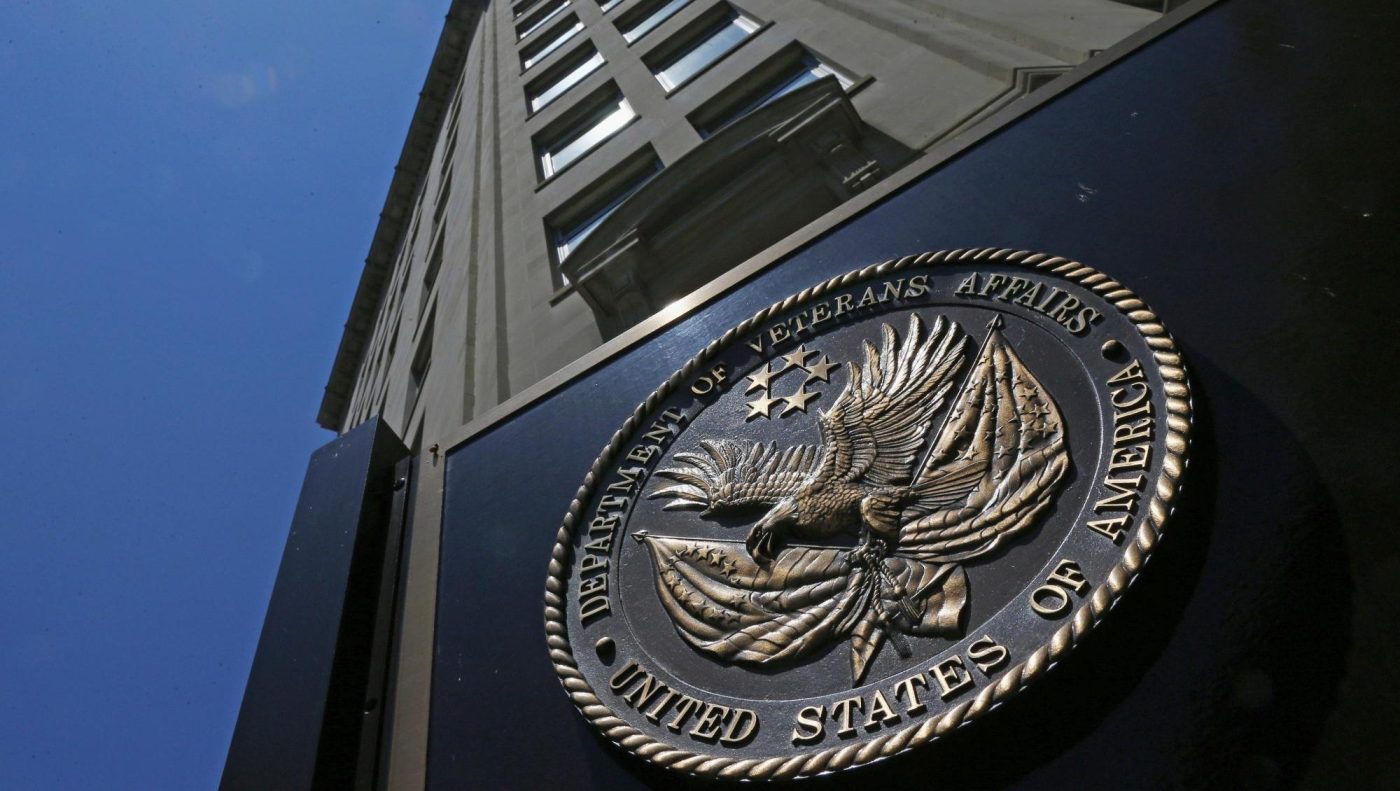
WASHINGTON (AP) — The Social Security Administration’s acting commissioner is facing calls to resign after he issued an order — which was quickly rescinded — that would have required Maine parents to register their newborns for Social Security numbers at a federal office rather than the hospital.

Newly unearthed emails show that the March 5 decision was made as political payback to Maine’s Governor Janet Mills, who has defied the Trump administration’s push to deny federal funding to the state over transgender athletes.

In the email addressed to the agency’s staff, acting commissioner Leland Dudek, said, “no money will go from the public trust to a petulant child.” Staff members warned that terminating the contracts would result in improper payments and the potential for identity theft.

Related Articles


Law firms fear Trump orders could affect security clearances of lawyers who are military reservists


Once common, now unusual: Conservative candidate firmly concedes Wisconsin Supreme Court election


Watch Live: Trump’s ‘Liberation Day’ tariffs announcement


Supreme Court appears divided over whether states can cut off Planned Parenthood funding


Musk could be headed for a Washington exit after turbulent times at Trump’s DOGE

Dudek’s order initially drew widespread condemnation from medical organizations and public officials, who described it as unnecessary and punitive. The practice of allowing parents to register a newborn for a Social Security number at a hospital or other birthing site, called the Enumeration at Birth program, has been common for decades.

Democratic Rep. Chellie Pingree, one of two House members from Maine, said Dudek should resign immediately. She characterized Dudek’s actions as retaliation for Mills publicly opposing President Donald Trump.

“If a federal agency can be turned into a political hit squad at the whim of an acting appointee, what checks remain on executive power? Commissioner Dudek’s vindictive actions against Maine represent a fundamental betrayal of public trust that disqualifies him from public service,” Pingree said.

Mills said Wednesday that Social Security is being subjected to “rushed and reckless cuts” and needs leadership that treats it like a public trust. She said that is especially important in Maine, which has a high number of recipients.

“Social Security is not a scheme, as some have said, it’s a covenant between our government and its people. The Social Security Administration’s leadership must act in a manner that reflects this solemn obligation,” Mills said.

Rep. Gerry Connolly, D-Va., ranking member of the House Oversight Committee, sent a letter to Dudek on Tuesday, calling for his immediate resignation and a request that he sit for an interview with the committee.

“The American people deserve answers about your activities and communications in the time between President Trump’s February 21, 2025, public threat to Governor Mills and your February 27, 2025, order to cancel the enumeration at birth and electronic death registration contracts with the state of Maine, and about your knowledge that cancelling these contracts would lead to increased waste, fraud, and abuse,” Connolly said in his letter.

Connolly, in a letter on Tuesday, said Democrats on the House oversight committee obtained internal emails from the Social Security Administration that he says shows Dudek cancelled the contracts to retaliate politically against Maine.

A representative from the Social Security Administration did not immediately respond to an Associated Press request for comment.

Dudek on a March 18th call with reporters to preview the agency’s tighter identity-proofing measures, initially said the cancellation of the Maine contract happened “because I screwed up,” adding that he believed that the contract looked strange. “I made the wrong move there. I should always ask my staff for guidance first, before I cancel something. I’m new at this job.”

He added, “Well, I was upset at the governor’s treatment, and I indicated in email as such, but the actual fact of the matter was it looked like a strange contract.”

“I’m not interested in political retaliation. I’m interested in serving the public.”

Maine has been the subject of federal investigations since Gov. Mills sparked the ire of Trump at a meeting of governors at the White House in February. During the meeting, Trump threatened to pull federal funding from Maine if the state does not comply with his executive order barring transgender athletes from sports.

Mills responded: “We’ll see you in court.”

The Trump administration then opened investigations into whether Maine violated the Title IX antidiscrimination law by allowing transgender athletes to participate in girls’ sports. The Education Department issued a final warning on Monday that the state could face Justice Department enforcement soon if it doesn’t come into compliance soon.

U.S. Secretary of Agriculture Brooke Rollins also said Wednesday that the department is pausing federal funds for some Maine educational programs because of Title IX noncompliance.

Whittle reported from Scarborough, Maine.