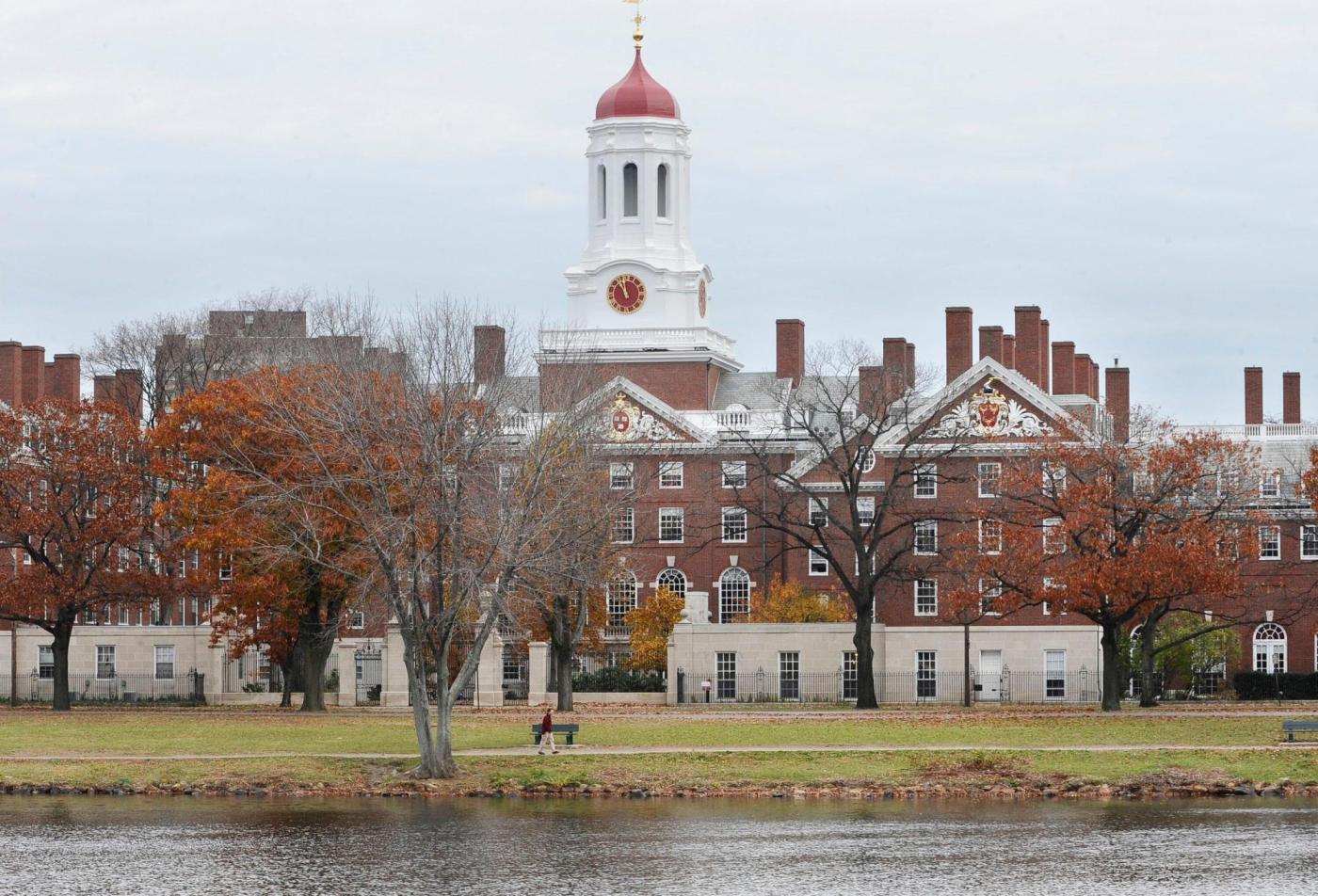
WASHINGTON (AP) — Harvard University failed to protect Jewish students from harassment, the Trump administration concluded after an investigation, threatening to cut all federal funding from the Ivy League school if it fails to take action.
A federal task force sent a letter to Harvard on Monday finding the university violated civil rights laws requiring colleges to protect students from discrimination based on race or national origin. It says investigators found Harvard was at times a “willful participant in anti-Semitic harassment of Jewish students, faculty, and staff” and that campus leaders allowed antisemitism to fester on the campus in Cambridge, Massachusetts.
“Failure to institute adequate changes immediately will result in the loss of all federal financial resources and continue to affect Harvard’s relationship with the federal government,” officials said in the letter, which was obtained by The Associated Press and first reported by The Wall Street Journal.
Harvard did not immediately comment.
It’s the latest intensification in the White House’s battle with Harvard, which lost more than $2.6 billion in federal research grants after rejecting a list of federal demands calling for sweeping changes to campus governance, hiring and admissions.
The Trump administration for months has accused Harvard of tolerating antisemitism on its campus, but a formal finding paves the way for a negotiated agreement or — if one isn’t reached — an attempt to cut the school off from federal dollars.
Much of the investigation’s evidence focuses on campus protests over the Israel-Hamas war. It says the campus was “overrun by an impermissible, multiweek encampment” that left Jewish and Israeli students fearful and disrupted their studies.
It accuses Harvard of imposing lax and inconsistent discipline against students who participated in the encampment, noting that none was suspended.
Harvard President Alan Garber has acknowledged problems with antisemitism and anti-Muslim bias on campus, but he says Harvard has made strides to fight prejudice. He announced new initiatives in April after Harvard released internal reports finding evidence of antisemitism and Islamophobia on campus.
“Harvard cannot — and will not — abide bigotry,” Garber wrote in releasing the reports.
The Monday letter finds that Harvard violated Title VI of the Civil Rights Act of 1964. Such findings have almost always been resolved through voluntary resolutions between schools and the federal government. The Trump administration has taken a much sharper edge than its predecessors, however.
It has been decades since an administration even attempted to fully strip a school or college of its federal funding over civil rights violations.
The Associated Press’ education coverage receives financial support from multiple private foundations. AP is solely responsible for all content. Find AP’s standards for working with philanthropies, a list of supporters and funded coverage areas at AP.org.
NEW YORK (AP) — U.S. stocks are adding to their records on Monday as Wall Street nears the finish of a second straight winning month.
The S&P 500 was 0.2% higher in early trading, its first trading after completing its stunning rebound from a springtime sell-off of roughly 20%. The Dow Jones Industrial Average was up 142 points, or 0.3%, as of 9:35 a.m. Eastern time, and the Nasdaq composite was 0.2% higher.
Stocks got a boost after Canada said it’s rescinding a planned tax on U.S. technology firms and resuming talks on trade with the United States. On Friday, U.S. President Donald Trump had said he was suspending talks with Canada because of his anger with the tax, which he called “a direct and blatant attack on our country.”
One of the main reasons U.S. stocks came back so quickly from its springtime swoon has been hope that Trump will reach deals with other countries to lower his stiff proposed tariffs. Otherwise, the fear is that the trade wars could stifle the economy and send inflation higher.
The United States is charging a 10% baseline tax on all imported goods, along with higher rates for Chinese goods and other import taxes on steel and autos. But many of Trump’s additional, announced tariffs are currently on pause. They’re scheduled to kick back into effect in a little more than a week.
In an interview with Fox News Channel’s “Sunday Morning Futures,” Trump said his administration will notify countries that the trade penalties will take effect unless there are deals with the United States. Letters will start going out “pretty soon” before the approaching deadline, he said.
On Wall Street, GMS’ stock jumped 11.3% after the supplier of specialty building products said it agreed to sell itself to a Home Depot subsidiary in a deal that would pay $110.00 per share in cash. That would give it a total value of roughly $5.5 billion, including debt.
Less than two weeks ago, another company, QXO, said it was offering to buy GMS for $95.20 per share in cash. After the announcement of the Home Depot bid, QXO’s stock rose 2%, and Home Depot’s stock was flat.
Hewlett Packard Enterprise rallied 12% and Juniper Networks climbed 8.4% after saying they had reached an agreement with the U.S. Department of Justice that could clear the way for their merger go through, subject to court approval. HPE is trying to buy Juniper in a $14 billion deal.
In the bond market, Treasury yields were easing a bit ahead of some major economic reports later in the week. The highlight will be Thursday’s jobs report. It’s often the most anticipated economic data of each month, and it will come a day earlier than usual this upcoming month because of the Fourth of July holiday.
The job market has remained relatively steady recently, even in the face of tariffs, but hiring has slowed. Economists expect Thursday’s data to show another slowdown in overall hiring, down to 115,000 jobs in June from 139,000 in May.
Related Articles
Business people: Jenna Ray named to lead GiveMN
Real World Economics: Fed up? Delusions about the central bank continue
How to manage ADHD at work and turn it into a strength
Can this Burnsville land go from garbage dump to golf destination?
Working Strategies: Adjusting to, and surviving, return-to-work
Such data has kept the Federal Reserve on hold this year when it comes to interest rates. Fed Chair Jerome Powell has said repeatedly that it’s waiting for more data to show how tariffs will affect the economy and inflation before resuming its cuts to interest rates. That’s because lower rates can fan inflation higher, along with giving the economy a boost.
Trump, meanwhile, has been pushing for more cuts to rates and for them to happen soon. Two of his appointees to the Fed have said recently they could consider cutting rates as soon as the Fed’s next meeting in less than a month.
The yield on the 10-year Treasury eased to 4.26% from 4.29% late Friday.
In stock markets abroad, indexes dipped modestly in Europe following a more mixed finish in Asia.
Stocks fell 0.9% in Hong Kong but rose 0.6% in Shanghai after China reported its factory activity improved slightly in June after Beijing and Washington agreed in May to postpone imposing higher tariffs on each others’ exports, though manufacturing remained in contraction.
DUBAI, United Arab Emirates (AP) — It’s been a week since the United States pressed Israel and Iran into a truce, ending a bloody, 12-day conflict that had set the Middle East and globe on edge.
How badly Iran’s nuclear program was set back remains murky. The prospects of renewed U.S.-Iran peace talks are up in the air. And whether U.S. President Donald Trump can leverage the moment to get Israeli Prime Minister Benjamin Netanyahu ‘s government and Hamas focused on a ceasefire and hostage deal that brings about an end to the 20-month war in Gaza remains an open question.
Israeli soldiers work amid the rubble of residential buildings destroyed by an Iranian missile strike that killed several people, in Beersheba, Israel, on Tuesday, June 24, 2025. (AP Photo/Bernat Armangue)
An Iranian woman holds up her country’s flag in an anti-U.S. and anti-Israeli rally at Enqelab-e-Eslami (Islamic Revolution) square in downtown Tehran, Iran, Tuesday, June 24, 2025. (AP Photo/Vahid Salemi)
1 of 2
Israeli soldiers work amid the rubble of residential buildings destroyed by an Iranian missile strike that killed several people, in Beersheba, Israel, on Tuesday, June 24, 2025. (AP Photo/Bernat Armangue)
Rafael Grossi, head of the International Atomic Energy Agency, said on CBS’ “Face the Nation” on Sunday that the three Iranian sites with “capabilities in terms of treatment, conversion and enrichment of uranium have been destroyed to an important degree.” But, he added, “some is still standing” and that because capabilities remain, “if they so wish, they will be able to start doing this again.” He said assessing the full damage comes down to Iran allowing inspectors access.
What future US-Iran relations might look like
After the ceasefire deal came together, Trump spoke of potentially easing decades of biting sanctions on Tehran and predicted that Iran could become a “great trading nation” if it pulled back once-and-for-all from its nuclear program.
The talk of harmony didn’t last long.
Related Articles
Today in History: June 30, Night of the Long Knives
Today in History: June 29, Apple releases the first iPhone to consumers
Today in History: June 28, Franz Ferdinand assassinated
Trump Management 101: World leaders adapt to his erratic diplomacy with flattery and patience
Oslo police announce rape and sexual assault charges against son of Norwegian crown princess
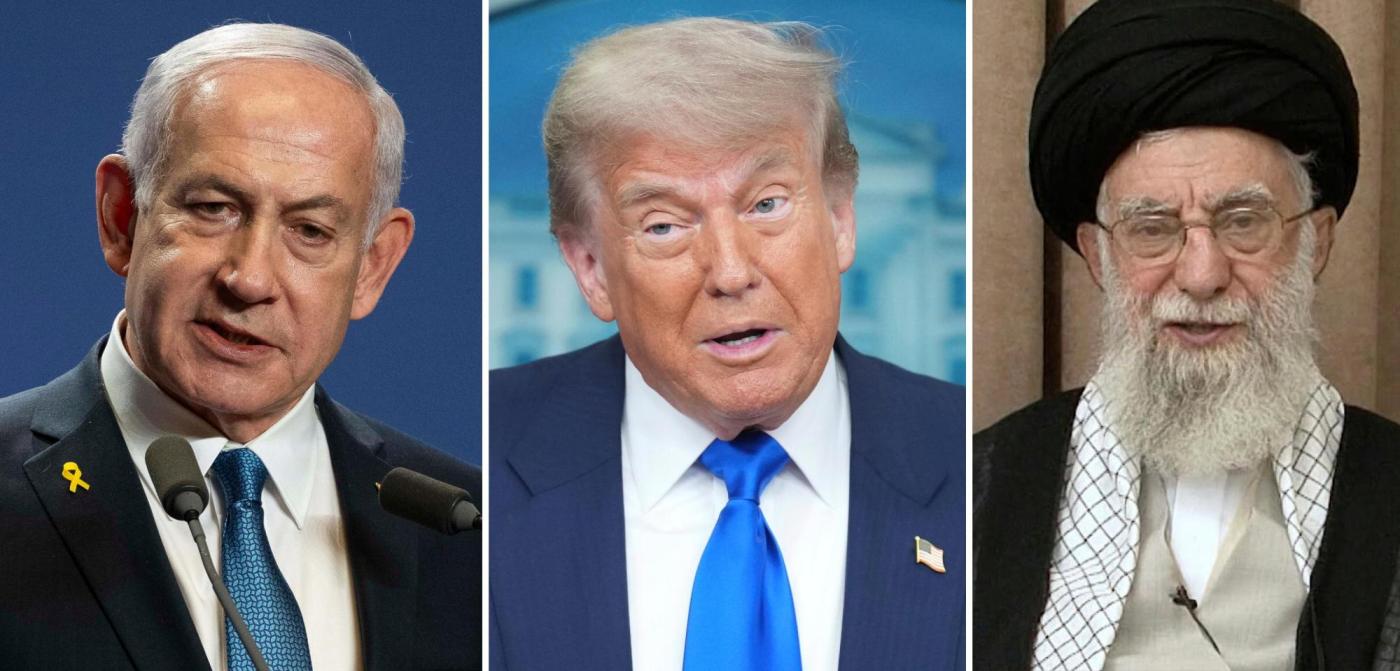
Ayatollah Ali Khamenei, in his first public appearance after the ceasefire was announced, claimed Tehran had delivered a “slap to America’s face.” Trump responded by suggesting the supreme leader own up to the fact Iran “got beat to hell. The president also said he was backing off reviewing any immediate sanction relief, because of Khamenei’s heated comments.
White House officials say the U.S. and Iran are already in early discussions about resuming negotiations that had ended after Israel began launching strikes. But Iranian Foreign Minister Abbas Araghchi says there’s no agreement in place to restart talks.
It’s unclear if Iran’s leadership is ready to come to the table so soon after the fighting has ended — especially if Trump holds to the position that Iran must give up nuclear enrichment for even civilian use. And Trump has offered conflicting statements about his commitment to talks. “We may sign an agreement,” he said Wednesday at a NATO summit press conference. He added, “I don’t think it’s that necessary.”
What role Iran’s supreme leader will play
Khamenei’s age and recent diminished appearance have raised questions about the scope of his involvement in U.S.-Iran relations and the Islamic Republic’s response to both American and Israeli strikes. But despite having spent the last few weeks in a bunker as threats to his life escalated, there is little indication that the ayatollah does not still reign supreme over the country’s massive military and governmental operations.
Khamenei has ruled three times longer than his predecessor, the late Ruhollah Khomeini, and has shaped life for the country’s more than 90 million people perhaps even more dramatically.
He entrenched the system of rule by the “mullahs,” or Shiite Muslim clerics. That secured his place in the eyes of hard-liners as the unquestionable authority, below only that of God. At the same time, Khamenei built the paramilitary Revolutionary Guard into the dominant force in Iran’s military and internal politics.
How Iran might strike back
Iran’s retaliatory missile attacks on a U.S. base in Qatar following the American bombardment were sloughed off by the White House as a half-hearted, face-saving measure. The U.S. was forewarned and the salvos were easily fended off.
Yet Iran remains a persistent threat, particularly via cyberwarfare. Hackers backing Tehran have already targeted U.S. banks, defense contractors and oil industry companies — but so far have not caused widespread disruptions to critical infrastructure or the economy.
The U.S. Department of Homeland Security last week issued a public bulletin warning of increased Iranian cyber threats. And the U.S. Cybersecurity and Infrastructure Security Agency, is urging organizations that operate critical infrastructure like water systems, pipelines or power plants to stay vigilant.
Whether the Israel-Iran ceasefire will hold
It remains a fragile peace.
Immediately following the U.S. strikes, Trump got on the phone with Netanyahu and told the Israeli leader not to expect further U.S. offensive military action, according to a senior White House official who was not authorized to comment publicly about the sensitive diplomatic talks.
But even as he agreed to deal, Netanyahu made clear that Israel will strike again “if anyone in Iran tries to revive this project.”
The ceasefire deal came without any agreement from Tehran on dismantling its nuclear program. Khamenei claims the attacks “did nothing significant” to Iran’s nuclear facilities.
Trump expressed confidence that Iran, at the moment, has no interest in getting its nuclear program back up. “The last thing they’re thinking about right now is enriched uranium,” Trump said.
Still, Trump says he expects Iran to open itself to international inspection to verify that it doesn’t restart its nuclear program by the International Atomic Energy Agency, the U.N. nuclear watchdog, or some other organization “that we respect, including ourselves.”
As a candidate, he promised to quickly end Russia’s brutal war in Ukraine and the Israel-Hamas conflict in Gaza, but has failed to find a resolution to either. He also vowed to keep the U.S. military out of foreign conflicts.
But after helping Israel with U.S. strikes on Iran, Trump — in conversations with Netanyahu and other world leaders in recent days — has made clear he wants a deal completed soon, according to two people familiar with the private discussions and were not authorized to comment publicly.
On Friday, Trump told reporters, “We think within the next week we’re going to get a ceasefire.”
Trump didn’t offer any further explanation for his optimism. But Israeli Minister for Strategic Affairs Ron Dermer is expected to be in Washington this week for talks on a Gaza ceasefire, Iran and other matters, according to an official familiar with the matter. The official spoke on condition of anonymity because they were not authorized to speak to the media.
Madhani reported from Washington. Associated Press writers Stephanie Liechtenstein in Vienna, Wafaa Shurafa in Deir al-Balah, Gaza Strip, Sam Mednick in Tel Aviv, Israel, and David Klepper in Washington contributed to this report.
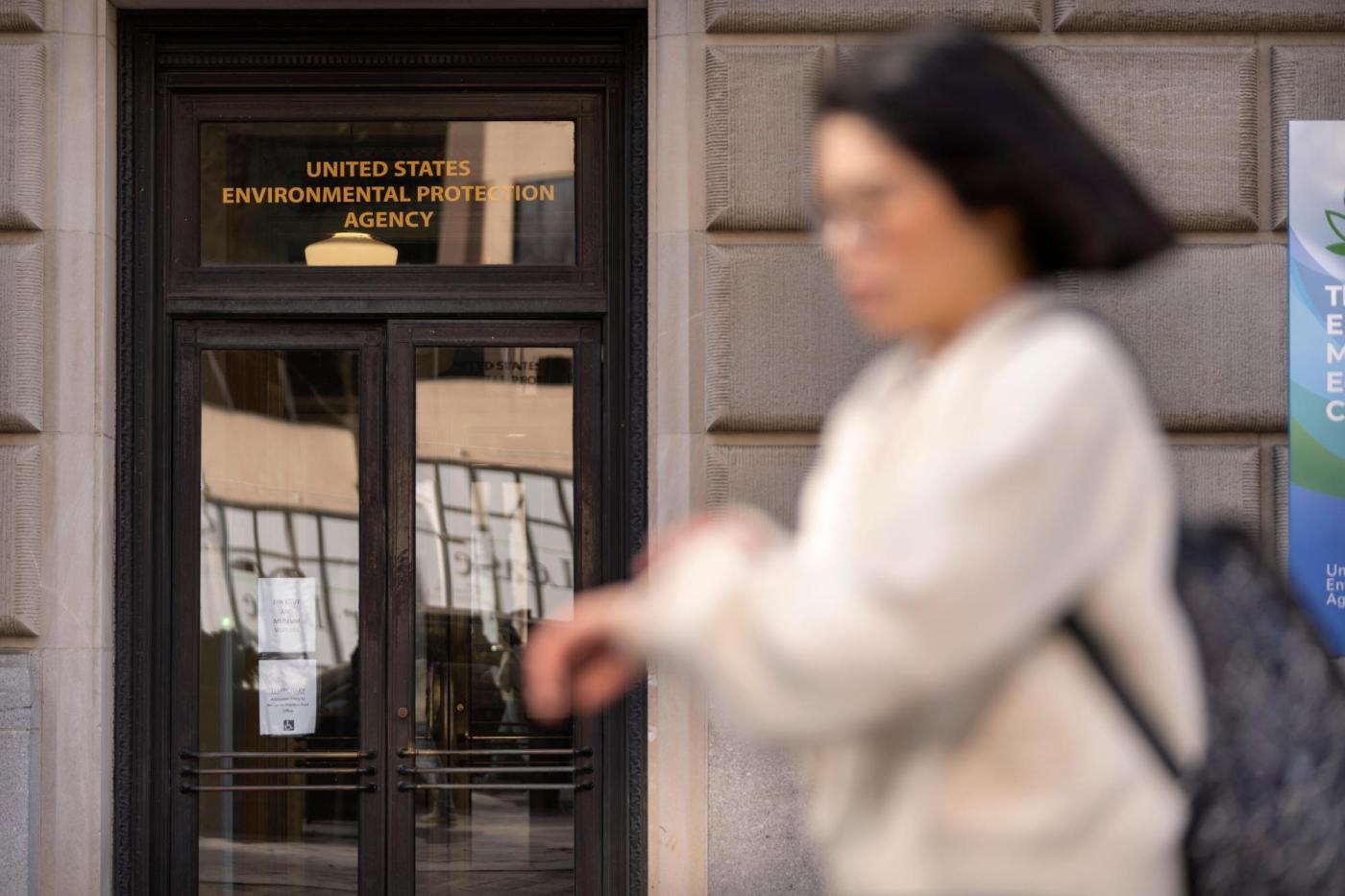
A group of Environmental Protection Agency employees on Monday published a declaration of dissent from the agency’s policies under the Trump administration, saying they “undermine the EPA mission of protecting human health and the environment.”
More than 170 EPA employees put their names to the document, with about 100 more signing anonymously out of fear of retaliation, according to Jeremy Berg, a former editor-in-chief of Science magazine who is not an EPA employee but was among non-EPA scientists or academics to also sign. The latter figure includes 20 Nobel laureates.
The letter represents rare public criticism from agency employees who could face blowback for speaking out against a weakening of funding and federal support for climate, environmental and health science. Scientists at the National Institutes of Health made a similar move earlier in June.
“Since the Agency’s founding in 1970, EPA has accomplished (its) mission by leveraging science, funding, and expert staff in service to the American people. Today, we stand together in dissent against the current administration’s focus on harmful deregulation, mischaracterization of previous EPA actions, and disregard for scientific expertise,” the letter read.
The EPA responded with a statement that said policy decisions “are a result of a process where Administrator (Lee) Zeldin is briefed on the latest research and science by EPA’s career professionals, and the vast majority who are consummate professionals who take pride in the work this agency does day in and day out.”
The statement also criticized the Biden administration for what it called “attempts to shut down American energy and make our citizens more reliant on foreign fossil fuels,” with worse environmental outcomes around the world as well as economic pain.
FILE – Former Rep. Lee Zeldin, R-N.Y., President-elect Donald Trump’s pick to head the Environmental Protection Agency, appears before the Senate Environment and Public Works Committee on Capitol Hill, Jan. 16, 2025, in Washington. (AP Photo/Mark Schiefelbein, File)
FILE – The Gibson Power Plant operates April 10, 2025, in Princeton, Ind. (AP Photo/Joshua A. Bickel, File)
1 of 2
FILE – Former Rep. Lee Zeldin, R-N.Y., President-elect Donald Trump’s pick to head the Environmental Protection Agency, appears before the Senate Environment and Public Works Committee on Capitol Hill, Jan. 16, 2025, in Washington. (AP Photo/Mark Schiefelbein, File)
“I’m really sad. This agency, that was a superhero for me in my youth, we’re not living up to our ideals under this administration. And I really want us to,” said Amelia Hertzberg, an environmental protection specialist at the EPA who has been on administrative leave since February from the Office of Environmental Justice and External Civil Rights, while the administration works to close down her department.
Hertzberg’s work focused on the most vulnerable groups impacted by pollution: pregnant and nursing people, young children and babies, the elderly, people with preexisting and chronic health conditions and people living in communities exposed to higher levels of pollution. That wasn’t supposed to be controversial, but it’s become so in this political climate, she said.
“Americans should be able to drink their water and breathe their air without being poisoned. And if they aren’t, then our government is failing,” she said.
Berg, who also directed the National Institute of General Medical Sciences at NIH from 2003-2011, said the dissent isn’t motivated by partisan criticism. He said the employees hope it will help the EPA get back to the mission for which it was established — which “only matters if you breathe air and drink water.”
The letter outlines what the EPA employees see as five main concerns: undermining public trust; ignoring scientific consensus to benefit polluters; reversing EPA’s progress in America’s most vulnerable communities; dismantling the Office of Research and Development; and promoting a culture of fear, forcing staff to choose between their livelihood and well-being.
EPA has cut funding and rolled back federal regulations
Senate Republicans are in a sprint on Trump’s big bill after a weekend of setbacks
Trump says Iran might get sanctions relief if it can be peaceful
Republican Senate tax bill would add $3.3 trillion to the US debt load, CBO says
Republican Sen. Thom Tillis of North Carolina won’t run in 2026 after opposing Trump’s bill
Debate is underway in the Senate on Trump’s big bill, but overnight voting is delayed
“People are going to die,” said Carol Greider, a Nobel laureate and professor of molecular and cellular biology at the University of California, Santa Cruz, who also signed the letter. She described last week’s East Coast heat wave as evidence of the ways people are feeling the effects of climate change. “And if we don’t have scientists at the EPA to understand how what we do that goes into the air affects our health, more people are going to die,” she added.
Berg said the declarations of dissent from both the NIH and EPA employees are noteworthy because they represent scientists speaking out as their careers are on the line. Even non-agency employees have to consider whether the government will withdraw research funding.
Greider, asked about fears of repercussions or retaliation, said she’s “living the repercussions of everything.” She regularly meets with graduate students who are worried about pursuing scientific careers as labs lose funding.
It’s a long-term problem if we aren’t supporting the next generation of scientists, she said: “That’s decades worth of loss.”
The Associated Press’ climate and environmental coverage receives financial support from multiple private foundations. AP is solely responsible for all content. Find AP’s standards for working with philanthropies, a list of supporters and funded coverage areas at AP.org.