Bruce Yandle: Today’s political correctness descends upon economic talk

posted in: All news | 0

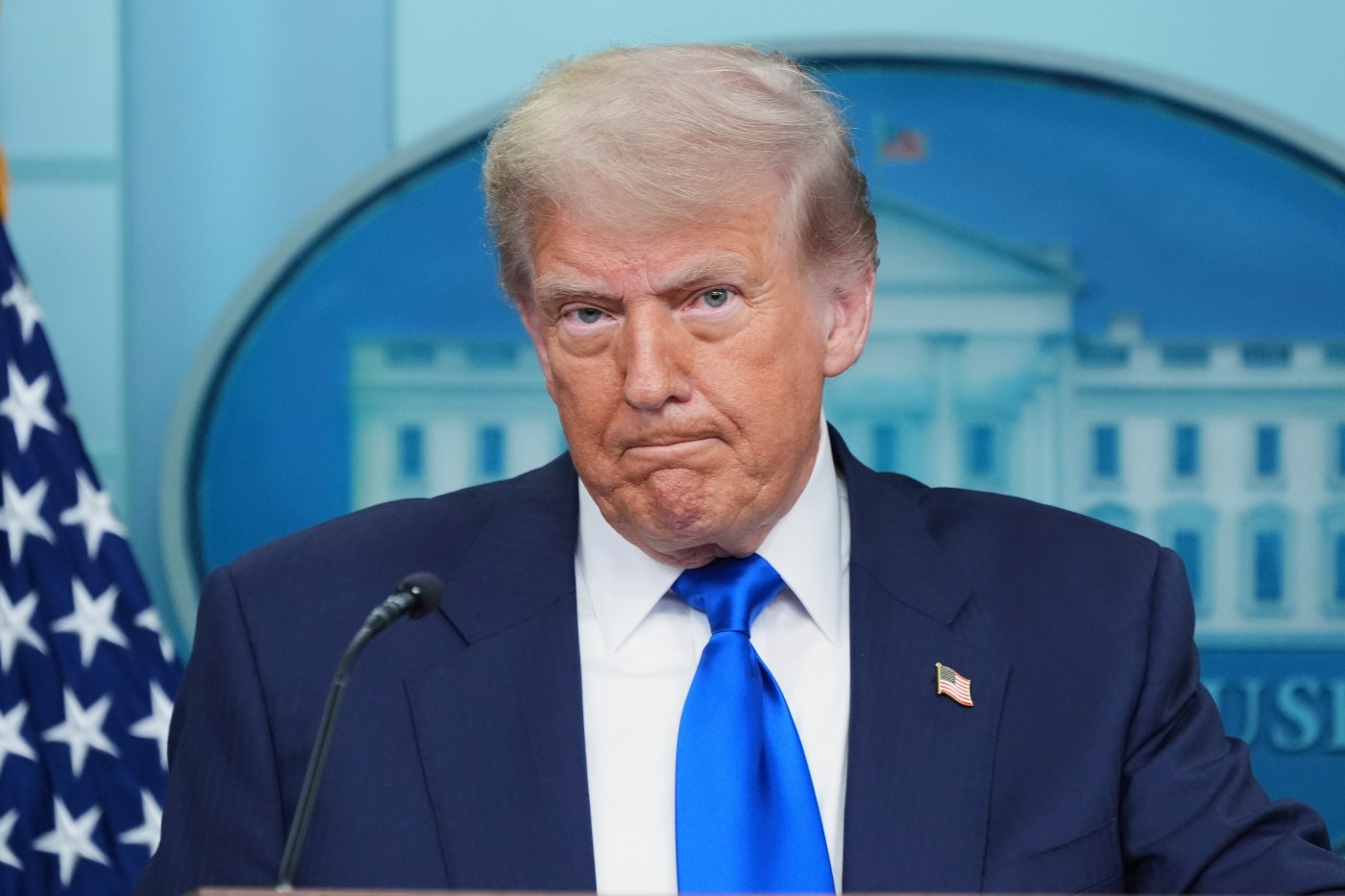
Whether U.S. bombers recently “obliterated” Iran’s nuclear capability (President Donald Trump’s preferred wording) or “severely damaged” it (per the CIA) matters so much to Trump that he’s threatened to sue news outlets reporting the CIA’s terminology.

The common presidential desire to shape the narrative has been especially noticeable lately, especially with matters regarding tariff-induced inflation.

It may even be generating a particular form of presidentially corrected economic speech reminiscent of Jimmy Carter’s tenure.

In 1978, Carter, worried about America’s sagging economy, ordered cabinet members to refrain from alarming the country with the word “recession.” Minding his boss’ instruction but facing a direct question, economic advisor Fred Kahn famously responded, “We’re in danger of having the worst banana in 45 years.”

With U.S. first quarter GDP growth now charting -0.50% and more than one respected forecaster looking at paltry growth later this year, will we see officials dancing around the same word in the near future? Trump’s preference for political happy talk has already reframed conversations about his economic agenda.

Trump recently chastised Walmart executives when they announced that China tariffs would force the retailer to raise prices. He angrily called for Walmart to “eat” the tariffs and reminded them in less-than-gentle terms that he would be watching.

In another example, toymaker Mattel indicated that it too would be raising prices because of tariffs. Outraged, Trump threatened to impose a 100% tariff on its products, promising the firm “won’t sell one toy in the United States.”

Since then, business leaders have been avoiding speaking about the price increases and other disruptions that Americans are quite obviously experiencing due to White House tariffs. As Neil Saunders, director of Global Data Retail, warned: ”The White House has decided it should aim its tanks at companies that do speak out.”

So, when offering investor guidance, some retailers speak of “adjusting” prices, others address the elephant in the room “gently and sparingly,” and still others refer to their pricing policies with words like “surgical.”

Above all, linking price changes to tariffs is a no-no. Denise Dahlhoff, director of marketing and communications research at the Conference Board, advises executives to use more neutral terms like “sourcing cost” or “input cost” or “supply chain cost,” which “are not as incendiary as ‘tariff.”

After all, Trump is serious about language. In February, the White House banned an Associated Press reporter from press conferences and Air Force One over the news agency’s refusal to re-term the Gulf of Mexico as the “Gulf of America” in its influential style manual (at least until cries over First Amendment rights turned the tide).

Trump and Carter are hardly the first pair of presidents to pour rhetorical oil on troubled waters, but the historical results, as with today, are mixed at best.

In Harry Truman’s time, the Korean War became known as a “police action.” Somehow the phrase softened the perceived scale of the situation and suggested the conflict would end quickly. But mid-century Americans knew a war when they saw it. Losing political patience, voters turned away from Truman’s party and chose Dwight Eisenhower to bring the action to an end.

In later wars, mostly undeclared, political speech began to deny the use of the word “retreat” in favor of terms like “an orderly withdrawal of troops.” Observers may view Vietnam or Afghanistan as the former, but leaders prefer less dramatic and more positive language.

Perhaps the most audacious and enduring effort by a Western leader to alter political speech came in 1604 when newly installed King James I of England ordered 47 leading Biblical scholars to develop a new Bible translation. The resulting King James Authorized Version is thought to be one of the most beautifully written volumes of the age. By the king’s order, it also removed certain references to kings as tyrants which had been present in an earlier English Bible.

Kings, democratically elected presidents, and holders of lesser offices will always frame things as they see fit, especially if they feel that their power or wisdom is being questioned. We the people may sometimes respond pragmatically by altering our own language. These things can be weathered so long as Americans retain our reverence for freedom of speech. Otherwise, only the bravest will have the gumption to call a spade a spade.

Bruce Yandle is a distinguished adjunct fellow with the Mercatus Center at George Mason University and former executive director of the Federal Trade Commission. He wrote this column for Tribune Content Agency.

Related Articles


F. Willis Johnson: Prophets, not spectators — the class of 2025 and the work of repair


Allison Schrager: America’s broken politics is breaking economics, too


Ross Douthat: Conservatives are prisoners of their own tax cuts


Barnett, Kristof: It isn’t freedom if it’s not for everyone


Thomas Friedman: How Trump’s ‘big beautiful bill’ will make China great again
Other voices: A reminder that the religious freedoms we take for granted are fragile

posted in: All news | 0

As Christianity declines in the West, the faith is flourishing in sub-Saharan Africa, which is seeing the fastest growth in Christianity the world over. By 2060, more than 4 in 10 Christians worldwide are expected to live in sub-Saharan Africa, compared with just 1 in 10 in 1970, according to Pew Research.

But this growth is coming at a cost. Unlike their counterparts in the U.S., African Christians increasingly risk violent death for their beliefs.

Nigeria, home to one of Africa’s largest and fastest-growing Christian populations, has also become one of the world’s deadliest places to practice the faith. On June 13, about 200 Christians were massacred by a group of jihadists in Yelwata, a town located in Benue State, which is almost entirely Christian. Most of the victims were internally displaced people sheltering at a nearby Catholic mission, many of them women and children.

This tragically is not unusual in Nigeria. During Holy Week, more than 150 Christians were killed in targeted attacks across central Nigeria. Some watchdog groups estimate that more than 50,000 Nigerian Christians have been killed by Islamist extremists since 2009. The State Department reports that fatal attacks in Nigeria are ongoing.

Moreover, in this violent region, the atrocities aren’t limited to Christians. Innocents of all faiths fall victim to militants, including members of the Muslim faith, which is also growing rapidly in sub-Saharan Africa. Some reports estimate that tens of thousands of moderate Muslims also have been killed by extremists in Nigeria, reflecting the broader toll of militant violence.

Bishop Wilfred Chikpa Anagbe, a Catholic leader in Benue State where the atrocities occurred, testified in March before the House Committee on Foreign Affairs, pleading with officials to take notice of what’s happening. He described his home as “one of the most dangerous and insecure places for Christians,” and his testimony came months before the June 13 attack. He noted that villagers sometimes are warned in advance of attacks and that even if they contact police for protection, no help comes and the slaughters happen anyway.

“Constitutionally, we are a secular country, but our unity has been fragile,” he said. “We live in fear because at any point, it can be our turn to be killed. But to remain silent is to die twice, so I have chosen to speak.”

Pope Leo offered a timely prayer for Nigeria during a June 15 address in St. Peter’s Square. “I pray that security, justice and peace prevail in Nigeria, a beloved country that has suffered various forms of violence,” he said.

We do not know the sort of fear of which Bishop Anagbe spoke because we live in a country that believes in the right to religious freedom.

It’s why we find alleged hate crimes such as the May slaying of a young Jewish couple, Yaron Lischinsky and Sarah Milgrim, in Washington, D.C., so devastating. We feel as if we are shielded from the sectarian violence that afflicts other parts of the globe by virtue simply of being American and when hate-based violence occurs here, that confidence is undermined.

The First Amendment protects all our religious freedoms, hardly limited to the three great Abrahamic religions, but it doesn’t guarantee them. We write this not only to spotlight the horrors others face for expressing their faith, but to remind ourselves that America’s religious liberty is rare, fragile and worth protecting.

— The Chicago Tribune

Related Articles


A surprise IRS move on political endorsements leaves faith leaders and legal experts divided


Pope prays for world to recognize urgency of climate crisis as he celebrates Mass’ using new rite


Pastors who endorse political candidates shouldn’t lose tax-exempt status, IRS says in filing


Pioneer Press covered a local girl’s quinceañera in 1985. Now it’s her granddaughter’s turn.


Tibetans in exile wonder: Will the next Dalai Lama be as charismatic as this one?

Ronald Brownstein: Congress is addicted to megabills — despite their risks

posted in: All news | 0

Extraordinarily narrow and unstable House and Senate majorities have become routine in modern American politics. The frantic, final maneuvering last week before Congress approved President Donald Trump’s One Big Beautiful Bill Act shows why that’s likely to persist for some time. And that means business, local governments, non-profits and ordinary Americans need to buckle up for more hairpin turns in national policy that make it almost impossible to plan for the long term.

Political parity has become a defining feature of our times. Neither party has won a House majority greater than 10 seats in each of the past three congressional sessions. That hasn’t happened since the formation of the modern party system in 1828. Likewise, one or the other party has reached 55 or more Senate seats in only three of the 13 congressional sessions since 2000, compared to 17 of the final 20 sessions of the 20th century.

With narrower margins, partisan control is flipping more frequently. Since 1980, for instance, neither party has controlled the Senate for more than eight consecutive years; never has the Senate changed hands so often over such a long period. No president has gone into a midterm election with unified control of the White House and Congress and successfully defended it since Jimmy Carter in 1978.

As last week’s debate on the sprawling GOP budget bill demonstrated, the two parties have refused to downsize their legislative ambitions to these systematically smaller and more ephemeral majorities. “Both political parties are more ideologically homogeneous than they used to be, they have big goals, they want to do a lot of things,” said Vanderbilt University political scientist John Sides. “We are not in an era where either political party comes into power and says, ‘Let’s make a few tweaks.’”

If anything, each new president seems to have internalized the likelihood that he will lose unified control of government after two years and has front-loaded his ambitions in response. Even with very small congressional margins, both Joe Biden and Trump styled themselves as transformative presidents and set out during their first year to pass a massive omnibus statute — Biden’s Build Back Better plan and Trump’s One Big Beautiful Bill. Both parties have forgotten, or rejected, the advice of Thomas Jefferson, who wrote in 1808 “that great innovations should not be forced on a slender majority.”

Republicans attuned to Jefferson’s admonition might have drafted a more fiscally and politically balanced bill that exposed their marginal members to less risk. Instead, they assembled a polarizing grab-bag of MAGA priorities that ensured an intense backlash — and pressured their marginal members to accept it anyway by conspicuously threatening primary challenges against those who balked.

In the immediate sense, that strategy worked: Just one Republican representative and two GOP senators in vulnerable seats voted against the bill. (One other in each chamber opposed it from the right.) But one cost of that strong-arm approach quickly became apparent when Senator Thom Tillis of North Carolina announced his retirement right after after Trump attacked him for opposing the bill, creating an open seat that will become Democrats’ best Senate opportunity in 2026.

Next year’s midterm election could bring more consequences. Polling has shown the bill facing enormous public opposition, particularly to its cornerstone feature of cutting federal health care programs for average families by more than $1 trillion to fund tax cuts for the wealthy.

The districts that will get hurt most by the bill are primarily non-urban, culturally conservative places where Democrats don’t expect to compete. But opposition to the principle of cutting health care for people who need it to fund tax cuts for people who don’t will likely prove a powerful Democratic argument. There are easily enough districts where white-collar suburban voters will be offended by the Medicaid cuts, even if they’re not directly affected by them, to cost the GOP the House majority next year.

The legislative contortions over the bill demonstrated how the parties have trapped themselves in a self-perpetuating cycle of instability. Because Republicans have such small House and Senate majorities, they could not give vulnerable members in either chamber a “hall pass” to vote against the measure. But because they could not grant such exemptions, Republicans increased the odds that some of those vulnerable members will lose next year and sink their majority, at least in the House. Passing a highly partisan and deeply unpopular bill with coercive demands for party loyalty isn’t a recipe for constructing durable congressional majorities.

The mismatch between the parties’ reach and their grasp makes it reasonable to expect that Congress will remain on a rollercoaster of narrow margins and frequent shifts in control. That’s not good news for any institution that needs stability from public policy, which is all of them. This bill erases Biden policies that prompted billions in investments from clean energy companies and medical providers. But if Democrats control the White House and Congress in 2029, it’s easy to imagine a different set of industries — oil companies, electric utilities, drug makers — facing equally disruptive swerves from Washington.

All American institutions would benefit from federal policies that attract support broad enough to outlast a single presidential term. The Republican choice to muscle through the most sweeping of innovations on the most slender of majorities shows why we’re unlikely to see many of those any time soon.

Ronald Brownstein is a Bloomberg Opinion columnist covering politics and policy. He is also a CNN analyst and previously worked for The Atlantic, The National Journal and the Los Angeles Times. He has won multiple professional awards and is the author or editor of seven books.

Related Articles


F. Willis Johnson: Prophets, not spectators — the class of 2025 and the work of repair


Allison Schrager: America’s broken politics is breaking economics, too


Ross Douthat: Conservatives are prisoners of their own tax cuts


Barnett, Kristof: It isn’t freedom if it’s not for everyone


Thomas Friedman: How Trump’s ‘big beautiful bill’ will make China great again
Mendota Bridge’s new railings getting a rethink after concerns from cyclists

posted in: All news | 0

After being closed for renovation most of last summer, the bike trail on the Mendota Bridge will close again in summer 2026 for a construction project to raise the bridge’s guardrail height — back to where it was before.

The Mendota Bridge is on the National Register of Historic Places. In 2024, its bike and pedestrian railing was replaced as part of a bridge rehabilitation project and the railing was lowered to its historical height, 42 inches. That’s the minimum height standard for the American Association of State Highway and Transportation Officials, according to the Minnesota Department of Transportation.

Since then, however, Twin Cities bicyclists have raised concerns about the new railing. Many commented on a local biking Facebook page about the lower height, calling it “frightening” and “sketchy.”

“It’s low enough that if a strong wind or encounter with a passing cyclist happened to knock you sideways, you could possibly go right over the top of the railing and off the bridge,” said Zack Mensinger, chair of the St. Paul Bicycle Coalition.

After a review, MnDOT has decided to raise the railing to the department’s standard height of 54 inches. It will add a structure on top of the existing railing to give it the extra height.

The project will cost $2.5 million and is scheduled for summer into fall of 2026. Money from the project will come from state road construction funds for bridge projects, according to MnDOT.

Historical characteristics

Jennie Hinz is a communications officer for MnDOT.

“So much goes into these projects, and we do care so much about safety and construction and historic preservation,” Hinz said. “When we did hear concerns, we went back and reviewed it, and then had to work through all of those historic guidelines again. So it’s not an easy fix.”

Hinz said the 2024 railing renovation was partially funded by the Federal Highway Administration. Historic bridge work must comply with federal requirements called “The Secretary of the Interior’s Standards for Rehabilitation.”

These standards include minimal changes to the historical characteristics of the structure. Hinz said the railing was lowered as part of efforts to preserve the historical characteristics of the bridge.

CJ Lindor, education manager at Bicycle Alliance of Minnesota, said the alliance is part of the Minnesota Advisory Council on Traffic Safety and the Active Transportation Advisory Committee. Lindor said neither of these committees were consulted about the 2024 project ahead of time.

“The realization of how the project would look didn’t land until it was basically completed already and reopened,” Lindor said.

Hinz said MnDOT typically does not have public engagement on bridge preservation projects.

Differing opinions

Bicyclists pass each other on the Mendota Bridge. (John Autey / Pioneer Press)

The trail over the bridge will be closed next summer into fall 2026. Andy Singer, former co-chair of the St. Paul Bicycle Coalition, said the construction cuts off a major route for cyclists trying to travel to and from the west side of St. Paul.

St. Paul resident Jeremy Norton biked across the renovated Mendota Bridge for the first time Wednesday. He said he didn’t think the railing was too low, and that the concerns might be an issue of “perception of safety versus actual safety.”

Related Articles


Second teen dies after Eagan crash; State Patrol says vehicles were racing


Apple Valley police ask for help in finding suspect in fatal stabbing


Second defendant admits to role in fatal shooting of South St. Paul father during marijuana robbery


Suburban restaurant group hires former Revival, Corner Table chef Thomas Boemer


Minneapolis man charged with May shooting at Apple Valley park

“You’d have to be having a really bad day to get flung off the side,” he said.

Jim Tucker of Minneapolis said he has been biking over the Mendota Bridge for about 50 years. He also said he wasn’t concerned about the new guardrail height.

“It’s OK. It’s all brand-new,” Tucker said. “I remember when it used to be all rusted.”

Mensinger, of the St. Paul Bicycle Coalition, said he’s glad the railings are being raised, even if it requires closing the bike lanes again.

“While I’m glad the issue is getting addressed, it’s really disappointing that MnDOT staff didn’t think things through better initially,” Mensinger said.

For more information on the project, visit dot.state.mn.us/metro/projects/hwy55mendotabridge.