
Concert review: Belcher’s violin elegant and expressive in Minnesota Orchestra’s German Romances

posted in: All news | 0

Cecilia Belcher, assistant principal second violin for the Minnesota Orchestra, gets the spotlight this weekend as she performs the solo part in two Romances — instrumental works that are elegant and tender — by Ludwig van Beethoven. The concert also features work by Johannes Brahms and Carl Maria von Weber. The program emphasizes the emotional flourish of the three German composers.

Conductor on the rise Kensho Watanabe leads the concert, after previously conducting “Listening Projects” concerts in 2022 and 2023. This marks his third appearance with the Minnesota Orchestra, and he proved himself to be someone to keep note of as he continues his career.

Before the music began, Watanabe paid tribute to Minnesota Orchestra viola player Ken Freed, who died on June 29 while running in a sprint triathlon. Freed was Watanabe’s teacher at Greenwood Music Camp in Massachusetts, and the conductor admitted to being a bit scared of him back in those days. Later, Freed gave Watanabe his first conducting job. “Ken was a generous musician who didn’t take himself seriously,” the conductor said, adding that Freed loved viola jokes.

The concert begins with the overture to Der Freischütz, often considered the first German Romantic opera. Weber’s music accompanies a story about love, hunting and a deal with the devil gone awry. The opera explores the power of love to overcome the most dire circumstances.

The piece is marked by contrasts between the warm, enveloping sounds of the horns and the jagged tension expressed through sighing, sorrowful calls of the clarinet and ominous timpani rolls.

After Weber, Belcher joins the orchestra for Beethoven’s Romance No. 2 in F Major and Romance No. 1 in G Major for Violin and Orchestra. In the first piece, Belcher takes a strident approach, with deep feeling and flow. The second work gives her a chance to show off her flawless double stops, played with elegance. Her playing was poised and expressive throughout, favoring subtlety over drama and marked by graceful nuance.

Both Weber and Beethoven were important figures in ushering in the Romantic era of music, following the Classical period. Weber’s infusion of folklore and the supernatural, seen in “Der Freischütz,” became hallmarks of Romanticism, and Beethoven’s Romances ooze with sentiment. Brahms’ Symphony No. 2, which came much later in the 19th century than the other two works on the program, sits more firmly within the Romantic period, even as it harkens back to earlier classical symphony forms.

It’s a luscious work, evoking landscape and sensation, with a complex structure of melodies and texture. The tension between the lower strings and the wind instruments evokes a yawning pull between earth and sky, punctuated by swelling grandeur, cascading passages, and finely articulated details that surface throughout the piece.

Violin soloist Cecilia Belcher will perform with the Minnesota Orchestra July 10-12, 2025 at Orchestra Hall in Minneapolis. They will perform both of Beethoven’s Romances-plus music by Brahms and Weber. (Zoe Prinds-Flash / Minnesota Orchestra)

The work’s third movement offers an intriguing pizzicato section, as well moments of discordant — though not somber — unease. Frantic runs burst through the music, while the last movement surprises with its sudden force. Watanabe leans into the final section with vigor, drawing out its celebratory intensity. The symphony drives to a triumphant, satisfying conclusion.

If you go

What: Beethoven and Brahms

When: Friday, July 11 at 8 p.m., Saturday, July 12 at 7 p.m.

Where: Orchestra Hall, 1111 Nicollet Mall, Mpls.

Tickets: $31-$106

Capsule: The Minnesota Orchestra serve up a program of German Romanticism, featuring violinist Cecilia Belcher and guest conductor Kensho Watanabe.
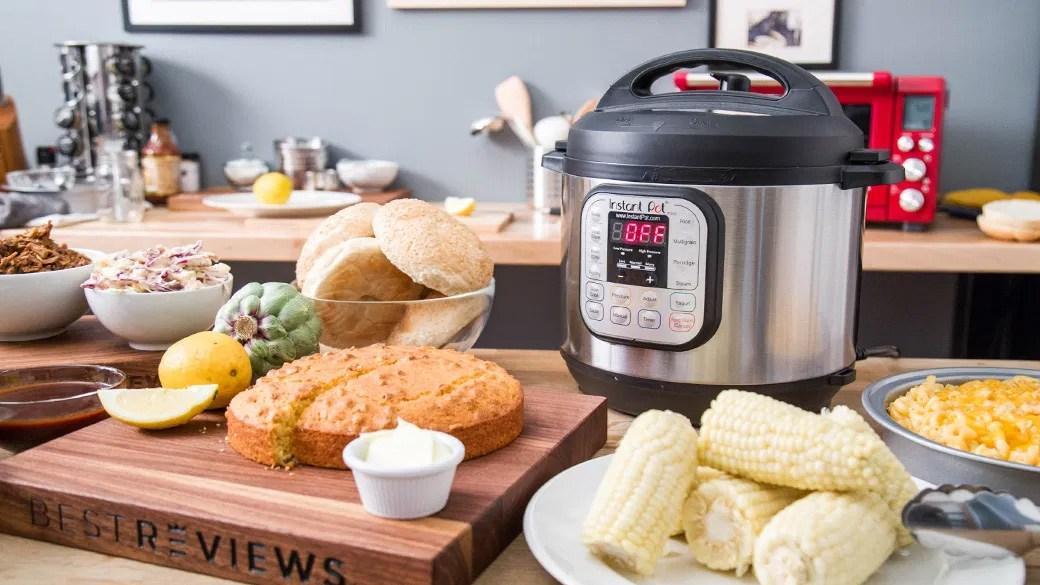

Best multicookers for fast and easy home meals

posted in: All news | 0

Which multicooker is best?

Multicookers are the Swiss Army knife of the kitchen. They can cook countless foods and recipes, from something as simple as plain white rice to something as complex as an all-day slow-cooked pot roast. Some are even advanced enough to include air frying to the list of gizmo-powered cooking.

The best multicooker is the Instant Pot Duo 7-in-1 Multicooker. The Instant Pot name is used interchangeably with multicooker by many people, thanks to its consistently high-caliber offerings. This model is among their best.

What to know before you buy a multicooker

Capacity

Multicookers generally come in capacities between 2 and 8 quarts, with roughly 1 quart needed for each person you intend to feed. Keep in mind you can always cook small batches in large multicookers. If your budget allows it’s best to purchase one with an extra quart or two of capacity to be safe and for weekly meal prepping.

Pressure

Multicookers can be divided into two categories: those with pressure cooking and those without.

Pressure multicookers can cook a wider variety of foods. They use either high or low pressure depending on the recipe, with better slow cookers letting you choose specific pressures rather than just “high” or “low.”
Nonpressure multicookers focus on slow-cooking various types of foods. They’re perfect for making a pot roast one night and rice the next, but their overall options are more limited.

What to look for in a quality multicooker

Programs and presets

The best multicookers offer the most programs and presets. These are one-touch functions that automatically set the cooker’s temperature, pressure and time to perfectly cook the chosen food. The most common presets are various types of rice — including white, brown and multigrain — as well as soup, oatmeal or porridge and meats.

Countdown timer

Your multicooker should include a display that counts down the time left until your food is ready. They should also allow you to set a timer manually if your food doesn’t have a preset. Most multicookers only have timer settings in increments of five minutes, but better models let you set it to the minute.

Delayed start

Advanced multicookers have a delayed start setting. It lets you put everything inside the cooker before you leave for the day and choose a specific time for cooking to begin so you can come home to a fresh, hot and perfectly cooked meal.

This setting should be used with some caution, however. If you’re unsure that anyone will be home when the food is finished cooking, you may want to reconsider the option. Additionally, some foods such as any kind of meat shouldn’t be left out longer than an hour.

How much you can expect to spend on a multicooker

Multicookers typically cost $50-$300. Small models or those with limited features cost roughly $50-$100. Midsized models and those with average features cost roughly $100-$150. Large models and those with every feature cost roughly $150-$300.

Multicooker FAQ

What can a multicooker do?

A. Multicookers live up to the name with most having at least five functions while others can have 10 or more. Some of the most common functions include:

Slow cooking
Pressure cooking
Rice cooking
Steaming
Sauteing
Warming
Air frying

Are multicookers dangerous to use?

A. Like any kitchen appliance that uses high levels of heat, multicookers can be dangerous if used incorrectly. However, most include safety features that mitigate this risk. If your multicooker includes pressure cooking, the most important feature to have is a locking lid to prevent the accidental, unsafe release of pressure. Cheap multicookers with pressure cooking tend not to include this safety measure.

Is it safe to slow-cook foods all day while I’m at work?

A. That depends on what you’re wanting to cook and how you use your multicooker to slow-cook it. Foods that are unsafe to leave out at room temperature include dairy and meat, but if you start the multicooker when you leave and set it to “keep warm” mode after it’s done, it should be safe. However, using a delayed-start mode will not be safe.

What’s the best multicooker to buy?

Top multicooker

Instant Pot Duo 7-in-1 Multicooker

What you need to know: Instant Pot is nearly synonymous with multicookers for a reason.

What you’ll love: The seven functions are rice cooking, yogurt making, pressure cooking, slow cooking, steaming, sautéing and warming. The stainless steel exterior is fingerprint-resistant and the inner pot, rack and lid are all dishwasher-safe. It’s available in 3-, 6- and 8-quart sizes.

What you should consider: Many customers spoke of a steep learning curve to getting everything out of the Instant Pot, but they were pleased with their results.

Top multicooker for the money

Aroma Housewares Rice and Grain Cooker

What you need to know: It’s a good choice if you’re on a strict budget.

What you’ll love: It’s available in 2- and 5-quart sizes. The two-quart size has automatic modes for white and brown rice, risotto, steaming, slow cooking and a timer. The five-quart size adds oatmeal, soup, cake, multigrain rice, egg and reheating functions. It includes a rice measuring cup and spatula.

What you should consider: It has limited functionality compared to most multicookers. Some purchasers reported it having less capacity than advertised. Others had issues with the timer.

Worth checking out

Ninja Combi All-in-One Multicooker

What you need to know: It’s a high-quality, versatile multicooker, though it’s expensive.

What you’ll love: It has 14 different functions, including air frying, baking, steaming, defrosting and more. It’s easy to clean, and the outside of the cooker doesn’t get too hot to touch. It has a 6-cup capacity and features both a cooking bowl and a basket, so you can prepare two dishes simultaneously.

What you should consider: Some people have reported issues with the exterior damaging easily and the controls becoming buggy after extensive use.

Prices listed reflect time and date of publication and are subject to change.

Check out our Daily Deals for the best products at the best prices and sign up here to receive the BestReviews weekly newsletter full of shopping inspo and sales.

BestReviews spends thousands of hours researching, analyzing and testing products to recommend the best picks for most consumers. BestReviews and its newspaper partners may earn a commission if you purchase a product through one of our links.

Bill in Congress would prevent schools from using student fees to bankroll college sports

posted in: All news | 0

WASHINGTON (AP) — A bill to regulate college sports introduced in the House on Thursday would offer limited antitrust protection for the NCAA, while barring schools from using student fees to pay for college athletic programs.

Co-sponsors of the SCORE Act includes seven Republicans and two Democrats, which gives the bill a fair chance of passage in the House. It would need at least seven Democratic votes in the Senate, where its chances are viewed as slim.

The bill includes the three elements the NCAA has lobbied for: antitrust protections, pre-emption of state laws that regulate name, image, likeness payments, and a section that prevents athletes from becoming employees of their schools.

The bill’s main goal is to set national standards for NIL payments that are dominating the industry in the wake of the approval of a $2.78 billion lawsuit settlement that allows schools to pay athletes.

It also includes a section that purports to protect Olympic programs that some see as threatened because of increased funding that will go to football and basketball. That part calls on schools with at least one coach who earns more than $250,000 to offer at least 16 sports programs. That language mirrors a rule already in effect for NCAA’s top-tier FBS schools.

The ban on using fees to offset costs strikes to the core of some schools’ plans to fund athletic programs, which are looking at ways to pay for the up to $20.5 million they’ll share with athletes.

Clemson earlier this year announced it would implement a $150 “athletic fee” each semester for students starting this fall. Fresno State approved fees of an additional $495 a year, about half of which is to be directed toward athletics.

Other schools, like Tennessee, have announced a “talent fee” to be added to season-ticket renewals. Arkansas is increasing concession prices and many more schools are informing boosters about the increasing price tag for the sports programs they support.

AI device startup that sued OpenAI and Jony Ive is now suing its own ex-employee over trade secrets

posted in: All news | 0

By MATT O’BRIEN

A secretive competition to pioneer a new way of communicating with artificial intelligence chatbots is getting a messy public airing as OpenAI fights a trademark dispute over its stealth hardware collaboration with legendary iPhone designer Jony Ive.

Related Articles


Ford recalls over 850,000 cars in the US due to potential fuel pump failure


What I learned from my first meeting with a financial advisor


What to know — and what isn’t known yet — about US tax deductions for tips and overtime pay


Chicago firm makes 4th St. Paul acquisition with Degree of Honor apartments


Average long-term US mortgage rate rises to 6.72%, ending a five-week slide

In the latest twist, tech startup iyO Inc., which already sued Ive and OpenAI CEO Sam Altman for trademark infringement, is now suing one of its own former employees for allegedly leaking a confidential drawing of iyO’s unreleased product.

At the heart of this bitter legal wrangling is a big idea: we shouldn’t need to stare at computer or phone screens or talk to a box like Amazon’s Alexa to interact with our future AI assistants in a natural way. And whoever comes up with this new AI interface could profit immensely from it.

OpenAI, maker of ChatGPT, started to outline its own vision in May by buying io Products, a product and engineering company co-founded by Ive, in a deal valued at nearly $6.5 billion. Soon after, iyO sued for trademark infringement for the similar sounding name and because of the firms’ past interactions.

U.S. District Judge Trina Thompson ruled last month that iyO has a strong enough case to proceed to a hearing this fall. Until then, she ordered Altman, Ive and OpenAI to refrain from using the io brand, leading them to take down the web page and all mentions of the venture.

A second lawsuit from iyO filed this week in San Francisco Superior Court accuses a former iyO executive, Dan Sargent, of breach of contract and misappropriation of trade secrets over his meetings with another io co-founder, Tang Yew Tan, a close Ive ally who led design of the Apple Watch.

Sargent left iyO in December and now works for Apple. He and Apple didn’t immediately respond to a request for comment.

“This is not an action we take lightly,” said iyO CEO Jason Rugolo in a statement Thursday. “Our primary goal here is not to target a former employee, whom we considered a friend, but to hold accountable those whom we believe preyed on him from a position of power.”

Rugolo told The Associated Press last month that he thought he was on the right path in 2022 when he pitched his ideas and showed off his prototypes to firms tied to Altman and Ive. Rugolo later publicly expanded on his earbud-like “audio computer” product in a TED Talk last year.

What he didn’t know was that, by 2023, Ive and Altman had begun quietly collaborating on their own AI hardware initiative.

“I’m happy to compete on product, but calling it the same name, that part is just amazing to me. And it was shocking,” Rugolo said in an interview.

The new venture was revealed publicly in a May video announcement, and to Rugolo about two months earlier after he had emailed Altman with an investment pitch.

“thanks but im working on something competitive so will (respectfully) pass!” Altman wrote to Rugolo in March, adding in parentheses that it was called io.

Altman has dismissed iyO’s lawsuit on social media as a “silly, disappointing and wrong” move from a “quite persistent” Rugolo. Other executives in court documents characterized the product Rugolo was pitching as a failed one that didn’t work properly in a demo.

Altman said in a written declaration that he and Ive chose the name two years ago in reference to the concept of “input/output” that describes how a computer receives and transmits information. Neither io nor iyO was first to play with the phrasing — Google’s flagship annual technology showcase is called I/O — but Altman said he and Ive acquired the io.com domain name in August 2023.

The idea was “to create products that go beyond traditional products and interfaces,” Altman said. “We want to create new ways for people to input their requests and new ways for them to receive helpful outputs, powered by AI.”

A number of startups have already tried, and mostly failed, to build gadgetry for AI interactions. The startup Humane developed a wearable pin that you could talk to, but the product was poorly reviewed and the startup discontinued sales after HP acquired its assets earlier this year.

Altman has suggested that io’s version could be different. He said in a now-removed video that he’s already trying a prototype at home that Ive gave him, calling it “the coolest piece of technology that the world will have ever seen.”

Altman and Ive still haven’t said is what exactly it is. The court case, however, has forced their team to disclose what it’s not.

“Its design is not yet finalized, but it is not an in-ear device, nor a wearable device,” said Tan in a court declaration that sought to distance the venture from iyO’s product.

It was that same declaration that led iyO to sue Sargent this week. Tan revealed in the filing that he had talked to a “now former” iyO engineer who was looking for a job because of his frustration with “iyO’s slow pace, unscalable product plans, and continued acceptance of preorders without a sellable product.”

Those conversations with the unnamed employee led Tan to conclude “that iyO was basically offering ‘vaporware’ — advertising for a product that does not actually exist or function as advertised, and my instinct was to avoid meeting with iyO myself and to discourage others from doing so.”

IyO said its investigators recently reached out to Sargent and confirmed he was the one who met with Tan.

FILE – Jason Rugolo, founder and CEO of iyO, wears the iyO One audio computer in his ears while being interviewed at the company’s office in Redwood City, Calif., Tuesday, June 24, 2025. (AP Photo/Jeff Chiu, File)

Rugolo told the AP he feels duped after he first pitched his idea to Altman in 2022 through the Apollo Projects, a venture capital firm started by Altman and his brothers. Rugolo said he demonstrated his products and the firm politely declined, with the explanation that they don’t do consumer hardware investments.

That same year, Rugolo also pitched the same idea to Ive through LoveFrom, the San Francisco design firm started by Ive after his 27-year career at Apple. Ive’s firm also declined.

“I feel kind of stupid now,” Rugolo added. “Because we talked for so long. I met with them so many times and demo’d all their people — at least seven people there. Met with them in person a bunch of times, talking about all our ideas.”

The Associated Press and OpenAI have a licensing and technology agreement that allows OpenAI access to part of AP’s text archives.