Trump’s latest round of tariffs are poised to go into effect. Here’s what we know

posted in: All news | 0

By WYATTE GRANTHAM-PHILIPS, AP Business Writer

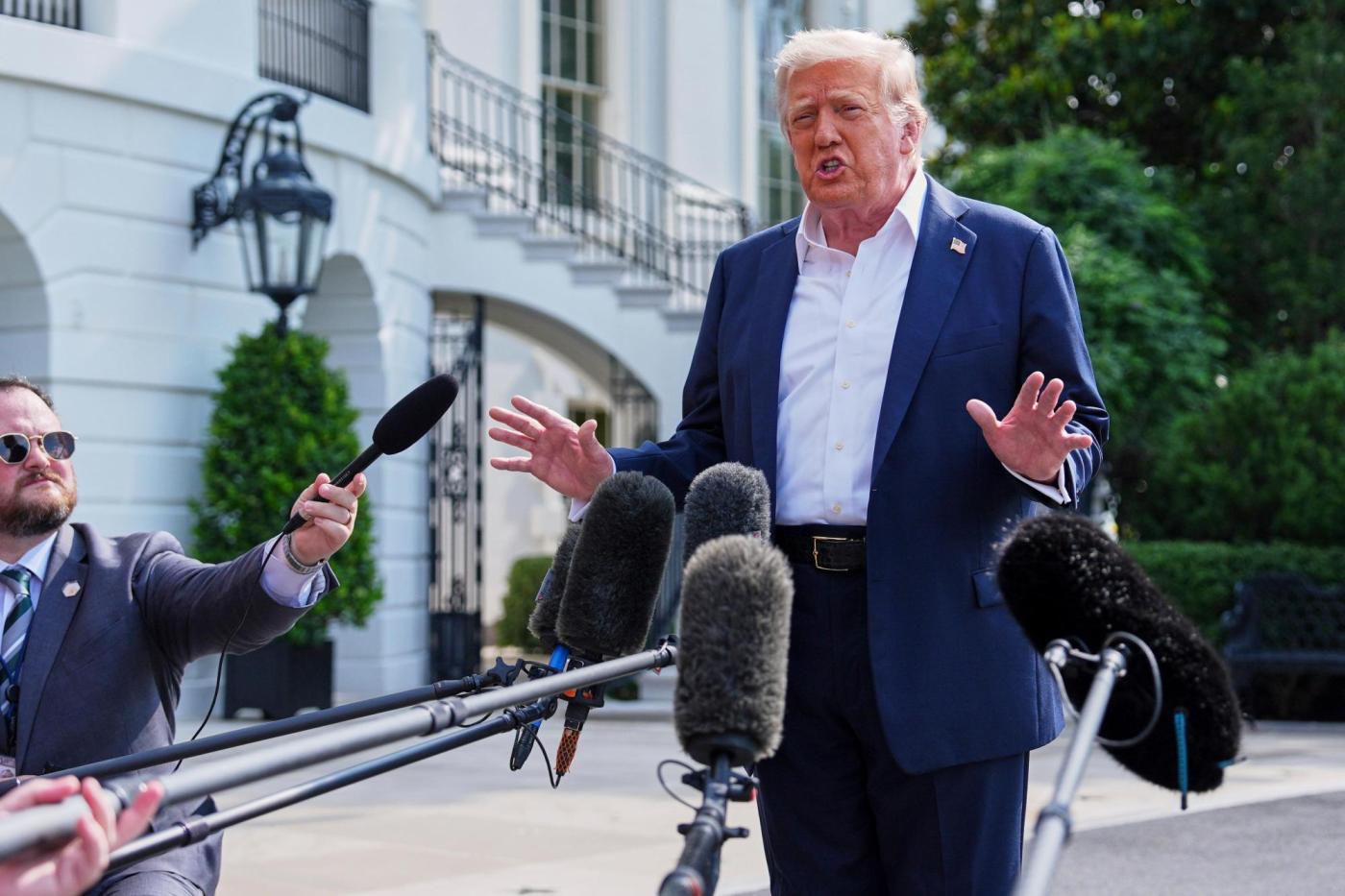
NEW YORK (AP) — President Donald Trump has launched tariff wars with nearly all of America’s trading partners. And there’s no end in sight.

A number of sweeping new taxes on goods from other countries are already here — with more set to take effect as soon as Wednesday. Trump has promised higher rates for his latest and most severe volley of duties, which he calls “reciprocal” tariffs.

With so many back-and-forth tariff actions and threats, it can be tough to keep track of where things stand. Here’s a rundown of what you need to know.

What tariffs go into effect on Wednesday?

Trump announced his latest — and most sweeping — round of tariffs on April 2, which he dubbed “Liberation Day,” as part of his “reciprocal” trade plan. In a fiery speech claiming that other countries had “ripped off” the U.S. for years, Trump declared that the U.S. would now tax nearly all of America’s trading partners at a minimum of 10% — and impose steeper rates for countries that he says run trade surpluses with the U.S.

Related Articles


US expected a big travel year, but overseas visitors — angered by Trump — are heading elsewhere


As China and the US spar, countries brainstorm over how to cope with the trade war


Trump says high tariffs may have prevented the Great Depression. History says different


5 top mistakes to avoid during a market sell-off


US stocks dive after another stunning reversal as uncertainty reigns about Trump’s tariffs

The 10% baseline already went into effect Saturday. And when the clock strikes midnight Wednesday, Trump’s higher import tax rates on dozens of countries and territories will take hold — that is, unless anything changes in the eleventh hour.

The steeper levies run as high as 50% — with that biggest rate landing on small economies that trade little with the U.S., including the African kingdom of Lesotho. Some other rates include a tax of 47% on imports from Madagascar, 46% on Vietnam, 32% on Taiwan, 25% on South Korea, 24% on Japan and 20% on the European Union.

Economists warn that the levies will raise prices for goods consumers buy each day — particularly as these new tariffs build on some of previous trade measures. Trump last week announced a tariff of 34% on China, for example, which would come on top of 20% levies he imposed on the country earlier this year.

Trump has since threatened to add an another 50% levy on Chinese goods in response to Beijing’s recently-promised retaliation. That would bring the combined total to 104% against China.

White House press secretary Karoline Leavitt said at a Tuesday briefing that Trump had not been considering an extension or delay for coming rate increases.

“He expects that these tariffs are going to go into effect,” she said.

Are more tariffs coming?

As part of a flurry of countermeasures, China has said it will levy its own 34% tariff on all U.S. goods — matching Trump’s rate — starting Thursday.

Trump was quick to criticize China’s move — but China has maintained that it will “fight to the end” and take countermeasures against the U.S. to protect itself. On Tuesday, China’s Commerce Ministry called Trump’s threat to escalate tariffs “a mistake on top of a mistake” that “once again exposes the blackmailing nature of the U.S.”

The trade war between the U.S. and China isn’t new. The two countries exchanged a series of tit-for-tat levies in recent months — on top of tariffs imposed during Trump’s first term, many of which were preserved or added to under former President Joe Biden.

While China has taken the toughest approach so far, several countries signaled that they are evaluating their own responses to Trump’s levies.

It’s possible that we’ll see more retaliation in the future, but others have signaled some hopes to negotiate. The head of the European Union’s executive commission is among those offering a mutual reduction of tariffs — while warning that counter measures are still an option.

Trump could also roll out more product-specific tariffs down the road. The president has previously threatened import taxes on goods like copper, lumber and pharmaceutical drugs — all of which are currently exempt from Trump’s “reciprocal” levies.

What other import taxes are already here?

A handful of tariffs are already in effect, including Trump’s 10% baseline tax on Saturday.

But prior to that sweeping levy, Trump had rolled out several other rounds of tariffs targeting particular countries and products. His 25% tariffs on auto imports began last Thursday, for example — kicking off with taxes on fully-imported cars. Those levies are set to expand to applicable auto parts in the following weeks, through May 3.

Canada responded on Tuesday with a 25% levy on auto imports from the U.S. that do not comply with the 2020 US-Mexico Canada Agreement. Those are slated to go into effect on the same day as Trump’s higher tariffs on Wednesday.

And Trump’s expanded steel and aluminum tariffs went into effect last month. Both metals are now taxed at 25% across the board, with Trump’s order to remove steel exemptions and raise aluminum’s levy from his previously-imposed 2018 import taxes taking effect March 12.

Beyond levies on China, Trump has also previously targeted Mexico and Canada. While Mexico and Canada were spared from last week’s heightened rates, Trump imposed — and later partially suspended — 25% duties on goods from both countries.

Meanwhile, goods complying with the USMCA can continue to enter the U.S. duty-free, according to the White House. Other imports are still levied at 25%, as well as a lower 10% duty on potash and Canadian energy products.

But once the two countries have satisfied Trump’s demands on immigration and drug trafficking, the White House said the tariff on non-USMCA compliant imports will drop from 25% to 12%.

Amid questions, Minnesota Senate president will step down as head of ethics panel

posted in: All news | 0

Minnesota Senate President Bobby Joe Champion will step down as head of the Subcommittee on Ethics as he faces questions about a possible conflict of interest related to his legal work and funding bills he has sponsored.

Champion, a Minneapolis DFLer, said Monday that he will ask the ethics panel to advise on whether he had a conflict of interest “out of an abundance of caution.” During that phase, he’ll step aside as the committee’s chair.

The move comes after the Minnesota Reformer — an online news site that operates under the umbrella of the nonprofit States Newsroom — reported last week that Champion worked with a client, the Rev. Jerry McAfee, on a pro bono basis. McAfee’s nonprofit group 21 Days of Peace later received state grant funds from an account that Champion worked to authorize.

Undated courtesy photo from the 2025-26 legislative session of Minnesota state Sen. Bobby Joe Champion, DFL- Minneapolis. Champion is President of the Senate. (Courtesy of the Minnesota Senate)

Champion remains the chair of the Senate Jobs and Economic Development Committee, which helped craft the 2023 bill that included the grants.

The timing of the transaction is among the points of dispute. Champion told the Reformer that his legal work for McAfee and entities he helps run had concluded prior to the introduction of the bill to free up the grant money.

The Senate Rules Committee voted Monday to remove Champion from the ethics subcommittee and install Sen. Sandy Pappas, DFL-St. Paul, as the ethics subcommittee chair. The ethics panel could look into the situation and provide an advisory opinion.

“I think this is a prudent move, just to make sure that any investigation in any sort of ethics complaint that may be coming through the subcommittee, this would be handled in a very professional way,” said Senate Minority Leader Mark Johnson, R-East Grand Forks.

The Senate Rules Committee approved the change in committee leadership on a bipartisan basis.

On the Senate floor Monday morning, Republicans asked whether Champion would potentially be asked to step down from his role as jobs committee chair, or as president of the Senate.

Senate Majority Leader Erin Murphy, DFL-St. Paul, said those steps were not being considered at this time and the ethics committee assessment should move forward.

“I believe that the Subcommittee on Ethics will be convened soon, and they will deal and offer an advisory opinion, and that, I think should be the first and only step that this body takes with regard to the participation in the leadership of Sen. Champion and the roles in which he’s playing,” Murphy said.

Murphy and Champion left the Senate floor as Capitol reporters asked them to comment on the situation Monday.

Related Articles


Federal judge dismisses lawsuit filed by former GOP gubernatorial candidate


Push to release Sen. Nicole Mitchell arrest video gets new chance on appeal


St. Paul Mayor Carter appoints Matt Privratsky as interim council member


Rent control, budget, acrimony, attendance issues dog St. Paul City Council


Anti-Trump ‘Hands Off!’ rally draws thousands at Minnesota Capitol

New Mexico governor mobilizes National Guard to tackle crime emergency in Albuquerque

posted in: All news | 0

By SUSAN MONTOYA BRYAN

ALBUQUERQUE, N.M. (AP) — Gov. Michelle Lujan Grisham on Tuesday declared a state of emergency in New Mexico’s largest city, saying that a significant increase in crime in Albuquerque warrants the help of the New Mexico National Guard.

She signed an executive order, clearing the way for several dozen troops to be deployed along the historic Route 66 corridor starting in mid-May. The order also frees up state funds for the National Guard to use as part of the effort.

Training for 60 to 70 troops already is underway, the governor’s office said.

Governors typically call up the National Guard to help with natural disasters like wildfires, earthquakes, tornadoes and hurricanes. Governors in recent years also have ordered troops to address illegal crossings at the U.S.-Mexico border. In New York last year, the National Guard helped patrol the subway system following a series of high-profile crimes.

In New Mexico, Albuquerque Police Chief Harold Medina called it a crucial time. Having the National Guard on the ground would free up officers to patrol the streets, he said.

FILE – Albuquerque Police Chief Harold Medina answers questions about an ongoing investigation in Albuquerque, N.M., Feb. 2, 2024. (AP Photo/Susan Montoya Bryan, File)

The troops can help secure crime scenes, distribute food and other supplies to the homeless population throughout the corridor, transport prisoners, provide security at the courthouse and run drone operations used for locating suspects or assessing incidents, officials said.

It’s not the first time Lujan Grisham has tried to leverage state resources to address high crime rates in Albuquerque. In 2021, the two-term Democrat temporarily assigned state police officers to the area to help local authorities tackle vehicle thefts, drug trafficking, aggressive driving and the apprehension of violent criminals with felony warrants.

The year before, then-President Donald Trump sent federal agents, including Homeland Security officers, to Albuquerque as part of an effort to contain violent crime. He also targeted Chicago and other U.S. cities with the surge in resources.

Lujan Grisham’s latest emergency declaration follows a March 31 request by the police chief, who pointed to the fentanyl epidemic and an increase in violent juvenile crime.

Medina wrote that progress has been made in reducing shootings and aggravated assaults along what is known as Central Avenue but that more resources are needed to sustain the momentum.

The New Mexico Legislature adjourned last month, drawing much criticism from law enforcement leaders, prosecutors and even the governor for failing to address what many have described as an ongoing crime crisis in Albuquerque and other New Mexico communities.

Lujan Grisham has indicated she will call lawmakers back at some point for a special session to consider public safety proposals.

Albuquerque Mayor Tim Keller, a Democrat who plans to seek reelection, had vowed when he first took office in 2017 to build up the ranks of the police force. An issue for years, the department still struggles to reach its goal of 1,000 sworn officers.

The mayor told Albuquerque television station KOAT last month that the city had turned the corners on many of its crime issues, noting that it’s coming down from all-time highs. But he also acknowledged that more work needs to be done.

Statistics released by the police department in February showed an 11% decrease in aggravated assaults in 2024 compared to the year before, while the number of homicides decreased for the second straight year.

In his request to the governor, Medina said the reinforcement that the National Guard will provide is “critical to improving public safety and the quality of life for Albuquerque residents.”

New SPCO season to feature more than 80 concerts and $16 tickets

posted in: All news | 0

The St. Paul Chamber Orchestra will perform more than 80 concerts across eight Twin Cities venues in its newly announced 2025-26 season.

Season ticket packages are on sale now via thespco.org or by phone at 651-291-1144. Prices start at $16 per concert for adults and are free for children and students. Individual tickets, priced from $70 to $16, will go on sale in August.

“Our musicians, working in close collaboration with our interim artistic director Jonathan Posthuma, have constructed a wonderful and exciting season ahead,” said SPCO managing director and president Jon Limbacher in a news release. “In our musician-led artistic model, the musicians function as the music director and are involved in every aspect of the programming and what happens on stage. This is one of the reasons SPCO concerts are so incredibly and consistently dynamic.”

Highlights of the season:

As has been the case since the adoption of the SPCO’s musician-led artistic model in 2004, the upcoming season has been crafted by the musicians of the orchestra. They framed the season with this quote from composer Robert Schumann: “To send light into the depths of the human heart — this is the artist’s calling!”

Along with the music of Robert and Clara Schumann, Johann Sebastian Bach’s four orchestral suites serve as artistic points of connection throughout the season. They’ll be performed alongside newer works written by composers who were inspired by their music.

Orchestra members will lead and develop programming through the Artistic Vision Committee, a rotating group of SPCO musicians tasked with planning the season. The process includes selecting repertoire, shaping artistic interpretations, choosing artistic partners and collaborators and leading unconducted rehearsals and performances.

Artistic partners for the season include British Baroque specialist Richard Egarr, American pianist Richard Goode, South African cellist Abel Selaocoe, Hungarian conductor Gábor Takács-Nagy and German violist Tabea Zimmermann. Guest artists include pianist Jonathan Biss, violinist Alina Ibragimova, cellist Kiegan Ryan, conductor Mei-Ann Chen, former artistic partner Thomas Zehetmair and vocalists Mark Billy, Federico De Michelis and Roderick Williams.

Related Articles


Atmosphere to play Minnesota State Fair with Cypress Hill, Lupe Fiasco and the Pharcyde


Spring and summer concerts include AC/DC, Post Malone, the Weeknd


Classical music to welcome spring and summer


Taste of Minnesota returning to Minneapolis, announces lineup


Folk rock trio Mumford and Sons will play St. Paul’s Xcel Energy Center in October

First launched during the 2022-23 season, the composer residency program Sandbox will continue with Gabriela Lena Frank as the featured composer-in-residence. She will workshop a new composition ahead of its premiere on Jan. 30.

In a move similar to Netflix or a monthly gym membership, the SPCO’s concert membership program gives access to all of the orchestra’s regular concerts throughout the season for a recurring monthly payment. There are three tiers that start at $5 per month for new members. The other options are $10 and $20 per month, with the latter offering more desirable seats.