The U.S. Environmental Protection Agency placed several of its Duluth laboratory employees on leave for signing a letter criticizing the Trump administration’s politicization of the agency, a move the union and Democratic politicians said violates federal workers’ right to free speech.
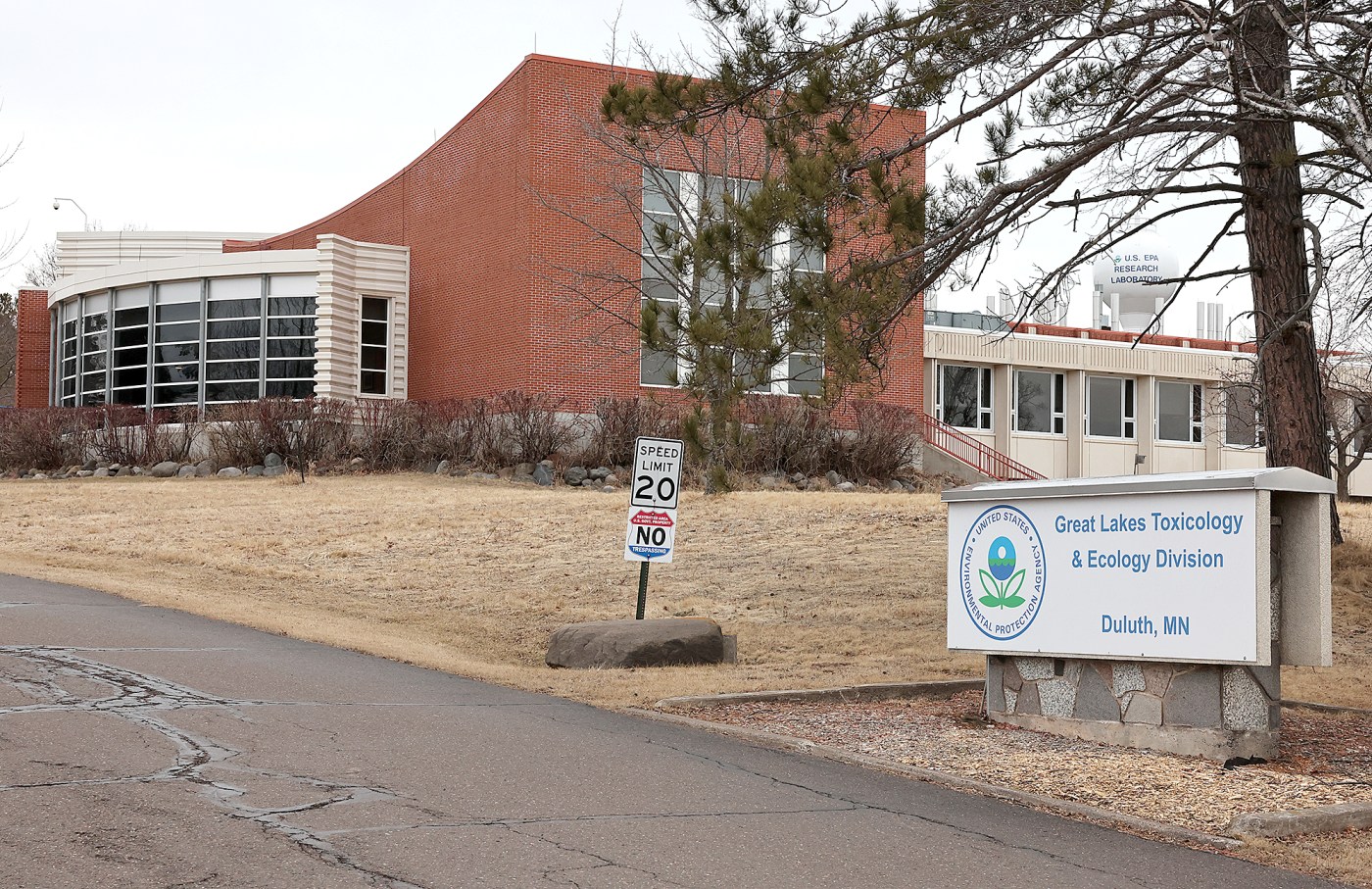
According to multiple sources familiar with the matter, approximately six people at the EPA’s Great Lakes Toxicology and Ecology Division Laboratory, 6201 Congdon Blvd., are on leave after signing a letter published late last month urging EPA Administrator Lee Zeldin to recommit the agency to protecting human and environmental health and “restore EPA’s credibility as a premier scientific institution.”
“EPA employees join in solidarity with employees across the federal government in opposing this administration’s policies, including those that undermine the EPA mission of protecting human health and the environment,” the letter, organized by Stand Up For Science, said.
While several signatures were originally public, they have since been removed from the website, which now lists 620 anonymous signers.
The EPA said it placed 139 employees on paid leave to investigate their use of official titles when signing the letter. The agency said the letter “contains information that misleads the public about agency business.”
However, the agency did not respond to the News Tribune’s request to explain why the letter was misleading.
“The Environmental Protection Agency has a zero-tolerance policy for career bureaucrats unlawfully undermining, sabotaging, and undercutting the administration’s agenda as voted for by the great people of this country last November,” an EPA spokesperson said in an email.
In a letter to Zeldin on Tuesday, Democrats on the U.S. House of Representatives’ Energy and Commerce Committee said that statement was “effectively concluding and publicly announcing that these individuals had somehow violated the law before an investigation was even conducted.”
“Taking adverse actions against employees for making a protected disclosure — including investigating them and placing them on administrative leave — in a manner that deters others from coming forward is a textbook violation of the Whistleblower Protection Act,” wrote Reps. Frank Pallone, D-New Jersey; Paul Tonko, D-New York; and Yvette Clarke, D-New York.
Nicole Cantello, president of the American Federation of Government Employees Local 704, which represents some 1,000 EPA employees in the Midwest, said in a news release that the union expected to take legal action against the agency.
“This is an act of blatant political retaliation — pure and simple,” Cantello said. “My message to EPA Administrator Zeldin is this: EPA employees have the right to freedom of speech just like everyone else. We’ll see you in court.”
Further cuts feared
There are also renewed fears that mass firings could be coming to the EPA.
Uncertainty has swirled at the lab since March, when the Trump administration’s plans to cut the EPA’s Office of Research and Development were first reported by the New York Times. The Duluth freshwater lab is part of ORD.
A portion of the reduction plan, shared earlier this year with the News Tribune by Science Committee Democratic staff, said the EPA planned to “eliminate” the ORD and expected 50%-75% of its more than 1,540 positions “will not be retained.”
In May, EPA officials told ORD employees they could retire early, leave voluntarily or apply for approximately 500 job openings at other EPA offices, the News Tribune previously reported.
Related Articles
Duluth woman’s college graduation journey took a prison path
Dining Diary: Pre- and post-event dining in St. Paul and Duluth yields delicious results
Essentia hospital nurses in Duluth, Superior avoid strike
Duluth zoo celebrates crowning achievement in bear dentistry
White Bear Lake native Joel Reichow is first to ever win half and full Grandma’s Marathon in career
Meanwhile, funding ended for 25 early-career researchers when the EPA did not renew a contract and canceled a grant.
The lab employed 176 people, according to an April 2025 fact sheet.
Any widescale reduction in force or reorganization seemed to be on hold after a federal judge barred such action without working with Congress.
However, in a decision Tuesday, the U.S. Supreme Court paved the way for the Trump administration to carry out a reduction in force of the federal workforce, renewing fear that mass firings were coming to the EPA and other federal agencies.
Landscape fabric may sound like a neat, tidy and easy solution to all your weeding woes, but, as often is the case, if it sounds too good to be true, it probably is.
To be fair, landscape fabric has its place. Unfortunately, it’s widely misused in most home landscape applications, where it does more harm than good in ornamental beds and around perennials and crops.
The woven (or sometimes non-woven) synthetic (or sometimes biodegradable) barrier is meant to suppress weeds while allowing water and air to pass through to the soil beneath it. And that’s exactly how it works -– for a short time, after which buyer’s remorse almost always sets in.
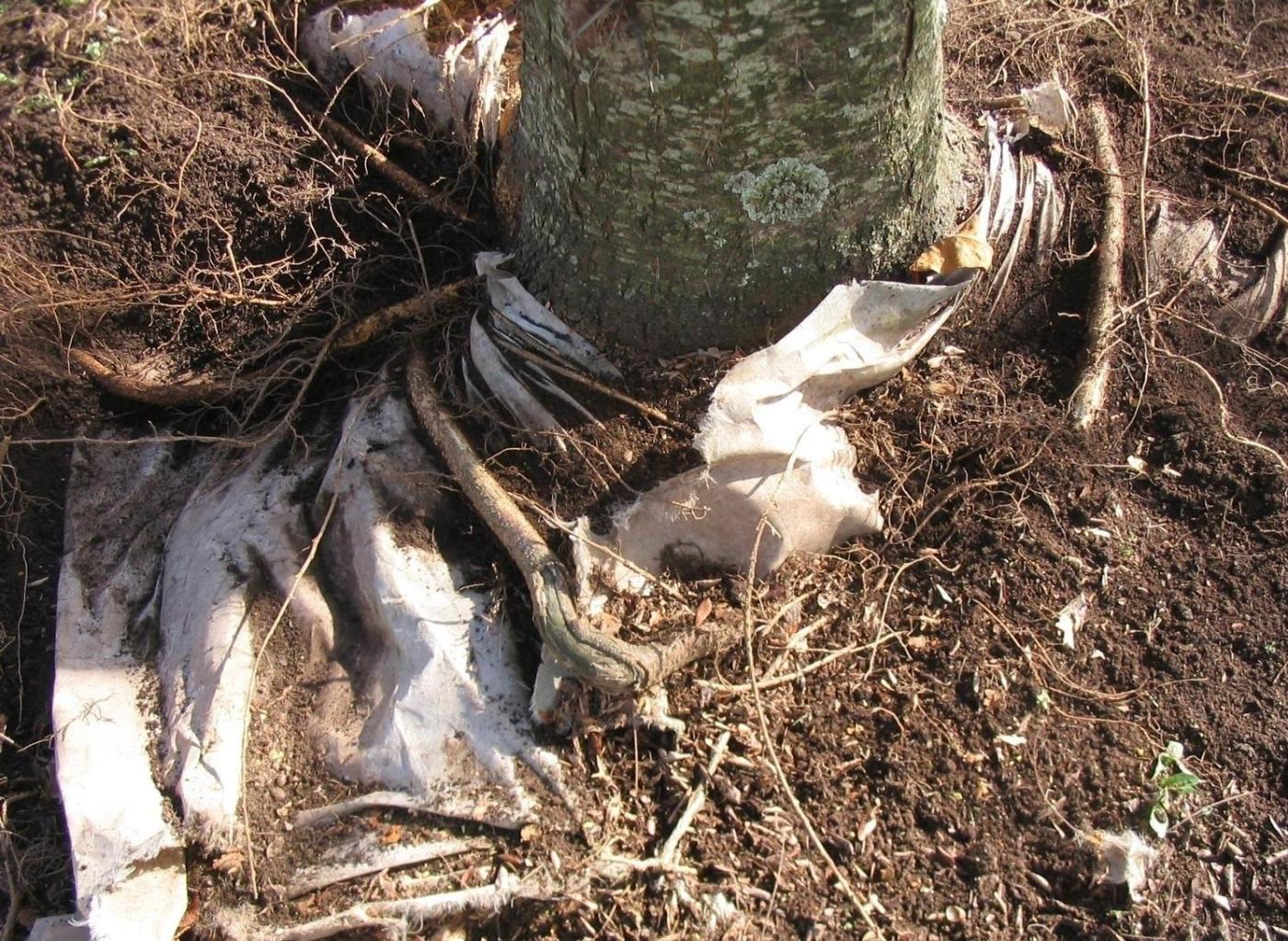
This July 10, 2008, image provided by Bugwood.org shows geotextile landscape fabric in use around a tree. (Andrew Koeser/International Society of Arboriculture/Bugwood.org via AP)
Before long, soil and other organic matter settle on top of the fabric, seeds find their way to the surface, and weeds begin to grow. Since their roots penetrate through the fabric, removing them becomes extremely difficult.
Under the barrier, which restricts water and oxygen from reaching the soil and carbon from escaping, microbes, earthworms and other insects die, fertility declines and roots struggle.
In perennial beds, the fabric creates heat pockets and impedes the spread and self-seeding of plants. In time, the fabric will shift and tear, and attempts to remove it will no doubt make you rue the day you had the bright idea to use it.
This 2010 image provided by Bugwood.org shows tree roots that have become tangled up in landscaping fabric. When this occurs, root growth is restricted, which negatively impacts tree or plant health. (Joe Murray/Treebio.com/Bugwood.org)
Plastic sheeting is even worse, as it completely blocks water and air from reaching the soil, overheats roots and releases microplastics into the ground.
There are exceptions, however. Landscape fabric can be helpful under gravel or stone paths or walkways, where it creates a barrier between the hardscape and the soil below.
It can also help smother grass and weeds when used temporarily to help create a clean slate for future planting beds in areas that are difficult to clear. Still, I recommend using thick layers of newspaper or cardboard instead, as they biodegrade naturally and perform the same function without having to be removed.
Related Articles
Movie review: ‘Don’t Let’s Go to the Dogs Tonight’ captures child’s singular view of volatile time
Best campground in the US, according to camping app
Arsenic in books? Exhibit shows that some pages can kill
Recipe: This is the best way to make a Wedge Salad
Singer Chris Brown pleads not guilty to 2 further charges over London nightclub assault case
When your landscape fabric becomes a torn, weedy, root-tangled mess – and it will — good luck removing it. The painstaking process involves slowly and carefully pulling up individual fragments of the fabric, which will be heavy under the soil, and cutting them away from around and between roots, which will have grown above, below and through the textile.
Instead of shooting yourself in the foot with landscape fabric, opt for an organic mulch like shredded bark, wood chips or straw. It will regulate soil temperature and moisture, nourish the soil as it decomposes and support the soil life that supports your plants.
Apply a 2- to 4-inch layer, keeping it away from trunks and stems, and refresh it when it breaks down. You’ll still get a few weeds, but they’ll pull up easily, roots and all.
Jessica Damiano writes weekly gardening columns for the AP and publishes the award-winning Weekly Dirt Newsletter. You can sign up here for weekly gardening tips and advice.
The Tim Walz administration, on behalf of Tim Walz, hired the law firm K&L Gates, based in Pittsburgh, with offices in Asia, Australia, Europe, the Middle East and South America, to coach Walz for an appearance in Washington on June 12 before a subcommittee wishing to question a couple of governors believed to be dragging their feet on federal immigration laws.
Walz was a predictable candidate to be summoned as he stubbornly refers to ICE agents as a modern-day Gestapo; the left in this country fanboys itself into a lather when it comes to Germany.
The coaching sessions began April 10 and continued right up to June 12 when the K&L team, their fingers crossed, boxed Walz up and shipped him to Washington for the day.
Oh, the bill. The bill was $430,000 of our money, with the K&L people promising not to wink at each other until they cleared Minnesota air space.
None of it makes sense.
Let’s start with the fact that the state employs offices full of lawyers, including Attorney General Keith Ellison. They couldn’t do it. Either they think Walz is so incomprehensibly dense that only the nation’s top legal surgeons could prep him, or our lawyers were too busy running down the streets trying to scoop up spilled food fraud cash.
In comes K&L Gates with a reported fee of $516 per hour. Among the questions we’ll never get answered is why K&L Gates? A local firm couldn’t have been tossed this bone? How about a firm that bills at, say, $316 an hour? How is it that K&L Gates just popped up on somebody’s rolodex?
Here’s another reason it doesn’t make sense. From the moment Walz got the letter summoning him to Washington, he grumped and griped about how this was nothing but a grandstand play by Republicans. He had a spokesman, Teddy Tschann, claim that the Republicans were planning a political stunt on the taxpayer dime. Practiced in the art of deflection, like a good spokesman, Tschann meant the federal taxpayer dime, not the local soaking for the legal bill.
Tom Hauser of KSTP-TV asked Walz on camera if Walz thought the taxpayers were angry about the $430,000 bill. Walz, also practiced in the art of deflection, kicked that one aside with the toe of his skate and agreed that Minnesotans should be angry that Republicans even invited him in the first place.
Related Articles
Real World Economics: Looming farm crisis, by the numbers
Skywatch: Shooting the moon
Joe Soucheray: Grate, more pointless, dangerous vandalism in St. Paul
Your Money: The pursuit of happiness
Working Strategies: Random thoughts: ‘Office,’ not ‘work;’ on-the-job training
Well, Tim, if you really thought that way, then why were you worried at all? You’re the alpha male of your party. You could have swaggered into that hearing room and called it for what you thought it was, a big sham.
But here’s the best reason the $430,000 doesn’t make sense. Walz served in Congress from 2007 to 2019. He was on countless committees and commissions. He held congressional hearings. Walz could walk through the nation’s Capitol building blindfolded. He not only knows all the nooks and crannies, he knowns all the tricks, the deflections, the stunts, the BS, you name it. And we’re supposed to believe that Walz needed highly specialized and outrageously expensive coaching for two months so he could handle those evil attack dogs, of whom he once was one.
JB Pritzker of Illinois was also summoned to appear the same day as Walz. Pritzker isn’t much of a governor, either, but it should be noted that he personally paid for his legal prep.
In Connecticut, construction workers in the Local 478 union who complete addiction treatment are connected with a recovery coach who checks in daily, attends recovery meetings with them, and helps them navigate the return to work for a year.
In Pennsylvania, doctors applying for credentials at Geisinger hospitals are not required to answer intrusive questions about mental health care they’ve received, reducing the stigma around clinicians seeking treatment.
The workplace is the new ground zero for addressing mental health. That means companies — employees and supervisors alike — must confront crises, from addiction to suicide. The two seemingly unrelated advances in Connecticut and Pennsylvania have one common factor: They grew out of the work of a little known federal agency called the National Institute for Occupational Safety and Health.
It’s one of the key federal agencies leading workplace mental health efforts, from decreasing alarmingly high rates of suicide among construction workers to addressing burnout and depression among health care workers.
Private industry and nonprofits may be able to fill some of the gap, but they can’t match the federal government’s resources. And some companies may not prioritize worker well-being above profits.
“Workplace mental health is one of the most underappreciated yet critical areas we could intervene on,” said Thomas Cunningham, a former senior behavioral scientist at NIOSH who took a buyout this year. “We were just starting to get some strong support from all the players involved,” he said. “This administration has blown that apart.”
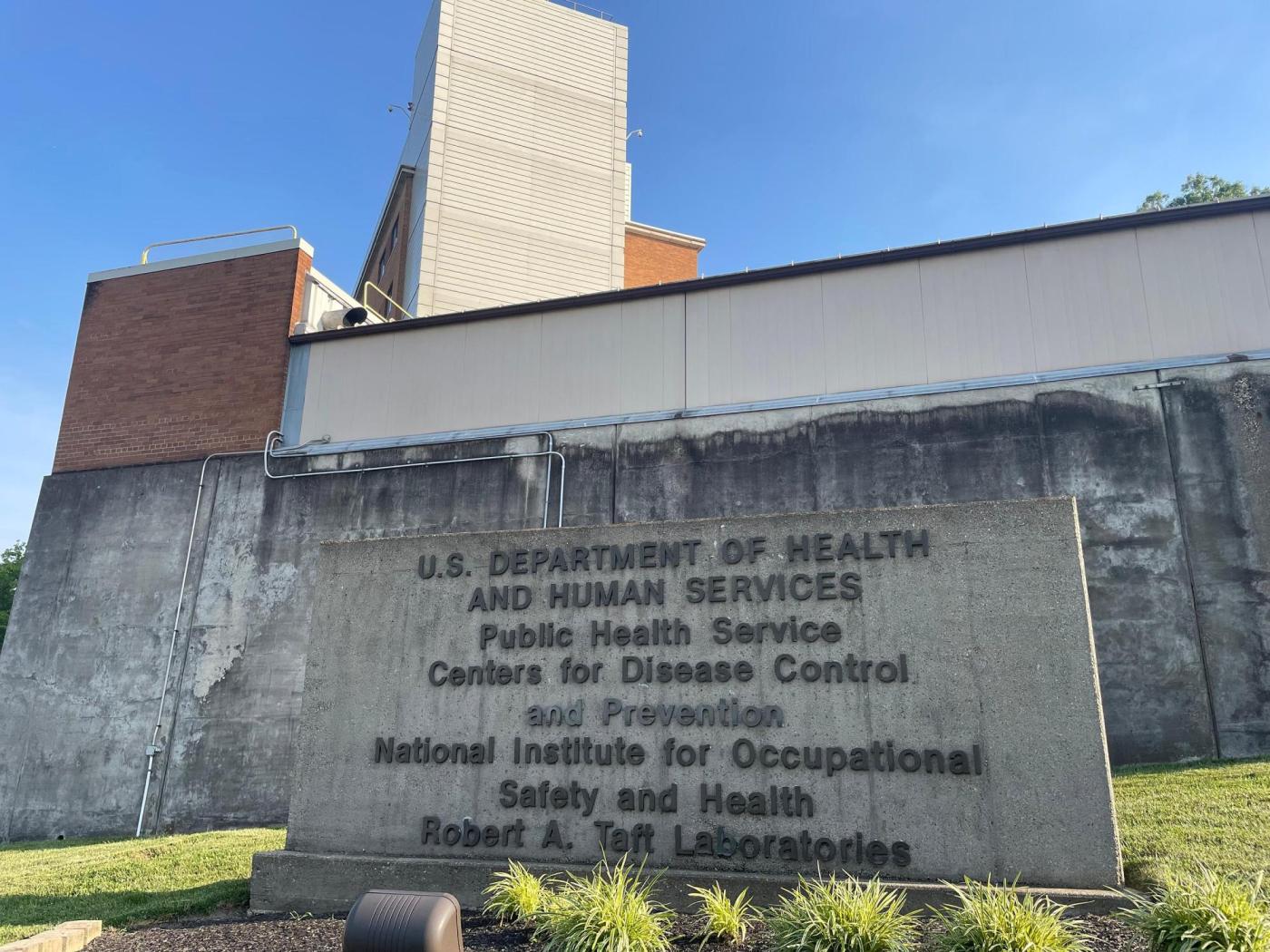
NIOSH, established in 1970 by the same law that created the better-known Occupational Safety and Health Administration, is charged with producing research that informs workplace safety regulations. It’s best known for monitoring black lung disease in coal miners and for testing masks, like the N95s used during the pandemic.
As part of the mass firing of federal workers this spring, NIOSH was slated to lose upward of 900 employees. After pushback from legislators — primarily over coal miner and first responder safety — the administration reinstated 328. It’s not clear if any rehired workers focus on mental health initiatives.
Emily Hilliard, a press secretary for the Department of Health and Human Services, asserted in a statement that “the nation’s critical public health functions remain intact and effective,” including support for coal miners and firefighters through NIOSH. “Improving the mental health of American workers remains a key priority for HHS, and that work is ongoing,” she wrote.
She did not answer specific questions from KFF Health News about whether any reinstated NIOSH employees lead mental health efforts or who is continuing such work.
Kyle Zimmer spent 25 years with the International Union of Operating Engineers Local 478 in Connecticut, for which he started a members’ assistance program, which he says helps workers with “the big three”— mental health, addiction, and suicide prevention. (Mike Gates/KFF Health News/TNS)
Kyle Zimmer spent 25 years with the International Union of Operating Engineers Local 478 in Connecticut, for which he started a members’ assistance program, which he says helps workers with “the big three”— mental health, addiction, and suicide prevention. (Mike Gates/KFF Health News/TNS)
TJ Lyons, a multi-decade construction industry safety professional, has worked at big names in the field such as Gilbane, Turner, and DPR Construction. He is confident that such companies will keep workplace mental health front and center, despite cuts to federal agencies and staff. (Raghuvaran Chakkravarthy/KFF Health News/TNS)
General contractors and project owners are increasingly incorporating mental health services on-site and as a normal part of their project budgets, says TJ Lyons, a multi-decade construction industry safety professional. (TJ Lyons/KFF Health News/TNS)
1 of 4
Kyle Zimmer spent 25 years with the International Union of Operating Engineers Local 478 in Connecticut, for which he started a members’ assistance program, which he says helps workers with “the big three”— mental health, addiction, and suicide prevention. (Mike Gates/KFF Health News/TNS)
Reducing Suicides and Addiction in Construction and Mining
Over 5,000 construction workers die by suicide annually — five times the number who die from work-related injuries. Miners suffer high rates too. And nearly a fifth of workers in both industries have a substance use disorder, double the rate among all U.S. workers.
Kyle Zimmer recognized these issues as early as 2010. That’s when he started a members’ assistance program for the International Union of Operating Engineers Local 478 in Connecticut. He hired a licensed clinician on retainer and developed partnerships with local treatment facilities.
At first, workers pushed back, said Zimmer, who recently retired after 25 years in the union, many as director of health and safety.
Their perception was, “If I speak up about this issue, I’m going to be blackballed from the industry,” he said.
General contractors and project owners are increasingly incorporating mental health services on-site and as a normal part of their project budgets, says TJ Lyons, a multidecade construction industry safety professional. But slowly, that changed — with NIOSH’s help, Zimmer said.
The agency developed an approach to worker safety called Total Worker Health, which identifies physical and mental health as critical to occupational safety. It also shifts the focus from how individuals can keep themselves safe to how policies and environments can be changed to keep them safe.
Over decades, the concept spread from research journals and universities to industry conferences, unions, and eventually workers, Zimmer said. People began accepting that mental health was an occupational safety issue, he said. That paved the way for NIOSH’s Miner Health Program to develop resources on addiction and for Zimmer to establish the recovery coaching program in Connecticut.
“We have beat that stigma down by a lot,” Zimmer said.
Related Articles
Judge orders Trump administration to halt indiscriminate immigration stops, arrests in California
Fallout over Epstein files cascades, roiling relations between AG Pam Bondi and FBI’s Dan Bongino
Trump administration sues California over egg prices and blames animal welfare laws
Trump to host Philippine president to discuss trade and security in Asia
Trump’s 50% tariff on Brazilian goods like coffee and orange juice could drive up US breakfast costs
Other countries have made more progress on mental health at work, said Sally Spencer-Thomas, co-chair of the International Association for Suicide Prevention’s workplace special interest group. But with the growth of the Total Worker Health approach, a 2022 surgeon general report on the topic, and increasing research, the U.S. appeared to finally be catching up. The recent cuts to NIOSH suggest “we’re kind of losing our footing,” she said.
Last year, Natalie Schwatka, an assistant professor at the Colorado School of Public Health’s Center for Health, Work & Environment, received a five-year NIOSH grant to build a toolkit to help leaders in labor-intensive industries, such as construction and mining, strengthen worker safety and mental health.
While many companies connect people to treatment, few focus on preventing mental illness, Schwatka said. NIOSH funding “allows us to do innovative things that maybe industry wouldn’t necessarily start.”
Her team planned to test the toolkit with eight construction companies in the coming years. But with few NIOSH employees left to process annual renewals, the funds could stop flowing anytime.
The consequence of losing such research is not confined to academia, Zimmer said. “Workers’ health and safety is very much in jeopardy.”
Health Care Sector Braces for Fallout From NIOSH Cuts
For a long time, clinicians have had troubling rates of addiction and suicide risk. Just after the height of the pandemic, a NIOSH survey found nearly half of health workers reported feeling burned out and nearly half intended to look for a new job. The agency declared a mental health crisis in that workforce.
NIOSH received $20 million through the American Rescue Plan Act to create a national campaign to improve the mental health of health workers.
The results included a step-by-step guide for hospital leaders to improve systems to support their employees, as well as tips and suggested language for leaders to discuss well-being and for workers to advocate for better policies.
Cunningham, the behavioral scientist who left NIOSH this year, helped lead the effort. He said the goal was to move beyond asking health workers to be resilient or develop meditation skills.
“We’re not saying resilience is bad, but we’re trying to emphasize that’s not the first thing we need to focus on,” he said.
Instead, NIOSH suggested eliminating intrusive questions about mental health that weren’t relevant to keeping patients safe from hospital credentialing forms and offering workers more input on how their schedules are made.
Foundation CEO Corey Feist recently appeared on Capitol Hill with Noah Wyle, who plays an emergency medicine doctor on the TV series“ The Pitt,” to advocate for Congress to renew funding for this work. (Diana Pressey/KFF Health News/TNS)
The agency partnered on this work with the Dr. Lorna Breen Heroes’ Foundation, named after an emergency medicine doctor who died by suicide during the pandemic. The foundation extended the campaign by helping health systems in four states implement pieces of the guide and learn from one another.
Foundation leaders recently appeared on Capitol Hill with Noah Wyle, who plays an emergency physician on the TV series “The Pitt,” to advocate for renewed federal funding for this work.
Corey Feist, foundation CEO and co-founder, said renewing that funding to NIOSH is crucial to get this guide out to all hospitals.
Without those resources, “it’s just going to really delay this transformation of health care that needs to happen,” he said.
Who Can Fill the Gap?
TJ Lyons, a multidecade construction industry safety professional who has worked at big-name companies such as Gilbane, Turner, and DPR Construction, is confident that workplace mental health will remain a priority despite the NIOSH cuts.
General contractors and project owners have been incorporating budget lines for mental health support for years, he said, sharing an example of a $1 billion project that included a mental health clinician on call for four hours several days a week. Workers would make appointments to sit in their pickup trucks during lunch breaks and talk to her, he said.
Now when these big companies subcontract with smaller firms, they often ask if the subcontractors provide mental health support for workers, Lyons said.
But others are skeptical that industry can replace NIOSH efforts.
Several workplace safety experts said smaller companies lack the means to commission research studies and larger companies may not share the results publicly, as a federal agency would. Nor would they have the same credibility.
“Private industry is going to provide what the people paying them want to provide,” said a NIOSH employee and member of the American Federation of Government Employees union, currently on administrative leave, who was granted anonymity for fear of professional retaliation.
Without federal attention on workplace mental health, “people may leave the workforce,” she said. “Workers may die.”