Career diplomat becomes the face of Trump’s ‘America First’ agenda at the UN

posted in: All news | 0

By FARNOUSH AMIRI

UNITED NATIONS (AP) — The highest-ranking U.S. representative now at the United Nations told Congress two years ago that Russia’s invasion of Ukraine was “unprovoked” and “unjustified,” urging U.N. members to condemn Moscow’s aggression and demand an end to the war.

Related Articles


US lawmakers’ bipartisan Taiwan visit signals support despite harsh words and tariffs from Trump


Venice expands its day-tripper tax program in bid to combat overtourism


Iran-US talks over Tehran’s nuclear program hinge on a billionaire and a seasoned diplomat


US strikes on a Yemeni oil port kill 74 people, Houthis say, in deadliest attack of Trump campaign


Rubio says the US will drop Ukraine-Russia peace efforts if no progress within days

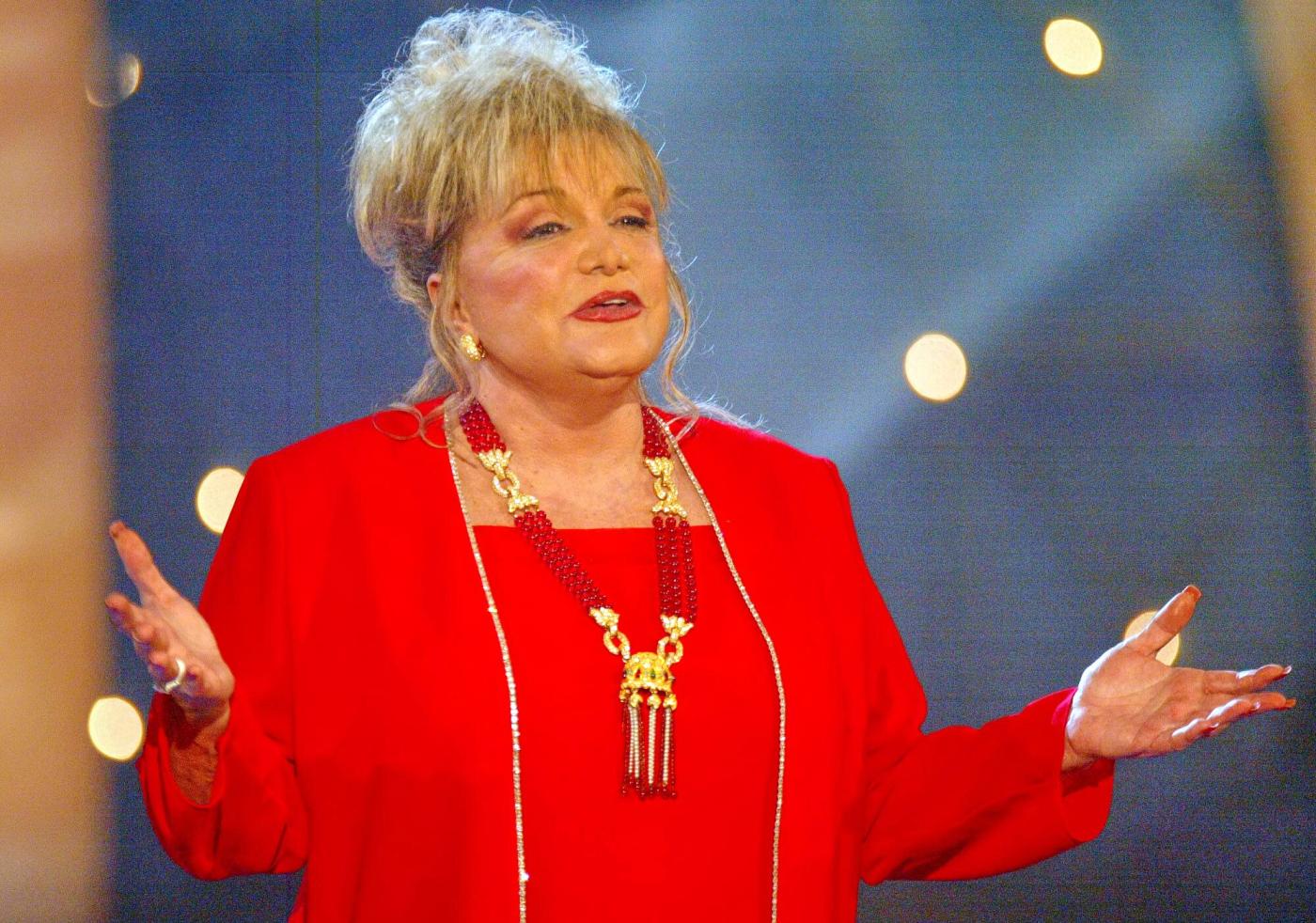
In February, it was the same career diplomat, Dorothy Shea, who voiced the Trump administration’s extraordinary decision to split with European allies and refuse to back a U.N. resolution blaming Russia for its invasion on the third anniversary of the war.

While it is typical for diplomats to stay on as U.S. presidents — and their political parties — change, Shea’s interim role has unexpectedly made her a face of the stunning U.S. transition on the world stage, with President Donald Trump’s “America First” approach increasingly upending the post-World War II international order.

Shea will be in place longer than expected after Trump’s unusual decision last month to withdraw his nominee for U.N. ambassador, Rep. Elise Stefanik, from consideration because of a slim Republican House majority.

“I would say (Shea’s) position is unique. It is probably particularly unique in that because of the extraordinary change, not just from one administration to another, but really an era of U.S. foreign policy, even when there were nuanced differences,” said Phillip Reeker, the former acting assistant secretary of state for Europe. “The change in the vote that took place at the U.N. on the Russia-Ukraine war was really an inflection point in U.S. policy.”

A UN vote changes US messaging on Ukraine

On Feb. 24, the U.S. joined Russia in voting against a European-backed Ukrainian resolution demanding an immediate withdrawal of Moscow’s forces. A dueling U.S. resolution noted “the tragic loss of life” and called for “a swift end to the conflict,” but it didn’t mention Moscow’s aggression as the Trump administration opened negotiations with Russia on a ceasefire.

“Continuing to engage in rhetorical rivalries in New York may make diplomats feel vindicated, but it will not save souls on the battlefield,” Shea, 59, said at the time. “Let us prove to ourselves and to our citizens that we can come together and agree on the most basic principles. Let us show one another that the bold vision of peace that once pulled us out of hell can prevail.”

The message was a shocking retreat for the U.S. in the 193-member U.N. General Assembly, whose resolutions are not legally binding but are seen as a barometer of world opinion. It also reinforced the fears of some allies about what a second Trump presidency could mean for longstanding transatlantic partnerships — and whether the U.S. could remain a bulwark against aggressors like Russia.

For Shea, it was another day at work. She has spent the last 30-plus years serving as a diplomat under both Republican and Democratic presidents — from Bill Clinton to Trump — carrying out their policies even if they were a departure from longstanding U.S. positions.

“I don’t know what her personal views are on things. But administrations change, policies change. And your job as a diplomat is to advocate for those policies,” said a former colleague and deputy U.S. ambassador, Robert Wood, who recently retired.

The U.S. mission to the U.N. declined to comment. The State Department did not immediately respond to a request for comment.

The roots of a diplomat

Shea’s work has included stints in South Africa, where she witnessed Nelson Mandela become the first democratically elected president, and Israel, where she worked on the Israeli-Palestinian peace process.

Shea grew up in the suburbs of Washington — her father a World War II veteran and her mother active in the local Japanese American friendship society. The experience of Japanese exchange students staying with her family over several summers and wanting to understand world events propelled her into international relations at the University of Virginia. After graduation, she scored a job offer with the U.S. Foreign Service.

She worked her way up and in 2019 was tapped to be Trump’s ambassador to Lebanon, where the soft-spoken diplomat made headlines for her criticism of the Hezbollah militant group. A Lebanese judge banned local and foreign media outlets from interviewing Shea for a year, saying her criticism of Hezbollah was seditious and a threat to social peace.

In 2023, Biden nominated Shea to become No. 2 at the U.N.

The top US role at the UN — for now

It is unclear when Shea will hand off to a Senate-confirmed political appointee. Stefanik went through a confirmation hearing, but her nomination was pulled last month because her vote to advance Trump’s agenda remains crucial to Republicans in the House. The GOP congresswoman was the fourth Trump nominee not to make it through the confirmation process.

Trump has made no mention of whom he would nominate to replace Stefanik and fill his last remaining Cabinet seat. Until then, Shea is at the helm at a critical moment for U.S. foreign policy, selling big changes to dealing with both allies and adversaries and defending the administration’s slashing of foreign assistance.

The White House recently proposed additional drastic cuts to the State Department, which would include eliminating funding for nearly all international organizations, such as the U.N.

The proposal is highly preliminary but reflects the administration’s isolationist view, which, along with funding uncertainties, poses a major challenge to the mandate and work of the U.N.

Hoping to install solar? You may have a harder time due to Trump tariffs

posted in: All news | 0

By ALEXA ST. JOHN

Mike Summers was eager to install solar at his home in Ohio for years, and after he finally replaced his aging roof this year, his solar contractor swung into action. His system — including 19 panels and a battery backup — went up this week, and Summers considers himself lucky.

“I’m glad to have done it when I did,” said Summers, a former mayor in his city of Lakewood just west of Cleveland. He’ll get about $10,000 in tax credits on his $39,000 investment, but nearly as important is that all the equipment was readily available.

Other hopeful solar buyers may have a much harder time in coming months. President Donald Trump’s escalating trade war with China threatens to crimp a massive source of solar panels and parts, with experts saying the cost of projects will certainly rise as China retaliates.

China accounted for at least 80% of the components of solar panels as recently as 2022, according to an International Energy Agency report, especially polysilicon, glass and solar cells. Solar also demands increasing critical mineral supplies, of which China is a key player across the globe, and electronics.

In the U.S., private industry has poured $18.2 billion into developing a domestic supply chain in recent years, according to Atlas Public Policy, that includes everything from the ingots and wafers that make up panels to electrical and structural components to assembly of the panels themselves. Most of that came from the Inflation Reduction Act passed during former President Joe Biden’s administration, with massive funding for clean energy investment.

But that won’t come close to replacing what China produces.

“Really everybody’s losing when you think about it, because the systems are costing more for the customers and it’s also just making it more difficult, in some ways, for us to do business,” said Brian DiPaolo, assistant sales manager at Cleveland-based solar installer YellowLite, which is doing Summers’ project. DiPaolo said some customers are holding off on plans until there is more clarity. The company still stocked up on solar panels, made in North America, a month ago to stay competitive in coming months.

“We’re seeing both international as well as domestic manufacturers of the equipment increasing their costs to prepare for the tariffs,” DiPaolo said. “You think that the domestic manufacturers would keep their prices down because they don’t get hit by the tariffs, but they’re seeing this added demand for their equipment.”

It’s supply and demand, said Martin Pochtaruk, CEO of Heliene, which focuses on large-scale solar projects. He described the price of a necessary glass component from China going up in February due to a tariff hike. Suppliers in other countries matched the higher price, meaning higher costs no matter the source.

Alexis Abramson, dean of Columbia University’s Climate School, said there’s no doubt that residential solar is going to be more expensive. That will cut solar adoption, and small and mid-size installers will go under, she said.

It’s just “extremely difficult to offer current and future customers pricing certainty” when trade policy is changing so much, said James Hasselbeck, chief operating officer at New England-based solar company ReVision Energy.

Related Articles


Law firms, universities and now civil society groups are in Trump’s sights for punitive action


As demand for AI rises, so do power thirsty data centers


Proposed rule change on endangered species triggers alarm for environmentalists


The EPA can’t end grants from $20 billion Biden-era fund for climate-friendly projects, a judge says


Wind and solar power opponents make headway in state legislatures

Solar has gotten significantly more affordable in recent years as the technology scales up, improves and gets cheaper to install. Systems can still cost thousands of dollars on average, but the average cost for a residential system is down more than 70% from 2010, according to the National Renewable Energy Laboratory. American consumers have also had a shot at credits that bring the cost down still further, although the future of those is uncertain under the Trump administration.

Commercial and utility-scale project costs have also dropped dramatically.

That’s fed rapid growth across the U.S. over the past two decades. In 2024, the commercial segment grew 8% and utility grew 33%, according to an annual report from the association and consultancy Wood Mackenzie. The residential segment fell 32% last year, but experts attribute that to high interest rates and election uncertainty, and said they had expected continued growth before the tariffs hit.

Solar is an important source of clean energy because it doesn’t emit the harmful greenhouse gases that coal, natural gas and oil do. Those are massive contributors to Earth’s warming.

Trump imposed tariffs during his first term on imported solar cells and modules in 2018 in hopes of slashing reliance on China.

But China subsidized its own domestic overproduction and some U.S. manufacturers accused it of essentially moving operations to four Southeast Asian countries that had a temporary exemption from tariffs.

Abigail Ross Hopper, president and CEO of the Solar Energy Industries Association, said the U.S. is “quickly taking back control of the supply chain from China to build the strongest solar manufacturing base in the world.” The group reported that in 2024, module manufacturing capacity, largely concentrated in the South, grew 190%, and said cell manufacturing “was reshored for the first time in five years” with company Suniva restarting production.

But Hopper also said sudden changes in policy risk chilling investment and slowing job creation, especially for manufacturers. The group said during the first Trump administration that tariffs issued then were harmful to the industry.

Ultimately, Abramson said she “would encourage anybody who has been really thinking about putting solar on their roof to really look into locking that in sooner rather than later.”

Read more of AP’s climate coverage at http://www.apnews.com/climate-and-environment.

Alexa St. John is an Associated Press climate reporter. Follow her on X: @alexa_stjohn. Reach her at ast.john@ap.org.

The Associated Press’ climate and environmental coverage receives financial support from multiple private foundations. AP is solely responsible for all content. Find AP’s standards for working with philanthropies, a list of supporters and funded coverage areas at AP.org.

Israeli strikes kill at least 25 in Gaza and Huckabee makes first appearance as US ambassador

posted in: All news | 0

By WAFAA SHURAFA and FATMA KHALED

DEIR AL-BALAH, Gaza Strip (AP) — Israeli airstrikes across Gaza killed at least 25 people on Friday including children, hospital workers said, as the new U.S. ambassador to Israel made his first public appearance in Jerusalem.

Related Articles


US lawmakers’ bipartisan Taiwan visit signals support despite harsh words and tariffs from Trump


Venice expands its day-tripper tax program in bid to combat overtourism


Iran-US talks over Tehran’s nuclear program hinge on a billionaire and a seasoned diplomat


US strikes on a Yemeni oil port kill 74 people, Houthis say, in deadliest attack of Trump campaign


Rubio says the US will drop Ukraine-Russia peace efforts if no progress within days

The dead included 15 people killed in three strikes on the southern city of Khan Younis, according to Nasser Hospital, which received the bodies. Ten people were killed in Jabaliya, including eight from the same home, according to the Indonesian Hospital, where the bodies were brought.

The strikes came a day after more than two dozen people died in Gaza as Israel continued attacks, pressuring Hamas to return the hostages and disarm.

U.S. Ambassador Mike Huckabee visited the Western Wall on Friday, the holiest Jewish prayer site in Jerusalem’s Old City. He inserted a prayer into the wall, which he said was handwritten by U.S. President Donald Trump. “Those are his initials, D.T.,“ said Huckabee while showing the note to the media.

In his first act as ambassador, Huckabee said Trump told him to pray for the peace of Jerusalem. Huckabee also said every effort was being made to bring home the remaining hostages held by Hamas. A one-time presidential hopeful, Huckabee has acknowledged his past support for Israel’s right to annex the West Bank and incorporate its Palestinian population into Israel but said it would not be his “prerogative” to carry out that policy.

During his first term, Trump recognized Jerusalem as Israel’s capital over Palestinian objections and moved the U.S. embassy from Tel Aviv. Palestinians seek the eastern part of the city, captured by Israel in the 1967 Mideast war, as their future capital.

Huckabee’s arrival comes at a pivotal time in the 18-month war, as international mediators including the U.S. are trying to get a broken ceasefire back on track.

Israel is demanding that Hamas release more hostages at the start of any new ceasefire and ultimately agree to disarm and leave the territory. Israel has said it plans to occupy large “security zones” inside Gaza.

Khalil al-Hayya, head of Hamas’ negotiating delegation, said Thursday the group had rejected Israel’s latest proposal along those lines. He reiterated Hamas’ stance that it will return hostages only in exchange for the release of more Palestinian prisoners, a full Israeli withdrawal from Gaza and a lasting truce, as called for in the now-defunct ceasefire agreement reached in January.

Hamas currently holds 59 hostages, 24 of whom are believed to be alive.

Friday’s airstrikes came a day after aid groups raised alarm over Israel’s blockade of of Gaza, where it has barred entry of all food and other goods for more than six weeks. Thousands of children have become malnourished, and most people are barely eating one meal a day as stocks dwindle, the United Nations said.

Israel’s Defense Minister says the blockade is one of the “central pressure tactics” against Hamas, which Israel accuses of siphoning off aid to maintain its rule. Aid workers deny there is significant diversion of aid, saying the U.N. closely monitors distribution. Rights groups have called it a “starvation tactic.”

The war began when Hamas-led terrorists attacked southern Israel on Oct. 7, 2023, killing about 1,200 people, mostly civilians, and abducting 251. Hamas has been designated a terrorist organization by the United States, Canada, and European Union.

Most of the hostages have since been released in ceasefire agreements or other deals.

Israel’s offensive has since killed over 51,000 Palestinians, mostly women and children, according to Gaza’s Health Ministry, which does not distinguish between civilians and combatanFts. The war has destroyed vast parts of Gaza and most of its food production capabilities. The war has displaced around 90% of the population, with hundreds of thousands of people living in tent camps and bombed-out buildings.

Khaled reported from Cairo. Associated Press writer Sam Mednick in Tel Aviv, Israel, contributed to this report.

Follow AP’s war coverage at https://apnews.com/hub/israel-hamas-war

US lawmakers’ bipartisan Taiwan visit signals support despite harsh words and tariffs from Trump

posted in: All news | 0

By CHRISTOPHER BODEEN, ELLEN KNICKMEYER and SIMINA MISTREANU

TAIPEI, Taiwan (AP) — Republican and Democratic lawmakers made their first trip to Taiwan under the new Trump administration a bipartisan one, aiming to show both Taiwan and China that U.S. support for Taiwan’s defense remains broad, despite the harsh words and heightened tariffs President Donald Trump has imposed for the Taiwanese.

Related Articles


Venice expands its day-tripper tax program in bid to combat overtourism


Iran-US talks over Tehran’s nuclear program hinge on a billionaire and a seasoned diplomat


US strikes on a Yemeni oil port kill 74 people, Houthis say, in deadliest attack of Trump campaign


Rubio says the US will drop Ukraine-Russia peace efforts if no progress within days


Today in History: April 18, the 1906 San Francisco earthquake

Taiwan’s leaders, in turn, have assured the Republican U.S. administration that they have taken in Trump’s complaints and are acting on them.

Many Asia-Pacific nations are eschewing the retaliatory criticism and tariffs of some of the U.S.’s European allies after Trump earlier this month slapped broad tariffs on many countries around the world, including a 32% one for Taiwan.

Despite that hit, conversations in Taiwan this week were “optimistic and forward-looking,” said Democratic Sen. Chris Coons, who was visiting Taipei alongside two Republican senators. “I’m optimistic that we’re going to see a strong next chapter in U.S.-Taiwan relations,” he said.

The Taiwanese have said they are working fast to strike new trade and investment deals that suit the Trump administration, on top of the advanced-semiconductor giant’s $100 billion investment this year alone in chip production in the U.S..

The U.S. lawmakers also said that Taiwan was taking lessons from Ukraine in its defense against Russia and criticism from Trump, and is investing fast to make their military stronger, nimbler and less dependent on the U.S. as the island’s strongest deterrent against China. That includes seeking investment with Americans on drone warfare.

Sens. Pete Ricketts and Coons, the ranking Republican and Democrat on the Senate Foreign Relations Committee’s East Asia subcommittee, spoke ahead of scheduled talks Friday with President Lai Ching-te, Defense Minister Wellington Koo and national security adviser Joseph Wu. Republican Sen. Ted Budd also is on the trip.

In remarks carried by the official Central News Agency, Lai called for a “secure and sustainable economic and trade partnership” between the two sides. That would involve building “non-red supply chains,” for manufacturing that exclude Chinese involvement in order to “meet geopolitical and climate change challenges,” the agency quoted Lai as saying at the Presidential Office Building.

Such an approach would involve considerable challenges since producers of Taiwanese items sold in the U.S. such as phones and electronics are mainly assembled in China.

The mission comes at a time when an economy-shaking trade war between the U.S. and China has some warning that China could strike out at Taiwan, a self-governed island with a vibrant democracy and the world’s top production of the most advanced semiconductors. China claims Taiwan as its territory, to be retaken by force if necessary.

Trump has repeatedly accused Taiwan of “stealing” the United States’ computer chip industry. His criticism of Taiwan, and his insistence last year that “Taiwan should pay us” for its defense, have heightened concern that the U.S., Taiwan’s strongest military partner, might decide not to get too involved if China were ever to attack Taiwan.

The 32% tariffs on Taiwan included in Trump’s sweeping new tariffs on trade partners this month surprised many Taiwanese, who thought that their government had shown itself a true ally to Washington.

“Look past the rhetoric and look at the action,” Ricketts said, repeating a watchword of the Republicans on Trump’s statements.

After saying he was in no rush to finish trade deals, the president said he thought he could wrap up talks “over the next three or four weeks.”

Another key Asian U.S. partner, Japan, held its first round of tariff talks between top negotiators in Washington Friday, where both sides agreed to try to reach an agreement as quickly as possible and hold a second round of meetings later this month. However, experts say reaching a full range of agreements with the dozens of nations now waiting on the Trump administration could take months or longer.

Ricketts cited the priority that Defense Secretary Pete Hegseth has placed on helping the Asia-Pacific secure itself against China. That included making the region one of the first he visited in office, Ricketts said.

Ricketts said Taiwan’s leaders already had reached out to Commerce Secretary Howard Lutnick for negotiations, moving quickly in the 90-day pause that Trump announced before the United States starts enforcing the new tariffs on most countries.

Lai, Taiwan’s president, has pledged to increase Taiwan’s military spending to 3% of its gross domestic product, up from about 2.5%, bringing it up to nearly a fifth of its overall budget.

Taiwan’s own defense industry is also producing advanced weapons from submarines to small arms and anti-air missiles.

“Of course, there is the possibility that Xi Jinping would decide that this is the right time for the Chinese Communist Party to take aggressive action,” Coons said of the Chinese president.

“I think it’s exactly the wrong thing for them to do,” Coons said. “I think they would find a forceful and united response.”

Knickmeyer reported from Washington.