From Buenos Aires to Rome: Key dates in the life of Pope Francis

posted in: All news | 0

VATICAN CITY (AP) — Key events in the life of Jorge Mario Bergoglio, who became Pope Francis and died on Monday:

Dec. 17, 1936: Jorge Mario Bergoglio is born in Buenos Aires, Argentina, the eldest of five children to Mario Jose Bergoglio, an accountant from Italy, and Regina María Sívori, the daughter of Italian immigrants.

Related Articles


Francis changed church policy on the death penalty and nuclear weapons but upheld it on abortion


Pope Francis reached out to migrants and the LGBTQ+ community, but also drew unusual opposition


‘Who am I to judge?’ Pope Francis had an informal, lighthearted speaking style


PHOTOS: Pope Francis, first Latin American pontiff, dies at 88


What to know about the death of Pope Francis

Dec. 13, 1969: Ordained a priest with the Jesuit religious order, which he would lead as Argentina provincial superior during the country’s murderous dictatorship that began in the 1970s.

May 20, 1992: Named auxiliary bishop of Buenos Aires and in 1998 succeeds Cardinal Antonio Quarracino as archbishop of the Argentine capital.

Feb. 21, 2001: Elevated to cardinal by St. John Paul II.

May 2007: Helps draft the final document of the fifth meeting of the Latin American bishops conference in Aparecida, Brazil, synthesizing what would eventually become his concerns as pope for the poor, Indigenous peoples and the environment and the need for a missionary church.

March 13, 2013: Elected 266th pope, the first from the Americas, the first Jesuit and the first to take the name of Francis, after St. Francis of Assisi.

April 13, 2013: Creates a kitchen cabinet of eight cardinals from around the globe to help him govern the church and reorganize its bureaucracy.

May 12, 2013: Canonizes the “Martyrs of Otranto,” 813 Italians slain in 1480 for defying demands by Turkish invaders to convert to Islam. With one ceremony, Francis nearly doubled the 480 saints made by St. John Paul II over his quarter-century pontificate, which at the time was more than all his predecessors combined for 500 years.

July 8, 2013: Makes first trip outside Rome to the Sicilian island of Lampedusa to meet with newly arrived migrants and denounces the “globalization of indifference” shown to would-be refugees.

July 30, 2013: Declares “Who am I to judge?” when asked about a gay priest during a news conference, signaling a more welcoming stance toward LGBTQ+ community.

Nov. 26, 2013: Issues mission statement for his papacy in Evangelii Gaudium, (“The Joy of the Gospel”), denouncing the world financial system that excludes the poor and declaring the Eucharist is “not a prize for the perfect but a powerful medicine and nourishment for the weak.”

May 25, 2014: Makes an unscheduled stop to pray at wall separating Israel from West Bank town of Bethlehem, in a show of support for the Palestinian cause.

June 8, 2014: Hosts Israeli and Palestinian presidents for peace prayers in the Vatican gardens.

March 20, 2015: Accepts the resignation of the “rights and privileges” of Scottish Cardinal Keith O’Brien after adult men accuse him of sexual misconduct.

June 18, 2015: Issues his environmental manifesto “Laudato Si” (“Praised Be”), calling for a cultural revolution to correct the “structurally perverse” global economic system that exploits the poor and has turned Earth into “an immense pile of filth.”

July 10, 2015: Apologizes in Bolivia for the sins and crimes of the Catholic Church against Indigenous peoples during the colonial-era conquest of the Americas.

Sept. 8, 2015: Overhauls the annulment process to make it faster, cheaper and simpler so divorced Catholics can remarry in the church.

Sept. 24, 2015: Challenges Congress to rediscover America’s ideals by acting on climate change, immigration and poverty reduction in the first speech by a pope at the U.S. Capitol.

Nov. 29, 2015: Inaugurates the Jubilee of Mercy by opening the Holy Door of the cathedral in Bangui, Central African Republic, rather than at the Vatican.

Feb. 12, 2016: Meets Russian Orthodox Patriarch Kirill during a stopover in Havana and declares “We are brothers,” in first such meeting between a pope and patriarch in over 1,000 years.

Ivanka Trump, first lady Melania Trump, and President Donald Trump stand with Pope Francis during a meeting, Wednesday, May 24, 2017, at the Vatican. (AP Photo/Evan Vucci, File)

Feb. 18, 2016: Prays for dead migrants at the U.S.-Mexico border, later says then-presidential candidate Donald Trump is “not a Christian” for wanting to build a border wall.

April 8, 2016: Opens the way to letting divorced and civilly remarried Catholics receive Communion in a footnote to the document “Amoris Laetitia” (“The Joy of Love”).

April 16, 2016: Visits a refugee camp in Lesbos, Greece, and brings 12 Syrian Muslims to Rome aboard his papal plane in an appeal for solidarity toward migrants.

Sept. 19, 2016: Is questioned in a letter by four conservative cardinals seeking clarification of his opening to divorced and remarried Catholics.

Dec. 1, 2017: Declares at a meeting in Bangladesh with Myanmar Rohingya refugees that, “The presence of God today is also called Rohingya.”

Jan. 19, 2018: Accuses sex abuse victims of slander during a visit to Chile, further undermining Catholic Church’s credibility. Subsequently orders a Vatican investigation into Chile’s abuse crisis.

April 12, 2018: Admits to “grave errors” in judgment in Chile’s sex abuse scandal. Later summons Chilean bishops to Rome to secure their resignations and invites abuse victims to Vatican to apologize.

Aug. 3, 2018: Declares capital punishment “inadmissible” under all circumstances in a change to official church teaching.

July 28, 2018: Accepts the resignation of Cardinal Theodore McCarrick from the College of Cardinals, orders him to penance and prayer pending an investigation into allegations of sexual misconduct with minors and adults.

Aug. 26, 2018: Retired Vatican ambassador Archbishop Carlo Maria Vigano publishes bombshell accusation claiming U.S. and Vatican officials for two decades covered up McCarrick’s sexual misconduct, demands Francis resign.

Sept. 22, 2018: Vatican and China sign landmark agreement over bishop nominations.

Oct. 14, 2018: Canonizes slain Salvadoran Archbishop Óscar Romero after his saint-making process was held up for decades by conservative cardinals.

Feb. 4, 2019: Signs the “Human Fraternity” document with the imam of Al Azhar, establishing collaborative relations between Catholics and Muslims.

Feb. 16, 2019: Defrocks McCarrick after Vatican investigation finds he sexually abused minors and adults.

Feb. 21, 2019: Opens first Vatican summit on child protection, warns bishops the faithful demand action, not just condemnation of clergy sexual abuse.

May 9, 2019: Issues new church law requiring clergy sex abuse to be reported in-house, although not to police; establishes procedures for investigating accused bishops, cardinals and religious superiors.

Oct. 25, 2019: Apologizes to Amazonian bishops, tribal leaders after conservative activists steal Indigenous statues from Vatican-area church and throw them into Tiber River in show of opposition to the pope.

Nov. 24, 2019: Declares the use and possession of nuclear weapons “immoral” during a visit to Hiroshima and Nagasaki, Japan.

Dec. 17, 2019: Abolishes use of “pontifical secret” in clergy sex abuse cases, allowing bishops to share internal documentation about abusers with law enforcement.

Feb. 12, 2020: Declines to approve ordination of married men as priests after appeals from Amazonian bishops, sidestepping issue in document “Querida Amazonia” (“Beloved Amazon”).

March 27, 2020: Delivers solitary evening prayer to the world facing the coronavirus pandemic from the promenade of St. Peter’s Square.

Oct. 4, 2020: Issues encyclical “Fratelli Tutti” (“Brothers All,”), arguing the pandemic proves theories of market capitalism failed and a new type of politics is needed to promote human fraternity.

Nov. 10, 2020: Vatican report into McCarrick finds Vatican, U.S. bishops, cardinals and popes played down or dismissed reports of sexual misconduct but spares Francis.

March 5-8, 2021: Becomes first pope to visit Iraq, meeting with its top Shiite Muslim cleric.

July 4, 2021: Undergoes intestinal surgery at Rome’s Gemelli hospital, has 33 centimeters (13 inches) of colon removed.

Jan. 5, 2023: Presides at funeral Mass for Pope Benedict XVI.

Jan. 24, 2023: Declares in an Associated Press interview that “Being homosexual is not a crime.”

March 29, 2023: Is admitted to Rome’s Gemelli hospital for respiratory infection; is released April 1.

June 7, 2023: Undergoes surgery to remove intestinal scar tissue and repair a hernia in the abdominal wall.

Oct. 4, 2023: Opens a synod on making the church more responsive to ordinary faithful during which women are allowed to vote alongside bishops for the first time.

Nov. 28, 2023: Cancels visit to Dubai to address U.N. climate conference and outline a new ecological manifesto “Laudate Deum” (“Praise God”) because of a new case of acute bronchitis.

Dec. 16, 2023: Vatican tribunal convicts Cardinal Angelo Becciu of embezzlement and sentences him to 5½ years in prison in one of several verdicts in a complicated financial trial that aired the city state’s dirty laundry and tested its justice system.

Dec. 19, 2023: Approves blessings for same-sex couples provided they don’t resemble marriage, sparking fierce opposition from conservative bishops in Africa, Asia and elsewhere.

July 5, 2024: Vatican excommunicates leading Francis critic Archbishop Carlo Maria Vigano for schism.

Sept. 10, 2024: Some 600,000 people, half of East Timor’s population, attend Francis’ Mass in Dili in what is believed to be the biggest turnout for a papal event in terms of the proportion of the population.

FILE – Pope Francis is seated before leading a holy mass at Tasitolu park in Dili, East Timor, Tuesday, Sept. 10, 2024. (AP Photo/Firdia Lisnawati, file)

Dec. 26, 2024: Opens the holy door of Rome’s Rebibbia prison, two days after formally inaugurating the 2025 Jubilee.

Jan. 16, 2025: Appears wearing a sling after a fall that bruised his right arm, just weeks after another apparent fall bruised his chin.

Feb. 14, 2025: Is hospitalized after a bout of bronchitis worsens and then develops into a complex lung infection and double pneumonia.

Feb. 28, 2025: His doctors briefly consider suspending treatment after a breathing crisis but decide instead on an aggressive course that risks organ damage.

March 13, 2025: Marks the 12th anniversary of his election as pope while hospitalized.

March 23, 2025: Is released from the hospital after 38 days of treatment but looks weak and frail.

April 17, 2025: Keeps his Holy Thursday tradition of spending time with the least fortunate, visiting inmates at Rome’s Regina Caeli prison. Although he says he can’t perform the ritual of washing the feet of 12 people in a gesture of humility, he says he wanted to be with them and “do what Jesus did on Holy Thursday.”

April 20, 2025: Says “Brothers and Sisters, Happy Easter!” and imparts the Easter Urbi et Orbi blessing from the loggia of St. Peter’s Basilica, then surprises the 35,000 people in the piazza below with a long ride in the popemobile, around the square and up and down Via della Conciliazione, in what would become his final goodbye to the faithful.

April 21, 2025: Cardinal Kevin Farrell, the camerlengo, announces from the chapel of the Domus Santa Marta hotel where Francis lived that the pope died at 7:35 a.m.

Pope Francis reached out to migrants and the LGBTQ+ community, but also drew unusual opposition

posted in: All news | 0

VATICAN CITY (AP) — Some takeaways about the life of Pope Francis, who died Monday:

Background

Jorge Mario Bergoglio was born Dec. 17, 1936, to Italian immigrants in Buenos Aires, Argentina, the eldest of five children. He was ordained a Jesuit priest in 1969 and led the religious order in Argentina during the country’s murderous dictatorship from 1976-83. He became archbishop of Buenos Aires in 1998 and elevated to cardinal in 2001 by St. John Paul II. He was elected the 266th pope on March 13, 2013, on the fifth ballot.

Francis’ Firsts

— The first pope from the Americas.

— The first from the Jesuit order to be elected pope.

— The first to take the name of Francis, after St. Francis of Assisi.

— The first to visit Iraq, meeting its top Shiite Muslim cleric in 2021.

Humility and simplicity

As Buenos Aires archbishop, Francis denied himself the luxuries his predecessors enjoyed, riding the bus, cooking his own meals and regularly visiting slums. This simplicity continued as pope, marked by Francis taking the name of the 13th century saint known for personal simplicity. He lived in the Vatican hotel instead of the Apostolic Palace, wore his old orthotic shoes and not the red loafers of the papacy, and set an example to the clerical classes by using compact cars.

Migrants

Advocating for migrants was one of Francis’ priorities as pope. His’ first trip outside Rome in 2013 was to the Sicilian island of Lampedusa to meet with newly arrived migrants. He denounced the “globalization of indifference” shown to would-be refugees. He prayed for dead migrants at the U.S.-Mexico border in 2016 and brought 12 Syrian Muslims to Rome on his plane after visiting a refugee camp in Lesbos, Greece. His plea for welcome put him at odds with U.S. and European policies. He said in 2016 of then-candidate Donald Trump that anyone building a wall to keep migrants out “is not a Christian.”

LGBTQ+ stance

Early in his papacy, Francis signaled a more welcoming stance toward LGBTQ+ people, declaring “Who am I to judge?” when asked about a gay priest. In a 2023 Associated Press interview, he declared that, “Being homosexual is not a crime,” and later approved blessings for same-sex couples, provided they don’t resemble marriage vows.

Environmental stance

Francis became the first pope to use scientific data in a major teaching document and made care for God’s creation a hallmark of his papacy. In 2015, his environmental manifesto “Praised Be,” urged a cultural revolution to correct what he called the “structurally perverse” global economic system that exploits the poor and turned Earth into “an immense pile of filth.” Many popes before him, though, also called for better care for the environment.

Clergy sexual abuse stance

The greatest scandal of his papacy came in 2018, when he discredited Chilean victims of clergy sexual abuse by siding with a bishop whom they accused of complicity in their abuse. Realizing his error, he invited them to the Vatican and apologized in person. He also brought the entire Chilean bishops conference to Rome, where he pressed them to resign. He convened a summit of the Catholic hierarchy in 2019 on abuse and sent a strong signal by defrocking former U.S. Cardinal Theodore McCarrick after a Vatican investigation determined he abused minors as well as adults. Francis passed church laws abolishing the use of pontifical secrecy and establishing procedures to investigate bishops who abuse or cover up for predator priests. But he was dogged by high-profile cases where he seemed to side with accused clergy.

His critics

In his first years as pope, critics had a living alternative in Pope Benedict XVI, who had resigned and was living on the Vatican grounds. That amplified the right-wing opposition to Francis’ reform agenda. Some called him a heretic after he opened the way in 2016 to letting divorced and civilly remarried Catholics receive Communion. In 2018, the Vatican’s retired U.S. ambassador Archbishop Carlo Maria Vigano published an accusation that U.S. and Vatican officials for two decades covered up McCarrick’s sexual misconduct and demanded that Francis resign. After Vigano amplified his criticisms and drew a following of his own, the Vatican in 2024 excommunicated him for schism.

Twins’ Edouard Julien shows strides after tough 2024 season

posted in: All news | 0

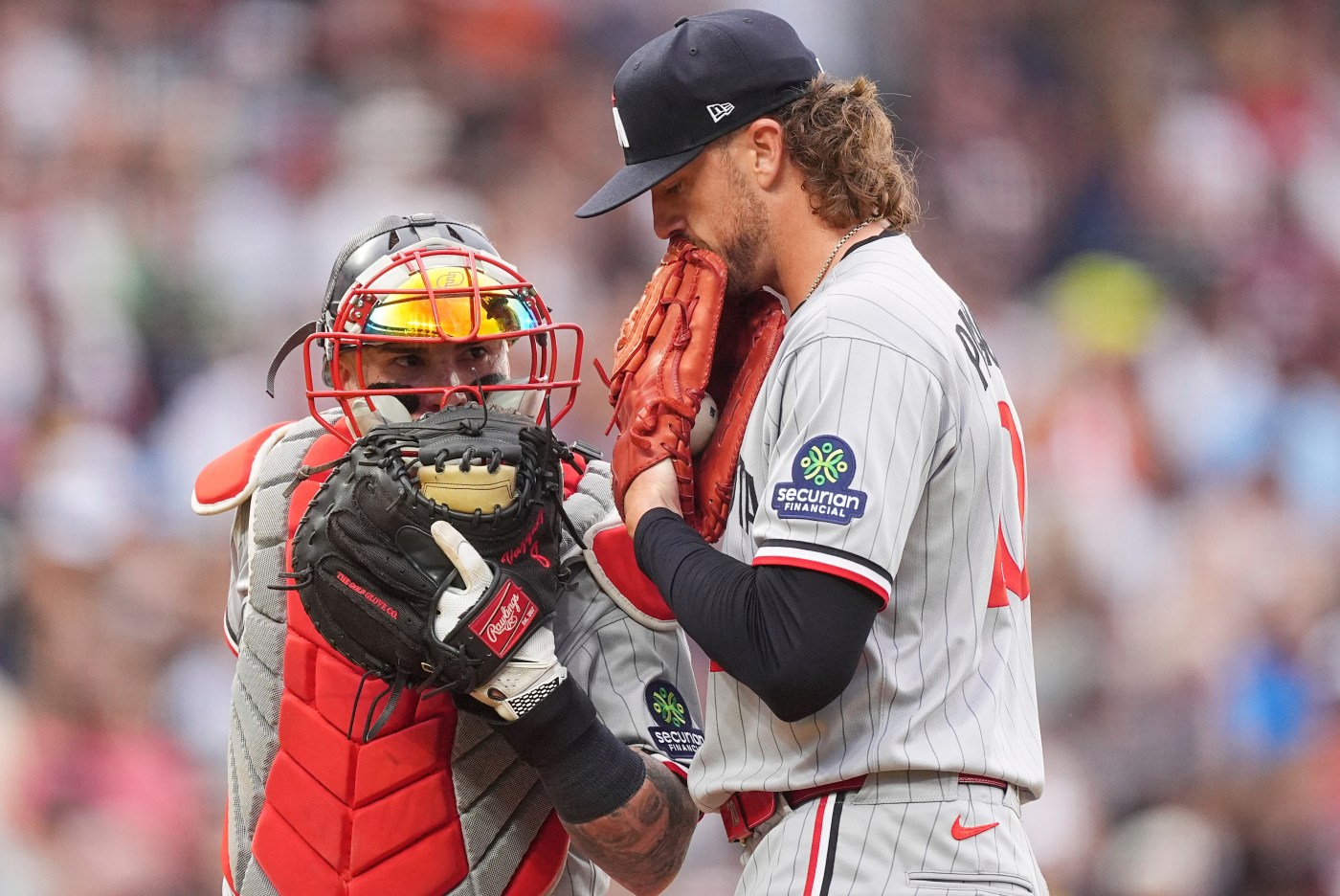
The numbers might not look it on the surface — especially after an 0-for-8 weekend in Atlanta — but Twins second baseman Edouard Julien believes he is a changed player.

A good hitter at every stage in his career, Julien spent last year, in his words, “trying to deal with failure” amid a sophomore season in the majors that saw him struggle mightily and get demoted to Triple-A multiple times. He came through that experience with a changed mindset.

A little over a week ago, manager Rocco Baldelli shook up the lineup, reinstating Julien in the leadoff spot, where he had hit before. And while he’s hitting .217 now with an OPS that has dipped below .600, he’s exhibited some of the strides he has made. Some of it is visible — he’s hitting breaking balls better, for example — and much of it internal.

“I feel like at times I would have good contact and good at-bats, but not the results I wanted. They would catch the ball and it would drive me so crazy inside,” Julien said. “It felt like at a point last year, I was not hitting, and every time I would hit it, they would catch it.

“I was so down on myself. This year, every time I hit the ball forward and it’s hit hard, I feel like it’s a win.”

That, Julien believes, will help him keep his confidence and work through inevitable slumps.

Julien said he felt like he was in a better spot with his approach by the end of last year, but his swing wasn’t there. He finished the season hitting just .199 with a .616 OPS. He racked up 102 strikeouts in 94 games, many of them looking.

Over the offseason, Julien worked on tweaking his swing so he could cover more pitches and stay through them better. He also believes, after parts of three seasons in the majors, he has a better understanding of what opposing pitchers are trying to do against him.

Where he hit .120 against breaking balls last year, he’s hitting .250 against them this year, per Statcast data.

“He’s been in the big leagues for … a few years and he’s already seen a lot of different things come his way,” manager Rocco Baldelli said. “He’s been one of the best hitters in the game for a period of time, and also been forced to make real adjustments, too, in his swing and in his approach.”

A spot on the roster wasn’t a guarantee for Julien coming into spring training and he knew it. He said in spring training he was playing with a chip on his shoulder, trying to prove he belonged.

But with Royce Lewis and Brooks Lee on the injured list to begin the year, Julien started the started the season with the Twins and during April has shown some flashes of what he looked like his rookie year, when he hit .263 with 16 homers and 37 RBIs in 102 games.

“Even when I’m getting outs right now, I come back and I’m not lost,” he said. “I’m not wondering what’s going on. Maybe I just missed a pitch, or he made a good pitch. I just like my odds right now. Every time I’m at the plate, I can do something good.”

White Sox, Angels on tap

The Twins will need much more of that from Julien and his teammates to overcome a 7-15 start to the season. Last year, the Twins found themselves in a similar position, beginning 7-13 before a stretch where they faced the Chicago White Sox, Los Angeles Angels and then the White Sox again.

The Twins used the soft part of their schedule — the White Sox recorded the most losses in a season in the history of Major League Baseball last year — to jumpstart their season, going on a 12-game winning streak.

Beginning Tuesday, the Twins will face those two teams over their next six games, giving themselves a good opportunity to right the ship. The Angels are hovering around .500, but the White Sox (5-16) have the American League’s worst record.

Briefly

Bailey Ober will take the ball for the first game of the series against Chicago, which kicks off at 6:40 p.m. on Tuesday. He will be opposed by Davis Martin. Ober, who gave up three runs in 6⅓ innings last time out, did not face the White Sox when the Twins played them earlier this season. … This will mark the second Tuesday home game televised on Fox 9. The game will also be aired on Twins.TV.

Watch: Cathedral of St. Paul livestreams Mass for Pope Francis

posted in: All news | 0

The Cathedral of St. Paul has joined the global reaction to the news of Pope Francis’ death on Monday, the day after Easter, at the age of 88.

The Cathedral is livestreaming its Mass for Pope Francis, which began at noon on Monday, led by Archbishop Bernard Hebda.

This follows the Cathedral’s regular early daily Mass, in which people prayed for the repose of the pope’s soul.

Related Articles


Thousands are expected to attend the White House Easter Egg Roll, with the Trumps presiding


JD Vance was one of the last leaders to meet with Pope Francis


Cathedral of St. Paul to host noon Mass for Pope Francis


Global tributes pour in to honor Pope Francis after his death


What are the church’s rites after the death of a pope and the election of a new one?