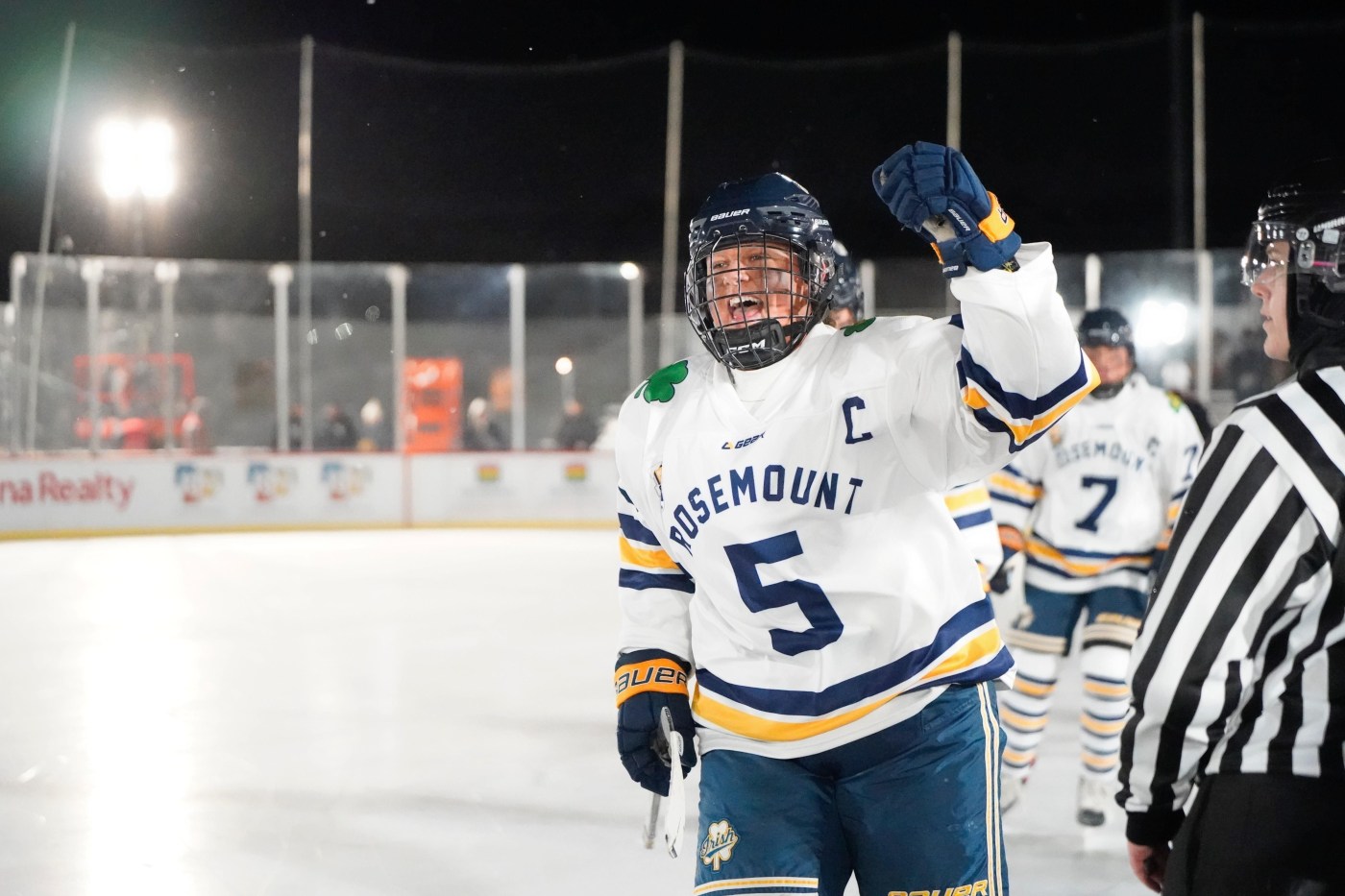
The Wild on Friday released the game schedule for this year’s Hockey Day Minnesota festivities in Hastings, including an outdoor game between the AHL teams for Minnesota and the Nashville Predators.
The 20th iteration of Hockey Day will be played at United Heroes League’s outdoor rink in Hastings with a weekend schedule beginning Jan. 23 with a 5 p.m. puck drop between the Iowa Wild and Milwaukee Admirals.
Saturday’s schedule includes three high school outdoor games, as well as the Wild’s 8 p.m. game against defending NHL champion Florida at Grand Casino Arena in St. Paul.
Hockey Day Minnesota
All games at United Heroes League outdoor rink, Hastings except where noted:
Friday, Jan. 23
Iowa Wild vs. Milwaukee Admirals, 5 p.m.
Saturday, Jan. 24
Hastings vs. Park Cottage Grove girls, TBA
Hastings vs. East Ridge boys, TBA
Rock Ridge vs. St. Thomas Academy boys, TBA
Minnesota Wild vs. Florida Panthers, Grand Casino Arena, 8 p.m.
How much has social media changed the way we talk and behave?
That’s the question linguist and content creator Adam Aleksic sets out to answer in his debut book “Algospeak.”
If you already know what words like “yeet,” “rizz,” “brainrot” or “blackpilled” mean, some of this information might not come as a surprise to you. Still, Aleksic’s analysis reaffirms how this language came about and why it continues to proliferate. For those unfamiliar, it acts as an accessible entry point into social media slang and its evolution.
“Algospeak” touches on a wide array of topics, including in-groups and out-groups, censorship, language appropriation, extremism online, microtrends, clickbait and generational divides. The chapters build on each other with a textbook-level attention to vocabulary.
This book serves as a sobering reality check on how social media is affecting not just our speech, but our entire identities.
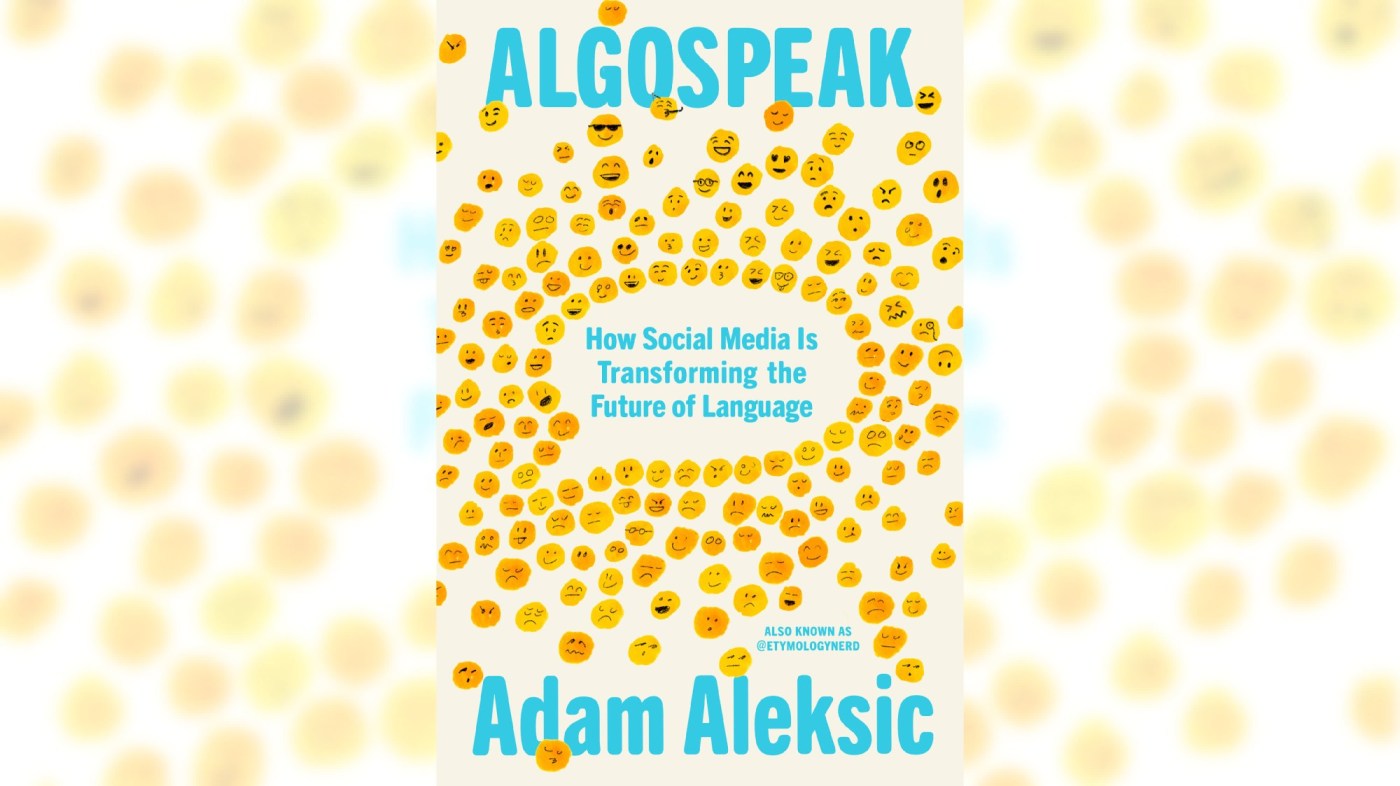
This book cover image released by Knopf shows “Algospeak: How Social Media is Transforming the Future of Language” by Adam Aleksic. (Knopf via AP)
“Social media creates new identities in order to commodify them,” Aleksic writes in a chapter about microtrends and micro-labels. “Your decisions are now curated for you under the guise of personalization, while in reality they’re engineered to make platforms as much money as possible.”
As a self-proclaimed “etymology nerd,” Aleksic leans heavily into his experience as a content creator, providing a crash course into social media history and how to game the ever-changing and opaque “algorithm.” His tone is academic, yet approachable, and he’s bold but pragmatic in his assertions, exploring counterarguments sufficiently.
He identifies the transient nature of language and the algorithm immediately, since the cultural references in “Algospeak” risk expiring quickly as trends change and social media platforms shift — but that’s the point.
“‘The algorithm’ is here to stay. This is why I think it’s absolutely worth talking about even the most fleeting words,” Aleksic writes.
Related Articles
Fans say new romance bookstores and online groups are giving the genre some overdue respect
Column: Of fighting and surviving, ‘Baddest Man’ is a soaring biography of Mike Tyson
Column: Where are the shows about regular people fighting back?
Amelia Earhart soars back into the headlines in new book ‘The Aviator and the Showman’
Literary calendar for week of July 13
Aleksic’s writing feels personable and knowledgeable as he translates his online presence offline, and in doing so, demonstrates his own claims about parasocial relationships and owning one’s audience. Keeping up with the algorithmic cycle is portrayed as exhausting, but as a necessary evil for influencers supporting their livelihoods through social media.
“Algospeak” is a fascinating blend of etymology, psychology, cultural analysis and first-person perspective. The book acts as both a snapshot of our current, social media-imbued society and as an intellectual foundation for language developments to come.
Aleksic leaves his reader with questions about the threats and opportunities that stem from social media developments, but undeniably one principle is true: social media has breached containment and is influencing not only the way we talk, but the way we live.
“Algorithms are the culprits, influencers are the accomplices, language is the weapon, and you, dear reader, are the victim,” he writes.
CAMBRIDGE, Mass. (AP) — Romance novels have always spiced up quiet nights. Now, a genre that has sometimes been dismissed as a guilty pleasure is bringing readers and writers together through social media, book clubs and a growing number of romance-specific bookstores.
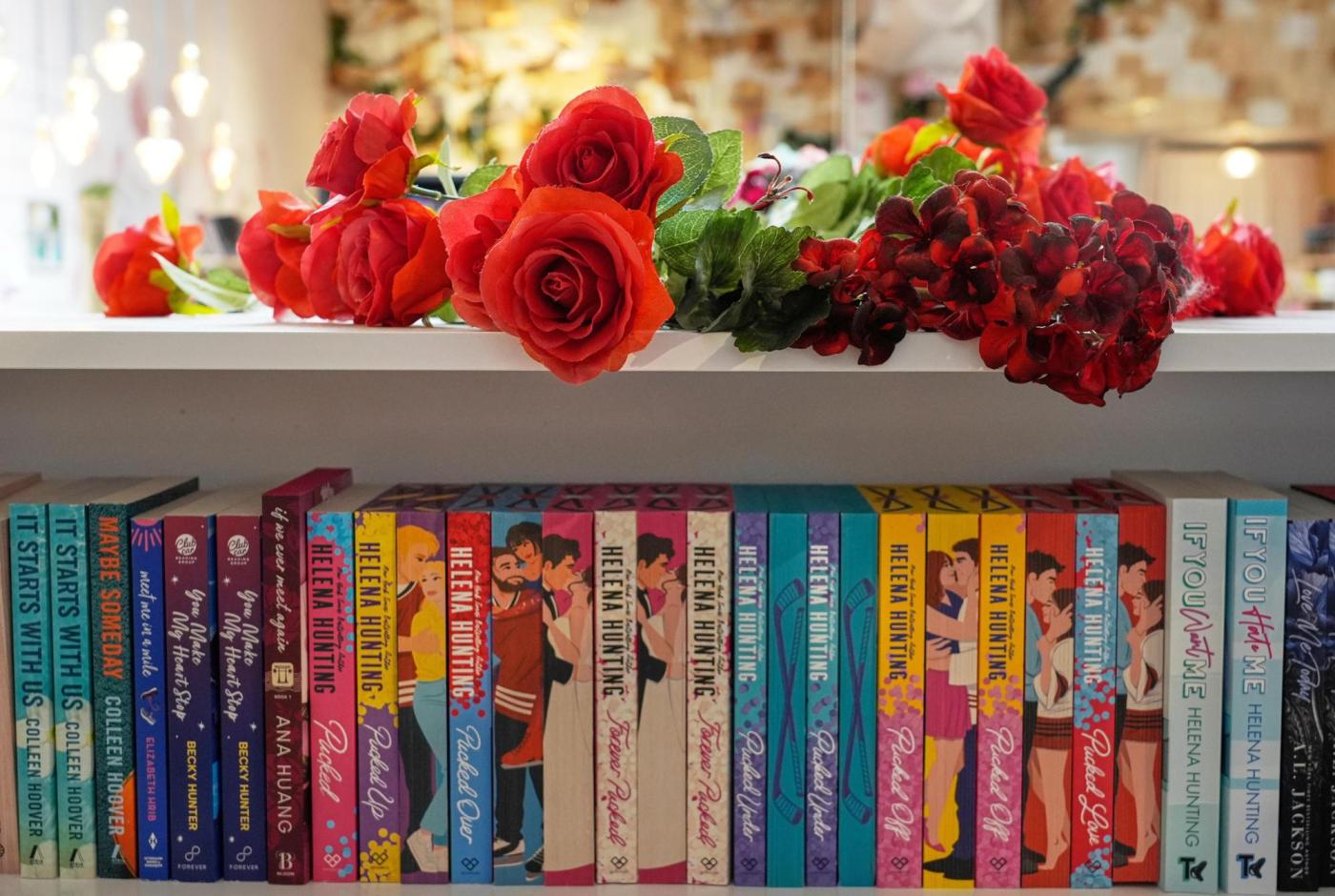
At a recent launch party for Nora Dahlia’s enemies-to-friends romance “Pick-Up” at Lovestruck Books, a romance-dedicated store in Cambridge, Massachusetts, a crowd of women sipped cocktails from the bar-café as they browsed the shelves.
After Dahlia’s reading, patrons stuck around to mingle, swap contact info and trade author recommendations.
It was a particularly social event for a book talk. But the communal atmosphere is typical of events for romance fans.
Dahlia likened romance readers to “Comic-Con folks,” referring to the deep-rooted passion that defines comic-book fandom.
“They’re educated on the genre in a real way,” Dahlia said. “Many of them started reading romance — Danielle Steel, V.C. Andrews, Jude Deveraux — as teenagers.”
At The Ripped Bodice bookstore in Brooklyn, New York, manager Katherine Zofrea said romance fans who have connected online frequently come into the store to meet in person. Along with author events, the store hosts three different book clubs and a romance comedy night.
“We’ve had a couple proposals here, we’ve had a wedding here which was really fun,” Zofrea said.
She said customers range “from teenagers who are starting to really get into the romance genres to older folks who have been romance readers for their entire lives and remember way back when they were reading the Harlequins and romance wasn’t as widely accepted.
“Now they’re loving seeing how widely accepted romance has become.”
A customer holds romance titles at The Ripped Bodice bookstore in Culver City, Calif., on Thursday, July 3, 2025. (AP Photo/Chris Pizzello)
Keiana Samoy browses romance titles at The Ripped Bodice bookstore in Culver City, Calif., on Thursday, July 3, 2025. (AP Photo/Chris Pizzello)
Ashley Dang, an employee at The Ripped Bodice, stocks romance titles at the bookstore in Culver City, Calif., on Thursday, July 3, 2025,. (AP Photo/Chris Pizzello)
Iliana Garcia browses romance titles at The Ripped Bodice bookstore in Culver City, Calif., on Thursday, July 3, 2025. (AP Photo/Chris Pizzello)
An oversized bookmark is featured in a display at The Ripped Bodice bookstore in Culver City, Calif., on Thursday, July 3, 2025. (AP Photo/Chris Pizzello)
1 of 5
A customer holds romance titles at The Ripped Bodice bookstore in Culver City, Calif., on Thursday, July 3, 2025. (AP Photo/Chris Pizzello)
Bookstores like Lovestruck and The Ripped Bodice (which has a flagship store in Los Angeles) have begun popping up all over the U.S., from Wichita, Kansas, to Wilmington, North Carolina, to Hopkinsville, Kentucky.
Of the 157 romance-dedicated bookstores in the American Booksellers Association, more than half opened within the last two years, said Allison Hill, CEO of the trade group for independent sellers.
“Romance books have been one of the fastest growing book sales categories in recent years, driven by a number of factors including the need for escape reading and BookTok,” Hill said.
And the genre has evolved. “The romance genre is more diverse in every way including character identity and plot,” she said.
Lovestruck Books owner Rachel Kanter poses in her bookstore in Cambridge, Massachusetts on Dec. 15, 2024. (Reagan Byrne/Lovestruck Books via AP)
Lovestruck’s owner, Rachel Kanter, called the boom “incredible — and honestly, overdue. Romance has always been one of the most commercially successful genres, but for a long time it didn’t get the respect or space it deserved in the literary world.”
Romance-specific bookstores, she says, “are places where readers can feel joy, comfort, and connection — and where love is taken seriously as a literary theme.”
A lifeline during COVID
As with many hobbies, romance fandom solidified and expanded after the COVID-19 pandemic.
“The pandemic had pushed so many people toward reading for escape and comfort, and romance became a lifeline for a lot of folks,” said Kanter.
“At the same time, there was a wider cultural shift happening — people were rethinking what mattered, craving joy and softness, and looking to support indie businesses that reflected their values. Romance, with all its hope and heart, met that moment beautifully,” she said.
Reimagining the romantic bond
Romance has countless subgenres — hockey romance, Western romance, LGBTQ romance, even romance set on prison planets. But a common theme is their “inherently hopeful storylines,” says Elizabeth Michaelson Monaghan, a 52-year-old freelance writer and editor in New York who said she’s read “hundreds” of romance novels.
“Romance must have a happily-ever-after — or at least a happily-for-now. Romance writers and readers are very clear on this,” she said.
Romantic fiction that doesn’t end that way? That’s just a love story.
Related Articles
Book Review: ‘Algospeak’ shows just how much social media is changing us
Column: Of fighting and surviving, ‘Baddest Man’ is a soaring biography of Mike Tyson
Column: Where are the shows about regular people fighting back?
Amelia Earhart soars back into the headlines in new book ‘The Aviator and the Showman’
Literary calendar for week of July 13
Traits of the romance genre also include strong character descriptions, attraction, conflict, and a satisfying resolution and emotional growth. Expect plenty of steam — some authors deploy it explicitly, others are more tame.
There’s a long-standing culture of (mostly) women reading and sharing these books across generations.
“It is pleasurable to reimagine courtship or the romantic bond,” said Jayashree Kamble, professor of English at LaGuardia Community College and president of the International Association for the Study of Popular Romance. “There is limited risk involved.”
Kamble has been a voracious romance reader since her teenage years in India, where she devoured Harlequin romances.
Romance novels, she said, are “a lovely reminder that individualism and companionship can go together. These are basic bonds.”
Community: online and in real life
Podcasts, too, have become a source for discovering what’s trending. Andrea Martucci, creator and host of the romance-focused “Shelf Love” podcast, said romance bookstores have become places of connection akin, in some ways, to churches — for the romantically devoted.
“I can go to a bookstore and not just find people who love books,” she said, “but find people who love the very same books I love.”
As Annabel Monaghan, author of several love stories including “Nora Goes Off Script,” puts it, “People who read romance want to feel good. And when you gather a bunch of people who want to feel good, it’s magic.”
Confidence. Some people have more of it and some people have less. Confident people have what psychologists call a strong internal locus of control. They believe they have the resources to control their own destiny. They have a bias toward action. They venture into the future.
When it comes to confidence, some nations have it and some don’t. Some nations once had it but then lost it. Earlier this month on his blog, “Marginal Revolution,” Alex Tabarrok, a George Mason University economist, asked us to compare America’s behavior during Cold War I (against the Soviet Union) with America’s behavior during Cold War II (against China). I look at that difference and I see a stark contrast — between a nation back in the 1950s that possessed an assumed self-confidence versus a nation today that is even more powerful but has had its easy self-confidence stripped away.
In the 1950s, American intelligence suggested that the Soviet Union was leapfrogging U.S. capabilities across a range of military technologies. Then on Oct. 4, 1957, the Soviet Union launched the first satellite, Sputnik, into space.
Americans were shocked but responded with confidence. Within a year the United States had created NASA and ARPA (later DARPA), the research agency that among other things helped create the internet. In 1958, President Dwight Eisenhower signed the National Defense Education Act, one of the most important education reforms of the 20th century, which improved training, especially in math, science and foreign languages. The National Science Foundation budget tripled. The Department of Defense vastly increased spending on research and development. Within a few years total research and development spending across many agencies zoomed up to nearly 12% of the entire federal budget. (It’s about 3% today.)
America’s leaders understood that a superpower rivalry is as much an intellectual contest as a military and economic one. It’s who can out-innovate whom. So they fought the Soviet threat with education, with the goal of maximizing talent on our side.
“One reason the U.S. economy had such a good Cold War was that the American university had an ever better one,” historian Hal Brands writes in his book “The Twilight Struggle.” Federal support for academic research rose to $1.45 billion in 1970 from $254 million in 1958. Earlier in that century, American universities lagged behind their “best” European peers, Brands observes; by the end of the Cold War, they dominated the globe.
Today we are in a second Cold War. For the first couple of decades it wasn’t clear whether China was a rival or a friend, but now it’s pretty clear that China is more a rival than a friend. As scholar Robert D. Atkinson argued in The New York Times this year, for the Chinese regime, the desire to make money is secondary. “Its primary goal is to damage America’s economy and pave the way for China to become the world’s pre-eminent power,” he wrote.
China is a country that, according to a 2024 House committee inquiry, was directly subsidizing the manufacture and export of fentanyl materials, even though drug overdose is the leading cause of death among Americans 18 to 44.
Since the beginning of the 21st century, China has moved — confidently — to seize the future, especially in the realm of innovation and ideas. China’s total research and development funding has grown 16-fold since 2000. Now China is surging ahead of the United States in a range of academic spheres. In 2003, Chinese scholars produced very few broadly cited research papers. Now they produce more “high impact” research papers than Americans do, and according to The Economist, they absolutely dominate research in the following fields: materials science, chemistry, engineering, computer science, the environment and ecology, agricultural science, physics and math.
These achievements of course lead directly to China’s advantages across a range of high-tech industries. It’s not just high-tech manufacturing of things like electric vehicles, drones and solar panels. It’s high-tech everything. In the years between 2003 and 2007, according to a study by the Australian Strategic Policy Institute, the United States led the way in 60 of 64 frontier technologies — stretching across sectors such as defense, space, energy, the environment, computing and biotech. By the period between 2019 and 2023, the Chinese led among 57 of those 64 key technologies, while the United States led in only seven.
Then along came AI. Americans overall are fearful about it. Last year, the polling organization Ipsos asked people from 32 countries if they were excited for the AI future or nervous about it. Americans are among the most nervous people in the world. The countries most excited by the prospect of that future? China, South Korea, Indonesia and Thailand. The fact is that nobody knows what the AI future holds; people’s projections about it mostly reflect their emotional states. Americans used to be the youthful optimists of the globe. Not right now.
So how is America responding to the greatest challenge of Cold War II? With huge increases in research? By infusing money into schools and universities that train young minds and produce new ideas? We’re doing the exact opposite. Today’s leaders don’t seem to understand what the Chinese clearly understand — that the future will be dominated by the country that makes the most of its talent. On his blog, Tabarrok gets it about right: “The DeepSeek Moment has been met not with resolve and competition but with anxiety and retreat.”
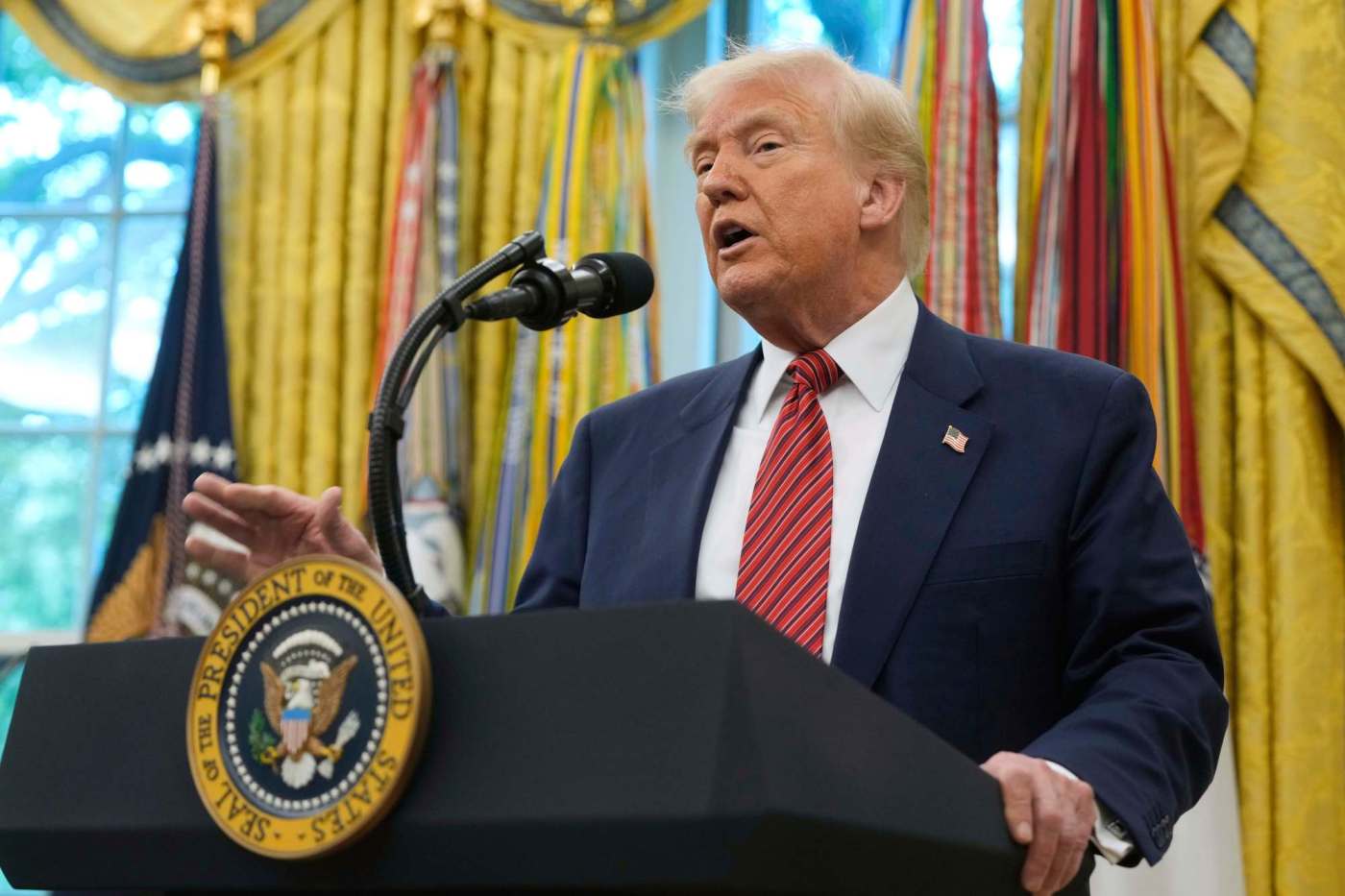
Populists are anti-intellectual. President Donald Trump isn’t pumping research money into the universities; he’s draining it out. The administration is not tripling the National Science Foundation’s budget; it’s trying to gut it. The administration is trying to cut all federal basic research funding by a third, according to the American Association for the Advancement of Science. A survey by the journal Nature of 1,600 scientists in the United States found that three-quarters of them have considered leaving the country.
The response to the Sputnik threat was to go outward and compete. Trump’s response to the Chinese threat generally is to build walls, to erect trade barriers and to turn inward. A normal country would be strengthening friendships with all nations not named China, but the United States is burning bridges in all directions. A normal country would be trying to restore America’s shipbuilding industry by making it the best in the world. We’re trying to save it through protectionism. The thinking seems to be: We can protect our mediocre industries by walling ourselves off from the world. That’s a recipe for national decline.
Related Articles
John Lawrence: Uncle Sam wants you … to rat on national parks that reflect true history
David Mastio: Democrats will regret their Epstein Files glee
Bret Stephens: Mamdani for mayor (if you want a foil for Republicans)
Mary Ellen Klas: The GOP’s Medicaid cuts have a very convenient timeline
Noah Feldman: The Supreme Court’s silent opinions undermine its legitimacy
The problem is not just Trump. China has been displaying intellectual and innovative vitality for decades and the United States has scarcely mobilized. This country sometimes feels exhausted, gridlocked, as if it has lost its faith in itself and contact with its future.
In the progressive era, America built new institutions like the Food and Drug Administration and the Federal Reserve. During the New Deal, Americans created an alphabet soup of new agencies. By 1949, Americans had created NATO and the precursor to the World Bank. Where are the new institutions fit for today? Government itself is not great at innovation, but for a century, public sector money has been necessary to fuel the fires of creativity — in the United States, in Israel and in China. On that front, America is in retreat.
Can confidence be restored? Of course. Franklin Roosevelt did it and Ronald Reagan did it. Is China’s dominance inevitable? Of course not. Centrally controlled economies are prone to monumental blunders.
But the primary contest is psychological — almost spiritual. Do Americans have faith in the power of the human mind? Are they willing to invest to enlarge the national talent pool? Right now, no. Americans, on the left and the right, have become highly attentive to threat, risk-averse and self-doubting about the national project. What do you do with a country with astounding advantages but that no longer believes in itself?
David Brooks writes a column for the New York Times.