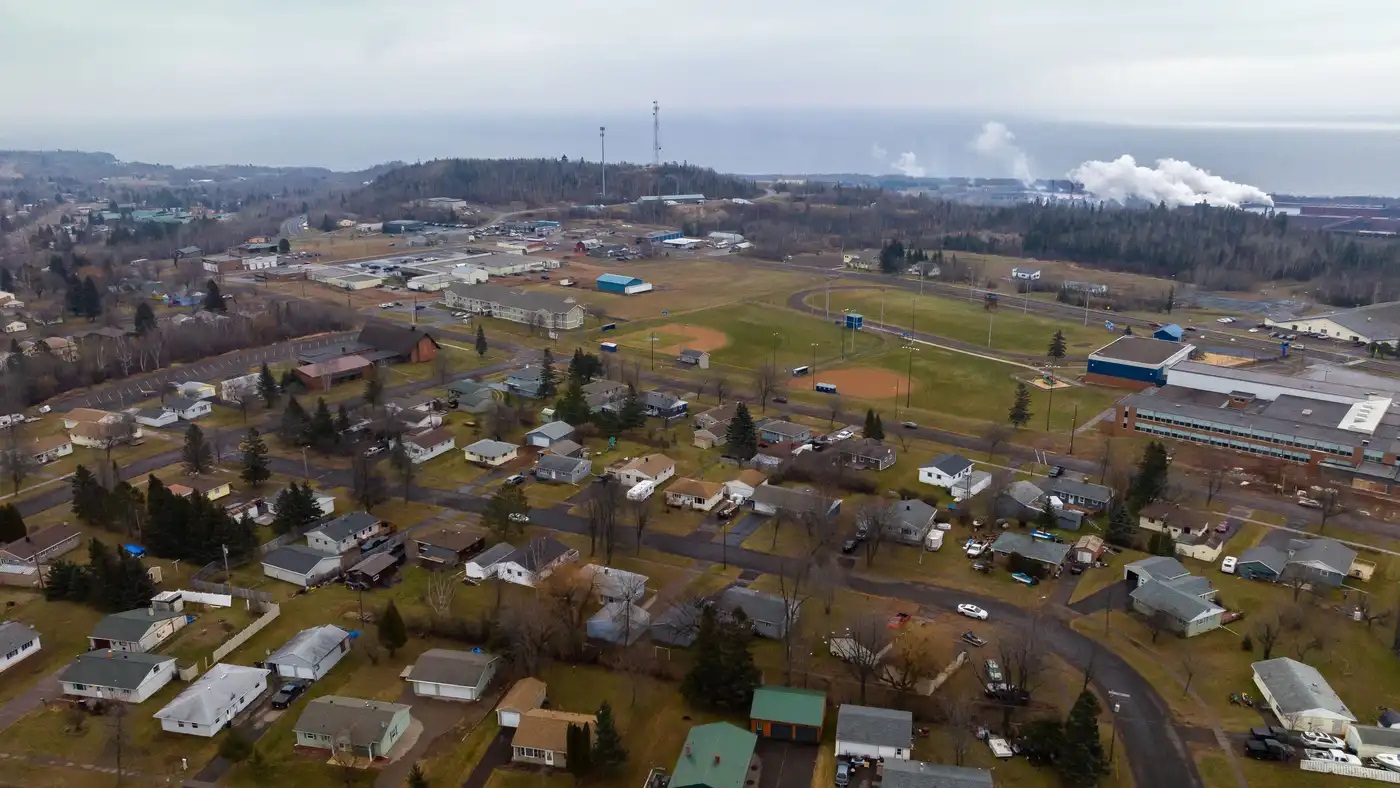
DULUTH — President Donald Trump is giving Minnesota’s taconite iron ore mines two more years to comply with a U.S. Environmental Protection Agency mandate to reduce their mercury emissions — a rule that the Trump administration has already signaled it intends to roll back.
A proclamation Trump signed late Thursday evening states that the rule adopted by the EPA last March relies on “technologies that have not been demonstrated to work in the taconite industry, are untested at commercial scale,” or are not “reasonably achievable.”
The order was among a series of proclamations from the president granting two years of relief from regulations for coal-fired power plants and other polluting industries that the Trump administration considers overly costly and burdensome.
After more than two decades of lawsuits and pressure applied by tribes, states and environmental groups, the EPA imposed a rule last year requiring the state’s six taconite mines and processing plants to cut mercury emissions by about 33% beginning in 2027.
U.S. Steel and Cleveland-Cliffs own and operate the facilities in northeast Minnesota, where the taconite ore is dug out of the earth and then made into pellets in giant furnaces, which are then shipped to mills around the Great Lakes to be transformed into steel. Another facility is located in Michigan’s Upper Peninsula.
Both companies have sued to block the rule. They praised the Trump administration’s move to delay its implementation until 2029.
“The proclamation will provide a reprieve from an onerous regulation that was put in place without regard to the technological feasibility of their implementation or the impact it presented to the domestic iron ore industry and thousands of good paying jobs these operations sustain,” said Cliffs, which owns three of the six taconite facilities on Minnesota’s Iron Range, and is majority owner and operator of a fourth.
U.S. Steel, which owns two iron ore mines on the range, including the state’s largest, Minntac, called the president’s proclamation “fair, reasonable and necessary,” and said the EPA’s rule “is not supported by science and would impose unprecedented costs while setting technologically unachievable standards.”
Taconite plant standards coming since 1990
With its 1990 U.S. Clean Air Act, Congress required the EPA to set mercury emission standards for taconite plants by the year 2000. But the agency never did. Since then, tribes, environmental groups and the state of Minnesota have pushed the agency to take action. Those efforts culminated in the EPA’s rule last year.
The requirements don’t go far enough for Minnesota to reach its mercury air emission reduction goals, said Jim Pew, who directs the federal clean air practice at Earthjustice.
“They didn’t really require the plants to do nearly as much as they could, but they still would have taken a significant bite out of the mercury emissions,” he said. “That’s what the Trump administration is trying to roll back right now.”
Pew said when the rule was adopted last year, taconite plants were given until 2027 to meet the mercury reduction targets so they had time to install pollution controls. He said Trump’s proclamation pushes that date back to 2029.
Meanwhile, the Trump administration had already announced in March that it was reconsidering the rule.
“So what’s really going on is that the Trump administration is telling these companies that they don’t have to do anything now to start getting ready to control their emissions, and in the meantime, it’s getting ready to get rid of the rules altogether so they never have to do it,” Pew said.
Mercury is a neurotoxin that can be especially harmful to young children and infants in the womb. It mostly enters the environment in Minnesota through air pollution from burning coal, processing taconite and other sources.
Once in lakes and streams, bacteria in the water convert it to a more toxic form called methylmercury, which works its way up the food chain and accumulates in fish.
More than 1,500 rivers and lakes in Minnesota are considered impaired for mercury, meaning there are advisories recommending that fish from those bodies of water not be eaten more than once a week or month.
Taconite emissions prevent state from reaching goal
The state has a goal to slash mercury emissions 76% from 2005 levels by this year. Significant progress has been made. Mercury emissions have dropped by more than half, largely because of the closures of coal-fired power plants or the installation of pollution controls.
But the state did not meet its goal, in large part because emissions from taconite plants have remained largely flat. Iron ore mines now emit about half of the mercury pollution in the state.
Minnesota Pollution Control Agency spokesperson Becky Lentz said the state’s ability to meet its mercury emissions reduction targets “will require additional reductions from all sources, including the taconite iron ore processing facilities.”
”We are continuing to assess how this presidential proclamation impacts our statewide mercury reduction goals, but, at a minimum, the Trump Administration created additional regulatory uncertainty with yesterday’s announcement,” she said.
The EPA has estimated it would cost more than $500 million over the next decade for the taconite industry to comply with its mercury emissions rule.
Trump offers regulatory relief for coal, iron ore and chemical industries
Interior Secretary Burgum must personally approve all wind and solar projects, a new order says
Can artificial reefs in Lake Michigan slow erosion and boost fish population? Researchers aim to find out.
Grand Canyon blaze shows how managing a fire can go suddenly sideways
Nebraska sues neighboring Colorado over how much water it’s drawing from the South Platte River
“It’s economically doable,” Pew said. “The only real obstacle is that the steel companies don’t want to be decent neighbors and put on the controls that just about every other industry, like the power industry, has already put on.”
But Kristen Vake, executive director of the Iron Mining Association of Minnesota, said the extension will give taconite operations more time to find solutions. She said testing of pollution control equipment is underway at Keetac, a taconite facility operated by U.S. Steel in Keewatin.
“This decision recognizes that the technology isn’t there yet, and more time is needed,” she said.