Men’s hockey: Big Ten alters its postseason format

posted in: All news | 0

The Big Ten Hockey Tournament, which determines the conference’s automatic berth to the NCAA Tournament, will shift to a two-week, single-elimination format with all games played on campus starting this season, the league announced Wednesday.

All seven conference teams will qualify for the Big Ten Tournament, with quarterfinals being held on Wednesday, March 11. Teams seeded No. 2, No. 3 and No. 4 will be the host schools of the No. 5, No. 6 and No. 7 seeds, respectively. The No. 1 seed will get a bye into the semifinals.

Semifinals will take place on Saturday, March 14, hosted by the No. 1 seed and the highest advancing seed from the quarterfinals. The championship game will be held the weekend of March 20-21 at the rink of the highest remaining seed.

Previously, the tournament lasted three weeks and started with three-game series.

Michigan State defended its tournament title in 2025, recording a 4-3 double overtime victory over Ohio State in Munn Ice Arena. The Gophers have won six regular-season Big Ten championships and won the conference tournament in 2015 and 2021.

Related Articles


Gophers freshman running back Johann Cardenas leaves team


Stillwater’s Luca Jarvis commits to Gophers hockey program


Gophers quarterback Drake Lindsey shows off big arm in practices


‘A family decision’: Cullen brothers commit to Gophers hockey


College football: St. Thomas enters season with FCS playoff hopes

Several states threaten to redraw congressional maps after Texas kicks off fight

posted in: All news | 0

By JESSE BEDAYN, Associated Press

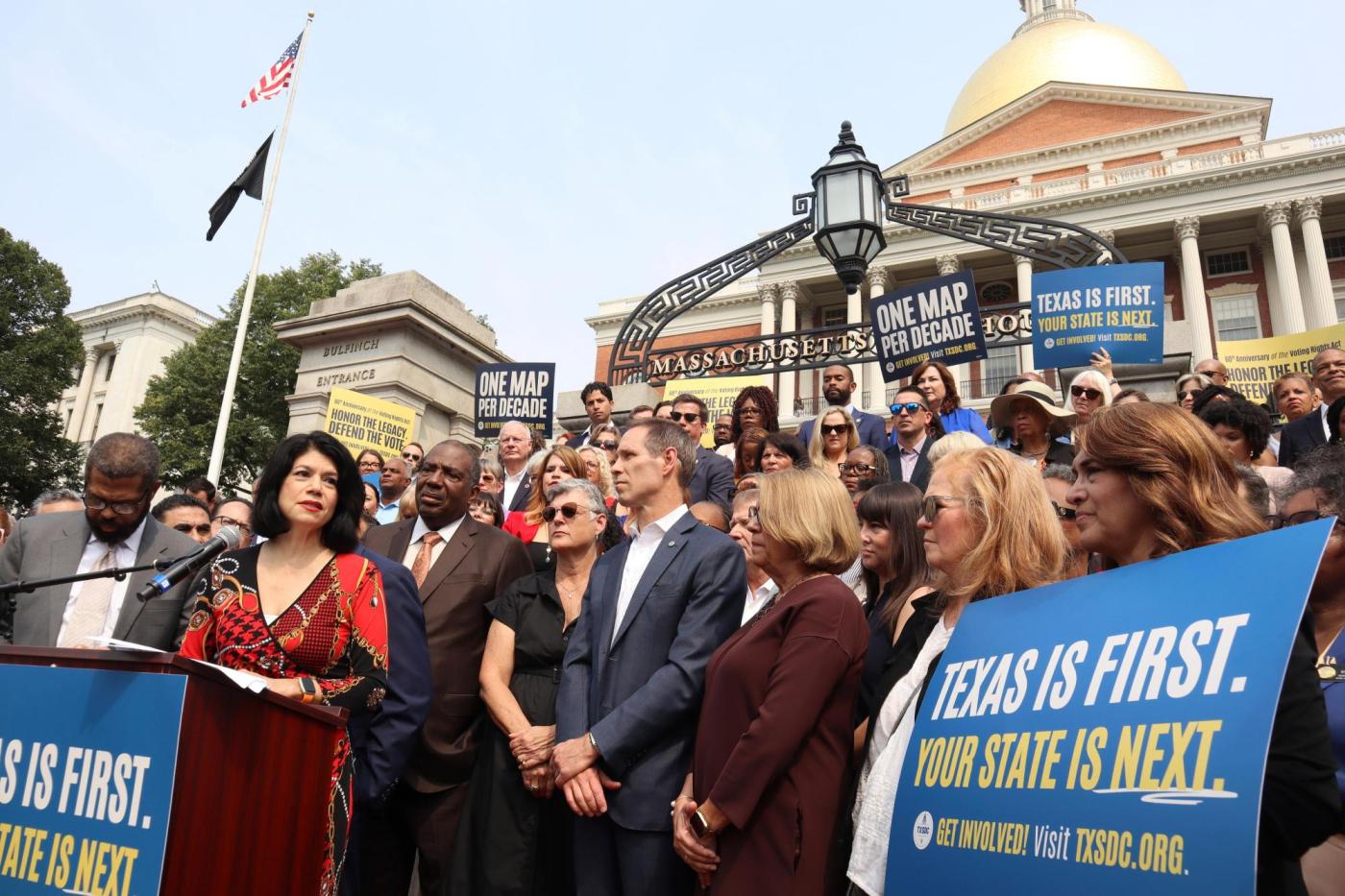
A push by Texas Republicans to redraw congressional maps to secure five more GOP seats in the U.S. House has kicked off a no-holds-barred battle between blue and red states, each threatening to redraw their own House seats.

The process of changing congressional maps in a bid to ensure one party’s victory over another — called gerrymandering — has typically been done more furtively, with parties fearing a backlash from voters wary of a rigged system.

But President Donald Trump’s call for Texas to blatantly redraw the maps to better ensure that Republicans retain control of the House in the 2026 elections has blown the lid off of the practice: gerrymandering, once a feared accusation, has now become a battle cry.

Here are the states now considering early redistricting.

Texas kicked it off, but Democrats left the state

Dozens of Democrats left Texas in a Hail Mary to halt a vote on redistricting, leaving the legislature without enough lawmakers present — called a quorum — to proceed.

Democrats, who didn’t show up for a second day Tuesday, wouldn’t have the votes to stop the bill otherwise.

In response, Gov. Gregg Abbott and fellow Republicans are threatening the Democrats who left with arrests, fines and removal from office.

The state Attorney General Ken Paxton warned he could ask the courts to vacate their seats if they don’t show up when the House convenes on Friday. Trump and Texas Sen. John Cornyn also asked the FBI to get involved.

Still, past efforts by Democrats to abscond and deny Republicans a quorum only delayed the passage of bills, but didn’t quash them.

Through it all, Abbott has been adamant that redrawing districts with political bias is legal.

California Democrats propose retaliation

Responding to developments in Texas, Democrats in California are considering a draft proposal to reshape their own district maps and cut away five Republican seats while securing more vulnerable seats already held by Democrats.

Democratic Gov. Gavin Newsom has been outspoken about wanting partisan redistricting if Texas moves ahead with its plans.

Unlike Texas, however, California has an independent commission that handles redistricting after the census each decade, which is typically when districts are reshaped to account for population shifts.

Any changes would first need the approval of state lawmakers and voters. Newsom said he’d call a special election in November for California residents to do just that.

Missouri’s governor under pressure from Trump

The Trump administration wants Gov. Mike Kehoe to call a special legislative session for congressional redistricting that favors Republicans.

Kehoe has expressed interest and discussed it with Republican legislative leaders, but has made no decision.

Republicans now hold six of the state’s eight U.S. House seats, and the GOP could pick up another by reshaping a Kansas City area district held by a Democrat.

New York Democrats try to change state law

New York, similar to California, has an independent commission that redistricts only after every census. Last week, state Democrats introduced legislation to allow mid-decade redistricting.

Democratic Gov. Kathy Hochul said if Texas proceeds, “we must do the same.”

Related Articles


Trump will highlight Apple’s plans to invest $100 billion more in US, raising total to $600 billion


Trump to put additional 25% import taxes on India, bringing combined tariffs to 50%


College applications rise outside US as Trump cracks down on international students


Protections of the Voting Rights Act are under threat as the law marks its 60th anniversary


Trump envoy Witkoff meets Putin ahead of Russia-Ukraine peace deadline, the Kremlin says

The proposal, however, would require an amendment to the state constitution, a change that would have to pass the legislature twice and be approved by voters.

That means the soonest new maps could be in place would be for the 2028 elections.

Wisconsin Democrats take a different tact

While Republicans control the legislature in the battleground state, Democrats turned to the courts to try to force a redrawing of congressional district boundary lines before the 2026 midterms.

Two lawsuits were filed in July after the liberal-controlled Wisconsin Supreme Court — without explanation — previously declined to hear challenges directly.

Maryland Democrats promise a response to Texas

The House Majority leader, David Moon, a Democrat, says he will sponsor legislation to trigger redistricting in Maryland if Texas or any other state holds redistricting ahead of the census.

Florida’s governor hints at support for redistricting

Republican Gov. Ron DeSantis has said he is considering early redistricting and “working through what that would look like.”

Ohio must redraw its maps before the 2026 midterms

That’s because a law in the Republican-led state requires it before the 2026 midterm elections. The GOP holds 10 of its 15 House seats already, and could try to expand that edge.

Indiana’s governor will speak with the Vice President J.D. Vance

Republican Gov. Mike Braun told reporters Tuesday that Vance will visit Indiana to discuss matters including redistricting in the solidly GOP state.

Braun, who would have to call a special session to draw new maps, said he expects a “broad conversation” with legislative leaders on the move’s constitutionality and said no commitments have yet been made.

“It looks like it’s going to happen across many Republican states,” Braun said in a video by WRTV in Indianapolis.

Associated Press writers Anthony Izaguirre in Albany, New York, Scott Bauer in Madison, Wisconsin, David Lieb in Jefferson City, Missouri, Isabella Volmert in Lansing, Michigan, and Brian Witte in Annapolis, Maryland, contributed to this report.

What to know about mRNA vaccines

posted in: All news | 0

By LAURAN NEERGAARD, AP Medical Writer

WASHINGTON (AP) — So-called mRNA vaccines saved millions of lives during the COVID-19 pandemic — and now scientists are using that Nobel Prize-winning technology to try to develop vaccines and treatments against a long list of diseases including cancer and cystic fibrosis.

Related Articles


Tribal groups assert sovereignty as feds crack down on gender-affirming care


New studies tie unrecognized deaths and health problems to Maui and LA wildfires


As last baby boomers reach retirement, they tackle a quest for fulfillment


How to maintain a caring relationship with someone with Alzheimer’s disease


RFK Jr. pulls $500 million in funding for vaccine development

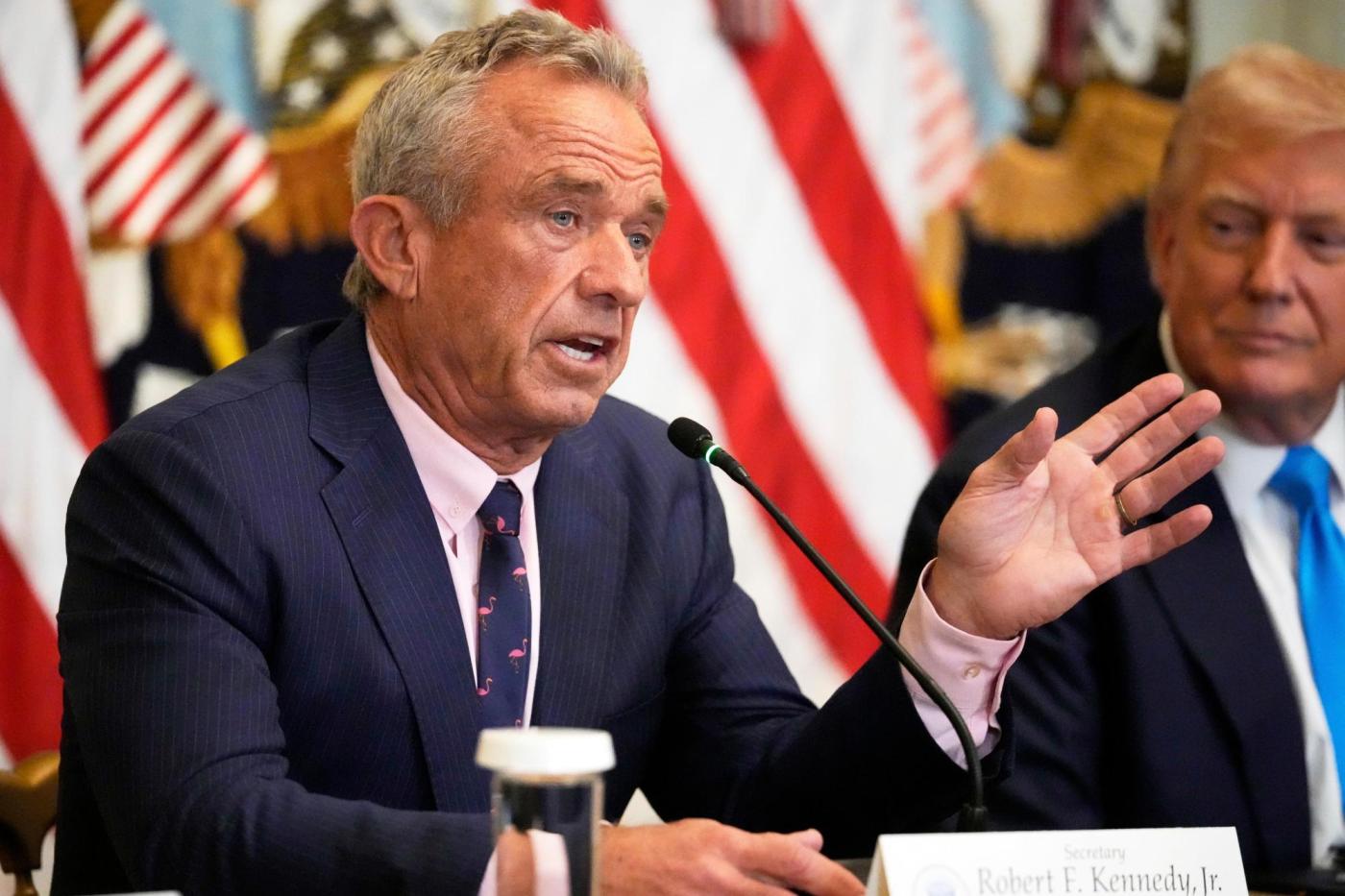
But this week, U.S. Health Secretary Robert F. Kennedy Jr., a longtime vaccine critic, canceled $500 million in government-funded research projects to create new mRNA vaccines against respiratory illnesses that might trigger another health emergency.

That dismays infectious disease experts who note that mRNA allows faster production of shots than older vaccine-production methods, buying precious time if another pandemic were to emerge.

Using older technology to target a pandemic flu strain would take 18 months to “make enough vaccine to vaccinate only about one-fourth of the world,” said Michael Osterholm of the University of Minnesota, an expert on pandemic preparation. But using mRNA technology “could change that dramatically, such that by the end of the first year, we could vaccinate the world.”

How mRNA technology works

Traditionally, making vaccines required growing viruses or pieces of viruses called proteins — often in giant vats of cells or, like most flu shots, in chicken eggs — and then purifying them. Injecting a small dose as a vaccine trains the body how to recognize when a real infection hits so it’s ready to fight back.

But that technology takes a long time. Using mRNA is a faster process.

The “m” stands for messenger, meaning mRNA carries instructions for our bodies to make proteins. Scientists figured out how to harness that natural process by making mRNA in a lab.

They take a snippet of that genetic code that carries instructions for making the protein they want the vaccine to target. Injecting that snippet instructs the body to become its own mini-vaccine factory, making enough copies of the protein for the immune system to recognize and react.

The COVID-19 vaccines aren’t perfect

Years of research show protection from COVID-19 vaccines — both the types made with mRNA and a type made with traditional technology — does wane over time. The vaccinations provide the strongest protection against severe infection and death, even if people still become infected.

But that’s a common feature with both the coronavirus and flu because both viruses continually mutate. That’s the reason we’re told to get a flu vaccine every year — using vaccines made with traditional methods, not mRNA.

Today’s COVID-19 vaccines made with mRNA by Pfizer and Moderna can be updated more quickly each year than traditional types, an advantage that now has multiple companies developing other vaccines using the technology.

Traditional vaccines aren’t the only use for mRNA

Osterholm counts about 15 infectious disease vaccines that could benefit from mRNA technology, but that’s not the only potential. Many disease therapies take aim at proteins, making mRNA a potential technique for developing new treatments. Researchers already are testing an mRNA-based therapeutic vaccine for pancreatic cancer. Genetic diseases are another target, such as an experimental inhaled therapy for cystic fibrosis.

AP video journalist Nathan Ellgren contributed to this report.

The Associated Press Health and Science Department receives support from the Howard Hughes Medical Institute’s Department of Science Education and the Robert Wood Johnson Foundation. The AP is solely responsible for all content.

Tribal groups assert sovereignty as feds crack down on gender-affirming care

posted in: All news | 0

By Jazmin Orozco Rodriguez, KFF Health News

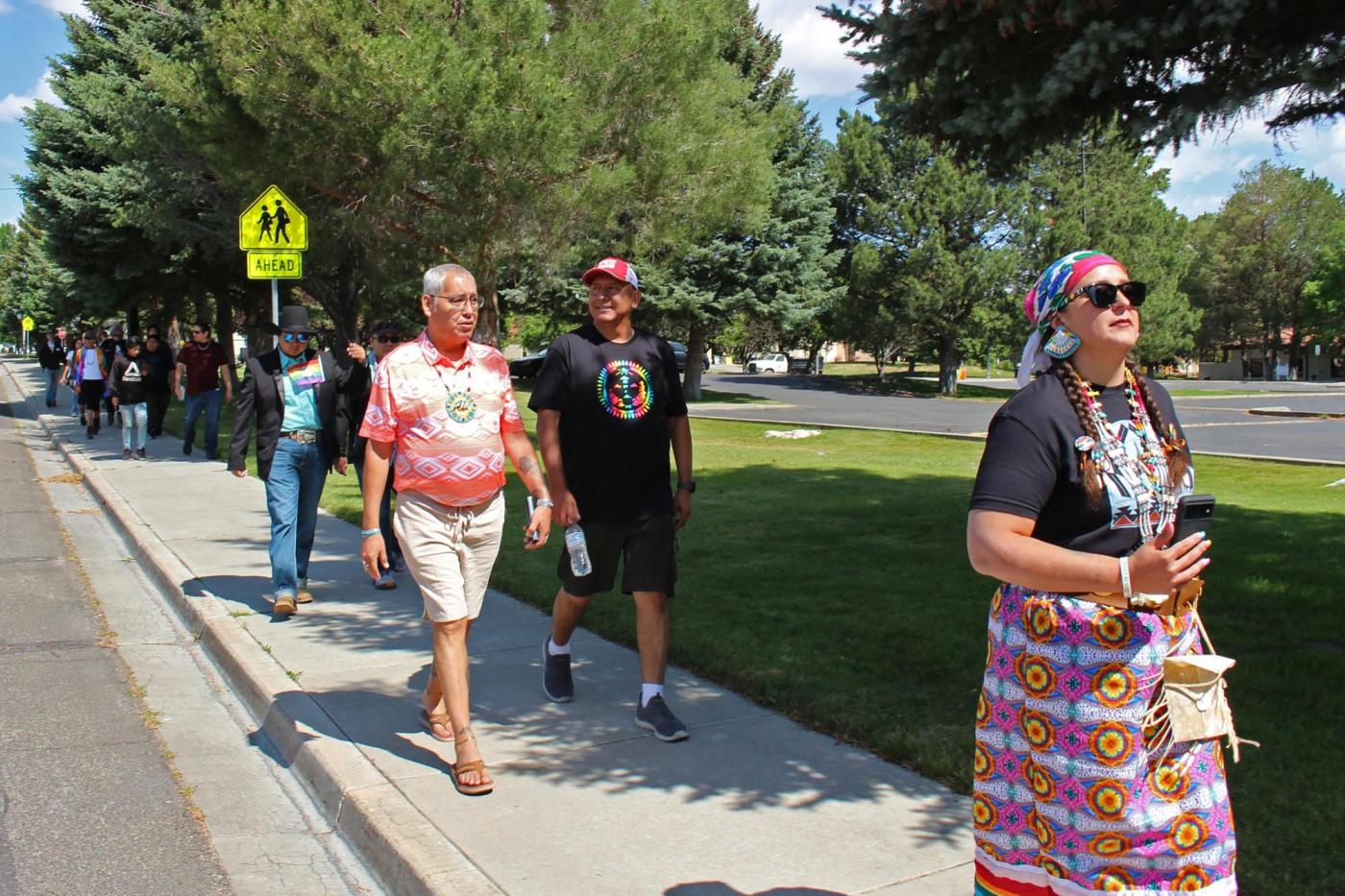
ELKO, Nev. — At the Two Spirit Conference in northern Nevada in June, Native Americans gathered in support of the LGBTQ+ community amid federal and state rollbacks of transgender protections and gender-affirming health care.

“I want people to not kill themselves for who they are,” said organizer Myk Mendez, a trans and two-spirit citizen of the Fort Hall Shoshone-Bannock Tribes in Idaho. “I want people to love their lives and grow old to tell their stories.”

“Two-spirit” is used by Native Americans to describe a distinct gender outside of male or female.

The conference in Elko reflects how some tribal citizens are supporting their LGTBQ+ community members as President Donald Trump rolls back protections and policies. In March, the National Indian Health Board, which represents and advocates for federally recognized Native American and Alaska Native tribes, passed a resolution declaring tribal sovereignty over issues affecting the Native American community’s health, including access to gender-affirming care.

The resolution calls on the federal government to preserve and expand programs that support the health and well-being of two-spirit and LGBTQ+ Native Americans. Tribes and tribal organizations are navigating how to uphold their sovereignty without jeopardizing the relationships and resources that support their communities, said Jessica Leston, the owner of the Raven Collective, a Native public health consulting group, and a member of the Ketchikan Indian Community.

In January, Trump signed an executive order recognizing only two sexes — male and female — and another to terminate diversity, equity, and inclusion programs within the federal government.

An Indian Health Service website describing two-spirit people was removed this year but restored following a court order. The page now has a disclaimer at the top that declares any information on it “promoting gender ideology” is “disconnected from the immutable biological reality that there are two sexes, male and female.”

Two-spirit is not a sexual orientation but refers to people of a “culturally and spiritually distinct gender exclusively recognized by Native American Nations,” according to a definition created by two-spirit elders in 2021. According to two-spirit leaders, people who did not fit into the Western binary of male and female have lived in their communities since before colonization.

Already, tribal citizens and leaders say some people have had trouble accessing gender-affirming care in recent months, with some community members being denied hormone treatments or having their medications delayed, even in places where gender-affirming care remains legal. Panic has spread, and tribal citizens have considered leaving the country.

“There is a chilling effect,” said Itai Jeffries, who is trans, nonbinary, and two-spirit, of the Occaneechi people from North Carolina, and a consultant for the Raven Collective.

Mendez said he requested hormone treatment at his local Indian Health Service clinic at the end of June and was told by his provider that the facility has had trouble receiving the treatment for patients.

Lenny Hayes, a two-spirit citizen of the Sisseton-Wahpeton Oyate in South Dakota, said the Indian Health Service clinic on the reservation also isn’t dispensing hormone treatment, though it is legal for people 18 and older. Hayes is the owner and operator of Tate Topa Consulting and provides educational training on two-spirit and LGTBQ+ Native Americans and Alaska Natives.

Related Articles


Claire’s, known for piercing millions of teens’ ears, files for Chapter 11, 2nd time since 2018


The Voting Rights Act is turning 60. Civil rights marchers recall a hard-won struggle


Michigan museum preserves Civil Rights artifacts amid federal efforts to downplay Black history


Homeland Security removes age limits for ICE recruits to boost hiring for Trump deportations


5 soldiers were shot at Fort Stewart in Georgia. A suspect is in custody

The National Congress of American Indians passed a resolution in 2015 to encourage the creation of policies to protect two-spirit and LGBTQ+ communities. And the organization adopted a resolution in 2021 to support providing gender-affirming care in Indian Health Service, tribal, and urban facilities.

The National Indian Health Board’s resolution cites homophobia and transphobia as contributing to higher rates of truancy, incarceration, self-harm, attempted suicide, and suicide among two-spirit young people. The board also lists health disparities among the broader Native LGBTQ+ population, including increased risks of anxiety, depression, and suicide.

Two-spirit and LGBTQ+ Native American and Alaska Native young people are particularly vulnerable to depression, suicidality, and sexual exploitation. In Minnesota, a 2019 state survey found that two-spirit and LGBTQ+ Native American and Alaska Native students had the highest rates of those ages 15-19 who responded “yes” to having traded sex or sexual activity for money, food, drugs, alcohol, or shelter.

Tribal leaders are also concerned that Medicaid cuts recently approved in Trump’s budget law will undercut efforts to expand testing and treatment for HIV infection in Native American communities.

The rates of HIV diagnosis among Native American and Alaska Native gay and bisexual men increased 11% from 2018 to 2022, according to the Centers for Disease Control and Prevention.

Despite this increase, Native American and Alaska Native gay and bisexual men are among the groups with the least access to HIV tests outside of health care settings, such as community-based organizations, mobile testing units, and shelters.

As tribes respond to state and federal regulations of two-spirit and LGBTQ+ people, organizations and communities are focused on providing information and resources to protect those in Indian Country, even from the president.

“He will never, ever wipe out our identity, no matter what he does,” Hayes said.

©2025 KFF Health News. Distributed by Tribune Content Agency, LLC.