Why many Americans are rethinking alcohol, according to a new Gallup poll

posted in: All news | 0

By LINLEY SANDERS, Associated Press

WASHINGTON (AP) — Fewer Americans are reporting that they drink alcohol amid a growing belief that even moderate alcohol consumption is a health risk, according to a new Gallup poll released Wednesday.

A record high percentage of U.S. adults, 53%, now say moderate drinking is bad for their health, up from 28% in 2015. The uptick in doubt about alcohol’s benefits is largely driven by young adults — the age group that is most likely to believe drinking “one or two drinks a day” can cause health hazards — but older adults are also now increasingly likely to think moderate drinking carries risks.

As concerns about health impacts rise, fewer Americans are reporting that they drink. The survey finds that 54% of U.S. adults say they drink alcoholic beverages such as liquor, wine or beer. That’s lower than at any other point in the past three decades.

FILE – Beer is displayed in a cooler at a store June 19, 2023, in Milwaukee. (AP Photo/Morry Gash)

The findings of the poll, which was conducted in July, indicate that after years of many believing that moderate drinking was harmless — or even beneficial — worries about alcohol consumption are taking hold. According to Gallup’s data, even those who consume alcohol are drinking less.

The federal government is updating new dietary guidelines, including those around alcohol. Before the COVID-19 pandemic, government data showed U.S. alcohol consumption was trending up. But other government surveys have shown a decline in certain types of drinking, particularly among teenagers and young adults.

This comes alongside a new drumbeat of information about alcohol’s risks. While moderate drinking was once thought to have benefits for heart health, health professionals in recent years have pointed to overwhelming evidence that alcohol consumption leads to negative health outcomes and is a leading cause of cancer.

Growing skepticism about alcohol’s benefits

Younger adults have been quicker than older Americans to accept that drinking is harmful, but older adults are coming around to the same view.

Related Articles


Tennessee town approves deals to turn closed prison into immigration detention facility


Today in History: August 13, East Germany closes Berlin border


Police in Southern California find $30K worth of Labubus stolen from warehouse


Man admits trying to smuggle 850 protected turtles valued at $1.4 million to Hong Kong


35 Union Pacific train cars derail near Texas town, no injuries reported

About two-thirds of 18- to 34-year-olds believe moderate drinking is unhealthy, according to the new poll, up from about 4 in 10 in 2015. Older adults are less likely to see alcohol as harmful — about half of Americans age 55 or older believe this — but that’s a substantial increase, too. In 2015, only about 2 in 10 adults age 55 or older thought alcohol was bad for their health.

In the past, moderate drinking was thought to have some benefits. That idea came from imperfect studies that largely didn’t include younger people and couldn’t prove cause and effect. Now the scientific consensus has shifted, and several countries recently lowered their alcohol consumption recommendations. Earlier this year, the outgoing U.S. surgeon general, Vivek Murthy, recommended a label on bottles of beer, wine and liquor that would clearly outline the link between alcohol consumption and cancer.

The federal government’s current dietary guidelines recommend Americans not drink or, if they do consume alcohol, men should limit themselves to two drinks a day or fewer while women should stick to one or fewer.

Gallup’s director of U.S. social research, Lydia Saad, said shifting health advice throughout older Americans’ lives may be a reason why they have been more gradual than young adults to recognize alcohol as harmful.

“Older folks may be a little more hardened in terms of the whiplash that they get with recommendations,” Saad said. “It may take them a little longer to absorb or accept the information. Whereas, for young folks, this is the environment that they’ve grown up in … in many cases, it would be the first thing young adults would have heard as they were coming into adulthood.”

The government is expected to release new guidelines later this year, under the directive of health secretary Robert F. Kennedy Jr., who has promised big changes. Kennedy has not hinted at how the alcohol recommendations may shift.

Drinking rates fall to decade low

Slightly more than half of Americans, 54%, report that they drink alcohol — a low in Gallup’s data that is especially pronounced among women and young adults.

Young Americans’ alcohol consumption has been trending downward for years, accelerating the overall decline in alcohol consumption. In sharp contrast with Gallup’s findings two decades ago, when young adults were likeliest to report drinking, young adults’ drinking rate is now slightly below middle-aged and older adults.

Americans’ reported drinking is among the lowest since the question was first asked in 1939. For most of the last few decades, at least 6 in 10 Americans have reported drinking alcoholic beverages, only dipping below that point a few times in the question’s history.

Americans who drink alcohol are consuming less

Even if concerns about health risks aren’t causing some adults to give up alcohol entirely, these worries could be influencing how often they drink.

The survey found that adults who think moderate drinking is bad for one’s health are just as likely as people who don’t share those concerns to report that they drink, but fewer of the people with health worries had consumed alcohol recently.

About half of those who worry moderate drinking is unhealthy said they had a drink in the previous week, compared with about 7 in 10 who did not think drinking was bad for their health.

Overall, only about one-quarter of Americans who drink said they had consumed alcohol in the prior 24 hours, a record low in the survey. Roughly 4 in 10 said that it had been more than a week since they had poured a drink.

Associated Press writer Amanda Seitz contributed to this report.
Trump will visit the Kennedy Center on the day honorees are announced

posted in: All news | 0

By ANNIE MA and HILLEL ITALIE, Associated Press

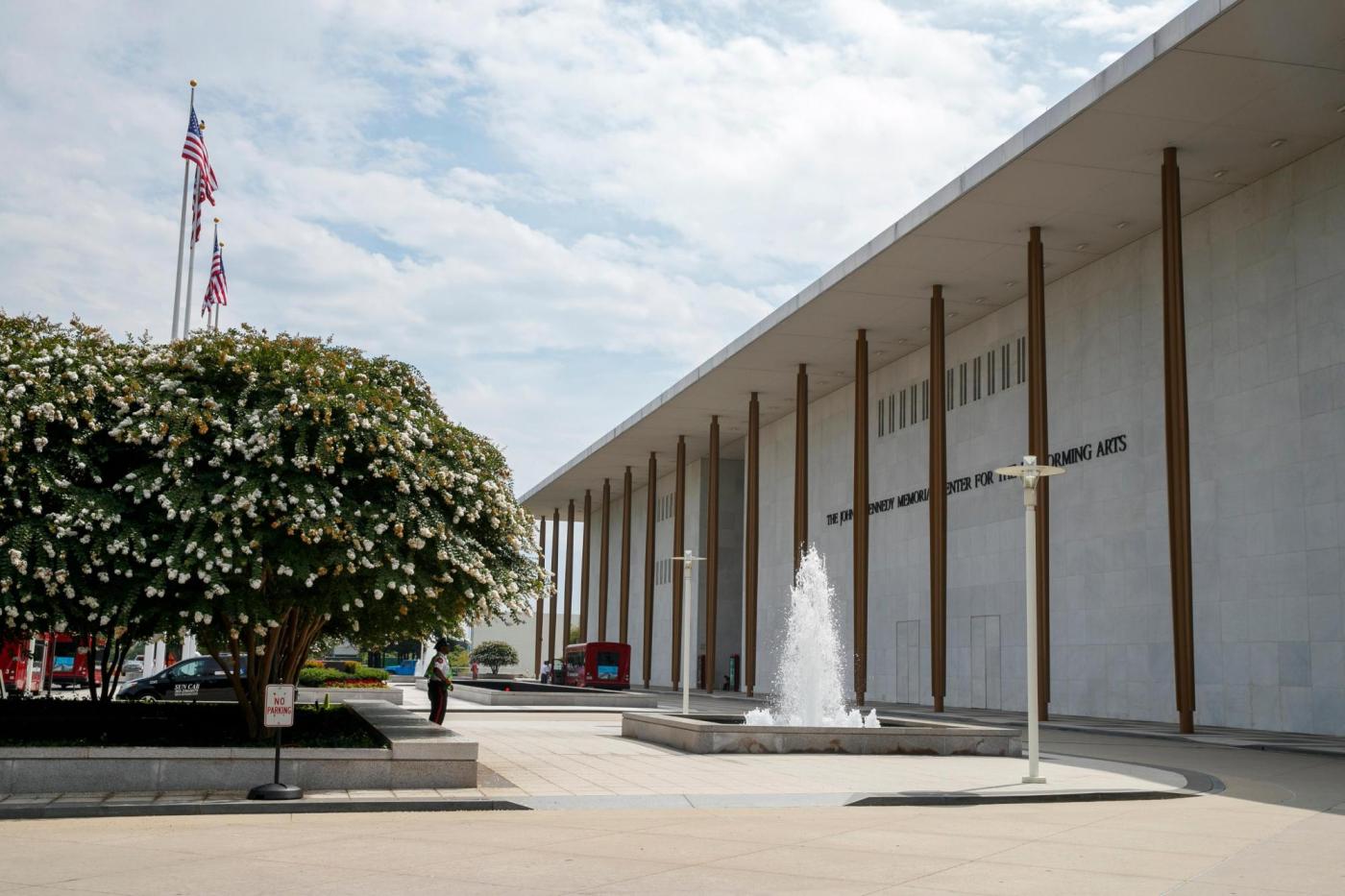
WASHINGTON (AP) — President Donald Trump is set to make an announcement Wednesday at the Kennedy Center, where this year’s honorees for its annual award are being revealed.

Trump avoided the Kennedy Center Honors during his first term after artists said they would not attend out of protest. This year, the Republican president has taken over as the Kennedy Center’s new chairman and fired the board of trustees, which he replaced with loyalists.

Related Articles


VA hospitals are finding it harder to fill jobs, watchdog says


Andrew Cuomo swipes at Zohran Mamdani over a classic New York topic: rent


National Guard rehearsed show of force against immigration raid protesters, general testifies


Trump’s nominee to oversee jobs, inflation data faces shower of criticism


Former aide to Eric Adams pleads guilty to soliciting straw donations for mayor’s campaign

In a Truth Social post on Tuesday, Trump teased a name change for the center, formally the John F. Kennedy Center for the Performing Arts, and said it would be restored to its past glory.

“GREAT Nominees for the TRUMP/KENNEDY CENTER, whoops, I mean, KENNEDY CENTER, AWARDS,” Trump wrote. He said work was being done on the site that would be “bringing it back to the absolute TOP LEVEL of luxury, glamour, and entertainment.”

“It had fallen on hard times, physically, BUT WILL SOON BE MAKING A MAJOR COMEBACK!!!” he wrote.

In a statement on its social media feed, the Kennedy Center said it is “honored” to host Trump, who will be visiting for the third time since January, and hinted that he would announce a construction project.

“Thanks to his advocacy, our beautiful building will undergo renovations to restore its prestige and grandeur,” the venue said. “We are also excited to be announcing this year’s INCREDIBLE slate of Kennedy Center Honorees.”

It is unclear how this year’s honorees were chosen, though Trump had indicated he wanted a more active role. Historically, a bipartisan advisory committee selects the recipients, who over the years have ranged from George Balanchine and Tom Hanks to Aretha Franklin and Stephen Sondheim. A message sent to the Kennedy Center press office asking how this year’s honorees were selected wasn’t returned Tuesday.

The Kennedy Center did post this on social media, however: “Coming Soon … A country music icon, an Englishman, a New York City Rock band, a dance Queen and a multi-billion dollar Actor walk into the Kennedy Center Opera House …”

In the past, Trump has floated the idea of granting Kennedy Center Honors status to singer-songwriter Paul Anka and Sylvester Stallone, one of three actors Trump named as Hollywood ambassadors earlier this year. Anka was supposed to perform “My Way” at Trump’s first inaugural and backed out at the last moment.

The Kennedy Center Honors were established in 1978 and have been given to a broad range of artists. Until Trump’s first term, presidents of both major political parties traditionally attended the annual ceremony, even when they disagreed politically with a given recipient.

Prominent liberals such as Barbra Streisand and Warren Beatty were honored during the administration of Republican George W. Bush, and a leading conservative, Charlton Heston, was feted during the administration of Democrat Bill Clinton.

In 2017, after honoree Norman Lear declared that he would not attend a White House celebration in protest of Trump’s proposed cuts to federal arts funding, Trump and first lady Melania Trump decided to skip the Kennedy Center event and remained away throughout his first term. Honorees during that time included such Trump critics as Cher, Lin-Manuel Miranda and Sally Field.

Since taking office for a second time, Trump has taken a much more forceful stance on the Kennedy Center and inserted himself into its governance. Besides naming himself chairman and remaking the board, he also has indicated he would take over decisions regarding programming at the center and vowed to end events featuring performers in drag.

The steps have drawn further criticism from some artists. In March, the producers of “Hamilton” pulled out of staging the Broadway hit musical in 2026, citing Trump’s aggressive takeover of the institution’s leadership. Other artists who canceled events include actor Issa Rae, singer Rhiannon Giddens and author Louise Penny.

House Republicans added an amendment to a spending bill that Trump signed into law in July to rename the Kennedy Center’s Opera House after Melania Trump, but that venue has yet to be renamed. Maria Shriver, a niece of the late President Kennedy, a Democrat, has criticized as “insane” a separate House proposal to rename the center after Trump.

Recipients of the Kennedy Center Honors are given a medallion on a rainbow ribbon, a nod to the range of skills that fall under the performing arts. In April, the center changed the lights on the exterior from the long-standing rainbow to a permanent red, white and blue display.

Italie reported from New York.

Tennessee town approves deals to turn closed prison into immigration detention facility

posted in: All news | 0

By ADRIAN SAINZ, Associated Press

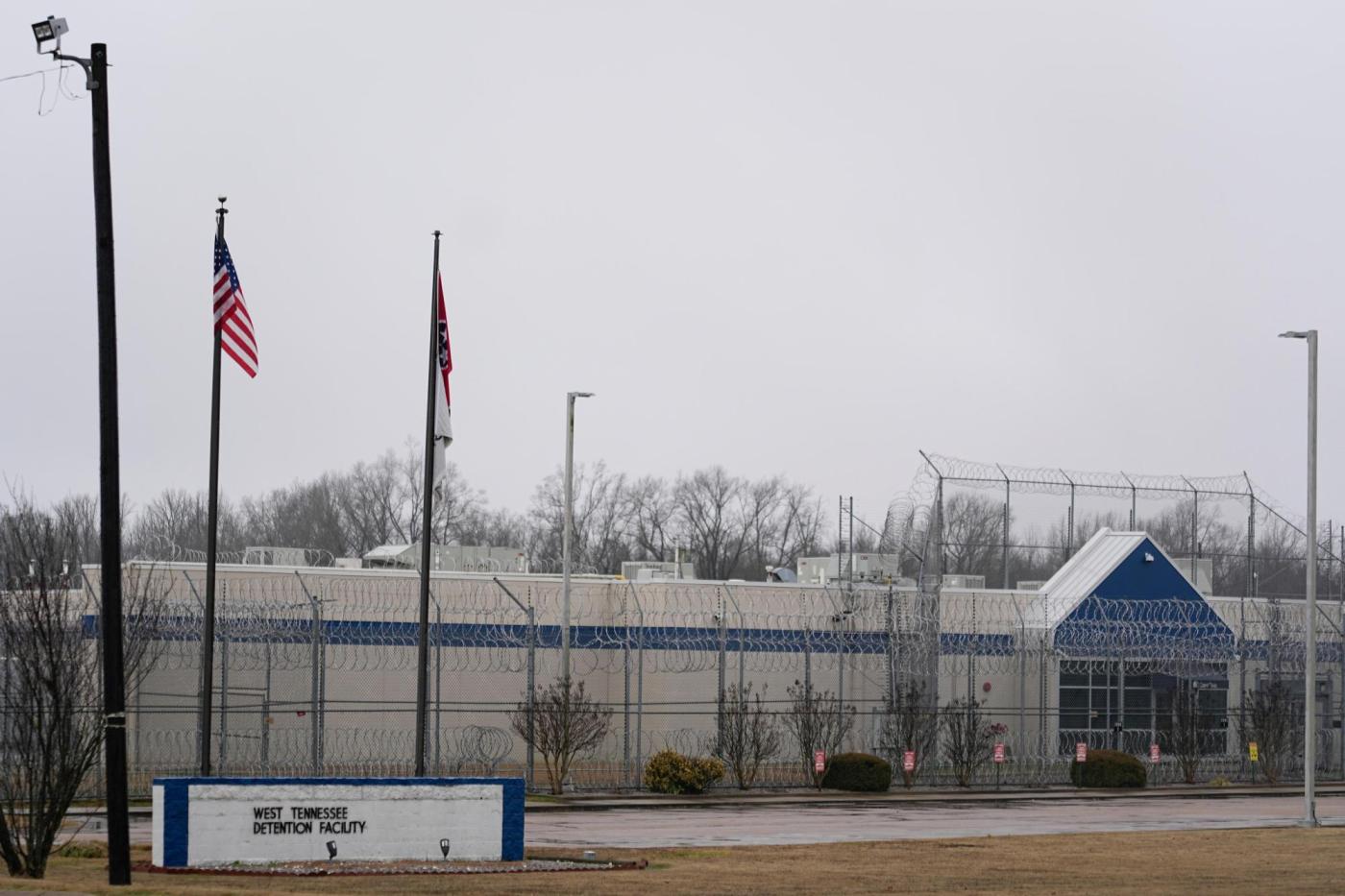
MASON, Tenn. (AP) — Officials in a rural Tennessee town voted Tuesday to approve agreements to turn a former prison into an immigration detention facility operated by a private company, despite loud objections from upset residents and activists during a contentious public meeting.

The five-member Board of Aldermen in Mason, plus Mayor Eddie Noeman and Vice Mayor Reynaldo Givhan, met in a fire station garage to discuss converting the closed West Tennessee Detention Facility into a U.S. Immigration and Customs Enforcement detention center run by CoreCivic Inc.

Also present were a few dozen vocal, angry members of the public who oppose allowing ICE to house immigrants in Mason who have been taken into custody as President Donald Trump pushes for mass deportations. Trump has touted a Florida detention facility where allegations of mistreatment of detainees have drawn lawsuits from civil rights advocates and environmental groups.

Darryle Dowell speaks during a meeting of town officials considering agreements to turn a closed prison into an immigration detention facility on Tuesday, Aug. 12, 2025, in Mason, Tenn. (AP Photo/Adrian Sainz)

The first vote of the meeting resulted in approval for a contract with CoreCivic to resume operating the facility, which was closed in 2021 after President Joe Biden ordered the Department of Justice to stop renewing contracts with private detention facilities. Trump reversed that order in January. The second vote, to approve an agreement with ICE, also passed.

It is not immediately known when the facility will reopen.

Mayor points to job-generating potential

Noeman said he wanted to reopen the shuttered prison to bring jobs and economic development to the town, which has struggled with financial problems and needs infrastructure improvements. With a population of about 1,300, Mason is located about 40 miles northeast of Memphis. When it was open, the prison was the town’s largest employer and an important economic engine.

Noeman, an Egyptian-American immigrant and a longtime business owner in the town, called turning the closed prison over to CoreCivic and ICE a “win-win situation,” which led to a cascade of loud boos.

“It’s nothing personal about any immigrant,” Noeman said, adding moments later that “to give jobs to the people is what I’m looking for.”

Related Articles


Why many Americans are rethinking alcohol, according to a new Gallup poll


Today in History: August 13, East Germany closes Berlin border


Police in Southern California find $30K worth of Labubus stolen from warehouse


Man admits trying to smuggle 850 protected turtles valued at $1.4 million to Hong Kong


35 Union Pacific train cars derail near Texas town, no injuries reported

At times, Noeman argued with attendees, questioning whether they actually live in Mason and telling them “you don’t know what you’re talking about.”

Before the meeting, board member Virginia Rivers told The Associated Press that she does not support turning the prison into an ICE facility because “I don’t like what ICE stands for, how they treat the people.”

During the meeting, she noted that some immigrants without criminal records are being swept up by immigration agents and separated from their families. She said approving the contracts would make Mason “complicit in the abusive treatment of immigrants.”

“We as officials of the town of Mason that were elected by the citizens should consider the consequences and the hurt that this would cause our local community, our neighbors, Tennessee schools and many families,” Rivers said.

CoreCivic said in a statement that the ICE facility would create nearly 240 new jobs, and it is currently advertising openings for detention officers at a pay rate of $26.50 per hour. The facility would also generate about $325,000 in annual property tax revenue and $200,000 for Mason that could be used for schools, infrastructure improvements and other projects, the company said.

“The services we provide help the government solve problems in ways it could not do alone — to help create safer communities by assisting with the current immigration challenges, dramatically improve the standard of care for vulnerable people, and meet other critical needs efficiently and innovatively,” CoreCivic said.

CoreCivic has faced dozens of lawsuits in Tennessee

In 2022, Mason reached a deal with the state of Tennessee after it attempted to take over the city’s finances following years of alleged mismanagement. Some members of the public who spoke at the meeting said Mason is a majority-Black town with a history of being ignored and treated with disrespect.

One of the speakers, Charles Watkins, noted that CoreCivic was the operator of the prison under its previous name, Corrections Corporation of America.

“How is it that we can consistently let these organizations come into Black communities and then just somehow overwhelm us with the few dollars that they throw on the table as crumbs while they take the majority of the take back to wherever they came from?” Watkins said.

Tennessee’s corrections agency has fined CoreCivic $44.7 million across four prisons from 2022 through February, including for understaffing violations. Records obtained by AP also show the company has spent more than $4.4 million to settle about 80 lawsuits and out-of-court complaints alleging mistreatment — including at least 22 inmate deaths — at four Tennessee prisons and two jails from 2016 through September 2024.

The state comptroller released scathing audits in 2017, 2020 and 2023.

The Brentwood, Tennessee-based company has defended itself by pointing to industrywide problems with hiring and keeping workers.

Associated Press writer Jonathan Mattise contributed from Nashville, Tennessee.

European leaders to speak with Trump ahead of his Friday summit with Putin

posted in: All news | 0

By STEFANIE DAZIO and LORNE COOK, Associated Press

BERLIN (AP) — Ukrainian President Volodymyr Zelenskyy on Wednesday arrived in Berlin for talks with German Chancellor Friedrich Merz and virtual meetings with other European and U.S. leaders ahead of a planned summit between President Donald Trump and Russian President Vladimir Putin later this week.

Merz has convened a series of virtual meetings for Wednesday in an attempt to have the voice of European and Ukraine’s leaders heard ahead of the summit in Alaska, where Trump and Putin are expected to discuss a path toward ending Moscow’s war in Ukraine.

Ukrainian President Volodymyr Zelenskyy, front right, is welcomed by German Chancellor Friedrich Merz, left, upon arrival in the garden of the chancellery in Berlin, Germany, Wednesday, Aug. 13, 2025 to join a video conference of European leaders with the US President on the Ukraine war. (John MacDougall/Pool Photo via AP)

Zelenskyy and the Europeans have been sidelined from that summit. German government spokesperson Steffen Meyer said the intention of Wednesday’s meetings was to “make clear the position of the Europeans.”

Zelenskyy is due to meet with European leaders first, in preparation for a virtual call with Trump and Vice President JD Vance about an hour later. A call between leaders of countries involved in the “coalition of the willing” — those who are prepared to help police any future peace agreement between Moscow and Kyiv — will take place last.

The Ukrainian leader on Wednesday said his government has had over 30 conversations with partners ahead of the summit in Alaska, but reiterated his doubt that Putin would negotiate in good faith.

Writing on his official Telegram channel, Zelenskyy said there was “currently no sign that the Russians are preparing to end the war,” and urged Ukraine’s partners in the United States and Europe to coordinate efforts and “force Russia to peace.”

“Pressure must be applied on Russia for an honest peace. We must take the experience of Ukraine and our partners to prevent deception by Russia,” Zelenskyy said.

The stakes for Europe

Trump has said he wants to see whether Putin is serious about ending the war, now in its fourth year, describing Friday’s summit as “a feel-out meeting” where he can assess the Russian leader’s intentions.

Related Articles


VA hospitals are finding it harder to fill jobs, watchdog says


Andrew Cuomo swipes at Zohran Mamdani over a classic New York topic: rent


National Guard rehearsed show of force against immigration raid protesters, general testifies


Trump’s nominee to oversee jobs, inflation data faces shower of criticism


Former aide to Eric Adams pleads guilty to soliciting straw donations for mayor’s campaign

Yet Trump has disappointed allies in Europe by saying Ukraine will have to give up some Russian-held territory. He has also said Russia must accept land swaps, although it was unclear what Putin might be expected to surrender.

European allies have pushed for Ukraine’s involvement in any peace talks, fearful that discussions that exclude Kyiv could otherwise favor Moscow.

Trump on Monday ducked repeated chances to say that he would push for Zelenskyy to take part in his discussions with Putin, and was dismissive of Zelenskyy and his need to be part of an effort to seek peace. Trump said that following Friday’s summit, a meeting between the Russian and Ukrainian leaders could be arranged, or that it could also be a meeting with “Putin and Zelenskyy and me.”

The Europeans and Ukraine are wary that Putin, who has waged the biggest land war in Europe since 1945 and used Russia’s energy might to try to intimidate the European Union, might secure favorable concessions and set the outlines of a peace deal without them.

The overarching fear of many European countries is that Putin will set his sights on one of them next if he wins in Ukraine.

Land concessions a non-starter for Kyiv

Zelenskyy said Tuesday that Putin wants Ukraine to withdraw from the remaining 30% of the Donetsk region that it still controls as part of a ceasefire deal, a proposal the leader categorically rejected.

Zelenskyy reiterated that Ukraine would not give up any territory it controls, saying that would be unconstitutional and would serve only as a springboard for a future Russian invasion.

He said diplomatic discussions led by the U.S. focusing on ending the war have not addressed key Ukrainian demands, including security guarantees to prevent future Russian aggression and including Europe in negotiations.

Three weeks after Trump returned to office, his administration took the leverage of Ukraine’s NATO membership off the table — something that Putin has demanded — and signaled that the EU and Ukraine must handle security in Europe now while America focuses its attention elsewhere.

Senior EU officials believe that Trump may be satisfied with simply securing a ceasefire in Ukraine, and is probably more interested in broader U.S. geostrategic interests and great power politics, aiming to ramp up business with Russia and rehabilitate Putin.

Russian advances in Donbas

Russian forces on the ground in Ukraine have been closing in on a key territorial grab around the city of Pokrovsk, in the eastern Donbas region comprises Ukraine’s eastern industrial heartland that Putin has long coveted.

Military analysts using open-source information to monitor the battles have said Ukraine’s ability to fend off those advances could be critical: Losing Pokrovsk would hand Russia an important victory ahead of the summit and could complicate Ukrainian supply lines to the Donetsk region, where the Kremlin has focused the bulk of military efforts.

Meanwhile, Ukrainian forces struck an oil pumping station in Russia’s Bryansk region overnight on Wednesday, according to a statement from Ukraine’s General Staff.

Ukrainian drones struck the Unecha station which supplies the Russian army, the statement said, adding that damage and a large fire was reported in the area around the pumping station.

Unecha transports oil to two pipelines with an annual capacity to pump 60 million tons. The operation was carried out by units of the Unmanned Systems Forces of Ukraine’s army and the Main Intelligence Directorate of the Defense Ministry, the statement said.

Cook reported from Brussels. Associated Press writer Samya Kullab in Kyiv, Ukraine contributed.