Here are three options being considered to revamp I-94 in St. Paul

posted in: All news | 0

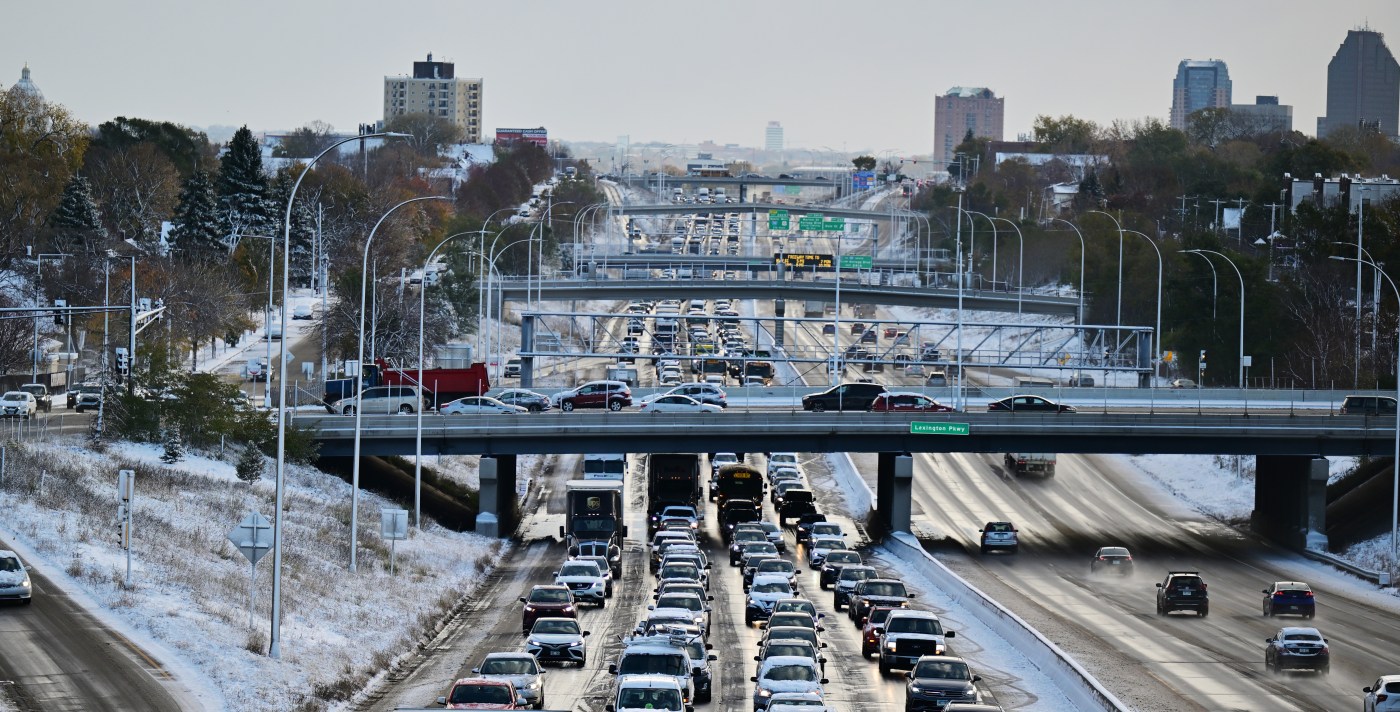
For the past 10 years, the Minnesota Department of Transportation has been weighing how best to reconfigure a 7.5-mile segment of Interstate 94 stretching from Minnesota 55/Hiawatha Avenue in Minneapolis to Marion Street in St. Paul. Three options are now on the table and ready for public comment through early March, with in-person discussions with the public scheduled for Thursday evening in St. Paul.

Transit and pedestrian advocates have called for filling in the deep trench of the highway in St. Paul, bringing it to grade level and creating a neighborhood-friendly boulevard that slows traffic speeds and potentially reduces vehicle emissions. Pointing to costs, congestion and traffic spillover into surrounding neighborhoods, MnDOT has chosen not to include the boulevard concept in a short list of potential projects, while offering simpler alternatives that could include removing travel lanes, adding managed lanes or consistent bus shoulders and improving frontage roads.

The goal is for MnDOT to make a final decision on interstate improvements by late 2028, while seeking environmental approvals around the same time.

Estimated construction costs have ranged from about $500 million to retain the status quo, on the one end, up to $3.2 billion to fill in the interstate and create a boulevard. A reduced freeway, reconfigured freeway or expanded freeway with new lane configurations and transit options could cost $1.5 billion to $2.6 billion for construction, on top of $62 million to $139 million for maintenance.

Related Articles


St. Paul City Council rejects grant extension for Lockheed Martin subsidiary


St. Paul man charged in hit-and-run death of man on mobility scooter


Local journalist and activist plead not guilty in St. Paul church protest


Woman critically injured in St. Paul hit-and-run, 2nd in the city in a week


Pickles, Como Zoo’s only remaining ostrich, dead at 14

Three options

After weighing 22 criteria ranging from impacts upon water pollution, noise and air quality to opportunities for economic growth, MnDOT has whittled 10 potential project approaches down to three options. A fourth option, “No Build,” is included in discussions to provide a baseline for comparing each project to the costs and drawbacks associated with doing nothing.

Option 1: “Maintenance B”

The first option is to maintain I-94 and its four travel lanes in each direction generally as they are, while reconstructing pavement and bridges and providing some relatively limited opportunities for bicycle and pedestrian improvements. Bus shoulders would be upgraded for consistency between downtown St. Paul and downtown Minneapolis, which could improve transit travel times. On the other hand, “wider shoulders may offer limited safety improvements but would not fix many of the other safety issues on I-94,” reads the MnDOT website.

Option 2: “Reduced Freeway-A”

With an eye toward reducing vehicular crashes and the seriousness of those crashes, the second option would be to remove travel lanes, add managed lanes and make other key changes designed “to improve the safety and comfort of people walking, bicycling or rolling.” That includes offering higher-speed bus rapid transit access and improved transit access for residents living near the highway at up to three new BRT stations whose locations have yet to be decided. Some frontage roads could be heavily improved.

The existing freeway would be rebuilt to host three lanes in both directions instead of four. During rush hours, two lanes in each direction would be dedicated to general travel, and a managed lane in each direction would be open to buses, carpoolers and those willing to pay with an E-Z Pass. At other times of day, everyone would be able to use all three lanes, including bus rapid transit services.

MnDOT has expressed concern that removing travel lanes will lead to more traffic congestion, especially during morning and evening rush hours, and possible traffic spillover into neighborhoods surrounding the interstate. On the other hand, a reduced freeway would make it easier to install locally-planned pedestrian and bicycle improvements across I-94, as well as new green space and other community-oriented improvements.

Option 3: “Reconfigured Freeway-A”

A third option would reconfigure the freeway, keeping the four existing travel lanes along I-94 today but converting one lane in each direction into a managed lane during morning and evening rush hours. The goal is to minimize traffic spillover onto surrounding streets while providing more reliable travel times for people in cars and freight trucks and decreasing travel times for buses. As in Option 2, planners would study up to three bus rapid transit locations.

Public comment closes March 9

The discussion resumes Thursday evening with an in-person meeting from 5:30 to 8:30 p.m. at the Wilder Foundation’s Amherst H. Wilder Auditorium, 451 Lexington Parkway N. in St. Paul. MnDOT will showcase project boards, make project representatives available for questions and offer the opportunity for visitors to submit official comment on the scoping document and draft scoping decision, as well as its state Environmental Assessment Worksheet, which were released in early January.

The public comment period on both documents closes March 9. Visitors on Thursday can fill out index cards or share their thoughts with a court reporter. Translated materials and interpretation services will be provided in Spanish, Hmong, Somali, Karen, Oromo, Amharic and American Sign Language.

MnDOT has acknowledged that the state’s approach toward highway construction 60 years ago was little short of devastating for the neighborhoods that I-94 bisected and displaced, including but not limited to the historically-Black Rondo neighborhood in St. Paul. In addition to safety improvements and necessary repairs to bridges, walls and pavement, state transportation officials see an opportunity to enhance broader community goals, such as reconnecting neighborhoods using MnDOT’s “livability framework,” which was developed following public workshops in 2021.

The framework calls for identifying key opportunities to establish a “sense of place,” as well as “community connections, economic opportunities, equity, safety and a healthy environment for the communities that live, work, and play there.”

Jointly conducted by MnDOT and the Federal Highway Administration, the Rethinking I-94 project is the first comprehensive review of this segment of the interstate since its construction in the 1960s.

More information is online at tinyurl.com/Rethinking9426.

Related Articles


In a West St. Paul front yard, an oversized whistle sculpture calls for ‘ICE out’


Pickles, Como Zoo’s only remaining ostrich, dead at 14


Waiting for a mentor: Abby


Waiting for a mentor: Penny


Trump’s border czar says ‘small’ security force will remain in Minnesota after enforcement drawdown

MN 2026 Legislature: How can you follow activity or even get involved?

posted in: All news | 0

The Minnesota Legislature reconvene this week, and lawmakers will make decisions that will affect almost everyone in Minnesota in some way.

They likely will consider a capital investment package to pay for infrastructure projects for schools, colleges and universities, parks, roads and bridges and more. They also will debate how to best deal with fraud in state government programs and the impact of the federal immigration enforcement in Minnesota.

The session official began Tuesday with a memorial to slain former House Speaker Melissa Hortman and her husband.

It’s worth keeping in mind that neither party is in full control of state government, and highly partisan issues such as gun control are unlikely to see significant action. Bills that make it to the governor’s desk will be the product of compromise.

Speaker of the House Lisa Demuth, R-Cold Spring, (John Autey / Pioneer Press)

If you’re interested in getting involved or just tracking progress, here are some tips on how to do so:

How do I find out who represents me?

Go to the Legislature’s Geographic Information Services page at gis.lcc.mn.gov/iMaps/districts/. Type in your address to find your senator and representative, and contact information for them.

How do I contact my legislators?

Click on the “members” link for the House or Senate at leg.state.mn.us or call the House Public Information Services office at 651-296-2146 or the Senate Information Office at 651-296-0504.

How do I keep track of what’s happening?

The Pioneer Press will report on major issues at the Capitol and provide breaking news as well as archived coverage at twincities.com/news/politics. Subscribers to Twincities.com can sign up for the Capitol Report newsletter by clicking the “All Sections” tab on the left hand side of the homepage and going to the bottom.

The Legislature also provides an array of information. Check its website at leg.state.mn.us to find bills and ways to track those you’re interested in, as well as committee schedules and reports on legislative activities. You can sign up for committee mailing lists, news releases from your legislators and a customized bill-tracking service.

Minnesota Senate Democratic Majority Leader Erin Murphy talks with reporters on the Senate floor in the Minnesota State Capitol. (AP Photo/Steve Karnowski)

How can I participate in committee meetings?

To speak at a hearing, contact the committee chair or its staff members and ask to be put on the agenda. Senate committees meet in the Capitol; House committees meet in the State Office Building. The sessions are open to the public.

How do I get into the Capitol?

The primary entrance for visitors is on the ground level under the south steps of the state Capitol. This year there are metal detectors as part of increased security. A weapons screening requirement at the state Capitol will help keep prohibited weapons like knives out of the building, but visitors are still be able to carry handguns if they have the proper permit.

Where can I park when I visit the Capitol?

Several parking ramps and lots near the Capitol provide metered spaces for the public, and there is also a limited amount of metered street parking. The Administration Department provides maps and parking cost information at mn.gov/admin/citizen/buildings-grounds/parking.

Margaret Smith, 7, is chased by her sister, Saoirse, 5, in the Rotunda of the Minnesota State Capitol in St. Paul on Thursday, June 10, 2021. (John Autey / Pioneer Press)


Key dates for the 2026 session

Here are some key dates for the 2014 Legislature:

Feb. 17: The House and Senate convene.

March 27: The first and second committee deadline. To remain alive, a House bill must be approved by a House committee and a Senate bill by a Senate committee by this date.

Related Articles


MN lawmakers honor Melissa and Mark Hortman on first day of session


‘The firsts are hard’: Lawmakers head into first session without Melissa Hortman


MN Legislature: Bonding requests from east metro counties, cities


Immigration crackdown, fraud top issues as Legislature prepares to convene Tuesday


MN Capitol: Screening will keep knives out, handguns allowed with permit

March 28: Second committee deadline. Bills that met the first committee deadline must be approved by a committee in the other house.

April 17: Committees must act favorably on major appropriation and finance bills.

The annual Easter/Passover break is scheduled to begin on March 27. The Legislature will be in recess until 8 a.m. on April 7.

The Legislature must complete its work by May 18.

After frustrating free agency, Andrew Chafin competes for spot in Twins’ bullpen

posted in: All news | 0

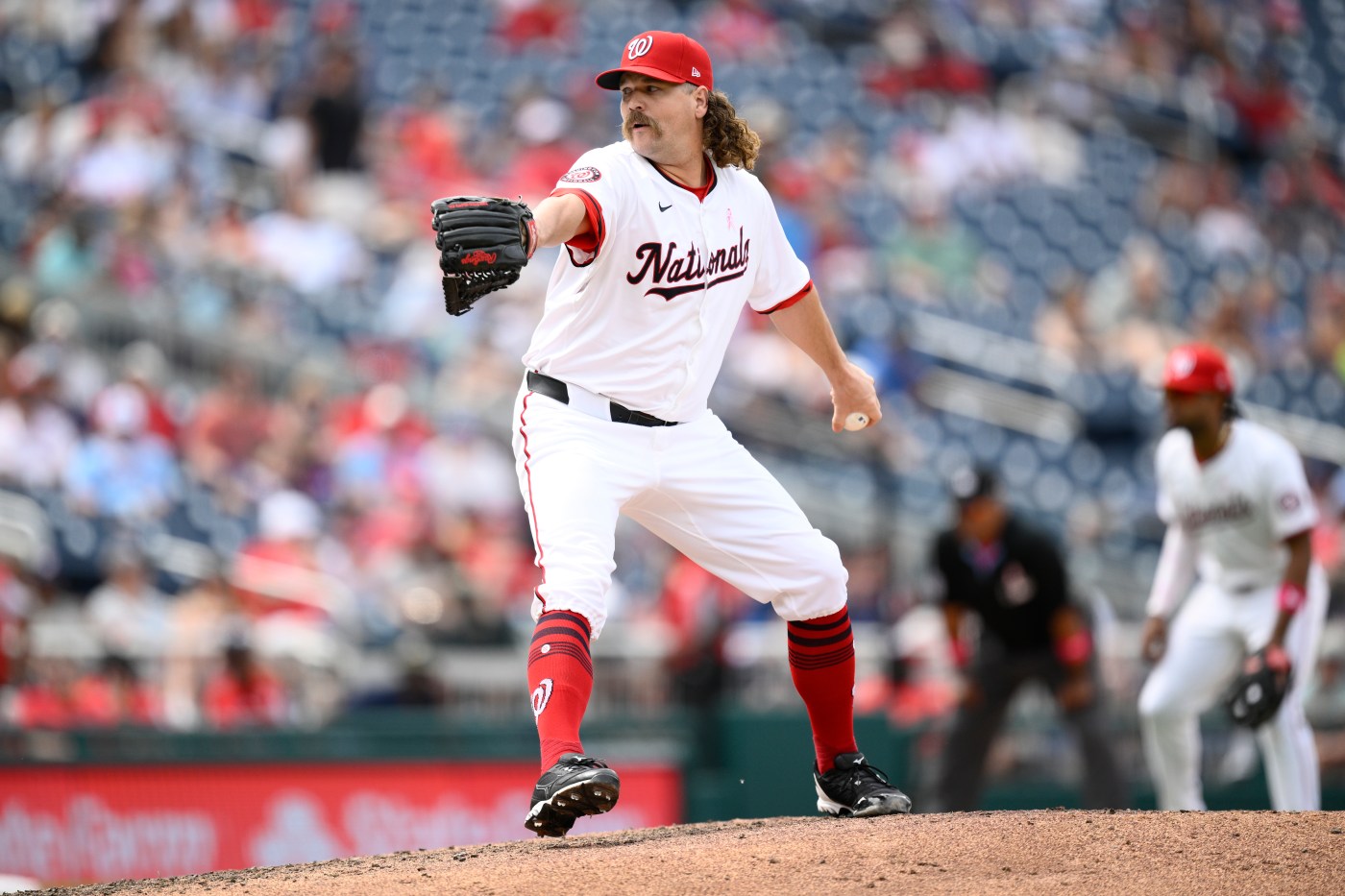
FORT MYERS, Fla. — Andrew Chafin’s trip through free agency was a frustrating one. Just as frustrating, he said, as his journey a year prior that ended with him signing a minor league deal with the Detroit Tigers in late February.

The left-handed reliever was coming off of a solid 2025 season split between the Washington Nationals — he signed there after opting out of his Tigers deal — and Los Angeles Angels and felt like he had put himself in a position to have multiple options. But, “I know how to get guys out and the computer doesn’t understand,” the 35-year-old veteran said.

Eventually, as camp began, he decided to take what he deemed the best opportunity available to him: a minor league deal with an invite to major league camp with the Twins.

With bullpen spots available, Chafin figured this would be the best opportunity to break camp with a team. At least, that’s what he was told.

“I don’t know (expletive) about baseball outside my little bubble,” he said. “I’ve got enough problems of my own to worry about, so that’s all I worry about. I’ve never been a fan of baseball. I don’t watch anything but what I’m doing. I let my agent do all the digging on that stuff. He knows what he’s doing. I know how to pitch.”

That he does.

He is, after all, a 12-year major league veteran, one who seems to be sought after at the trade deadline every year for contending teams, even if free agency isn’t playing out the way he would like. Chafin posted a 2.41 earned-run average across 33 2/3 innings last season.

“I know how to pitch. Most of the young bucks these days know how to throw hard,” Chafin said. “They don’t know what to do with it yet. It took me a while into my career to figure that out. I know how to pitch, and that’s why I’m good at pitching. … I know who I am as a pitcher, what I’m good at, and how to get outs with what I have.”

The Twins signed lefty Taylor Rogers to a one-year deal this offseason. They picked up Anthony Banda in a deal with the Los Angeles Dodgers at the beginning of spring training. Kody Funderburk had a strong finish to the 2025 season after the deadline.

All of a sudden, the Twins have a glut of lefties competing for spots. Right now, there’s no telling how many they may break camp with.

“I think we’re good with whoever’s the best pitchers to leave when we break here,” manager Derek Shelton said. “If you tell me that we leave and everybody’s healthy and we have to make challenging decisions, I’ve learned over the course of time, you can never have too much pitching.”

ABS testing

Ryan Jeffers responded to the first pitch he saw from Rogers during live batting practice with a tap on the helmet. The Twins started to familiarize themselves with the Automated Ball-Strike (ABS) challenge system during live batting practice Wednesday, with Jeffers challenging a call immediately.

“I felt bad it was the first pitch, because that umpire probably hadn’t seen a pitch since last November,” Shelton said. “But ultimately, yeah, it’s good to be able to use it.”

Players tested it out the system last spring, and it has been in use in the minor leagues in recent years. But starting this season, it will be used at the major league level, giving players the chance to appeal an umpire’s ball-strike call. The decision will then be either confirmed or overturned by the ABS challenge system. Teams will have two challenges that are retained when successful.

There’s still plenty for the Twins to work through as they adapt to the new system, but there’s one thing that stands out early: catchers and batters will be doing much more of the challenging than pitchers.

“I don’t think pitchers are going to be probably the most astute at it, and they’re also the most emotional with it,” Shelton said.

Briefly

The Twins have one more day of workouts before they start game play. Zebby Matthews will take the ball Friday when the Twins play host to the University of Minnesota. The day after that, they begin Grapefruit League play against the Boston Red Sox.

Related Articles


Twins look for “next man up,” in wake of Pablo López injury news


Twins’ Pablo López likely to miss entire season


Twins owner Tom Pohlad arrives at spring training, aims to ‘set a new culture’


Pablo López experiences elbow soreness as Twins kick off full-team workouts


After “different” offseason, Buxton preps for WBC, season

Loons’ Joaquin Pereyra and Tomas Chancalay connection forged in Argentina

posted in: All news | 0

The lives of Joaquin Pereyra and Tomas Chancalay are intertwined across two continents.

Pereyra was born in late 1998 in Parana, Argentina, a small town roughly 300 miles northwest of the capital Buenos Aires. Exactly one month later, Chancalay was born in Viale, a smaller town 40 miles east of Parana.

The pair of attacking midfielders later played together on Argentina’s Under-20 national team. After their own club careers took them on separate trajectories, the now 27-year-olds have been reunited with Minnesota United this season.

“(Tomas is) going to be a great help” on the field, Pereyra said in Spanish in January, “in addition to the company he provides during our morning mate sessions.”

Putting Yerba Mate in front of soccer is far from surprising for typical Argentines, who drink the caffeinated herbal tea in a ritualistic way akin to how Americans gulp down coffee.

On the field last season, Pereyra was a jolt to the Loons’ attack, producing 14 goal contributions (6 scored, 8 assisted) in 33 regular-season games.

In New England a year ago, Chancalay was more groggy, working his way back from a torn anterior cruciate ligament in his right knee suffered in the middle of the 2024 season and produced six goal contributions (4 scored, 2 assisted) in 26 games.

Chancalay was a high-priced Designated Player when the Revolution paid a $3 million transfer fee to Racing Club for him in Argentina in November 2024. While on loan with the Revs earlier in 2024, he had scored six goals in 859 minutes for an impressive 0.63 goals per 90 minutes. His 2025 campaign started slowly even before that significant injury.

“I come back in a really good way,” Chancalay told the Pioneer Press in English in January. “I take my mind (off the) ACL, and I’m really ready for play.”

The overlapping layers of Chancalay and Pereyra go down to the same primary position — left attacking midfielder. During their one preseason game together, a 3-0 win over Kansas City on Feb. 7, Chancalay was in that left-side spot, while Pereyra moved into the No. 10 role, or central attacking mid.

New Loons head coach Cam Knowles has made it clear he wants a more attacking style this season and said he was going to experiment with Chancalay and Pereyra in different ways.

“We’ve looked at (Chancalay) as a second forward,” Knowles said. “We look at him as a second (No.) 10. We’ve even looked at Joaquin playing on the right side instead of the left, so there are a few things.”

This trial was before the Loons signed Colombian star James Rodriguez, who plays the No. 10 playmaker role. How the pieces all fit together with Rodriguez, Pereyra, Chancalay and Bongi Hlongwane will be an ongoing experiment to start the season. The first data will come in the Loons’ season opener at Austin FC at 7:30 p.m. Saturday.

Rodriguez received his work visa on Wednesday, which gives him a few official days of prep before a potential debut this weekend.

Knowles liked what he saw from Chancalay during that first preseason game at the Coachella Valley Invitational in Indio, Calif. Chancalay chipped in a cross that set up Anthony Markanich’s first goal against Sporting.

“If we look back at that game, I thought he was excellent,” Knowles said. “His work rate was excellent on both sides of the ball. The players that we have in those attacking positions, the rotations that we can have and the problems we can cause the opposition, he becomes a really good part of that.”

Chancalay missed the final two preseason games while obtaining his U.S. Green Card; that will remove him from the team’s international spots as the club works toward roster compliance by this weekend.

To acquire Chancalay, the Loons spent a paltry sum of $100,000 in a cash-for-player trade the day after Christmas. Chancalay will no longer be a DP with MNUFC in a new deal through the 2027-28 season, but he will still come with a significant budget charge and the accompanying pressure to produce goals. His guaranteed compensation last year in New England was $1.06 million, per the MLS Players Association.

Besides a bond with Pereyra, Chancalay has another fellow Argentine in the Loons’ dressing room: center back Nico Romero.

“It’s always good to have (teammates) from your country,” Chancalay said. “They help me a lot with the first couple days to understand everything here. That’s really good for me. They open the way for me.”

The longtime connection with Pereyra will come in handy for Chancalay.

“I’ve known Tommy for quite a while now,” Pereyra said. “And as I said, the important thing is that we can help him feel good and comfortable in these first few months. After that, I know the kind of player he is, I know how much he can give to the team.”