Loons’ Michael Boxall and Dayne St. Clair named MLS All-Stars

posted in: All news | 0

Michael Boxall’s desire to shirk the spotlight came out moments after the Minnesota United captain was made the center of attention Tuesday.

Loons teammates, coaches, club staff and members of the ACES non-profit he supports choreographed a reveal that Boxall has been voted into the MLS All-Star Game for the first time in his 10-year MLS career.

After basking in the celebratory scene as much as a stoic can stomach, Boxall saw the amount of reporter lens focused on him and said, “Too many cameras.”

Boxall and MNUFC goalkeeper Dayne St. Clair will participate in the MLS showcase match against Liga MX All-Stars on July 23 in Austin, Texas. St. Clair, who is away with the Canadian men’s national team, made his first appearance in 2022 when the exhibition was in St. Paul.

Boxall didn’t want any more attention cast on him with the club’s get-out-the-vote campaign over the previous month and passed the credit when singled out Tuesday.

“I’ve never been disappointed when I haven’t made (the All-Star Game), so I think making it doesn’t really bring the opposite of that,” Boxall said in an interview. “I think me being there … feels more like a team award. If there ever was a time when an individual took credit for what the whole team does, I think this is an example of that.”

Boxall did get emotional when his wife and two young kids were a part of the presentation at the National Sports Center in Blaine. His son Beau had an All-Star jersey for his dad.

“Yeah, that’s, I mean, just not expected,” Boxall said. “Obviously, everything I do, it’s for my kids. So just seeing them happy, happy for me, is pretty cool.”

Boxall and St. Clair are stalwarts on a Loons’ defense tied for the fourth-fewest goals allowed (20 in 18 games) this season. St. Clair is tied for MLS lead with eight clean sheets. Boxall is fifth in the league with 117 clearances.

For Boxall, an All-Star nod is also a bit of a career achievement award, given the 36-year-old’s 250-plus appearances nine seasons at MNUFC.

“On so many fronts, he is deserving of this,” head coach Eric Ramsay said Tuesday. “First and foremost for a player who has been here this long to have this opportunity at this stage in his career is huge. It’s a testament to how he’s looked after himself and the level of performance he’s been able to maintain and the way people look at him here.”

Ramsay previously said he might need to manage Boxall’s workload and, while he doesn’t do all training sessions, he has been a regular in the lineup, playing 1,350 out of a possible 1,620 minutes the season. He has been indispensable in what has become a more competitive position group.

“For him to not only maintain the level of performance but gone beyond is a real credit to him,” Ramsay said.

The Loons have had five other players named to All-Star games: Robin Lod (2024), Emmanuel Reynoso (2022, ’21), Romain Metanire (2019), Darwin Quintero (2018) and Francisco Calvo (2018).

Related Articles


Loons vs. Houston: Keys to the match, projected lineup and a prediction


U.S. men’s soccer team to play at U.S. Bank Stadium


Loons let lead slip away in 4-2 loss to San Diego


Loons vs. San Diego: Keys to the match, projected lineup and a prediction


Rising soccer leader returns home to St. Paul for MLS match against Loons

Opinion: The Reality of Anti-Gang Policing in Harlem and Beyond

posted in: All news | 0

“Ten years later, Harlem is still waiting for justice and for a recognition of the truth that community safety doesn’t come from raids, prisons, or gang lists.”

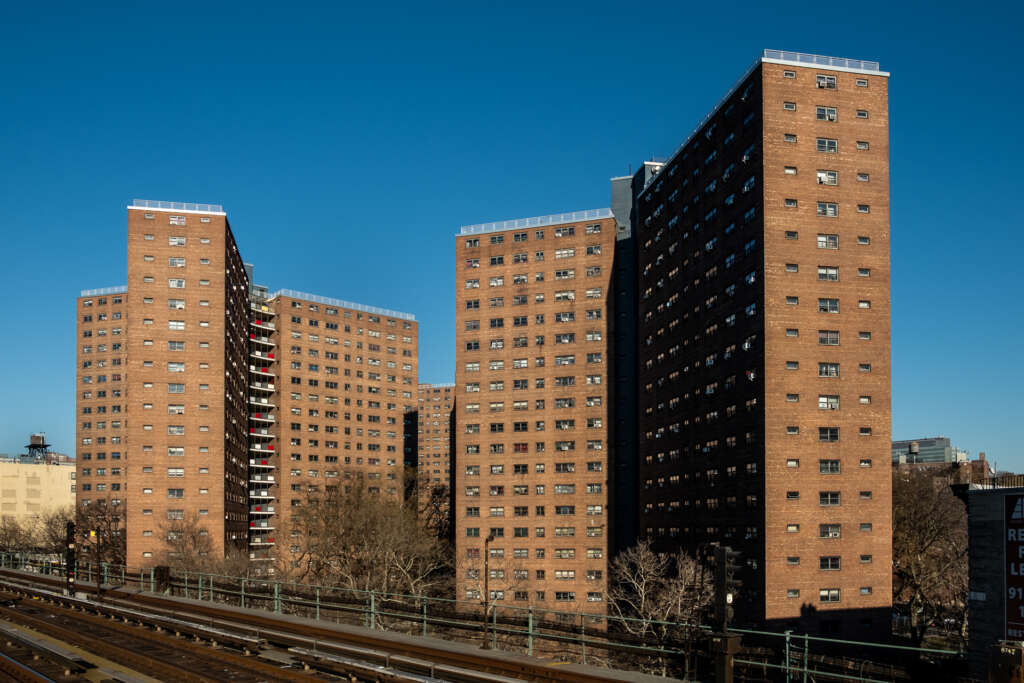
New York City Housing Authority’s Manhattanville Houses. (Photo by Adi Talwar)

On June 4, 2014, one of New York City’s most extensive gang raids took place at the Manhattanville and Grant public housing developments in West Harlem, sweeping up 103 young people, most of them Black and Latino.

A decade later, families impacted by the raid continue to struggle with the trauma and fallout. The resources and services the community asked for before and after the raid never came because anti-gang policing in Harlem—and across the U.S.—has not resulted in equitable justice for communities of color. It has always been about feeding more people into a prison system that disproportionately targets communities of color.

Recent deportations of Venezuelan immigrants (including green card holders and those with legal status) accused of gang affiliation—based on tattoos and without due process—repeat the same racist tactics behind anti-gang policing in New York. These tactics share a pattern: dehumanize Black and Latino people by framing them as inherently violent, thus justifying heightened policing, surveillance, and incarceration.

Harlem’s history with police brutality is long and well-documented. Before the 2014 raids, there was Stop and Frisk, a program rooted in racial profiling. Before that, Broken Windows policing criminalized poverty. And before that, infamous cases like the Central Park Five and the Harlem Six—Black and Latino youth wrongfully targeted and prosecuted under the guise of public safety. Each policy has had a new name for the same old system of racialized policing.

Walking through the Manhattanville and Grant developments today reveals the same systemic neglect that existed before the raid and has only intensified. Homelessness is accelerating, services remain scarce, and poverty persists. The youth who were paraded as violent criminals were the children of parents struggling against generational disinvestment, and those youth have grown into adults facing the same struggles.

This story is not unique to Harlem. Black and Latino neighborhoods across the country face the same dynamics—structural inequities masked by over-policing. These communities know well that the police are not there to uplift or protect them, but serve to protect property, wealth, and the status quo.

Under President Trump, immigration enforcement has adopted the same dehumanizing tactics long used in Black and brown communities. By branding immigrants as “animals” and gang members, and even invoking the Alien Enemies Act to summarily deport them without due process to maximum-security prisons in foreign countries, the administration has justified extreme actions while masking them as neutral law enforcement. Meanwhile, primarily white insurrectionists who stormed the Capitol were pardoned and rebranded as patriots, reinforcing that violence is not always criminalized unless people of color commit it.

This two-tiered justice system is mirrored in the language used by law enforcement. The term “gang” is used by law enforcement as a racially coded word to describe Black and Latino youth. Government officials then use that label to justify the suspension of rights, the erosion of due process, and the use of brutality. 

In Harlem, we worked directly with many of the 103 young people entrapped in the 2014 raids, alongside the Tayashana Chicken Murphy Foundation (TCMF). Our efforts included reentry support, restorative justice circles, job-readiness training, and licensing programs. But when our limited funding ran out, those crucial supports disappeared, leaving the community to deal with the lasting effects of the raids without the tools it needed to heal.

Anti-gang policing is not a broken system. It functions exactly as designed—to criminalize and control people of color. It’s a direct descendant of Jim Crow, the War on Drugs, and the policies that have built the modern prison-industrial complex. And even as crime in New York reaches historic lows, Black and Latino youth continue to be scapegoated as the main drivers of violence. New York City’s gang database, for example, is 99 percent Black and Latino, yet officials insist it is not discriminatory.

But our neighborhoods are not naturally violent. They are the product of decades of trauma, displacement, and systemic neglect. Rather than addressing these root causes, the state continues to rely on fear-based tactics—labeling people of color as gang members who are threatening safety—to distract from the real national crisis: the erosion of democratic values and the rise of authoritarianism.

Ten years later, Harlem is still waiting for justice and for a recognition of the truth that community safety doesn’t come from raids, prisons, or gang lists. Community safety comes from meaningful investments, services, and resources that support communities that have long suffered from systemic neglect and racist policies and policing tactics.

Anthony Posada is a supervising attorney in the Community Justice Unit and Criminal Law Reform at The Legal Aid Society. Matthew Brodwith is a community organizer in the Community Justice Unit at the Legal Aid Society. Taylonn Murphy Sr. is an anti-violence activist, consultant and the founder of the Tayshana “Chicken” Murphy foundation. He is the father of Tayshana Murphy and Taylonn Murphy Jr.

The post Opinion: The Reality of Anti-Gang Policing in Harlem and Beyond appeared first on City Limits.

One more sizzling hot day for the eastern US before temperatures plunge 30 degrees

posted in: All news | 0

By SETH BORENSTEIN

NEW YORK (AP) — A record-smashing heat wave broiled the U.S. East for another day Wednesday, even as thermometers were forecast to soon plunge by as many as 30 degrees in the same areas.

Related Articles


Nestle says it will remove artificial dyes from US foods by 2026


Boulder attack suspect indicted on additional federal hate-crime, explosives charges


Once named opponents in the Supreme Court case that legalized same-sex marriage, now they’re friends


California official criticized for appearing to call on gangs to intervene in immigration raids


Karen Read jury foreman appeals to FBI to reopen the murder investigation

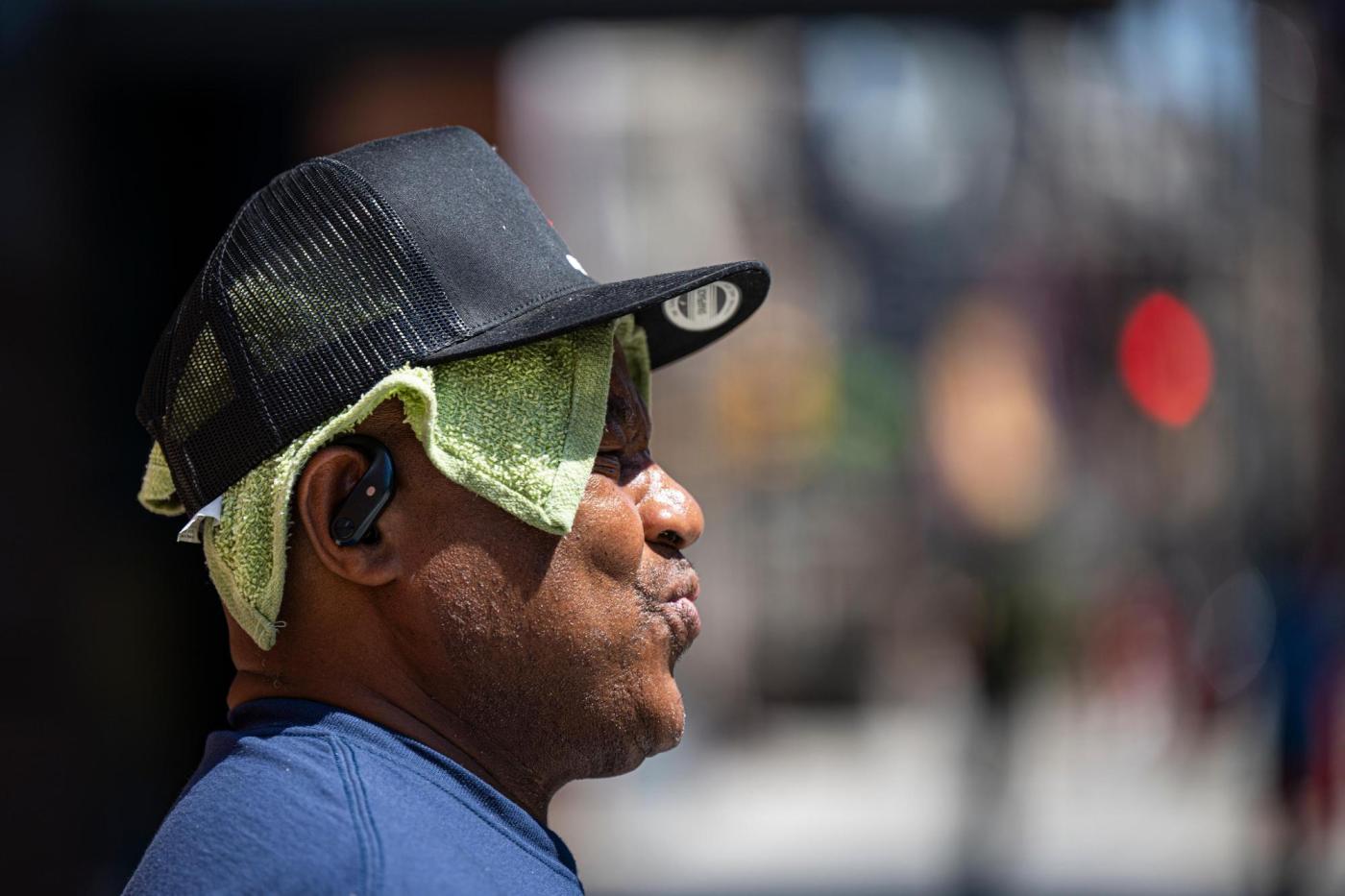
At least 50 heat records were matched or broken Tuesday and 21 places hit triple-digit temperatures. About 127 million Americans remained under National Weather Service heat advisories, down from the previous day. Sizzling temperatures sent utilities scrambling to keep the air conditioning and lights on amid massive demand for power.

“It’s still going to be, I think, pretty bad across the East,” meteorologist Bob Oravec of the Weather Prediction Center said Wednesday morning. ”I think today is probably the last day of widespread record potential. It might not be quite as hot as yesterday by a few degrees. But still, high temperatures are expected in the upper 90s across a good section of the East.”

The weather service warned of “extreme heat” for a stretch of the country from North Carolina to New York and west to West Virginia. Highs could approach triple digits from New York to Richmond, Oravec said. Temperatures again broke 100 on Wednesday at New York’s John F. Kennedy Airport and in Newark and Baltimore.

Temperatures Wednesday morning were “a little bit warmer than expected” because of northwesterly winds bringing “warm leftovers from yesterday,” said former NOAA chief scientist Ryan Maue, a private meteorologist. Nantucket, Massachusetts, was above 90 degrees Fahrenheit when its forecast high was 82.

Weather whiplash

The high pressure heat dome that has baked the East was forecast to break. A cold front began moving south from New England, bringing with it clouds and cooler temperatures — not only cooler than 100 degrees Fahrenheit, but cooler than normal.

A woman uses a portable fan to cool down Wednesday, June 25, 2025, outside the U.S. Capitol in Washington. (AP Photo/Julia Demaree Nikhinson)

That air mass drawing on cool ocean waters will send temperatures plummeting by the end of the week in Philadelphia, which hit a record high of 101 degrees Fahrenheit on Tuesday, said Ray Martin, meteorologist at the National Weather Service in Mount Holly, New Jersey. Air temperatures will be in the low 70s Fahrenheit.

“It’s going to feel like a shock to the system, but it’s not anything particularly unusual,” said Martin.

Boston’s forecast high for Friday is 34 degrees lower than what it hit Tuesday.

“It’s going to feel like a different season,” Oravec said.

However, it won’t last. After one or two days, slightly hotter than normal temperatures are forecast, but not anywhere near the highs from earlier this week, Oravec said.

Weather whiplash from one extreme to another occurs more often as the world warms overall from burning fossil fuels such as coal, oil and natural gas, scientists said.

Records smashed

Tuesday was likely the peak of the heat, with Baltimore the king of swelter. The city’s high of 105 degrees Fahrenheit smashed a previous record by four degrees. At night, when the human body needs cooling, temperatures only dropped to 87 Fahrenheit.

Baltimore was hardly alone. A dozen weather stations were 101 degrees or higher, including two New York airports. Boston hit 102, breaking its old record by seven degrees. Augusta, Maine’s 100-degrees also broke its old record by seven degrees.

Every coastal state from Maine to South Carolina hit 100 degrees somewhere, with Georgia and Florida clocking in at 99 on Tuesday.

A person uses an umbrella to shield themselves from the sun Wednesday, June 25, 2025, outside the U.S. Capitol in Washington. (AP Photo/Julia Demaree Nikhinson)

As temperatures rise “things become less reliable and more unstable,” said Climate Central Chief Meteorologist Bernadette Woods Placky.

The heat meant more demand for power. The nation’s largest power grid operator, PJM Interconnection, on Monday recorded its highest demand since 2011, with only a slight drop off Tuesday and Wednesday, spokesman Dan Lockwood said.

“We have an aging grid infrastructure already in United States, so you can see the impacts of that heat on that infrastructure,” said Kate Guy, senior research fellow at the Columbia University Center on Global Energy Policy. The aging system is less capable of transmitting power at the voltages needed, she said. “At the same time, you’re seeing a really big spike in demand. This is what they (utilities) are increasingly experiencing because of climate change,” Guy said. “Frankly, with each year is increased, historic temperatures and that intense heat arriving earlier than ever, just putting an immense pressure on the electrical grid.”

Mudassar Khan, right, talks with a customer while sitting outside his electronics store with air conditioners and fans for sale on display, Tuesday, June 24, 2025, in New York. (AP Photo/Cedar Attanasio)

Extreme heat caused the road to buckle in two locations on an interstate highway in northern New Jersey. State transportation officials say the impact on the concrete roadway in Morris County on Tuesday afternoon forced some lane closures as temporary repairs were made. Crews then began work to replace the damaged areas and repave those sections.

Some downtown Chicago streets will close Wednesday night to repair pavement that has buckled due to hot temperatures amid an ongoing heat wave in the city.

“Pavement failures or blowouts occur when prolonged high temperatures cause the road to expand and buckle up or blow out, resulting in uneven driving surfaces,” the Illinois Department of Transportation said in a statement.

In Chesapeake, Virginia, a heat-related malfunction prompted a bridge to remain stuck in the open position.

Isabella O’Malley in Philadelphia; Alexa St. John in Detroit; Patrick Whittle in Portland, Maine; Bruce Shipkowski in Trenton, New Jersey; and Christine Fernando contributed to this report.

The Associated Press’ climate and environmental coverage receives financial support from multiple private foundations. AP is solely responsible for all content. Find AP’s standards for working with philanthropies, a list of supporters and funded coverage areas at AP.org.

Democrats fret about national fallout after Mamdani stuns in New York City

posted in: All news | 0

By STEVE PEOPLES and ANTHONY IZAGUIRRE

NEW YORK (AP) — The stunning success of Zohran Mamdani, a 33-year-old self-described democratic socialist, in the race for New York City mayor has exposed anew the fiery divisions plaguing the Democratic Party as it struggles to repair its brand nearly half a year into Donald Trump’s presidency.

Related Articles


Who is Zohran Mamdani? State lawmaker seeks to become NYC’s first Muslim and Indian American mayor


Fannie Mae, Freddie Mac ordered to consider crypto as an asset when buying mortgages


Trump voters cheer his move against Iran. MAGA leaders had warned the bombing could backfire


Trump wraps up a NATO summit far chummier than the tense meetings of his first term


CDC nominee Susan Monarez sidesteps questions about disagreements with RFK in Senate hearing

A fresh round of infighting erupted among Democratic officials, donors and political operatives on Wednesday, a day after Mamdani’s leading opponent, former New York Gov. Andrew Cuomo, conceded the Democratic primary. Mamdani appears on a glide path to the nomination, though ranked choice vote counting will determine the final outcome next week.

Many progressives cheered the emergence of the young and charismatic Mamdani, whose candidacy caught on with viral campaign videos and a focus on the cost of living. But the party’s more pragmatic wing cast the outcome as a serious setback in their quest to broaden Democrats’ appeal and move past the more controversial policies that alienated would-be voters in recent elections.

Indeed, Wednesday’s debate was about much more than who would lead America’s largest city for the next four years.

Giddy Republicans viewed Mamdani’s success as a political gift that would help shape elections across New Jersey and Virginia this fall and into next year’s midterms. And while such predictions are premature, national conservative media focused on the New York election with fresh zeal, suggesting that Mamdani’s emerging profile as a prominent Democratic leader will surely grow.

Trump took aim at Mamdani on social media, calling him “a 100% Communist Lunatic.”

“We’ve had Radical Lefties before, but this is getting a little ridiculous,” the president wrote. “Yes, this is a big moment in the History of our Country.”

Some Democrats think so, too.

Lawrence Summers, the Treasury Secretary under former Democratic President Barack Obama, aired dire concerns on social media.

“I am profoundly alarmed about the future of the (Democratic Party) and the country” because of the New York City results, Summers wrote.

Vermont Sen. Bernie Sanders, who had endorsed Mamdani, scoffed at such Democratic critics and instead called for them to follow Mamdani’s lead.

“In many ways, Mamdani’s campaign really shows the direction in which the Democratic Party should be moving. And that is not to worry about what billionaires want, but to worry about what working-class people want,” Sanders told The Associated Press.

The Vermont senator warned Republicans against premature celebration.

“People like Mamdani are their worst nightmares,” Sanders said of the GOP. “It’s one thing for the Democrats to be strongly against Donald Trump. It is another thing to give working class people something to vote for — a positive agenda.”

Democratic mayoral candidate Zohran Mamdani takes the stage at his primary election party, Wednesday, June 25, 2025, in New York. (AP Photo/Heather Khalifa)

Assuming Mamdani ultimately is the Democratic nominee, he would move to a November election against embattled Mayor Eric Adams, who is running as an independent, Republican candidate Curtis Sliwa and maybe even Cuomo again, should he also choose to run as an independent.

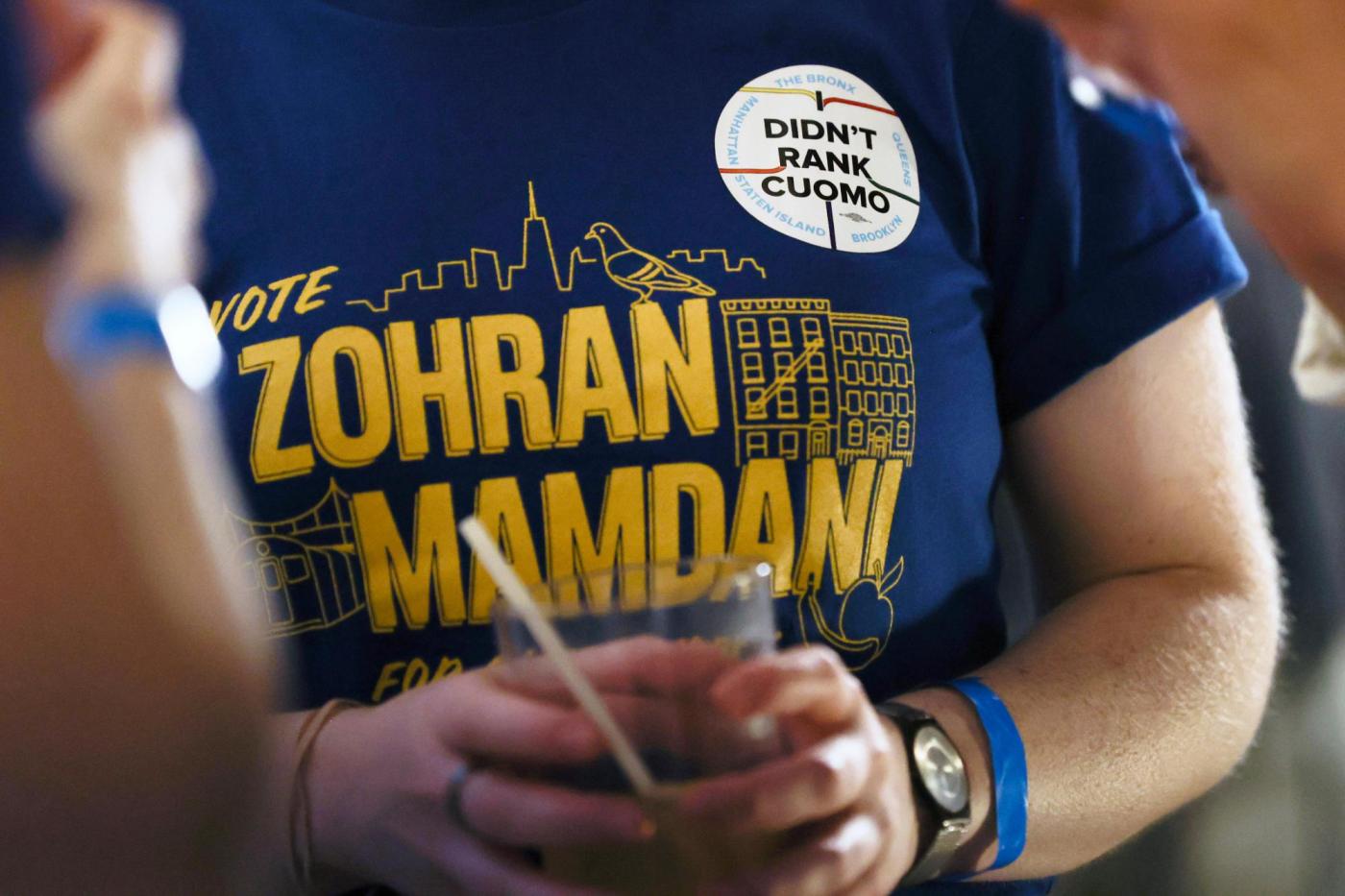
A member of the New York state Legislature since 2021, Mamdani won over Democratic primary voters with an optimistic message centered on the cost-of-living backed by a sprawling grassroots campaign that brought out thousands of volunteers across the city’s five boroughs. Initial precinct data shows that he did well in the city’s wealthier enclaves while Cuomo struggled in all but majority Black and orthodox Jewish neighborhoods, along with the more conservative Staten Island.

Mamdani’s rise was aided by Cuomo’s baggage. The 67-year-old Democrat was trying to mount a political comeback from a sexual harassment scandal that forced him to resign the governorship in 2021.

Mamdani has had to sidestep a field of landmines of his own making, centered on his policies and political rhetoric.

He called the New York Police Department “racist, anti-queer and a major threat to public safety” in a 2020 social media post. As a mayoral candidate, he softened his stance and said that the police served a vital role. Still, he pushed for the creation of a new public safety department that would rely more on mental health care services and outreach workers.

On Israel’s war in Gaza, he used the term “genocide” to describe Israel’s actions in the conflict. In the primary’s closing stretch, Mamdani also defended the phrase “ globalize the intifada,” which he described as “a desperate desire for equality and equal rights in standing up for Palestinian human rights.”

He also faced criticism over his identity as a democratic socialist, a label he refused to back away from.

Mamdani’s agenda includes free city bus service, free child care, government-run grocery stores, a rent freeze for people living in rent-regulated apartments and new affordable housing — all paid for by raising taxes on the rich.

Matt Bennett, co-founder of the centrist Democratic group Third Way, warned that Mamdani’s policies are a political problem for the Democratic Party.

“The fact that Mamdani is young, charismatic, a great communicator — all of those things are to be emulated,” Bennett said. “His ideas are bad. … And his affiliation with the (Democratic Socialists of America) is very dangerous. It’s already being weaponized by the Republicans.”

Mamdani’s age and ethnic background also earned praise from allies across the country. He would be the youngest New York City mayor in more than a century and its first Muslim and Indian American mayor if elected.

After keeping quiet on Mamdani throughout his primary campaign, three of New York’s top Democrats, Gov. Kathy Hochul, House Democratic Leader Hakeem Jeffries and Senate Democratic leader Chuck Schumer, praised the progressive upstart but stopped short of endorsing him after his victory seemed assured.

Senate Minority Leader Chuck Schumer, D-N.Y., left, and House Minority Leader Hakeem Jeffries, D-N.Y., hold a news conference on the GOP reconciliation bill, at the Capitol in Washington, Wednesday, June 11, 2025. (AP Photo/J. Scott Applewhite)

The Democratic leaders, largely considered moderates, applauded his focus on affordability and said they had spoken with him, although none explicitly said they would support him in the November general election.

Mamdani’s Democratic critics feared that he would make their task this fall and in next year’s midterm elections, which will decide the balance of power in Congress, even more difficult.

The group, Republicans Against Trumpism, a key Democratic ally in the 2024 election, predicted that Republicans would make Mamdani “the face of the Democratic Party, hurting moderates in swing districts and Democrats’ chances of taking back the House.”

In a Wednesday radio interview with WNYC, Mamdani acknowledged that his contest had become part of the national debate.

“It has been tempting I think for some to claim as if the party has gone too left,” he said. “When in fact what has occurred for far too long is the abandonment of the same working-class voters who then abandoned this party.”

Associated Press writers Matt Brown and Joey Cappelletti in Washington and Jill Colvin in New York contributed to this report.