Early lead exposure could result in memory issues later in life

posted in: All news | 0

By Roberta Burkhart, Pittsburgh Post-Gazette

PITTSBURGH — A new study has found that people who lived in areas with high levels of leaded gasoline emissions in the 1960s and ’70s are more likely to report memory problems today — a finding that researchers say could deepen our understanding of environmental risks tied to dementia.

Related Articles


Elisabeth Rosenthal: The price increases that should cause Americans more alarm


Why getting a COVID-19 vaccine is likely to be more complicated this year


FDA approves updated Pfizer COVID shots but limits access for some kids and adults


FTC has long said products must back up health claims. A MAHA lawsuit would upend that


Two deaths among 20 Minnesota cases of West Nile virus this year

The study and others presented in July at the 2025 Alzheimer’s Association International Conference used data from more than 600,000 participants from the U.S. Health and Retirement Study from the University of Michigan’s Institute for Social Research.

Participants who lived in areas with higher estimated lead emissions — often tied to dense traffic and industrial zones — were significantly more likely to report poor memory. Although the Michigan study did not include cognitive testing or formal dementia diagnoses, the findings point to a potential long-term connection between environmental exposure and cognitive decline.

“Research suggests half the U.S. population — more than 170 million people — were exposed to high lead levels in early childhood. This research sheds more light on the toxicity of lead related to brain health in older adults today,” said Maria C. Carrillo, the Alzheimer’s Association chief science officer and medical affairs lead, per a July 27 news release.

Other studies presented at the conference suggested that any lead exposure during one’s lifetime may cause cognitive problems; that certain populations may be disproportionately affected, pointing to social disparities; and that a biological connection exists between lead exposure and Alzheimer’s, Carrillo said.

On the one hand, these conclusions are not all that surprising, said Mark Haut, the director of WVU Rockefeller Neuroscience Institute’s Memory Health Clinic, and Steven Albert, professor of behavioral and community health sciences at the University of Pittsburgh. Neither expert contributed to the studies.

But the conference presentation highlights the need for further study plus continued and expanded long-term collection of data, so that the connection and repercussions of these kinds of toxic exposures can be better understood — from both environmental and treatment perspectives, they said.

Plenty of research, Haut explained, has shown brain development and resilience can be compromised early in life by toxic exposures.

He described the concept of “brain reserve,” comparing it to a cup that starts full and empties over time. Lead exposure — especially in childhood — can siphon off this reserve early. So while lead might not directly cause Alzheimer’s or memory loss, it may set the stage for cognitive decline by weakening the brain’s defenses over time.

Albert noted that while the studies presented at the conference relied on self-reported memory issues rather than clinical diagnoses, the implications are still notable, especially given the scale of the data.

While there’s growing concern about historical lead exposure contributing to memory decline, Haut cautioned against overstating the link.

“First, it’s an association study, a correlation. It’s not cause and effect,” he said.

Still, the evidence that lead is neurotoxic is solid: “Heavy metals, which include lead as well as mercury, are not good for your body or your brain, even at low-level exposure.”

The leaded gasoline study was one of several presented at the conference exploring the role of environmental factors in dementia risk. Another study, with nearly 2,780 California participants, found that even current residence near industrial sources of lead was associated with worse cognitive performance.

“There are many environmental pollutants, airborne toxins, that have been associated with cognitive performance,” Albert said.

He also pointed to a systematic review published the same week as the conference in Lancet Planetary Health linking long-term air pollution exposure — specifically particulate matter, nitrogen dioxide and black carbon — to increased risk of diagnosed dementia.

“The big implication of all this is that a lot of the dementia that we attribute to old age and … the accumulation of amyloid and tau and the shrinking of the brain and neuronal debris” may have an environmental source, Albert said, referring to amyloid and tau proteins.

In Alzheimer’s patients, brain cell function is disrupted by the accumulation of amyloid plaques and tau tangles, which ultimately leads to brain shrinkage and the buildup of neuronal debris — or remnants and waste products from damaged or dead brain cells, per the Alzheimer’s Therapeutic Research Institute at the Keck School of Medicine of USC.

Why lead matters — and who’s at risk

Lead has long been known to affect brain development in children. But research into its long-term effects on aging brains is still emerging.

“Lead is bad for lots of things,” Albert said. “There’s been some studies that suggest it’s related to IQ generally, and also aggression and lots of other things in animal model studies.”

A study published in the journal PNAS in 2022, which found 170 million Americans alive today were exposed to high lead levels in early childhood, also indicated that many of those individuals were exposed to levels five or more times higher than what’s considered safe today. It estimated that lead exposure is responsible for the loss of more than 800 million collective IQ points among those 170 million Americans, as of 2015.

IQ is not the only area where lead exposure damages us, Albert noted. Instead, it often overlaps with other social determinants of health, like poverty and poor housing, making it difficult to isolate one factor.

Higher levels of exposure and living near environmental pollutants often correlate to those with lower incomes, he said.

Haut agreed, pointing out that many exposures are geographically and economically determined.

“The other interesting thing about this data is it also points to the neighborhood that you grow up in,” he said, referring to the data presented at the conference. He noted that areas near former industrial sites or lead sources tend to lack resources and have more pollution.

He discussed the concept of “neighborhood disparity” and added, “whether it’s lead by itself or with all these other factors, or lack of access to health care, and poor nutrition … all those kinds of factors kind of figure into this.”

These compounding variables, he said, make it difficult to isolate lead as the sole cause of cognitive decline.

Haut underscored the difficulty of drawing firm conclusions about toxic exposure and cognitive outcomes without long-term, consistent data collection.

He pointed to research systems in other countries, such as Britain’s UK Biobank, which follows the lifelong health journeys of a half-million volunteers.

He said these types of studies take decades — “I’m talking 60 years” — but are necessary to build a clearer picture.

What can be done now?

While the exposures in question may have occurred decades ago, Albert said there are still meaningful steps people can take — especially in places like Pittsburgh, where aging housing may contribute to continued risk.

“Something as simple as dehumidifiers, air purifiers or even opening up the window or scrubbing fungal moisture in the basement — all of these things probably can make a difference for the quality of indoor air,” he said. “And maybe that would have important health consequences.”

Albert recently led a study through the Healthy Home Lab at Pitt, funded by the U.S. Department of Housing and Urban Development, that examined indoor air quality and its links to health. The study’s findings are under review and are not yet published.

“We looked at indoor air quality, which is one of these also less well investigated things — to look at particulate matter and carbon dioxide and also fungal species that you can actually measure in dust,” he said. “There probably is a lot of work to be done for the home.”

Even without a clear cause-and-effect link to Alzheimer’s, Haut emphasized the importance of protecting brain health through lifestyle choices.

“Diet actually is really important” in addition to one’s general health, he said, recommending lean protein, fewer processed foods, more fruits and vegetables and lower sugar intake. “Pairing that with daily exercise is really important.”

But perhaps the most powerful tool is interpersonal connection.

Haut said socialization is something he consistently recommends. “That’s the best brain exercise, right?”

He explained that human social interactions engage the entire brain and vary constantly, making them more neurologically stimulating than something like repetitive brain games.

A preventable piece of the puzzle

Ultimately, Albert sees the lead findings as part of a broader conversation about preventable risks for dementia — and one that should lead to greater public health investment.

He pointed out that the Lancet Commission has identified up to 14 different factors that affect cognitive health in old age, including high cholesterol, traumatic brain injury, hearing loss, Type 2 diabetes, smoking, obesity and high blood pressure.

“The estimate is that if you reduced those or eliminated those, you could cut the dementia incidence by about 40 or 45%,” he said. “And lead is a good one because we know a lot about its biological effects on the nervous system.”

Even as research continues, he said the public health message remains clear.

“With age, the ‘whips and scorns of time,’ as Shakespeare called it, you will see increases in dementia,” Albert said. “But the way we live and what we expose ourselves to probably increases our risks.”

© 2025 the Pittsburgh Post-Gazette. Visit www.post-gazette.com. Distributed by Tribune Content Agency, LLC.


Trump administration asks military base outside Chicago for support on immigration operations

posted in: All news | 0

CHICAGO (AP) — President Donald Trump’s administration has asked a military base outside Chicago for support on immigration operations, the base said Thursday, signaling a push to expand its law enforcement crackdown to other cities.

Related Articles


Judge won’t halt closure of ‘Alligator Alcatraz’ immigration detention center in Florida Everglades


Fed Gov. Lisa Cook sues Trump administration to block her attempted firing


Japan’s chief trade envoy postpones US trip as Tokyo calls for faster action on its tariffs deal


Louisiana urges Supreme Court to bar use of race in redistricting, in attack on Voting Rights Act


FACT FOCUS: Rural hospitals are expected to lose money from Trump’s bill, despite RFK Jr.’s promise

The Department of Homeland Security has asked Naval Station Great Lakes for “limited support in the form of facilities, infrastructure, and other logistical needs to support DHS operations,” said Matt Mogle, spokesperson for the base 35 miles (56 kilometers) north of Chicago.

He said no decisions have been made on the request and that the base has not received an official request to support a National Guard deployment.

The request shows the Republican administration’s desire to move beyond Washington as it ramps up immigration operations. Trump has threatened to deploy National Guard troops to Chicago and other Democratic-led cities after he called up troops to target crime, immigration and homelessness in Washington.

Illinois Gov. JB Pritzker, a Democrat, told The Associated Press that the nation’s third-largest city doesn’t need or want military intervention to fight crime.

The Chicago Sun-Times first reported about the Trump administration’s request.

How Gen Z is preparing (or not) for retirement

posted in: All news | 0

By Erin El Issa, NerdWallet

The investing information provided on this page is for educational purposes only. NerdWallet, Inc. does not offer advisory or brokerage services, nor does it recommend or advise investors to buy or sell particular stocks, securities or other investments.

Generation Z is the youngest adult generation in the U.S. today, giving Gen Zers (ages 18-28) ample time to get financially prepared for retirement. But for many, it doesn’t appear to be a priority, at least not yet.

Fewer than 1 in 5 Gen Zers (18%) say they’ve contributed to a retirement account in 2025, according to NerdWallet’s Financial Goals Midyear Check-In Report. This could be attributed to several factors — like a lack of urgency, know-how or extra funds to get started.

But another NerdWallet survey on retirement, conducted online by The Harris Poll, suggests that many Gen Zers may not think they’ll even need retirement savings, and some have trepidation about the U.S. stock market. If this is you, here are a few things to know and tips to get started saving so you can eventually stop working, even if it seems too far away to worry about.

Many Gen Zers plan to work indefinitely

The retirement survey finds that three-quarters of Gen Zers (75%) plan to stay in the workforce for as long as they physically can. Maybe they’ll still feel the same three or four decades from now. But maybe not. Things change, and no matter your age, it’s smart to prepare for an eventuality where you’ll want to (or have to) retire.

What Gen Zers can do: Allow yourself to change your mind and set a goal

One of the best things money can buy is opportunity. In this case, the opportunity to change your mind later.

Whether or not you currently plan on retiring some day, set a goal number. It doesn’t have to be perfect and it will probably change over time, but start somewhere. Use a retirement calculator to estimate how much you might need in your golden years.

Related Articles


US applications for jobless benefits fell last week as layoffs remain low


US economy grows 3.3% in second quarter, government says, in second estimate of April-June growth


Al Sharpton to lead pro-DEI march through Wall Street on anniversary of the 1963 March on Washington


Japan’s chief trade envoy postpones US trip as Tokyo calls for faster action on its tariffs deal


Nvidia’s AI chip sales surged again in latest quarter, but worries about a tech bubble persist

It can be hard to imagine your future self without just picturing an older-looking version of current you. But over the decades, it’s almost a certainty that your life will change. You could experience disability or need to take on caregiving responsibilities for a loved one. Or, you might find you just don’t want to continue working after thirty or forty years. If you don’t save for the future, you’re limiting your ability to retire without financial hardship.

More than 2 in 5 Gen Zers think Social Security will be enough

With a retirement goal amount in mind, you might be curious how much of that will be covered by your Social Security benefits. Likely some, but not all of it. According to the retirement survey, 43% of Gen Zers think Social Security alone will provide enough income for them to live comfortably during retirement. But Social Security is meant to cover just a fraction of your income — about 40%, though this can vary — when you stop working, not replace it.

In June 2025, the average monthly Social Security benefit for a retired worker was $2,005. By the time Gen Zers are ready to leave work, this could be even lower (adjusted for inflation): The 2025 Social Security Trustees Report estimates that the combined Social Security Old-Age and Survivors Insurance and Disability Insurance Trust Funds will be depleted in 2034, at which time Social Security benefits would be reduced to 81%.

This means Gen Zers likely won’t have the same benefits their predecessors had, and even if they did, Social Security wouldn’t be sufficient for most to live on. Instead, it’s a good idea to save as if this benefit will be reduced in the future.

What Gen Zers can do: Start saving now

Retirement may not seem like a pressing concern in your twenties, but it’s smart to start early. Ideally, Social Security income will be there to supplement your savings when you’re ready to retire. But in any case your age puts you in a great position to prepare.

Let’s say you’re 25 years old and have a retirement savings goal of $1.5 million by age 65. That may sound like an impossible sum, but most of the total will come from returns earned by investing your retirement savings in the stock market. Based on past market performance, we can assume an average annual return of 7%, after accounting for inflation.

If you postpone saving until you’re 35, you’d need to invest $1,280 a month for 30 years. But if you start investing today, you’d have to save less than half that per month — just $604 — for 40 years.

Note that by starting now, you’d have to save around $170,000 less than if you waited to start until age 35. That’s because your returns have more time to compound.

Saving several hundred dollars a month may be a tall order, but don’t let that stop you from saving anything at all. Forty years is a long time, and it’s likely your financial situation will change over the course of your working life, hopefully for the better. Start by saving something for the future — whether that’s just hitting an employer match on a 401(k), putting a small percentage of take-home pay in a Roth IRA and/or committing to increasing contributions when you get a pay bump. It all adds up over the decades.

Some Gen Zers have trust issues with the stock market

Three in 10 Gen Zers with retirement accounts (30%) say their confidence in the U.S. stock market decreased in the past 12 months, according to the retirement survey. Market fluctuations can be hard to stomach, especially if you’re risk averse. But throughout history, the stock market has always eventually recovered from downturns. And while past performance isn’t indicative of future performance, it does provide some comfort that even the worst stock market crashes ultimately bounced back.

While some may feel apprehensive about the risk of investing in the stock market, it’s arguably riskier to forgo it. Let’s take our earlier example of investing $604 a month for 40 years. We’ll assume 7% returns for investment accounts and 4% returns for savings accounts, the latter of which is generous and a rate currently available on some accounts, but unlikely to be sustained over four decades.

Despite the same total amount contributed, the retirement balance at the end of these two scenarios is very different. With 7% returns, you’d end up with the $1.5 million we calculated before. But with 4% returns from a savings account, it would be less than half that, at around $704,000. And this doesn’t take into account lost employer matches or tax advantages that often come along with investing in retirement accounts.

What Gen Zers can do: Diversify and trust the process

So how do you invest without feeling like you’re playing roulette? Diversify your portfolio. This means buying a mix of different assets so if one underperforms, your portfolio has a better chance of withstanding the hit.

Diversification can be achieved pretty easily with low-cost index funds and a little research. An index fund tracks a market index, like the S&P 500, which tracks the stock performance of 500 major U.S. companies. There are index funds for U.S. companies of different sizes — large-cap, mid-cap and small-cap — as well as international funds, bond funds and more. Index funds themselves are diversified, but you can strengthen your portfolio further by choosing a handful of funds that track different markets or asset classes.

It can be easy to deprioritize a financial goal that’s decades away, like retirement savings, when dealing with more pressing money concerns, like student loan payments or just living expenses in general. But getting started — whether it’s with $50 or $500 — and investing consistently can truly make the difference for your financial future.

The complete survey methodology is available in the original article, published at NerdWallet.

Erin El Issa writes for NerdWallet. Email: erin@nerdwallet.com.

US applications for jobless benefits fell last week as layoffs remain low

posted in: All news | 0

By CHRISTOPHER RUGABER, Associated Press Economics Writer

WASHINGTON (AP) — Fewer Americans sought unemployment benefits last week as employers appear to be holding onto their workers even as the economy has slowed.

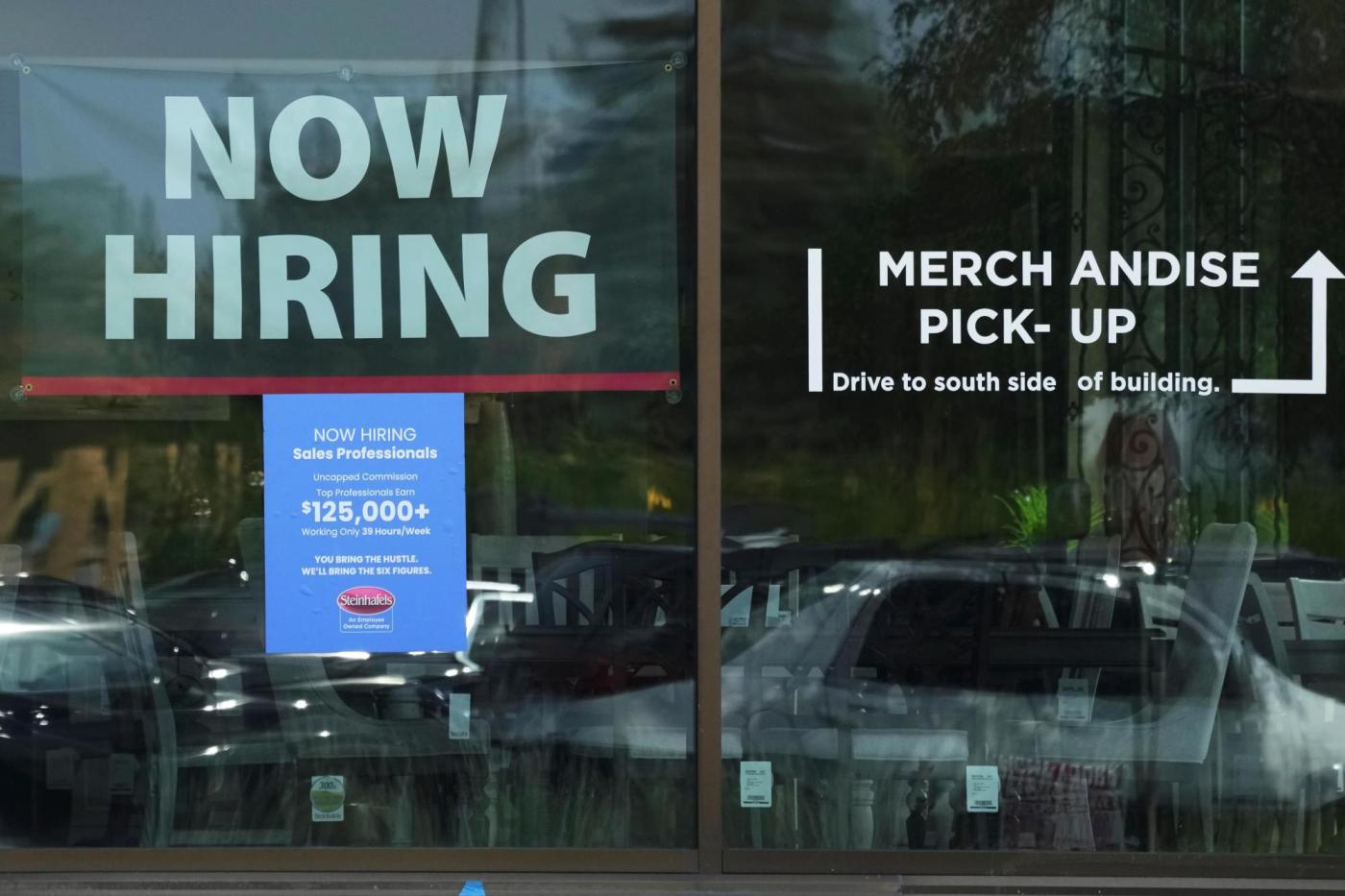
Applications for unemployment benefits for the week ending Aug. 23 dropped 5,000 to 229,000, the Labor Department reported Thursday.

Related Articles


Japan’s chief trade envoy postpones US trip as Tokyo calls for faster action on its tariffs deal


Nvidia’s AI chip sales surged again in latest quarter, but worries about a tech bubble persist


Pro-DEI organizers fired up to maintain Target boycott as promises go unfulfilled


Ford recalls more than 355,000 pickup trucks over instrument display failure on the dashboard


Wall Street edges higher and pushes S&P 500 to another record

Measures of the job market are being closely watched on Wall Street and by the Federal Reserve as the most recent government data suggests hiring has slowed sharply since this spring. Job gains have averaged just 35,000 a month in the three months ending in July, barely one-quarter what they were a year ago.

Weekly applications for jobless benefits are seen as a proxy for layoffs and have mostly settled in a historically healthy range between 200,000 and 250,000 since the U.S. began to emerge from the COVID-19 pandemic more than three years ago.

While layoffs are low, hiring has also weakened as part of what many economists describe as a “no hire, no fire” economy. Still, the unemployment rate remains a low 4.2%.

Growth has weakened so far this year as many companies have pulled back on expansion projects amid the uncertainty surrounding the impacts of President Donald Trump’s tariff policies. Growth slowed to a 1.3% annual rate in the first half of the year, down from 2.5% in 2024.

The sluggishness in the job market is a key reason that Federal Reserve Chair Jerome Powell signaled last week that the central bank may cut its key interest rate at its next meeting Sept. 16-17. A cut could reduce other borrowing costs in the economy, including mortgages, auto loans, and business loans.

The Labor Department’s report also showed that the four-week average of claims, which softens some of the week-to-week swings, rose by 2,500 to 228,500.

The total number of Americans collecting unemployment benefits for the previous week of Aug. 16 fell 7,000 to 1.95 million, down from nearly a four-year high reached earlier this month. The stubbornly high number of people continuing to collect jobless aid suggests that once out of work, many Americans are having trouble finding new jobs.