By Henry Larweh, Rachana Pradhan, Rae Ellen Bichell, KFF Health News
The Trump administration’s cuts to Centers for Disease Control and Prevention funding for state and local health departments had vastly uneven effects depending on the political leanings of a state, according to a KFF Health News analysis. Democratic-led states and select blue-leaning cities fought back in court and saw money for public health efforts restored — while GOP-led states sustained big losses.
Podcasters and influencers: The unexpected jobs covered under Trump’s ‘no tax on tips’ plan
States begin to see job losses from Trump’s cuts, housing and spending slowdowns
Students in the US illegally see college pathways close as Trump targets tuition breaks
Head of EU parliament trade committee has ‘doubts’ about deal with US, says it could be amended
Rubio will meet Mexico’s president as Trump flexes military might in Latin America
The Department of Health and Human Services in late March canceled nearly 700 Centers for Disease Control and Prevention grants nationwide — together worth about $11 billion. Awarded during the COVID-19 pandemic, they supported efforts to vaccinate people, reduce health disparities among demographic groups, upgrade antiquated systems for detecting infectious disease outbreaks, and hire community health workers.
Initially, grant cancellations hit blue and red states roughly evenly. Four of the five jurisdictions with the largest number of terminated grants were led by Democrats: California, the District of Columbia, Illinois, and Massachusetts.
But after attorneys general and governors from about two dozen blue states sued in federal court and won an injunction, the balance flipped. Of the five states with the most canceled grants, four are led by Republicans: Texas, Georgia, Oklahoma, and Ohio.
In blue states, nearly 80% of the CDC grant cuts have been restored, compared with fewer than 5% in red states, according to the KFF Health News analysis. Grant amounts reported in an HHS database known as the Tracking Accountability in Government Grants System, or TAGGS, often don’t match what states confirmed. Instead, this analysis focused on the number of grants.
The divide is an example of the polarization that permeates health care issues, in which access to safety-net health programs, abortion rights, and the ability of public health officials to respond to disease threats diverge significantly depending on the political party in power.
In an emailed statement, HHS spokesperson Andrew Nixon said the agency “is committed to protecting the health of every American, regardless of politics or geography. These funds were provided in response to the COVID pandemic, which is long over. We will continue working with states to strengthen public health infrastructure and ensure communities have the tools they need to respond to outbreaks and keep people safe.”
The money in question wasn’t spent solely on COVID-related activities, public health experts say; it was also used to bolster public health infrastructure and help contain many types of viruses and diseases, including the flu, measles, and RSV, or respiratory syncytial virus.
“It really supported infrastructure across the board, particularly in how states respond to public health threats,” said Susan Kansagra, chief medical officer of the Association of State and Territorial Health Officials.
The Trump cutbacks came as the U.S. recorded its largest measles outbreak in over three decades and 266 pediatric deaths during the most recent flu season — the highest reported outside of a pandemic since 2004. Public health departments canceled vaccine clinics, laid off staff, and put contracts on hold, health officials said in interviews.
After its funding cuts were blocked in court, California retained every grant the Trump administration attempted to claw back, while Texas remains the state with the most grants terminated, with at least 30. As the CDC slashed grants in Texas, its measles outbreak spread across the U.S. and Mexico, sickening at least 4,500 people and killing at least 16.
Colorado, which joined the lawsuit, had 11 grant terminations at first, but then 10 were retained. Meanwhile, its neighboring states that didn’t sue — Wyoming, Utah, Kansas, Nebraska, and Oklahoma — collectively lost 55 grants, with none retained.
In Jackson, Ohio, a half-dozen community health workers came to work one day in March to find the Trump administration had canceled their grant five months early, leaving the Jackson County Health Department half a million dollars short — and them without jobs.
“I had to lay off three employees in a single day, and I haven’t had to do that before. We don’t have those people doing outreach in Jackson County anymore,” Health Commissioner Kevin Aston said.
At one point, he said, the funding helped 11 Appalachian Ohio counties. Now it supports one.
Marsha Radabaugh, one employee who was reassigned, has scaled back her community health efforts: She’d been helping serve hot meals to homeless people and realized that many clients couldn’t read or write, so she brought forms for services such as Medicaid and the Supplemental Nutrition Assistance Program to their encampment in a local park and helped fill them out.
“We would find them rehab places. We’d get out hygiene kits, blankets, tents, zero-degree sleeping bags, things like that,” she said. As a counselor, she’d also remind people “that they’re cared for, that they’re worthy of being a human — because, a lot of the time, they’re not treated that way.”
Sasha Johnson, who led the community health worker program, said people like Radabaugh “were basically a walking human 411,” offering aid to those in need.
Radabaugh also partnered with a food bank to deliver meals to homebound residents.
Aston said the abrupt way they lost the funds — which meant the county unexpectedly had to pay unemployment for more people — could have ruined the health district financially. Canceling funding midcycle, he said, “was really scary.”
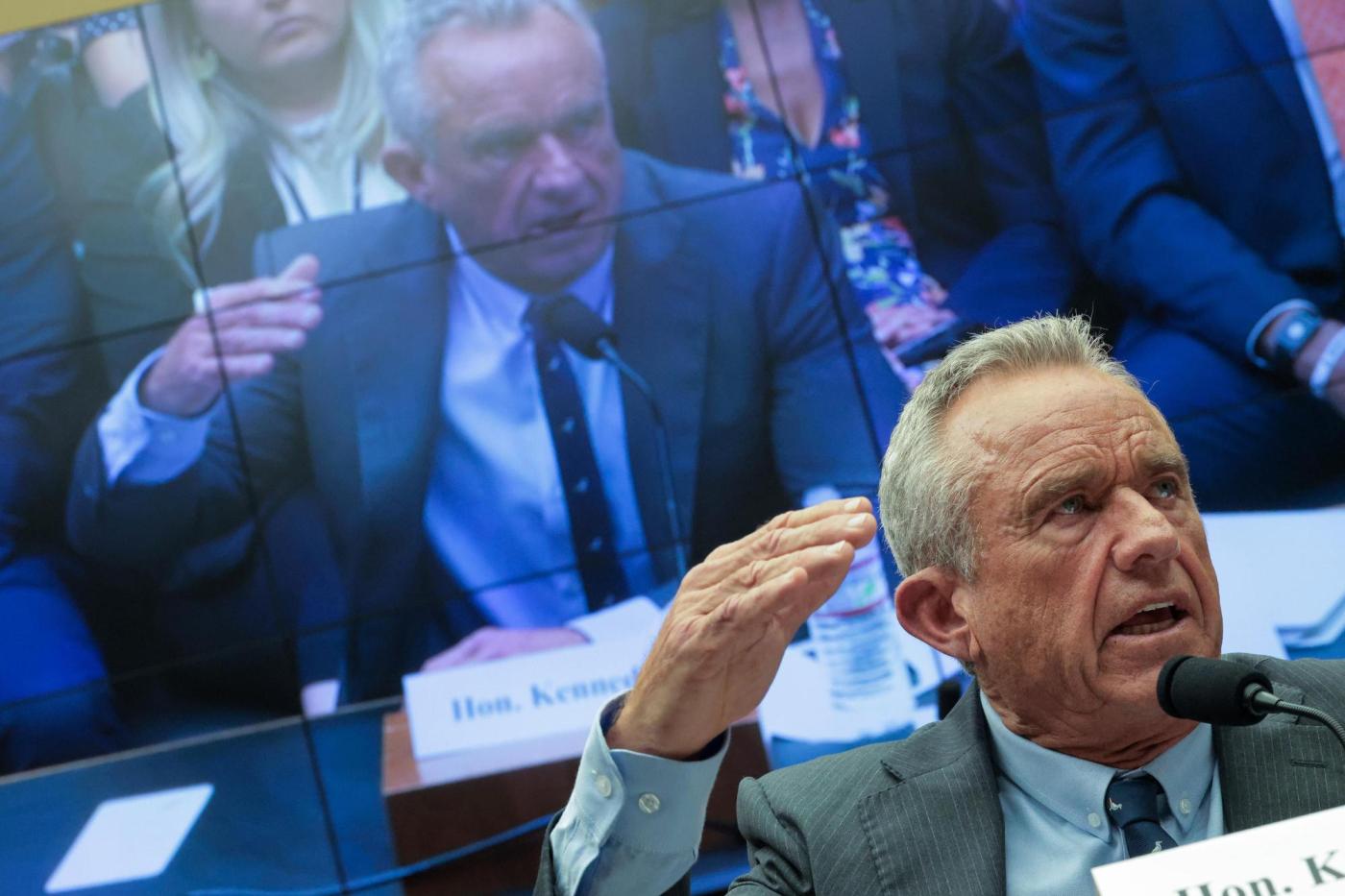
HHS Secretary Robert F. Kennedy Jr., a longtime anti-vaccine activist and promoter of vaccine misinformation, has called the CDC a “cesspool of corruption.” At HHS, he has taken steps to undermine vaccination in the U.S. and abroad.
Federal CDC funding accounts for more than half of state and local health department budgets, according to KFF, a health information nonprofit that includes KFF Health News. States that President Donald Trump won in the 2024 election received a higher share of the $15 billion the cCDC allocated in fiscal 2023 than those that Democrat Kamala Harris won, according to KFF.
The Trump administration’s nationwide CDC grant terminations reflect this. More than half were in states that Trump won in 2024, totaling at least 370 terminations before the court action, according to KFF Health News’ analysis.
The Columbus, Ohio, health department had received $6.2 million in CDC grants, but roughly half of it — $3 million — disappeared with the Trump cuts. The city laid off 11 people who worked on investigating infectious disease outbreaks in such places as schools and nursing homes, Columbus Health Commissioner Mysheika Roberts said.
She also said the city had planned to buy a new electronic health record system for easier access to patients’ hospital records — which could improve disease detection and provide better treatment for those infected — but that was put on ice.
“We’ve never had a grant midcycle just get pulled from us for no reason,” Roberts said. “This sense of uncertainty is stressful.”
Columbus did not receive its money directly from the CDC. Rather, the state gave the city some funds it received from the federal government. Ohio, led by Republican Gov. Mike DeWine and a Republican attorney general, did not sue to block the funding cuts.
Columbus sued the federal government in April to keep its money, along with other Democratic-led municipalities in Republican-governed states: Harris County, Texas, home to Houston; the Metropolitan Government of Nashville and Davidson County in Tennessee; and Kansas City, Missouri. A federal judge in June blocked those cuts.
As of mid-August, Columbus was awaiting the funds. Roberts said the city won’t rehire staff because the federal funding was expected to end in December.
Joe Grogan, a senior scholar at the University of Southern California’s Schaeffer Institute and former director of the White House Domestic Policy Council in Trump’s first term, said state and local agencies “are not entitled” to the federal money, which was awarded “to deal with an emergency” that has ended.
“We were throwing money out the door the last five years,” Grogan said of the federal government. “I don’t understand why there would ever be a controversy in unspent COVID money coming back.”
Ken Gordon, Ohio Department of Health spokesperson, wrote in an email that the $250 million in grants lost had helped with, among other things, upgrading the disease reporting system and boosting public health laboratory testing.
Some of the canceled HHS funding wasn’t slated to end for years, including four grants to strengthen public health in Indian Country, a grant to a Minnesota nonprofit focused on reducing substance use disorders, and a few to universities about occupational safety, HIV, tuberculosis, and more.
Brent Ewig, chief policy and government relations officer for the Association of Immunization Managers, said the cuts were “the predictable result of ‘boom, bust, panic, neglect’ funding” for public health.
The association represents 64 state, local, and territorial immunization programs, which Ewig said will be less prepared to respond to disease outbreaks, including measles.
“The system is blinking red,” Ewig said.
Methodology
KFF Health News’ analysis of Centers for Disease Control and Prevention grants sought to answer four questions: 1) How many grants have been terminated in the U.S. under the Trump administration since March? 2) Which states saw the most grants cut? 3) What were the grants for? and 4) Did the grant terminations affect blue, red, and purple states differently? This follows a similar analysis by KFF Health News for an article on nationwide NIH grant terminations.
Our primary data source was a Department of Health and Human Services website showing grant terminations. We compared an initial list of grant terminations from April 3 with one from July 11 to determine how many grants had been restored. The USAspending.gov database helped us track grants by state.
To classify states politically, we followed the same steps from our April coverage of National Institutes of Health grant terminations. States were “blue” if Democrats had complete control of the state government or if the majority of voters favored Democratic presidential candidates in the last three elections (2016, 2020, 2024). “Red” states were classified similarly with respect to the Republican Party. “Purple” states had politically split state governments and/or were generally considered to be presidential election battleground states. The result was 25 red states, 17 blue states, and eight purple states. The District of Columbia was classified as blue using similar methods.
This analysis does not account for potential grant reinstatements in local jurisdictions where the funds were awarded indirectly rather than directly from the CDC; it accounts only for the recipients’ location, and excludes grants terminated from Compacts of Free Association states and other foreign entities that received grants directly from the CDC. At least 40 CDC grants were terminated that were meant for global health efforts or assisting public health activities in other nations following the Trump administration’s order for the CDC to withdraw support for the World Health Organization.
©2025 KFF Health News. Distributed by Tribune Content Agency, LLC.