New Hampshire judge to hear arguments on class action against Trump’s birthright citizenship order

posted in: All news | 0

By HOLLY RAMER and MIKE CATALINI, Associated Press

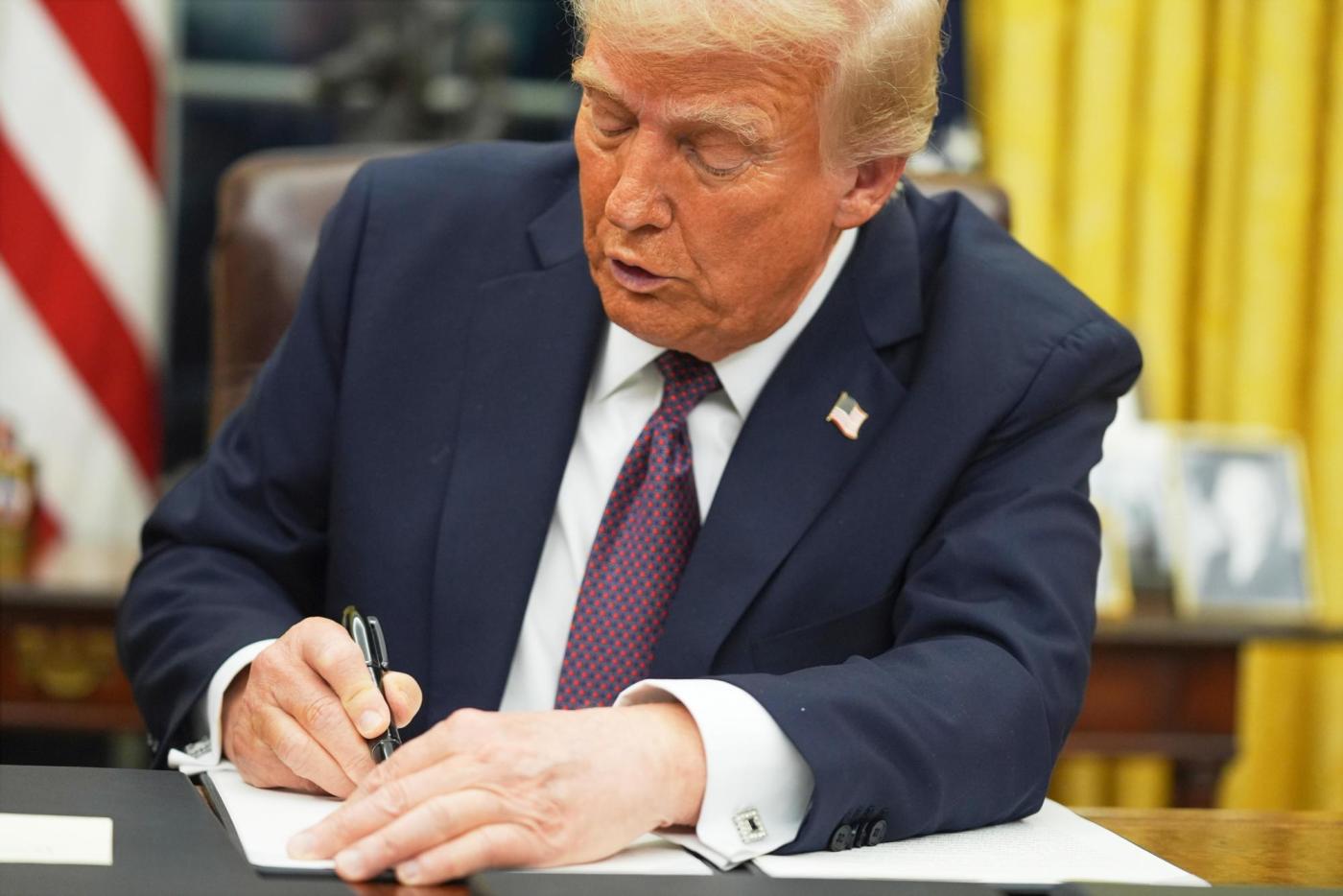
CONCORD, N.H. (AP) — A federal judge in New Hampshire will hear arguments Thursday on whether to certify a class-action lawsuit that would include every baby affected by President Donald Trump’s restrictions on birthright citizenship.

The lawsuit, filed on behalf of a pregnant woman, two parents and their infants, is among numerous cases challenging Trump’s January order denying citizenship to those born to parents living in the U.S. illegally or temporarily. Represented by the American Civil Liberties Union and others, the plaintiffs are seeking to have their case certified as a class action and to block implementation of the order while litigation continues.

“Tens of thousands of babies and their parents may be exposed to the order’s myriad harms in just weeks and need an injunction now,” lawyers for the plaintiffs wrote in court documents filed Tuesday.

FILE – Mairelise Robinson, a U.S. citizen who is 6 months pregnant, attends a protest in support of birthright citizenship, outside of the Supreme Court in Washington, May 15, 2025. (AP Photo/Jacquelyn Martin, File)

At issue is the Constitution’s 14th Amendment, which states: “All persons born or naturalized in the United States and subject to the jurisdiction thereof, are citizens of the United States.” The Trump administration says the phrase “subject to the jurisdiction thereof” means the U.S. can deny citizenship to babies born to women in the country illegally, ending what has been seen as an intrinsic part of U.S. law for more than a century.

“Prior misimpressions of the citizenship clause have created a perverse incentive for illegal immigration that has negatively impacted this country’s sovereignty, national security, and economic stability,” government lawyers wrote in the New Hampshire case. “The Constitution does not harbor a windfall clause granting American citizenship to … the children of those who have circumvented (or outright defied) federal immigration laws.”

Legal battles continue in multiple states

Several federal judges have issued nationwide injunctions stopping Trump’s order from taking effect, but the U.S. Supreme Court limited those injunctions in a June 27 ruling that gave lower courts 30 days to act. With that time frame in mind, opponents of the change quickly returned to court to try to block it.

New Jersey and the more than dozen states joining its case in Massachusetts federal court have asked the judge to determine if the nationwide injunction in their case could still apply under the high court’s ruling. The judge has scheduled a hearing for July 18.

Related Articles


Rubio says U.S. and Russia have exchanged new ideas for Ukraine peace talks


A surprise IRS move on political endorsements leaves faith leaders and legal experts divided


FACT FOCUS: Trump misrepresents facts about wind power during Cabinet meeting


US issues sanctions against UN investigator probing abuses in Gaza


Trump administration resumes sending some weapons to Ukraine after Pentagon pause

“Everybody knows there’s a 30-day clock, so our hope is that we get an answer prior to the end of the 30-day clock,” New Jersey Attorney General Matt Platkin told The Associated Press in a recent interview.

In a Washington state case before the 9th U.S. Circuit Court of Appeals, the judges have asked the parties to write briefs explaining the effect of the Supreme Court’s ruling. Washington and the other states in that lawsuit have asked the appeals court to return the case to the lower court judge.

As in New Hampshire, the plaintiff in a Maryland seeks to organize a class-action lawsuit that includes every person who would be affected by the order. The judge set a Wednesday deadline for written legal arguments as she considers the request for another nationwide injunction from CASA, a nonprofit immigrant rights organization.

Ama Frimpong, legal director at CASA, said the group has been stressing to its members and clients that it is not time to panic.

“No one has to move states right this instant,” she said. “There’s different avenues through which we are all fighting, again, to make sure that this executive order never actually sees the light of day.”

New Hampshire plaintiffs include parents, babies

The New Hampshire plaintiffs, referred to only by pseudonyms, include a woman from Honduras who has a pending asylum application and is due to give birth to her fourth child in October. She told the court the family came to the U.S. after being targeted by gangs.

“I do not want my child to live in fear and hiding. I do not want my child to be a target for immigration enforcement,” she wrote. “I fear our family could be at risk of separation.”

Another plaintiff, a man from Brazil, has lived with his wife in Florida for five years. Their first child was born in March, and they are in the process of applying for lawful permanent status based on family ties — his wife’s father is a U.S. citizen.

“My baby has the right to citizenship and a future in the United States,” he wrote.

Catalini reported from Trenton, New Jersey.
New Mexico village rebuilds all over again after record-breaking flash flood kills 3

posted in: All news | 0

By MORGAN LEE, SUSAN MONTOYA BRYAN and ROBERTO E. ROSALES, Associated Press

RUIDOSO, N.M. (AP) — The mountain village of Ruidoso returned to the grim rituals of rebuilding after flash flooding and a deadly natural disaster, just one year after wildfire and intense flooding reshaped the popular vacation getaway and its surroundings.

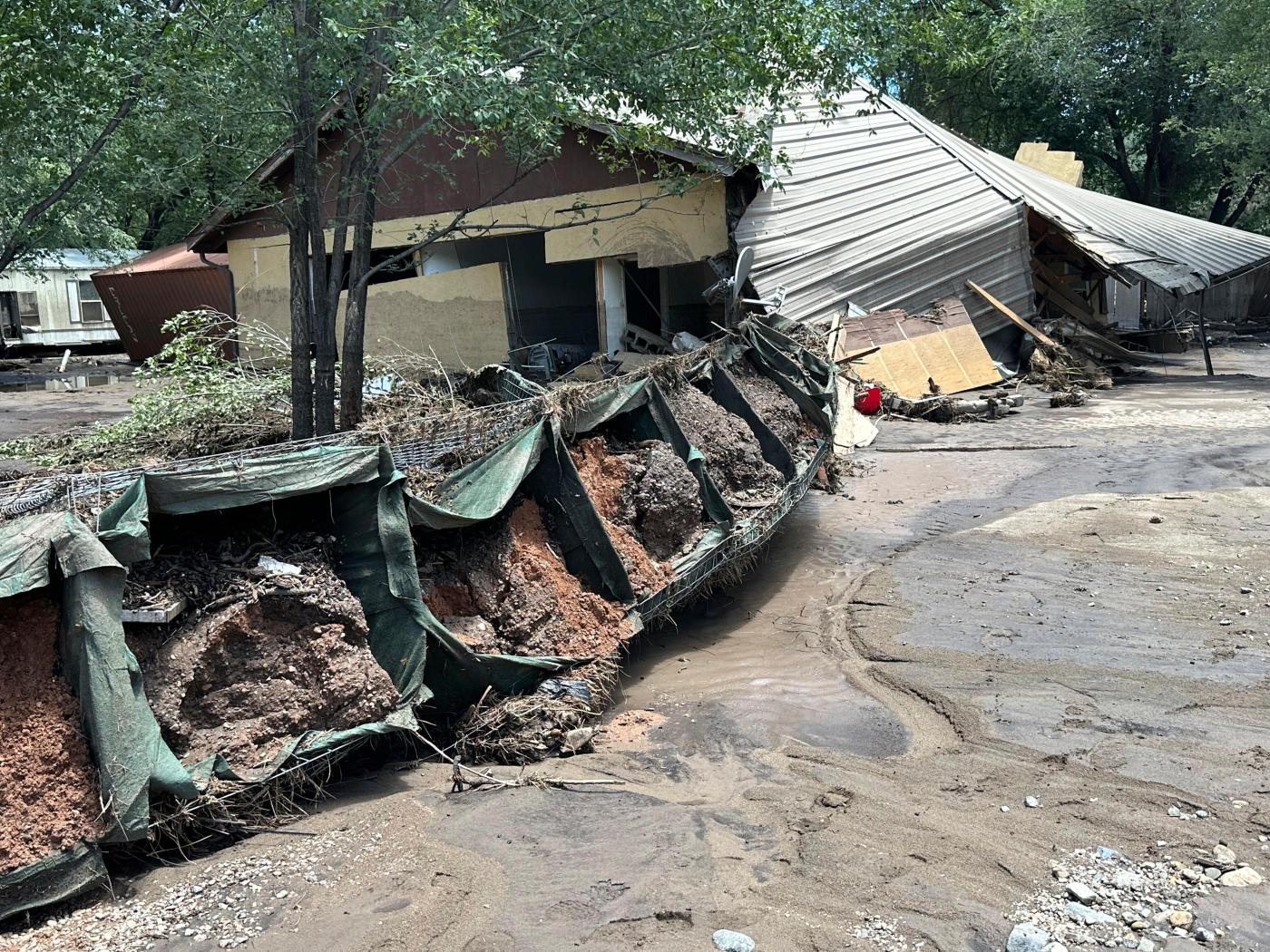
Broken tree limbs, twisted metal, crumpled cars and muddy debris remained as crews worked to clear roads and culverts in the wake of Tuesday’s flash flood that killed three people — including two children — and significantly damaged as many as 50 homes, with one home carried away entirely.

Tracy Haragan, a Ruidoso native on the verge of retirement, watched from his home as a surging river carried away the contents of nine nearby residences.

“You watched everything they owned, everything they had — everything went down,” he said. “It is such a great town, it just takes a tail-whipping every once in a while. … We always survive.”

An intense bout of monsoon rains set the disaster in motion Tuesday. Water rushed from the surrounding mountainside, overwhelming the Rio Ruidoso and taking with it a man and two children from an RV park along the river. The bodies were found downstream during search and rescue efforts.

The children — a 4-year-old girl and a 7-year-old boy — had been camping with their parents when they were swept away. The father and mother were being treated for injuries at a hospital in Texas, according to officials at Fort Bliss, where the father is stationed.

Mayor Lynn Crawford said hearts are broken over the lives lost and stomachs are in knots as residents begin to take stock of the damage.

Rebuilding — again

A popular summer retreat, Ruidoso is no stranger to tragedy. It has spent a year rebuilding following destructive wildfires last summer and the flooding that followed.

Rebuilding again in Ruidoso will be hard, if not impossible, said Riverside RV Park owner Barbara Arthur.

Arthur says her guests scrambled up a nearby slope when the river started coursing through the site Tuesday afternoon. She also lost her home in flood.

It was the sixth time the river rose in the last several weeks and by far the worst, she said. And Tuesday’s rainfall was more than could be absorbed by the hillsides and canyons within a wildfire burn scar.

Setting records

The floodwaters of the Rio Ruidoso rose more than 20 feet (6 meters) on Tuesday to set a record high-water mark, said National Weather Service meteorologist Todd Shoemake in Albuquerque. That eclipsed the previously recorded high in July 2024 by nearly 5 feet.

About 3.5 inches of rain fell over the South Fork burn scar in just an hour and a half, Crawford said. As little as a quarter of an inch of rain over a burn scar can cause flooding.

“They were probably already getting some runoff from upstream before it even actually started raining on top of the wildfire burn scar,” Shoemake said. “It really was just kind of a terrible coincidence of events that led to that.”

He likened the intense rainfall to a 100-year storm, which has a 1% chance of happening in any given year.

Cleanup begins

Emergency crews completed dozens of swift water rescues before the water receded Tuesday. Two National Guard teams and several local crews already were in the area when the flooding began, said Danielle Silva of the New Mexico Department of Homeland Security and Emergency Management.

New Mexico Gov. Michelle Lujan Grisham requested a presidential disaster declaration, tallying more than $50 million in emergency response expenditures, including water rescues, and damage to public infrastructure, including toppled bridges and washed out roadways. The estimate includes flood damage at Ruidoso and beyond from monsoon rainstorms since late June.

Ruidoso has also recently requested $100 million in federal aid to convert flood-prone private land to public property after successive years of violent flooding laid bare the dangers of an expanded flood plain.

The floods at Ruidoso came just days after flash floods in Texas killed at least 120 people and left more than 160 people missing.

Bracing for more

Local officials said the village, as the flood hit, was still in the process of replacing outdoor warning sirens destroyed in last year’s wildfire and reassessing risks along the local flood plain.

Related Articles


Today in History: July 10, the Battle of Britain begins in World War II


Philadelphia workers and city reach a deal to end strike that halted residential trash pickup


‘Unfortunately, he resisted’: Pennsylvania man charged with beheading father says he was trying to perform a citizen’s arrest


Convicted murderer Derrick Groves eludes law enforcement as last New Orleans jail escapee on the run


Merck spends $10 billion for Verona, gaining access to its COPD medication

Crawford reiterated Wednesday that Ruidoso will continue to be in the crosshairs with each monsoon, as there’s still work to do to recover from the wildfire. The rainy season begins in June and runs through September.

The river, meanwhile, is running thick with sediment that can settle and raise future water levels.

The village’s tourism-based economy also has been thrown into turmoil again. With floodwaters running through Ruidoso Downs, one of the horse track’s signature races that was scheduled to start Friday has been derailed.

The mayor said people are anxious as the monsoon is sure to bring more rain throughout the summer.

“Yesterday was a good lesson — you know, that Mother Nature is a much bigger, powerful force than we are,” he said Wednesday. “And that we can do a lot of things to protect ourselves and to try to help direct and whatever, but we cannot control.”

Lee reported from Santa Fe, New Mexico, and Bryan from Albuquerque. Associated Press writers Matt Brown in Denver and Christopher L. Keller in Albuquerque contributed to this report.

Rubio holds talks with Russia’s Lavrov as Ukraine tensions soar

posted in: All news | 0

By MATTHEW LEE, Associated Press Diplomatic Writer

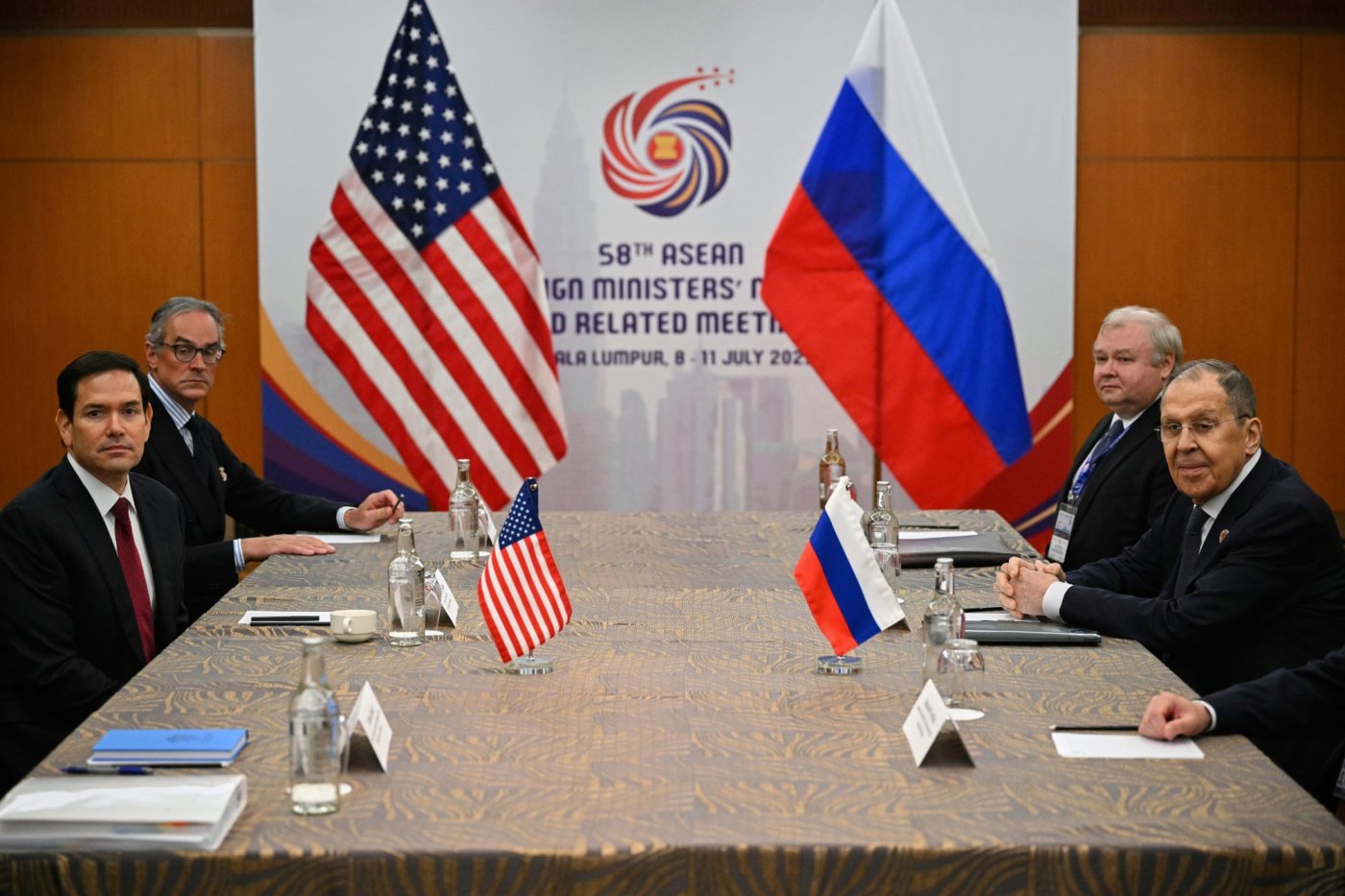
KUALA LUMPUR, Malaysia (AP) — U.S. Secretary of State Marco Rubio and his Russian counterpart met Thursday in Malaysia as tensions between the countries rise over Moscow’s increasing attacks on Ukraine and whether Russia’s leader is serious about a peace deal.

Rubio and Foreign Minister Sergey Lavrov held talks in Kuala Lumpur on the sidelines of the annual Association of Southeast Asian Nations Regional Forum, which brings together 10 ASEAN members and their most important diplomatic partners including Russia, China, Japan, South Korea, European nations and the U.S.

The meeting lasted around 50 minutes. Rubio was seen winking at Lavrov afterward as reporters shouted questions, which they both ignored.

U.S. Secretary of State Marco Rubio, front, arrives at Subang Air Base, outside of Kuala Lumpur Thursday, July 10, 2025. Rubio arrived in Malaysia to attend the ASEAN Foreign Ministers’ Meeting. (Mandel Ngan/Pool Photo via AP)

The meeting was their second encounter since Rubio took office, although they have spoken by phone several times. Their first meeting took place in February in Riyadh, Saudi Arabia, as the Trump administration sought to test Russia and Ukraine on their willingness to make peace.

Thursday’s meeting occurred shortly after the U.S. resumed some shipments of defensive weapons to Ukraine following a pause, ostensibly for the Pentagon to review domestic munitions stocks, that was cheered in Moscow.

The resumption comes as Russia fires escalating air attacks on Ukraine and as U.S. President Donald Trump has become increasingly frustrated with Russian President Vladimir Putin.

“Putin is not, he’s not treating human beings right,” Trump said during a Cabinet meeting Tuesday, explaining the pause’s reversal. “It’s killing too many people. So we’re sending some defensive weapons to Ukraine, and I’ve approved that.”

US diplomatic push could be overshadowed by tariff threats

Rubio was also seeing other foreign ministers, including many whose countries face tariffs set to be imposed Aug. 1. The tariff threat could overshadow the top diplomat’s first official trip to Asia, just as the U.S. seeks to boost relations with Indo-Pacific nations to counter China’s growing influence in the region.

Rubio sought to assuage concerns as he held group talks with ASEAN foreign ministers.

U.S. Secretary of State Marco Rubio, second left, meets with Malaysia’s Prime Minister Anwar Ibrahim, right, at the prime minister’s office at Parliament as the Association of Southeast Asian Nations (ASEAN) Foreign Ministers’ Meeting takes place in Kuala Lumpur Thursday, July 10, 2025. (Mandel Ngan/Pool Photo via AP)

“The Indo Pacific, the region, remains a focal point of U.S. foreign policy,” he told them. “When I hear in the news that perhaps the United States or the world might be distracted by events in other parts of the planet, I would say distraction is impossible, because it is our strong view and the reality that this century and the story of next 50 years will largely be written here in this region.”

“These are relationships and partnerships that we intend to continue to build on without seeking the approval or the permission of any other actor in the region of the world,” Rubio said in an apparent reference to China.

Trump notified several countries on Monday and Wednesday that they will face higher tariffs if they don’t make trade deals with the U.S. Among them are eight of ASEAN’s 10 members.

U.S. State Department officials said tariffs and trade won’t be Rubio’s focus during the meetings, which Trump’s Republican administration hopes will prioritize maritime safety and security in the South China Sea, where China has become increasingly aggressive toward its small neighbors, as well as combating transnational crime.

But Rubio may be hard-pressed to avoid the tariff issue that has vexed some of Washington’s closest allies and partners in Asia, including Japan and South Korea and most members of ASEAN, which Trump says would face 25% tariffs if there is no deal.

Rubio also met with Malaysian Prime Minister Anwar Ibrahim, who has warned global trade is being weaponized to coerce weaker nations. Anwar urged the bloc Wednesday to strengthen regional trade and reduce reliance on external powers.

Rubio’s “talking points on the China threat will not resonate with officials whose industries are being battered by 30-40% tariffs,” said Danny Russel, vice president of the Asia Society Policy Institute and a former assistant secretary of state for East Asia and the Pacific during the Obama administration.

When Anwar said “ASEAN will approach challenges ‘as a united bloc’ he wasn’t talking about Chinese coercion but about U.S. tariffs,” Russel noted.

Majority of ASEAN members face major tariff hikes

Among ASEAN states, Trump has announced tariffs on almost all of the bloc’s 10 members.

Trump sent tariff letters to two more ASEAN members Wednesday: Brunei, whose imports would be taxed at 25%, and the Philippines at 20%. Others hit this week include Cambodia at 36%, Indonesia at 32%, Laos at 40%, Malaysia at 25%, Myanmar at 40% and Thailand at 36%.

Vietnam recently agreed to a trade deal for a 20% tariffs on its imports, while Singapore still faces a 10% tariff that was imposed in April. The Trump administration has courted most Southeast Asian nations in a bid to blunt or at least temper China’s push to dominate the region.

Related Articles


A surprise IRS move on political endorsements leaves faith leaders and legal experts divided


FACT FOCUS: Trump misrepresents facts about wind power during Cabinet meeting


US issues sanctions against UN investigator probing abuses in Gaza


Trump administration resumes sending some weapons to Ukraine after Pentagon pause


Man accused of Trump assassination attempt in Florida seeks to remove defense attorneys from case

In Kuala Lumpur, Rubio also will likely come face-to-face with China’s foreign minister during his visit of about 36 hours.

Chinese Foreign Minister Wang Yi is a veteran of such gatherings and “fluent in ASEAN principles and conventions,” while Rubio “is a rookie trying to sell an ‘America First’ message to a deeply skeptical audience,” Russel noted.

Issues with China remain substantial, including trade, human rights, militarization of the South China Sea and China’s support for Russia in Ukraine.

U.S. officials continue to accuse China of resupplying and revamping Russia’s military industrial sector, allowing it to produce additional weapons that can be used to attack Ukraine.

Earlier on Thursday, Rubio signed a memorandum on civilian nuclear energy with Malaysia’s foreign minister, which will pave the way for negotiations on a more formal nuclear cooperation deal, known as a 123 agreement after the section of U.S. law allowing such programs.

Those agreements allow the U.S. government and U.S. companies to work with and invest in civilian energy nuclear programs in other countries under strict supervision.

Eileen Ng contributed to this report.

UN says if US funding for HIV programs is not replaced, millions more will die by 2029

posted in: All news | 0

By MARIA CHENG, Associated Press Medical Writer

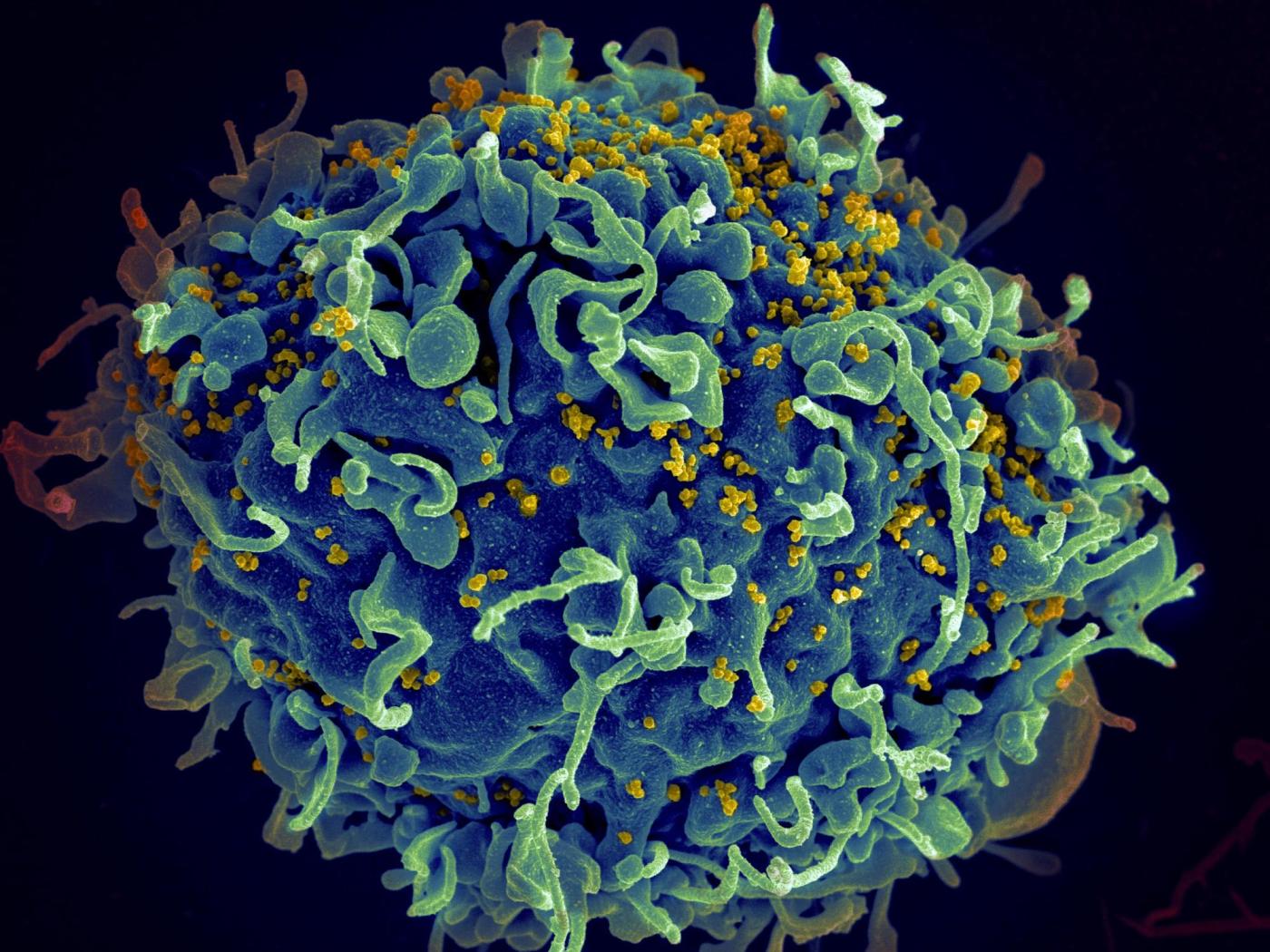
LONDON (AP) — Years of American-led investment into AIDS programs has reduced the number of people killed by the disease to the lowest levels seen in more than three decades, and provided life-saving medicines for some of the world’s most vulnerable.

But in the last six months, the sudden withdrawal of U.S. money has caused a “systemic shock,” U.N. officials warned, adding that if the funding isn’t replaced, it could lead to more than 4 million AIDS-related deaths and 6 million more HIV infections by 2029.

“The current wave of funding losses has already destabilized supply chains, led to the closure of health facilities, left thousands of health clinics without staff, set back prevention programs, disrupted HIV testing efforts and forced many community organizations to reduce or halt their HIV activities,” UNAIDS said in a report released Thursday.

Related Articles


EU chief Ursula von der Leyen comfortably survives a confidence vote


Today in History: July 10, the Battle of Britain begins in World War II


US issues sanctions against UN investigator probing abuses in Gaza


South Korean court approves new arrest of former President Yoon Suk Yeol over martial law decree


Ship attacked by Yemen’s Houthi rebels sinks in the Red Sea, 6 of 25 aboard rescued

UNAIDS also said that it feared other major donors might also scale back their support, reversing decades of progress against AIDS worldwide — and that the strong multilateral cooperation is in jeopardy because of wars, geopolitical shifts and climate change.

The $4 billion that the United States pledged for the global HIV response for 2025 disappeared virtually overnight in January when U.S. President Donald Trump ordered that all foreign aid be suspended and later moved to shutter the U.S. AID agency.

Andrew Hill, an HIV expert at the University of Liverpool who is not connected to the United Nations, said that while Trump is entitled to spend U.S. money as he sees fit, “any responsible government would have given advance warning so countries could plan,” instead of stranding patients in Africa when clinics were closed overnight.

The U.S. President’s Emergency Plan for AIDS Relief, or PEPFAR, was launched in 2003 by U.S. President George W. Bush, the biggest-ever commitment by any country focused on a single disease.

UNAIDS called the program a “lifeline” for countries with high HIV rates, and said that it supported testing for 84.1 million people, treatment for 20.6 million, among other initiatives. According to data from Nigeria, PEPFAR also funded 99.9% of the country’s budget for medicines taken to prevent HIV.

In 2024, there were about 630,000 AIDS-related deaths worldwide, per a UNAIDS estimate — the figure has remained about the same since 2022 after peaking at about 2 million deaths in 2004.

Even before the U.S. funding cuts, progress against curbing HIV was uneven. UNAIDS said that half of all new infections are in sub-Saharan Africa.

Tom Ellman, of the charity Doctors Without Borders, said that while some poorer countries were now moving to fund more of their own HIV programs, it would be impossible to fill the gap left by the U.S.

“There’s nothing we can do that will protect these countries from the sudden, vicious withdrawal of support from the U.S.,” said Ellman, director of Doctors Without Borders’ South Africa Medical Unit.

Experts also fear another loss: data. The U.S. paid for most HIV surveillance in African countries, including hospital, patient and electronic records, all of which has now abruptly ceased, according to Dr. Chris Beyrer, director of the Global Health Institute at Duke University.

“Without reliable data about how HIV is spreading, it will be incredibly hard to stop it,” he said.

The uncertainty comes as a twice-yearly injectable could end HIV, as studies published last year showed that the drug from pharmaceutical maker Gilead was 100% effective in preventing the virus.

At a launch event Thursday, South Africa’s health minister Aaron Motsoaledi said the country would “move mountains and rivers to make sure every adolescent girl who needs it will get it,” saying that the continent’s past dependence upon US aid was “scary.”

Last month, the U.S. Food and Drug Administration approved the drug, called Yeztugo, a move that should have been a “threshold moment” for stopping the AIDS epidemic, said Peter Maybarduk of the advocacy group Public Citizen.

But activists like Maybarduk said Gilead’s pricing will put it out of reach of many countries that need it. Gilead has agreed to sell generic versions of the drug in 120 poor countries with high HIV rates but has excluded nearly all of Latin America, where rates are far lower but increasing.

“We could be ending AIDS,” Maybarduk said. “Instead, the U.S. is abandoning the fight.”

The Associated Press Health and Science Department receives support from the Howard Hughes Medical Institute’s Department of Science Education and the Robert Wood Johnson Foundation. The AP receives financial support for global health and development coverage in Africa from the Gates Foundation. The AP is solely responsible for all content. Find AP’s standards for working with philanthropies, a list of supporters and funded coverage areas at AP.org.