By KEN SWEET, Associated Press Banking Writer
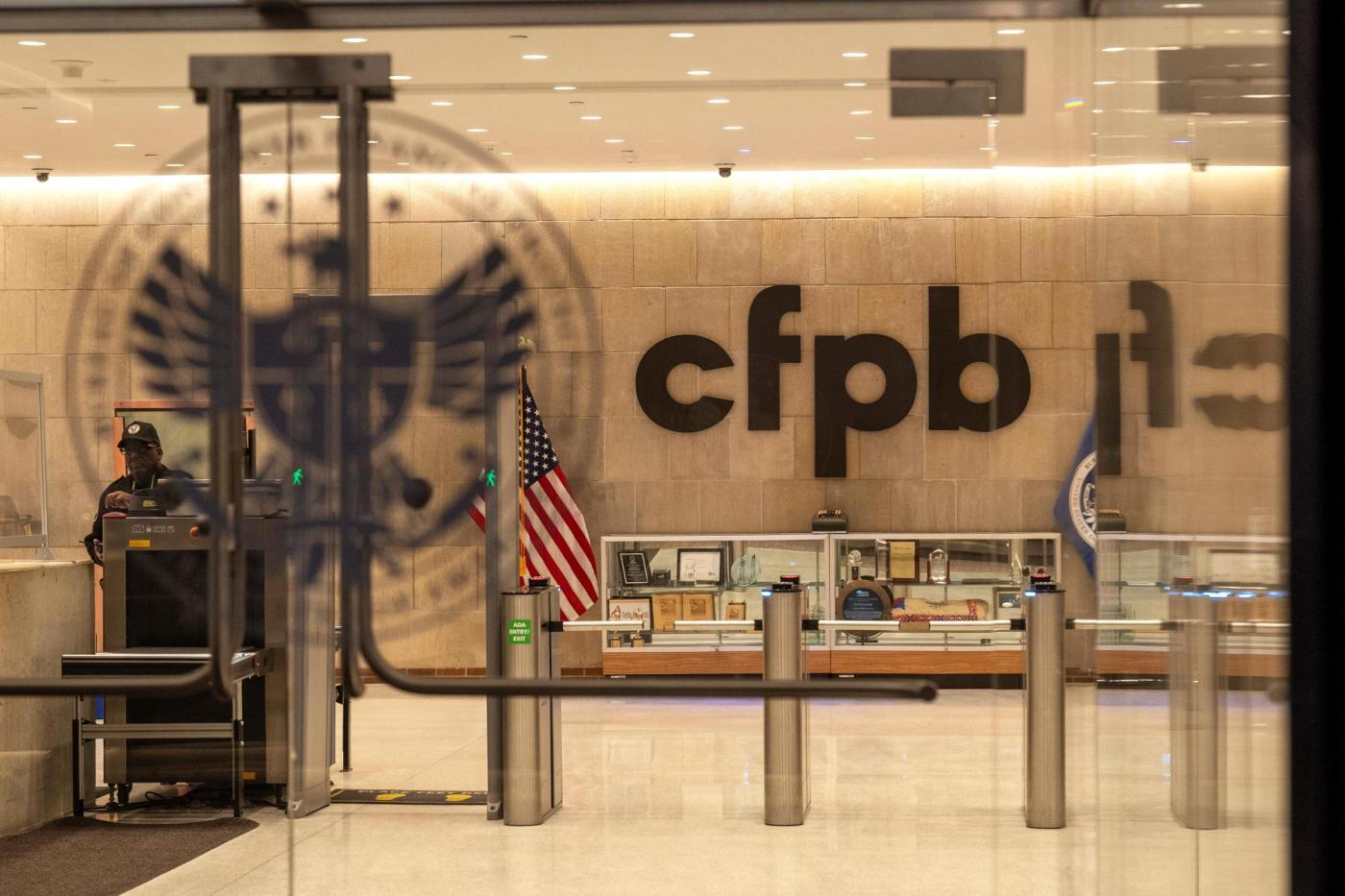
NEW YORK (AP) — The lights are on at the Consumer Financial Protection Bureau across the street from the White House, and employees still get paid. But, in practice, the bureau has been mostly inoperable for nearly six months. CFPB employees say they essentially spend the workday sitting on their hands, forbidden from doing any work by directive from the White House.
The bureau is supposed to be helping oversee the nation’s banks and financial services companies and taking enforcement action in case of wrongdoing. Instead, the situation is Kafkaesque: the main function seems to be undoing the rulemaking and law enforcement work that was done under previous administrations, including in President Donald Trump’s first term.
Trump and Sen. Dave McCormick team up to promote energy investments in Pennsylvania
Senate confirms Trump’s first judicial nominee of his second term
A chaotic raid, 360 arrests, and a tragic death: What happened at California’s Glass House Farms
US imposes a 17% duty on fresh Mexican tomatoes in hopes of boosting domestic production
Trump administration says it won’t publish major climate change report on NASA website as promised
American consumers can no longer look to the bureau for help when it comes to their checking account, credit card, payday loan, auto loan or mortgage. Trump has neutered the watchdog, employees say, the culmination of a yearslong effort by Republicans who felt the agency often went overboard in its efforts.
One current employee, who spoke on condition of anonymity because the directive forbids staffers from speaking publicly about their jobs, said outsiders would be amazed at how little work is being done. Employees are reluctant even to talk to one another, out of fear that a conversation between two employees would be considered a violation of the directive.
Another employee described the drastic shift in mission, from trying to protect consumers to doing nothing, as “quite demoralizing.”
To gain an understanding of what is happening inside the CFPB, The Associated Press spoke with 10 current and former employees, as well as bankers and policymakers who used to interact with the bureau nearly every day but now say their emails and voicemails go into a black hole. The agency’s press office doesn’t respond to emails.
Different approaches
Bureau rank-and-file employees and former CFPB officials say they expected the bureau to keep doing its work under “Trump 2.0,” although likely in a more restrained fashion. In Trump’s first term, his then-director Kathy Kraninger took a lighter approach to supervision and enforcement, but still some of the biggest financial settlements in the bureau’s history took place during that time.
President Joe Biden’s choice to run the bureau, Rohit Chopra, took an expansive view of its authority, targeting profitable practices by banks such as overdraft and credit card late fees, as well as investigating companies over credit reporting and medical debt.
FILE – Rohit Chopra, director of the Consumer Financial Protection Bureau, speaks as President Joe Biden meets with his Competition Council to announce new actions to lower costs for families in the State Dining Room of the White House in Washington, on March 5, 2024. (AP Photo/Andrew Harnik, File)
He even turned a spotlight on big tech companies that have increasingly made inroads into financial services. The CFPB ordered Apple to pay $89 million in fines and penalties for problems related to the Apple Card. Paypal’s Venmo is used by millions to split a bill, and the bureau found that payment and funds transfer apps like PayPal and Venmo should fall under the federal consumer protection laws, just like banks.
Banks and the financial services industry felt Chopra acted too aggressively, particularly with a proposal to cut overdraft fees to $5 from the industry average of $27 to $35. The bureau estimated the move would save consumers roughly $5 billion a year. The proposal was overturned by Congress with Trump’s backing earlier this year.
“We are thankful that the Trump Administration recognized the harm to consumers, the market, and the overall economy posed by the CFPB’s overreaches under its prior leadership,” said Lindsey Johnson, president of the Consumer Bankers Association.
Under Trump 2.0, the bureau became a main target of the Department of Government Efficiency, then run by Elon Musk, who posted on X that the CFPB should “RIP” shortly after DOGE employees became embedded at the agency. Through the bureau’s acting chief, Russell Vought, the White House issued a directive that CFPB employees should “ not perform any work tasks. ”
The administration then tried to lay off roughly 90% of the bureau’s staff, or roughly 1,500 employees. Courts have blocked those layoffs, but there is a feeling inside the bureau that the court rulings are only a temporary reprieve.
‘Reverse-engineering’
Sensing blood in the water, companies that committed wrongdoing, or had open investigations, have lobbied the bureau and the White House for their punishments to be rescinded. Employees at the bureau say the only time their workdays get remotely busy these days is when the White House instructs them to begin rescinding one of these punishments. It often involves “reverse-engineering” reasons why the bureau, which investigated and found that these companies did harm to consumers, now no longer believes that happened.
In 2024, Navy Federal Credit Union agreed to settle claims that it illegally charged overdraft fees to its members. Among the customers at the $180 billion financial institution are Navy service men and women, and veterans. Vought canceled the settlement last month, and Navy Federal will no longer have to pay back $80 million in fees. A spokesman for Navy Federal declined to comment on whether the credit union planned to return those funds to its members, as it originally said it would.
FILE – Office of Management and Budget Director Russell Vought walks at the White House, Monday, July 7, 2025, in Washington. (AP Photo/Alex Brandon, File)
In 2023, the auto financing arm of Toyota was found to be illegally bundling products onto car buyers’ auto loans, refusing to cancel those products and doing harm to customers’ credit scores. Toyota was ordered to refund $48 million to harmed customers. That settlement was rescinded in mid-May. A spokesman for Toyota declined to say whether customers would be reimbursed.
“Companies are lining up to get out of repaying harmed customers,” said Eric Halperin, former enforcement director at the bureau, who resigned earlier this year.
It’s not just settlements from the Biden era. At the end of Trump’s first term in 2020, the CFPB sued the Chicago-based mortgage company Townstone Financial after the company’s executives made statements that were seen as discouraging Black homebuyers from applying for a loan with the company. Townstone and its executives fought vigorously with the bureau, saying that words spoken on a podcast or on social media cannot be construed as discrimination or redlining. Courts agreed with the bureau and eventually Townstone settled in November, agreeing to pay a $105,000 penalty.
Under Vought, the bureau said it would move to vacate the settlement and would return Townstone’s fine. Courts have blocked the dismissal of that settlement, with one judge saying the CFPB wanted to commit “an act of legal hara-kiri that would make a samurai blush.”
The Associated Press sent a list of questions to the White House regarding President Trump’s vision for the CFPB. The White House did not respond.
While the lack of new initiatives and the scuttling of old ones frustrate employees the most, they also note that even everyday tasks like collecting consumer complaints about financial service companies have largely fallen to the wayside.
The CFPB has run a consumer complaint database for nearly a decade, basically an online portal where a consumer uploads a complaint and the bureau then forwards that complaint to the subject company. A report done by the office of Sen. Elizabeth Warren, the senior Democrat on the Senate Banking Committee, found that the bureau is uploading roughly 2,200 complaints a day compared to the roughly 10,500 complaints it was doing in the months before Trump took office again. Warren came up with the idea for the bureau when she was a law professor at Harvard University.
The bureau did take an enforcement action on Friday. The pawn shop chain FirstCash Inc. agreed to pay $9 million in refunds and fines to settle claims that it charged excessive interest rates on loans to armed service members, in violation of the Military Lending Act. FirstCash operates more than 1,000 stores and had net income of $259 million in 2024.
Budget Cut
The bureau is going to be even further diminished in the coming months. The new budget law signed by Trump earlier this month cuts the CFPB’s funding by roughly half, meaning the bureau will be forced into mass layoffs. Senate Democrats are looking for ways to restore that funding.
“The agency is still standing and its mission to protect consumers remains as important as ever,” Warren said in a statement. “We will fight back using every tool at our disposal.”
That said, one supervision employee grimly joked that a 50% budget cut to the bureau will mean little, based on how the bureau is currently operating.
“A 50% cut of nothing is still nothing,” they said.
In the meantime, employees go about their mundane routine: They continue to check their email once or twice a day to see if any of their previous work has been slated for being undone. They don’t talk to anyone, not even the banks they are supposed to supervise. They wait to be laid off. The only constants are the silence from bureau political appointees or the “mini funerals” that happen every Friday, when another batch of employees who have decided to leave the bureau voluntarily have their last day.
“I don’t think I’ll ever work in public service again,” said one current employee, who has been looking for a new job for the past three months.