France’s new prime minister faces a bumpy ride with budget challenges and nationwide strikes ahead

posted in: All news | 0

By SYLVIE CORBET, Associated Press

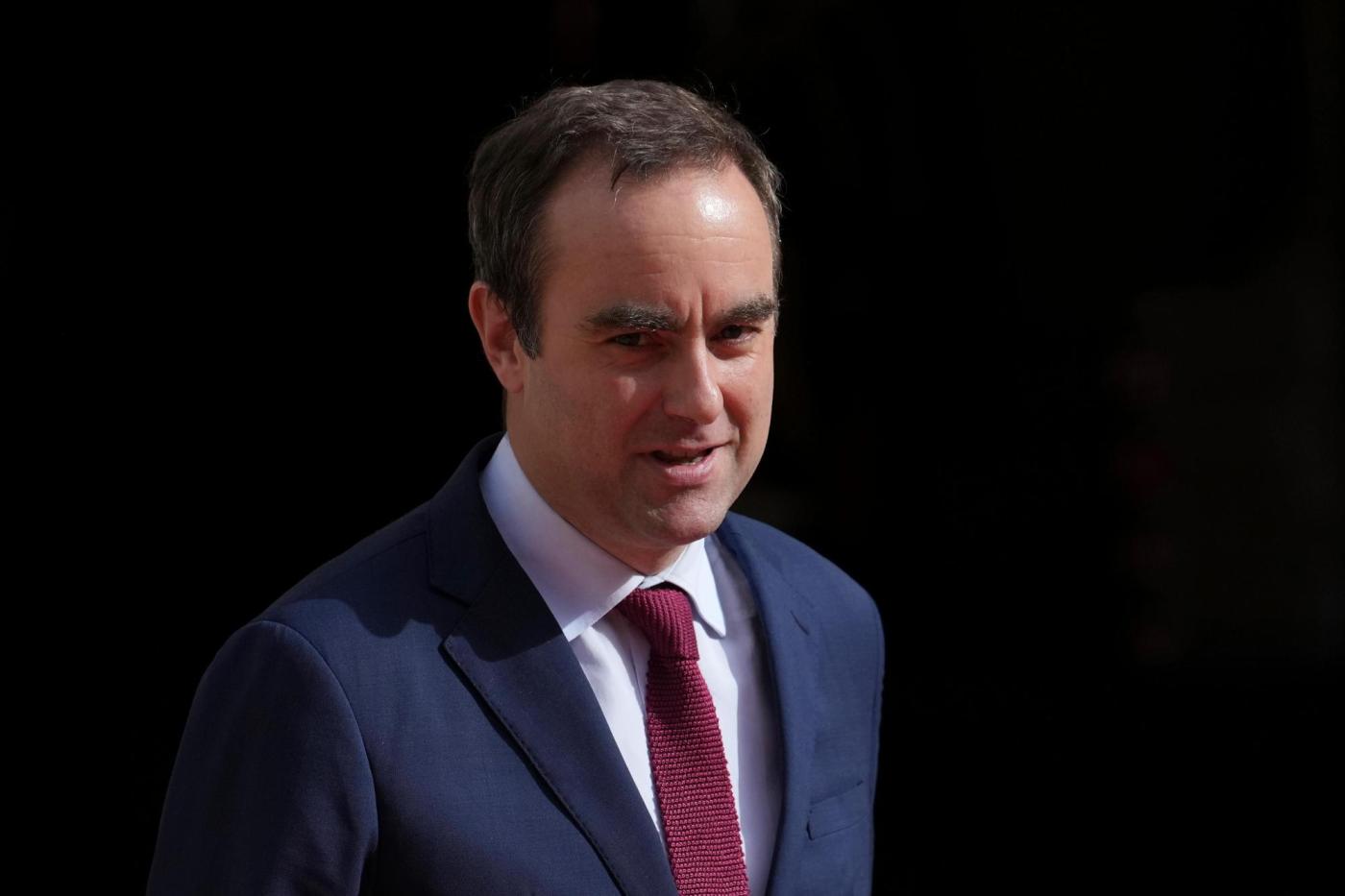
PARIS (AP) — A ballooning deficit. A fractious Parliament. Unrest on the streets. The challenges facing Sébastien Lecornu, France’s fourth prime minister in a year, are daunting and defeated his immediate predecessors.

So he’s trying a different tack. To ease tensions, Lecornu has scrapped proposals to axe two public holidays and trimmed lifetime benefits for former government ministers. A loyal ally to unpopular centrist President Emmanuel Macron, he began meeting with opposition leaders and trade unions this week.

But pitfalls lie ahead. Opponents aim to turn up the heat yet further on Thursday with nationwide strikes and protests against budget cuts and other complaints targeting Lecornu’s fragile minority government.

French politics have been in turmoil since Macron called early parliamentary elections in June last year which resulted in a deeply fragmented legislature.

One major challenge looms: addressing France’s budget crisis, a deeply divisive issue in Parliament.

Symbolic, popular first moves

Lecornu’s first big move has been to dismiss the idea of cutting two public holidays, championed by his immediate predecessor, whose government fell earlier this month. François Bayrou had stirred public anger with his plan to scrap the Easter Monday and Victory Day (May 8) holidays, a move he said was needed to boost the economy.

Lecornu vowed to find “to find other sources of financing” instead.

He also announced this week that lifetime benefits for former government members will be eliminated, starting from Jan. 1st.

For former prime ministers, the benefits include police protection, along with a car and driver paid for by the state. Protection will be capped at three years and only extended for security reasons, while the car will be reduced to a period of 10 years. This is estimated to save about 4.4 million euros ($5.21 million) per year.

Strikes and protests Thursday

Trade unions have called for nationwide strikes and protests on Thursday, scheduled before the change of prime minister, to push back on what they see as austerity policies.

Unions reject cuts in social spending, arguing French workers have been deeply affected by rising prices in recent years. They also continue to protest against Macron’s pension reform that raised the minimum retirement age from 62 to 64.

Thursday’s strikes are expected to prompt disruption in sectors like transport, public services, hospitals and schools. They may sound a stark warning for Lecornu.

Last week, thousands of protesters rallied across France last week for a day of nationwide action against Macron’s policies under the slogan “Block Everything.”

Mathieu Gallard, account director at Ipsos France polling institute, says a series of opinion polls show French voters’ main concerns focus on their declining purchasing power and the deterioration of once-generous social benefits, including health care, pensions and public services.

“The political situation gives the French the feeling leaders are not able to remedy the situation due to that instability,” Gallard told The Associated Press.

Lecornu’s method

On the day he took office, Lecornu, 39, vowed to be both “more creative” and “more serious” in the way his government will work with opposition parties.

Lecornu, who started his political career in his 20s as a local official in the Normandy region, is described by his longtime friends as a somewhat old-school politician. They say he is is by nature discreet and methodical but also very persuasive — qualities that could help him in his quest to ease political tensions.

Related Articles


Israeli troops press forward into Gaza City as Palestinians flee and death toll passes 65,000


Trump basks in the pageantry at Windsor Castle during unprecedented second UK state visit


Today in History: September 17, aircraft crash kills a person for the first time


Endangered pink river dolphins face a rising mercury threat in the Amazon


Divers recover artifacts from the Titanic’s sister ship Britannic for the first time

“There’s a Lecornu method,” said François Ouzilleau, mayor of Vernon in Normandy, where they made their first forays into politics together. “I think he’ll manage to find comprises … He has a manner of doing things in the right order, with methodology.”

“People criticize his closeness with and loyalty to the president. But I think that’s a strength. It’s better when the executive twosome functions well together. And that doesn’t mean that Sébastien has no character, no personality, no freedom,” Ouzilleau said in an Associated Press telephone interview.

“He’s a guy with incredible flair. He is good at sniffing things out, sniffing out people, sniffing out situations, sniffing out subjects. He’s like a truffle-hunting dog.”

Tough budget debate ahead

France’s previous government fell over plans to cut 44 billion euros ($51 billion) in public spending, meant to rein in debt of the European Union’s second-largest economy. Last week, the Fitch rating agency downgraded France’s credit rating, anticipating that the country’s debt ratio “will continue to rise.”

Lecornu has not yet set out his own strategy.

He met Wednesday with Socialist leader Olivier Faure in an effort to negotiate a parliamentary non-aggression pact that would help prevent the fall of his government in a no-confidence vote.

The Socialists are pushing for a tax on the super-rich as proposed by French economist Gabriel Zucman. French media reported Lecornu may be open to increase the taxes on the wealthiest, but in a downsized version.

Meanwhile, Lecornu must also take care of his conservative allies, The Republicans, who reject any general tax rise.

Marine Le Pen, leader of the far-right National Rally party, predicted Lecornu’s failure and urged Macron to call new legislative elections to break the deadlock.

“The level of pessimism is massive in France,” Gallard said, arguing opinion polls show a vast majority of French voters don’t believe in the new prime minister’s ability to negotiate with opposition parties and pass a budget.

“When you ask the French about the economic situation of the country, 9% consider it’s good … way lower compared to France’s neighbors in southern Europe, Italians and Spanish who are around 30%,” he said.

AP journalist John Leicester, in Paris, contributed to the story.

Connect Four, lightsabers, Furbies … and snow: Which playthings belong in the Toy Hall of Fame?

posted in: All news | 0

By CAROLYN THOMPSON, Associated Press

Later this year, the National Toy Hall of Fame could induct snow — yes, the cold, white stuff that falls from the sky. But only if it ices out enough of the competition — a group that features hugely popular board games, outdoor favorites and giggling plushies.

The Hall of Fame announced its 12 finalists for the Class of 2025 Wednesday and opened voting to the public and a panel of judges who will choose which few will be honored in November.

Along with snow, the contenders include tabletop favorites Battleship, Catan, Connect Four, Spirograph and Trivial Pursuit, as well as crowd-pleasers — scooters, slime and cornhole. The “Star Wars” lightsaber, Furby and Tickle Me Elmo round out the finalists chosen from among the thousands of nominees the Toy Hall of Fame receives each year.

“This year’s contenders present some playful matchups,” said Christopher Bensch, vice president for collections and chief curator.

The Strong’s National Toy Hall of Fame in Rochester, N.Y., on Sept. 17, 2025, announced the 12 finalists in the running for induction later this year: Battleship, Catan, Connect Four, cornhole, Furby, scooter, slime, snow, Spirograph, Star Wars Light Saber, Tickle Me Elmo, and Trivial Pursuit. (Strong’s National Toy Hall of Fame via AP)

Along with a slate of board games and tactile materials like snow and slime, he said, “There’s also Tickle Me Elmo and Furby — two technological icons of the 90s toy world — battling it out.”

“I’m always excited to see where the judges and public come out in their votes,” Bensch said. “At the end of the day, the playful debates just go to show how much personal and cultural relevance these toys have for us all.”

The public has a week, until Sept. 24, to vote for their favorites. The three top vote-getters will make up a “Player’s Choice” ballot to be counted alongside 22 other ballots from a panel of historians, educators and other experts. The winners will be announced in November by The Strong National Museum of Play in Rochester, New York, where the Hall of Fame is located.

While anyone can nominate a toy, the ones that make it into the hall have to be considered icons, have engaged multiple generations, fostered creativity, or profoundly changed play or toy design.

Last year, My Little Pony, Transformers action figures and the Phase 10 card game were honored, bringing to 87 the number of toys inducted since the Hall of Fame was established in 1998.

Who is nominated this year?

— Battleship: Milton Bradley has sold more than 100 million copies of the strategy game since introducing its plastic warships and pegboard version in 1967. Originally a pencil-and-paper game, Battleship was among the first board games to be computerized in 1979.

— Catan: Known earlier as Settlers of Catan, the game first published by Kosmos in Germany was one of the first German-style board games to achieve popularity outside of Europe. More than 45 million copies in 40 languages have sold since it was introduced in 1995. It has inspired dozens of spinoffs and new editions, including electronic versions, and even a cookbook.

— Connect Four: Players drop discs into a grid in hopes of being the first to get four in a row. Spoiler alert: The game has been mathematically solved, meaning the first player can always win with the right moves.

— Cornhole challenges players to throw bean bags though a hole in a slanted wooden board to score points. The nominee stands out for a simplicity that has made it a staple at picnics, on bar patios and while tailgating.

— Furby debuted in 1998 and within the first three years, 40 million of the drowsy-eyed robotic creatures were sold. An enhanced version was reintroduced to a new generation of kids in 2023.

— The scooter has provided riders with low-tech, two-wheeled transportation for generations, evolving along the way to incorporate lightweight materials and innovative technology.

— Slime, whether commercially produced or homemade, is on the list for its ability to encourage messy and experimental play. Since it’s commercial introduction in 1976, it has become an element of other playthings and a featured player on television shows.

Related Articles


As officials searched for Charlie Kirk’s shooter, suspect confessed to his partner, prosecutor says


US stocks are stuck on pause as the countdown ticks to a decision by the Federal Reserve


The Federal Reserve wrestles with how many interest rate cuts to make and how fast


Despite past challenges, Scouting America stabilizes with support from faith-based units


Suspect in custody after driver rams car into FBI building gate in Pittsburgh

— Snow is recognized for its versatility, allowing children and adults to make snowballs and sculpt the cold, wintry stuff into forts and figures, while also serving as a base for sledding, skiing and snowboarding. The nominee would join the ranks of other back-to-basic inductees like the stick, sand and cardboard box.

— Spirograph, with its plastic gears, rings, triangles and bars, has entertained and educated the masses for 60 years. Users place the tip of pen into a hole of a gear and rotate it around or within other gears to create intricate, geometric drawings.

— Kenner released the first “Star Wars” lightsaber in 1978 on the heels of the 1977 “Star Wars” movie. An arsenal has followed, with lights and sound, demonstrating the influence of popular culture on play.

— Tickle Me Elmo, with its contagious laughter, was the must-have toy of the 1996 holiday season. The “Sesame Street” character wasn’t the first stuffed animal to get electronics, but the giggling Muppet took the concept to another level.

— Trivial Pursuit debuted more than 40 years ago with a challenging mix of trivia questions on geography, history, sports and other topics. More than 100 million copies were sold by 2023.

Immigrant children at Texas detention facility face unsafe conditions, attorneys say

posted in: All news | 0

By VALERIE GONZALEZ, Associated Press

McALLEN, Texas (AP) — New revelations about conditions at a Texas detention facility for immigrant families have stoked ongoing concerns from attorneys representing children.

The details are part of a lawsuit where the government is attempting to end protections for children. Declarations from families held at the facility in Dilley, Texas, which was reopened in March, described persistently cloudy water, delayed medical attention and long periods of time children are being detained.

Allegations of children fighting adults for clean water, distraught children and a protracted medical response first surfaced during the summer while the federal government asked a federal judge to end a policy protecting immigrant children.

U.S. District Judge Dolly Gee in Los Angeles, who presides over the case, heard arguments from the government, which wants to end the Flores Settlement agreement. The policy limits how long Customs and Border Protection can hold immigrant children and requires safe and sanitary conditions.

After Gee told the government last month to provide detention times, Immigration and Customs Enforcement reported that the number of children in custody over 72 hours decreased from an average of six days to five days in June and July, respectively. The “vast majority” spent less than 72 hours in CBP custody, the report stated.

Attorneys representing the children reviewed the report and said some children are still being held for several weeks or months and often without justification.

About 65 families spoke to attorneys since Dilley opened.

“A huge percentage of families at Dilley are being apprehended from across the country as they dutifully appear for their immigration court hearings and ICE check-ins,” Leecia Welch, the deputy legal director at Children’s Rights who spoke with families, told The Associated Press in a statement.

The tap water is cloudy, smells strange and upsets stomachs, the families told their attorneys. The hand soap the facility provides for showers has been causing rashes, the families said. Children also struggle eating the food, like the snacks of graham crackers, apples, juice and milk.

Detainees are allowed to buy staples like bottled water for $1.21 from the commissary.

“I have never heard until now of children having to buy water,” said Welch, who has been visiting children in custody of CBP and the Office of Refugee Resettlement for eight years.

Families face costs as high as $5.73 for deodorant, $1.44 for soap, and $2.39 for toothpaste, Welch said in court documents. A single dose of Tylenol costs $1.30, she said.

Related Articles


As officials searched for Charlie Kirk’s shooter, suspect confessed to his partner, prosecutor says


US stocks are stuck on pause as the countdown ticks to a decision by the Federal Reserve


The Federal Reserve wrestles with how many interest rate cuts to make and how fast


Despite past challenges, Scouting America stabilizes with support from faith-based units


Suspect in custody after driver rams car into FBI building gate in Pittsburgh

A child with a stomachache waited six hours for a nurse and wasn’t taken to a hospital with appendicitis until he vomited, court documents said. Another child fell on his arm and it wasn’t until two hours later that the staff drove him to a hospital for an X-ray.

Parents said there are no organized activities for the children and only an hour of instruction from workbooks.

A woman’s son told her that he “doesn’t believe in God anymore because he prays to him but we still haven’t been able to get out of here,” according to her declaration, provided by Welch.

Some families are being released only to be detained again, Welch said. One family released after about 60 days in federal detention was asked to check in with ICE only to be detained at their appointment.

Trump’s Medicaid cuts were aimed at ‘able-bodied adults.’ Hospitals say kids will be hurt

posted in: All news | 0

By Phil Galewitz, KFF Health News, KFF Health News

Republicans insist that President Donald Trump’s cuts to Medicaid were aimed at reducing fraud and getting more of its adult beneficiaries into jobs. But the side effects may include less care for sick kids.

Some children’s hospitals collectively stand to lose billions of dollars in revenue once Trump’s wide-ranging tax and spending law, which Republicans called the “One Big Beautiful Bill,” is fully enacted, according to the Children’s Hospital Association. Kids account for nearly half of enrollees in Medicaid, the state and federally financed health program for low-income and disabled people, and its related Children’s Health Insurance Program.

The law will cut federal Medicaid spending by about $900 billion over a decade.

The reduction “cannot be achieved without directly affecting coverage and care for Arizona’s kids, especially the most vulnerable among them,” said Robert Meyer, chief executive of Phoenix Children’s, a pediatric hospital system. About half of the system’s revenue comes from Medicaid.

Trump’s law locks into place much of his domestic agenda, including a massive expansion of immigration enforcement and an extension of tax cuts that largely benefit the wealthiest Americans. The cuts to Medicaid are expected to partially offset the cost of the president’s priorities, which will add more than $3 trillion to the nation’s deficit, according to the Congressional Budget Office. About 7.5 million Americans will lose Medicaid coverage by 2034 as a result, the CBO estimates.

Throughout debates over the measure, Republicans insisted the Medicaid cuts would affect only nondisabled adults enrolled in the program who don’t work and immigrants living in the U.S. without legal status. “Our legislation preserves Medicaid, strengthens Medicaid for the people who actually need it and deserve it,” House Speaker Mike Johnson said June 1 on NBC News’ “Meet the Press.” “And we’re going to get rid of the fraud, waste, and abuse.”

Meyer, though, warned that unless some cuts are reversed, Phoenix Children’s would lose about $172 million a year in payments that supplement the health system’s regular Medicaid revenue, for treating low-income children covered by the program. Medicaid typically pays lower rates for care than commercial insurance or Medicare, the federal program for people age 65 and older.

The supplemental payments, known as state-directed payments, are financed largely by federal taxpayers through complicated tax arrangements adopted by nearly all states. The payments have helped the Phoenix system open additional pediatric clinics, increase mental health staffing, and screen children for abuse and other trauma, Meyer said.

A provision of Trump’s law would cap the amount of directed payments states could make to any hospital, including those for children. But the cap, which doesn’t take effect until 2028, will be phased in over a decade — and hospitals are already lobbying to ensure that never happens. Days after voting for Trump’s law, Sen. Josh Hawley, R-Mo., introduced legislation that would eliminate provisions of the measure cutting Medicaid payments to hospitals.

If the law isn’t changed, at least 29 states would need to reduce their payments, according to an analysis by KFF, a health information nonprofit that includes KFF Health News.

The extra Medicaid funds, on average, make up more than a third of children’s hospitals’ total Medicaid revenue and about 14% of their operating revenue overall, according to the Children’s Hospital Association.

Richard Park, a director at Fitch Ratings, a credit rating agency, said the Medicaid funding cuts present a “long-term headwind” for children’s hospitals. Hospital officials say that if the payments are cut and states don’t replace the funding, they could be forced to cut staff and services.

“Services the hospitals provide that require longer admissions or bring in less revenue are going to be in the crosshairs, for sure,” Park said.

Children’s hospitals are especially vulnerable to changes in Medicaid because they count on the program for about half their revenue — a much higher proportion than general acute-care hospitals do.

Most children’s hospitals are in good financial condition, however, because they face little competition — there are seldom more than one or two in a metropolitan area — and strong philanthropic support. And the funding cuts won’t affect all the nation’s approximately 200 children’s hospitals.

In 2023, Phoenix Children’s had a $163 million surplus on nearly $1.5 billion in revenue, according to its 2023 IRS tax return.

Under the law, the extra payments in the District of Columbia and 40 states that expanded Medicaid under the Affordable Care Act would be capped at Medicare payment rates. The 10 states that didn’t expand would be able to pay up to 110% of Medicare rates.

The Biden administration had allowed states to pay up to their average commercial insurance rates. That’s generally about 2.5 times the Medicare rate, according to KFF.

Medicaid’s traditionally low fees to health providers can make doctors, dentists, and other specialists reluctant to treat patients in the program.

Brian Blase, president of the conservative Paragon Health Institute and a key architect of Medicaid changes in the new law, said cutting state-directed payments is justified because states should not pay hospitals more to treat Medicaid patients than they do for Medicare patients. Unlike regular Medicaid payments for specific health services, hospitals are not always held accountable for how they spend the extra money, he said.

He said state-directed payments to children’s hospitals and other facilities amount to “corporate welfare,” often helping financially strong institutions get richer.

Blase said states have little incentive to pay hospitals less because the money from state-directed payments comes mostly from federal taxpayers.

In Norfolk, Virginia, Children’s Hospital of The King’s Daughters depends on more than $11 million annually in state-directed payments to make up for what it says is a shortfall between Medicaid’s low reimbursement rates and the cost of advanced care.

The cuts to Medicaid in Trump’s law “will have serious and far-reaching consequences to our services, programs, and patients,” spokesperson Alice Warchol told KFF Health News. “Medicaid supplemental funding helps us pay for the highly specialized pediatric medical, surgical, and psychiatric physicians that are needed to care for every child who needs our services.”

In fiscal 2023, King’s Daughters had a $24 million surplus on $646 million in revenue, according to its federal tax return.

King’s Daughters has used the extra Medicaid money to expand treatment for abused and neglected children and mental health services, Warchol said.

How states account for the extra payments made to hospitals varies. For instance, Utah Medicaid Director Jennifer Strohecker said her state does not track how the money gets spent.

Other states, such as Texas, use the money as an incentive for hospitals to improve their performance in treating patients. They track how well the facilities do each year and publish the findings in public reports.

Matthew Cook, president and chief executive of the Children’s Hospital Association, said that even with the extra funding, Medicaid doesn’t cover the full cost of treatment for its patients.

While some children’s hospitals have strong balance sheets, boosted by philanthropy, that is not the case for all, Cook said. And the Medicaid funding cuts come on top of reductions in other federal payments, including for training doctors and research, he said.

At Phoenix Children’s, Meyer said, the loss of extra funding would curtail expansions of care for children and growth of the hospital’s workforce. The hospital hopes Congress delays or reverses the cuts — but it’s not counting on it, he said.

“We see this grace period as a godsend to get ourselves ready to close the funding gap,” he said.

©2025 KFF Health News. Distributed by Tribune Content Agency, LLC.