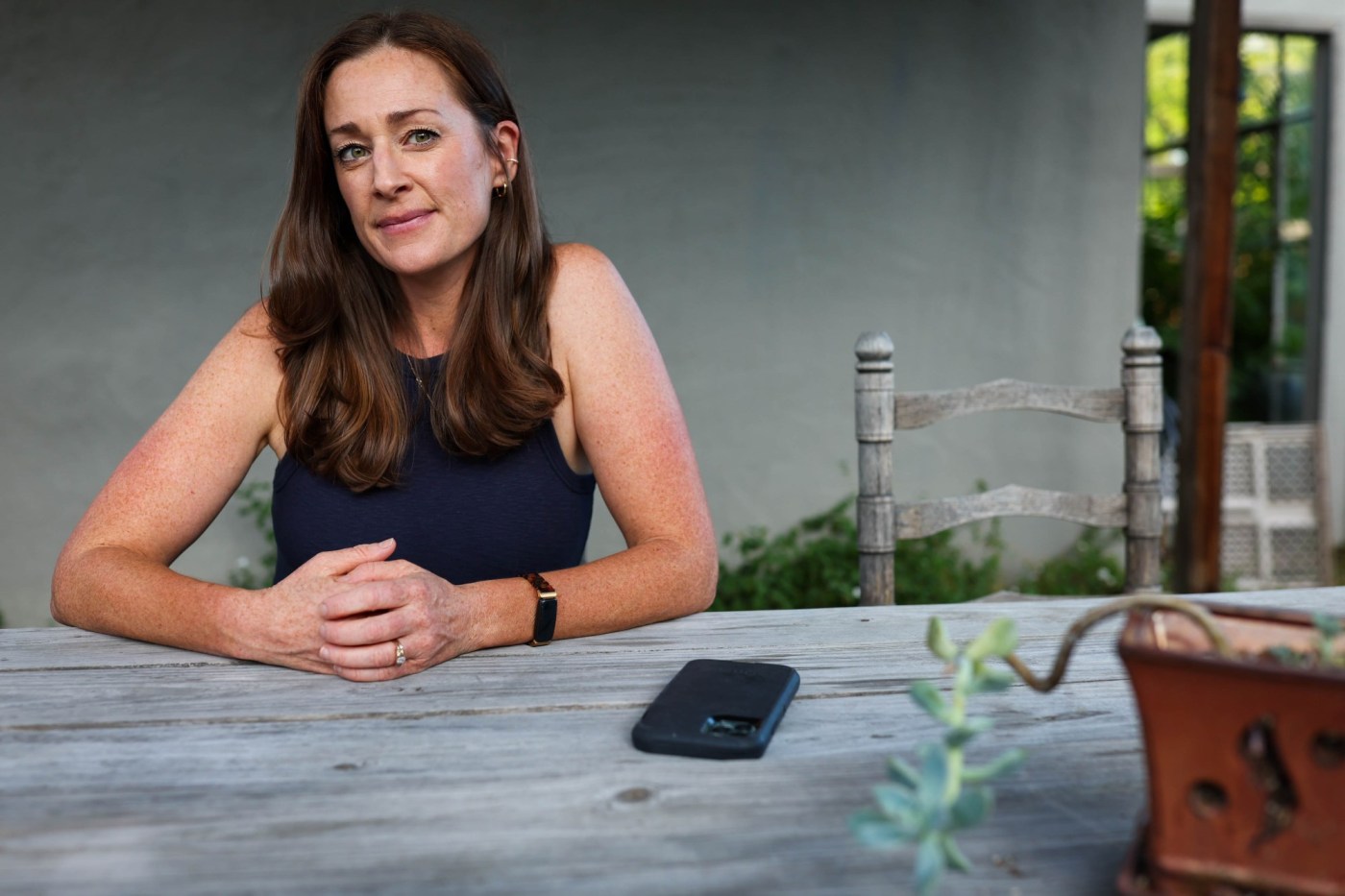
DFL candidate Xp Lee has won the special election for the Minnesota House district left vacant after the assassination of former House Speaker Melissa Hortman, restoring the balance of power in the chamber to a 67-67 tie between Democrats and Republicans.
Unofficial results Tuesday night showed Lee had a decisive lead, with 61% of the vote to Republican Ruth Bittner’s 39% with all District 34B precincts reporting results. Polls closed at 8 p.m. and final returns were in a short while later.
SMALL FILE — MAX. WIDTH FOR PRINT: 3.75 INCHES — Undated courtesy photo, circa July 2025, of Xp Lee, Democratic candidate for Minnesota House District 34B. Lee faces Republican candidate Ruth Bittner in a special election on Sept. 16, 2025. Bittner, a real estate agent seeking her first elected office and Lee, a former Brooklyn Park City Council member, are vying to replace Melissa Hortman, the former Democratic state House speaker who was slain along with her husband at their home in June 2025. District 34B includes the communities of Brooklyn Park and Champlin in Hennepin County and Coon Rapids in Anoka County. (Courtesy of the candidate)
“I am honored to have been elected to represent my neighbors in Brooklyn Park, Champlin, and Coon Rapids,” Lee said in a statement. “I have never lost sight of the situation that brought us to this moment, and I will work hard every day to carry forward Speaker Melissa Hortman’s legacy.”
Lee is a former member of the Brooklyn Park City Council. It was widely expected that the district would remain in DFL hands. Bittner is a real estate agent who had not served in elected office before.
Hortman was first elected to the House in 2004 and was in her 11th term in the Legislature. She was elected speaker of the House in 2019, when the DFL took a majority in the House and continued to lead her party in the House after it lost the majority in 2025.
Hortman handily won reelection in District 34B and past districts that covered a similar footprint. In 2024, she won reelection with 63% of the vote.
The House seat has been vacant for three months since Hortman and her husband, Mark, were killed by a gunman at their home in Brooklyn Park on June 14. Sen. John Hoffman and his wife, Yvette, were also shot at their home in Champlin but survived.
Vance Boelter, 57, faces federal and state murder, attempted murder and other charges in the attacks.
Hortman’s death left the House split 67-66 between Republicans and DFLers. With Lee’s win, a power-sharing agreement the parties reached earlier this year after the 2024 election delivered a tied House will remain in place.
Undated courtesy photo, circa Sept. 2025, of Ruth Bittner, candidate for state House District 34B in a special election on Sept. 16, 2025. Bittner, a Republican real estate agent seeking her first elected office, faces Democrat Xp Lee, a former Brooklyn Park City Council member, in a special election to replace Melissa Hortman, the former Democratic state House speaker who was slain along with her husband at their home in June 2025. District 34B includes the communities of Brooklyn Park and Champlin in Hennepin County and Coon Rapids in Anoka County. (Courtesy of the candidate)
The Legislature has not been in session, so the balance of seats hasn’t had any immediate effect on the state, and the House can’t pass any bills without Democratic-Farmer-Labor support because the threshold to do so is 68 votes.
The state Senate is in a similar situation. DFLers have 33 seats to Republicans’ 32 in that chamber, but 34 votes are needed to pass legislation.
Before two vacancies this summer due to the unexpected death of Sen. Bruce Anderson, R-Buffalo, and the felony conviction of another member, Sen. Nicole Mitchell, DFL-Woodbury, the DFL had a 34-33 advantage. Special elections to fill the two seats are scheduled for Nov. 4.
Related Articles
Tuesday special election will determine balance of power in MN House
St. Paul to require its legislative request list by early days of session
Minneapolis suburb’s candidates campaign amid fear and violence after political assassinations
Tim Walz sends strong signal he’ll run for third term as governor
MN Senate DFL forms new committee on ‘federal impacts’
What: U.S. Open Cup semifinal When: 7:30 p.m. Wednesday Where: Allianz Field Stream: CBS Sports Network; Paramount+ Weather: 75 degrees, mostly sunny, 5 mph east wind
Form: Minnesota is unbeaten in four, including a 3-1 victory at first-place San Diego on Saturday. Austin had won two straight before a 2-0 loss to Texas rival FC Dallas last weekend.
Recent matchups: Minnesota beat Austin 3-0 in Texas on May 3 and the two teams played to a 1-1 draw in St. Paul on May 24.
Quote: Players “are probably sick of hearing me describe games as finals because I think I’ve been doing it for a while and it gets the desired response,” head coach Eric Ramsay said. “But I feel like we have been in that position where we’ve been in the hunt for lots of things for a lot of this season.”
Stat: Forward Kelvin Yeboah has not scored in seven straight matches, but he was dealing with another lull in May before scoring in an Open Cup round of 16 match against St. Louis. He also converted on two penalty kicks in the USOC quarterfinal win over Chicago.
Context: The Loons are expecting at least 14,000 fans for Wednesday’s match, which is well short of the stadium’s capacity of 19,600, but way more than they have had in previous rounds.
Absences: MF/CB Carlos Harvey is out with a knee injury that Ramsay said is not considered serious. CF Momo Dieng is ineligible after already playing in the tournament for Hartford Athletic.
Prediction: With only 31 goals in 29 games, Austin has struggled to score, especially without injured forward Brandon Vazquez, and Minnesota’s success is built on a suffocating defense. Loons move onto their first Open Cup final since 2019 with a 2-0 victory.
PUERTO NARINO, Colombia (AP) — A flash of pink breaks the muddy surface of the Amazon River as scientists and veterinarians, waist-deep in the warm current, patiently work a mesh net around a pod of river dolphins. They draw it tighter with each pass, and a spray of silver fish glistens under the harsh sun as they leap to escape the net.
Related Articles
DNR: Zebra mussel larvae reported in Phalen chain of lakes in Ramsey County
New England’s shrimp industry is struggling, with fishermen catching few in 2025
Young activists won a landmark state climate trial. Now they’re challenging Trump’s orders
McDonald’s plans $200 million investment to promote regenerative practices on US cattle ranches
Shipping companies support a first-ever global fee on greenhouse gases, opposed by Trump officials
When the team hauls a dolphin into a boat, it thrashes as water streams from its pink-speckled sides and the crew quickly ferries it to the sandy riverbank where adrenaline-charged researchers lift it onto a mat. They have 15 minutes — the limit for how long a dolphin can safely be out of the water — to complete their work.
Fernando Trujillo, a marine biologist leading the effort, kneels beside the animal’s head, shielding its eye with a small cloth so it can’t see what’s happening. He rests his hand gently on the animal and speaks in low tones.
“They’ve never felt the palm of a hand. We try to calm them,” said Trujillo, sporting a pink dolphin bandana. “Taking a dolphin out of the water, it’s a kind of abduction.”
One person counts the dolphin’s breaths. Another wets its skin with a sponge while the others conduct multiple medical tests that will help show how much mercury is coursing through the Amazon’s most graceful predators.
Mercury threat spreads through the Amazon food chain
Trujillo directs the Omacha Foundation, a conservation group focused on aquatic wildlife and river ecosystems, and leads health evaluations of river dolphins. It’s a painstaking operation involving experienced fishermen, veterinarians and locals that takes months of planning and happens a couple of times a year.
“We take blood and tissue samples to assess mercury,¨ Trujillo told The Associated Press from the Colombian riverside town of Puerto Narino. “Basically, we’re using dolphins as sentinels for the river’s health.”
The miners use mercury to separate gold from sediment, then dump the sludge back into rivers, where it enters fish eaten by people and dolphins. Rising global gold prices have fueled a mining boom, and mercury pollution in remote waterways has increased.
Scientists and veterinarians capture a pink river dolphin in the Amazon River to perform health checks in Puerto Narino, Colombia, Sunday, Sept. 7, 2025. (AP Photo/Fernando Vergara)
Mercury can damage the brain, kidneys, lungs and immune system and cause mood swings, memory loss and muscle weakness in people, according to the World Health Organization and the U.S. Environmental Protection Agency. Pregnant women and young children are most at risk, with prenatal exposure linked to developmental delays and reduced cognitive function.
“The maximum any living being should have is 1 milligram per kilogram,” Trujillo said. “Here, we’re seeing 20 to 30 times that amount.”
In previous years, his team found 16 to 18 milligrams per kilogram of mercury in dolphins, which can suffer the same neurological damage, organ damage and other problems as humans. In Colombia’s Orinoco River, levels in some dolphins have reached as high as 42, levels scientists say are among the most extreme ever recorded in the species.
Trujillo said it’s difficult to prove the toxin is directly killing dolphins. Further studies are underway, he added, noting that “any mammal with a huge amount of mercury will die.”
When Trujillo and his team tested their own blood three years ago, his results showed more than 36 times the safe limit — 36.4 milligrams per kilogram — a level he attributes to decades working in mercury-affected areas and a diet heavy in fish. With medical assistance, his levels have dropped to about 7 milligrams.
“Mercury is an invisible enemy until it builds up to a sufficient amount, then it starts to affect the central nervous system,” Trujillo told AP after his team managed to capture and test four pink dolphins. “We’re already seeing evidence of it in Indigenous communities.”
A series of scientific studies and reports — including work by the International Pollutants Elimination Network and academic researchers — have found high mercury exposure among Indigenous peoples across the Amazon, including in Brazil, Peru, Colombia, Suriname and Bolivia. Hair samples showed averages well above WHO’s safe threshold of 1 part per million, with one Colombian community registering more than 22 milligrams per kilogram.
Scientists and veterinarians capture a pink river dolphin in the Amazon River for health checks in Puerto Narino, Colombia, Sunday, Sept. 7, 2025. (AP Photo/Fernando Vergara)
Scientists and veterinarians examine a pink river dolphin in Puerto Narino, Colombia, Sunday, Sept. 7, 2025. (AP Photo/Fernando Vergara)
Veterinarian Maria Jimena Valderrama implants a microchip into a pink river dolphin after a health check in Puerto Narino, Colombia, Sunday, Sept. 7, 2025. (AP Photo/Fernando Vergara)
A veterinarian draws a blood sample in a pink river dolphin in the Amazon River during health checks in Puerto Narino, Colombia, Sunday, Sept. 7, 2025. (AP Photo/Fernando Vergara)
Scientists and veterinarians examine blood samples that were drawn from pink river dolphins in the Amazon River to determine mercury levels in Puerto Narino, Colombia, Sunday, Sept. 7, 2025. (AP Photo/Fernando Vergara)
Scientists and veterinarians weigh a pink river dolphin after a health check in Puerto Narino, Colombia, Sunday, Sept. 7, 2025. (AP Photo/Fernando Vergara)
1 of 8
Scientists and veterinarians capture a pink river dolphin in the Amazon River for health checks in Puerto Narino, Colombia, Sunday, Sept. 7, 2025. (AP Photo/Fernando Vergara)
Dolphin populations in this part of the Amazon have plunged, with Trujillo’s monitoring showing a 52% decline in pink dolphins and a 34% drop in gray river dolphins, a different species, in recent decades. The International Union for Conservation of Nature listed the pink dolphin as endangered in 2018. Trujillo said exact numbers for the Amazon are unknown, but his organization estimates 30,000 to 45,000 across the basin.
Pink river dolphins also face threats from overfishing, accidental entanglement in nets, boat traffic, habitat loss and prolonged drought.
Colombia says it’s tackling illegal mining and mercury pollution. It banned mercury use in mining in 2018, ratified the Minamata Convention aimed at reducing mercury in the environment and submitted an action plan in 2024. Authorities cite joint operations with Brazil and recent enforcement sweeps, but watchdogs say efforts remain uneven and illegal mining persists across much of the country.
Other Amazon nations say they’re stepping up. Brazil has launched raids and moved to restrict satellite internet used by illegal gold-mining camps that use mercury, aiming to disrupt logistics and supply lines. Peru recently seized a record 4 tons of smuggled mercury. Ecuador, Suriname and Guyana have filed action plans to cut mercury use in small-scale gold mining.
A delicate operation to test dolphins safely
The dolphin testing operation relies on José “Mariano” Rangel, a charismatic former fisherman from Venezuela. He leads the charge when it’s time to haul the animals — which can weigh as much as about 353 pounds — into the small boats. It’s a moment that can end with a stinging blow to the jaw as the dolphins thrash to break free.
Scientists and veterinarians free a pink river dolphin after a health check in Puerto Narino, Colombia, Sunday, Sept. 7, 2025. (AP Photo/Fernando Vergara)
“The most difficult part of the captures is enclosing the dolphins,” Rangel said.
A portable ultrasound machine scans lungs, heart and other vital organs for disease. The team checks for respiratory problems, internal injuries and signs of reproduction, photograph the animals’ skin and scars, swab blowholes and genital openings for bacterial cultures, and collect tissue for mercury testing. Microchips are implanted so researchers can identify each animal and avoid duplicating tests.
Omacha has recorded antimicrobial resistance — bacteria that can’t be killed by common medicines — and respiratory problems. They have also identified possible emerging diseases, such as papilloma virus, that could pose risks to both dolphins and humans.
After a long morning hauling and testing dolphins, the scientists return to a laboratory in Puerto Narino that’s covered with posters of dolphins and manatees and the bones and skulls of dolphins and other animals. They test some samples, prepare others to send to larger facilities and end their day repairing nets and refilling kits to do it all again at dawn.
For Trujillo, each capture, scan and blood test is part of a larger fight.
“We are one step away from being critically endangered and then extinct,” Trujillo said.
The Associated Press’ climate and environmental coverage receives financial support from multiple private foundations. AP is solely responsible for all content. Find AP’s standards for working with philanthropies, a list of supporters and funded coverage areas at AP.org.
ATHENS, Greece (AP) — Divers have recovered artifacts from the Titanic’s sister ship, the Britannic, for the first time since the ocean liner sank in the Aegean Sea more than a century ago after striking a mine during World War I.
Related Articles
Ford to drop up to 1,000 jobs at German plant as demand for electric cars in Europe lags forecasts
Colombia’s president lashes out at Trump administration over drug war designation
Priceless archaeological artifacts in Gaza saved in frantic rescue
Russia shows off conventional and nuclear military might in drills — and raises tensions with NATO
Despite Trump sanctions, ICC staff and advocates vow to fight on
The Culture Ministry in Greece said Monday that an 11-member deep-sea diving team conducted a weeklong operation in May to recover artifacts including the ship’s bell and the port-side navigation light.
The White Star Line’s Britannic, launched in 1914, was designed as a luxury cruise liner, but was requisitioned as a hospital ship during World War I. It was heading toward the island of Lemnos when it struck a mine and sank off the island of Kea, about 45 miles southeast of Athens, on Nov. 21, 1916.
The vessel, the largest hospital ship at the time, sank in less than an hour. Thirty of the more than 1,060 people on board died when the lifeboats they were in were struck by the ship’s still turning propellers.
The wreck lies at a depth of nearly 400 feet, making it accessible only to technical divers. The dive team used closed-circuit rebreather equipment in a recovery operation organized by British historian Simon Mills, founder of the Britannic Foundation, the Culture Ministry said.
In this undated photo provided by the Greek Culture Ministry on Monday, Sept. 15, 2025, divers illuminate the wreck’s interior of the Britannic, sister ship to the Titanic, for the first time since the ocean liner sank in the Aegean Sea more than a century ago after striking a mine during World War I. (Greek Culture Ministry via AP)
In this undated photo provided by the Greek Culture Ministry on Monday, Sept. 15, 2025, divers carefully sift to recover objects from the wreck site of the Britannic, sister ship to the Titanic, for the first time since the ocean liner sank in the Aegean Sea more than a century ago after striking a mine during World War I. (Greek Culture Ministry via AP)
In this undated photo provided by the Greek Culture Ministry on Monday, Sept. 15, 2025, a diver carefully sifts to recover objects from the wreck site of the Britannic, sister ship to the Titanic, for the first time since the ocean liner sank in the Aegean Sea more than a century ago after striking a mine during World War I. (Greek Culture Ministry via AP)
1 of 3
In this undated photo provided by the Greek Culture Ministry on Monday, Sept. 15, 2025, divers illuminate the wreck’s interior of the Britannic, sister ship to the Titanic, for the first time since the ocean liner sank in the Aegean Sea more than a century ago after striking a mine during World War I. (Greek Culture Ministry via AP)
Conditions on the wreck were particularly tough because of currents and low visibility, the ministry said. Among the items raised to the surface were artifacts reflecting both the ship’s utilitarian role and its luxurious design: the lookout bell, the navigation lamp, silver-plated first-class trays, ceramic tiles from a Turkish bath, a pair of passenger binoculars and a porcelain sink from second-class cabins.
The artifacts are now undergoing conservation in Greek capital Athens and will be included in the permanent collection of a new Museum of Underwater Antiquities under development at the port of Piraeus. The museum will feature a dedicated World War I section, with the items from the Britannic as a centerpiece.