By DANIEL WALTERS/InvestigateWest
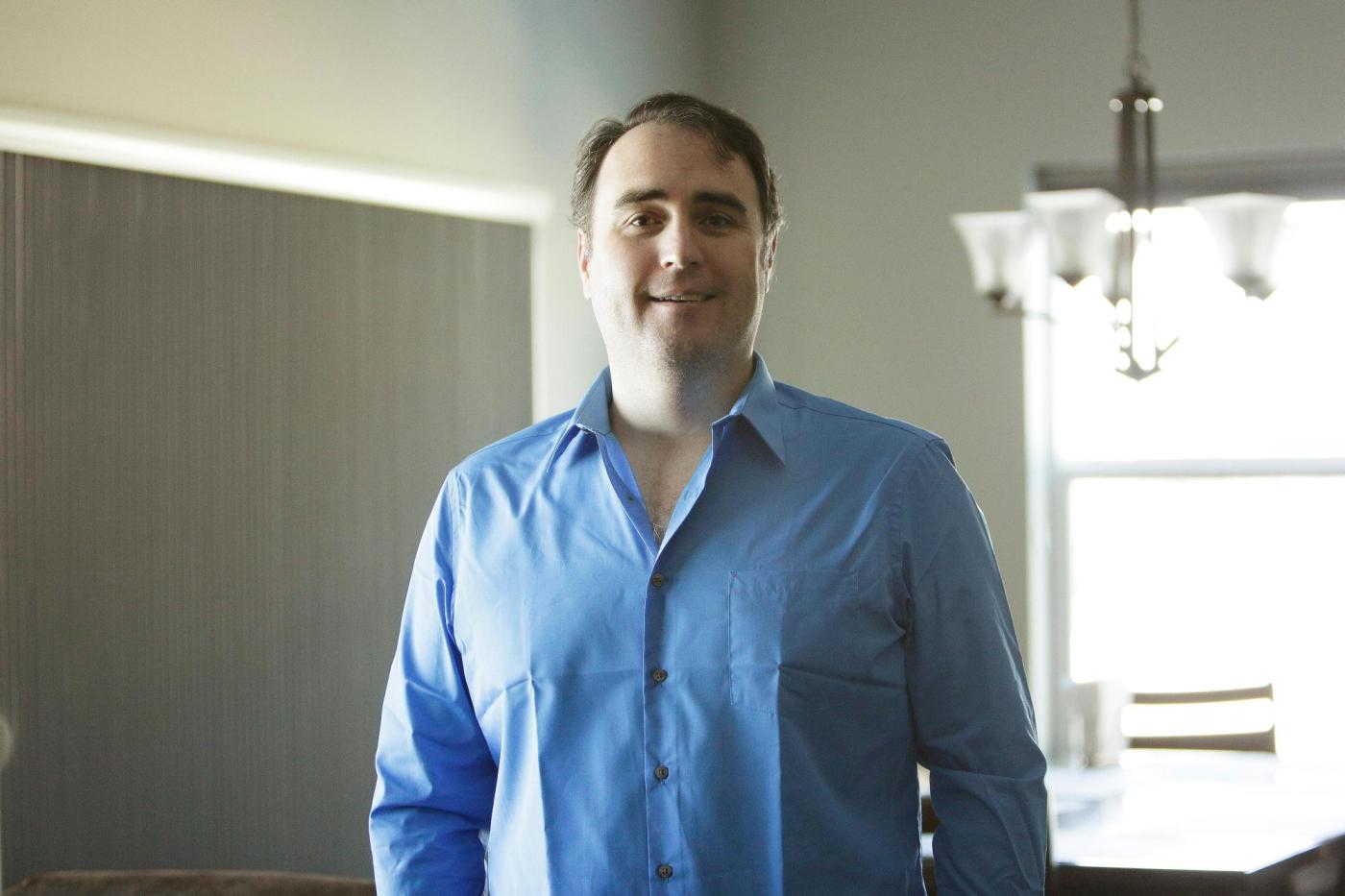
SPOKANE, Wash. (AP) — The first time Denys’s children heard fireworks go off in Spokane, Washington, they were terrified. His kids had grown up about 20 miles from the Russian border, in the Ukrainian city of Kharkiv, and they knew too well the booms of Russian missile attacks and screeching sounds of Ukrainian air defenses.
White House scraps water expert’s nomination as states hash out Colorado River plan
Trump suggests US troops could return to base in Afghanistan, citing its proximity to rival China
Pete Buttigieg rallies against redistricting in home state of Indiana
Trump administration to close Miami organ donation group it calls ‘failing’
Turned off by Trump rhetoric, Canadians cancel trips. New England pays the price
In 2023, after Russians attacked the hospital where his youngest daughter, Olivia, had recently been born, Denys knew he needed a way out, and fast.
That’s when a former neighbor, living in an American city on the other side of the world, offered him an escape:
“He called me and said, ‘We have a nice program — Uniting for Ukraine,’” Denys recalled. “If you want to come, grab your family and move.”
Denys, who asked his last name not be used, leapt at the opportunity. He’s stayed in Spokane for the past three years, getting used to a place where explosions are simply celebrations of freedom. He’d spent a half year learning English, and then drawing on his Ukrainian experience making boilers, he swiftly got a job welding construction beams at Metals Fabrication Co.
Like so many of the 240,000 Ukrainians who have immigrated to this country through the Uniting for Ukraine program, his future here is precarious.
Launched by former President Joe Biden in 2022, Uniting for Ukraine is a “humanitarian parole” program. It allowed Ukrainian immigrants to temporarily stay and work in America, two years at a time, so long as they found an American sponsor willing to help support them.
In June, however, Denys lost his job — not because he did anything wrong, but because the federal government failed to reauthorize his right to work. Under Donald Trump’s administration, which is targeting humanitarian parole programs affecting nearly 1.8 million migrants, renewals have ground to a halt.
“I’m very worried about my family,” Denys said. “I need to buy food. I have three kids.”
Along with freezing the Biden-era parole programs for Ukrainian refugees, the administration completely withdrew parole protections for more than 530,000 immigrants from Cuba, Haiti, Nicaragua and Venezuela, and over 9,000 from Afghanistan.
Many Ukrainians are taking notice of what’s happening to other refugees. In Spokane, two Venezuelan immigrants who had come here legally through humanitarian parole programs were jailed and slated for deportation, despite applying for asylum. When they showed up for a scheduled meeting in June with Immigration and Customs Enforcement, they were arrested by ICE and carted off to Tacoma’s immigration detention center. A mass protest resulted in 30 arrests, federal charges for nine demonstrators, and national media attention.
Unlike Latin American, Haitian and Afghan immigrants, most Ukrainians don’t have to worry about racial profiling. They haven’t been tarred with wild falsehoods about eating pets from the presidential debate stage. But while Ukrainians were never the primary target of the Trump administration’s efforts to dismantle Biden’s immigration legacy, they’ve been caught in the crossfire. At the mercy of a rapidly changing and dysfunctional federal bureaucracy, many are paralyzed by the uncertainty — faced with a choice of waiting for a government response, working illegally, surviving on charity, or leaving America entirely.
“There’s this no man’s land,” said Spokane immigration attorney Sam Smith. “There’s this in-between that they’re stuck in. There’s no good solution for them.”
Frozen in place
Whether because of its climate or its people, Spokane, a mid-sized Washington city on the Idaho border, has been a hub for Ukrainian immigration since the fall of the Soviet Union in 1991.
The Russian invasion of Ukraine brought a new surge of nearly 3,000 Ukrainians, many who quickly got to work establishing their new lives.
At a coffee stop started by another Ukrainian immigrant, Maksym Bedenko proudly hands InvestigateWest the business card for The Old Preacher, a small barbershop business he started in 2023. He was lucky enough to re-enroll in the Uniting for Ukraine program in August of last year, when it was still easy to get re-approval. But he knows a slew of other people, including Amazon workers, factory workers and caregivers, who have all lost their jobs.
The second Trump administration had launched with a salvo against nearly every aspect of the immigration system. Executive orders banned new refugees, severed contracts with refugee resettlement organizations and put any renewals of those with programs like Uniting for Ukraine on hold.
During the campaign, Trump had demonized Biden’s humanitarian parole programs, which had resulted in a surge of immigrants into some cities. On his first day back in office, Trump issued an executive order to “terminate all categorical parole programs” that were contrary to his policies.
Three days later, a freeze order went out from the acting director of the U.S. Citizenship and Immigration Services: Stop processing all Uniting for Ukraine applications, including from those trying to renew their parole status. No parole status, no new rights to work.
Spokane Slavic Association Vice President Zhanna Oberemok, who immigrated to Spokane shortly after the fall of the Soviet Union, said drivers for her husband’s trucking company recently started seeing some of their workers lose their commercial driver’s licenses as their work authorizations expired.
“Within the next week or so, we’re going to be losing about seven drivers because their driver license just became inactive,” Oberemok said.
Employers were frustrated to have to let perfectly good workers go.
Sara Weaver-Lundberg, vice president for Metals Fabrication Co., said by email that Denys had been a “gilded unicorn,” the rare, impossible-to-find experienced worker, and losing him “put a strain on our production.”
He was dependable, she said, always willing to work overtime when they needed it. She reached out to her corporate attorney and contacted her congressman to find help for Denys, but so far, neither route has been effective.
“I cannot imagine having to leave my country because it was no longer safe for me and my family,” Weaver-Lundberg said. “Denys did just that — he left Ukraine and entered this country legally. … Now, because of a pause in the program or backlog, he is living in this country with no job.”
Every two weeks, Denys had been sending money to his mother — still in Ukraine, where the prices of groceries and utilities have skyrocketed because of the war. He had been hoping to bring her to the United States through Uniting for Ukraine. Now, that’s out of the question, too.
Without a job, he’s been relying on the generosity of his sponsor — his former neighbor — to pay for food and rent for himself, his wife and his three kids. He’s waiting for a phone call from the state government to see if he’s eligible for unemployment benefits. He noted how he’d been turned from someone contributing to tax revenue through his work into someone costing the government money.
At a table at the Spokane refugee resettlement nonprofit Thrive International, Denys speaks through a translator, a woman who herself came here through the Uniting for Ukraine program.
“I know some families, they got mortgages,” Denys said. “They have loans for their cars. They have huge bills every single month.”
They’re left with an ugly decision: Provide for their family or follow the law. It’s a choice Denys hasn’t made and doesn’t want to.
“I should probably find some job and work under the table, but I don’t want to do that,” Denys said. “But it’s like the government pushes us to do that. We don’t want to do that. We want to work legally and follow the law.”
Pushing back
Elsewhere in Spokane, a local doctor has been fighting for months for a remedy in federal court. In February, Kyle Varner, an activist who spent a month along the Ukrainian border caring for refugees and who’d sponsored nearly 50 Venezuelan immigrants, joined a lawsuit to challenge the new policies, writing that he feels “that there is something fundamentally and morally wrong with treating people differently and giving them fewer rights simply because they were not born in this country.”
Along with immigrants from Ukraine, Nicaragua, Haiti and Afghanistan, he asked the court to force the Trump administration to start processing humanitarian parole applications again.
So far, the verdict has been mixed: New parole applications remain frozen, and in May, the U.S. Supreme Court allowed the Trump administration to order a half-million Latin American immigrants to leave the country, a decision that Justice Ketanji Brown Jackson warned could lead to “social and economic chaos.”
But thanks to a lower court ruling, the director of U.S. Citizenship and Immigration Services sent out a memo on June 9, officially lifting the freeze on processing parole renewals. In theory, Ukrainian immigrants like Denys would begin to see their right to work restored. So far, few have.
“We’ve seen some cases denied. And some cases be asked for additional evidence,” said Matthew Soerens, the policy director for World Relief, a national refugee resettlement organization. “But at least the folks that we’re helping, we are not aware of cases being approved for humanitarian parole renewal from Ukraine.”
Smith, the local immigration attorney, says the parole system remains functionally frozen. He suspects it’s a matter of priorities, that the Trump administration is dumping more resources into enforcement and kicking people out instead of helping people to stay.
“It’s pretty clear what the administration thinks about … immigrants and immigration generally,” Smith said.
Alternate routes
Many Ukrainian immigrants have lit upon another strategy, one that uses the glacial pace of the federal immigration bureaucracy to their advantage. Some are filing for asylum — arguing they have a well-founded fear of political, racial or religious persecution from their home country.
And while an asylum application can sometimes take five to 10 years to process, immigrants can get work authorization while they wait.
There’s just one big hitch: It still takes six months, once you apply for asylum, to get work permits. Even if Denys applied today, he wouldn’t be able to get the right to work again until March.
Even then, Smith, the attorney, hesitates to offer any kind of certainty. Lately, federal policy has been chaotic enough that it’s hard to provide long-term assurances.
Often, the government hasn’t formally communicated at all about changes in policy, and when it has, it’s sometimes been a mistake. In April, according to The Washington Post, the Department of Homeland Security had emailed many Ukrainians across the country telling them that their humanitarian parole had been canceled, and threatening that if they didn’t leave the United States, “the federal government will find you.” The message was an error, but it was sent out so broadly that even Smith — an attorney, not an immigrant — got the email.
“There’s a lack of clarity all throughout the system, which makes an already difficult system to navigate even more difficult and perilous,” Smith said. “It paralyzes the system, but it also paralyzes people.”
Appealing to Trump
In Congress, there have been a handful of stabs at trying to make things easier for Ukrainian immigrants — a Senate bill proposes letting Ukrainians on humanitarian parole continue to work, while a bill in the U.S. House would give the Ukrainian parolees a way to become permanent residents. But while both bills have bipartisan supporters, neither has gotten much traction. The Republican Party has been starkly divided on Ukraine, the traditional anti-Russian wing in conflict with a growing isolationist wing.
Spokane’s Republican congressman, U.S. Rep. Michael Baumgartner, embodies that tension. In February, after Ukrainian President Volodymyr Zelenskyy was booted from the White House following a combative meeting with Trump, Baumgartner called for Zelenskyy’s resignation.
But in April, he also co-authored a bipartisan letter calling for the Trump administration to continue to offer Ukrainian immigrants protection.
“Many of them have found employment, pay taxes, have their children enrolled in school, and are positively contributing to their new communities,” the letter states. “Revoking their protections and sending them back to a war-torn country before peace is secured would be devastating for both them and their families.”
Baumgartner said he did not get a response from the administration.
Still, he stressed to InvestigateWest that “the Ukrainian population have really been model immigrants. They’re hard-working folks, they are entrepreneurs, small business owners.” He was hopeful that Trump could use his tough-on-immigration reputation as a way to bring about reform of a broken system.
In a dark way, Oberemok with the Spokane Slavic Association finds a reason for optimism in the recent news about the stabbing of a young Ukrainian refugee woman in North Carolina. Trump, in his social media post calling for the death penalty for the “animal” who murdered her, had characterized her as a “beautiful young lady from Ukraine, who came to America searching for peace and safety.”
“It’s already giving us hope that he’s not planning on sending us back home,” Oberemok said.
So far, Trump has shown little sign of making it easier for immigrants. In an interview this month, U.S. Citizenship and Immigration Services Director Joseph Edlow declared that the administration plans to make it even harder, and more expensive, for immigrants to get work authorization. He accused the Biden administration of using work permits as a magnet to attract droves of foreigners to the United States.
“To the extent that we can shut off work authorization once we terminate these paroles, we’ve done that,” Edlow said. “You may be eligible for a work permit, but that doesn’t mean anymore that that’s going to result in you being able to remain in this country.”
For now, Ukrainian immigrants continue living under what Mariia Chava, Denys’s sponsor and former neighbor, calls “the big question mark.”
“What will be tomorrow?” she said. “Nobody knows.”
Denys knows he can’t return to Ukraine, where war is still raging and where many see those who left as traitors.
He loves the beauty of nature in Spokane, driving on America’s wide open roads. But he can’t live in a place where he has to fear deportation, where he’s not allowed to provide for his family without breaking the law, where he has no clear path to becoming legal.
“I love this country,” Denys said. “Just give me a chance to work.”
This story was originally published in InvestigateWest and distributed through a partnership with The Associated Press.