Vance touts tax breaks in Pennsylvania as he makes White House’s first big pitch on Trump’s new law

posted in: All news | 0

By MARC LEVY and MICHELLE L. PRICE, Associated Press

WEST PITTSTON, Pa. (AP) — Vice President JD Vance on Wednesday made the Trump administration’s first big pitch to sell the public on President Donald Trump’s sweeping budget-and-policy package in the swing political turf of northeastern Pennsylvania.

The vice president, whose tiebreaking vote got the bill through the Senate, touted the legislation’s tax breaks and cast Democrats as opponents of the cutting taxes because of their unanimous opposition to the legislation.

Democrats, who’ve decried the wide-ranging law’s cuts to Medicaid and food stamps, along with other provisions, are expected to try to use it against Republicans in closely contested congressional campaigns next year that will determine control of Congress.

The GOP plans to use it to make their case as well, something the Republican vice president asked the crowd in working-class West Pittston to help with.

“Go and talk to your neighbors, go and talk to your friends, about what this bill does for America’s citizens. Because we don’t want to wake up in a year and a half and give the Democrats power back,” he said.

As he spoke at at an industrial machine shop, the vice president was also quick to highlight the bill’s new tax deductions on overtime.

“You earned that money,” Vance said. “You ought to keep it in your pocket.”

He also promoted the legislation’s creation of a new children’s savings program, called Trump Accounts, with a potential $1,000 deposit from the Treasury Department. Recognizing the significance of the coal and gas industry in Pennsylvania, he also talked up the ways the law seeks to promote energy extraction, such as allowing increased leasing for drilling, mining and logging on public lands, speeding up government approvals and cutting royalty rates paid by extraction companies.

“We are finally going to drill, baby drill and invest in American energy,” Vance said. “And I know you all love that.”

The historic legislation, which Trump signed into law earlier this month with near unanimous Republican support, includes key campaign pledges like no tax on tips but also cuts Medicaid and food stamps by $1.2 trillion.

Democrats recently held a town hall in House Speaker Mike Johnson’s home state of Louisiana to denounce the legislation as a “reverse Robin Hood — stealing from the poor to give to the rich.”

Vance’s office declined to elaborate on plans for other public events around the U.S. to promote the bill. After his remarks, he visited a nearby diner where he picked up food and spoke to some of the patrons.

It’s unclear how much Trump plans to promote it himself. He told NBC News last week that he would travel “a little bit” to help champion the measure he dubbed the “One Big Beautiful Bill.”

“But honestly,” he said, “It’s been received so well I don’t think I have to.”

Related Articles


California Republican lawmakers launch campaign to require voter ID


Trump says he’s ‘highly unlikely’ to fire Fed’s Powell after floating that idea in private


Trump’s bid to claw back $9B in foreign aid and public broadcasting funds nears Senate vote


Stay or go? For some transgender sailors and Marines, Trump’s ban leaves one option: ‘Come and find me’


A look inside a lab making the advanced fuel to power growing US nuclear energy ambitions

The battle for control of the messaging on the bill could be critical to how well the measure is ultimately received, as some of the most divisive parts of the law, including Medicaid and food assistance cuts, are timed to take effect only after the midterm elections. The bill was generally unpopular before its passage, polls showed, although some individual provisions are popular, like boosting the annual child tax credit and eliminating taxes on tips.

West Pittston, which sits in Republican Rep. Rob Bresnahan’s district in northeastern Pennsylvania, is a place where Trump’s populist brand of politics has found a foothold. Trump’s popularity with the white working class has accelerated the political shift in nearby areas, including around Wilkes-Barre and Scranton, turning reliably Democratic areas into contested turf and contributing to Trump’s 2024 win in Pennsylvania.

There, and in a swing district around Allentown just to the south, Republicans last year knocked off two Democratic U.S. House incumbents after years of trying.

Walter Volinski, a 74-year-old retiree from nearby Swoyersville, said he liked that the bill extended the tax cuts that Trump enacted in his first term. He said he hasn’t read the nearly 900-page legislation but he thinks most politicians haven’t either. Still, Volinski said, “I trust Donald Trump and the Republican Party to make this country a great country again.”

Steven Taylor, a 52-year-old truck driver from West Pittston, thought the new law would help people struggling to pay their bills. Taylor, a Republican who voted for Trump, said he liked that the law contained tax breaks on tips and overtime pay. “Everybody’s hurting out here,” he said. “We need a little extra help.”

But Taylor said he was concerned that his nephew, who has diabetes, could be affected by the legislation’s cuts to Medicaid. “We don’t know as of yet. But we’re really hopeful that it doesn’t,” Taylor said.

Maegan Zielinski, a 33-year-old small business owner from Wilkes-Barre who was among a group of people protesting Vance’s appearance, said she worried the law will hurt vulnerable people, including those on Medicaid and Medicare. “I do not like that it continues to support the billionaires instead of the working-class people of America, continuing to give them tax breaks while middle-class America suffers,” she said.

Democratic Gov. Josh Shapiro has aggressively gone after the state’s Republican members of Congress who voted for the bill, including Bresnahan, whose seat is a top Democratic target.

“Shame on these members of Congress who spent the last few months saying, ‘Oh, I’ll never cut Medicaid,’” Shapiro said during an appearance earlier this month on WILK-FM radio in Wilkes-Barre. “I mean, Rep. Bresnahan told you, your listeners, your newspapers, told me to my face, this was a red line in the sand for him, he wouldn’t harm people on Medicaid, he wouldn’t harm our rural hospitals. … He caved and voted for this bill.”

Bresnahan has defended his vote by saying it strengthens Medicaid by cracking down on fraud, waste and abuse and requiring those who can work to do so. He also said it ensures hospitals in northeastern Pennsylvania will qualify for the funding they need to stay open.

Price reported from Washington.
California Republican lawmakers launch campaign to require voter ID

posted in: All news | 0

By TRÂN NGUYỄN, Associated Press

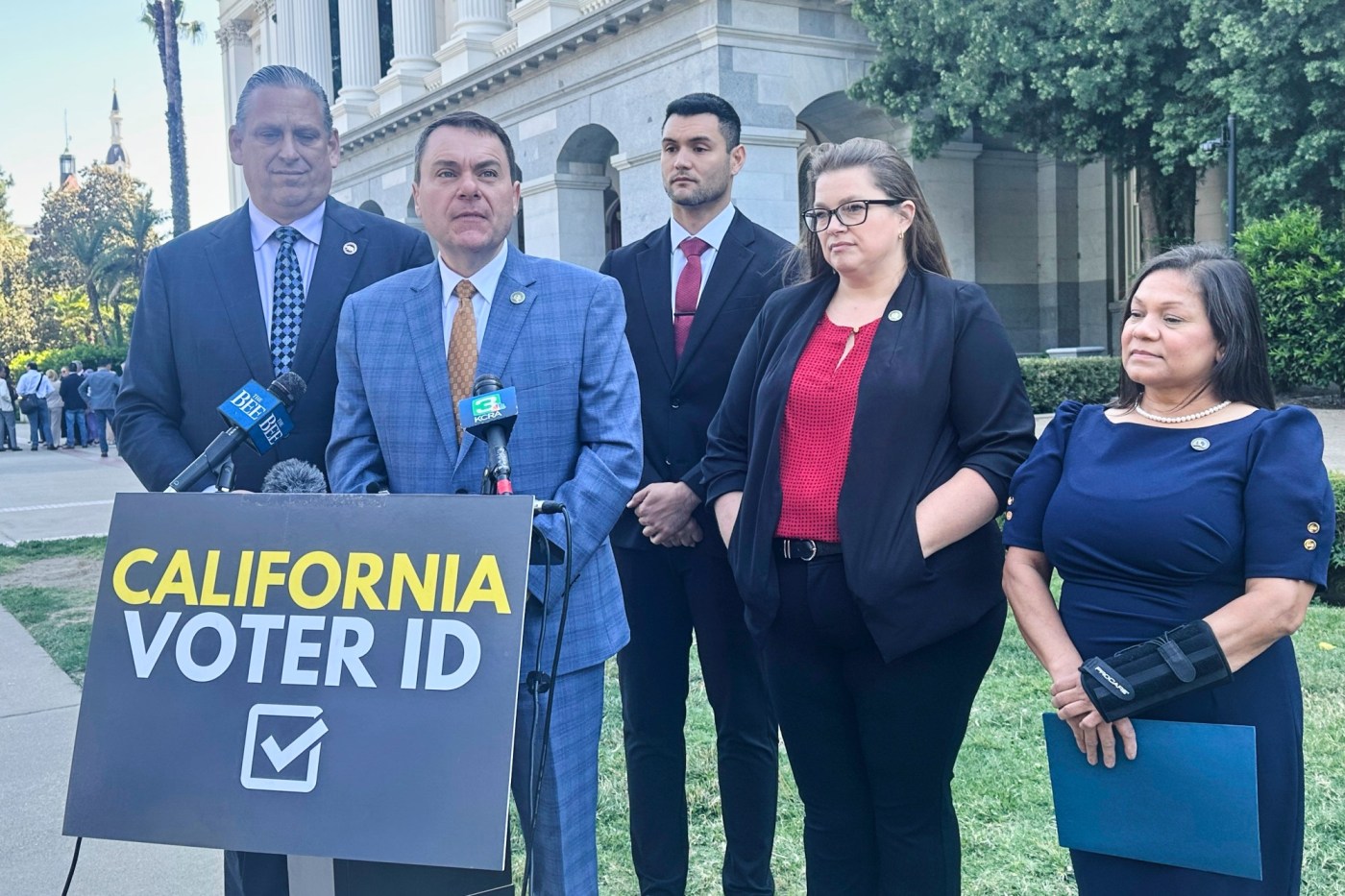
SACRAMENTO, Calif. (AP) — Two California Republican state lawmakers launched a campaign Wednesday to place a measure on the 2026 ballot that would require voter identification and proof of citizenship at the polls.

The proposal would require the state to verify proof of citizenship when a person registers to vote, and voters would have to provide identifications at the polls. Those who vote through mail-in ballots would have to give the last four digits of a government-issued ID such as a Social Security number.

“We do not want to make it harder to vote. In fact, our initiative makes it easier to vote because it streamlines the process to verify someone’s identity,” Assemblymember Carl DeMaio, who’s leading the effort, said at a Wednesday news conference.

Related Articles


Trump says he’s ‘highly unlikely’ to fire Fed’s Powell after floating that idea in private


Trump’s bid to claw back $9B in foreign aid and public broadcasting funds nears Senate vote


Stay or go? For some transgender sailors and Marines, Trump’s ban leaves one option: ‘Come and find me’


A look inside a lab making the advanced fuel to power growing US nuclear energy ambitions


Jill Biden aide invokes Fifth to decline testimony in Republican investigation

The Republican lawmakers said the measure would help restore trust in elections where they said people have complained about outdated voter rolls and an inadequate signature review process, with some also casting doubt on election results.

While voting by noncitizens has occurred, research and reviews of state cases have shown it to be rare and typically a mistake rather than an intentional effort to sway an election. Voter fraud is also rare.

California is among 14 states and the District of Columbia that do not require voters to show some form of identification at the polls or to register to voter.

The California campaign came as congressional Republicans were working to advance their own legislation to overhaul the nation’s voting procedures at the urging of President Donald Trump. Across the country, lawmakers in 17 states have introduced legislation this year to require proof of citizenship for voters, according to National Conference of State legislatures.

Opponents argued that the requirements make it more difficult for people to vote, especially the elderly, those with disabilities and those without driver’s licenses. The NAACP and other civil rights groups have argued that it disproportionately harms Black and Latino voters. Democrats in the California Legislature, who hold supermajorities in both chambers, in April rejected a bill by DeMaio aiming to enact similar voting rule changes.

The statewide proposal also came as the state continued to challenge a local measure passed by voters in the city of Huntington Beach to require voter identification at the polls. The state last year sued the city over the new rule, and Gov. Gavin Newsom signed a law to prohibit local governments in California from establishing and enforcing laws that require residents provide identification to vote in elections.

Sen. Tony Strickland, who helped pass the Huntington Beach measure as a city councilmember last year, said he expects a similar fight from state Democrats over the issue.

“The courts would be on our side because we carefully drafted this initiative. It’s constitutional,” he said.

In an East Side bar, new Pop and Son Grill serves loaded potatoes and ‘Soul Food Sundays’

posted in: All news | 0

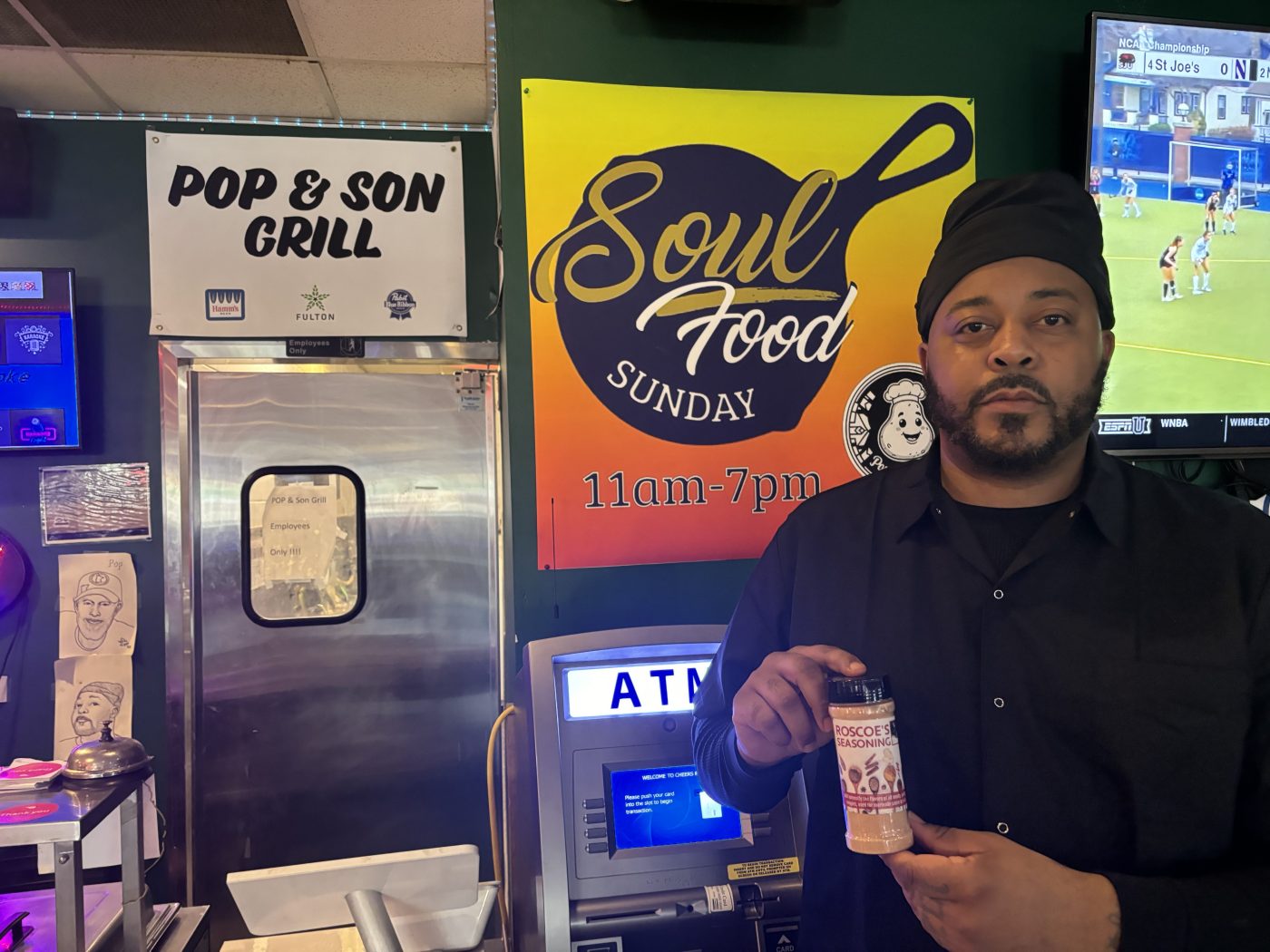
True to its name, Pop and Son Grill — tucked in the back of Cheers Pub on the East Side — consists of two people: owner and chef Roscoe Woulard and his father, Kirk Munson.

For Woulard, Pop and Son, which opened in November, is both a return home and a chance to branch out.

Woulard grew up in St. Paul and attended Le Cordon Bleu College of Culinary Arts Minneapolis/St. Paul in Mendota Heights in 2009. A few years ago, he opened his first restaurant, called The Salad Bar, at Southdale Mall in Edina. His parents also owned the former Munsons Potato Shack in the Maplewood Mall. But some mall food courts impose menu restrictions to avoid restaurants stepping on each other’s toes, he said.

“I wanted to bring something back to the community where I was raised,” he said. “I took a bit of the Salad Bar menu and the Potato Shack, things I couldn’t do there, and mixed them with things I wanted to do. Here, I’m just a bit more free.”

The Pop and Son menu is expansive, from wings to shrimp to mac and cheese to classic bar appetizers, with specials that rotate daily. One of the menu’s biggest sections — a nod to Munsons Potato Shack — consists of 14 varieties of loaded baked potatoes and fries. Other top sellers include catfish (breaded, blackened or buffalo) and jerk pasta, which has proved so overwhelmingly popular that it’s now only offered Wednesdays and Sundays, Woulard said.

“The experience has been great, and I’m very grateful to the owner (of Cheers Pub) for giving me the opportunity to step in here and let me flourish,” he said. “To be honest with you, I went in a little scared, like ‘What the heck is going to happen,’ but I get a lot of support from the community.”

The restaurant’s hours differ from the bar: Pop and Son Grill is open 3 p.m. to midnight Tuesdays through Saturdays and 11 a.m. to 7 p.m. Sunday with a special “Soul Food Sunday” menu.

“Hey Roscoe,” a bar patron called out to Woulard on a recent Tuesday afternoon. “Whatever you did to this potato, it should be illegal. It’s so good.”

Pop and Son Grill: 1067 Hudson Rd.; instagram.com/popandson_grill

Related Articles


Downtown St. Paul Afro Deli moves across street; Pino’s Pizzeria to take its place


Dining Diary: Pre- and post-event dining in St. Paul and Duluth yields delicious results


French restaurant Aubergine to move into former Revival space on Selby Ave.


Suburban restaurant group hires former Revival, Corner Table chef Thomas Boemer


A first taste of the Palace Pub, now open next to St. Paul’s Palace Theatre

Robert Roberson Faces New Execution Date in Controversial ‘Shaken Baby Syndrome’ Case

posted in: All news | 0

Attorneys for Robert Roberson and for the State of Texas went toe-to-toe in a Palestine courtroom Wednesday, arguing over the fate of the man whose 2024 execution date was halted in a dramatic eleventh-hour intervention by state legislators—and whose appeals have raised the question of whether a crime occurred at all.

After hearing arguments, Smith County Judge Austin Reeve Jackson, who is new to the case and is described in campaign literature as “a grassroots conservative,” ruled that there was no legal reason not to sign the execution order, which sets a date of October 16, almost exactly a year after Roberson’s last scheduled date. He noted that the Court of Criminal Appeals has had the matter pending for five months and hasn’t ruled.

“It doesn’t seem like anything is going to get resolved without a date,” Jackson said at the close of the hearing, calling it “unfortunate.” 

Roberson attended the hearing wearing jail-issued black and white stripes and a bullet-proof vest. As he was escorted out after the judge’s ruling, someone said; “We love you Robert.” Otherwise, the courtroom was quiet.

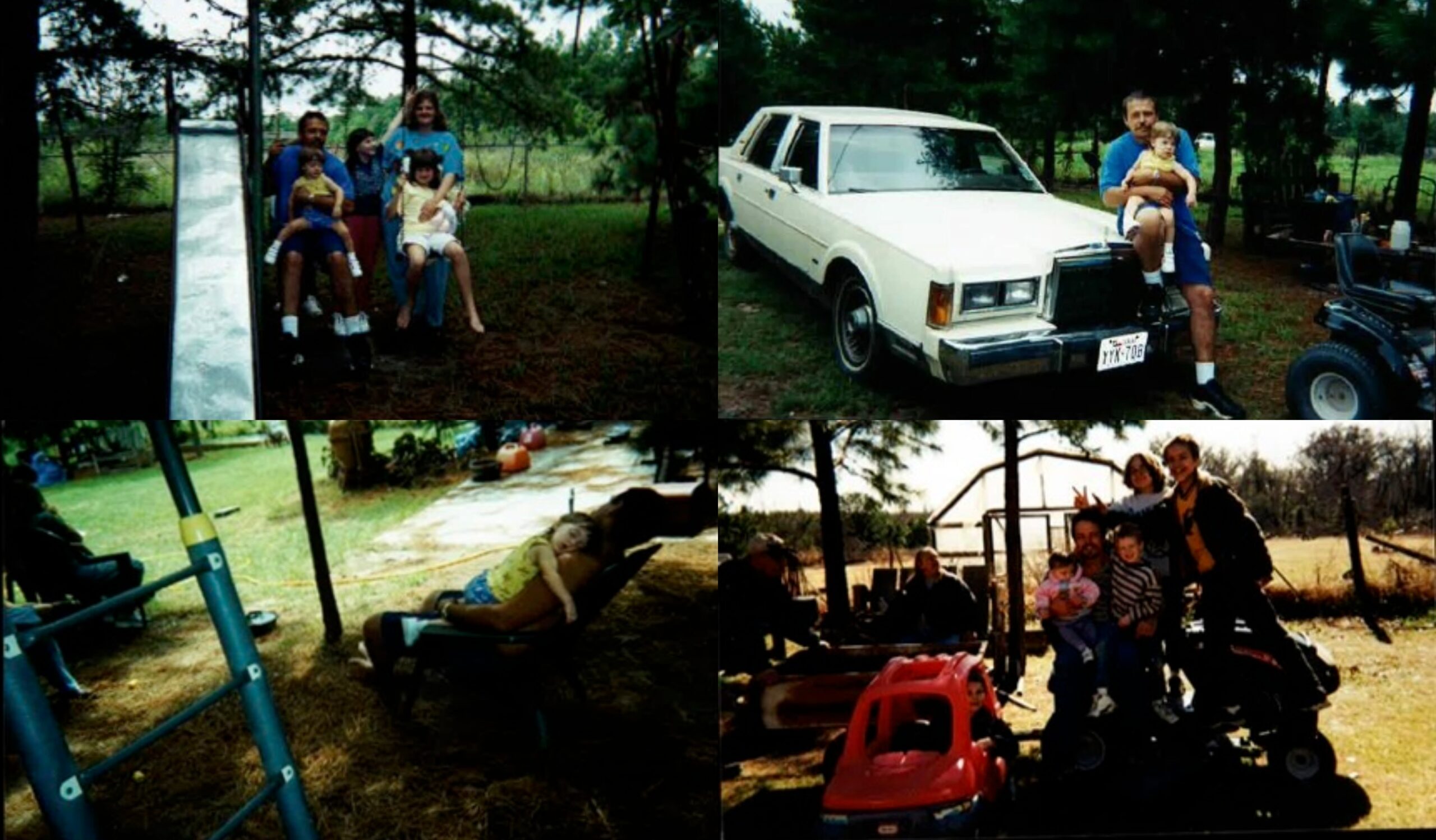
Robert Roberson in family pictures including his daughter (Courtesy/Roberson Family, Innocence Project, Gretchen Sween)

The hearing had been scheduled after Attorney General Ken Paxton’s office took over the case from Anderson County District Attorney Allyson Mitchell and swiftly called for a new execution date for Roberson. 

In court, Roberson’s attorney, Gretchen Sween, objected to resetting a date, noting that an appeal is still making its way through Texas courts arguing his actual innocence. This was the crux of the argument she made Wednesday, calling it “unusual” for the state to seek an execution date while an appeal was pending. 

Roberson was convicted in 2003 of causing the death of his young daughter, Nikki Curtis, who died in 2002 of what medical professionals at the time deemed to be Shaken Baby Syndrome (SBS) based on a now-discredited diagnostic method. Several experts tapped by the defense have helped uncover another possibility: that Nikki died of a constellation of natural causes including double pneumonia and sepsis. 

“There’s no legal or practical or moral reason to be setting a date at this time,” Sween told the Observer in an interview earlier this week.

Roberson had only recently gotten custody of his two-year-old daughter Nikki in January 2002, when he rushed her to the Palestine Regional Emergency Room. She had been sick for a week—with symptoms including diarrhea, vomiting, and a fever of up to 104.5 degrees—and that morning, Roberson had awoken to find she had fallen out of the bed they were sharing. After he checked her for injuries, they went back to sleep. Four hours later, when Roberson awoke to his alarm, Nikki was unresponsive.

A CT scan at the hospital showed bleeding and brain swelling, but Nikki didn’t have any skull fractures to explain her injuries. She was transferred to Dallas Children’s Medical Center, where a pediatrician who specialized in child abuse recognized what was believed to be a tell-tale set of symptoms. For decades, the scientific consensus stated that if children had subdural bleeding, brain swelling, and retinal hemorrhages—all of which Nikki had—doctors could presume they were victims of SBS. Today, the consensus has shifted, and doctors only diagnose what is now called Abusive Head Trauma if all other possibilities—like short falls, accidents, or illness—have been excluded and doctors have reviewed the child’s medical records. 

In Nikki’s case, the medical examiner who performed her autopsy didn’t look at her medical records, which showed a two-year-old with a history of infections and breathing problems. After Nikki was taken off life support without her father’s consent, police arrested Roberson. He was charged and convicted of capital murder. An Anderson County jury sentenced him to death. 

But in appeals since 2016, the most recent filed in February, his lawyers have presented new testimony from experts that clarify how dire Nikki’s health was before she died and how the short fall off of the bed could have led to the head injuries doctors saw that day at the ER. Even the original lead police investigator on the case has reversed his opinion and now says he believes Nikki’s death was accidental. 

Since 1989, challenges to SBS diagnoses have resulted in the exonerations of 41 people across the United States, according to the National Registry of Exonerations. If executed, Roberson would be the first in the country put to death based on the controversial diagnostic method. 

Last fall, Roberson earned a groundswell of bipartisan support from legislators who either believed he was innocent or that the state’s laws related to changing scientific consensus failed him. 

“We as a legislature actually created a way for people like Mr. Roberson to challenge convictions based on science that later turns out to be wrong,” said Democratic state Representative Joe Moody at a press conference last September, when attention around Roberson’s case was growing. “As far as we can tell, though, the courts simply aren’t engaging in that process. So convictions are being allowed to stand on junk science.”

The Texas House Committee on Criminal Jurisprudence issued a subpoena for Roberson to testify in a hearing on October 21—four days after he was set to be executed by lethal injection. What followed was a fiery debate about the separation of powers among the state’s officials. In any case, the subpoena helped stop the clock: The state Supreme Court halted the execution the night it was supposed to take place.

Paxton’s office responded with a public statement to “set the record straight” on the facts of the case. The statement attacked legislators by name and repeated a flawed argument that prosecutors made in appeals: that Roberson hadn’t actually been convicted based on SBS in the first place. This is despite the fact that SBS was mentioned numerous times during his trial, including in the testimony of the child abuse expert who originally suggested that Nikki exhibited the signs.

“I’m very alarmed by some of the misinformation about the case that has been intentionally peddled in certain circles, and I think it’s emanating from elected officials. … It has to do with politics, which should have no place in this,” Sween told the Observer

During the latest legislative session, lawmakers in the House of Representatives attempted to push forward reforms to the state’s “junk science” law, which is meant to give people another avenue to contest their convictions based on newly discredited forensic methods.

After receiving overwhelming support in the House, the legislation failed in the Senate. Legislators have argued that Roberson was denied the chance to use that existing process in his case. 

The post Robert Roberson Faces New Execution Date in Controversial ‘Shaken Baby Syndrome’ Case appeared first on The Texas Observer.