

Researchers try new ways of preserving more hearts for transplants

posted in: All news | 0

By LAURAN NEERGAARD, AP Medical Writer

WASHINGTON (AP) — Two university hospitals are pioneering new ways to expand lifesaving heart transplants for adults and babies — advances that could help recover would-be heart donations that too often go unused.

The new research aims to overcome barriers for using organs from someone who dies when their heart stops. Called DCD, or donation after circulatory death, it involves a controversial recovery technique or the use of expensive machines.

Surgeons at Duke and Vanderbilt universities reported Wednesday that they’ve separately devised simpler approaches to retrieve those hearts. In the New England Journal of Medicine, they described successfully transplanting hearts to a 3-month-old infant at Duke and three men at Vanderbilt.

“These DCD hearts work just as well as hearts from brain-dead donors,” said Vanderbilt lead author Dr. Aaron M. Williams.

How hearts are saved for donation

Most transplanted hearts come from donors who are brain dead. In those situations, the body is left on a ventilator that keeps the heart beating until the organs are removed.

Circulatory death occurs when someone has a nonsurvivable brain injury but because all brain function hasn’t ceased, the family decides to withdraw life support and the heart stops. That means organs can spend a while without oxygen before being recovered, a time lag usually doable for kidneys and other organs but that can raise questions about the quality of hearts.

To counter damage and determine whether DCD organs are usable, surgeons can pump blood and oxygen to the deceased donor’s abdominal and chest organs — after clamping off access to the brain. But it’s ethically controversial to artificially restore circulation even temporarily and some hospitals prohibit that technique, called normothermic regional perfusion, or NRP.

Another option is to “reanimate” DCD organs in a machine that pumps blood and nutrients on the way to the transplant hospital. The machines are expensive and complex, and Duke’s Dr. Joseph Turek said the devices can’t be used for young children’s small hearts — the age group with the most dire need.

New ways of preserving hearts

Turek’s team found a middle ground: Remove the heart and attach some tubes of oxygen and blood to briefly assess its ability to function — not in a machine but on a sterile table in the operating room.

They practiced with piglets. Then came the real test. At another hospital, life support was about to be withdrawn from a 1-month-old whose family wanted to donate — and who would be a good match for a 3-month-old Duke patient in desperate need of a new heart. The other hospital didn’t allow the controversial NRP recovery technique but let Turek’s team test the experimental alternative.

It took just five minutes to tell “the coronary arteries are filling well, it’s pink, it’s beating,” Turek said. The team promptly put the little heart on ice and raced it back to Duke.

Vanderbilt’s system is even simpler: Infuse the heart with a nutrient-rich, cold preservative solution before removing it from the donor’s body, similar to how hearts from brain-dead donors are handled.

That “replenishes the nutrients that are depleted during the dying process and helps protect it for transport,” Williams explained, adding that Vanderbilt has performed about 25 such transplants so far. “Our view is you don’t necessarily need to reanimate the heart.”

More donated hearts are needed

There’s a huge need for more transplantable hearts. Hundreds of thousands of adults suffer from advanced heart failure, yet many are never even offered a transplant because of the organ shortage.

Every year about 700 children in the U.S. are added to the transplant list for a new heart and about 20% die waiting. Turek said infants are at particular risk.

Related Articles


Juul can continue selling its tobacco and menthol e-cigarettes, FDA says


Healthy babies born in Britain after scientists used DNA from three people to avoid genetic disease


Congress targeted Planned Parenthood for defunding, but also caught a Maine health care provider


Stillwater: Silver Sobriety marks 10 years with new location, new executive director


RFK Jr. and other Trump officials embrace psychedelics after FDA setback

Last year, people whose lives ended via circulatory death made up 43% of the nation’s deceased donors — but just 793 of the 4,572 heart transplants.

That’s why many specialists say finding ways to use more of those hearts is crucial. The new studies are small and early-stage but promising, said Brendan Parent of NYU Langone Health, who directs transplant ethics and policy research.

“Innovation to find ways to recover organs successfully after circulatory death are essential for reducing the organ shortage,” he said.

If alternatives pan out, “I absolutely think that cardiac programs will be thrilled, especially at hospitals that have rejected NRP.”

The Associated Press Health and Science Department receives support from the Howard Hughes Medical Institute’s Department of Science Education and the Robert Wood Johnson Foundation. The AP is solely responsible for all content.
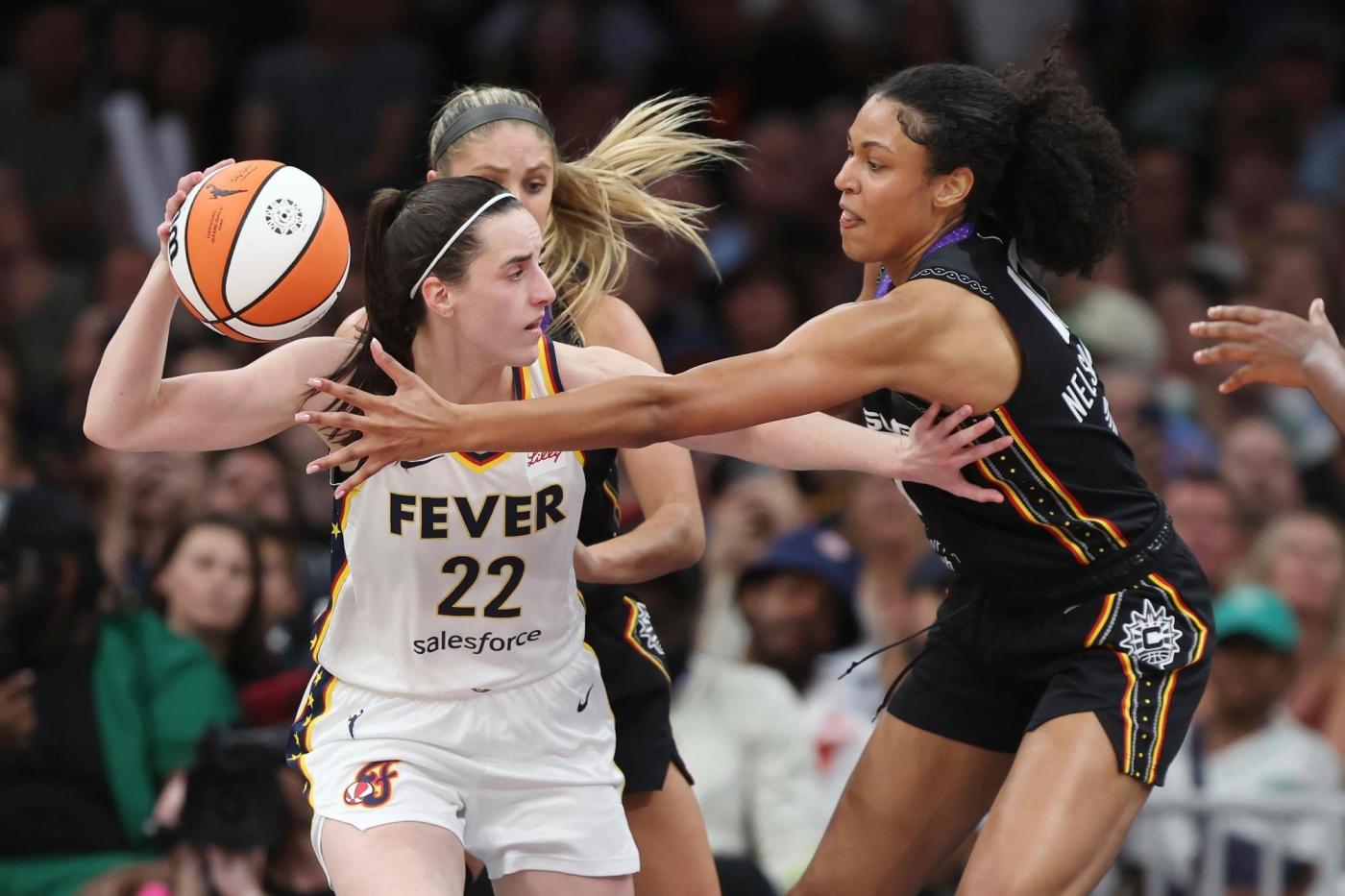

Caitlin Clark pulls out of All-Star weekend because of groin injury

posted in: All news | 0

By DOUG FEINBERG, Associated Press

INDIANAPOLIS (AP) — Caitlin Clark is out of All-Star weekend.

The Indiana Fever guard injured her right groin on Tuesday night in the final minute of the team’s win over the Connecticut Sun. She said Thursday in a message posted on X that she had to rest her body.

“I am incredibly sad and disappointed to say I can’t participate in the 3-Point Contest or the All-Star Game,” Clark said in the message posted by the Fever. “I have to rest my body. I will still be at Gainbridge Fieldhouse for all the action and I’m looking forward to helping (Liberty coach Sandy Brondello) coach our team to a win.”

Clark was supposed to compete in a loaded 3-point contest Friday night and is captain of one of the All-Star teams. The second-year guard was the leading vote getter from the fans and has been a huge reason the league has had a boon in attendance and ratings over the last two seasons.

Related Articles


Baseball Hall of Famer Dave Winfield to be honored at Toni Stone Stadium


Loons fall in trap to Los Angeles in 1-0 loss


Lynx knock off Phoenix, hit all-star break at WNBA-leading 20-4


Rosemount ready to rep Minnesota at NFL Flag Football Championships


How climate change could force FIFA to rethink the World Cup calendar

Clark sat out the team’s 98-77 loss against New York.

Fever coach Stephanie White said Clark had imaging done Wednesday afternoon and deferred to the team’s training staff for more details except to say that she considered it good news.

Clark got hurt with under a minute left. She walked downcourt holding her right groin after assisting on the Fever’s final basket. As teammate Aliyah Boston tried to console her, Clark walked to the basket stanchion and banged her head against it before heading to the bench. During the timeout, she covered her head with a towel and appeared to be holding back tears.

Clark had been durable throughout college and her first season in the WNBA, never missing a game. Now she’s had four different muscle injuries so far this year.

She missed the preseason opener with tightness in her quad but played the next day in an exhibition game at her alma mater, Iowa. She suffered a quad strain against New York on May 24 that kept her out for five games. Clark returned June 14 and played in five games before suffering another injury to her left groin that kept her out for four contests and the Commissioner’s Cup final.

 How Trump’s IRS May Unshackle Churches from Their Political Restraints

posted in: All news | 0

Last week, the Family Research Council’s longtime president Tony Perkins exulted over the win the Trump administration delivered to the Christian right: “Churches will now be unshackled,” he declared.  

In a federal court filing, the Internal Revenue Service (IRS) signaled it would reinterpret a longstanding ban on candidate endorsements by tax-exempt 501(c)(3) nonprofits. The so-called Johnson Amendment, named for its author and then-Senator Lyndon Baines Johnson, has long targeted by Christian conservatives for allegedly infringing on pastors’ free speech rights and religious liberty.

Under the new interpretation, houses of worship—including churches, synagogues, mosques, and temples—can endorse political candidates without jeopardizing their tax-exempt status. The IRS proposed to treat such endorsements “not as campaigning but as a private matter, like ‘a family discussion concerning candidates.’” The policy change was presented in federal court as a way to settle a lawsuit brought by two Texas churches and an association of Christian broadcasters that sought to have the Johnson Amendment declared unconstitutional.

While the proposal doesn’t fulfill the Christian right’s desire to completely eliminate the Johnson Amendment, it does deliver a key victory, one that will surely disrupt an important social compact at the heart of this venerable provision in ways that may remake the religious and political landscape.

The proposal “basically tells churches of all denominations and sects that you’re free to support candidates from the pulpit,” law professor Lloyd Hitoshi Mayer told The New York Times. “It also says to all candidates and parties, ‘Hey, time to recruit some churches.’”

It’s no surprise this IRS policy shift came under the second administration of President Donald Trump, whose political success owes much to his deep support among the Christian right and who has long vowed to “totally destroy” the Johnson Amendment. 

However, it should be noted that the IRS proposal doesn’t entirely “destroy” this tax provision but instead opens up the possibility of selective enforcement that could give politically allied churches a pass. As Amanda Tyler, executive director of the Baptist Joint Committee, stressed, the proposal “is NOT a repeal of the Johnson Amendment. It does not change the law, nor does it protect all churches from potential enforcement.” 

The provision remains on the books and apparently still applies to other tax-exempt nonprofits (though enforcement of the law has generally been lacking for years). But the IRS move clearly undermines the policy, much to the delight of prominent Christian right activists. First Baptist Dallas senior pastor Robert Jeffress, a Trump ally and influential Christian nationalist, praised the administration and declared, “Government has NO BUSINESS regulating what is said in pulpits!” 

By contrast, advocates for the separation of church and state condemned the maneuver. Americans United  called it “a flagrant, self-serving attack on church-state separation that threatens our democracy by favoring houses of worship over other nonprofits and inserting them into partisan politics.” The group promptly filed a request to intervene in the lawsuit to defend the Johnson Amendment. (Full disclosure: I have previously donated to Americans United.)

The Johnson Amendment has roots in the grubby world of Texas politics. As historian Randall Balmer notes in a forthcoming book on church-state separation, while up for reelection in 1954, U.S. Senator Lyndon Johnson faced fierce “McCarthy-like attacks” from right-wing tax-exempt nonprofits (including one funded by Dallas oil tycoon H. L. Hunt). In response, Johnson sought to amend the tax code to prohibit tax-exempt nonprofits from politicking. The provision was passed by Congress without debate and signed into law by President Eisenhower, and in 1986 was strengthened under President Ronald Reagan.

In exchange for tax exemption—a hefty financial boon for organizations that may rely mainly on donations—nonprofits agree to refrain from “participating in, or intervening in, any political campaign on behalf of (or in opposition to) any candidate for elective public office.” That tax exemption amounts to a public taxpayer subsidy. 

Moreover, the Johnson Amendment does not prevent churches and other nonprofits from engaging in any political activity. Ministers acting in their personal capacity are free to endorse candidates, and per IRS regulations, congregations can “advocate for or against issues that are in the political arena” and conduct voter education, registration, and get-out-the-vote drives so long as such activities are “conducted in a non-partisan manner.”

Here, I think, critics of the Johnson Amendment have a legitimate complaint. In today’s hyper-polarized environment, it isn’t always easy to determine what is and isn’t non-partisan—when, say, support for reproductive rights is closely associated with the Democratic Party and opposition with the GOP. Yet whether that difficulty justifies ending the provision is another question altogether.

The ban on churches endorsing candidates is overwhelmingly supported by Americans. According to a 2022 poll by the Pew Research Center 77 percent of Americans surveyed oppose houses of worship endorsing political candidates and 67 percent say houses of worship should keep out of political matters altogether. Interestingly, not only do most Christians (72 percent) oppose church political endorsements, but so do most white evangelicals (62 percent), who form the base of the right-wing Christian nationalist movement.

Despite widespread public disapproval of church politicking, Christian right activists have long chafed at the Johnson Amendment, contending that it makes the IRS into “speech police” and chills the constitutional rights of religious leaders. 

And this opposition to the Johnson Amendment often goes hand-in-hand with the ideology of Christian nationalism. If politics is inherently about getting and keeping power, Christian nationalism is inherently political: it seeks conservative Christian dominance over law and government. Take, for  instance, the rhetoric from someone like Pastor Jeffress saying Trump is “the only one going to take us to the promised land.” 

Moreover, one of Christian nationalism’s variants, the New Apostolic Reformation, views politics as a key part of a cosmic battle between good and evil, painting Democrats and other opponents as demonic and issuing divine blessings of political leaders like Trump. By interpreting away the ban on endorsing or opposing candidates, the IRS may only further encourage this kind of divisive, demonizing politics in churches.

While such Christian nationalist ministers may be eager to take advantage of this new policy, it’s not clear that there will be a broader rush among clergy into the political realm. Only 9 percent of clergy in the U.S. said they had “endorsed or opposed a candidate while preaching, speaking, or writing to their congregation,” according to a recent survey; just 14 percent indicated they would if the tax law permitted.

Given the widespread unpopularity of candidate endorsements by houses of worship, I suspect most congregations will continue to refrain from the practice. Candidate endorsements risk introducing partisan divisions and rancor into congregations. Furthermore, if congregants and the wider public start to see ministers as little more than political flacks, both clergy and church may be tarred with the same negativity with which the public views politics and politicians generally.

Still, there are real concerns about this policy change. For one, the IRS may have now opened the door for dark money to flood into churches—a particular concern here in Texas, where lavish campaign-related spending by Christian billionaires from West Texas now exerts tremendous sway over state politics. As the Campaign Legal Center notes, if the ban on electioneering was lifted, churches could become “super dark money groups” for anonymous donors to bankroll electoral campaigns—with a charitable tax deduction to boot. 

Further, the move is part of a broader undermining of church-state separation, that bedrock constitutional principle that prevents any one religion from monopolizing the religious realm. Here in Texas, church-state separation has been under sustained attack by Christian nationalist-minded lawmakers and activists for well over a decade—most recently with new laws passed requiring that the Ten Commandments are posted in every public school classroom, that schools provide a daily period for prayer, and the enactment of a school voucher scheme using taxpayer funds to subsidize religious education.  

It’s too soon for certainty about the impact of the new IRS policy as, for now, it applies only to the parties in the lawsuit. But opponents of the Johnson Amendment like Tony Perkins are likely to test the boundaries and push to permanently unshackle the church. One thing is clear: this change has the potential to reshape both politics and religion in the U.S., in ways that may not be healthy for either.

The post  How Trump’s IRS May Unshackle Churches from Their Political Restraints appeared first on The Texas Observer.

2025 Minneapolis Aquatennial lineup: What to know

posted in: All news | 0

The 2025 Minneapolis Aquatennial, a four-day celebration in downtown Minneapolis, is set for next week.

This year’s Aquatennial will include signature family-friendly events like the torchlight parade and fireworks show. Festivities will run Wednesday, July 23, through Saturday, July 26.

Gopher men’s hockey coach Bob Motzko will be grand marshal of the Aquatennial Torchlight Parade, which is at 7:30 p.m. Wednesday. The parade will be travel along Nicollet Avenue from 12th Street to Fourth Street.

The pre-fireworks show will kick off at 4 p.m. Saturday, July 26, on West River Parkway near the Stone Arch Bridge. Live music at the show will include Jordan Johnston (5 p.m.), Pullstring (6 p.m.), Obi Original & the Black Atlantics (7 p.m.), Plymouth School of Rock (8 p.m.) and Dysfunktional (9 p.m.). There also will be a Kids Zone with face paint, tattoos, balloons and trapeze performances.

Fireworks will begin at 10 p.m. July 26 along the banks of the Mississippi River on West River Parkway near the Stone Arch Bridge. The fireworks show will be set to music playing on KDWB.

Other highlights include the Loring Park Family Fun Night (5:30 to 7:30 p.m. Wednesday, July 23), movie night at Target Field Station (7 to 9 p.m. Thursday, July 24), Minneapolis Craft and Vintage Markets (4 to 10 p.m. Saturday, July 26, at the Chicago Mall between the Guthrie Theater and Mill City Museum) and Twin Cities Carifest (10 a.m. to 10 p.m. Saturday, July 26, on West River Road between Plymouth Avenue and Broadway Avenue).

For the full event schedule, go to aquatennial.com.

Related Articles


In an East Side bar, new Pop and Son Grill serves loaded potatoes and ‘Soul Food Sundays’


Camel rides, live music and kebabs: Middle Eastern Festival in West St. Paul this weekend


What to expect at Lumberjack Days 2025


Hudson RiverFest will celebrate conservation


This fall, explore all of Minnesota’s art crawls