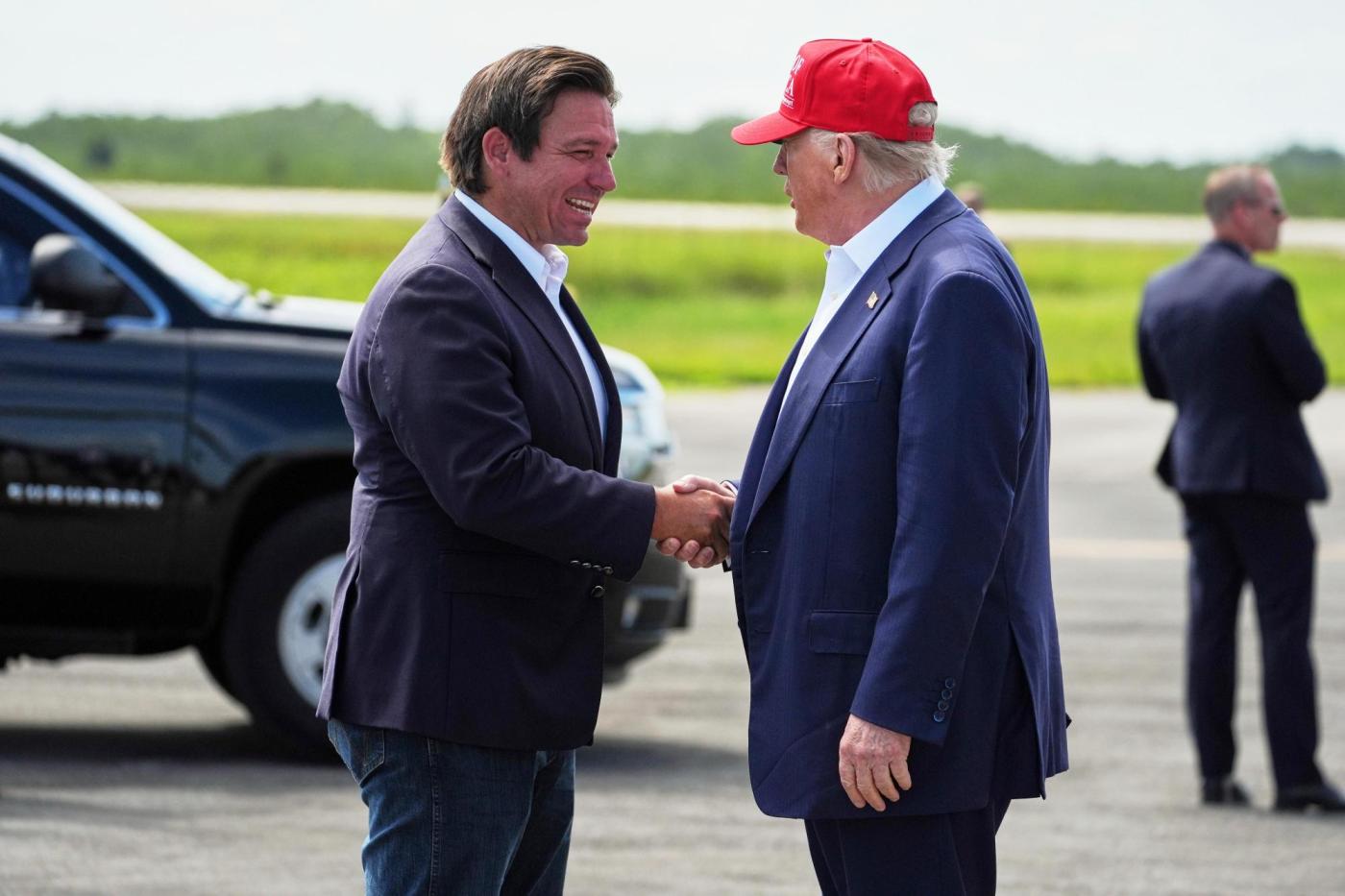
Emails show DeSantis administration blindsided county officials with plans for ‘Alligator Alcatraz’

posted in: All news | 0

By KATE PAYNE, Associated Press

TALLAHASSEE, Fla. (AP) — Florida Gov. Ron DeSantis’ administration left many local officials in the dark about the immigration detention center that rose from an isolated airstrip in the Everglades, emails obtained by The Associated Press show, while relying on an executive order to seize the land, hire contractors and bypass laws and regulations.

The emails show that local officials in southwest Florida were still trying to chase down a “rumor” about the sprawling “Alligator Alcatraz” facility planned for their county while state officials were already on the ground and sending vendors through the gates to coordinate construction of the detention center, which was designed to house thousands of migrants and went up in a matter of days.

“Not cool!” one local official told the state agency director spearheading the construction.

The 100-plus emails dated June 21 to July 1, obtained through a public records request, underscore the breakneck speed at which the the governor’s team built the facility and the extent to which local officials were blindsided by the plans for the compound of makeshift tents and trailers in Collier County, a wealthy, majority-Republican corner of the state that’s home to white-sand beaches and the western stretch of the Everglades.

Workers install a sign reading “Alligator Alcatraz” at the entrance to a new migrant detention facility at Dade-Collier Training and Transition facility, Thursday, July 3, 2025, in Ochopee, Fla. (AP Photo/Rebecca Blackwell)

The executive order, originally signed by the Republican governor in 2023 and extended since then, accelerated the project, allowing the state to seize county-owned land and evade rules in what critics have called an abuse of power. The order granted the state sweeping authority to suspend “any statute, rule or order” seen as slowing the response to the immigration “emergency.”

A representative for DeSantis did not immediately respond to a request for comment.

Known as the Dade-Collier Training and Transition Airport, the airstrip is about 45 miles (72 kilometers) west of downtown Miami. It is located within Collier County but is owned and managed by neighboring Miami-Dade County. The AP asked for similar records from Miami-Dade County, which is still processing the request.

To DeSantis and other state officials, building the facility in the remote Everglades and naming it after a notorious federal prison were meant as deterrents. It’s another sign of how President Donald Trump’s administration and his allies are relying on scare tactics to pressure people who are in the country illegally to leave.

Detention center in the Everglades? ‘Never heard of that’

Collier County Commissioner Rick LoCastro apparently first heard about the proposal after a concerned resident in another county sent him an email on June 21.

“A citizen is asking about a proposed ‘detention center’ in the Everglades?” LoCastro wrote to County Manager Amy Patterson and other staff. “Never heard of that … Am I missing something?”

“I am unaware of any land use petitions that are proposing a detention center in the Everglades. I’ll check with my intake team, but I don’t believe any such proposal has been received by Zoning,” replied the county’s planning and zoning director, Michael Bosi.

Work progressed on a new migrant detention facility dubbed “Alligator Alcatraz,” at Dade-Collier Training and Transition facility in the Florida Everglades, Friday, July 4, 2025, in Ochopee, Fla. (AP Photo/Rebecca Blackwell)

Environmental groups have since filed a federal lawsuit, arguing that the state illegally bypassed federal and state laws in building the facility.

In fact, LoCastro was included on a June 21 email from state officials announcing their intention to buy the airfield. LoCastro sits on the county’s governing board but does not lead it, and his district does not include the airstrip. He forwarded the message to the county attorney, saying “Not sure why they would send this to me?”

In the email, Kevin Guthrie, the head of the Florida Division of Emergency Management, which built the detention center, said the state intended to “work collaboratively” with the counties. The message referenced the executive order on illegal immigration, but it did not specify how the state wanted to use the site, other than for “future emergency response, aviation logistics, and staging operations.”

Workers sit alongside trailers as work progresses on a new migrant detention center dubbed “Alligator Alcatraz,” at Dade-Collier Training and Transition facility in the Florida Everglades, Friday, July 4, 2025, in Ochopee, Fla. (AP Photo/Rebecca Blackwell)

The next day, Collier County’s emergency management director, Dan Summers, wrote up a briefing for the county manager and other local officials, including some notes about the “rumor” he had heard about plans for an immigration detention facility at the airfield.

Summers knew the place well, he said, after doing a detailed site survey a few years ago.

“The infrastructure is — well, nothing much but a few equipment barns and a mobile home office … (wet and mosquito-infested),” Summers wrote.

FDEM told Summers that while the agency had surveyed the airstrip, “NO mobilization or action plans are being executed at this time” and all activity was “investigatory,” Summers wrote.

Emergency director said lack of information was ‘not cool’

By June 23, Summers was racing to prepare a presentation for a meeting of the board of county commissioners the next day. He shot off an email to FDEM Director Kevin Guthrie seeking confirmation of basic facts about the airfield and the plans for the detention facility, which Summers understood to be “conceptual” and in “discussion or investigatory stages only.”

“Is it in the plans or is there an actual operation set to open?” Summers asked. “Rumor is operational today… ???”

In fact, the agency was already “on site with our vendors,” coordinating construction of the site, FDEM bureau chief Ian Guidicelli responded.

“Not cool! That’s not what was relayed to me last week or over the weekend,” Summers responded, adding that he would have “egg on my face” with the Collier County Sheriff’s Office and Board of County Commissioners. “It’s a Collier County site. I am on your team, how about the courtesy of some coordination?”

On the evening of June 23, FDEM officially notified Miami-Dade County it was seizing the county-owned land to build the detention center, under emergency powers granted by the executive order.

Plans for the facility sparked concerns among first responders in Collier County, who questioned which agency would be responsible if an emergency should strike the site.

Discussions on the issue grew tense at times. Local Fire Chief Chris Wolfe wrote to the county’s chief of emergency medical services and other officials on June 25: “I am not attempting to argue with you, more simply seeking how we are going to prepare for this that is clearly within the jurisdiction of Collier County.”

Related Articles


In American life, a growing and forbidding visual rises: the law-enforcement officer in a mask


Trump administration order requires interior secretary to sign off on all wind and solar projects


House sends bill regulating stablecoins, a type of cryptocurrency, to Trump


Trump is checked for swelling in legs, diagnosed with common condition in older adults


‘Fear is the tool of a tyrant,’ fired federal prosecutor Maurene Comey tells colleagues

‘Not our circus, not our monkeys’

Summers, the emergency management director, repeatedly reached out to FDEM for guidance, trying to “eliminate some of the confusion” around the site.

As he and other county officials waited for details from Tallahassee, they turned to local news outlets for information, sharing links to stories among themselves.

“Keep them coming,” Summers wrote to county Communications Director John Mullins in response to one news article, “since its crickets from Tally at this point.”

Hoping to manage any blowback to the county’s tourism industry, local officials kept close tabs on media coverage of the facility, watching as the news spread rapidly from local newspapers in southwest Florida to national outlets such as The Washington Post and The New York Times and international news sites as far away as Great Britain, Germany and Switzerland.

As questions from reporters and complaints from concerned residents streamed in, local officials lined up legal documentation to show the airfield was not their responsibility.

In an email chain labeled, “Not our circus, not our monkeys…,” County Attorney Jeffrey Klatzkow wrote to the county manager, “My view is we have no interest in this airport parcel, which was acquired by eminent domain by Dade County in 1968.”

Meanwhile, construction at the site plowed ahead, with trucks arriving around the clock carrying portable toilets, asphalt and construction materials. Among the companies that snagged multimillion dollar contracts for the work were those whose owners donated generously to DeSantis and other Republicans.

On July 1, just 10 days after Collier County first got wind of the plans, the state officially opened the facility, welcoming DeSantis, Trump, Homeland Security Secretary Kristi Noem and other state and national officials for a tour.

A county emergency management staffer fired off an email to Summers, asking to be included on any site visit to the facility.

“Absolutely,” Summers replied. “After the President’s visit and some of the chaos on-site settles-in, we will get you all down there…”

Kate Payne is a corps member for The Associated Press/Report for America Statehouse News Initiative. Report for America is a nonprofit national service program that places journalists in local newsrooms to report on undercovered issues.
In American life, a growing and forbidding visual rises: the law-enforcement officer in a mask

posted in: All news | 0

By DEEPTI HAJELA, Associated Press

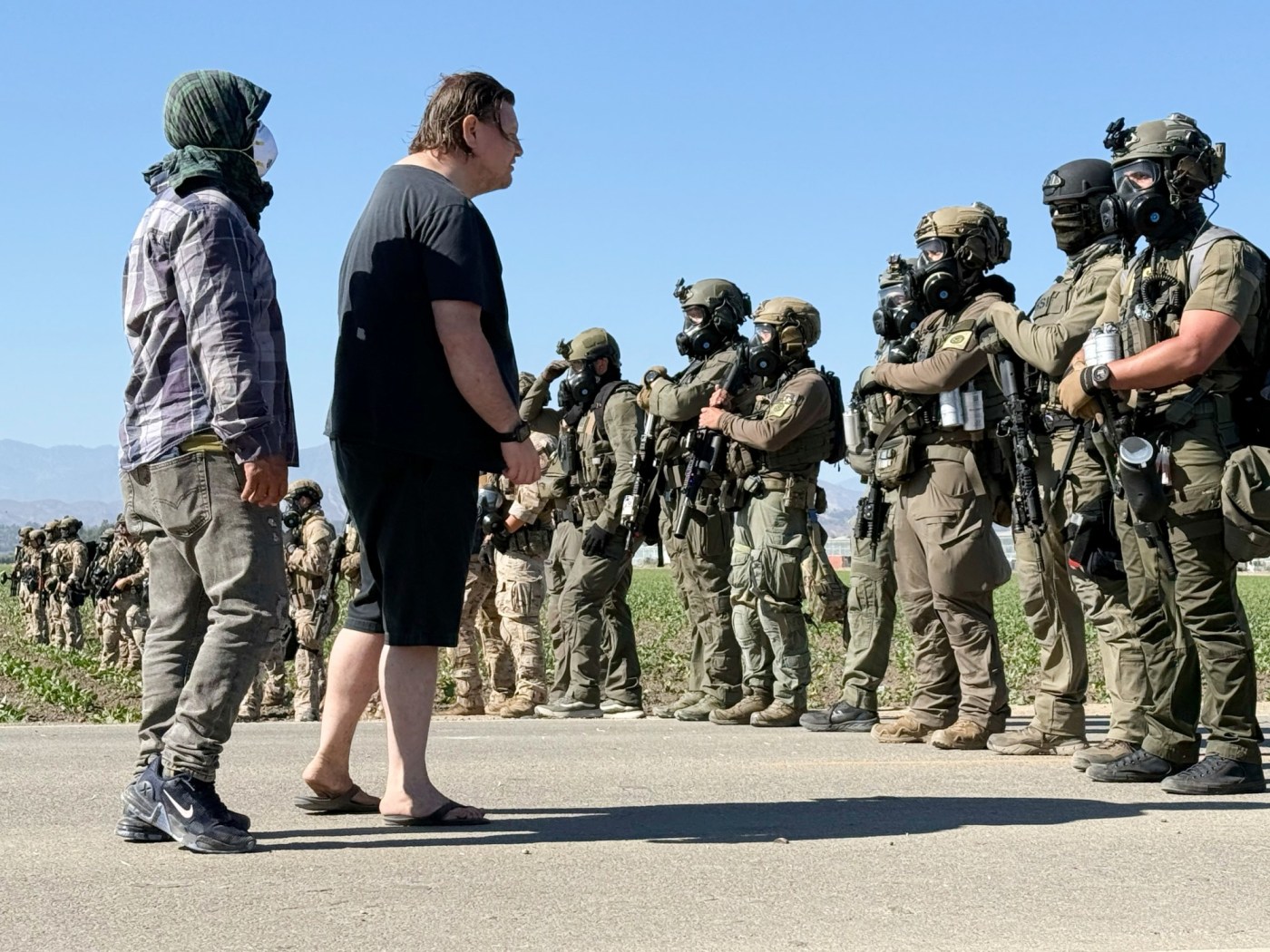
NEW YORK (AP) — In a matter of months, it has become a regular sight around the country — immigration enforcement agents detaining people and taking them into custody, often as public anger and outcry unfold around them. But in the process, something has disappeared: the agents’ faces, covered by caps, sunglasses, pulled-up neck gaiters or balaclavas, effectively rendering them unidentifiable.

With the year only half over, the covered face — as deployed by law enforcement in a wave of immigration crackdowns directed by President Donald Trump’s White House — has become one of the most potent and contentious visuals of 2025.

The increase in high-profile immigration enforcement was already contentious between those opposed to the actions of Trump’s administration and those in support of them. The sight of masked agents carrying it out is creating a whole new level of conflict, in a way that has no real comparison in the U.S. history of policing.

People shout at federal immigration agents during a raid in the agriculture area of Camarillo, Calif., July 10, 2025. (AP Photo/Michael Owen Baker)

Trump administration officials have consistently defended the practice, saying that immigration agents have faced strident and increasing harassment in public and online as they have gone about their enforcement, and hiding their identities is for their and their families’ safety to avoid things like death threats and doxxing, where someone’s personal information is released without their permission on the internet.

“I’m sorry if people are offended by them wearing masks, but I’m not going to let my officers and agents go out there and put their lives on the line, their family on the line because people don’t like what immigration enforcement is,” Immigration and Customs Enforcement acting director Todd Lyons said last month.

There’s pushback, as expected

Democrats and others, including the several state attorneys general, have pushed back, saying the use of face masks generates public fear and should be halted.

In a letter to Lyons last week, a group of Democratic senators said the stepped-up immigration enforcement in workplaces, restaurants and other sites was already causing dismay and the increasingly common sight of masked agents “represents a clear attempt to compound that fear and chaos – and to avoid accountability for agents’ actions.”

FILE – Immigration and Customs Enforcement agents escort a detained immigrant into an elevator after he exited an immigration courtroom, Tuesday, June 17, 2025, in New York. (AP Photo/Olga Fedorova, file)

In American culture, covering one’s face has often gone hand in hand with assumptions of negative behavior. Think bandits donning bandanas in cowboy movies, or robbers putting on ski masks before pulling a heist on a bank. Even comic-book superheroes who cover their faces have been swept up in storylines in recent years that derisively refer to them as “masks” and say their decision to hide their identities while enforcing justice is transgressive.

And the presence of masked police or paramilitary forces in other countries has been seen by Americans as antithetical to promised democracy and justice for all — and to the common-law principle of being able to face your accusers.

Mask-wearing overall in American life took another hit during the COVID-19 pandemic, when many Trump supporters scoffed at notions that protective masks would insulate people from the deadly virus and scorned people who wore them. More recently, Trump has come out against masks, at least when they’re being worn by protestors. He posted on social media last month that demonstrators wearing masks should be arrested.

Given all that cultural context, it’s even more problematic that those enforcing laws be the ones with their faces covered, said Tobias Winright, professor of moral theology at St. Patrick’s Pontifical University in Maynooth, Ireland. He has worked in law enforcement in the U.S. and writes frequently about policing ethics.

If “what you’re doing is above board and right,” he said, “then why conceal your identity?”

Power gives different symbols different meanings

For those who question why it’s different for law enforcement to wear masks if protestors and non-law enforcement personnel are doing it, it’s because symbols have different meanings based on the power and position of the people using them, said Alison Kinney, author of “Hood,” a book about that clothing item and the various ways people have used it.

“ICE agents are agents of the state. and they’re invested with not only power but also with protections in carrying out their job,” she said. “But that job is also supposed to be public service. It’s also supposed to be accountable and responsible to the public.”

“And so they have a greater responsibility for transparency and accountability and making themselves known so that we can hold them accountable for the justice or injustice of their actions,” she said.

Related Articles


US Justice Department wants no prison time for ex-officer convicted in Breonna Taylor raid


Settlement reached in investors’ lawsuit against Meta CEO Mark Zuckerberg and other company leaders


‘Fear is the tool of a tyrant,’ fired federal prosecutor Maurene Comey tells colleagues


Ground squirrels are taking over a North Dakota city and officials are not amused


Can artificial reefs in Lake Michigan slow erosion and boost fish population? Researchers aim to find out.

Concerns over how law enforcement is held accountable to the public have come up before. Advocates pushed for officers to wear body cameras and demanded that police officers have visible names and badge numbers. But there hasn’t previously been much discussion around police masking because there isn’t a history of it being done in any kind of official widespread way in the United States, outside of SWAT- or undercover-type operations, Winright said.

The most high-profile example of mask-wearing in American history for the purpose of hiding identity is also its most negative one — racist attacks carried out by the members of the Ku Klux Klan.

The masks served a purpose, of course, of keeping the wearers’ identities secret, said Elaine Frantz, a history professor at Kent State University and author of “Ku-Klux: The Birth of the Klan during Reconstruction.” But they also made it easier for those wearing them to commit violent acts against others, she said.

“One thing about a mask is it kind of works like being behind a riot shield,” Frantz said. “When you have more of separation from the person you’re attacking, it’s easier to dehumanize that person.”

Winright said he hoped law enforcement mask-wearing wouldn’t be normalized. There has been at least one expansion into local policing. In Nassau County, on Long Island just outside New York City, County Executive Bruce Blakeman last week signed an executive order allowing police officers to wear masks during certain types of work, including working with immigration agents.

Winright is concerned, though, that the move could strain police-community relations even more, thus putting officers at even more risk.

“Wearing a mask seems to increase fear and decrease trust, and policing from federal to local in America needs trust and transparency and community relations that are positive,” he said.

He added: “The harms, the risks, are greater by wearing masks, not only to the individual officers, but to the profession itself, as well as to the United States society. It’s just going to further exacerbate the us-versus-them polarization, the lack of trust, and that’s the probably the last thing we need right now.”

Trump administration order requires interior secretary to sign off on all wind and solar projects

posted in: All news | 0

By MATTHEW DALY, Associated Press

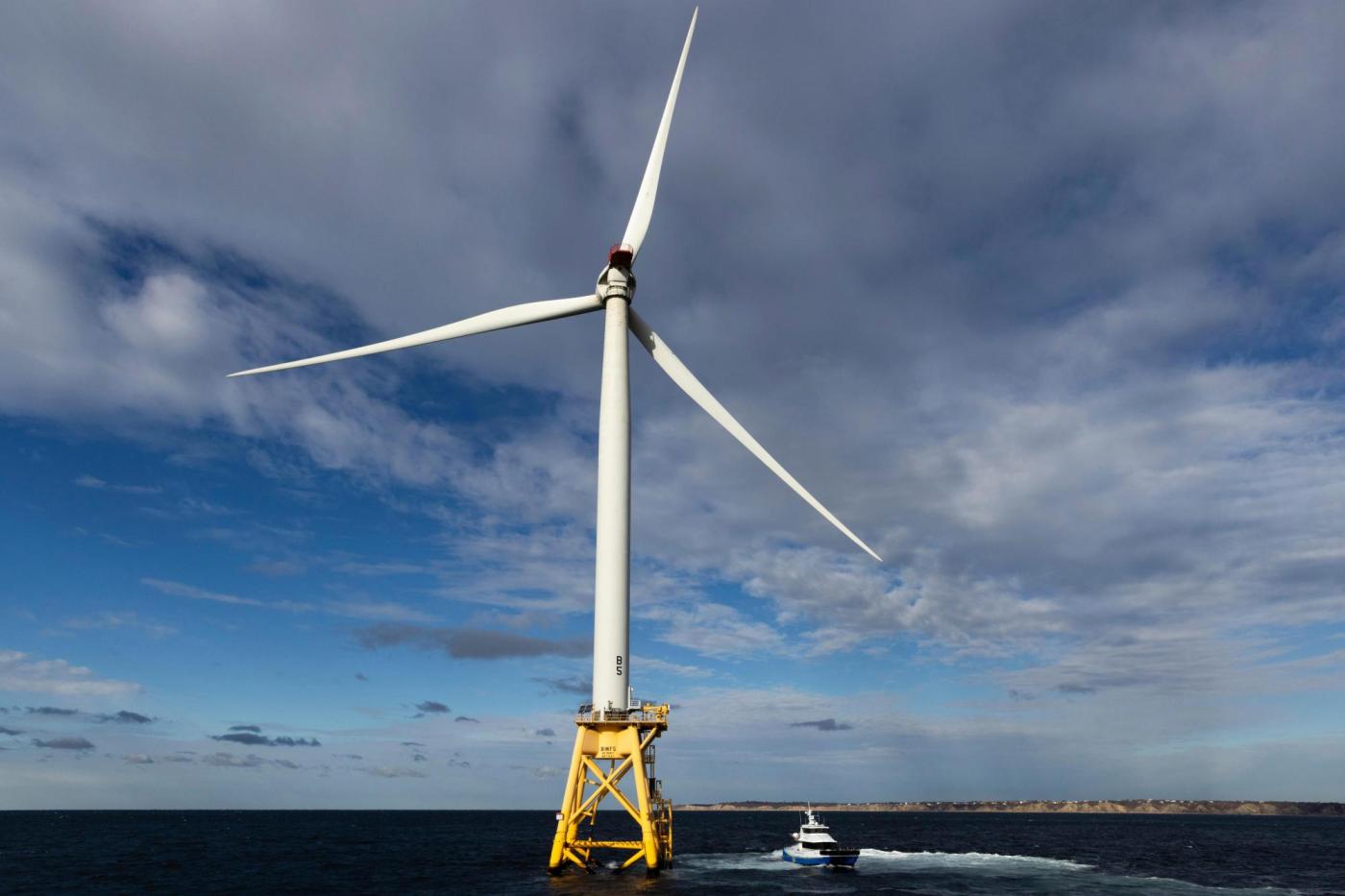
WASHINGTON (AP) — All solar and wind energy projects on federal lands and waters must be personally approved by Interior Secretary Doug Burgum under a new order that authorizes him to conduct “elevated review” of activities ranging from leases to rights-of-way, construction and operational plans, grants and biological opinions.

The enhanced oversight on clean-energy projects is aimed at “ending preferential treatment for unreliable, subsidy-dependent wind and solar energy,” the Interior Department said in a statement Thursday. The order “will ensure all evaluations are thorough and deliberative” on potential projects on millions of acres of federal lands and offshore areas, the department said.

Secretary of Interior Doug Burgum listens to President Donald Trump speak during a cabinet meeting at the White House, Tuesday, July 8, 2025, in Washington. (AP Photo/Evan Vucci)

Clean-energy advocates said the action could hamstring projects that need to be underway quickly to qualify for federal tax credits that are set to expire under the tax-cut and spending bill that President Donald Trump signed into law on July 4. The law phases out credits for wind, solar and other renewable energy while enhancing federal support for fossil fuels such as coal, oil and natural gas.

“At a time when energy demand is skyrocketing, adding more layers of bureaucracy and red tape for energy projects at the Interior Department is exactly the wrong approach,” said Stephanie Bosh, senior vice president of the Solar Energy Industries Association. “There’s no question this directive is going to make it harder to maintain our global (artificial intelligence) leadership and achieve energy independence here at home.”

FILE – Pumpjacks operate in the foreground while a wind turbines at the Buckeye Wind Energy wind farm rise in the distance Monday, Sept. 30, 2024, near Hays, Kan. (AP Photo/Charlie Riedel, File)

In the legislation, Trump and GOP lawmakers moved to dismantle the 2022 climate law passed by Democrats under President Joe Biden. And on July 7, Trump signed an executive order that further restricts subsidies what for he called “expensive and unreliable energy policies from the Green New Scam.”

That order was part of a deal the Republican president made with conservative House Republicans who were unhappy that the tax-cut bill did not immediately end all subsidies for clean energy. A group of Republican senators, including Alaska Sen. Lisa Murkowski and Utah Sen. John Curtis, had pushed to delay phaseout of some of the credits to allow currently planned projects to continue.

Trump has long expressed disdain for wind power, describing it at a Cabinet meeting last week as an expensive form of energy that “smart” countries do not use.

Even with the changes approved by the Senate, the new law will likely crush growth in the wind and solar industry and lead to a spike in Americans’ utility bills, Democrats and environmental groups say. They say it jeopardizes hundreds of renewable energy projects intended to boost the nation’s electric grid as demand is set to rise amid sharp growth from data centers, artificial intelligence and other uses.

Related Articles


In American life, a growing and forbidding visual rises: the law-enforcement officer in a mask


House sends bill regulating stablecoins, a type of cryptocurrency, to Trump


Trump is checked for swelling in legs, diagnosed with common condition in older adults


‘Fear is the tool of a tyrant,’ fired federal prosecutor Maurene Comey tells colleagues


The House is poised to OK Trump’s $9 billion cut to public broadcasting and foreign aid

‘Level the playing field’

The Interior Department said Thursday that Burgum’s order will “level the playing field for dispatchable, cost-effective and secure energy sources,” such as coal and natural gas “after years of assault under the previous administration.″

“American energy dominance is driven by U.S.-based production of reliable baseload energy, not regulatory favoritism towards unreliable energy projects that are solely dependent on taxpayer subsidies and foreign-sourced equipment,” said Adam Suess, the acting assistant secretary for lands and minerals management.

While Democrats complain the tax law will make it harder to get renewable energy to the electric grid, Republicans say it supports production of traditional energy sources such as oil, gas and coal, as well as nuclear power, increasing reliability.

In the Senate compromise, wind and solar projects that begin construction within a year of the law’s enactment are allowed to get a full tax credit without a deadline for when the projects are “placed in service,″ or plugged into the grid. Wind and solar projects that begin later must be placed in service by the end of 2027 to get a credit.

The law retains incentives for technologies such as advanced nuclear, geothermal and hydropower through 2032.

Fridley boy, 15, pleads guilty to fatally shooting man on St. Paul’s North End

posted in: All news | 0

A 15-year-old Fridley boy waived certification to adult court Wednesday and pleaded guilty in the October fatal shooting of a 28-year-old man in St. Paul’s North End neighborhood.

The Ramsey County attorney’s office originally charged Nehemiah D. Robinson Bowes by juvenile petition in the Oct. 12 death of Riccardo Anthony Fleming, who was shot 11 times at Woodbridge Street and Wheelock Parkway.

Riccardo Fleming (Courtesy of the family)

Because Bowes was 15 at the time of the killing, state law prevented the attorney’s office from providing information about the case due to his age. Bowes was arrested in November at Fridley High School, St. Paul police said at the time, without naming him.

Fleming was visiting his father’s side of the family in St. Paul and his mother, Moneke Thomas, told the Pioneer Press in December she didn’t know why he was shot.

“I would like my son to be remembered as a loving person with a good heart. He was so funny and outgoing, and the life of the party,” said Thomas, adding that her son loved dogs and recording music. “He didn’t deserve this. … I’m lost, I’m numb.”

Fleming lived in Robbinsdale for the first part of his life and then moved with his family to Council Bluffs, Iowa. He later lived in Fremont and Lincoln, Neb.

Bowes pleaded guilty to the sole count of second-degree intentional murder. A plea agreement calls for Bowes to receive between 16½ and 21¾ years in prison. He remains jailed in lieu of $2.5 million bail ahead of his Sept. 5 sentencing.

No tension

Police responded to multiple reports of shots fired about 9:50 p.m. and found Fleming lying in the street with multiple gunshot wounds. He was pronounced dead at Regions Hospital.

Investigators recovered three spent 9mm casings in the road on Woodbridge Street and eight more in the grass near an apartment building sign.

An autopsy showed Bowes had 11 gunshot wounds and that he died of blood loss.

Video surveillance showed Fleming and three other males lingering around a Volvo in an apartment building parking lot earlier in the day. At about 9:45 p.m., one male is seen running back to the parking lot, with others soon following.

Police identified the driver of the Volvo as a 31-year-old man who lived at the apartment. The man, identified in the complaint as J.C., told police in an Oct. 30 interview that he was approached in his parking lot by his friend, R.W., who was with a younger male and Fleming.

J.C. said they hung out and drank vodka and other liquor. He said the “vibe” between everyone was normal throughout the day as they drank and smoked together.

J.C. said that Fleming and the younger male walked up Wheelock Parkway. He said as he walked around the building, he heard gunshots and looked back and saw the younger guy with a gun.

Related Articles


Girl, 7, hospitalized with life-threatening injuries after driver strikes her in St. Paul


Cottage Grove: 43-year-old Hastings woman killed on U.S. 61


BCA: St. Paul man fired at 3 officers, injured 2 bystanders as restaurant tried to close doors


Feds say they’re investigating ‘massive scheme to defraud’ MN’s Housing Stabilization Services Program


Maplewood man pleads guilty in 2023 Raspberry Island killing, again

J.C. said that R.W. messaged him a couple of days later and apologized for putting him in danger and said something like, “I can’t have that little boy around me no more,” according to the complaint. R.W. said the younger male was “my uncle’s son.”

R.W., who lived at an adjacent apartment building, told police in an Oct. 31 interview that he and J.C. had nothing to do with the shooting. He said they were hanging out in the parking lot when Fleming approached them and said he made music. He said they all hung out and he thought Fleming was a nice guy, the complaint says.

R.W. told police that he later called someone to buy marijuana. As he was walking outside while on the phone, he heard gunshots and saw Bowes clutching a gun and running. He said he didn’t know why Bowes shot Fleming, that he had not noticed any tension between them.

R.W. told police that Bowes went to his apartment with the gun after the shooting and that the teen then threw it behind a nearby house, the complaint says.

Stole his father’s gun

Police discovered that two days after the shooting Bowes’ father reported to Fridley police that his 9mm pistol had been stolen out of his gun safe. He said he realized it was missing the day he reported the theft, and that his 15-year-old son was the only person who lived with him.

St. Paul police executed a search warrant at the Fridley home on Nov. 6. Officers recovered a black Nike sweatshirt, which video from a Holiday store the morning of the killing showed the teen had been wearing, according to the complaint.

Police interviewed Bowes on Nov. 11. He said that in late September, around his 15th birthday, he was talking with R.W. about whether there were guns in Bowes’ home. Bowes told him they were in one of the safes. Bowes said R.W. then told him how to open one of the safes and that he saw a gun.

Bowes said he got mad at his parents one day in late September and called R.W., who told him to grab everything in the safe and come over, the complaint says. Bowes said he grabbed some money, pills and a gun and went to R.W.’s apartment. He said he gave the pills and gun to R.W., who put the gun in a closet.

Bowes said he went over to R.W.’s apartment to hang out on Oct. 12, the day of the killing. After all four were hanging out, Bowes said, R.W. told him that Fleming “gotta go,” the complaint says.

Bowes said that when Fleming exited the bathroom, R.W. pointed toward the closet. Bowes said Fleming asked why R.W. pointed at the closet and asked if there was a gun in there. Bowes said he told Fleming there was and that Fleming then said that he was a grown man and could get to that gun faster than Bowes. Fleming also said that R.W. shouldn’t put Bowes in that predicament, the complaint says.

Bowes said J.C. and R.W. left the apartment and came back with crushed-up white powder that they initially said was Tylenol. He said he snorted the powder and instantly felt mad and confused.

Bowes said Fleming asked R.W. if they had any “plays,” which he took as meaning a robbery, and R.W. stated, “for sure” and began calling people, the complaint says. R.W. then said that he set something up.

Bowes told police that he and Fleming walked to where they were going to meet the guys to rob. Bowes had the gun. When they got to the area where the robbery was supposed to take place, no one was there. Bowes said Fleming told him that R.W. was a “snake.”

Related Articles


Sen. Nicole Mitchell burglary trial: Witnesses detail fear, paranoia


Watch bodycam footage of MN Sen. Nicole Mitchell’s burglary arrest


Maplewood man pleads guilty in 2023 Raspberry Island killing, again


Noah Feldman: The Supreme Court’s silent opinions undermine its legitimacy


Opening arguments heard in Sen. Nicole Mitchell’s burglary trial

They then saw J.C. and R.W. by the apartment building. Bowes said R.W. gave him a look. Bowes said he then pulled out the gun and shot Fleming, the complaint says.

Bowes said he ran back to R.W., who told him to come with him and to stop running. They went back to R.W.’s apartment and R.W. gave him a bag to put the gun in. R.W. told Bowes to hide the gun outside, which he did. R.W. told him to take a shower and that R.W. sprayed him down with soap because he didn’t have bleach.

Bowes said R.W. told him the next day to get rid of the gun and that he took an Uber to his dad’s house and hid the gun under some wooden stairs near a dog park.

On Nov. 11, St. Paul police officers searched the location described by Bowes and found the gun in a green duffel bag. Court records show that Bowes has no prior criminal cases.

Ramsey County Attorney’s Office spokesman Dennis Gerhardstein said Thursday that no additional cases have been presented for charging consideration.

Mara H. Gottfried contributed to this report.