Column: Returning again to the Scopes ‘monkey trial,’ and what I learned

posted in: All news | 0

You may have noticed that the 100th anniversary of the so-called “monkey trial” in Dayton, Tennessee, has rolled around this month, with various offerings, notably my colleague Ron Grossman’s excellent recent story, which informed me, among many things, that the town’s main street “took on a carnival atmosphere. Rival trainers brought chimpanzees to town —  including a celebrated simian named Joe Mendi, who wore a plaid suit and a fedora hat. Vendors hawked toy monkeys and Bibles. Shop windows had monkey-theme displays.”

Read that story and perhaps you too will be compelled to dive deeper into the past. The simplest way is to watch the 128-minute 1960 movie based on the events that took place, mostly in a sweltering courtroom, from July 10-21 in 1925.

I did that, and “Inherit the Wind” is a great movie. Adapted from a successful play written by Jerome Lawrence and Robert Edwin Lee and based on real events, it is dominated by those towering actors Spencer Tracy and Fredric March. They portray, respectively, opposing attorneys Clarence Darrow and William Jennings Bryan, though they’re given the names Henry Drummond and Matthew Harrison Brady.

See what I mean by “based on.” Still, Amazon touts the movie as the “thrilling recreation of the most titanic courtroom battles of the century,” hyperbolically ignoring a trial the year before, when Darrow took on the defense of killers Nathan Leopold and Richard Loeb in Chicago. (There’s a pretty good movie of that too, 1959’s “Compulsion”).

The trial, more formally called the Scopes trial, or the State of Tennessee v. John Thomas Scopes, involved a high school teacher, John Scopes, who was accused of violating the Butler Act, a Tennessee state law banning the teaching of human evolution in public schools.

After watching “Inherit,” I did some further digging and feel fortunate to have learned some encouraging things about Scopes. For instance, “He did not capitalize at all on his celebrity,” said John Mark Hansen. “He had offers of tens of thousands of dollars to go on vaudeville stages and talk about the trial. Instead, he came to the University of Chicago to further his education, never seeking attention.”

Hansen is a longtime University of Chicago political science professor and Hyde Park resident. He is also a talented writer, and his “Evolution on Trial” story in the university’s magazine makes for enlightening and lively reading.

Among the other things I learned:

Darrow, the principal defense attorney, knew many University of Chicago scientists and professors, because for years, living in an apartment on 60th Street near Stony Island Avenue, “he hosted an informal biology club … directing discussions on biology, religion and evolution,” Hansen writes.

He recruited some of these folks to testify at the trial, and they stayed in “a big Victorian house on the edge of Dayton,” which is described as “ancient and empty … now crudely furnished with iron cots, spittoons, playing cards and the other camp equipment of scientists,” Hansen writes. “It was called the Mansion, Defense Mansion, and, inevitably, the Monkey House.”

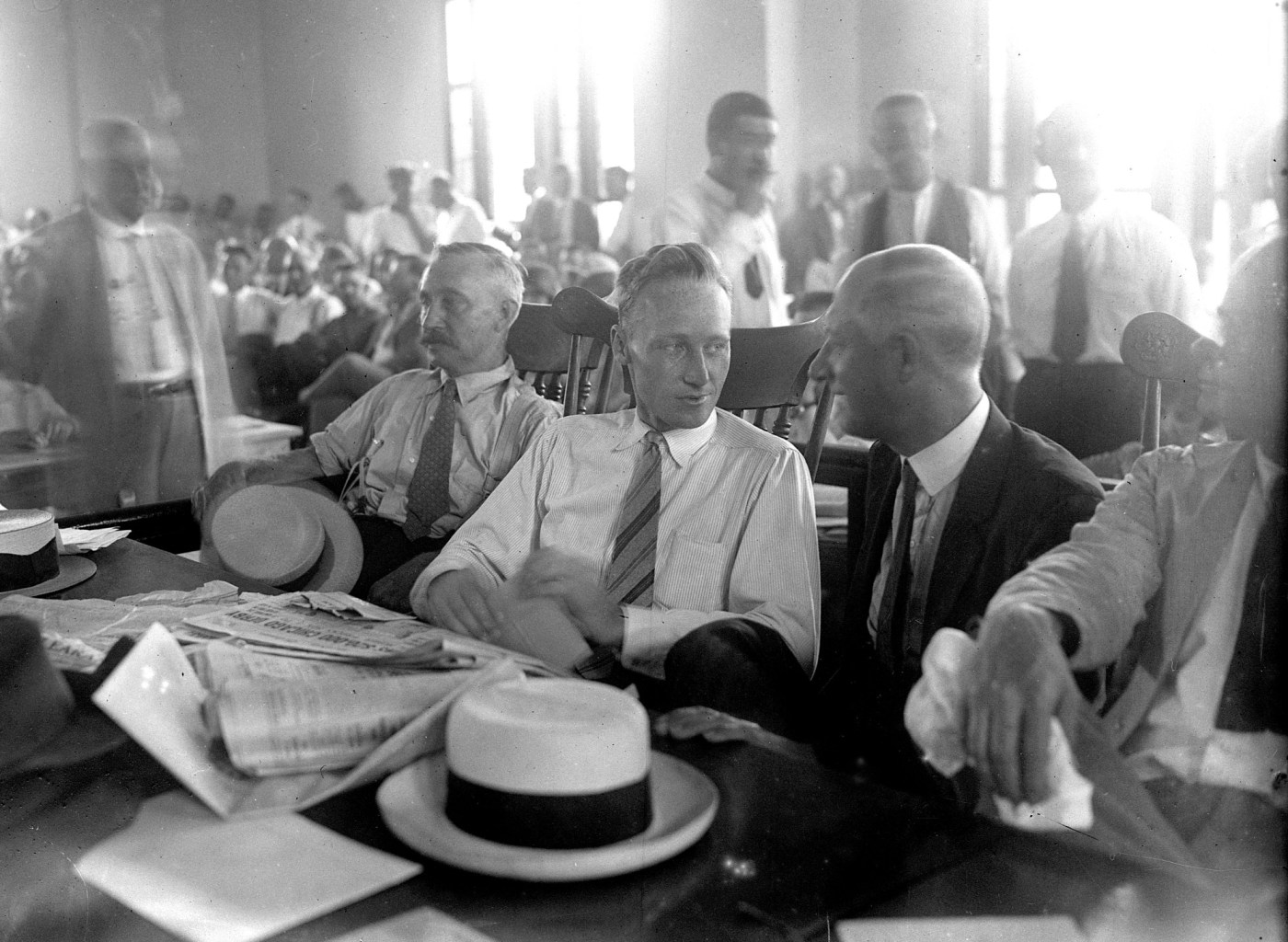
Scientists, lawyers and supporters of John Scopes assembled on the steps of the “defense mansion” outside of Dayton, Tennessee, for the trial in July 1925. The defense mansion was a Victorian house where the defense team and witnesses stayed during the trial. The scientists did not get a chance to testify at the trial. (Chicago Herald and Examiner)

Scopes decided to study geology at the University of Chicago. His tuition toward earning a doctorate was paid for by a grant and other donations. But when he applied for a third year to finish his studies, the president of another school that administered the fellowships refused to consider his application, saying, “As far as I am concerned, you can take your atheistic marbles and play elsewhere.”

And so he did, fading away into life as a working geologist, Hansen tells me, living in Texas and Louisiana. He did return to the University of Chicago campus for a conference in 1960. When asked about the 1925 trial, Hansen writes, “Scopes had little to add. ‘I hope that I don’t ever have to go through something like that again.’”

“Some of the issues of the trial still echo,” says Hansen. “Ever debated is the role of religion in public school classrooms, as is the question ‘Who controls what gets taught in school?’”

Bryan died only days after the Scopes trial and Darrow lived until 1938, the most famous lawyer in the world then, and arguably still. Reading Hansen’s fine story and watching “Inherit the Wind” put Darrow solidly in my mind and compelled me to go to see a small and pretty bridge in Jackson Park. It sits behind the Museum of Science and Industry, named in Darrow’s honor and dedicated in 1957 by relatively new mayor Richard J. Daley. Closed to pedestrians since 2013, it’s sadly in bad shape, recently having been listed as one of Preservation Chicago’s 7 Most Endangered Buildings for 2025, noting, “As necessary maintenance continues to be deferred, the bridge is increasingly vulnerable to further disrepair. If conditions worsen, demolition and removal are possible outcomes.”

Atty. Clarence Darrow talks at the Scopes trial in 1925. (Chicago Tribune historical photo)

I also found the time to read Darrow’s 20,000 some-word closing argument in the Leopold and Loeb sentencing, the words that saved those two men from execution.

Here are some of them: “You may hang these boys; you may hang them, by the neck until they are dead. But in doing it you will turn your face toward the past. … I am pleading for the future; I am pleading for a time when hatred and cruelty will not control the hearts of men. When we can learn by reason and judgment and understanding and faith that all life is worth saving, and that mercy is the highest attribute of man.”

rkogan@chicagotribune.com
Research finding opens the door to a viral link to Parkinson’s disease

posted in: All news | 0

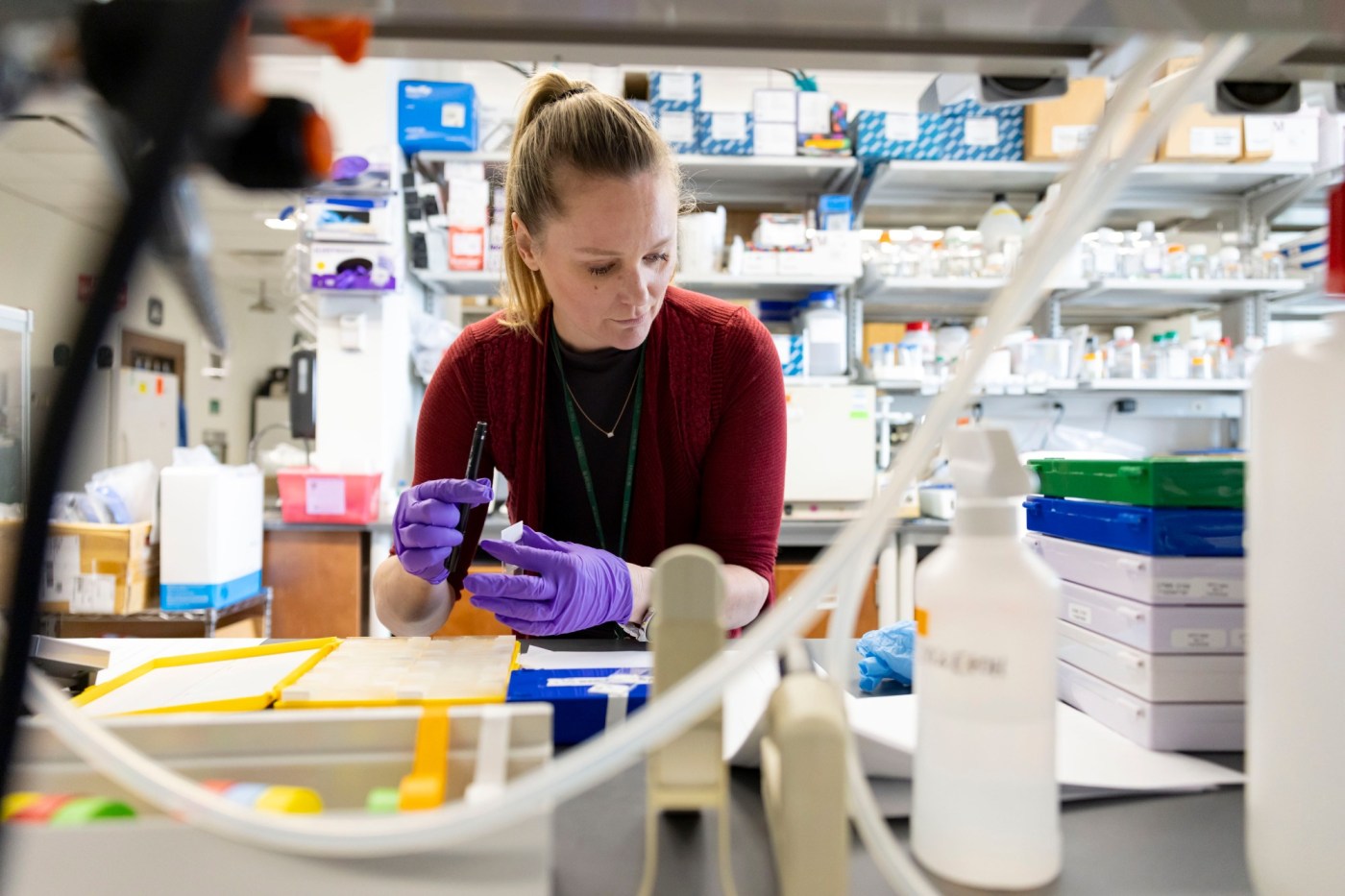
A Northwestern Medicine research lab has found a usually harmless virus in brain samples from Parkinson’s patients. The idea that Parkinson’s could be linked to a virus had been theorized for years, but this is the first study to pinpoint a specific virus as more common in Parkinson’s patients.

“The message that we want to give to the general public is, it opens a new field of investigation, something that we didn’t know about,” said Dr. Igor Koralnik, Northwestern’s chief of neuroinfectious diseases and global neurology and lead author of the study.

Parkinson’s disease is a movement disorder caused by the loss of neurons that produce dopamine, a chemical messenger in the brain. Why these neurons break down is unknown, but it’s thought that this breakdown is caused by many factors, both genetic and environmental.

The team used a tool called ViroFind, which is able to test samples for all known viruses that infect humans much quicker than the usual one-at-a-time “brute force” method. The lab found human pegivirus, or HPgV, in 5 of the 10 Parkinson’s-affected brains they tested, and none of the brains without Parkinson’s.

“Fifty percent of any population having this virus would be very, very high,” Barbara Hanson, the lab’s post-doctoral fellow, said. Estimates calculate HPgV as being present in about 5% of blood donors in North America, and people with healthy immune systems generally lose the virus within two years of exposure. It is not known to cause disease in humans, so most who catch the virus will never know they had it.

Before this study, Hanson said, HPgV had not been found in human brain tissue. It was understood to primarily “live” in blood.

“For this virus to be present in the brain, there must be a reason for that,” Koralnik said.

This doesn’t mean that the virus itself is a trigger for Parkinson’s, though. It could be that an as-yet unidentified genetic mutation that makes people susceptible to Parkinson’s, also allows for the virus to spread throughout the body differently than in people without the mutation.

And even if further research shows HPgV as a direct cause of Parkinson’s, both Koralnik and Dr. Danny Bega, medical director of Northwestern’s Parkinson’s Disease and Movement Disorders Center, said people shouldn’t necessarily worry about getting HPgV.

A patient likely has to encounter a couple of different factors before they develop Parkinson’s, Bega said. He puts it in terms of “hits” — a hit could be genetic, or it could be environmental, such as exposure to a virus or pesticide. These “hits” build up over time until there are enough factors to cause the neuron degeneration specific to Parkinson’s.

It’s possible that this is why Parkinson’s risk increases with age, Bega said. The longer you live, the more of these “hits” you take, as you encounter different Parkinson’s risk factors throughout your life.

“I always caution people who try to blame their Parkinson’s on one thing,” he said. “Rest assured, it’s never one thing that you could have done or should have done differently.”

The work to treat and hopefully one day prevent Parkinson’s is being done through finding these factors and eliminating them one by one. “The more targets that we have, the more likely we are to be able to achieve a treatment that actually can slow things down,” Bega said.

Alan Bergman, Oscar-winning lyricist who helped write ‘The Way We Were,’ dies at 99

posted in: All news | 0

By HILLEL ITALIE

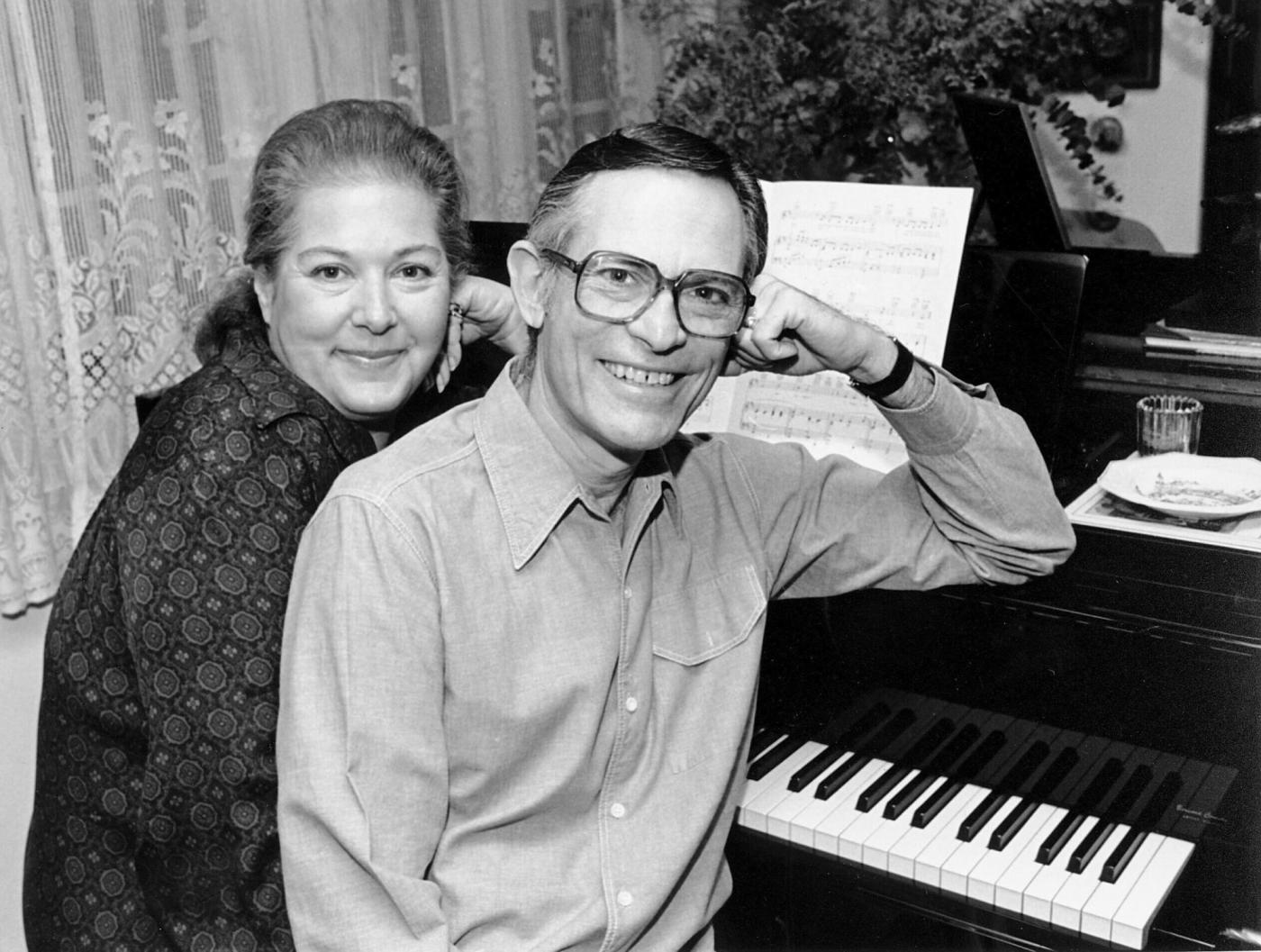
Alan Bergman, the Oscar-winning lyricist who teamed with his wife, Marilyn, for an enduring and loving partnership that produced such old-fashioned hits as “How Do You Keep the Music Playing?,” “It Might Be You” and the classic “The Way We Were,” has died at 99.

Bergman died late Thursday at his home in Los Angeles, family spokesperson Ken Sunshine said in a statement Friday. The statement said Bergman had, in recent months, suffered from respiratory issues “but continued to write songs till the very end.”

The Bergmans married in 1958 and remained together until her death, in 2022. With collaborators ranging from Marvin Hamlisch and Quincy Jones to Michel Legrand and Cy Coleman, they were among the most successful and prolific partnerships of their time, providing words and occasional music for hundreds of songs, including movie themes that became as famous as the films themselves. Frank Sinatra, Michael Jackson, Tony Bennett and many other artists performed their material, and Barbra Streisand became a frequent collaborator and close friend.

Blending Tin Pan Alley sentiment and contemporary pop, the Bergmans crafted lyrics known by millions, many of whom would not have recognized the writers had they walked right past them. Among their most famous works: the Streisand-Neil Diamond duet “You Don’t Bring Me Flowers,” the well-named Sinatra favorite “Nice ’n’ Easy” and the topical themes to the 1970s sitcoms “Maude” and “Good Times.” Their film compositions included Ray Charles’ “In the Heat of the Night” from the movie of the same name; Noel Harrison’s “The Windmills of Your Mind,” from “The Thomas Crown Affair”; and Stephen Bishop’s “It Might Be You,” from “Tootsie.”

FILE – Honorees Alan, left, and Marilyn Bergman arrive at the ASCAP Film and Television music awards in Beverly Hills, Calif. on Tuesday, May 6, 2008. (AP Photo/Matt Sayles, File)

The whole world seemed to sing and cry along to “The Way We Were,” an instant favorite recorded by Streisand for the 1973 romantic drama of the same name that co-starred Streisand and Robert Redford. Set to Hamlisch’s tender, bittersweet melody, it was essentially a song about itself — a nostalgic ballad about nostalgia, an indelible ode to the uncertainty of the past, starting with one of history’s most famous opening stanzas: “Memories / light the corners of my mind / misty watercolor memories / of the way we were.”

“The Way We Were” was the top-selling song of 1974 and brought the Bergmans one of their three Oscars, the others coming for “Windmills of Your Mind” and the soundtrack to “Yentl,” the Streisand-directed movie from 1983. At times, the Academy Awards could be mistaken for a Bergman showcase. In 1983, three of the nominees for best song featured lyrics by the Bergmans, who received 16 nominations in all.

The Bergmans also won two Grammys, four Emmys, were presented numerous lifetime achievement honors and received tributes from individual artists, including Streisand’s 2011 album of Bergman songs, “What Matters Most.” On “Lyrically, Alan Bergman,” Bergman handled the vocals himself. Although best known for their movie work, the Bergmans also wrote the Broadway musical “Ballroom” and provided lyrics for the symphony “Visions of America.”

Their very lives seemed to rhyme. They didn’t meet until they were adults, but were born in the same Brooklyn hospital, four years apart; raised in the same Brooklyn neighborhood, attended the same children’s concerts at Carnegie Hall and moved to California in the same year, 1950. They were introduced in Los Angeles while working for the same composer, but at different times of the day. Their actual courtship was in part a story of music. Fred Astaire was Marilyn’s favorite singer at the time and Alan Bergman co-wrote a song, “That Face,” which Astaire agreed to record. Acetate in hand, Bergman rushed home to tell Marilyn the news, then proposed.

Bergman is survived by a daughter, Julie Bergman, and granddaughter.

Related Articles


After years of tough rules on liquids and footwear, US air travel may be on the cusp of a new era


Chevron gets go ahead for $53B Hess deal, and access to one of the biggest oil finds this decade


Wall Street hangs near records highs with most of the focus on earnings, dealmaking


Today in History: July 18, Nadia’s perfect 10


Stephen Colbert says CBS is ending his ‘Late Show’ in May 2026

Bergman had wanted to be a songwriter since he was a boy. He majored in music and theater at the University of North Carolina, and received a master’s from the University of California, Los Angeles, where he befriended Johnny Mercer and became a protege. He and Marilyn at first wrote children’s songs together, and broke through commercially in the late 1950s with the calypso hit “Yellowbird.” Their friendship with Streisand began soon after, when they visited her backstage during one of her early New York club appearances. “Do you know how wonderful you are?” was how Marilyn Bergman greeted the young singer.

The Bergmans worked so closely together that they often found themselves coming up with the same word at the same time. Alan likened their partnership to housework: one washes, one dries, the title of a song they eventually devised for a Hamlisch melody. Bergman was reluctant to name a favorite song, but cited “A Love Like Ours” as among their most personal:

“When love like ours arrives / We guard it with our lives / Whatever goes astray / When a rainy day comes around / A love like ours will keep us safe and sound.”

New study could help doctors address diabetes, prediabetes

posted in: All news | 0

A correction to an earlier version of this article has been appended to the end of the article.

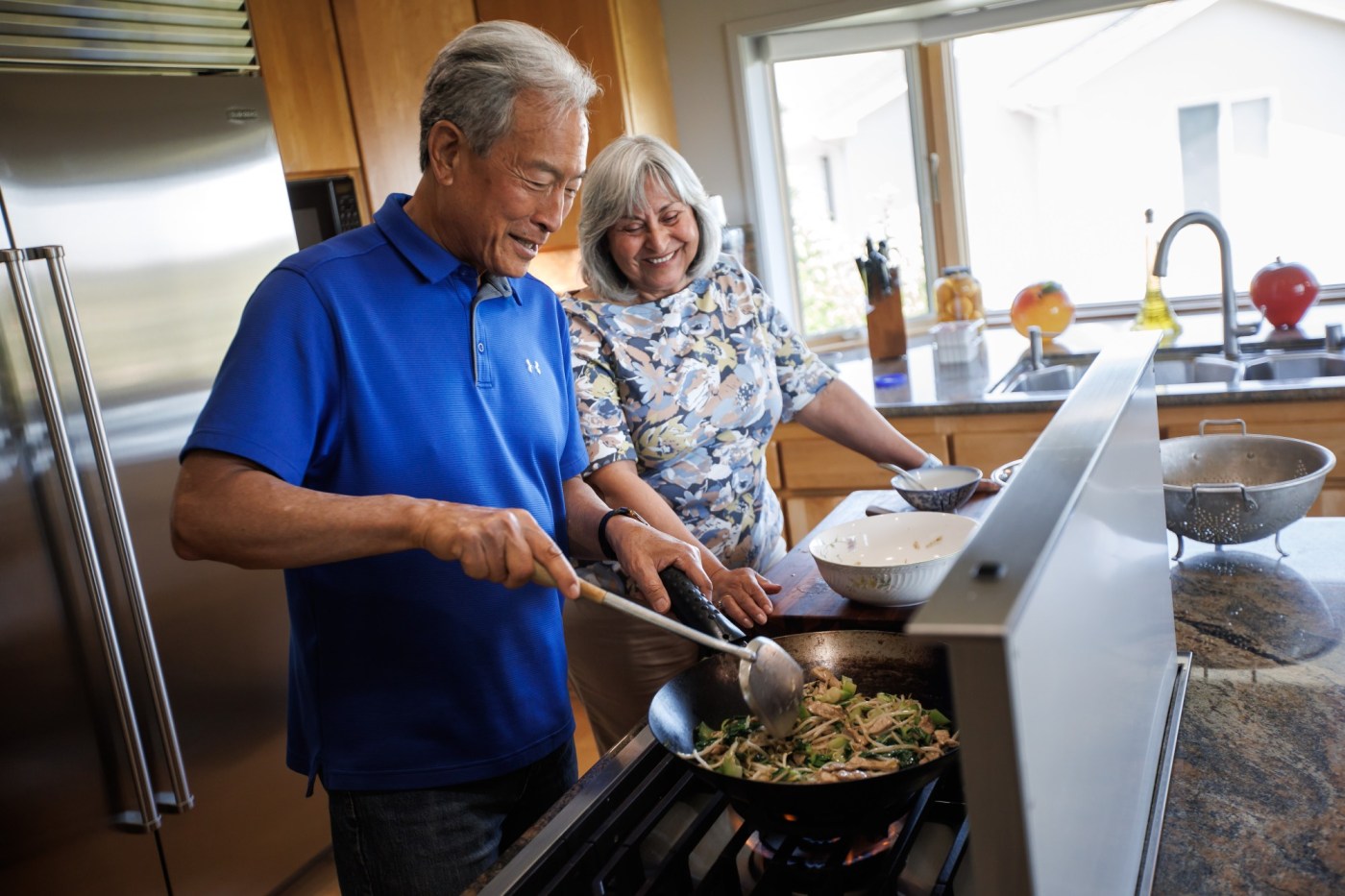
On a recent summer afternoon, Randy and Vera Tom prepared a stir-fried lunch in their Redwood City home with their “sous chef,” a 17-year-old Bichon Frise named Munchies, afoot.

Randy, 70, recently overhauled his lifestyle after the couple participated in a Stanford Medicine study tracking their metabolic responses to carbohydrates in real time with a continuous glucose monitoring device.

Randy Tom, center, and his wife, Vera Tom, eat lunch—bowls of stir-fried pork, bok choy, and bean sprouts—at their Redwood City home on June 27, 2025. (Dai Sugano/Bay Area News Group)

The recently published research tracked the glucose levels in the blood of 55 study subjects as they consumed precooked meals starring different carbohydrates such as grapes, jasmine rice, potatoes, pasta and bread. It was led by genetic deep data specialist Mike Snyder, metabolic expert Tracey McLaughin and research dietician Dalia Perelman at Stanford.

The results could lead to better prevention, diagnoses and treatment of prediabetes, diabetes and other metabolic diseases that lower quality of life and raise health care costs.

According to the Centers for Disease Control and Prevention, 38.4 million people, or 11.6% of the U.S. population, had diabetes in 2024.

Most common is Type 2 diabetes, which occurs when the body develops resistance to insulin because of diet, lifestyle, weight and family history. Type 1 diabetes is an autoimmune disease attacking cells of the pancreas, disabling the body’s production of insulin, the hormone that orchestrates the body’s food-processing functions. Both types of diabetes are life-threatening without intervention.

According to the CDC, more than a third of the 250 million people 18 or older in the U.S. and almost half of the 60 million who are 65 or older are prediabetic — the vast majority unknowingly.

“How would you know, if you can only know with a test that you get only if there seems to be a problem?” asked Randy, cleaver in hand, chopping neatly organized piles of lean pork and technicolor-green bok choy.

Randy Tom cuts bok choy as he prepares lunch at his Redwood City home on June 27, 2025. (Dai Sugano/Bay Area News Group)

The opportunity to access more personalized health information while contributing to science attracted the Toms to Stanford’s genomics studies about a decade ago. They’ve been in more than five long-term studies since — the latest was the first involving food.

Related Articles


Trump says Coke will shift to cane sugar. But increasingly, shoppers want no sugar in their sodas


Here’s what to know about chronic venous insufficiency


Researchers try new ways of preserving more hearts for transplants


Juul gets FDA’s OK to keep selling tobacco and menthol e-cigarettes


Nationwide protests begin against Trump’s immigration crackdown and health care cuts

When the research team asked Randy what he ate over Christmas after seeing spikes in his blood sugar data, the culprit was tamales. Now, he enjoys just one of the corn-based treats per sitting.

For Snyder, the advancement of physiologically specific care has been personal. From 2009 to 2011, he and Stanford profiled his own descent from prediabetes into type 2 diabetes — the first time the phenomenon was documented at the molecular level.

Snyder, who is svelte and active, said, “When I first became diabetic, everybody looked at me and said, ‘No way, it’s gonna go away.’”

But the proof was in his integrative Personal “Omics” Profile, or iPOP, an unprecedented analysis of billions of individual bits of molecular genetic data collected by powerful cutting-edge technology.

This level of analysis allows researchers to understand people by metabolic subtype and tailor treatment to match.

Right now, doctors begin to classify metabolic shifts or prediabetes when glucose levels in the blood exceed 5.7%, with no information as to why the abnormality exists.

But there are four different pathways to metabolic disease — two where the body doesn’t produce enough insulin and two where the body doesn’t respond properly to insulin.

In the study, McLaughlin and Snyder looked for soft slopes in blood sugar. Jagged peaks are generally normal responses to food or sugar.

Everyone’s blood sugar spikes in response to grapes and rice. But the scientists found that people with metabolic problems spiked higher and for longer to potato starch than people who lacked problems. The “potato-to-grape” reaction ratio correlated with different underlying metabolic dysfunctions.

These differences call for precision medicine and targeted preventative measures. Some people might need weight loss. Others might need exercise. Yet others may need sleep — something that lowers blood glucose levels across the board.

“If we understand where the problem lies, we can treat it more effectively,” Perelman said.

The researchers are looking for markers in cells that can identify these problems more easily through simple blood tests.

In the meantime, continuous glucose monitoring offers actionable information for people who want to be proactive about their metabolic health.

“You see what spikes you, you see what doesn’t spike you, so you eat what doesn’t spike you,” Snyder said.

After the study wrapped, the Toms obtained their own monitoring devices. Vera, 71, reacted moderately to her data; Randy took things further.

Pictured is a bowl of stir-fried pork, bok choy, and bean sprouts Randy Tom made for lunch at his Redwood City home on June 27, 2025. (Dai Sugano/Bay Area News Group)

He avoided foods that caused sustained spikes in his blood sugar and joined a master’s swimming team. The retiree and part-time model dropped 25 extra pounds, shed numbers from his high cholesterol count and reversed his prediabetic condition.

“I don’t think people know that you can reverse it,” he said. “It’s just hard to do. You don’t just take a pill.”

Last fall, continuous glucose monitors became available over the counter. A drawback is the $80 monthly cost because insurance only covers the devices for diabetics.

Snyder, who wears multiple devices tracking his body’s functions and removes them only before getting weighed, thinks everyone should try one.

Perelman said the monitors are not a replacement for clinical consultation. McLaughlin added that the devices can yield false metrics in certain situations.

The next phase of the research will test different foods and “mitigators” — proteins or fats that can lower blood sugar fluctuations when consumed with carbohydrates. Toasted bread, for example, is easier on the system for some people when eaten with meat or a fat source like heavy cream. Mitigators don’t work as well for people with metabolic disorders — another crumb for research. Cornflakes and milk? Bad for nearly everyone.

This time, study participants will receive interventions, from medicine to personalized instructions for diet and lifestyle modifications.

Perelman said, “I want people to know that there’s delicious food that’s incredibly healthy.”